Male hormone health check home blood test kit
If you’ve been feeling “not quite yourself” for a while (low energy, lower libido, poor gym progress, mood wobble, brain fog), it’s easy to blame work, sleep, or the fact that you now make involuntary noises when standing up. Sometimes that is the reason. Sometimes, though, your hormones deserve a proper look.
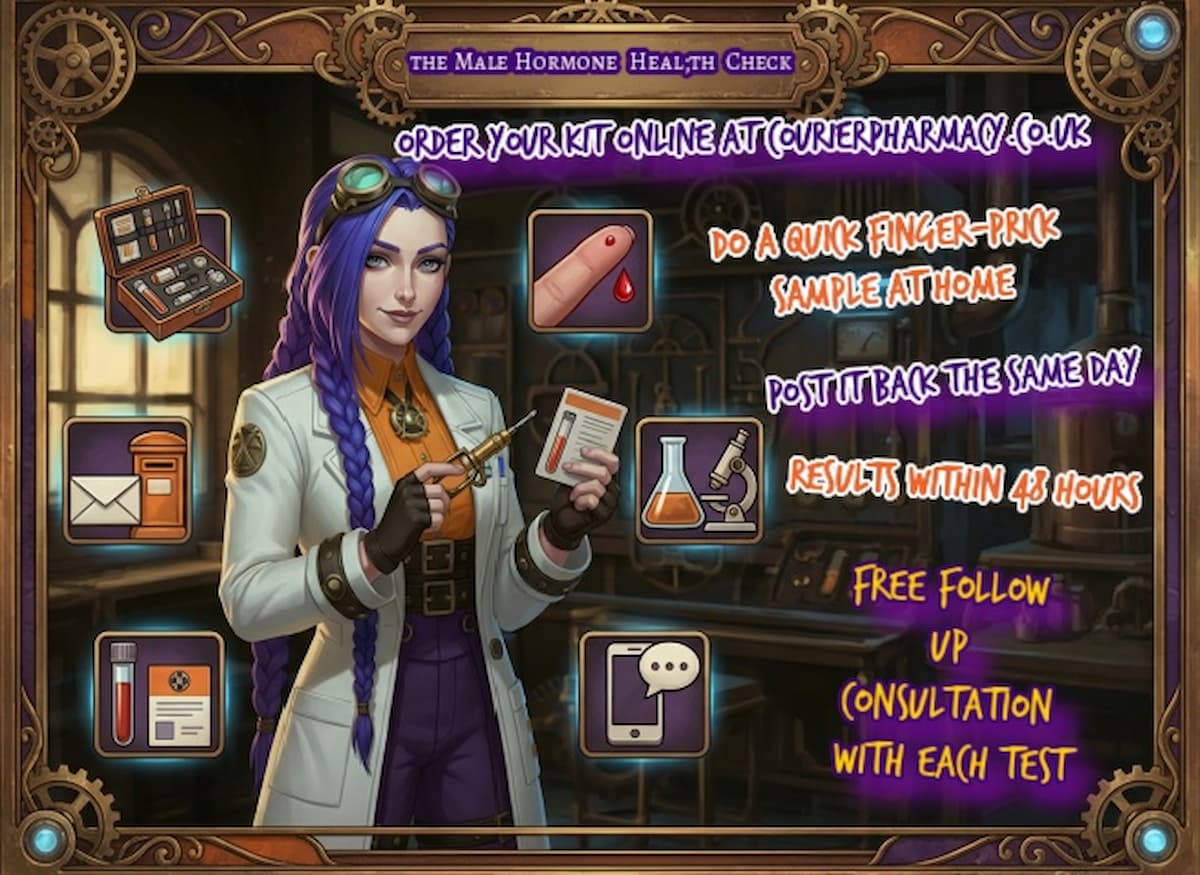
The Male Hormone Health Check from courierpharmacy.co.uk is a simple finger-prick home blood test for men. It measures total testosterone plus the key hormones and binding proteins that help you interpret testosterone correctly, not just chase one number. Your results can help you understand whether low testosterone could be contributing to symptoms and whether further testing for hypogonadism (testosterone deficiency) is a sensible next step with a clinician [1], [2].
All Courier Pharmacy home blood tests come with a free follow-up consultation. If your results and symptoms fit, there may be a pathway to TRT through Courier Pharmacy, but the boring (good) rule still applies: confirm low results correctly, look for causes, and make sure treatment is safe before anything starts [2].
What this page covers (and why it’s worth reading)
This guide walks you through what’s in the Male Hormone Health Check kit, what it measures, how to do a finger-prick sample without turning your kitchen into a crime scene, and how to think about your results in context. We’ll also cover safety, common reasons results look “off” (sleep, illness, medicines, weight changes), and 20 practical FAQs people ask before they test [2], [3].
Five key takeaways
- Testosterone results need a proper context
- Morning samples reduce false alarms
- SHBG can change the whole story
- One test is a starting point
- Follow-up turns numbers into action
Testosterone is not a “yes/no” hormone. Symptoms overlap with stress, depression, sleep problems, thyroid issues, obesity, and long-term conditions. That’s why the goal is clarity, not a label [1], [2].
Timing matters. Testosterone can vary throughout the day, especially in younger men, so morning testing (often 7 am–11 am) is commonly recommended in UK guidance. It helps reduce “borderline” results that are really just normal daily variation [2].
SHBG (sex hormone binding globulin) is the quiet troublemaker. If SHBG is high, your free testosterone can be low even when total testosterone looks fine. If SHBG is low, total testosterone can look low while free testosterone is acceptable. That’s why this panel includes SHBG and albumin, not just total testosterone [2].
A single home test is a first step, not a verdict. If results are low or borderline, good practice is usually to repeat a morning test and consider additional markers to understand the cause and safety before any treatment is considered [2].
Finally, follow-up is where the value is. A result without context can lead to unhelpful self-treatment (supplements, “test boosters”, or worse). A clinician can help you interpret patterns, check red flags, and decide what to do next [2].
What you get (typical contents may vary by supplier batch):
- Finger-prick collection kit (lancets, collection tube/card, wipes, dressings)
- Step-by-step instructions
- Pre-paid return packaging
- Lab analysis of your sample
- Digital results report
- Free follow-up consultation via courierpharmacy.co.uk
- What it measures:
- Albumin (ALB)
- Dehydroepiandrosterone sulphate (DHEAS)
- Follicle-stimulating hormone (FSH)
- Free testosterone (FTEST)
- Luteinising hormone (LH)
- Prolactin (PROL)
- Sex hormone binding globulin (SHBG)
- Total testosterone (TEST)
How often should you use the Male hormone health check?
Most men use a Male hormone health check in one of three ways: baseline, confirmation, or monitoring.
- Baseline: If you have symptoms that could be due to low testosterone, a baseline test gives you a starting point to discuss with a clinician. Symptoms alone are not enough because they overlap with many common issues (sleep, stress, depression, obesity, diabetes) [1], [2].
- Confirmation: If your result is low or borderline, UK guidance commonly recommends repeating a morning testosterone test to confirm before any diagnosis or treatment is considered. This matters because testosterone fluctuates and can dip temporarily with illness, poor sleep, heavy training, or calorie restriction [2].
- Monitoring: If you’re already under clinical care for testosterone deficiency, your clinician may recommend periodic monitoring. Home testing can be useful for trend tracking, but it should not replace the broader safety monitoring that’s often needed when someone is on TRT (for example, full blood count and other markers) [2].
When should you use the Male hormone health check?
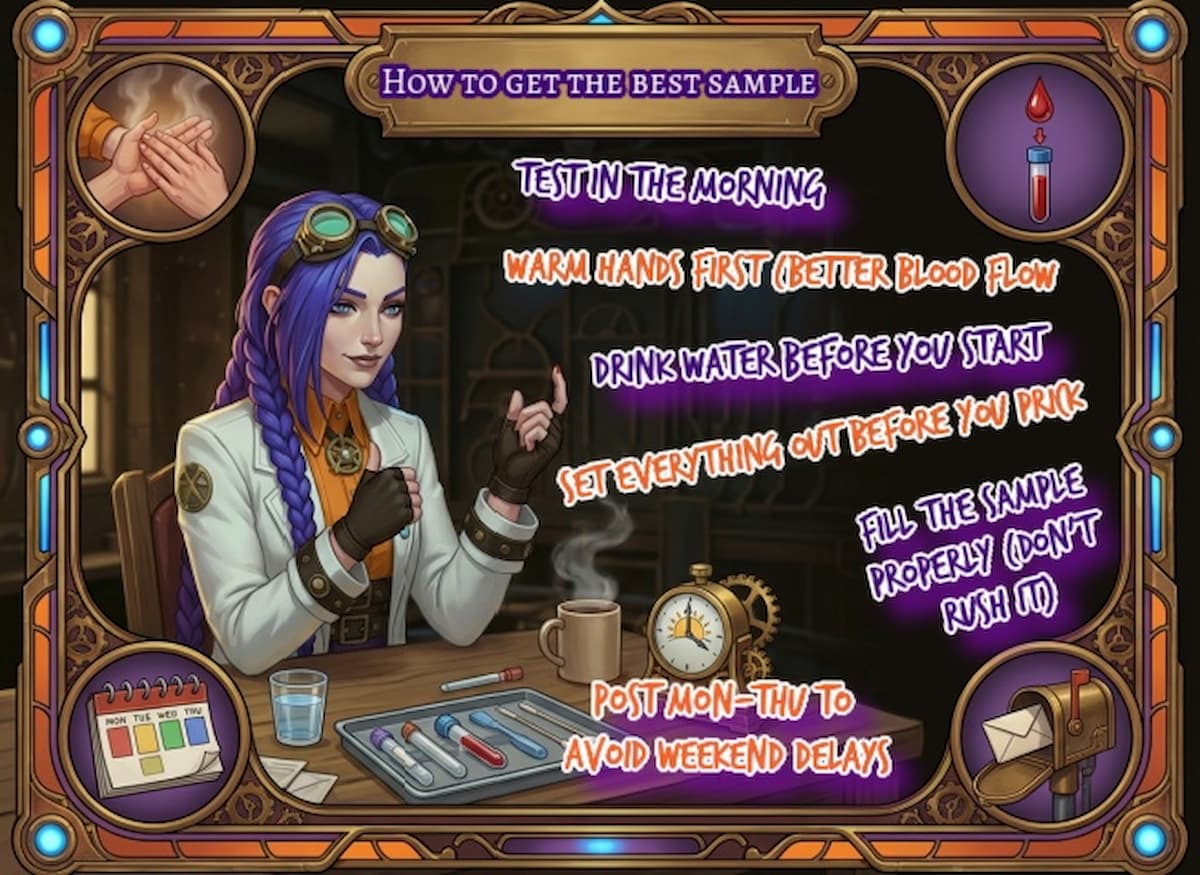
Aim for a morning sample. Many UK recommendations suggest early morning sampling (often 7 am–11 am) because testosterone levels are usually higher earlier in the day and fall later. Morning testing helps make results more comparable and reduces the chance of a misleading “low-ish” afternoon number [2].
Try not to test when you’re acutely unwell (fever, infection) or the day after a terrible night’s sleep. If you do, note it down. Context doesn’t ruin a test; it stops you from overreacting to it.
Fasting: Testosterone testing does not always require fasting, but follow the kit instructions. If you’re doing other tests at the same time (like lipid or glucose panels), fasting may be required for those tests.
When to repeat: If your result is borderline or low, repeating in a couple of weeks (morning, similar conditions) is often sensible. Your follow-up clinician can advise on timing based on symptoms and results [2].

Overview: Male hormone health check
- Checks total and free testosterone with context
- Includes SHBG and albumin for interpretation
- Also includes DHEAS
- Adds LH, FSH and prolactin for pattern clues
- Helpful for symptoms, not just curiosity
- Includes free follow-up for next steps
What the kit measures:
This panel covers testosterone (total and free), SHBG, and albumin, which influence how much testosterone is “available” to tissues. It also includes LH and FSH (pituitary hormones that signal the testes) and prolactin, which can be relevant when clinicians explore reasons for low testosterone [2].
Why those markers matter:
Total testosterone is the overall amount in your blood, but most testosterone is bound to proteins. SHBG binds tightly; albumin binds more loosely. Free testosterone is the small unbound fraction. When SHBG is unusually high or low, total testosterone alone can mislead, so the “binding context” matters [2].
Home testing DHEAS is useful for men because it gives a convenient snapshot of your adrenal androgen output (a hormone made mainly by the adrenal glands) without needing a clinic visit. It can add context if you’re dealing with things like low energy, low libido, poor recovery from training, mood changes, or stubborn belly fat, especially when you’re also checking markers like testosterone, SHBG, and free androgen index.
Because DHEAS tends to be more stable than some other hormones, it’s also a handy marker to track over time, so you and your clinician can spot trends and decide whether further tests (or lifestyle and treatment changes) actually move the needle.
Who benefits most:
Men with persistent symptoms that could fit low testosterone, men with risk factors (for example, obesity or type 2 diabetes), and men who want a sensible first step before arranging more extensive testing. The NHS notes late-onset hypogonadism can occur, but it’s not the same thing as normal ageing, and it needs proper assessment [1], [2].
What a result can and can’t tell you:
A home test can show whether your hormone pattern looks reassuring, borderline, or worth repeating. It cannot diagnose the cause of symptoms on its own. That’s why follow-up matters, and why repeat morning testing is often recommended when results are low [2].
What to do next:
If results are normal, you can look at other likely drivers (sleep, stress, training load, alcohol, medicines, mental health, thyroid, metabolic health). If results are low or borderline, the next step is usually repeat testing and a clinician review, not self-prescribing “solutions” from the internet’s dodgier corners [1], [2].