Wellman Home Blood Test Kit
If you’re a bloke who’s trying to feel a bit more “on it” (energy, focus, gym, sleep, mood, libido… the lot), it’s tempting to guess what’s going on.
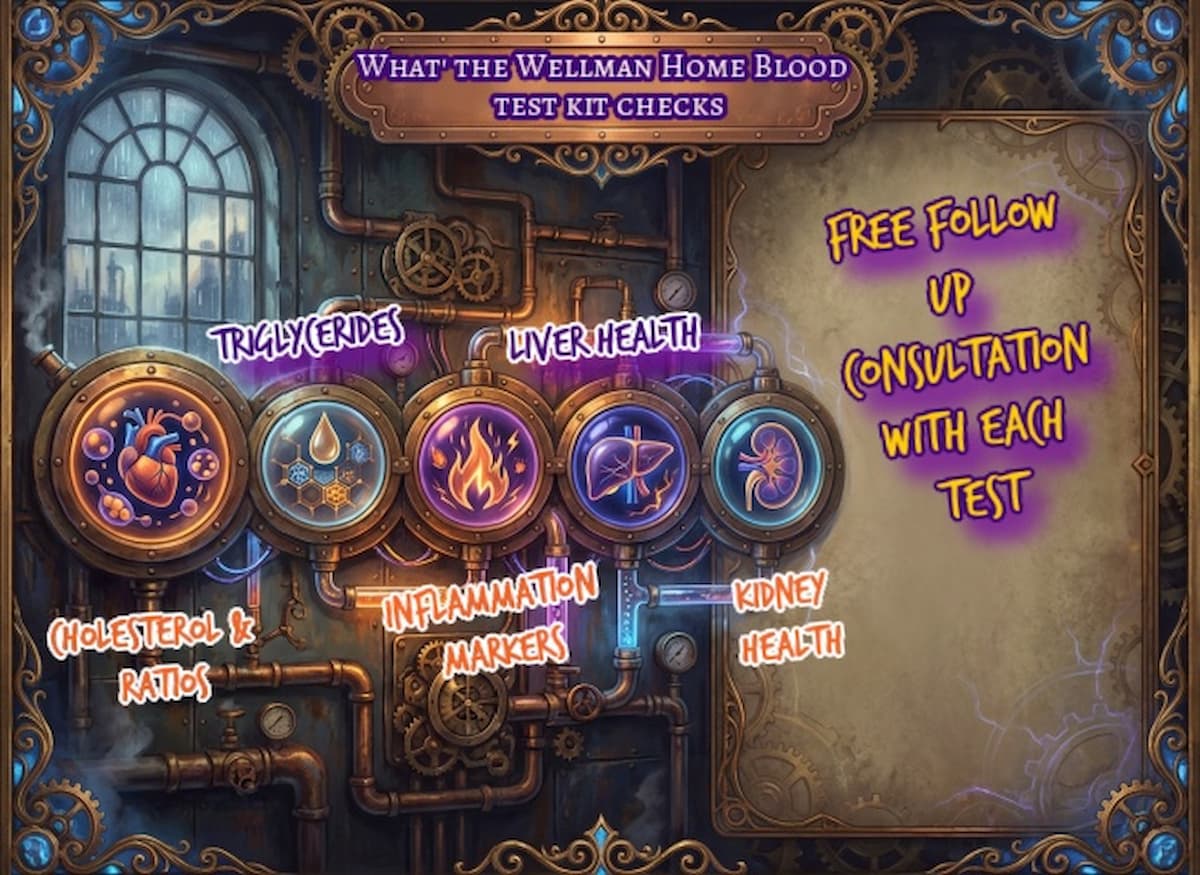
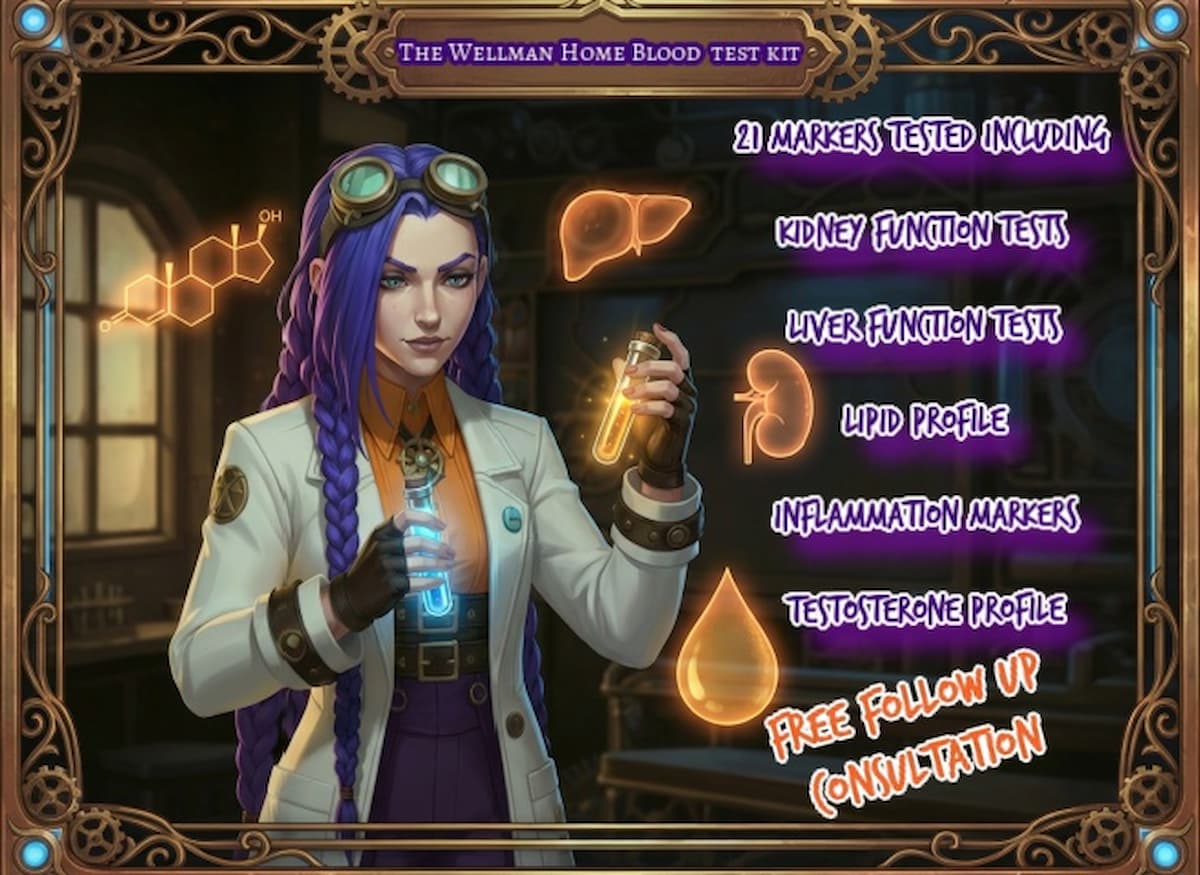
The Wellman Home Blood Test Kit from courierpharmacy.co.uk is built to replace guessing with a clear snapshot of key men’s health markers, including cholesterol, long-term blood sugar control, inflammation, liver and kidney markers, and a proper look at testosterone with SHBG and albumin for context [1]. You take a simple finger-prick sample at home, post it to the lab, and get results back fast (typically within 48 hours), plus a free follow up consultation to talk through what it all means.

What this page covers (and how to use it)
This Wellman Home Blood Test Kit deep dive covers what’s in the kit, what it checks, how to do it, what the results can (and can’t) tell you, safety, and FAQs. It’s written to help you use your results sensibly, with the right context and the right next steps [2].
Five key takeaways
- A broad men’s health snapshot
- Hormones with proper context
- Heart and metabolic markers
- Liver and kidney check-in
- Free follow up included
A broad men’s health snapshot
This isn’t a single “one-number” test. It’s a joined-up panel that looks at several common areas that affect how men feel day to day: energy, recovery, weight, and long-term health [1].
Hormones with proper context
Testosterone is useful, but it’s not the whole story. Measuring SHBG and albumin alongside total and free testosterone helps you interpret what’s actually available to your tissues, not just what’s floating around in total [3].
Heart and metabolic markers
Cholesterol and triglycerides help build a picture of cardiovascular risk, and HbA1c gives a longer-term view of blood sugar control over the last 2–3 months [2] [4].
Liver and kidney check-in
Your liver and kidneys do a lot of behind-the-scenes work. Liver enzymes and kidney filtration markers can flag when something needs a closer look, especially if you’re tired, taking medicines, or making lifestyle changes [5], [6].
Free follow up included
Numbers are only useful when someone helps you make sense of them. Your free follow up consultation is where you can ask what to repeat, what to change, and what should go to your GP or a specialist [1].
Overview: Wellman Home Blood Test Kit
- Broad men’s health panel
- Testosterone plus SHBG context
- Lipids and ratios included
- HbA1c for long-term glucose
- Liver and kidney markers

What the kit measures
This kit measures markers across hormones, lipids, inflammation, liver function, and kidney function. That mix is useful because men’s health goals often overlap: energy, weight, performance, and long-term risk reduction [1].
Why those markers matter
Cholesterol markers and triglycerides help assess cardiovascular risk, especially when interpreted alongside ratios and non-HDL cholesterol [2]. HbA1c helps spot early changes in blood sugar control [4]. hs-CRP can reflect inflammation and cardiovascular risk, but it needs context (infection, injury, training load) [7].
Who benefits most
Men who want a baseline, men making lifestyle changes, and men who have symptoms like fatigue, low motivation, weight gain, or reduced libido often find this panel useful as a starting point [8].
What a result can and can’t tell you
Results can highlight what’s normal, what’s borderline, and what’s clearly abnormal. They can’t diagnose a condition on their own. Symptoms, history, and repeat testing matter [1].
What to do next
Use the report and your free follow up consultation to decide what to repeat, what to change, and what needs GP review. That’s the safest way to turn numbers into action.
What is the Wellman Home Blood Test Kit for?
The Wellman Home Blood Test Kit is for adult men who want a practical health check that goes beyond “I feel a bit off”. It can be useful if you’ve noticed changes like tiredness, low motivation, weight gain, reduced libido, or slower gym progress [8].
It’s also useful if you’re trying to optimise health: improving sleep, changing diet, training more consistently, reducing alcohol, or managing stress. A baseline gives you something to measure against.
It can also be used to determine if you testosterone levels are low and if you are a suitable candidate for testosterone replacement therapy (TRT).
What it can’t do is diagnose a condition on its own. If you have persistent symptoms, or anything severe, the right move is to speak to a clinician.
How does the Wellman Home Blood Test Kit work?
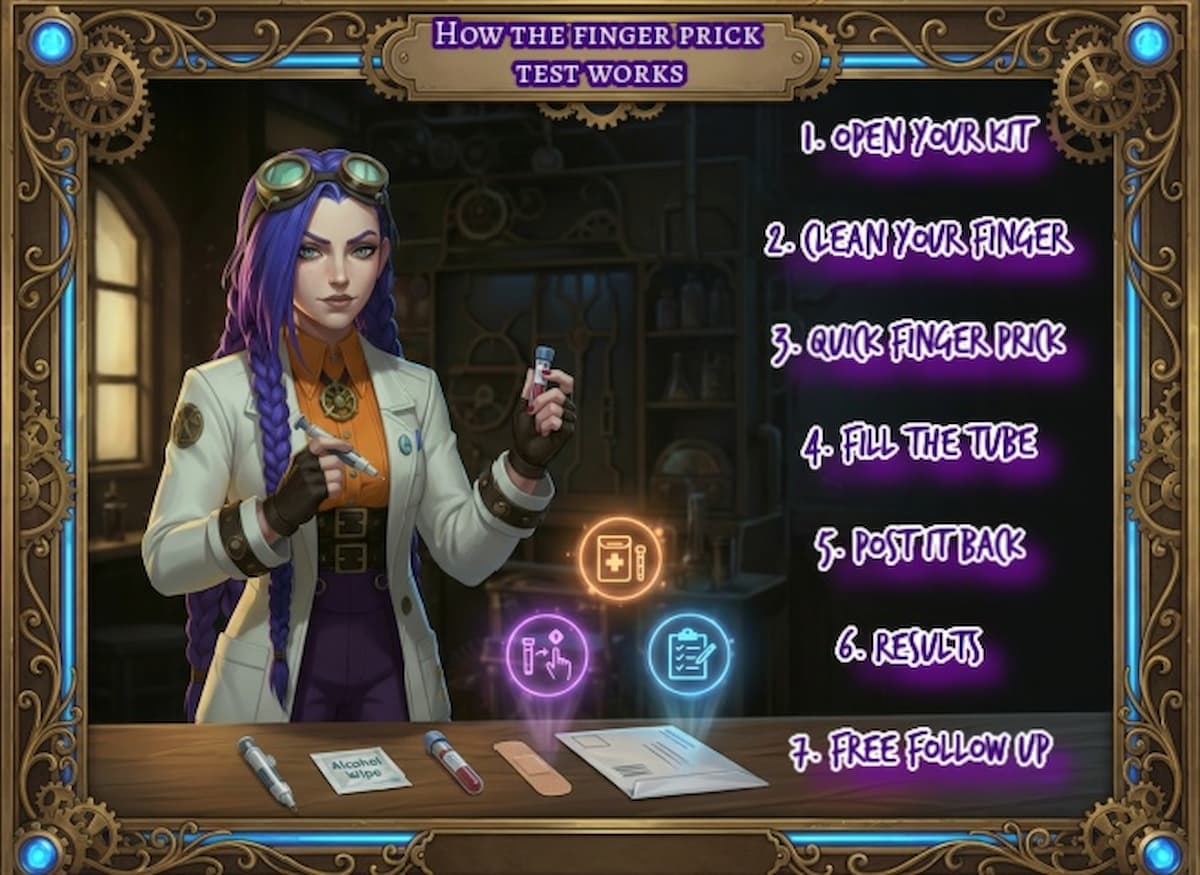
You collect a small blood sample using a finger-prick device, then post it to a laboratory for analysis. The lab uses validated methods to measure each marker and generate your report.
Your results are then compared against reference ranges. But reference ranges are not the same as “optimal”, and they don’t capture your full story. Training load, sleep debt, recent illness, and medicines can all shift results.
Testosterone is a good example. Total testosterone is the overall amount in your blood, but much of it is bound to proteins. SHBG binds tightly, albumin binds more loosely, and free testosterone is the small unbound fraction. That’s why SHBG and albumin help you interpret the result properly [3].
The lipid panel works similarly. It’s not just “cholesterol good/bad”. HDL, non-HDL, triglycerides, and ratios can add useful context, especially when you’re thinking about overall cardiovascular risk [2].
Finally, the follow up consultation is where the numbers become useful. It’s your chance to ask: what’s likely lifestyle-related, what needs repeating, and what needs a GP or specialist.
How to use the Wellman Home Blood Test Kit?
Do the test when you can take your time. Rushing is the main reason home kits fail. Set everything out first, wash your hands, and warm them up to improve blood flow.
Also, since the test will be measuring testosterone levels, it is best to take a blood sample early in the morning when the testosterone levels are higher.
Collect the sample exactly as instructed, label it correctly, and post it back the same day. If you can, post Monday to Thursday so it’s less likely to sit in a depot over the weekend.
If you struggle to get enough blood, don’t keep stabbing the same finger. Warm hands, hydration, and lowering your hand below heart level usually help. The Tasso device is a useful alternative if you are struggling to get a good sample.
Warnings and precautions: Wellman Home Blood Test Kit
This is not an emergency test. If you have chest pain, severe shortness of breath, collapse, or any urgent symptoms, seek emergency medical help.
If you faint at the sight of blood, have a bleeding disorder, or take anticoagulants (blood thinners), take extra care and consider having someone with you. If you’re unsure, ask a clinician before doing a finger-prick test.
Do not make big medication decisions based on one home test. If something is abnormal, the usual next step is repeat testing and a proper clinical review.
If you have symptoms that are persistent, worsening, or worrying, treat this kit as a starting point, not a finish line.
Side effects: Wellman Home Blood Test Kit
Most people have no side effects beyond minor discomfort.
You may get a small bruise, soreness, or a tiny amount of bleeding at the finger-prick site. Very occasionally, people feel light-headed. Sitting down and having a drink nearby helps.
If you develop increasing redness, swelling, heat, or pus at the puncture site, seek medical advice as this could indicate infection.
Drug interactions: Wellman Home Blood Test Kit
The Wellman Home Blood Test Kit itself does not interact with medicines.
However, medicines and health conditions can affect the markers being measured. Some medicines can affect liver enzymes, lipids, blood sugar control, inflammation markers, or hormone signalling.
If your results are borderline or unexpected, it’s worth reviewing your medicines and supplements with a clinician. Alternatively, please contact us for you FREE follow up consultation.
FAQs: Wellman Home Blood Test Kit
Who is the Wellman Home Blood Test Kit for?
It’s for adult men who want a broad health check, including testosterone with SHBG context, plus cholesterol, HbA1c, inflammation, and liver and kidney markers.
If you have persistent symptoms, use the kit as a starting point and speak to a clinician about next steps.
What does the Wellman Home Blood Test Kit measure?
It measures liver markers (ALT, ALP, GGT, bilirubin, proteins), kidney markers (creatinine and eGFR), lipid markers (cholesterol and triglycerides), HbA1c, hs-CRP, and testosterone markers (total, free, SHBG, albumin).
How quickly do I get results from the Wellman Home Blood Test Kit?
Typically within 48 hours after the lab receives your sample (timings can vary). Posting earlier in the week helps avoid delays.
Do I need to do the Wellman Home Blood Test Kit in the morning?
If you’re focusing on testosterone, morning sampling is often most helpful because levels can vary across the day.
Do I need to fast for the Wellman Home Blood Test Kit?
Yes, the Wellman Home Blood Test Ki requires a fasted morning sample.
What does HbA1c tell me?
HbA1c reflects your average blood glucose over the last 2–3 months. It’s useful for spotting early problems with blood sugar control..
What does hs-CRP tell me?
High-sensitivity CRP is a marker of low-grade inflammation. It can rise with infections, injuries, and chronic inflammatory states, so it always needs context.
What does eGFR mean?
eGFR is an estimate of kidney filtration. It’s calculated from creatinine and other factors and helps screen for reduced kidney function.
What’s the difference between total and free testosterone?
Total testosterone is the overall amount in your blood. Free testosterone is the small fraction not bound to proteins. SHBG and albumin influence how much is available to tissues.
Why does the Wellman Home Blood Test Kit measure SHBG?
Because SHBG binds testosterone strongly and can make total testosterone look “fine” even when free testosterone is low (or vice versa). It helps interpretation.
Can stress affect my result?
Yes. Poor sleep, high stress, and recent illness can shift hormones and inflammation markers. If results are borderline, repeating the test when life is calmer can help.
Can alcohol affect liver markers?
Yes. Alcohol can raise liver enzymes in some people. If your liver markers are high, it’s worth reviewing alcohol intake and repeating testing after changes.
Can training hard affect results?
Intense exercise can temporarily affect inflammation markers and sometimes liver enzymes. If you want a “true baseline”, avoid unusually heavy sessions right before testing.
What if my cholesterol is high?
High cholesterol is common and often improves with diet, weight loss, and activity. The next step is usually a full cardiovascular risk review rather than panic.
What if my HbA1c is high?
A raised HbA1c suggests higher average blood glucose. The sensible next step is clinical review, lifestyle changes, and repeat testing.
What if my testosterone is low?
Low testosterone should be confirmed with repeat testing and clinical assessment. Don’t self-treat based on one result.
Can the Wellman Home Blood Test Kit diagnose a condition?
No. It provides markers that support clinical assessment. Diagnosis depends on symptoms, history, and sometimes further tests.
Is the Wellman Home Blood Test Kit safe?
For most people, yes. The main risks are minor finger-prick discomfort and occasional light-headedness.
What should I do if I feel faint?
Sit down before you start, take slow breaths, and have water nearby. If you’ve fainted before with needles or blood, ask someone to be with you.
Can I do the Wellman Home Blood Test Kit if I’m on blood thinners?
Take extra care and speak to a clinician first. Finger-prick tests can cause prolonged bleeding in some people on anticoagulants.
What happens after my results?
You’ll receive your report, and you can use the free follow up consultation to discuss what’s normal, what’s borderline, what needs repeating, and what needs GP follow up.
Why choose courierpharmacy.co.uk for the Wellman Home Blood Test Kit?
You get a broad men’s health panel, fast turnaround, and a free follow up consultation, with UK-based pharmacy support.
Disclaimer: This article is for informational purposes only and is not a substitute for professional medical advice.
References:
- NHS inform (n.d.) Common blood tests. Available at: https://www.nhsinform.scot/tests-and-treatments/blood-tests/common-blood-tests/ (Accessed: 31 January 2026).
- NICE (2023) Cardiovascular disease: risk assessment and reduction, including lipid modification (NG238). Available at: https://www.nice.org.uk/guidance/ng238 (Accessed: 31 January 2026).
- Bhasin, S. et al. (2018) Testosterone therapy in men with hypogonadism: an Endocrine Society clinical practice guideline. Available at: https://www.endocrine.org/clinical-practice-guidelines/testosterone-therapy (Accessed: 31 January 2026).
- NHS (n.d.) Type 2 diabetes. Available at: https://www.nhs.uk/conditions/type-2-diabetes/ (Accessed: 31 January 2026).
- Specialist Pharmacy Service (SPS) (n.d.) Assessing liver function and interpreting liver blood tests. Available at: https://www.sps.nhs.uk/articles/assessing-liver-function-and-interpreting-liver-blood-tests/ (Accessed: 1 February 2026).
- StatPearls Publishing (n.d.) Liver function tests. In: StatPearls [Internet]. Treasure Island (FL): StatPearls Publishing. Available at: https://www.ncbi.nlm.nih.gov/sites/books/NBK507821/ (Accessed: 1 February 2026).
- European Society of Cardiology (n.d.) [Article]. European Heart Journal. Available at: https://academic.oup.com/eurheartj/advance-article/doi/10.1093/eurheartj/ehaf937/8377304 (Accessed: 1 February 2026).
- NHS (n.d.) Tiredness and fatigue. Available at: https://www.nhs.uk/conditions/tiredness-and-fatigue/ (Accessed: 31 January 2026).