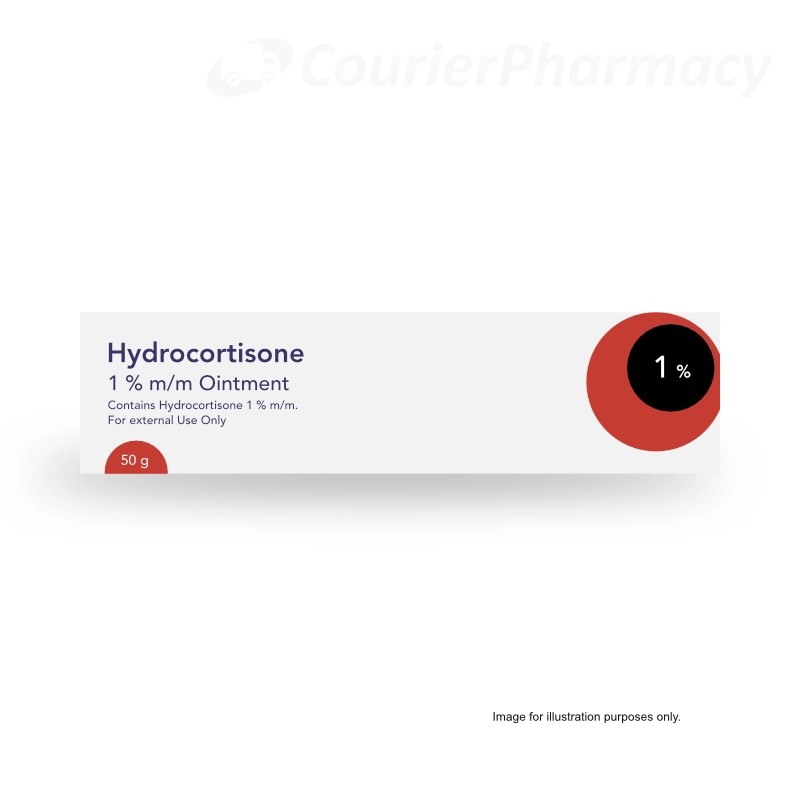
Hydrocortisone 1% ointment is a mild topical steroid used to treat inflammatory skin conditions including eczema, dermatitis, and other dermatological complaints.
It works by reducing inflammation and easing itching, redness, and swelling.
Applied directly to affected skin, it’s suitable for adults, children, and elderly patients when used as directed by a healthcare professional.
Hydrocortisone 1% ointment is a topical corticosteroid preparation. It is designed to reduce inflammation and ease discomfort associated with a range of skin conditions. [1]
The ointment base provides a protective barrier whilst delivering the active ingredient directly to affected areas. This makes it particularly effective for dry or sensitive skin. [1] It’s classified as a mild steroid. This means it’s gentler than stronger alternatives and can be used on delicate skin areas when prescribed appropriately. [4]
The formulation contains micronised hydrocortisone suspended in an ointment base of wool fat, liquid paraffin, and white soft paraffin. [4] This combination creates a smooth, off-white translucent ointment that absorbs gradually into the skin without leaving a greasy residue. [4] Many patients find the ointment format more soothing than creams, especially during acute flare-ups when skin is particularly sensitive or raw.
Hydrocortisone 1% ointment is available in multiple pack sizes
15g,
30g, and
50g)
and is supplied by licensed manufacturers in the UK. [4] It’s a Prescription Only Medicine (POM) for the larger pack sizes.
At Courier Pharmacy, we make accessing this treatment straightforward through our online consultation service, ensuring you receive the right strength for your specific condition.
Additional information
Pack size
1 x 15g, 1 x 30g, 1 x 50g
MOJO WISDOM
Take control of your health by understanding your condition and what this medication is doing for you.
READ:
More information about this treatment.
UK-based doctors and pharmacists
Discreet and Confidential
UK-based doctors and pharmacists
Free, Expert Advice
No video link provided.
No video link provided.
UK-based doctors and pharmacists
Free, expert advice
Discrete and confidential
Fast delivery
Giving you trusted clinical advice for over 40 conditions
A UK regulated pharmacy providing safe, effective treatments online since 2014
Everything you need to know about hydrocortisone cream for eczema, dermatitis, and skin inflammation
Hydrocortisone 1% ointment is a mild topical steroid that’s been trusted by UK patients and healthcare professionals for decades. Whether you’re dealing with eczema flare-ups, contact dermatitis, or other inflammatory skin conditions, this guide covers everything you need to understand about how it works, how to use it safely, and when to seek professional advice.
Key takeaways
Hydrocortisone 1% ointment is a mild corticosteroid classified as a weak steroid, suitable for sensitive areas and long-term use under medical supervision
It works by reducing inflammation, calming the immune response, and easing redness, itching, and swelling
Proper application technique matters: use a thin layer, apply to clean skin, and follow your prescriber’s guidance on frequency
It’s not suitable for untreated infections, and you should avoid applying it to the face without professional advice
Long-term use requires monitoring to prevent side effects like skin thinning, and withdrawal syndrome is possible if stopped abruptly
Overview of hydrocortisone 1% ointment
Hydrocortisone 1% ointment represents a cornerstone of topical steroid therapy in the UK. [1], [4] It’s been used safely and effectively for generations, with a well-established safety profile when used as directed. Understanding how it fits into your skincare routine and when to use it can make a significant difference to your comfort and skin health.
The ointment is particularly valued for its versatility. It can be used on various body areas, from the hands and feet to the trunk and neck, making it suitable for managing different types of dermatitis and eczema. However, application to the face requires extra caution and should only be done under professional guidance, as facial skin is more delicate and prone to side effects like thinning. [4]
Many patients appreciate that hydrocortisone 1% is mild enough for regular use during flare-ups but potent enough to provide meaningful relief. [1] This balance makes it an ideal first-line treatment for many inflammatory skin conditions, particularly when other approaches haven’t provided adequate control. [1]
The ointment base itself offers additional benefits beyond simply delivering the active ingredient. [4] The combination of wool fat, liquid paraffin, and white soft paraffin creates an occlusive barrier that locks in moisture, which is especially helpful for dry, cracked, or irritated skin. [4] This makes hydrocortisone 1% ointment particularly suitable for conditions like atopic eczema, where the skin barrier is compromised. [1]
Consistency and reliability are hallmarks of hydrocortisone 1% ointment therapy. When used correctly, most patients experience noticeable improvement within a few days, with significant relief often achieved within one to two weeks. This relatively quick onset of action makes it a practical choice for managing acute flare-ups whilst you work with your healthcare team on longer-term management strategies.
Hydrocortisone 1% ointment is a Prescription Only Medicine (POM) and is only available with a valid prescription from a UK-qualified healthcare professional.
At Courier Pharmacy, we make obtaining hydrocortisone 1% ointment straightforward and discreet. Simply complete a quick online consultation, which is reviewed by one of our UK-qualified prescribers to ensure the treatment is suitable and safe for you. Here’s how it works:
Complete your online consultation. Answer a few straightforward questions about your skin condition, medical history, and any medications you’re currently taking.
Our prescriber reviews your answers. We assess your suitability for hydrocortisone 1% ointment, considering your specific condition, skin type, and any potential contraindications.
If approved, we issue your prescription. Once our prescriber confirms hydrocortisone 1% ointment is right for you, we generate your prescription and prepare your order.
We dispense and deliver discreetly. Your medication is carefully dispensed by our pharmacy team and delivered to your door in plain, unmarked packaging within 24 hours.
If hydrocortisone 1% ointment isn’t suitable for you, we’ll explain why and suggest the next best option—whether that’s an alternative strength, a different formulation, or a completely different approach to managing your skin condition.
Active ingredient in hydrocortisone 1% ointment
The active ingredient in hydrocortisone 1% ointment is micronised hydrocortisone, a naturally occurring corticosteroid hormone. Each gram of ointment contains 10mg of hydrocortisone, making it a 1% preparation. [4] Micronisation means the hydrocortisone particles have been reduced to very small sizes, which improves absorption through the skin and enhances the ointment's effectiveness. [4]
Hydrocortisone is classified as a weak corticosteroid, placing it in the lowest potency category used in topical steroid therapy. [4] This classification is important because it reflects the balance between efficacy and safety—hydrocortisone is strong enough to manage many inflammatory skin conditions but gentle enough for use on sensitive areas and in vulnerable populations like infants and elderly patients. [1], [4] The body naturally produces hydrocortisone as part of the stress response, which is why topical application is generally well tolerated when used appropriately. [4]
What is hydrocortisone 1% ointment for?
Hydrocortisone 1% ointment is indicated for a wide range of inflammatory skin conditions. [1], [4] The most common uses include atopic eczema (the most prevalent form of eczema), infantile eczema, discoid eczema, and stasis eczema. [1], [4] It's equally effective for various types of dermatitis, including primary irritant dermatitis (caused by direct skin irritation), contact allergic dermatitis (triggered by allergens), photo dermatitis (sun-related), and seborrheic dermatitis (affecting oily skin areas). [2] [3]
Beyond eczema and dermatitis, hydrocortisone 1% ointment can be used for other dermatological conditions including prurigo nodularis (intensely itchy skin nodules), neurodermatoses (skin conditions linked to nervous system dysfunction), and otitis externa (inflammation of the ear canal). [4] It's also helpful for intertrigo (skin fold irritation), insect bite reactions, and nappy rash when concurrent infection has been excluded or is being appropriately treated. [4] This versatility makes it a valuable tool in managing various skin complaints that affect quality of life.
How does hydrocortisone 1% ointment work?
Hydrocortisone 1% ointment works through multiple anti-inflammatory mechanisms that address the root causes of skin inflammation. [4]
How hydrocortisone cream helps calm inflamed skin
Hydrocortisone cream is a mild steroid cream that helps settle irritation in the skin. When you apply it, it soaks into the top layers of the skin and tells the body to turn down the inflammation response.
In simple terms, it works by:
Reducing redness and swelling
Calming itching and irritation
Slowing down the skin’s overactive immune response
Helping protect the skin while it heals
When skin becomes inflamed, the body releases chemicals that cause symptoms like itching, soreness, heat, and redness. Hydrocortisone helps block some of these chemicals, so the skin feels more comfortable and looks less angry.
It also helps stop too many immune cells from gathering in the area. That matters because these cells can make rashes worse if the skin is already irritated.
At the same time, hydrocortisone can help reduce further damage to the skin barrier. This gives the skin a better chance to recover, especially in conditions like:
eczema
contact dermatitis
insect bites
mild allergic skin reactions
other mild inflammatory rashes
How to use hydrocortisone 1% ointment
Using hydrocortisone 1% ointment correctly is essential for achieving the best results whilst minimising the risk of side effects. Start by washing the affected area with mild soap and lukewarm water, then pat your skin dry completely—damp skin can increase absorption and potentially lead to stronger effects than intended. Apply a thin layer of ointment directly to the affected area, using gentle massage to help it penetrate. [4]
The frequency of application depends on your specific condition and your prescriber's instructions, but typically ranges from once to four times daily for adults. [4] As your skin improves, gradually increase the time between applications—for example, moving from four times daily to three times, then twice, then once daily. Many patients find they can eventually reduce to applying the ointment only two or three times weekly or just when symptoms return, which helps minimise long-term steroid exposure. [4]
Never apply hydrocortisone 1% ointment to broken skin, open wounds, or areas with untreated infections, as this can increase systemic absorption and potentially cause harm. Avoid applying it to the face unless specifically directed by your healthcare professional, as facial skin is thinner and more prone to side effects like atrophy (thinning). Similarly, keep the ointment away from your eyes and mucous membranes. If you accidentally get ointment in your eye, rinse thoroughly with water and contact your healthcare provider if irritation persists. [4]
Warnings and precautions for hydrocortisone 1% ointment
Hydrocortisone 1% ointment should not be used on untreated bacterial infections (such as impetigo), fungal infections (including candida or dermatophyte infections), or viral infections (like herpes simplex). Using a steroid on infected skin can worsen the infection and delay healing. [4] If you suspect your skin condition is infected—signs include increased warmth, pus, crusting, or spreading redness—contact your healthcare provider before using hydrocortisone.
Do not use this ointment on ulcerative conditions, rosacea, perioral dermatitis, or acne unless specifically instructed by your prescriber. [4] These conditions can be worsened by topical steroids, and alternative treatments are usually more appropriate. In infants and children, long-term use should be avoided, particularly on the face, as there's an increased risk of adrenal suppression (reduced production of natural steroids by the body). [4] Courses of treatment in young children should typically not exceed five to seven days.
If you're pregnant or breastfeeding, discuss hydrocortisone use with your healthcare provider before starting treatment. Whilst topical hydrocortisone is generally considered safe, there's theoretical risk of effects on foetal development if absorbed systemically during pregnancy. If you're breastfeeding, avoid applying the ointment unless advised by your doctor. [4]
Side effects of hydrocortisone 1% ointment
Most people tolerate hydrocortisone 1% ointment very well, and serious side effects are uncommon when used as directed. However, you should be aware of potential adverse effects, particularly with prolonged use or application to large skin areas. Local side effects can include epidermal thinning (the outer layer of skin becoming thinner), telangiectasia (small dilated blood vessels becoming visible), and striae (stretch marks or linear scars). [4] These effects are more likely in areas of high absorption, such as skin folds, the face, and areas covered with occlusive dressings. [4]
In infants and young children, local atrophic changes (thinning and wasting of skin) may occur in intertriginous areas (skin folds) and nappy areas where moist conditions favour hydrocortisone absorption. [4] This is why careful supervision and limiting treatment duration to five to seven days is particularly important in this age group. [4] Following prolonged topical use, systemic absorption can occasionally be sufficient to produce hypercorticism (excessive cortisol effects) and suppression of the pituitary-adrenal axis. [4] This effect is more likely in infants, children, and when occlusive dressings are used or large areas of skin are treated.
Rarely, visual disturbances including blurred vision have been reported with topical corticosteroid use. If you experience blurred vision or other visual changes whilst using hydrocortisone, contact your healthcare provider promptly for evaluation. [4] Withdrawal reactions—a form of rebound inflammation—can develop after stopping long-term topical steroid use, characterised by intense redness, stinging, burning, itching, skin peeling, and oozing pustules. These reactions are more likely after treating delicate skin sites like the face and flexures. [4]
Drug interactions with hydrocortisone 1% ointment
No significant drug interactions have been identified with topical hydrocortisone 1% ointment. This is because hydrocortisone applied to the skin is absorbed minimally compared to oral or injected steroids, meaning systemic levels remain very low under normal use. [4] However, if you're using other topical medications on the same area, inform your healthcare provider, as they may advise spacing out applications or using products in a specific order.
If you're taking systemic corticosteroids (steroids by mouth or injection) for another condition, mention this when discussing hydrocortisone ointment with your prescriber. [Whilst the topical application is unlikely to cause problems, your healthcare team will want to monitor your overall steroid exposure. Similarly, if you're taking medications that affect your immune system or skin barrier function, your prescriber may want to assess whether hydrocortisone is appropriate for you. [4]
Frequently asked questions about hydrocortisone 1% ointment
How long does it take for hydrocortisone 1% ointment to work?
Most patients notice improvement within two to three days of starting treatment, with significant relief often achieved within one to two weeks. The speed of response depends on the severity of your condition, the area being treated, and how consistently you apply the ointment as directed.
Can I use hydrocortisone 1% ointment on my face?
Application to the face should only be done under professional guidance, as facial skin is thinner and more prone to side effects like atrophy. Your prescriber may recommend a milder steroid or alternative treatment for facial conditions.
Is hydrocortisone 1% ointment safe for children?
Yes, hydrocortisone 1% is safe for children when used as directed by a healthcare professional. However, treatment should be limited to five to seven days, and long-term use should be avoided, particularly on the face.
Can I use hydrocortisone 1% ointment whilst pregnant?
Discuss this with your healthcare provider before starting treatment. Whilst topical hydrocortisone is generally considered safe, there's theoretical risk if absorbed systemically during pregnancy.
What should I do if my skin gets worse after starting hydrocortisone 1% ointment?
Contact your healthcare provider immediately. Worsening could indicate an untreated infection or an allergic reaction to the ointment or one of its ingredients.
Can I use hydrocortisone 1% ointment under an occlusive dressing?
Occlusive dressings (like plastic wrap) significantly increase absorption and should only be used under professional guidance. Using an occlusive dressing without medical advice increases the risk of side effects.
How often should I apply hydrocortisone 1% ointment?
Application frequency depends on your condition and prescriber's instructions, typically ranging from once to four times daily for adults. Gradually increase intervals between applications as your skin improves.
Can I stop using hydrocortisone 1% ointment suddenly?
Stopping abruptly after long-term use can trigger withdrawal reactions (rebound inflammation). Gradually reduce frequency and duration under your prescriber's guidance.
Is hydrocortisone 1% ointment addictive?
No, hydrocortisone is not addictive in the traditional sense, but prolonged use can lead to skin dependence, where symptoms return or worsen when you stop using it. This is why gradual reduction under professional supervision is recommended.
What's the difference between hydrocortisone 1% ointment and cream?
Ointments provide a thicker, more occlusive barrier and are better for dry skin, whilst creams absorb faster and feel lighter. Your prescriber will recommend the formulation best suited to your skin type and condition.
Can I use hydrocortisone 1% ointment alongside other skincare products?
Yes, but space out applications—apply other products at different times of day. Avoid mixing hydrocortisone with other active ingredients unless your prescriber advises otherwise.
Does hydrocortisone 1% ointment cause skin thinning?
Skin thinning is a potential side effect with prolonged use, particularly on delicate areas like the face and skin folds. Using the lowest effective dose for the shortest duration minimises this risk.
Is hydrocortisone 1% ointment suitable for sensitive skin?
Yes, hydrocortisone 1% is classified as a mild steroid and is suitable for sensitive skin when used as directed. However, some people may be allergic to hydrocortisone or its excipients.
How should I store hydrocortisone 1% ointment?
Store below 25°C in a cool, dry place away from direct sunlight. Keep the tube tightly closed and out of reach of children.
What are the ingredients in hydrocortisone 1% ointment?
The active ingredient is micronised hydrocortisone 1%. Excipients include wool fat, liquid paraffin, and white soft paraffin.
Can I use hydrocortisone 1% ointment on broken skin?
No, do not apply hydrocortisone to broken skin, open wounds, or infected areas. This increases systemic absorption and can worsen infections.
Is hydrocortisone 1% ointment available without a prescription?
Yes and no, hydrocortisone 1% ointment is a Prescription Only Medicine (POM) in the larger pack sizes. You'll need a valid prescription from a UK-qualified healthcare professional.
What should I do if I miss a dose?
Apply the ointment as soon as you remember, then continue with your regular schedule. Don't double up on the next application to make up for a missed dose.
Can I use hydrocortisone 1% ointment long-term?
Long-term use should be under professional supervision, with regular reviews to monitor for side effects. Your prescriber may recommend periodic breaks or reduction in frequency to minimise risks.
Disclaimer
This information is for educational purposes only and is not personal medical advice. If you have symptoms of meningitis or think you’ve been exposed, seek urgent medical help by calling 999 or attending A&E. Always speak to a healthcare professional (GP, pharmacist, or clinician) before making decisions about your health or treatment.