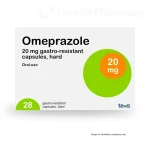
Omeprazole 20mg gastro-resistant capsules are a prescription-only proton pump inhibitor licensed in the UK for GORD, peptic ulcers, H. pylori eradication, NSAID-related ulcers and Zollinger-Ellison syndrome.
The 28-capsule pack provides a one-month supply at the standard once-daily adult dose.
Prescribed and dispensed in the UK by Courier Pharmacy with personalised online consultation, GPhC-registered pharmacist oversight, and discreet home delivery.
Omeprazole 20mg gastro-resistant capsules contain omeprazole 20mg, a proton pump inhibitor (PPI) that reduces how much acid your stomach makes. PPIs work by acting on the acid-producing cells in the stomach lining. As a result, they can help with symptoms such as heartburn, acid reflux, and indigestion linked to excess acid.
These capsules are gastro-resistant, which means they don’t release the medicine in the stomach. Instead, they pass through the stomach and release omeprazole in the small intestine, where your body absorbs it. This matters because stomach acid would otherwise break down omeprazole before it can work. In other words, the capsule design protects the medicine so it can do its job.
Omeprazole has been used in the UK since the late 1980s, and clinicians know it well. Several UK manufacturers supply generic omeprazole. However, the active ingredient and expected clinical effect stay the same whichever brand you receive.
We supply Omeprazole 20mg gastro-resistant capsules from a UK-registered pharmacy. A UK prescriber reviews every prescription, and a GPhC-registered pharmacist checks the supply before dispatch. So, you get proper clinical oversight, not just a repeat order.
If antacids such as Gaviscon or Rennies no longer control your reflux, prescription omeprazole can be the next sensible step. It can also help if you’ve tried over-the-counter omeprazole (which is usually limited to 14 days of self-treatment in adults) and symptoms keep coming back. A 28-capsule pack supports a full month of treatment with prescriber input, which many cases of GORD need.
However, omeprazole isn’t right for everyone. For example, you should seek medical advice before treatment if you have red-flag symptoms such as unintended weight loss, difficulty swallowing, persistent vomiting, blood in vomit or stool, or anaemia. These symptoms need investigation rather than symptom masking.
Key features and specifications
Active ingredient: Omeprazole 20mg per gastro-resistant capsule
Form: Hard gastro-resistant capsule containing enteric-coated granules
Pack size: 28 capsules (28-day supply at standard dose)
Heartburn that wakes you at 3am. Acid reflux that ruins curry night, then dinner the next night, then breakfast. The taste of stomach acid in your throat after every meal. Indigestion that’s gone from occasional to most days of the week, and the slow realisation that whatever’s going on isn’t going to fix itself.
Omeprazole 20mg is one of the most familiar prescription treatments for acid-related stomach conditions in the UK, used to reduce stomach acid production and let irritated tissue heal.
The 28-capsule pack provides a one-month supply at the standard once-daily dose. At Courier Pharmacy, we believe healthcare should fit you, not the other way round. Whether you’re managing classic GORD, ulcers, MCAS care that takes you seriously and recognises gastric histamine release, or chronic illness support where reflux is part of a wider picture, this page is here to help.
Five key takeaways
Omeprazole 20mg gastro-resistant capsules belong to a group of medicines called proton pump inhibitors (PPIs), which reduce stomach acid production at the source.
They’re licensed in the UK for gastro-oesophageal reflux disease (GORD), stomach and duodenal ulcers, H. pylori eradication (with antibiotics), NSAID-associated ulcers, and rare hypersecretion conditions like Zollinger-Ellison syndrome.
The standard adult dose is one 20mg capsule taken once daily, usually in the morning before food; relief typically builds over the first 1-2 weeks.
Long-term PPI use is well-tolerated for most people but warrants periodic review, since it can affect magnesium, vitamin B12, and bone health over years of continuous treatment.
Courier Pharmacy supplies Omeprazole 20mg through online prescriber consultation, GPhC-registered pharmacist oversight, and free fortnightly community clinics in Derby.
Acid-related disorders are common. Roughly 1 in 4 UK adults experience reflux symptoms at least once a month, and 5-10% have weekly symptoms severe enough to qualify as GORD. For mild and infrequent symptoms, lifestyle changes (smaller meals, avoiding late eating, weight management, sleep position) and over-the-counter antacids or alginates (Gaviscon) are usually enough. For frequent or severe symptoms, PPIs like omeprazole are the workhorse treatment, with strong evidence for both symptom relief and healing of oesophagitis.
Omeprazole works by binding irreversibly to proton pumps on the acid-secreting cells of the stomach lining. Each capsule lasts beyond its 24-hour dose interval because the cell has to manufacture new pumps to start producing acid again. This is why the full effect builds over the first few days of treatment, and why a single missed dose doesn’t immediately undo previous progress.
It’s worth being honest about what omeprazole isn’t. It isn’t a cure for the underlying cause of reflux or ulcers; it manages the acid environment so symptoms ease and tissue heals. Hiatus hernia, weak lower oesophageal sphincter function, dietary triggers, smoking, alcohol, weight, and certain medicines can all drive reflux, and addressing those alongside omeprazole gives the best long-term outcome. It also isn’t a forever medicine for most people; once symptoms settle, many users can step down to maintenance dosing or stop entirely, with antacids or alginates available for breakthrough symptoms.
Many of our patients arrive after years of being told their reflux is just stress, or being put on omeprazole indefinitely without ever being offered a review. We don’t subscribe to that approach. Whether you’re navigating chronic GORD, ulcer disease, MCAS care that takes you seriously, fibromyalgia support where dyspepsia is part of the wider picture, or chronic illness care that fits your life, the goal is a treatment plan that respects your symptoms rather than just suppressing them indefinitely.
The bigger picture for any reflux or dyspepsia case involves identifying triggers, addressing lifestyle factors where realistic, considering H. pylori testing if symptoms are persistent or recurrent, and reviewing whether long-term PPI treatment is genuinely needed or whether a step-down approach is appropriate. Omeprazole is one tool, not the whole toolkit. Our community work in Derby is one way we try to live up to that.
Why choose Courier Pharmacy for Omeprazole 20mg
We started Courier Pharmacy because too many people were being put on omeprazole indefinitely, without anyone ever reviewing whether they still needed it. Personalisation means looking at your symptom pattern, your other medicines, your history of any red-flag features, and your wider health context, then deciding together whether omeprazole is the right fit and for how long. We’ll also help you step down the dose once symptoms settle, where appropriate, rather than leaving you on the starting dose forever.
Guidance carries through after the prescription is issued. Our GPhC-registered pharmacists are reachable for the smaller questions that often go unasked: should I be having my B12 and magnesium checked? Why are my symptoms returning when I try to stop? Should I be tested for H. pylori? Our medical lead, the figure behind much of our clinical thinking, is Dr Ada Jex-Cori, an evidence-led, community-rooted clinician who built her practice on the belief that people with chronic symptoms deserve to be heard before they’re prescribed. MCAS care that takes you seriously is central to that ethos.
Trust is the part that has to be earned, not claimed. We’re a UK-regulated pharmacy, we publish our processes, we tell you when something isn’t suitable, and we’ll always recommend onward investigation when red-flag features are present, rather than treating empirically. We’d rather lose a sale than place a medicine where it doesn’t belong. Whether you’re navigating chronic GORD, peptic ulcer disease, MCAS care, fibromyalgia support with dyspeptic features, or chronic illness care that fits your life, we’ll meet you where you are.
Buy Omeprazole 20mg (Prescription Only) from Courier Pharmacy
The 28-capsule pack of Omeprazole 20mg is a Prescription Only Medicine (POM) in the UK. Smaller pack sizes of omeprazole 20mg tablets are available as Pharmacy (P) or General Sales List (GSL) medicines for short-term self-treatment of reflux in adults aged 18 and over, with maximum 14-day use without prescriber input. For ongoing treatment, longer courses, or anything beyond short-term self-treatment of frequent heartburn, the prescription route is appropriate. Here’s how the process works at Courier Pharmacy:
Complete a quick online consultation
A UK prescriber reviews your answers
If approved, a prescription is issued
We dispense and deliver discreetly to your door
If it isn’t suitable for you, we’ll explain why and suggest the next best option. Sometimes that’s a different PPI (lansoprazole or pantoprazole, particularly if you take clopidogrel), sometimes investigation for H. pylori or a referral for endoscopy if symptoms have red-flag features, sometimes lifestyle approaches and alginates for milder cases. We also run free fortnightly drop-in clinics and talks at Insomnia, Derby, 10 am to 12 pm. No appointment, no cost, no obligation.
Summary
A UK Prescription Only proton pump inhibitor for acid-related stomach and oesophageal conditions
Reduces stomach acid production at the source rather than just neutralising acid that’s already there
Standard once-daily dosing makes long-term use practical and predictable
Long-term use is generally well-tolerated but warrants periodic review for magnesium, B12 and bone health
Available from Courier Pharmacy through online prescriber consultation and pharmacist-led dispensing
Active ingredient in Omeprazole 20mg capsules
The active ingredient is omeprazole, a substituted benzimidazole that acts as a proton pump inhibitor. Omeprazole works by irreversibly inhibiting the hydrogen-potassium ATPase (the proton pump) in the acid-secreting parietal cells of the stomach lining. This pump is the final common pathway for acid secretion, so blocking it reduces both basal and stimulated acid production by about 95% at standard doses. Because the inhibition is irreversible, acid production resumes only as new proton pumps are synthesised, which takes several days.
Omeprazole itself is acid-labile (it's destroyed by stomach acid), which is why it's formulated as gastro-resistant capsules containing enteric-coated granules. The granules pass through the stomach intact and dissolve in the alkaline environment of the small intestine, where omeprazole is absorbed into the bloodstream. From there it reaches the parietal cells of the stomach lining and binds to its target. Other ingredients in the capsule formulation typically include sucrose, mannitol, hydroxypropyl methylcellulose, talc, magnesium stearate and various coating polymers. Specific excipient lists vary slightly between manufacturers of generic omeprazole, but the active ingredient and clinical effect are identical.
What are Omeprazole 20mg capsules used for?
Omeprazole 20mg is licensed for several distinct acid-related conditions. The most common indication is gastro-oesophageal reflux disease (GORD), where stomach acid escapes upwards into the oesophagus and causes heartburn, regurgitation, chest pain, sometimes a chronic cough, and over time can damage the oesophageal lining (oesophagitis). For symptomatic GORD without endoscopy-confirmed damage, treatment is symptom-led; for confirmed reflux oesophagitis, the goal is both symptom relief and tissue healing.
Omeprazole also treats peptic ulcer disease, both gastric ulcers (in the stomach) and duodenal ulcers (in the upper small intestine). Most peptic ulcers in the UK are caused by Helicobacter pylori infection or by NSAID use (ibuprofen, naproxen, diclofenac, aspirin), and treatment usually combines omeprazole with antibiotic eradication therapy or with NSAID modification. For people who need ongoing NSAID treatment (chronic arthritis, for instance), omeprazole is commonly co-prescribed to prevent NSAID-associated ulcers.
Less common indications include Zollinger-Ellison syndrome (a rare condition causing tumour-driven acid hypersecretion), Barrett's oesophagus (a precancerous change in the lining of the oesophagus caused by chronic reflux), and acid-related dyspepsia in the absence of a clear ulcer or reflux diagnosis. Omeprazole is not licensed for routine treatment of nausea without acid involvement, for stress (alone), or for general digestive discomfort without an acid-driven mechanism. A note on chronic illness contexts: people with MCAS often have prominent upper GI symptoms driven by gastric histamine release, and PPIs can be helpful for the inflammatory and acid components. However, PPIs can also reduce absorption of important nutrients (vitamin B12, magnesium, calcium) over time, which matters more in people with chronic illness who may already be nutritionally vulnerable. We'll explore your pattern during the consultation.
How do Omeprazole 20mg capsules work?
Stomach acid is produced by specialised cells called parietal cells in the lining of the stomach. These cells contain millions of tiny pumps, called hydrogen-potassium ATPases (or proton pumps), that move hydrogen ions out of the cell and into the stomach cavity in exchange for potassium ions. The hydrogen ions combine with chloride ions to form hydrochloric acid, which gives stomach contents their normal pH of around 1.5 to 2.0. This acid is essential for breaking down food, killing harmful bacteria, and activating digestive enzymes, but in too much quantity or in the wrong place (the oesophagus), it causes problems.
Omeprazole works directly on the proton pump. After being absorbed in the small intestine and reaching the parietal cells via the bloodstream, omeprazole enters the acid-secreting compartment of the cell and binds covalently to the pump, inactivating it permanently. The pump can no longer transport hydrogen ions, and acid secretion drops dramatically. This effect builds up over the first few days of treatment as more and more pumps are inactivated. Acid production only resumes as the parietal cells synthesise new proton pumps, which typically takes 24 to 96 hours after the last dose. This is why omeprazole has a long-lasting effect despite its short half-life.
The clinical effects of reduced acid production are several. In GORD, less acid in the stomach means less acid available to reflux upwards into the oesophagus, so symptoms ease and any inflammation or erosion of the oesophageal lining can heal. In peptic ulcer disease, the protective mechanisms of the stomach and duodenal lining can repair the damage caused by acid, NSAIDs, or H. pylori, allowing the ulcer to close over. In H. pylori eradication, the higher gastric pH created by omeprazole is necessary for the antibiotics (clarithromycin in particular) to work effectively against the bacteria.
Onset of symptom relief varies. Some users notice modest improvement within 24 to 48 hours; others take a week or two to feel the full benefit. This is normal. PPIs build up their effect gradually rather than blocking a single symptom signal instantly. If you're treating frequent breakthrough symptoms during the first week, antacids (Gaviscon, Rennies) are safe to use alongside omeprazole and can bridge the gap while the PPI effect builds.
After stopping omeprazole, acid production returns over a few days as new proton pumps are made. For people who've been on PPIs for months or years, stopping abruptly can cause rebound acid hypersecretion, where stomach acid temporarily spikes above normal levels, causing transient worsening of symptoms. This rebound usually settles within 2 to 4 weeks. Gradual dose reduction, ideally guided by a prescriber, helps minimise the rebound effect.
How to use Omeprazole 20mg capsules
Take one capsule once daily, ideally in the morning, around 30 to 60 minutes before breakfast. Swallow the capsule whole with a glass of water. Don't chew, crush, or split the capsule, because the enteric coating protects the active ingredient from stomach acid; breaking it would destroy the medicine before it could work. Taking the capsule before food is important because food can delay absorption, although missing this window occasionally isn't a disaster.
If swallowing whole capsules is difficult, omeprazole can usually be opened and the granules sprinkled onto a small amount of cool, slightly acidic liquid (such as apple juice or yogurt). Swallow the mixture immediately without chewing the granules, and don't store the mixture for later use. If you struggle regularly with swallowing capsules, a different omeprazole formulation (such as omeprazole orodispersible tablets, or liquid omeprazole) may be more appropriate, and we can discuss alternatives during your consultation.
Practical tips from our pharmacists: pick a consistent time each morning and stick with it; consistency is more important than precise timing; set a phone alarm during the first weeks if needed; antacids (Gaviscon, Rennies) are safe to use alongside omeprazole for breakthrough symptoms during the first 1-2 weeks while the PPI builds up; don't take indigestion remedies containing magnesium trisilicate or aluminium hydroxide within 2 hours of omeprazole, since they can reduce absorption; address lifestyle factors alongside (smaller meals, avoid eating within 3 hours of bed, raise the head of the bed if symptoms are worse at night, limit alcohol and rich/spicy foods if these are triggers for you); and book a review if symptoms haven't significantly improved after 4 weeks of consistent use.
Warnings and precautions for Omeprazole 20mg capsules
Omeprazole is not suitable for everyone. It must not be used by anyone with known hypersensitivity to omeprazole, other proton pump inhibitors (esomeprazole, lansoprazole, pantoprazole, rabeprazole), or any of the capsule excipients. Omeprazole must not be combined with nelfinavir (an HIV medicine), since omeprazole significantly reduces nelfinavir levels and can compromise HIV treatment.
Red-flag symptoms warrant investigation before starting or continuing omeprazole. These include unintended weight loss, difficulty or pain on swallowing, persistent vomiting (especially vomiting blood or coffee-ground material), passing black tarry stools or fresh blood in stool, persistent severe stomach pain, signs of anaemia (pale skin, fatigue, breathlessness), or a family history of stomach cancer. PPIs can mask the symptoms of gastric malignancy, which is why these features need direct medical assessment rather than empirical treatment. Mention any red-flag symptoms during your consultation; we may need to refer you for endoscopy rather than supply omeprazole.
Long-term use (over a year) deserves periodic review. Recognised concerns include reduced absorption of vitamin B12 (with risk of deficiency over years), reduced absorption of magnesium (with risk of hypomagnesaemia that can present as muscle cramps, fatigue, irregular heartbeat), slightly increased risk of bone fractures particularly in older people, small increased risk of certain bowel infections (especially Clostridium difficile colitis), and a small increased risk of gastric polyps (usually benign fundic gland polyps). None of these is a reason to avoid omeprazole when it's clinically indicated, but they're all reasons to review whether continued treatment is necessary periodically rather than continuing indefinitely without review.
Serious skin reactions, including Stevens-Johnson syndrome, toxic epidermal necrolysis, drug reaction with eosinophilia and systemic symptoms (DRESS), acute generalised exanthematous pustulosis (AGEP), and subacute cutaneous lupus erythematosus (SCLE), have been reported very rarely with omeprazole. Stop omeprazole immediately and seek urgent medical advice if you develop a widespread or unusual skin rash, particularly with mucosal involvement, blistering, or systemic symptoms (fever, swollen glands). SCLE typically appears as ring-shaped or red scaly rashes on sun-exposed skin.
Caution is needed in liver impairment (dose adjustment may be required), in older adults (slightly increased side effect risk), and in people awaiting endoscopy (PPIs can affect findings; ideally stop omeprazole 1-2 weeks before endoscopy if symptoms allow). During pregnancy, omeprazole is generally considered safe for short-term use when needed, with extensive observational data supporting this; mention pregnancy during your consultation so the decision can be individualised. During breastfeeding, omeprazole passes into breast milk in small amounts and is generally considered compatible with breastfeeding, although individual advice is sensible.
Side effects of Omeprazole 20mg capsules
Most people who take Omeprazole 20mg tolerate it well. Common side effects (occurring in 1-10% of users) include headache, abdominal pain, constipation, diarrhoea, flatulence, nausea, and vomiting. These are usually mild and often settle within the first 1-2 weeks of treatment. If headache is a persistent problem, taking the capsule at a different time of day or splitting the dose pattern with a prescriber's input can sometimes help.
Less common effects (in 0.1-1% of users) include dizziness, drowsiness, insomnia, peripheral oedema (mild ankle swelling), pruritus (itching), and various skin rashes. Some users notice a vague feeling of malaise or fatigue. Mood changes (anxiety, depression-like feelings) have been reported but are uncommon at standard doses.
Rare but more serious effects (in less than 0.1% of users) include hepatitis (with or without jaundice), blood disorders (low platelets, low white cells), hyponatraemia (low sodium, which can cause confusion in older people), interstitial nephritis (a rare kidney inflammation), and the rare but serious skin reactions outlined under Warnings (SJS, TEN, DRESS, AGEP, SCLE). Hypomagnesaemia from prolonged use can cause cramping, palpitations, and fatigue.
Long-term use considerations include reduced vitamin B12 absorption (worth checking with a blood test annually for people on long-term PPI), reduced magnesium absorption, slightly increased fracture risk particularly in older people on long-term high-dose PPI, increased risk of certain bowel infections (especially C. difficile colitis), and the small risk of benign gastric polyps. PPI use during pregnancy is generally well-tolerated; the data on individual PPIs in pregnancy is reassuring.
If something feels wrong, trust that signal. Stop omeprazole and seek prompt medical advice for spreading rash with blistering or mucosal involvement, severe muscle cramps or weakness, yellowing of skin or eyes, severe abdominal pain that doesn't settle, confusion or significant cognitive change, or any persistent unexplained symptoms.
Suspected side effects can and should be reported to the MHRA via the Yellow Card scheme at yellowcard.mhra.gov.uk. Reporting helps build the safety picture for everyone.
Drug interactions with Omeprazole 20mg
Omeprazole has a number of clinically significant drug interactions. The most absolute is with nelfinavir (an HIV medicine); omeprazole significantly reduces nelfinavir levels and compromises HIV treatment, so the combination is contraindicated. Other HIV protease inhibitors (atazanavir, in particular) also have significant interactions with omeprazole and usually need dose adjustment or alternative reflux treatment.
Clopidogrel (Plavix) is one of the most discussed interactions. Omeprazole inhibits the enzyme (CYP2C19) that activates clopidogrel into its active form, which can theoretically reduce clopidogrel's antiplatelet effect and the cardiovascular protection it provides. UK and European guidance recommends avoiding omeprazole and esomeprazole in people taking clopidogrel where possible; pantoprazole or lansoprazole are preferred alternatives if a PPI is genuinely needed. Tell us about clopidogrel during your consultation; we'll usually switch to a different PPI rather than omeprazole.
Warfarin and other vitamin K antagonists can interact with omeprazole, occasionally increasing INR and bleeding risk. INR monitoring is sensible when starting, stopping, or changing omeprazole doses in warfarin users. Methotrexate (used for arthritis and some cancers) can have raised levels with omeprazole; high-dose methotrexate may need omeprazole to be temporarily stopped. Phenytoin (for epilepsy) can have raised levels; INR-style monitoring of phenytoin levels is appropriate. Digoxin can have raised levels in some users.
Antifungal medicines like ketoconazole, itraconazole and posaconazole need stomach acid to be absorbed properly; omeprazole significantly reduces their absorption and effectiveness. If you need both, separate dosing by several hours and discuss with a prescriber, or consider an alternative antifungal. Iron supplements absorbed in acidic conditions can also be slightly reduced by omeprazole, although the clinical impact is usually modest. Mycophenolate (used after transplants) absorption can be reduced.
Less commonly, citalopram (an SSRI antidepressant) can have its plasma levels raised by omeprazole, and the combination should be used cautiously, particularly at higher citalopram doses, because of QT prolongation risk. St John's Wort and rifampicin can both reduce omeprazole levels, potentially reducing its effectiveness. Alcohol doesn't have a major direct pharmacokinetic interaction with omeprazole, but it irritates the stomach lining and can worsen reflux symptoms directly. Reducing alcohol where realistic improves outcomes from any PPI treatment. Tell us about every prescribed medicine, over-the-counter product, and herbal remedy during your consultation.
Frequently asked questions about Omeprazole 20mg capsules
What are Omeprazole 20mg capsules used for?
Omeprazole 20mg is a proton pump inhibitor (PPI) licensed for acid-related conditions including gastro-oesophageal reflux disease (GORD), gastric and duodenal ulcers, H. pylori eradication (with antibiotics), prevention of NSAID-associated ulcers, and Zollinger-Ellison syndrome. It works by reducing stomach acid production at the source.
How quickly does Omeprazole 20mg work?
Some users notice modest improvement within 24 to 48 hours of the first dose, but most people see the full benefit over 1 to 2 weeks of consistent daily use. PPIs build up their acid-suppressing effect gradually as more and more proton pumps are inactivated. Antacids (Gaviscon, Rennies) can be used alongside omeprazole during the first week for breakthrough symptoms.
What's the difference between Omeprazole and Lansoprazole or Pantoprazole?
All three are proton pump inhibitors with similar mechanism, similar effectiveness, and broadly similar side effect profiles. Specific differences matter mostly for drug interactions: omeprazole and esomeprazole are best avoided with clopidogrel, while pantoprazole and lansoprazole are preferred in that situation. The choice often comes down to prior response, side effect tolerance, and other medicines you're on.
Can I buy Omeprazole 20mg capsules over the counter?
Smaller pack sizes of omeprazole 20mg tablets (typically 14 tablets) are available as P or GSL medicines for short-term self-treatment of frequent heartburn in adults aged 18 and over, for a maximum of 14 days. The 28-capsule prescription pack is for ongoing treatment, longer courses, or treatment of conditions beyond simple heartburn (ulcers, GORD, H. pylori).
When should I take Omeprazole 20mg capsules?
Take one capsule once daily in the morning, ideally 30 to 60 minutes before breakfast. This timing allows the medicine to reach the parietal cells of the stomach when they're most active, which maximises the acid-suppressing effect. Taking with food is acceptable but slightly delays absorption.
Can I open Omeprazole 20mg capsules if I can't swallow them?
If swallowing is difficult, the capsule can be opened and the granules sprinkled onto a small amount of cool, slightly acidic liquid (such as apple juice or yogurt) and swallowed immediately without chewing the granules. Don't crush or chew the granules themselves. If swallowing problems are persistent, alternative formulations (orodispersible tablets or liquid omeprazole) may be more practical; ask us during your consultation.
Can I take Omeprazole 20mg capsules long-term?
Yes and no, for many conditions long-term omeprazole is appropriate. However, long-term use warrants periodic review (typically at least annually) and consideration of vitamin B12, magnesium, and bone health monitoring. Many people on long-term PPIs can step down the dose or take treatment as needed rather than every day; we'll discuss this during your review.
Will Omeprazole 20mg interact with my heart medication?
Possibly. The most important interaction is with clopidogrel (Plavix), where omeprazole can reduce clopidogrel's effectiveness; in that case we'd usually switch to lansoprazole or pantoprazole. Omeprazole can also affect warfarin (INR may rise) and digoxin (levels may rise). Mention all heart medicines during your consultation so we can manage interactions appropriately.
Is Omeprazole 20mg safe in pregnancy?
Generally yes, when needed. Extensive observational data on omeprazole use in pregnancy hasn't shown evidence of harm. Pregnancy heartburn often responds to lifestyle changes and antacids/alginates (Gaviscon, Peptac) first, but if symptoms are severe and persistent, omeprazole is one of the better-studied PPI options. Mention pregnancy during your consultation.
Can children take Omeprazole 20mg?
Omeprazole is licensed for paediatric use in certain situations (severe reflux oesophagitis, peptic ulcer in older children) under specialist supervision. For routine indigestion in children, lifestyle and dietary changes plus antacids are usually first-line. Omeprazole for children typically uses paediatric dispersible formulations rather than the 20mg adult capsule.
Will Omeprazole 20mg interact with my antidepressant?
Most modern antidepressants have no significant interaction with omeprazole. The notable exception is citalopram, which can have raised plasma levels with omeprazole and shouldn't be used at high doses with omeprazole due to QT prolongation risk. SSRIs in general have a small increased bleeding risk on top of any PPI interaction. Tell us about every antidepressant during your consultation.
How long can I take Omeprazole 20mg for?
Duration depends on the condition. Acute reflux: 4 to 8 weeks. Gastric ulcer: 4 to 8 weeks. Duodenal ulcer: 2 to 4 weeks. Maintenance for healed reflux oesophagitis or for chronic GORD: long-term with periodic review. The principle is to use the lowest effective dose for the shortest duration that controls your symptoms or maintains healing.
Can Omeprazole 20mg cause vitamin deficiencies?
Long-term use (typically over a year) can reduce absorption of vitamin B12 and magnesium, since both depend partly on stomach acid for absorption. Annual blood tests for B12 and magnesium are sensible for anyone on long-term omeprazole, particularly older adults or those with other risk factors for deficiency. Iron and calcium absorption can also be modestly reduced.
Why are my symptoms worse when I try to stop Omeprazole 20mg?
This is called rebound acid hypersecretion. After prolonged PPI use, stopping abruptly can cause stomach acid production to spike above normal levels temporarily, causing transient worsening of reflux symptoms. The rebound usually settles within 2 to 4 weeks. Gradual dose reduction (stepping down to alternate-day dosing, or to a lower-dose tablet, over weeks) helps minimise this.
Can people with MCAS take Omeprazole 20mg?
Often yes, and it can be helpful for the gastric component of MCAS-related symptoms. The main considerations are that PPIs can affect absorption of B12, magnesium, calcium and iron over time, which matters more in chronic illness where nutritional vulnerability is more common. We always review the full picture during your consultation if you have known mast cell reactivity.
Can I drink alcohol with Omeprazole 20mg?
Alcohol doesn't pharmacokinetically interact with omeprazole, but alcohol directly irritates the stomach lining, relaxes the lower oesophageal sphincter, and worsens reflux symptoms generally. Drinking heavily on omeprazole undermines what the medicine is trying to do. Moderation is sensible for any acid-related condition.
What are the red-flag symptoms that need investigation?
Unintended weight loss, swallowing difficulty or pain on swallowing, persistent vomiting (especially with blood), passing black tarry stools or fresh blood in stool, persistent severe stomach pain, anaemia (pale, tired, breathless), and family history of stomach cancer. These warrant direct medical assessment (usually endoscopy) rather than empirical PPI treatment, since PPIs can mask the symptoms of gastric malignancy.
Should I be tested for H. pylori?
If you have persistent or recurrent dyspepsia, H. pylori testing is usually recommended before starting or continuing long-term PPI treatment. The test can be done by stool antigen, breath test, or blood test. If positive, eradication therapy with a 7-day course of omeprazole plus two antibiotics is the standard approach. Mention persistent dyspepsia during your consultation so we can arrange this.
How is Omeprazole 20mg stored?
Store the capsules below 25°C in their original packaging, away from direct sunlight and moisture. The enteric coating is sensitive to humidity, so keep the bottle or blister pack sealed. Don't transfer capsules to other containers. Keep out of sight and reach of children. Don't use beyond the expiry date printed on the pack.
How do I order Omeprazole 20mg from Courier Pharmacy?
Complete the short online consultation on our site, including detail about your symptoms, current medicines, and any red-flag features. A UK prescriber reviews your answers. If Omeprazole 20mg 28-capsule pack is suitable, a prescription is issued and we dispense the pack discreetly to your door. If it isn't suitable, we'll explain why and suggest the next best step, which sometimes includes referral for investigation.
Disclaimer: This article is for general information only and isn’t a substitute for personal medical advice, diagnosis, or treatment. Always check with a GP, pharmacist, or specialist before starting a new supplement if you have a medical condition or take regular medicines.
Joint Formulary Committee (2026) British National Formulary: Omeprazole. London: BMJ Group and Pharmaceutical Press. Available at: https://bnf.nice.org.uk/drugs/omeprazole/