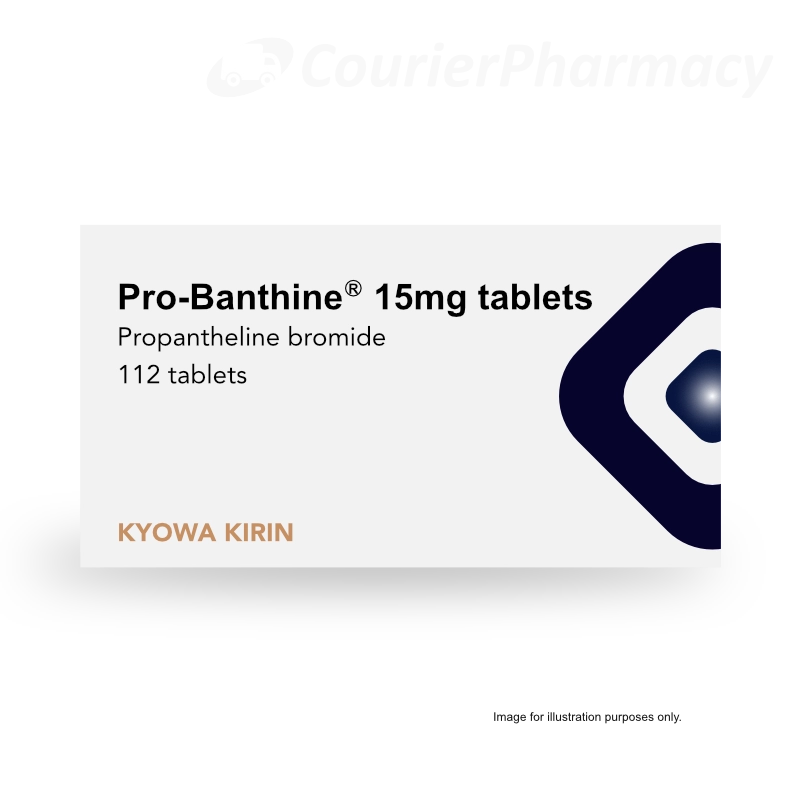
A prescription antimuscarinic medicine containing propantheline bromide, used for gastrointestinal smooth muscle spasm, adult enuresis, and hyperhidrosis.
Pro-Banthine 15mg tablets are prescribed at Courier Pharmacy after a brief online consultation reviewed by a UK clinician, then dispensed and delivered to your door.
Pro-Banthine 15mg tablets contain propantheline bromide, a synthetic antimuscarinic medicine that doctors have used for decades. Each sugar-coated tablet contains 15mg propantheline bromide. Pro-Banthine is a Prescription Only Medicine (POM) in the UK.
Pack sizes can vary by supplier. However, pharmacies often dispense Pro-Banthine in cartons of 84 or 100 tablets. So, it can cover several weeks of treatment depending on your dose.
Pro-Banthine sits in a slightly unusual spot because it has licensed uses across a few different body systems. Doctors use it for gut conditions where spasm causes pain (such as IBS and diverticular disease). They also use it for adult enuresis linked to bladder overactivity, and for hyperhidrosis (excessive sweating). In other words, the same “switch” drives symptoms in different places.
Pro-Banthine works by blocking muscarinic receptors. These receptors help control smooth muscle activity in the gut and bladder, and they also affect sweat gland activity. As a result, propantheline can reduce cramping, bladder urgency, or sweating in the right patient.
Propantheline is a quaternary ammonium compound, which means it carries a positive charge. Because of that, it doesn’t cross into the brain as easily as some similar medicines. So, it may cause fewer central nervous system (CNS) effects in some people. However, it can still cause typical anticholinergic side effects, such as dry mouth, blurred vision, constipation, urinary hesitancy, and sometimes drowsiness or confusion.
UK availability of Pro-Banthine has been intermittent in recent years. At times, the UK-licensed product has been out of stock and pharmacies have sourced unlicensed imports instead. Both contain the same active ingredient at the same strength. The difference is the regulatory status. For that reason, we’ll always tell you if we’re supplying an unlicensed import rather than the UK-licensed product.
At Courier Pharmacy, a UK-registered prescriber reviews every Pro-Banthine prescription before we dispense it. We look at the reason you need it, your other conditions, and any medicines you take. Because Pro-Banthine has antimuscarinic effects, it isn’t suitable for everyone. For example, it may not be the right choice if you have glaucoma, prostate enlargement, certain bowel conditions, or significant cardiovascular issues. So, we’d rather check that upfront.
Features and specifications
Active ingredient: Propantheline bromide 15mg
Form: Sugar-coated tablet (typically peach or pale orange)
Sweating that ruins your shirts before you’ve left the house. Bladder urgency that has you mapping the toilets of every venue. Stomach cramping that returns within hours of every meal. Pro-Banthine 15mg tablets are an antispasmodic and antimuscarinic medicine used for these three quite different conditions, all linked by one underlying mechanism. At Courier Pharmacy we want you to understand exactly how Pro-Banthine works, who it suits, and the safety considerations that come with any antimuscarinic, so the choice feels properly yours.
Five key takeaways
Pro-Banthine 15mg tablets contain propantheline bromide, an antimuscarinic medicine licensed for three indications in adults: gastrointestinal smooth muscle spasm, adult enuresis (involuntary urine leakage), and hyperhidrosis (excessive sweating).
It works by blocking acetylcholine at muscarinic receptors throughout the body, reducing smooth muscle contraction in the gut and bladder, reducing gastric acid, and reducing sweat production.
Standard adult dosing is one tablet (15mg) three times daily about an hour before meals, plus one tablet (15mg) at bedtime, with higher doses sometimes used for hyperhidrosis under specialist guidance.
Pro-Banthine has had intermittent UK availability over the past few years and is sometimes only available as an unlicensed import; we’ll always tell you upfront if supply is an issue.
Anticholinergic side effects (dry mouth, blurred vision, constipation, urinary hesitancy, drowsiness) and a specific risk of reduced sweating in hot weather are recognised effects of the medicine; they reflect the same pharmacology that delivers the benefit.
Treatment dosage Pro-Banthine 15mg tablets
The standard adult dose for gastrointestinal conditions and adult enuresis is one Pro-Banthine 15mg tablet taken three times daily, about an hour before each main meal, plus one tablet at bedtime. This gives a total daily dose of 60mg in four divided doses. The before-meals timing matters because it allows time for the medicine to take effect on smooth muscle and acid secretion before food triggers a response.
For hyperhidrosis (excessive sweating), the dose is often higher and titrated to effect. Treatment usually starts at the standard 15mg three or four times daily, then is adjusted gradually upward until sweating is adequately controlled or side effects become limiting. Doses up to 30mg three or four times daily (a total of 90 to 120mg per day) are sometimes used under specialist guidance, although tolerability typically limits how high the dose can go. There is no fixed correct dose for hyperhidrosis; it’s a balance between symptom control and side effects, found individually.
Swallow each tablet whole with a glass of water. Pro-Banthine should be taken on an empty stomach, ideally at least an hour before food, because food significantly reduces its absorption.
In older adults, anticholinergic side effects (confusion, urinary retention, falls from dizziness, constipation) tend to be more pronounced. The lowest effective dose, regular review, and careful attention to whether the medicine is still helping rather than just causing side effects are particularly important in this age group. No specific dose adjustment is mandated for kidney or liver impairment, but caution applies in both, particularly in severe impairment.
Don’t double up if you miss a dose. If you remember within an hour or two and your next dose is several hours away, take it; if it’s close to the next scheduled dose, skip the missed one.
Overview of Pro-Banthine 15mg tablets
Five things worth knowing:
Propantheline bromide acts on muscarinic receptors throughout the body, which is why it has uses across the gut, bladder, and sweat glands.
As a quaternary ammonium compound, it crosses the blood-brain barrier less readily than tertiary amine antimuscarinics, in theory giving fewer central side effects, though this is a modest difference in practice.
The duration of effect per dose is roughly 4 to 6 hours, which is why three or four times daily dosing is needed.
Food significantly reduces absorption, so the medicine must be taken on an empty stomach to work properly.
Heat stroke is a specific and serious risk because Pro-Banthine reduces sweating, the body’s main cooling mechanism.
Pro-Banthine sits in a small group of antimuscarinic medicines used across multiple body systems. Other systemic antimuscarinics in UK practice include dicycloverine (more focused on gut spasm), oxybutynin and tolterodine (focused on overactive bladder), and glycopyrronium bromide (used for sweating and salivary issues). Each has slightly different selectivity and side effect profiles, and the choice between them depends on the primary indication and individual tolerance.
For people living with chronic conditions, fibromyalgia, ME/chronic fatigue, MCAS, or autoimmune issues, antimuscarinic medicines need particular thought. Many people with these conditions are already prescribed other medicines that have anticholinergic activity (tricyclic antidepressants like amitriptyline, certain antihistamines, some bladder medicines), and stacking these on top of Pro-Banthine produces what’s called “anticholinergic burden”. The cumulative effect can cause significant problems: persistent dry mouth, severe constipation, urinary issues, blurred vision, and in older adults, confusion and falls. Where possible, we try to identify other anticholinergic medicines you’re taking before adding Pro-Banthine, and consider whether the combined load is sensible.
The medicine is most useful when its primary indication is clearly established. For IBS where cramping is dominant, dicycloverine, mebeverine, or hyoscine butylbromide are often tried first because they’re more readily available and have similar efficacy. Pro-Banthine sits as a useful alternative when these haven’t worked or aren’t tolerated. For adult urinary incontinence, modern bladder antispasmodics (oxybutynin, tolterodine, solifenacin) are usually first-line; Pro-Banthine is less commonly used here. For hyperhidrosis, Pro-Banthine has a strong tradition of use, particularly for generalised sweating where topical aluminium chloride hasn’t worked and where botulinum toxin or surgical options aren’t appropriate; it remains one of the most commonly used systemic medicines for this indication.
Across all three indications, Pro-Banthine works at the same place: muscarinic receptors. The benefit and the side effects come from the same mechanism, which is why finding a dose that controls symptoms without too much in the way of dry mouth, blurred vision, or constipation is often the practical challenge.
Why choose Courier Pharmacy for Pro-Banthine 15mg tablets
Pro-Banthine is one of those prescriptions where the right answer depends heavily on the specifics. Which of the three indications is it for? What else have you tried? What other anticholinergic medicines are you on? Do you have glaucoma, prostate issues, reflux, heart disease? Are you about to travel somewhere hot? Most online pharmacies don’t have the time or inclination to think this through. We do.
Every Pro-Banthine prescription at Courier Pharmacy is reviewed by a UK-registered prescriber who reads your answers properly, asks follow-up questions where needed, and explains the decision either way. If you’ve come to us for IBS spasm and a different antispasmodic might suit you better (mebeverine or dicycloverine, both with simpler use profiles), we’ll say so. If you’ve come to us for hyperhidrosis and aluminium chloride or iontophoresis hasn’t been tried, we’ll flag that as the usual first-line approach. If supply of UK-licensed Pro-Banthine is uncertain, we’ll be straight with you about whether we can source it and whether an unlicensed import is suitable.
Our brand guide, Dr Ada Jex-Cori, sums it up: you’re not broken. The system that’s failed you might be. We want to do the part we can do, properly, and connect you with the rest. That includes our free fortnightly drop-in clinics and talks at Insomnia in Derby, where you can ask questions face-to-face without spending a penny.
Buy Pro-Banthine 15mg tablets (Prescription Only) from Courier Pharmacy
Pro-Banthine 15mg tablets are a Prescription Only Medicine (POM) in the UK, which means they cannot be sold over the counter. Buying through Courier Pharmacy is straightforward and built around your time, not ours.
Here’s how it works:
Complete a quick online consultation
A UK prescriber reviews your answers
If approved, a prescription is issued
We dispense and deliver discreetly to your door
If it isn’t suitable for you, we’ll explain why and suggest the next best option. If UK supply of licensed Pro-Banthine is restricted, we’ll tell you upfront and discuss options including unlicensed imports.
Active ingredient in Pro-Banthine 15mg tablets
The active ingredient is propantheline bromide, a synthetic quaternary ammonium antimuscarinic. It was first developed in the 1950s and has been in continuous clinical use for over 70 years. The molecule blocks acetylcholine binding at muscarinic receptors throughout the body, reducing parasympathetic nervous system activity. This translates to reduced smooth muscle contraction in the gut and bladder, reduced gastric acid secretion, reduced salivary and sweat gland output, and modest cardiovascular effects.
Each Pro-Banthine 15mg tablet contains 15mg of propantheline bromide along with inactive ingredients including lactose monohydrate, corn (maize) starch, talc, magnesium stearate, and light liquid paraffin. The sugar coating contains sucrose, calcium carbonate, saccharin sodium, titanium dioxide, light magnesium carbonate, castor oil, talc, ferric oxide red and yellow (for the colour), and carnauba wax.
The lactose and sucrose content is worth flagging. People with hereditary problems of galactose intolerance, total lactase deficiency, glucose-galactose malabsorption, fructose intolerance, or sucrase-isomaltase insufficiency should not take Pro-Banthine. People with diabetes should also be aware of the sucrose content, though for someone taking 4 tablets a day this represents a very small amount of sugar overall.
Unlicensed imports of propantheline 15mg tablets (used when the UK-licensed Pro-Banthine product is unavailable) may have slightly different excipient profiles. If you have specific excipient sensitivities, mention them so we can check the specific brand being supplied.
What is Pro-Banthine 15mg tablets for?
Pro-Banthine is licensed in the UK for three distinct indications in adults. The first is gastrointestinal disorders characterised by smooth muscle spasm. This includes irritable bowel syndrome (where cramping and abdominal pain are dominant symptoms), diverticular disease (where spasm of the colon around diverticular pockets causes pain), and other functional bowel conditions where smooth muscle hyperactivity is the issue. Pro-Banthine acts on the smooth muscle of the gut wall to reduce contraction, easing cramping pain.
The second indication is adult enuresis: involuntary leakage of urine in adults. This is most commonly used for symptoms suggestive of overactive bladder (urgency, frequency, urge incontinence), though it isn’t first-line for these conditions in modern UK practice. Pro-Banthine relaxes the detrusor muscle of the bladder, reducing involuntary contractions and increasing functional bladder capacity. Modern bladder antispasmodics like oxybutynin, tolterodine, and solifenacin are usually preferred because they have more selective effects on bladder muscarinic receptors with potentially fewer systemic side effects, but Pro-Banthine remains a valid option, particularly when other agents haven’t been tolerated.
The third indication is hyperhidrosis: excessive sweating. This is one of Pro-Banthine’s most distinctive uses in modern UK practice. Hyperhidrosis can affect the palms, soles, axillae, face, or be generalised across the body, and it can have a significant impact on daily life. Pro-Banthine works by blocking muscarinic receptors on sweat glands, reducing their response to acetylcholine signalling. For generalised hyperhidrosis where topical treatments (aluminium chloride antiperspirant) haven’t worked, and where targeted approaches like iontophoresis or botulinum toxin injections aren’t appropriate or available, systemic antimuscarinics including Pro-Banthine are an important option. Glycopyrronium is sometimes used off-label for the same indication.
Pro-Banthine is not licensed for use in children, and modern UK practice generally avoids it in this age group.
How does Pro-Banthine 15mg tablets work?
The autonomic nervous system has two main branches: sympathetic (the “fight or flight” system) and parasympathetic (the “rest and digest” system). The parasympathetic system uses acetylcholine as its main signalling chemical, with acetylcholine binding to muscarinic receptors on target cells to produce effects throughout the body.
Activation of muscarinic receptors does many things at once. In the gut, it causes smooth muscle contraction (peristalsis and secretion). In the bladder, it causes detrusor muscle contraction (urination). On sweat glands, it stimulates sweating. In the eye, it constricts the pupil and helps focus on near objects. In salivary glands, it produces saliva. In the heart, it slows the heart rate. In the lungs, it produces bronchoconstriction and mucus.
Pro-Banthine works by blocking acetylcholine binding at these muscarinic receptors. Wherever acetylcholine was producing an effect, that effect is reduced. The clinical benefit depends on which effect is the problem. For IBS, reducing gut smooth muscle contraction reduces cramping. For overactive bladder, reducing detrusor contraction reduces urgency and leakage. For hyperhidrosis, reducing sweat gland response reduces sweating.
The same mechanism produces the side effects. Reduced acetylcholine effect on the salivary glands gives dry mouth. Reduced acetylcholine effect on the eye’s ciliary muscle gives blurred vision when focusing on near objects. Reduced acetylcholine effect on the bladder neck can cause urinary hesitancy or retention. Reduced acetylcholine effect on gut motility can cause constipation. There isn’t a way to get the benefit without some degree of the side effects, because the medicine isn’t selective enough to act only where you want it to.
The quaternary ammonium structure of propantheline gives it a positive charge, which means it doesn’t cross cell membranes as easily as uncharged molecules. This includes the blood-brain barrier, so in theory propantheline produces less CNS effect than tertiary amine antimuscarinics like atropine or dicycloverine. In practice, the difference is modest, and some patients still experience drowsiness, dizziness, or confusion, particularly older adults.
Onset of effect is usually within 30 to 60 minutes of taking the tablet on an empty stomach. Peak effect occurs at around 1 to 2 hours, with duration of action of 4 to 6 hours. This pharmacokinetic profile is why three or four times daily dosing is needed to maintain steady effect.
How to use Pro-Banthine 15mg tablets
Take one Pro-Banthine 15mg tablet three times daily, about an hour before each main meal, with an additional tablet at bedtime. Swallow each tablet whole with a glass of water. Don’t crush or chew the tablet. The sugar coating helps mask the bitter taste of the active ingredient.
Taking Pro-Banthine on an empty stomach is essential. Food significantly reduces absorption of propantheline, so taking it with or just after meals leads to inadequate blood levels and poor symptom control. The standard pattern is to take it about an hour before meals, but if your schedule makes this difficult, even 30 to 60 minutes before eating is better than taking it with food.
Consistency matters. For IBS, enuresis, or hyperhidrosis, the medicine works best when blood levels are kept reasonably steady throughout the day. Skipping doses or taking them at very irregular times tends to mean symptoms return until the next dose builds back up.
If you miss a dose and remember within an hour or two, take it. If your next scheduled dose is due soon, skip the missed one. Never double up.
Hot weather, intense exercise, and hot environments need particular attention. Pro-Banthine reduces sweating, which is the body’s main mechanism for cooling itself. People taking Pro-Banthine are at higher risk of heat exhaustion and heat stroke, particularly during hot weather, in saunas or hot tubs, during vigorous exercise, or in any environment where the body needs to cool itself by sweating. Stay well hydrated, take regular breaks from heat, and recognise the early symptoms of heat illness (light-headedness, headache, nausea, confusion, dry warm skin). If you feel overheated and unable to cool down, seek shade or air conditioning, drink water, and consider stopping Pro-Banthine until temperatures drop.
Driving and operating machinery can be affected if Pro-Banthine causes drowsiness, dizziness, or blurred vision. These side effects are usually mild, but be cautious until you know how the medicine affects you, particularly in the first few days. Alcohol can compound the drowsiness and is best limited.
Warnings and precautions for Pro-Banthine 15mg tablets
Pro-Banthine has a relatively long list of contraindications because of its broad antimuscarinic action. It must not be used in: known hypersensitivity to propantheline bromide or any excipient; obstructive disease of the gastrointestinal tract (pyloric stenosis, paralytic ileus, intestinal atony); severe ulcerative colitis or toxic megacolon; hiatus hernia associated with reflux oesophagitis; obstructive uropathy or urinary retention; significant prostatic enlargement; angle-closure glaucoma or shallow anterior chamber of the eye (where pupil dilation can precipitate an acute attack); myasthenia gravis (where reducing acetylcholine activity worsens muscle weakness); and unstable cardiovascular status during acute haemorrhage.
Use with care in: open-angle glaucoma (where intraocular pressure should be monitored); ileostomy or colostomy patients (where diarrhoea may indicate incomplete obstruction); hyperthyroidism; coronary heart disease; congestive heart failure; tachyarrhythmias; hypertension; autonomic neuropathy; older adults (more sensitive to side effects); patients with Down’s syndrome (who tend to be more sensitive to antimuscarinic effects); and anyone in hot weather or at risk of heat stroke.
In pregnancy, cohort data on antimuscarinics suggest a possible association with minor malformations. Pro-Banthine should not be used in pregnancy unless considered essential, and only after discussion with a clinician familiar with your case. During breastfeeding, the medicine is not recommended; it isn’t known whether propantheline passes into breast milk in humans, and suppression of lactation can occur with antimuscarinics. Alternatives are usually preferred during pregnancy and breastfeeding.
The anticholinergic burden is an important consideration. If you’re already taking other medicines with anticholinergic activity (tricyclic antidepressants like amitriptyline, older antihistamines like chlorphenamine or promethazine, oxybutynin for bladder, hyoscine, some Parkinson’s medicines, certain antipsychotics), adding Pro-Banthine compounds the effect. The cumulative anticholinergic burden can produce significant dry mouth, constipation, urinary retention, confusion (especially in older adults), and increased risk of falls. Pro-Banthine should not be combined with other antimuscarinic medicines except where benefits clearly justify the risks and under careful prescriber supervision.
Heat stroke deserves a specific mention. Pro-Banthine reduces sweating, your main cooling mechanism. In hot weather, hot work environments, hot bath or sauna use, and during exercise in heat, the risk of heat exhaustion and heat stroke is genuinely raised. If you have a planned holiday somewhere hot, or your work involves hot conditions, mention this to your prescriber before starting Pro-Banthine. Stay well hydrated and take cooling breaks if needed.
If gastrointestinal or bladder symptoms change in character while on Pro-Banthine (new severe pain, blood in stools or urine, fever, signs of obstruction or retention), don’t assume these are simple medicine effects. They need medical assessment.
Side effects of Pro-Banthine 15mg tablets
Most side effects of Pro-Banthine reflect its antimuscarinic mechanism and are predictable from how the medicine works. They tend to be dose-related, meaning higher doses produce more side effects, which is one reason why doses are usually titrated to the lowest effective level.
Common side effects, affecting more than 1 in 100 people, include dry mouth (very common), dry eyes, blurred vision (particularly with near focus), constipation, urinary hesitancy, reduced sweating, headache, dizziness, drowsiness, and tachycardia (mild increase in heart rate).
Less common side effects include difficulty swallowing, decreased lactation in nursing mothers, palpitations, dilated pupils, photophobia (sensitivity to light), increased intraocular pressure (a particular concern in glaucoma), nausea, vomiting, loss of taste, bloating, abdominal pain, urinary retention (more common in older men with prostatic enlargement), skin rash and itching, decreased erection, suppression of breast milk production, agitation, drowsiness, weakness, insomnia, mild restlessness in older adults, and impaired sense of taste.
Rare but serious side effects, fewer than 1 in 1,000 people, include severe allergic reactions (anaphylaxis with swelling of lips, mouth, throat, and difficulty breathing), severe gastrointestinal effects (paralytic ileus, particularly in vulnerable patients), acute urinary retention, acute angle-closure glaucoma in susceptible individuals, severe heart rhythm disturbances, and heat stroke (where reduced sweating impairs cooling in hot conditions). Anaphylaxis is a medical emergency; call 999.
Toxic doses of propantheline can produce non-depolarising neuromuscular blocking effects with weakness or paralysis of voluntary muscles. Overdose is a medical emergency requiring urgent treatment. Symptoms can include severe anticholinergic effects (confusion, hallucinations, very dry mouth, dilated pupils, flushed dry skin, fast heart rate, urinary retention, slowed gut), respiratory depression, hyperthermia, convulsions, and coma. Specific antidote treatment with physostigmine may be needed in severe cases.
If you experience any side effect that worries you, you can report it directly to the MHRA’s Yellow Card scheme. This helps improve safety data for everyone who uses the medicine. Our pharmacy team are happy to help you submit a Yellow Card report if you’d like assistance.
Drug interactions with Pro-Banthine 15mg tablets
Pro-Banthine interacts with many medicines, and most interactions are pharmacodynamic (combining anticholinergic effects) rather than pharmacokinetic. The interactions that matter most involve other medicines with antimuscarinic activity, certain CNS depressants, and medicines that depend on gut motility for absorption.
Combining Pro-Banthine with other antimuscarinic medicines significantly increases anticholinergic side effects. This includes other antispasmodics (dicycloverine, hyoscine), bladder antispasmodics (oxybutynin, tolterodine, solifenacin, fesoterodine), tricyclic antidepressants (amitriptyline, nortriptyline, dosulepin, imipramine), older sedating antihistamines (chlorphenamine, promethazine, hydroxyzine, diphenhydramine), some antipsychotics (chlorpromazine, clozapine, olanzapine), some Parkinson’s medicines (procyclidine, trihexyphenidyl, orphenadrine), and atropine or hyoscine in any form. Combining anticholinergics produces more dry mouth, constipation, urinary retention, blurred vision, and (in older adults) significantly higher risk of confusion and falls.
Combining Pro-Banthine with opioid pain medicines (codeine, morphine, oxycodone, tramadol) increases the risk of significant constipation and ileus. The combination needs careful consideration, particularly in older adults or anyone with pre-existing bowel issues.
Pro-Banthine slows gastric emptying, which can affect the absorption of other medicines taken at the same time. Medicines that require a specific gastric emptying rate for predictable absorption (such as some painkillers and certain antibiotics) may have altered effects. Levodopa absorption can be reduced because of slowed gastric emptying. Antacids and adsorbents (kaolin, attapulgite) can reduce Pro-Banthine absorption if taken together; separating doses by 1 to 2 hours helps.
Phenothiazines and tricyclic antidepressants can have their anticholinergic activity enhanced by Pro-Banthine, increasing the risk of side effects in this category. MAO inhibitors (rasagiline, selegiline, moclobemide, phenelzine) can intensify the effects of antimuscarinic medicines; the combination needs care.
Alcohol can potentiate drowsiness and dizziness. Combined use should be moderate, particularly at the start of treatment. Cannabis use compounds anticholinergic and sedating effects similarly.
Always tell your prescriber and pharmacist about everything you take, including over-the-counter medicines (many cold-and-flu remedies contain antihistamines or other compounds with anticholinergic effects), vitamins, supplements, and herbal products, before starting Pro-Banthine.
Frequently asked questions about Pro-Banthine 15mg tablets
What is Pro-Banthine used for?
Pro-Banthine is licensed for three indications in adults: gastrointestinal disorders involving smooth muscle spasm (such as IBS or diverticular disease), adult enuresis (involuntary urinary leakage), and hyperhidrosis (excessive sweating). The common thread is that all three are driven by overactivity of muscarinic-acetylcholine signalling, which Pro-Banthine blocks.
How quickly will Pro-Banthine work?
Onset is usually within 30 to 60 minutes of taking a tablet on an empty stomach, with peak effect at around 1 to 2 hours. Duration of action is roughly 4 to 6 hours, which is why three or four times daily dosing is needed.
Why must I take it on an empty stomach?
Food significantly reduces the absorption of propantheline. Taking it about an hour before meals allows enough absorption to produce reliable effect. Taking it with or just after food can mean blood levels are too low for symptom control.
Why is Pro-Banthine sometimes unavailable in the UK?
Pro-Banthine has had intermittent UK supply issues over the past few years. During periods of UK shortage, propantheline 15mg tablets may only be available as unlicensed imports through specialist importers. Both forms contain the same active ingredient; the difference is regulatory licensing. We’ll always be upfront about which form we can supply.
Can I take Pro-Banthine with other antispasmodics like dicycloverine or Buscopan?
No. Combining two antimuscarinic antispasmodics doesn’t usually improve symptom control and significantly increases anticholinergic side effects (dry mouth, blurred vision, urinary retention, constipation, confusion in older adults). The right approach is to pick one antispasmodic and titrate to the right dose.
Why is dry mouth so common with Pro-Banthine?
Dry mouth reflects the antimuscarinic action of Pro-Banthine on salivary glands. The same mechanism that reduces sweating and gut spasm also reduces saliva. Sipping water through the day, sugar-free gum, and good oral hygiene help. If dry mouth is severe enough to affect eating or sleeping, the dose may need adjusting.
Can Pro-Banthine cause heat stroke?
Yes. By reducing sweating, Pro-Banthine impairs the body’s ability to cool itself in hot conditions. The risk is meaningful in hot weather, during exercise, in saunas or hot tubs, or in hot work environments. Stay well hydrated, take regular breaks from heat, and recognise the early signs of heat illness. If you have a hot holiday planned or work in heat, mention this to your prescriber.
Can I drink alcohol on Pro-Banthine?
Moderate alcohol is usually fine. Alcohol can compound the drowsiness and dizziness some people experience with Pro-Banthine, so be careful, especially when first starting. Heavy or regular drinking is best avoided.
Will Pro-Banthine affect my driving?
It can, particularly in the first few days, because of possible drowsiness, dizziness, or blurred vision. Be cautious until you know how the medicine affects you. If you notice significant drowsiness or visual changes, don’t drive until they settle.
Can I take Pro-Banthine during pregnancy?
Pro-Banthine should not be used in pregnancy unless considered essential. Cohort data on antimuscarinics suggest a possible association with minor malformations. Always discuss with a clinician familiar with your situation if you’re pregnant and considering treatment.
Is Pro-Banthine safe while breastfeeding?
No, it’s not recommended. It isn’t known whether propantheline passes into breast milk in humans, and antimuscarinic medicines can suppress lactation. Alternatives are usually preferred during breastfeeding.
Can children take Pro-Banthine?
Pro-Banthine is not recommended for children. There are no established paediatric dosing schedules, and the antimuscarinic side effect profile is poorly tolerated in younger patients.
Can older adults take Pro-Banthine?
Yes, with care. Older adults are more vulnerable to anticholinergic side effects including confusion, urinary retention, constipation, blurred vision, and falls. The lowest effective dose, regular review of benefit versus side effects, and careful attention to other anticholinergic medicines they’re taking are particularly important.
How does Pro-Banthine compare to dicycloverine for IBS?
Both are antimuscarinic antispasmodics. Dicycloverine has a slightly different mechanism (it adds a direct smooth muscle relaxant effect on top of its antimuscarinic action) and may give slightly more thorough cramping relief. Pro-Banthine is more focused on the antimuscarinic effect, with similar tolerability overall. Choice often comes down to availability, prescriber preference, and individual response.
How does Pro-Banthine compare to oxybutynin for overactive bladder?
Oxybutynin is more selective for bladder muscarinic receptors and has become first-line for overactive bladder in modern UK practice. Pro-Banthine has broader antimuscarinic effects across the body, which means more systemic side effects relative to bladder-specific benefit. Pro-Banthine remains valid if oxybutynin or tolterodine haven’t been tolerated, but it isn’t usually the first choice.
How does Pro-Banthine compare to glycopyrronium for hyperhidrosis?
Glycopyrronium is another quaternary ammonium antimuscarinic, often used off-label for hyperhidrosis. It has a similar mechanism and side effect profile to Pro-Banthine. Choice often depends on availability, prescriber preference, and individual response. Both have a role for systemic management of generalised excessive sweating.
What if Pro-Banthine isn’t working for my symptoms?
Talk to your prescriber. It may be that the dose needs adjusting, the timing relative to meals needs tweaking, that you’re being affected by food reducing absorption, or that a different antimuscarinic or non-antimuscarinic approach suits you better. Don’t escalate doses or combine medicines without prescriber input.
Can Pro-Banthine cause constipation?
Yes, frequently. By reducing gut motility, Pro-Banthine commonly causes constipation. For IBS-D patients (where constipation is welcome), this can be part of the benefit. For others, it’s a side effect that can need management with extra fluids, fibre, or a gentle laxative.
Can I stop Pro-Banthine suddenly?
Yes, it doesn’t need to be tapered. You can stop when symptoms allow or when your prescriber advises. If symptoms return, speak to your prescriber rather than restarting on your own, particularly if you’ve been on it for a long time.
Is there a generic alternative to Pro-Banthine?
Pro-Banthine is the most common UK brand of propantheline bromide. Generic propantheline 15mg tablets are also available, particularly through specialist importers when UK-licensed product is in short supply. Both contain the same active ingredient at the same strength.
Disclaimer: This article is for information only and isn’t a substitute for personal medical advice. Always speak to a qualified prescriber before starting or changing treatment.