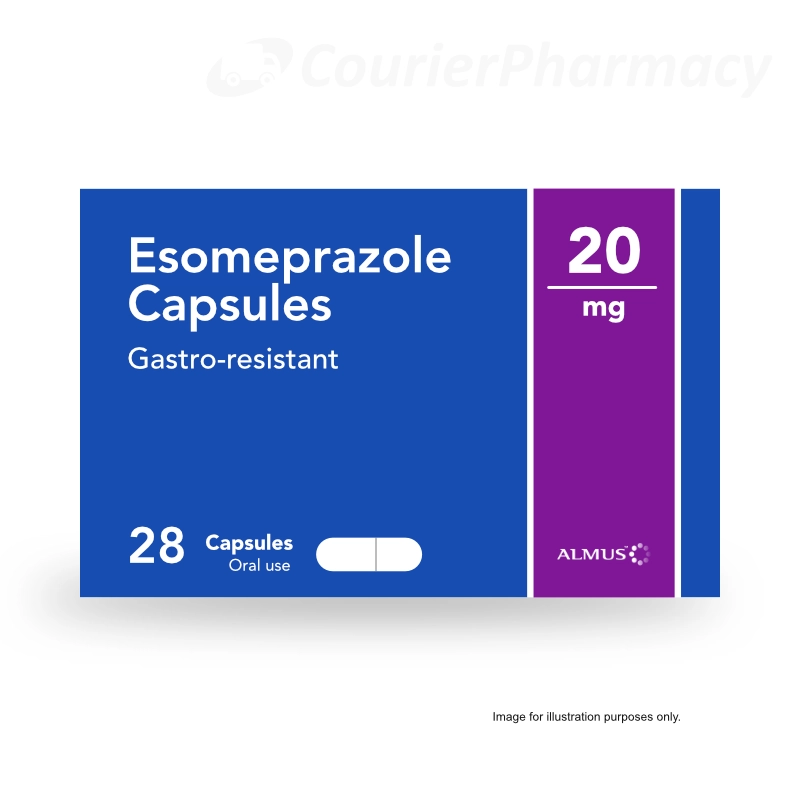
Esomeprazole 20mg Capsules is a UK Prescription Only Medicine and a member of the proton pump inhibitor (PPI) class, used for the treatment and prevention of conditions where reducing stomach acid production is clinically beneficial.
As the S-isomer of omeprazole, esomeprazole provides slightly more consistent acid suppression between patients.
Available from Courier Pharmacy after a quick online consultation reviewed by a UK-qualified prescriber, with optional free pharmacist support before or after you order.
Esomeprazole 20mg Capsules are a UK Prescription Only Medicine (POM). Doctors use them to treat and prevent conditions where lowering stomach acid helps. Common examples include acid reflux (GORD) and reflux oesophagitis.
Each capsule contains 20mg of esomeprazole. The capsule holds enteric-coated granules (often as esomeprazole magnesium trihydrate). These granules resist stomach acid. Instead, they pass through the stomach and dissolve in the small intestine. Then your body absorbs the medicine and carries it to the acid-producing cells in the stomach lining.
How esomeprazole works
Esomeprazole is a proton pump inhibitor (PPI). It reduces acid by blocking the proton pump. This pump acts as the final step in acid production. As a result, esomeprazole can lower stomach acid strongly and for longer.
This matters because healing often needs steady acid control. For example, inflamed oesophagus tissue and stomach ulcers usually improve faster when acid stays low.
Esomeprazole vs omeprazole: what’s the difference?
Esomeprazole came out in the late 1990s as a refined version of omeprazole. Omeprazole contains two “mirror-image” forms of the molecule. However, the body converts only one form (the S?isomer) reliably into the active drug.
Esomeprazole contains that S?isomer on its own. Therefore, it can give more consistent acid suppression between patients. At 20mg, many people see a similar effect to omeprazole. Even so, esomeprazole can help if omeprazole has not controlled symptoms well.
Generic esomeprazole from Courier Pharmacy
We supply generic esomeprazole 20mg capsules. UK-licensed manufacturers make these products to the same regulatory standards as the original brand (Nexium). They also meet bioequivalence requirements. So, you get the same active medicine at a lower cost.
Why a prescriber review still matters
We supply Esomeprazole 20mg Capsules from a UK-registered pharmacy after an online consultation. A UK-qualified prescriber reviews your answers.
The consultation checks:
Your symptoms and how long they’ve lasted
Your medical history and previous PPI use
Your current medicines (esomeprazole can interact with some treatments)
Your treatment goals
If 20mg does not fit your needs, the prescriber may suggest a different strength, another PPI, or a referral. That way, you get the right plan rather than a quick patch.
Key features and specifications
Active ingredient: Esomeprazole 20mg per capsule (often as esomeprazole magnesium trihydrate in enteric-coated granules)
Form: Hard gelatin capsules (swallow whole with water)
When acid reflux, heartburn, or GORD is taking over your meals and your evenings, esomeprazole is one of the most effective proton pump inhibitors available. As the S-isomer of omeprazole, it offers a refined version of the same medicine, with slightly more predictable absorption and a strong evidence base for healing oesophagitis and controlling reflux symptoms.
At Courier Pharmacy, we believe acid-related care should suit the person, not the marketing budget. Whether you’re managing recent-onset reflux, a flare of GORD, an active stomach ulcer, NSAID-related gastric protection, or you’ve moved to esomeprazole because omeprazole hasn’t quite controlled your symptoms, this page is here to help you decide whether Esomeprazole 20mg Capsules fit your situation, and how to use them well.
Five key takeaways
Esomeprazole 20mg Capsules is a UK Prescription Only Medicine (POM) for the treatment and prevention of acid-related conditions, including GORD, reflux oesophagitis, peptic ulcers, NSAID-associated ulcers, Helicobacter pylori eradication (with antibiotics), and Zollinger-Ellison syndrome.
Esomeprazole is the S-isomer of omeprazole, the pharmacologically active component of the older mixed-isomer omeprazole product, designed to provide more consistent acid suppression between patients.
Standard adult dose: one 20mg capsule once daily, taken in the morning, swallowed whole with water, ideally 30 to 60 minutes before food.
Most acid-related conditions respond within 4 to 8 weeks; long-term use is appropriate for some patients but should be reviewed regularly to use the lowest effective dose for the shortest necessary duration.
Long-term PPI use carries small but real risks (low magnesium, low vitamin B12, slight increase in fracture and Clostridioides difficile infection risk), which is why prescriber review is built into our service.
Treatment dosage: Esomeprazole 20mg Capsules
Always follow the dosing instructions from your prescriber. The information below is based on standard BNF and SmPC guidance for esomeprazole 20mg capsules.
For GORD and reflux oesophagitis in adults: 20mg once daily for 4 weeks, extended to a further 4 weeks if symptoms or oesophagitis have not fully resolved. Maintenance treatment, where appropriate, is usually 20mg once daily.
For severe reflux oesophagitis in adults: 40mg once daily for 4 to 8 weeks may be needed; this requires the higher-strength formulation.
For gastric and duodenal ulcers in adults: 20mg once daily for 4 to 8 weeks. Healing typically takes 4 weeks for duodenal ulcers and up to 8 weeks for gastric ulcers.
For H. pylori eradication (triple therapy with two antibiotics): 20mg twice daily for 7 to 14 days, in combination with amoxicillin and clarithromycin (or metronidazole if penicillin-allergic), as part of a NICE-recommended eradication regimen.
For NSAID-associated ulcer prevention (in patients who need to continue an NSAID and have risk factors): 20mg once daily for the duration of NSAID treatment.
For NSAID-associated ulcer treatment: 20mg once daily for 4 to 8 weeks.
For Zollinger-Ellison syndrome: dosing is individualised and is usually higher than the standard 20mg once daily, under specialist supervision.
Swallow the capsule whole with a glass of water. The enteric coating on the granules inside the capsule is essential, because esomeprazole is degraded by stomach acid; the coating protects the granules until they reach the small intestine where they can be absorbed. Do not crush or chew the capsule. If you have difficulty swallowing the capsule whole, it can be opened and the enteric-coated granules sprinkled into a small amount of slightly acidic fluid (such as fruit juice or yoghurt) and swallowed immediately without chewing. Do not mix with water or milk, which can disrupt the enteric coating.
Take esomeprazole in the morning, around 30 to 60 minutes before breakfast. PPIs work best when the proton pumps are activated by an oncoming meal, which is why pre-meal dosing produces better acid suppression than dosing at any other time. If a twice-daily regimen is prescribed (for H. pylori eradication, for example), take the second dose around 30 to 60 minutes before evening meal.
Do not stop esomeprazole abruptly after long-term use without prescriber advice. PPIs cause a rebound increase in acid secretion when stopped suddenly after months or years of use, which can produce a few weeks of worse-than-baseline symptoms. A gradual taper, sometimes with bridging H2 antagonist cover, is usually more comfortable.
Why choose Courier Pharmacy for Esomeprazole 20mg Capsules
At Courier Pharmacy, our whole approach is built around the idea that healthcare should fit the person. For esomeprazole, that means more than just a repeat supply. Our prescriber will check whether 20mg is the right dose for your situation, whether the duration of treatment is appropriate, whether there are any drug interactions that matter for you, and whether long-term use needs a planned review point. Our service is shaped by the philosophy of Dr Ada Jex-Cori, our brand pharmacist, who has built her practice around accessible, honest, personalised care. Her view is straightforward: you are not broken. The system is the problem. We are here to change that.
We know that many patients have been on PPIs for years without much attention to whether they’re still needed at the same dose. Our prescriber-led model is designed to catch that, with a structured review at the supply point rather than a passive repeat. For patients who haven’t responded fully to omeprazole or lansoprazole, esomeprazole can be a sensible next step within the PPI class, and our prescriber can talk through whether that switch makes clinical sense for your situation. For patients with complex acid-related histories, including those with overlapping MCAS, fibromyalgia, or chronic fatigue picture (where PPI use is often part of a wider medicines list), we can think about excipient sensitivities and consider whether a different formulation or even a compounded option might suit better. MCAS care that takes you seriously means looking at the whole picture, not just signing off the next 28 capsules.
Trust is the part that has to be earned, not claimed. We’re GPhC-regulated, we ground our content in NHS, NICE, BNF, and peer-reviewed sources, and we will tell you honestly if esomeprazole isn’t the right answer for your situation, including referring you for endoscopy or specialist review where red-flag symptoms warrant it. We’d rather give you the right answer than a quick sale.
Buy Esomeprazole 20mg Capsules (Prescription Only) from Courier Pharmacy
Esomeprazole 20mg Capsules is a Prescription Only Medicine (POM) in the UK. It can only be supplied after a UK-qualified prescriber has reviewed your online consultation. The consultation takes a few minutes and covers your symptoms, medical history, current medicines, and treatment goals.
Here is how our service works:
Complete a quick online consultation answering questions about your symptoms, medical history, and current medications.
A UK-qualified prescriber reviews your answers to confirm esomeprazole is suitable for you.
If approved, a prescription is issued and your order is prepared for dispatch.
We dispense and deliver discreetly to your door.
If Esomeprazole 20mg Capsules isn’t suitable for you, we will explain why and suggest the next best option. That might be a different dose (40mg for severe oesophagitis), a different PPI (such as omeprazole or lansoprazole as a more cost-effective first-line option, or pantoprazole for patients on clopidogrel), an H2 antagonist (such as famotidine) for milder symptoms or short-term use, or a referral to your GP or for endoscopy if your symptoms suggest something that needs a clinical look.
Our free fortnightly drop-in clinics at Insomnia, Derby run every other week from 10 am to 12 pm. Reflux, dyspepsia, PPI long-term use, switching between PPIs, and “should I still be on this?” are all conversations we have regularly at these sessions. No appointment needed, no charge, no pressure.
Active ingredient in Esomeprazole 20mg Capsules
The active ingredient is esomeprazole (chemically the S-isomer of omeprazole), typically formulated as esomeprazole magnesium trihydrate in licensed UK products, with some generics using esomeprazole strontium. Esomeprazole is a substituted benzimidazole that selectively inhibits the H+/K+ ATPase enzyme (the "proton pump") in gastric parietal cells. Like omeprazole, it is a prodrug that is activated only in the acidic environment of the parietal cell's secretory canaliculus, which is why the active drug accumulates specifically where it needs to act and produces minimal effects elsewhere.
Each capsule contains esomeprazole as enteric-coated granules inside a hard gelatin capsule shell. The enteric coating is essential because esomeprazole is acid-labile, meaning stomach acid would destroy it before absorption if it weren't protected. The coating dissolves only in the slightly alkaline environment of the small intestine, where esomeprazole is absorbed into the bloodstream and then concentrated in the gastric parietal cells via the bloodstream supply to the stomach wall. The result is a medicine that is protected on its way down, absorbed efficiently, and then targeted back to the exact tissue it needs to act on.
The pharmacological refinement of esomeprazole over omeprazole is in how the body handles each isomer. The S-isomer (esomeprazole) is metabolised mainly by CYP3A4 in the liver, while the R-isomer of omeprazole is metabolised mainly by CYP2C19. CYP2C19 shows substantial genetic variation between individuals (some people are poor metabolisers, others are extensive metabolisers, others are ultra-rapid), which means standard-dose omeprazole produces quite variable levels in different patients. Esomeprazole, by bypassing the CYP2C19-dependent isomer, produces more consistent blood levels and more consistent acid suppression across the population. The clinical relevance of this is modest for most patients but meaningful for some, particularly those who have had an incomplete response to omeprazole.
What are Esomeprazole 20mg Capsules used for?
Esomeprazole 20mg Capsules is licensed in the UK for a range of acid-related conditions in adults.
For gastro-oesophageal reflux disease (GORD) and reflux oesophagitis, esomeprazole is widely used as either a first-line PPI or as a step-up from omeprazole or lansoprazole where the response has been incomplete. It reduces the acidity of refluxed gastric contents, which relieves heartburn and allows inflamed oesophageal tissue to heal. Typical course is 4 weeks for mild oesophagitis, extended to 8 weeks for more significant disease, followed by review.
For gastric and duodenal ulcers, esomeprazole heals the ulcer crater by removing the acid contribution to mucosal injury. Duodenal ulcers typically heal in 4 weeks and gastric ulcers in 8 weeks of treatment. Where H. pylori is identified as a cause, eradication therapy is added to reduce recurrence.
For Helicobacter pylori eradication, esomeprazole 20mg twice daily is used in combination with two antibiotics (usually amoxicillin and clarithromycin, or metronidazole for penicillin-allergic patients) for 7 to 14 days, in line with NICE-recommended triple therapy regimens.
For NSAID-associated ulcer prevention, esomeprazole 20mg once daily is appropriate for patients who need to continue an NSAID (ibuprofen, naproxen, diclofenac) long-term and who have risk factors for NSAID-related gastric injury (age over 65, previous ulcer history, concurrent steroid or anticoagulant use). It also has a role in treating active NSAID-induced ulcers.
For Zollinger-Ellison syndrome (a rare condition causing massive gastric acid hypersecretion), esomeprazole is used at individualised, often higher, doses under specialist supervision.
For non-licensed but commonly accepted off-label uses, prescribers may use esomeprazole for severe dyspepsia not responding to lifestyle changes and OTC treatment, for prevention of stress ulcers in critically ill patients (in hospital settings), and for gastric protection alongside other medicines (long-term steroids, antiplatelet agents in some cases). These uses are common, evidence-supported, and reasonable.
It is not appropriate for self-treatment of red-flag symptoms. Persistent vomiting, vomiting blood, dark or tarry stools, unexplained weight loss, difficulty swallowing, or new onset of symptoms in patients over 55 require GP assessment to rule out gastric cancer and other serious causes before assuming reflux is the diagnosis.
How does Esomeprazole work?
Esomeprazole works by directly inhibiting the H+/K+ ATPase enzyme (the proton pump) in gastric parietal cells. The proton pump is the final common step in gastric acid secretion, the point where the parietal cell actively transports hydrogen ions (the acid component) from inside the cell into the gastric lumen in exchange for potassium ions. By blocking this pump, esomeprazole reduces gastric acid secretion regardless of what's stimulating it (histamine, acetylcholine, gastrin, or food itself).
This is what distinguishes PPIs from older H2-receptor antagonists like famotidine. H2 antagonists block one of the stimulating signals to the parietal cell (histamine binding to H2 receptors), but the parietal cell still responds to other signals. PPIs block the final pump itself, which produces more complete and more sustained acid suppression. Around 24 hours after a single dose of esomeprazole 20mg, gastric acid output is typically reduced by 70 to 80 percent, with the 40mg dose producing slightly greater suppression.
After you swallow an esomeprazole capsule, the enteric-coated granules pass through the stomach (where the coating protects them from acid degradation), reach the small intestine, dissolve, and release esomeprazole, which is rapidly absorbed. Absorbed esomeprazole travels via the bloodstream to the gastric parietal cells, where it accumulates in the acidic secretory canaliculus. There, the acidic environment activates the prodrug into its active form, which then irreversibly binds to the H+/K+ ATPase pump.
The irreversible binding has interesting clinical consequences. Once a pump is inhibited, it stays inhibited until the parietal cell synthesises a new one, which takes around 24 to 36 hours. This means the duration of acid suppression from esomeprazole is much longer than the duration of esomeprazole itself in the bloodstream (the plasma half-life is around 1 to 1.5 hours). It also means that the effect of esomeprazole builds over the first few days of treatment as more and more pumps are inhibited, reaching steady state at around day 3 to 5. Patients should be told to expect gradually improving symptoms over the first week rather than instant relief.
The pharmacokinetic advantage of esomeprazole over omeprazole shows up in two ways. First, oral bioavailability is higher (around 64 to 90 percent for esomeprazole versus around 40 percent for omeprazole after repeat dosing), so more of each dose reaches the systemic circulation. Second, the dose-response is more predictable between patients, because esomeprazole is less affected by the CYP2C19 metaboliser-status genetic variation that affects omeprazole. The net result is slightly stronger and more consistent acid suppression at the same nominal dose, although the practical clinical difference at the 20mg strength is modest for most patients.
How to use Esomeprazole 20mg Capsules
Take one 20mg capsule once daily, in the morning, around 30 to 60 minutes before breakfast. The pre-meal timing matters because the proton pumps are activated by the prospect of food, and esomeprazole works best when it's in the bloodstream and ready to bind to activated pumps as they appear.
Swallow the capsule whole with a glass of water. Do not crush or chew the capsule. If you have difficulty swallowing capsules, you can open the capsule and tip the small enteric-coated granules onto a spoonful of yoghurt, apple sauce, or fruit juice, and swallow immediately without chewing. Do not mix with water, milk, or anything alkaline, which can dissolve the enteric coating and inactivate the esomeprazole.
Take esomeprazole consistently at the same time each day. Skipping doses produces incomplete acid suppression, which can prolong healing of ulcers or oesophagitis. If you miss a dose, take it as soon as you remember unless it's nearly time for the next dose; don't double-dose to catch up.
Most acid-related conditions respond within 4 to 8 weeks. If your symptoms haven't improved by the end of the prescribed course, contact your prescriber for a review rather than continuing indefinitely. Persistent symptoms despite a full PPI course may suggest a different diagnosis, the need for a different dose or PPI, or that endoscopy is warranted.
Don't stop esomeprazole abruptly after long-term use. PPIs cause rebound acid hypersecretion when stopped suddenly after several months of use, which can produce a few weeks of unpleasant symptoms even in patients who no longer need treatment. A gradual taper (for example, reducing to once-every-other-day for two weeks before stopping, sometimes with H2 antagonist cover) is usually more comfortable.
Warnings and precautions for Esomeprazole 20mg Capsules
Esomeprazole is well-tolerated by most patients, but a few cautions apply.
Do not use esomeprazole if you have a known hypersensitivity to esomeprazole, to other substituted benzimidazoles (omeprazole, lansoprazole, pantoprazole, rabeprazole), or to any of the capsule excipients. Do not use it if you are taking nelfinavir (an HIV protease inhibitor), where the combination significantly reduces nelfinavir efficacy. Patients on atazanavir also need specialist HIV advice before combining with esomeprazole.
Use with caution in significant liver impairment, as esomeprazole is metabolised in the liver and a dose reduction may be needed (the SmPC suggests maximum 20mg daily in severe liver impairment). Renal impairment generally does not require dose adjustment.
In older patients, particularly those with multiple medical conditions and multiple medicines, the long-term risks of PPI use deserve more careful weighing against the benefits. The main long-term concerns are reduced magnesium absorption (which can cause symptomatic hypomagnesaemia, particularly after a year or more of use), reduced vitamin B12 absorption (more relevant after several years of use), a small increase in the risk of Clostridioides difficile infection (particularly in hospital settings), and a small increase in the risk of hip and vertebral fracture (more relevant in older patients with other fracture risk factors). These risks are small and should not stop appropriate PPI use; they are reasons for ongoing review rather than reasons for avoidance.
Pre-existing red-flag symptoms (vomiting blood, dark stools, unexplained weight loss, persistent vomiting, difficulty swallowing, new onset of dyspepsia after age 55) need a proper assessment before starting esomeprazole, because the medicine can mask symptoms of more serious underlying disease, including gastric cancer.
In pregnancy and breastfeeding, esomeprazole is generally considered low-risk based on observational data, although the safety database is smaller than for omeprazole. Omeprazole has the largest pregnancy safety dataset of any PPI and is often preferred where a PPI is needed in pregnancy. If you become pregnant while taking esomeprazole, discuss with your prescriber whether switching to omeprazole would be sensible. Use the lowest effective dose for the shortest necessary duration during pregnancy.
In children, esomeprazole has a more limited licence than omeprazole and is used in older children under specialist guidance. Supply through this online consultation route is restricted to adults. Children's care should go through a paediatric route.
A specific warning relates to severe cutaneous adverse reactions. Subacute cutaneous lupus erythematosus has been reported with PPI use, including esomeprazole. If a new rash develops, particularly on sun-exposed skin, stop the medicine and seek medical advice.
Side effects of Esomeprazole 20mg Capsules
Like all medicines, esomeprazole can cause side effects, though most patients tolerate it well.
Common side effects (affecting up to 1 in 10 patients) include headache, abdominal pain, nausea, diarrhoea, constipation, flatulence, and benign fundic gland polyps (small, harmless polyps that can develop in the stomach with long-term use and don't require treatment).
Less common side effects include skin rash, dizziness, drowsiness, insomnia, sleep disturbance, transient elevation of liver enzymes, peripheral oedema, dry mouth, paraesthesia, and taste disturbance.
Rare side effects include more significant skin reactions (urticaria, photosensitivity), arthralgia, myalgia, blood dyscrasias including thrombocytopenia, and reversible mental confusion (mainly in elderly patients).
Very rare but serious side effects include severe skin reactions (Stevens-Johnson syndrome, toxic epidermal necrolysis), severe liver injury, severe blood disorders, interstitial nephritis, and subacute cutaneous lupus erythematosus. If you notice any severe rash, blistering, jaundice, dark urine, fever with rash, or sudden swelling, stop the medicine and seek urgent medical attention.
Long-term use side effects deserve specific mention because they are managed by review rather than by avoidance.
Low magnesium can develop after 3 months or more of PPI use and is more likely after a year or more. Symptoms include fatigue, muscle cramps, tremor, weakness, and occasionally seizures or cardiac arrhythmias. A magnesium blood test is sensible for any patient who has been on a PPI for more than a year and develops unexplained symptoms.
Low vitamin B12 can develop after several years of PPI use, particularly in older patients with limited B12 intake. Symptoms include fatigue, mood changes, neurological symptoms (numbness, tingling), and anaemia. A B12 level is reasonable to check after several years of continuous use.
Increased C. difficile infection risk is mainly a concern in hospital settings, where PPI use combined with broad-spectrum antibiotics can predispose to C. difficile colitis. The community risk is much smaller but not zero; new-onset diarrhoea in a patient on esomeprazole should not automatically be assumed to be drug-related, and prompt review is appropriate.
Increased fracture risk (hip, wrist, spine) is small but real with long-term high-dose PPI use, particularly in older patients with other osteoporosis risk factors. It's a reason to ensure that long-term PPI use is at the lowest effective dose, alongside attention to calcium, vitamin D, weight-bearing exercise, and other bone health measures.
Yellow Card reporting: report suspected adverse drug reactions to the MHRA via the Yellow Card scheme at yellowcard.mhra.gov.uk. Reporting helps build the safety picture for everyone.
Drug interactions with Esomeprazole 20mg Capsules
Esomeprazole has a meaningful interaction profile, mainly because of its effect on stomach acidity (which affects the absorption of pH-sensitive medicines) and because it has some effect on liver enzymes that metabolise other medicines.
Clopidogrel is a notable interaction. Clopidogrel is a prodrug that needs CYP2C19 to be activated to its antiplatelet form. PPIs including esomeprazole can inhibit CYP2C19 to varying degrees, which can theoretically reduce the antiplatelet effect of clopidogrel. The effect with esomeprazole is generally regarded as smaller than with omeprazole, but the MHRA and other regulators still advise caution; pantoprazole is often preferred as a PPI for patients on clopidogrel where gastric protection is needed.
Methotrexate (particularly at high oncology doses) can have its excretion reduced by PPIs, leading to higher and more toxic methotrexate levels. The interaction is less of an issue at the low weekly doses used for rheumatological conditions but should still be flagged.
Nelfinavir (an HIV protease inhibitor) is significantly reduced in efficacy by esomeprazole, and the combination should not be used. Atazanavir is also significantly affected; specialist HIV advice is needed before combining.
Diazepam, citalopram, phenytoin, and warfarin levels and effects can be modestly affected by esomeprazole through CYP2C19 inhibition. Patients on these medicines should have their dose, INR, or response monitored when starting or stopping esomeprazole.
Acid-dependent absorption: some medicines need an acidic stomach for proper absorption. PPIs reduce the absorption of ketoconazole, itraconazole, posaconazole (azole antifungals), rilpivirine (HIV), erlotinib (cancer), and some iron salts. Switching to a different antifungal or adjusting timing is usually the workaround.
Tacrolimus and other immunosuppressants can have their levels affected by esomeprazole. Patients on tacrolimus should have levels monitored when starting or stopping a PPI.
Cilostazol levels are increased by esomeprazole; the cilostazol dose may need to be reduced when the two are combined.
For patients on any of the medicines above, our prescriber will check the interaction profile during your consultation and either advise on appropriate management or suggest an alternative PPI that suits your situation better.
Frequently asked questions about Esomeprazole 20mg Capsules
What is Esomeprazole 20mg used for?
Esomeprazole 20mg Capsules is used for the treatment and prevention of acid-related conditions including gastro-oesophageal reflux disease (GORD), reflux oesophagitis, gastric and duodenal ulcers, NSAID-associated ulcers, H. pylori eradication (in combination with antibiotics), and Zollinger-Ellison syndrome. The standard adult dose is one capsule once daily.
What's the difference between esomeprazole and omeprazole?
Esomeprazole is the S-isomer of omeprazole, the pharmacologically active component of the older mixed-isomer omeprazole product. Esomeprazole produces slightly more consistent acid suppression between patients and slightly higher oral bioavailability, particularly at higher doses. The clinical difference is modest at the 20mg strength but can be meaningful for patients who haven't responded fully to omeprazole.
Is esomeprazole stronger than omeprazole?
At equivalent doses, esomeprazole produces slightly greater acid suppression than omeprazole, particularly at the 40mg dose. The difference at 20mg is small. NICE recommends omeprazole or lansoprazole as the cost-effective first-line PPI in most cases; esomeprazole is used where there's a clinical reason to switch (incomplete response to omeprazole, side effects, specific drug interaction concerns).
How quickly does esomeprazole start working?
Some symptom relief can be felt within the first few days, but the full effect builds over the first week as more proton pumps are inhibited. Most patients see a clear improvement by day 5 to 7. For ulcer or oesophagitis healing, the medicine continues to work over the full 4 to 8 week course, even if symptoms resolve sooner.
When should I take my esomeprazole?
In the morning, around 30 to 60 minutes before breakfast. PPIs work best when the proton pumps are activated by oncoming food, which is why pre-meal dosing produces better acid suppression than post-meal or random timing. Be consistent with the timing each day.
Can I open the capsule if I can't swallow it whole?
Yes. The capsule can be opened and the small enteric-coated granules inside tipped onto a spoonful of yoghurt, apple sauce, or fruit juice, then swallowed immediately without chewing. Do not crush or chew the granules themselves, as this destroys the enteric coating. Do not mix with water, milk, or anything alkaline.
How long can I take esomeprazole for?
The licensed treatment courses are 4 to 8 weeks for most acid-related conditions, with maintenance treatment where appropriate. Long-term use is common and often necessary, but should be reviewed regularly to ensure it's still needed and to use the lowest effective dose. Our prescriber will build this into your supply pattern.
Is long-term esomeprazole safe?
Long-term PPI use is generally safe but carries small risks that warrant active monitoring: low magnesium (after a year or more), low vitamin B12 (after several years), small increase in C. difficile risk, and small increase in fracture risk. These are reasons for regular review rather than reasons to avoid appropriate use.
Can I stop esomeprazole suddenly?
If you've been on esomeprazole for less than a few weeks, you can usually stop without significant rebound. For long-term users (months or years), stopping abruptly often causes rebound acid hypersecretion and unpleasant symptoms for a few weeks. A gradual taper, sometimes with H2 antagonist cover, is more comfortable.
Can I take esomeprazole with antacids like Gaviscon?
Yes. Antacids and PPIs work through different mechanisms and can be taken together. Antacids neutralise existing acid for quick symptom relief; PPIs reduce acid production for sustained effect. Many patients use Gaviscon or another antacid for breakthrough symptoms during the first few days of starting esomeprazole, before the PPI effect has fully built up.
Can I take esomeprazole with clopidogrel?
This combination is generally regarded as having less of a clopidogrel interaction than omeprazole does, but caution is still advised. If you need gastric protection while on clopidogrel, pantoprazole is often preferred. Discuss this with your prescriber during the consultation.
Is esomeprazole safe in pregnancy?
Esomeprazole is considered low-risk in pregnancy based on observational data, but the safety database is smaller than for omeprazole. Omeprazole has the largest pregnancy safety dataset of any PPI and is often preferred when a PPI is needed in pregnancy. Discuss with your prescriber if you are or might become pregnant.
Can esomeprazole cause weight gain?
There's no strong evidence that esomeprazole directly causes weight gain. Some patients report changes in appetite or eating patterns once reflux is controlled (because they're no longer avoiding foods that triggered symptoms), which can secondarily affect weight.
What if my symptoms come back after I stop esomeprazole?
Two possibilities. First, rebound acid hypersecretion is common in the first 2 to 4 weeks after stopping long-term PPI use, and usually settles. Second, your original condition may genuinely need ongoing treatment. If symptoms return persistently after a proper taper-off period, contact your prescriber for a review and possibly a return to PPI treatment or a different long-term plan.
Can esomeprazole interact with other medicines?
Yes. The main interactions involve clopidogrel (modest reduction in antiplatelet effect), high-dose methotrexate (reduced clearance), HIV medicines including nelfinavir and atazanavir, azole antifungals (reduced absorption), warfarin (altered effect), citalopram, diazepam, phenytoin, tacrolimus, and cilostazol. List all your medicines during the consultation so the prescriber can check.
Do I need a blood test before or during esomeprazole treatment?
Not routinely for short courses. For long-term use (more than a year), a magnesium level is sensible, and a B12 level becomes reasonable after several years. Patients on diuretics or other medicines that can lower magnesium may need earlier monitoring.
Should I see a doctor about my reflux symptoms?
See your GP if you have any red-flag symptoms (vomiting blood, dark stools, unexplained weight loss, persistent vomiting, difficulty swallowing, new symptoms over age 55), if symptoms persist despite a full course of PPI, or if you've been on a PPI for years without a clear review. Endoscopy is sometimes warranted.
How should I store esomeprazole?
Store at room temperature, below 25°C, in the original packaging to protect from moisture. Keep out of sight and reach of children. Do not use after the expiry date printed on the pack.
Can people with MCAS take esomeprazole?
Yes, in most cases. Some MCAS patients are sensitive to PPI excipients, in which case switching to a different brand or considering a compounded formulation can help. PPIs can also be a useful part of MCAS management itself because of their adjunctive effects on gastric mast cell-related symptoms, although this is off-label. Discuss your full medical picture during the consultation.
How do I order Esomeprazole 20mg Capsules from Courier Pharmacy?
Complete the online consultation at courierpharmacy.co.uk. A UK-qualified prescriber will review your answers, issue a prescription if appropriate, and our pharmacy team will dispense and deliver discreetly. Free pharmacist support is available before and after you order.
More than a prescription: our community
Healthcare shouldn't only happen when you're paying for it. Every fortnight we run free drop-in talks and clinics at Insomnia, Derby, from 12pm to 1pm. Bring a question, bring a friend, bring a stack of bewildering letters from another clinic; we'll sit with you. We cover acid reflux, GORD, PPI long-term use, hair loss, men's health, MCAS, fibromyalgia, low-dose naltrexone, and whatever else people bring through the door. No appointment. No cost. No pressure. Learn more about our community talks.
Disclaimer: This article is for general information only and isn’t a substitute for personal medical advice, diagnosis, or treatment. Always check with a GP, pharmacist, or specialist before starting a new supplement if you have a medical condition or take regular medicines.
How this content was created
Written by the Courier Pharmacy editorial team and reviewed by a GPhC-registered pharmacist. Grounded in the latest NHS, NICE, BNF and EMC guidance, peer-reviewed studies, and the real questions patients bring to our drop-in clinics in Derby.
References
[1] Electronic Medicines Compendium (emc) (n.d.) [Product name not specified] – Summary of Product Characteristics (SmPC). Available at: https://www.medicines.org.uk/emc/product/12019/smpc (Accessed: 14 May 2026).