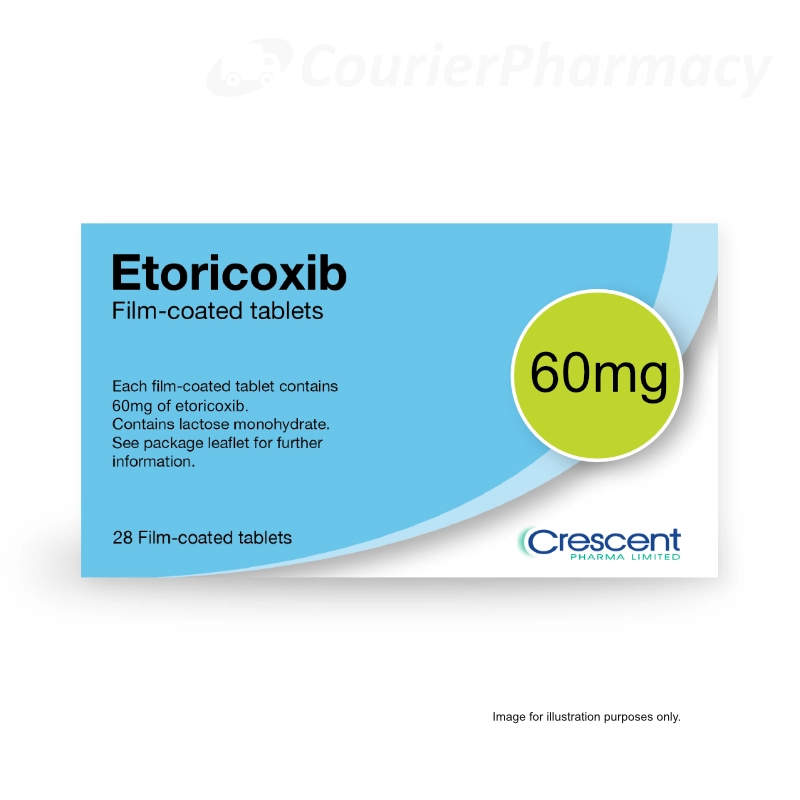
Etoricoxib 60mg tablets are a selective COX-2 inhibitor NSAID for the symptomatic treatment of osteoarthritis in adults. The 60mg once-daily dose achieves anti-inflammatory and analgesic efficacy comparable to non-selective NSAIDs with a substantially reduced upper gastrointestinal adverse event profile.
Available as a prescription-only medicine (POM), the 28-tablet pack provides four weeks of treatment.
Courier Pharmacy offers a secure online consultation with a UK-registered prescriber to facilitate access for eligible patients.
Etoricoxib 60mg tablets are a selective cyclo-oxygenase-2 (COX-2) inhibitor, a class of NSAID developed specifically to provide anti-inflammatory and analgesic efficacy while substantially reducing the gastrointestinal risk associated with traditional, non-selective NSAIDs such as ibuprofen, naproxen, and diclofenac.
Each film-coated tablet contains 60mg of etoricoxib, the dose licensed for the symptomatic treatment of osteoarthritis in adults. The 28-tablet pack provides exactly four weeks of once-daily treatment, aligning with a standard monthly prescription review cycle.
The clinical rationale for selective COX-2 inhibition was based on a sound pharmacological hypothesis: COX-1, constitutively expressed throughout the body including in the gastric mucosa, is responsible for producing the prostaglandins that maintain the stomach’s protective mucosal lining. COX-2, by contrast, is primarily induced at sites of inflammation rather than constitutively expressed at most locations.
A drug that selectively inhibits COX-2 should therefore reduce prostaglandin production at inflammatory sites while preserving the gastric mucosal protection provided by COX-1. Clinical trials of etoricoxib confirmed this hypothesis, demonstrating significantly lower rates of endoscopically confirmed gastric and duodenal ulcers compared with non-selective NSAIDs in comparative studies.
As a prescription-only medicine (POM), etoricoxib 60mg requires a valid UK prescription from a registered prescriber. This classification reflects the cardiovascular risk profile of selective COX-2 inhibitors, which require individual clinical assessment before prescribing. Courier Pharmacy provides a secure online consultation with a UK-registered prescriber, making the prescribing process accessible without the need for an in-person GP appointment, while ensuring that the appropriate clinical checks are completed before treatment begins.
Key features and specifications
Active ingredient: etoricoxib 60mg per film-coated tablet
Drug class: selective COX-2 inhibitor (coxib)
Pack size: 28 tablets
Legal category: prescription-only medicine (POM)
Suitable for: adults requiring treatment for osteoarthritis
Dosing frequency: once daily (plasma half-life approximately 22 hours)
Licensed indication at 60mg: symptomatic treatment of osteoarthritis
Additional information
Quantity
1 x 28, 2 x 28, 3 x 28
MOJO WISDOM
Take control of your health by understanding your condition and what this medication is doing for you.
READ:
More information about this treatment.
UK-based doctors and pharmacists
Discreet and Confidential
UK-based doctors and pharmacists
Free, Expert Advice
No video link provided.
No video link provided.
UK-based doctors and pharmacists
Free, expert advice
Discrete and confidential
Fast delivery
Giving you trusted clinical advice for over 40 conditions
A UK regulated pharmacy providing safe, effective treatments online since 2014
Targeted inflammation relief with a lower stomach risk profile — etoricoxib 60mg tablets were designed to address both problems at once
If you have been prescribed an NSAID for chronic joint or musculoskeletal pain and found that the gastrointestinal side effects are as much of a problem as the condition itself, etoricoxib 60mg tablets may represent a better-fitting solution.
Etoricoxib is a selective COX-2 inhibitor, meaning it targets the specific enzyme responsible for driving inflammation while largely sparing the COX-1 enzyme that protects the stomach lining. The result is anti-inflammatory and analgesic efficacy comparable to non-selective NSAIDs, with a clinically demonstrated reduction in upper gastrointestinal adverse events.
Available only on prescription, etoricoxib 60mg tablets are used for osteoarthritis and the chronic musculoskeletal conditions where targeted inflammation management matters most.
At Courier Pharmacy, we believe healthcare should fit the person, not force the person to navigate a system that was built for someone else. For people managing general chronic illness or complex musculoskeletal conditions, that personalised approach to prescribing is exactly what we are here to support.
Five things worth knowing straight away
Etoricoxib 60mg tablets are a selective COX-2 inhibitor, providing anti-inflammatory and analgesic action with substantially lower inhibition of the gastric-protective COX-1 enzyme than non-selective NSAIDs.
They are a prescription-only medicine (POM); a valid UK prescription from a registered prescriber is required to obtain them.
The 60mg dose is licensed specifically for osteoarthritis; higher doses (90mg and 120mg) are used for other inflammatory conditions and require separate prescribing decisions.
Despite improved gastrointestinal tolerability compared with non-selective NSAIDs, etoricoxib carries a cardiovascular risk profile that requires careful individual assessment; it is contraindicated in established cardiovascular disease and uncontrolled hypertension.
Etoricoxib has a once-daily dosing schedule due to its long plasma half-life of approximately 22 hours, making adherence substantially easier than three or four times daily NSAID regimens.
Treatment dosage: Etoricoxib 60mg tablets
Always take etoricoxib 60mg tablets exactly as directed by your prescriber. For adults with osteoarthritis: the recommended dose is 60mg once daily.
Etoricoxib should be taken at approximately the same time each day, with or without food. Its long plasma half-life of approximately 22 hours makes once-daily dosing effective for maintaining consistent plasma concentrations throughout the 24-hour period, including overnight when morning stiffness in osteoarthritis is typically at its worst.
Use the lowest effective dose for the shortest duration consistent with treatment goals. For chronic conditions such as osteoarthritis, ongoing treatment requires regular prescriber review to reassess the continued need, the risk-benefit balance in light of any changes in cardiovascular or gastrointestinal health, and whether dose reduction or alternative analgesia is appropriate.
Do not increase the dose above 60mg daily for osteoarthritis without prescriber guidance; higher doses (90mg and 120mg) are licensed for other conditions but are not the licensed dose for osteoarthritis and carry a greater risk of adverse effects.
Swallow the tablet whole with a full glass of water. Do not crush, split, or chew. If you miss a dose, take it as soon as you remember, unless the next dose is due within eight hours. In that case, skip the missed dose and continue with your regular schedule. Do not take two doses to compensate for a missed one.
Overview of etoricoxib 60mg tablets
The development of selective COX-2 inhibitors addressed a genuine and well-documented clinical problem. Non-selective NSAIDs are among the most widely prescribed medicines in the world and among the most effective for inflammatory pain conditions, but they cause serious gastrointestinal complications, including upper GI bleeding, perforation, and ulceration, at a rate that contributes significantly to hospitalisation and mortality in people who use them regularly.
The COX-1 enzyme inhibition responsible for this gastric risk is the same mechanism through which non-selective NSAIDs provide their gastrointestinal adverse effects, independent of their anti-inflammatory action. A drug that separates these effects by sparing COX-1 while inhibiting COX-2 was a logical pharmacological goal.
The cardiovascular risk story for COX-2 inhibitors is more nuanced and deserves honest discussion. The early selective COX-2 inhibitor rofecoxib was withdrawn from the market in 2004 after a clinical trial demonstrated a significantly increased risk of cardiovascular events compared with placebo. This raised concerns about the entire class.
Subsequent clinical data, including the MEDAL programme for etoricoxib, suggested that etoricoxib’s cardiovascular risk is broadly comparable to that of diclofenac rather than being uniquely elevated. The current clinical consensus, reflected in NICE guidance and the BNF, is that all NSAIDs, both selective and non-selective, carry a dose-dependent cardiovascular risk, and prescribing decisions should be made on an individual risk-benefit basis. For patients with established cardiovascular disease or uncontrolled hypertension, etoricoxib is contraindicated.
Once daily dosing
The once-daily dosing schedule is a practical advantage that should not be dismissed as a minor convenience. Adherence to NSAID therapy for chronic conditions is often poor, partly because the medicines are associated with side effects, and partly because complex multi-dose regimens are difficult to maintain. Studies consistently show that once-daily regimens improve adherence rates. For a person managing osteoarthritis alongside other chronic conditions requiring multiple medicines, reducing the number of daily dosing events is a meaningful quality-of-life improvement.
People managing chronic musculoskeletal conditions often ask whether etoricoxib is worth trying if they have had gastrointestinal problems with other NSAIDs in the past. The answer requires a proper prescriber assessment, but the clinical evidence does support meaningfully lower upper GI adverse event rates with etoricoxib 60mg compared with non-selective NSAIDs. For patients who have had gastric ulceration, significant dyspepsia, or GI bleeding with ibuprofen or naproxen, etoricoxib, particularly combined with a PPI for residual gastroprotection, is an evidence-based alternative worth discussing with a prescriber.
The 28-tablet pack structure at once-daily dosing provides exactly four weeks of treatment, which is a well-designed format for a POM requiring monthly prescriber review. At Courier Pharmacy, we structure our consultation and dispensing process around this clinical reality: regular review of the continued need, risk-benefit balance, and dose appropriateness is not a bureaucratic hurdle but a genuinely important part of safe NSAID prescribing.
Why choose Courier Pharmacy for etoricoxib 60mg tablets
At Courier Pharmacy, we built our service around the belief that healthcare should fit the person, not force the person to fit a system designed for average cases. For etoricoxib 60mg tablets, that means a prescribing consultation that genuinely engages with your cardiovascular history, your gastrointestinal risk factors, and your current medication list, not a tick-box exercise.
Our service is shaped by the philosophy of Dr Ada Jex-Cori, our brand pharmacist, who has spent her career making expert, evidence-led care accessible to people who have often been let down by one-size-fits-all medicine. Her message is straightforward: you are not broken. The system is. We are here to change that.
For people managing osteoarthritis alongside other chronic conditions, the choice of NSAID matters in ways that a standard GP appointment, constrained by ten-minute slots, does not always have time to explore properly. Our online consultation process is designed to surface the clinically relevant questions: what has your experience been with previous NSAIDs, what is your cardiovascular and blood pressure history, what other medicines are you taking, and is etoricoxib the best-fitting option for your specific combination of needs and risks? If it is, we will prescribe it. If it is not, we will explain why and identify what is.
Trust is built through transparency and consistency. Courier Pharmacy operates under GPhC regulation, grounds all clinical content in NHS, NICE, BNF, and peer-reviewed evidence, and is honest about the risks of the medicines we dispense as well as their benefits. The cardiovascular contraindications and the monitoring requirements for etoricoxib are covered fully in this content because patients deserve to know them, not because regulators require disclosure. That is the kind of pharmacy we are trying to be.
Buy etoricoxib 60mg tablets (prescription only) from Courier Pharmacy
Etoricoxib 60mg tablets are a prescription-only medicine (POM). You cannot purchase them without a valid UK prescription issued by a registered prescriber. Courier Pharmacy provides a secure online consultation with a UK-registered prescriber to make this process accessible without the need for an in-person GP appointment.
Here is how it works:
Complete a quick online consultation answering questions about your osteoarthritis, cardiovascular history, blood pressure, renal function, and current medications.
A UK-registered prescriber reviews your answers, usually within one working day.
If etoricoxib 60mg is clinically appropriate for you, a prescription is issued electronically.
We dispense and deliver discreetly to your door.
If etoricoxib 60mg tablets are not suitable for you, we will explain why and suggest the next best option. Getting the right treatment matters more to us than completing a transaction.
Our free fortnightly drop-in clinics at Insomnia, Derby run every other fortnight from 10 am to 12 pm. Managing chronic musculoskeletal conditions, understanding NSAID options, and navigating the cardiovascular and gastrointestinal risks of anti-inflammatory treatment are regular topics. No appointment, no charge, no pressure.
Summary
Etoricoxib is approximately 100-fold more selective for COX-2 over COX-1 in in vitro assays, making it one of the most selective COX-2 inhibitors available; this selectivity is the pharmacological basis for its improved gastrointestinal tolerability compared with non-selective NSAIDs.
The MEDAL programme, a large comparative cardiovascular outcomes study, found that etoricoxib and diclofenac had comparable cardiovascular thrombotic event rates, suggesting that the cardiovascular risk from etoricoxib is similar to that of a commonly prescribed non-selective NSAID rather than being uniquely elevated.
Once-daily dosing, enabled by the 22-hour half-life, represents a practical clinical advantage: poor adherence is one of the primary reasons chronic pain treatments fail, and once-daily regimens have consistently higher adherence rates than multiple daily dose schedules.
Etoricoxib’s selectivity for COX-2 means it has minimal effect on platelet aggregation (a COX-1-mediated process), which distinguishes it from non-selective NSAIDs and is relevant for patients on anticoagulant therapy where additional antiplatelet effects are undesirable.
At 60mg, etoricoxib is associated with a lower incidence of hypertension-related adverse events than at 90mg or 120mg, which is part of the clinical rationale for using the lowest effective dose; blood pressure monitoring during treatment is still recommended.
Active ingredient in etoricoxib 60mg tablets
The active ingredient is etoricoxib 60mg, a member of the coxib subclass of NSAIDs. Etoricoxib is a diarylheterocyclic compound that selectively inhibits the cyclo-oxygenase-2 (COX-2) enzyme. In radiometric and fluorimetric COX selectivity assays, etoricoxib shows approximately 100-fold greater potency for COX-2 than COX-1 inhibition, making it one of the most selective COX-2 inhibitors in clinical use. Its plasma half-life of approximately 22 hours is substantially longer than most non-selective NSAIDs, supporting once-daily dosing with consistent 24-hour plasma concentrations.
Etoricoxib undergoes extensive hepatic metabolism, primarily via CYP3A4 and other cytochrome P450 enzymes, to form inactive metabolites that are excreted predominantly in the urine. This hepatic metabolism pathway is relevant to drug interactions and to prescribing in hepatic impairment, where etoricoxib clearance is reduced and lower doses or avoidance may be appropriate. Like all NSAIDs, etoricoxib is highly protein bound (approximately 92 percent), which is relevant to interactions with other highly protein-bound medicines.
What is etoricoxib 60mg tablets for?
Etoricoxib 60mg tablets are licensed for the symptomatic treatment of osteoarthritis in adults. Osteoarthritis is the most common joint condition in the UK, characterised by progressive degradation of articular cartilage, secondary inflammation of the synovial membrane, and the resulting pain, stiffness, and functional limitation in the affected joints. The pain of osteoarthritis has both a mechanical component (from damaged joint structures) and an inflammatory component (from synovitis and prostaglandin-driven pain sensitisation). Etoricoxib addresses the inflammatory component directly.
It is worth noting that etoricoxib is also licensed at higher doses (90mg and 120mg) for rheumatoid arthritis, ankylosing spondylitis, acute gout, and post-dental surgery pain, but these indications require separate prescribing decisions and are outside the scope of the 60mg indication covered here. If your condition has changed or if you are being considered for a different indication, discuss with your prescriber rather than adjusting the dose independently.
Etoricoxib 60mg is not appropriate for all people with osteoarthritis. The selective prescribing context, particularly the cardiovascular and hepatic contraindications, means it is most suitable for people who have an identified need for an NSAID, who have either experienced gastrointestinal problems with non-selective NSAIDs or are at significant GI risk, and who have been assessed as having an acceptable cardiovascular risk profile for NSAID therapy. A thorough prescriber assessment is the starting point for any etoricoxib prescription.
How does etoricoxib 60mg tablets work?
Etoricoxib inhibits the COX-2 enzyme, blocking the conversion of arachidonic acid to prostaglandin H2, which is the precursor to the prostaglandins, prostacyclins, and thromboxanes that mediate inflammation and pain sensitisation. COX-2 is induced at sites of inflammation, where it drives the production of prostaglandins that sensitise peripheral nociceptors, promote vasodilation and increased vascular permeability causing swelling, and contribute to central sensitisation in the spinal cord that amplifies pain signals. By selectively inhibiting COX-2, etoricoxib reduces these prostaglandin-mediated inflammatory signals at the joint, decreasing pain, swelling, and stiffness.
The selectivity for COX-2 over COX-1 is the pharmacological property that distinguishes etoricoxib from traditional NSAIDs. COX-1 is constitutively expressed throughout the body, including in the gastric mucosa where it generates prostaglandins that maintain the protective mucus and bicarbonate layer and promote mucosal blood flow. When COX-1 is inhibited by a non-selective NSAID, this protective barrier is reduced, leaving the gastric mucosa vulnerable to injury from acid and pepsin. Etoricoxib's minimal inhibition of COX-1 means this gastric protective mechanism is largely preserved, which is why clinical trials consistently demonstrate lower rates of gastric and duodenal ulceration with etoricoxib compared with non-selective NSAIDs.
The cardiovascular mechanism of coxib risk relates to the differential effect on prostacyclin and thromboxane A2. Prostacyclin (PGI2) is a vasodilator and platelet inhibitor produced mainly in vascular endothelium via COX-2. Thromboxane A2 (TXA2) is a vasoconstrictor and platelet activator produced mainly in platelets via COX-1. A selective COX-2 inhibitor reduces prostacyclin production without reducing TXA2 synthesis, potentially shifting the balance towards a prothrombotic and vasoconstrictive state. This is the proposed mechanism for the cardiovascular risk associated with coxibs, and it is why etoricoxib is contraindicated in patients with established ischaemic heart disease, stroke, peripheral arterial disease, and uncontrolled hypertension.
The 22-hour plasma half-life of etoricoxib reflects its slow hepatic metabolism and high protein binding, producing a flat plasma concentration profile with once-daily dosing that maintains COX-2 inhibition throughout the 24-hour period. This sustained inhibition is clinically relevant for osteoarthritis because the inflammatory process driving joint pain and morning stiffness is continuous rather than episodic; a drug that maintains therapeutic concentrations overnight provides more consistent symptom control than one that requires multiple daily doses to maintain efficacy.
How to use etoricoxib 60mg tablets
Take one etoricoxib 60mg tablet at approximately the same time each day. The tablet can be taken with or without food. Taking it with a meal is not required for gastric protection (as etoricoxib's COX-2 selectivity already preserves gastric prostaglandins), but if you prefer to take it with food as a personal habit, that is perfectly acceptable. Take with a full glass of water and swallow the tablet whole. Build the dose into a consistent daily routine, such as with breakfast or before bed, to maximise adherence.
Do not take more than one tablet per day for osteoarthritis. Taking a higher dose does not improve efficacy at the COX-2 target for this indication and significantly increases the risk of cardiovascular and hypertensive adverse events. If you feel the 60mg dose is not providing adequate symptom control, discuss this with your prescriber rather than doubling up; the appropriate response may be a change of treatment rather than a dose increase. Blood pressure monitoring during treatment is recommended, particularly in the early weeks; some people experience a mild rise in blood pressure with any NSAID including etoricoxib.
Use etoricoxib for the shortest duration that achieves your treatment goals. For chronic osteoarthritis, this requires regular prescriber review: at each review, assess whether your symptoms remain adequately controlled, whether any new cardiovascular, renal, or hepatic concerns have emerged, and whether dose reduction or discontinuation is now appropriate. NSAID therapy for osteoarthritis should be part of a broader management plan that includes exercise, physiotherapy, weight management where relevant, and non-pharmacological pain strategies. Etoricoxib addresses the inflammatory component of your pain; physiotherapy and activity address the mechanical component and build long-term joint resilience.
Warnings and precautions for etoricoxib 60mg tablets
Etoricoxib 60mg tablets are contraindicated in several clinically important groups. Do not take if you have established ischaemic heart disease, peripheral arterial disease, cerebrovascular disease (including stroke or TIA), or uncontrolled hypertension. Do not take if you have active peptic ulceration or gastrointestinal bleeding. Do not take in severe hepatic impairment (Child-Pugh score greater than 9), severe renal impairment (creatinine clearance below 30ml/min not receiving dialysis), or established severe heart failure. Etoricoxib is also contraindicated in pregnancy (third trimester) and in patients with known hypersensitivity to etoricoxib or any other NSAID including those with aspirin-sensitive asthma.
Cardiovascular monitoring is essential during etoricoxib therapy. Blood pressure should be measured before starting treatment and monitored regularly thereafter, particularly in the first few weeks. NSAIDs including etoricoxib can cause sodium retention and oedema, raise blood pressure, and worsen pre-existing heart failure. If blood pressure rises significantly during treatment, discuss dose reduction or discontinuation with your prescriber. The risk of serious cardiovascular events increases with dose, duration, and in patients with pre-existing cardiovascular risk factors.
Renal function should be monitored during long-term etoricoxib use. All NSAIDs can reduce renal prostaglandin synthesis, impairing renal blood flow in circumstances where it is prostaglandin-dependent, such as dehydration, heart failure, and pre-existing renal disease. This can lead to fluid retention, oedema, and in susceptible patients, acute kidney injury. Particular caution is needed in older adults, those taking diuretics or ACE inhibitors, and those with pre-existing renal impairment.
Hepatic function should also be considered. Etoricoxib is extensively metabolised by the liver; dose reduction to 30mg once daily is recommended in moderate hepatic impairment (Child-Pugh score 5 to 9), and etoricoxib is contraindicated in severe hepatic impairment. Elevations in liver enzymes (transaminases) have been reported with etoricoxib use; if significant elevation occurs during treatment, discontinuation should be considered.
Pregnancy and breastfeeding: etoricoxib is contraindicated in the third trimester of pregnancy due to the risk of premature closure of the ductus arteriosus and inhibition of labour. It should not be used in the first and second trimesters without clear clinical justification and medical supervision. Breastfeeding is not recommended during treatment. If you become pregnant during etoricoxib therapy, contact your prescriber immediately.
Side effects of etoricoxib 60mg tablets
The most commonly reported side effects of etoricoxib 60mg are related to its systemic NSAID effects at a lower prevalence than with non-selective NSAIDs. Oedema (swelling of the ankles and lower legs from fluid retention) is among the most frequently reported, occurring in approximately 3 to 5 percent of patients in clinical trials. Dyspepsia, abdominal pain, nausea, and altered bowel habit (both constipation and diarrhoea) can occur; while the gastric mucosal risk is lower than with non-selective NSAIDs, the systemic prostaglandin effects on gastrointestinal motility are not completely eliminated. Hypertension or worsening of pre-existing blood pressure control is common enough to require routine monitoring.
Less common side effects include dizziness, headache, elevated liver enzymes (transaminases), urinary tract infections, upper respiratory tract infections, and skin reactions including rash and pruritus. Tinnitus, a classic sign of NSAID-class effect at higher doses, can occur rarely with etoricoxib. Hyperkalaemia (elevated potassium) may develop, particularly in patients with renal impairment or those taking potassium-sparing diuretics or ACE inhibitors.
Serious but rare side effects include severe cardiovascular events (myocardial infarction, stroke), serious gastrointestinal events (ulceration, perforation, bleeding, which can occur without prior warning symptoms even with a COX-2-selective NSAID), severe hepatotoxicity, severe hypersensitivity reactions including anaphylaxis, and serious skin reactions such as Stevens-Johnson syndrome. These are uncommon but reinforce the importance of the cardiovascular and gastrointestinal risk assessment before prescribing and the need for regular monitoring during long-term treatment.
It is important to understand that gastrointestinal events can still occur with etoricoxib, particularly in patients at higher baseline risk, though the absolute rate is substantially lower than with non-selective NSAIDs. If you develop black or tarry stools, blood in vomit, sudden severe abdominal pain, or chest pain during treatment, seek emergency medical attention immediately.
Report suspected adverse drug reactions to the MHRA via the Yellow Card scheme at yellowcard.mhra.gov.uk. Your report contributes to the ongoing safety monitoring of all medicines in real-world use.
Drug interactions with etoricoxib 60mg tablets
Etoricoxib has a clinically important interaction profile that should be reviewed with a prescriber or pharmacist before starting treatment. Inform your prescriber of all medicines you are taking, including OTC products, supplements, and herbal remedies.
Anticoagulants and antiplatelets: etoricoxib has minimal antiplatelet effect compared with non-selective NSAIDs (because platelet aggregation is COX-1 mediated), but it can still interact with warfarin by increasing INR values in some patients; regular INR monitoring is advised when starting, stopping, or changing etoricoxib in patients on warfarin. The combination of any NSAID, including etoricoxib, with antiplatelet agents such as aspirin or clopidogrel increases the risk of gastrointestinal bleeding. Low-dose aspirin taken for cardiovascular prophylaxis can be continued alongside etoricoxib, but this adds to GI risk; a PPI co-prescription should be considered.
Lithium: etoricoxib, like other NSAIDs, can increase lithium plasma levels by reducing renal tubular excretion. In patients taking lithium for mood stabilisation, starting etoricoxib may require a lithium dose adjustment and additional plasma level monitoring. Methotrexate: similar renal tubular competition can increase methotrexate levels; this combination requires careful monitoring in patients treated with higher doses of methotrexate.
Antihypertensives: etoricoxib can reduce the effectiveness of ACE inhibitors, ARBs, beta-blockers, and diuretics through its renal prostaglandin-inhibiting effects, and the combination increases the risk of renal impairment. Blood pressure monitoring is particularly important in patients on antihypertensive therapy. Diuretics: increased risk of diuretic failure and nephrotoxicity with concurrent NSAID use; monitor renal function and electrolytes.
CYP1A2 inducers: etoricoxib is a moderate inhibitor of CYP1A2. This means it can increase plasma levels of medicines metabolised by CYP1A2, including some antidepressants (fluvoxamine), theophylline, and certain opioids. If you are taking any CYP1A2 substrate, review this interaction with your prescriber. Rifampicin, a potent CYP enzyme inducer, reduces etoricoxib plasma levels by approximately 65 percent and may require dose adjustment.
Frequently asked questions about etoricoxib 60mg tablets
What are etoricoxib 60mg tablets used for?
Etoricoxib 60mg tablets are licensed for the symptomatic treatment of osteoarthritis in adults. Osteoarthritis involves both mechanical joint degradation and secondary synovial inflammation; etoricoxib addresses the inflammatory component by selectively inhibiting COX-2, reducing the prostaglandin production that drives pain sensitisation, joint swelling, and morning stiffness.
What is the difference between etoricoxib and ibuprofen?
Both are NSAIDs that inhibit COX enzymes to reduce inflammation, but they differ in selectivity. Ibuprofen is a non-selective inhibitor that inhibits both COX-1 and COX-2. Etoricoxib selectively inhibits COX-2, sparing the COX-1 enzyme that protects the gastric mucosa. Etoricoxib also has a much longer half-life (22 hours versus 2 to 4 hours), enabling once-daily versus three to four times daily dosing. Etoricoxib is prescription-only while ibuprofen is available OTC.
Is etoricoxib safer for the stomach than ibuprofen or naproxen?
Clinical trials consistently show etoricoxib causes fewer endoscopically confirmed gastric and duodenal ulcers than non-selective NSAIDs including ibuprofen and naproxen. This benefit is mediated by the preservation of COX-1-derived gastroprotective prostaglandins. However, serious gastrointestinal events can still occur with etoricoxib, particularly in patients at higher baseline risk; a PPI co-prescription may be appropriate in some cases.
Why does etoricoxib need a prescription?
Etoricoxib is prescription-only because its cardiovascular risk profile requires individual clinical assessment before prescribing. It is contraindicated in people with established cardiovascular disease, uncontrolled hypertension, and several other conditions that require a prescriber to evaluate. The prescriber consultation ensures these contraindications are checked and that the risk-benefit balance is appropriate for each individual patient.
Can I take etoricoxib 60mg if I have high blood pressure?
Etoricoxib is contraindicated in uncontrolled hypertension. If your blood pressure is well controlled on medication, etoricoxib may still be considered by a prescriber after careful assessment, but blood pressure monitoring during treatment is mandatory. Etoricoxib can raise blood pressure and reduce the effectiveness of antihypertensive medicines; this needs to be factored into the prescribing decision and monitored regularly during treatment.
Can I take etoricoxib 60mg if I have heart disease?
No. Etoricoxib is contraindicated in people with established ischaemic heart disease, heart failure, peripheral arterial disease, and cerebrovascular disease (including previous stroke or TIA). The cardiovascular risk from selective COX-2 inhibition, related to the imbalance between prostacyclin and thromboxane A2, makes etoricoxib unsuitable in these patients. A prescriber will assess your cardiovascular history as part of the consultation.
How long does etoricoxib 60mg take to work?
Etoricoxib reaches peak plasma concentrations within approximately one hour of an oral dose. For acute symptoms, some improvement in pain and stiffness may be noticeable within the first few hours of the initial dose. For the management of chronic osteoarthritis, the full anti-inflammatory benefit builds over the first few days of consistent once-daily dosing as steady-state plasma concentrations are established.
Does etoricoxib 60mg affect platelets?
Unlike non-selective NSAIDs, etoricoxib has minimal effect on platelet aggregation because platelet aggregation is primarily mediated by thromboxane A2, which is produced via COX-1. Etoricoxib's selectivity for COX-2 means it does not significantly inhibit COX-1 in platelets. This makes it preferable to non-selective NSAIDs in patients where additional antiplatelet effects are undesirable, though it also means it cannot substitute for low-dose aspirin in cardiovascular prophylaxis.
Can I take etoricoxib 60mg with aspirin?
Low-dose aspirin for cardiovascular prophylaxis can be continued alongside etoricoxib. However, the combination increases the gastrointestinal risk from NSAID use compared with etoricoxib alone, potentially reducing some of the GI tolerability advantage. When etoricoxib is prescribed to patients already on low-dose aspirin, co-prescription of a PPI is usually recommended. Analgesic-dose aspirin (300mg or above) should not be taken concurrently with etoricoxib.
Can I take etoricoxib 60mg with paracetamol?
Yes. Paracetamol and etoricoxib work through different mechanisms and can generally be taken together safely for additional analgesic coverage. Paracetamol addresses the central pain component while etoricoxib addresses the inflammatory peripheral component, making them pharmacologically complementary for osteoarthritis pain. Always confirm with your prescriber or pharmacist as part of your overall pain management plan.
Can etoricoxib 60mg cause kidney problems?
Yes, like all NSAIDs, etoricoxib can impair renal function by inhibiting prostaglandin-mediated renal blood flow. The risk is highest in older adults, those who are dehydrated, those with pre-existing renal impairment, and those taking diuretics or ACE inhibitors. Renal function monitoring is recommended during long-term treatment. Report any significant reduction in urine output, ankle swelling, or unexplained weight gain to your prescriber promptly.
Is etoricoxib the same as celecoxib?
Both etoricoxib and celecoxib are selective COX-2 inhibitors (coxibs), but they are different chemical entities with different pharmacokinetic profiles. Etoricoxib has a longer half-life (approximately 22 hours versus 11 hours for celecoxib), making it suitable for once-daily versus twice-daily dosing. Both have similar clinical efficacy and selectivity class effects; the choice between them is based on individual patient factors and prescriber preference.
Can etoricoxib 60mg be taken during pregnancy?
Etoricoxib is contraindicated in the third trimester of pregnancy due to the risk of premature closure of the ductus arteriosus and inhibition of labour. It should be avoided in the first and second trimesters unless clearly necessary under medical supervision. If you discover you are pregnant while taking etoricoxib, contact your prescriber immediately. Paracetamol remains the recommended OTC analgesic during pregnancy.
What is the maximum dose of etoricoxib for osteoarthritis?
The maximum licensed dose for osteoarthritis is 60mg once daily. Higher doses of 90mg and 120mg are licensed for other indications (rheumatoid arthritis, ankylosing spondylitis, acute gout) but are not appropriate for osteoarthritis and carry a higher rate of cardiovascular and hypertensive adverse events. Do not increase your dose above 60mg daily for osteoarthritis without explicit prescriber guidance.
Can I drink alcohol while taking etoricoxib 60mg?
Moderate alcohol consumption is generally not a specific contraindication with etoricoxib, but alcohol increases the risk of gastrointestinal bleeding with any NSAID use and can exacerbate blood pressure effects. If you drink regularly or in significant quantities, discuss this with your prescriber; it may be a factor in assessing the GI and cardiovascular risk-benefit balance. Avoid alcohol on days when you feel any GI discomfort from the medication.
Does etoricoxib 60mg interact with blood pressure medications?
Yes. Etoricoxib reduces the effectiveness of most antihypertensive drug classes, including ACE inhibitors, ARBs, beta-blockers, and diuretics, by inhibiting prostaglandin-mediated vasodilation and renal sodium excretion. Blood pressure should be monitored closely when starting etoricoxib in patients on antihypertensive therapy. In some patients, antihypertensive dose adjustment may be needed. Report any significant blood pressure rise to your prescriber.
How does etoricoxib 60mg differ from prescription-strength naproxen?
Prescription naproxen (500mg) is a non-selective COX-1 and COX-2 inhibitor, typically given twice daily. Etoricoxib 60mg is a selective COX-2 inhibitor given once daily. For osteoarthritis, both provide comparable symptomatic relief. Etoricoxib's advantages are lower GI adverse event rates and once-daily dosing. Naproxen has a comparatively more favourable cardiovascular profile among non-selective NSAIDs. The choice depends on individual GI and cardiovascular risk factors assessed by a prescriber.
Can etoricoxib 60mg be used long-term?
Long-term use is possible for chronic conditions such as osteoarthritis, but requires regular prescriber review. At each review, the continued need for NSAID therapy, the adequacy of symptom control, any changes in cardiovascular or renal health, and dose appropriateness should all be reassessed. The principle of using the lowest effective dose for the shortest duration consistent with treatment goals applies to etoricoxib as to all NSAIDs.
What should I do if I miss a dose of etoricoxib 60mg?
Take the missed dose as soon as you remember, unless the next scheduled dose is within eight hours. In that case, skip the missed dose entirely and continue with your regular once-daily schedule. Do not take two tablets on the same day to compensate for a missed dose. The long half-life of etoricoxib means that a single missed dose is unlikely to produce a significant gap in anti-inflammatory coverage.
More than a prescription: our community
Living with a chronic musculoskeletal condition is a long game, and the right medication is just one part of managing it well. At Courier Pharmacy, we show up even when no one is buying anything, because we believe good healthcare includes community. Our free fortnightly drop-in clinics and talks at Insomnia, Derby run every other fortnight from 12 to 1pm.
Understanding your NSAID options, managing cardiovascular and gastrointestinal risk alongside pain, and knowing when OTC treatments are enough and when a prescription medicine like etoricoxib is warranted are topics we explore regularly in these sessions. You are welcome to come along whether you are a Courier Pharmacy patient or not. No appointment, no charge, no pressure.
Learn more about our community talks and find the next session date at courierpharmacy.co.uk. Healthcare should be accessible, not just when you are buying. We mean that.
How this content was created
Written by the Courier Pharmacy editorial team and reviewed by a GPhC-registered pharmacist. Grounded in the latest NHS, NICE, BNF and EMC guidance, peer-reviewed studies, and the real questions patients bring to our drop-in clinics in Derby.
Byline
Courier Pharmacy editorial team, reviewed by a GPhC-registered pharmacist. Last reviewed: May 2026.
Note to editor: the brief listed etoricoxib 60mg as a pharmacy medicine (P). Etoricoxib is a prescription-only medicine (POM) in the UK and the document has been written accordingly. The buy section uses the full POM four-step consultation flow.