Home » Treatment » Ibuprofen & Codeine 200mg/12.8mg tablets
Ibuprofen & Codeine 200mg/12.8mg tablets
from£9.99
Ibuprofen 200mg and Codeine 12.8mg Tablets is a UK Pharmacy combination painkiller pairing standard-dose ibuprofen with a small dose of codeine for acute moderate pain that paracetamol, ibuprofen, or aspirin alone has not been able to control.
Indicated for short-term use only (maximum 3 days continuous use without medical advice) in adults and children aged 12 and over.
Functionally equivalent to branded ibuprofen-codeine products like Nurofen Plus, but at the generic price point. Supplied in the UK by Courier Pharmacy with pharmacist-led advice and discreet home delivery.
Product description: Ibuprofen 200mg and Codeine 12.8mg Tablets
Stronger relief when ibuprofen alone isn’t enough
When ibuprofen on its own hasn’t quite shifted moderate pain, an ibuprofen + codeine combination can be the next sensible step, such as, Ibuprofen 200mg and Codeine 12.8mg tablets.
Ibuprofen 200mg and Codeine 12.8mg Tablets combine a standard dose of ibuprofen with a low dose of codeine. You use it for short-term relief of acute moderate pain when paracetamol or ibuprofen alone hasn’t worked well enough.
At Courier Pharmacy, we’re not here to sell you hype. We’re here to help you choose the right option for your pain (and your stomach).
When this product may help
People often choose this type of pain relief for:
Dental pain or toothache flare-ups
Muscular or joint pain (sprains, strains, back pain)
Period pain
Tension headaches that won’t budge
Five key takeaways
Pharmacy medicine (P): for short-term treatment of acute moderate pain not relieved by paracetamol, ibuprofen, or aspirin alone.
Two active ingredients: ibuprofen 200mg (an NSAID) + codeine phosphate 12.8mg (an opioid that converts to morphine in the liver).
3-day limit: don’t use for more than 3 days in a row without medical advice. Codeine can cause dependence and medication-overuse headache.
Extra NSAID cautions: ibuprofen can irritate the stomach and may not suit everyone (especially with kidney, heart, or asthma concerns).
Budget-friendly equivalent: Almus is the Boots generic line. It matches branded options like Nurofen Plus for active ingredients and strength.
How it works (two angles on pain)
This combination tackles pain in two ways.
Ibuprofen is a non-steroidal anti-inflammatory drug (NSAID). It reduces prostaglandins, which drive inflammation and pain. This can help with pain linked to swelling or inflammation.
Codeine works in the central nervous system. Your body converts it into morphine in the liver. That changes how you feel pain.
Used together for a short course, they can provide broader relief than either ingredient alone.
Pharmacy-only for a reason
This is a Pharmacy (P) medicine. You can buy it without a prescription, but a pharmacist must supervise the sale.
That matters because:
Codeine carries a risk of dependence if you use it for too long.
Ibuprofen comes with specific safety checks (stomach, kidneys, heart, asthma).
Every order from Courier Pharmacy is reviewed by a GPhC-registered pharmacist.
Who should be cautious (or avoid it)
This product isn’t right for everyone. Speak to a pharmacist first if you have:
A history of stomach ulcers, bleeding, or severe indigestion
Kidney disease
Heart or circulation problems
Asthma (especially if NSAIDs have triggered symptoms before)
A history of medication-overuse headaches
Sensitivity to codeine or opioid medicines
Key features and specifications
Active ingredients (per tablet): ibuprofen 200mg + codeine phosphate 12.8mg
Form: film-coated tablets (swallow whole with water)
Pack size: 32 tablets
Indication: short-term treatment of acute moderate pain not relieved by paracetamol, ibuprofen, or aspirin alone
Maximum duration: 3 days continuous use without medical advice
Suitable for: adults and children aged 12+ (follow age-specific dosing)
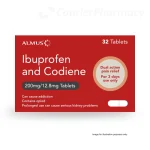
Ibuprofen 200mg and Codeine 12.8mg Tablets 32 Pack
When ibuprofen on its own hasn’t quite shifted moderate pain, the next sensible step is often an ibuprofen-codeine combination. Ibuprofen 200mg and Codeine 12.8mg Tablets pair a standard ibuprofen dose with a small dose of codeine for short-term relief of acute moderate pain that paracetamol or ibuprofen alone can’t fully control.
At Courier Pharmacy, we believe pain relief should suit the person, not the marketing budget. Whether you’re managing a dental flare-up, a stubborn musculoskeletal injury, period pain that won’t settle, or a tension headache that’s outstayed its welcome, this page is here to help you decide whether the Ibuprofen and Codeine tablets fits your situation.
Five key takeaways
Ibuprofen 200mg and Codeine 12.8mg Tablets is a UK Pharmacy (P) medicine for the short-term treatment of acute moderate pain not relieved by paracetamol, ibuprofen, or aspirin alone.
Each tablet contains ibuprofen 200mg (a standard NSAID dose) and codeine phosphate 12.8mg (a small opioid dose that converts to morphine in the liver).
Because the product contains codeine, it must not be used for more than three days continuously without medical advice, due to the risks of addiction and medication-overuse headache.
The ibuprofen component adds NSAID-specific cautions (stomach, kidney, cardiovascular, asthma) that you don’t get with paracetamol-and-codeine products like Solpadeine Max or co-codamol.
The Ibuprofen 200mg and Codeine 12.8mg tablets are a generic line and is supplied as a budget-priced equivalent to branded ibuprofen-codeine products like Nurofen Plus, with the same active ingredients at the same doses.
Treatment dosage: Ibuprofen 200mg and Codeine 12.8mg Tablets
Always follow the dosage instructions printed on the pack or provided by your pharmacist. The information below is based on the standard SmPC and BNF guidance for ibuprofen-codeine 200mg/12.8mg tablets and should not replace personalised advice from a healthcare professional.
For adults and children aged 16 and over: take 1 to 2 tablets every 4 to 6 hours as needed for pain. Do not take more frequently than every 4 hours. Maximum 6 tablets in any 24-hour period.
For children aged 12 to 15: take 1 tablet every 6 hours as needed for pain. Do not take more frequently than every 6 hours. Maximum 3 tablets in 24 hours.
The tablets should be swallowed whole with a full glass of water and ideally taken with or just after food. Food helps to reduce the stomach irritation that ibuprofen can cause, particularly with repeated dosing. Do not exceed the stated dose. Crucially, do not use Ibuprofen and Codeine for more than three consecutive days without medical advice. If pain persists beyond three days, or worsens, stop taking the medicine and speak to a pharmacist or GP. Prolonged use beyond the recommended duration significantly increases the risk of codeine dependence and medication-overuse headache.
Children under 12 must not take Ibuprofen and Codeine because of the codeine breathing risk in younger children. Adolescents aged 12 to 18 who have had their tonsils or adenoids removed for obstructive sleep apnoea must not take this product for the same reason. People known to be ultra-rapid metabolisers of codeine should also not take Ibuprofen and Codeine, because they can produce dangerously high morphine levels from a standard codeine dose.
If you are already taking other medicines that contain ibuprofen (or any other NSAID, including diclofenac, naproxen, or aspirin), do not take Ibuprofen and Codeine at the same time. Stacking NSAIDs significantly increases the risks of stomach bleeding, kidney injury, and cardiovascular events. Similarly, do not combine with other codeine-containing products such as Solpadeine Max, Migraleve, or co-codamol.
Overview of Ibuprofen 200mg and Codeine 12.8mg tablets
Five key facts
Ibuprofen and Codeine combines ibuprofen 200mg (a standard NSAID dose) with codeine phosphate 12.8mg (a small opioid dose) for inflammatory and centrally-mediated pain at the same time.
The three-day maximum duration is not a suggestion; it is a safety limit based on the dependence potential of codeine and the cumulative side-effect burden of repeated NSAID dosing.
The ibuprofen component means this product is particularly useful for inflammatory pain (dental pain, musculoskeletal injury, period pain) but adds NSAID-specific cautions that paracetamol-and-codeine products like Solpadeine Max don’t carry.
People of North African, Ethiopian, or Saudi Arabian heritage are more likely to carry the CYP2D6 gene variant that makes them ultra-rapid metabolisers of codeine, which increases the risk of morphine toxicity.
The generic version is functionally equivalent to branded ibuprofen-codeine products like Nurofen Plus, at a more accessible price; the active ingredients and doses are identical.
Ibuprofen and Codeine occupies a specific position in the pain relief landscape. It is intended for situations where single-ingredient analgesics have genuinely not been enough, not as a first-line option for mild pain. NICE guidance on pain management emphasises the importance of using the least potent analgesic appropriate for the pain level, which means ibuprofen-codeine combinations sit above paracetamol or ibuprofen alone but below prescription-strength codeine preparations like co-codamol 30/500. Used within that context, and for no more than three days, the product can be an effective short-term solution.
The three-day limit deserves emphasis because it is widely misunderstood. Codeine is a mild opioid, and regular use beyond a few days can lead to physical dependence, where the body adapts to the presence of the drug and withdrawal symptoms emerge when it is stopped. It can also lead to medication-overuse headache, a paradoxical worsening of headache symptoms in people who take analgesics too frequently. Neither outcome is inevitable with appropriate short-term use, but both are preventable by respecting the three-day rule.
The choice between an ibuprofen-codeine combination (like Almus Ibuprofen and Codeine) and a paracetamol-codeine combination (like Solpadeine Max or co-codamol) is worth thinking through. Ibuprofen adds genuine anti-inflammatory action, which is particularly useful for dental pain, musculoskeletal injury, period pain, and other inflammatory pain types. But ibuprofen also adds NSAID-specific risks: stomach irritation and bleeding, kidney impairment in vulnerable patients, increased cardiovascular risk in long-term use, and potential to trigger asthma attacks in some asthmatic patients. For inflammatory pain in a generally healthy adult, the ibuprofen-codeine combination is often the better choice. For non-inflammatory pain or in patients with NSAID contraindications, the paracetamol-codeine combination is usually safer.
People managing long-term pain conditions, including fibromyalgia or conditions associated with chronic fatigue, sometimes turn to over-the-counter combination analgesics during acute flare-ups. This is understandable, but it is worth having a broader pain management conversation with a prescriber rather than relying on short-course OTC products for recurring episodes. Pain management built around you, not the other way round, often involves a wider toolkit than just OTC codeine combinations. Our team at Courier Pharmacy can be a useful first step in that conversation, including discussion of compounded topical pain creams as an alternative or supplement.
Why choose Courier Pharmacy for Ibuprofen and Codeine
At Courier Pharmacy, we built our service around the idea that healthcare should fit the person, not force the person to fit the system. When you buy Ibuprofen and Codeine from us, you are not just completing a transaction: you have access to a team that genuinely wants to make sure it is the right option for you.
Our approach is shaped by the philosophy of Dr Ada Jex-Cori, our brand pharmacist, who built her practice around accessible, honest, personalised care. Her view is straightforward: you are not broken. The system is the problem. We are here to change that.
We know that people managing long-term or complex conditions, whether that is fibromyalgia, CFS/ME, chronic pain, or recurring inflammatory flare-ups, often find themselves reaching for over-the-counter analgesics during acute episodes because the system has not yet offered them something better. If that sounds familiar, Ibuprofen and Codeine may be part of your short-term toolkit, but we would also love to have a broader conversation about what else might help. Our pharmacists can discuss prescription alternatives, compounded topical pain creams that deliver higher-strength NSAIDs and other actives directly to the painful area without the systemic load, and help you build a more complete picture of your pain management options.
Trust is the part that has to be earned, not claimed. Courier Pharmacy is UK-regulated, operates under GPhC oversight, and grounds every piece of clinical content in NHS, NICE, BNF, and peer-reviewed sources. When we recommend something, it is because the evidence supports it and it fits your needs, not because it is the most profitable option. If Ibuprofen and Codeine isn’t right for you, we’ll tell you why and suggest a better alternative.
Buy Ibuprofen and Codeine Tablets from Courier Pharmacy
Ibuprofen 200mg and Codeine 12.8mg Tablets is a Pharmacy (P) medicine that contains codeine and an NSAID. That means you don’t need a prescription, but the sale must be supervised by a pharmacist who’s checked the product is appropriate for your situation, particularly given the codeine content, the NSAID profile, and the three-day continuous-use limit.
Here is how our service works:
Complete a quick online consultation with a few straightforward questions about your health and current medications
A UK GPhC-registered pharmacist reviews your answers to confirm the product is suitable for you
If it is appropriate, your order is approved
We dispense and deliver discreetly to your door
If it isn’t suitable for you, we’ll explain why and suggest the next best option. Sometimes that’s a paracetamol-codeine combination like Solpadeine Max (better for non-inflammatory pain or for people with NSAID cautions), sometimes a different acute pain treatment, sometimes a referral for prescription options if your pain pattern needs a wider plan, and sometimes a compounded topical pain cream tailored to your skin and pain pattern. We also run free fortnightly drop-in clinics and talks at Insomnia, Derby, every other week from 10 am to 12 pm. No appointment, no cost, no obligation.
Active ingredients in Ibuprofen 200mg and Codeine 12.8mg Tablets
Each tablet contains two active ingredients. Ibuprofen 200mg is a propionic acid NSAID that inhibits both COX-1 and COX-2 cyclo-oxygenase enzymes, reducing the production of prostaglandins, prostacyclins, and thromboxanes. This produces anti-inflammatory, analgesic, and antipyretic effects across the body, but most usefully in inflamed tissues at the site of pain. Codeine phosphate hemihydrate 12.8mg is a mild opioid prodrug that is metabolised in the liver to morphine by the CYP2D6 enzyme. Morphine then binds to mu-opioid receptors in the central nervous system, modifying how pain signals are perceived.
The 12.8mg dose of codeine in Ibuprofen and Codeine is at the lower end of the therapeutic range. It is sufficient to provide meaningful additive analgesia alongside ibuprofen, while staying within the threshold that defines the boundary between Pharmacy-only and Prescription Only Medicines in the UK. The pharmacokinetic interaction between the two ingredients is largely additive: each contributes its own mechanism independently, but together they address pain through complementary inflammatory and central pathways simultaneously.
What are Ibuprofen and Codeine tablets used for?
Ibuprofen 200mg and Codeine 12.8mg tablets is indicated for the short-term treatment of acute moderate pain that has not been adequately relieved by paracetamol, ibuprofen, or aspirin used alone. Typical presentations include dental pain (particularly after extractions or significant dental work), period pain (primary dysmenorrhoea), backache, musculoskeletal injuries with an inflammatory component, post-operative or post-procedural pain, headache, and tension-type pain.
The product is designed for situations where you have already tried a simpler analgesic and it has not been sufficient. If ibuprofen 400mg alone hasn't touched your dental pain after a procedure, or if period pain is making it impossible to function, Ibuprofen and Codeine offers a step up in analgesic coverage without requiring a prescription. The combination is particularly well-suited to inflammatory pain because of the ibuprofen component. For non-inflammatory pain (typical tension headache, neuropathic pain components, visceral pain), a paracetamol-codeine combination may be a more appropriate choice.
It is not appropriate for chronic pain conditions, pain that has been present for more than a few days, or pain of unknown cause. If you find yourself reaching for ibuprofen-codeine combinations regularly, that is a signal to have a proper conversation with a healthcare professional. Recurring pain often has an underlying cause that deserves investigation, and regular codeine and ibuprofen use brings its own risks.
How do Ibuprofen and Codeine tablets work?
Ibuprofen and codeine work on two completely different pain pathways, which is why combining them produces better analgesia than either alone for inflammatory pain.
Ibuprofen works peripherally and centrally to inhibit COX enzymes. At the site of tissue injury or inflammation, prostaglandins are produced as part of the inflammatory cascade. These prostaglandins sensitise pain nerve endings and contribute to local swelling, heat, and pain. By blocking COX enzyme activity, ibuprofen reduces prostaglandin production at the site of pain, which dampens the inflammatory contribution to the overall pain experience. This is why ibuprofen is particularly effective for dental pain, period pain, musculoskeletal injury, and other clearly inflammatory pain types.
Codeine is an opioid prodrug, meaning it is not itself the active molecule but is converted to morphine in the liver by the CYP2D6 enzyme. Morphine then binds to mu-opioid receptors in the central nervous system, modifying how pain signals are perceived and how unpleasant they feel. At the 12.8mg codeine dose in Ibuprofen and Codeine, the effect is modest but clinically meaningful when added to ibuprofen. It is enough to make a noticeable difference to moderate pain without the sedation or side effect burden of higher opioid doses.
The conversion of codeine to morphine by CYP2D6 varies significantly between individuals. Most people are normal metabolisers and respond predictably. A small proportion are poor metabolisers (and get little benefit from codeine because they don't convert much to morphine). Another small proportion are ultra-rapid metabolisers, who can produce dangerously high morphine levels from a standard codeine dose and must not take codeine-containing products.
After you swallow the Ibuprofen and Codeine, the tablets disintegrate in the stomach and the active ingredients are absorbed from the small intestine. Peak ibuprofen blood levels are typically reached around 1 to 2 hours after dosing, and pain relief usually starts within 30 to 60 minutes. Codeine reaches peak levels in a similar timeframe, with its analgesic effect building over the following hour as it is metabolised to morphine. The combined analgesic effect typically lasts 4 to 6 hours, which is why doses are spaced every 4 to 6 hours.
How to use the Ibuprofen and Codeine tablets
Take the lowest effective number of tablets for the shortest time necessary. For adults aged 16 and over, the standard dose is 1 to 2 tablets at a time; some people find 1 tablet adequate for milder pain, and there is no benefit to taking more than the dose that controls your pain. Take the tablets with a full glass of water, ideally with or just after food. Food reduces the stomach irritation that ibuprofen can cause, particularly with repeated dosing. Swallow the tablets whole without crushing or chewing.
Spacing your doses sensibly matters. Waiting at least four hours between doses keeps the ibuprofen and codeine within safe therapeutic ranges. Do not take Ibuprofen and Codeine alongside other ibuprofen-containing products, other NSAIDs (diclofenac, naproxen, aspirin), or other codeine-containing products (Solpadeine Max, Migraleve, co-codamol). Stacking either active ingredient significantly increases the risk of side effects and overdose.
Keep to the three-day maximum. If your pain has not improved within three days, or if it has worsened or changed in character, stop taking Ibuprofen and Codeine and seek medical advice. Pain that persists deserves investigation, not a continuing supply of OTC analgesics. If you find yourself tempted to continue beyond three days because stopping feels difficult, that is a signal worth taking seriously and discussing with a pharmacist or GP.
Warnings and precautions for Ibuprofen and Codeine tablets
Do not take Ibuprofen and Codeine tablets if you are allergic to ibuprofen, codeine, aspirin, or any other NSAID, or to any of the other ingredients. Do not take it if you have a history of NSAID-exacerbated respiratory disease (aspirin-sensitive asthma), active or recent stomach ulcer or bleeding, severe heart failure, severe kidney impairment, or severe liver impairment. Do not give it to children under 12 years of age.
It is contraindicated in people known to be ultra-rapid metabolisers of codeine, in people with significant respiratory depression, severe obstructive airways disease, raised intracranial pressure, or recent head injury, and in adolescents under 18 who have had tonsils or adenoids removed for obstructive sleep apnoea. It must not be used in the third trimester of pregnancy because of NSAID-related fetal cardiovascular and renal effects, and is best avoided throughout pregnancy unless prescribed.
Stomach safety is one of the main reasons NSAIDs need careful use. Ibuprofen can cause stomach irritation, peptic ulcers, and gastrointestinal bleeding, particularly with repeated dosing or in vulnerable patients (over 65, history of ulcers, on steroids or anticoagulants). Take Ibuprofen and Codeine tablets with food, and stop immediately if you develop indigestion, abdominal pain, dark stools, or any signs of GI bleeding.
Cardiovascular caution applies to all NSAIDs. Regular NSAID use can slightly increase the risk of heart attack and stroke, particularly in patients with existing cardiovascular disease, hypertension, or significant cardiovascular risk factors. For a three-day OTC course in a generally healthy adult, this risk is small but not zero. People with significant cardiovascular history should discuss alternatives with their pharmacist.
Kidney caution also applies. NSAIDs can impair kidney function, particularly in patients who are dehydrated, elderly, or have existing kidney disease, and in patients taking diuretics, ACE inhibitors, or ARBs. Stay well hydrated while taking Almus Ibuprofen and Codeine, and avoid use if you have significant kidney impairment.
Asthma is another consideration. Around 1 in 10 asthmatic patients experience worsening of their asthma after taking an NSAID (a phenomenon called NSAID-exacerbated respiratory disease). If you have asthma and have not used ibuprofen before, or if you have known aspirin or NSAID sensitivity, do not take the Ibuprofen and Codeine tablets without pharmacist advice.
Codeine dependence is a real and documented risk, particularly for people who use codeine-containing products regularly or at higher doses. If you have a personal or family history of substance misuse or addiction, discuss alternatives with your pharmacist before taking the Ibuprofen and Codeine tablets. The three-day rule is in place partly because dependence can begin to develop with surprisingly brief regular exposure.
Medication overuse headache (MOH) is a particularly important concern for people who experience frequent headaches. Using any analgesic on more than ten days per month can paradoxically worsen headache frequency and severity over time. If headaches are a recurring issue, seek a proper diagnosis rather than repeated short courses of analgesics.
Pregnancy and breastfeeding: NSAIDs are contraindicated in the third trimester of pregnancy. Codeine is not recommended in pregnancy at any stage. Both are best avoided in breastfeeding because of risks to the baby. If you are pregnant or breastfeeding and need pain relief, paracetamol alone is usually the preferred option; speak to your midwife or GP for advice specific to your situation.
Side effects of the Ibuprofen and Codeine tablets
Like all medicines, the Ibuprofen and Codeine tablets can cause side effects in some people. The most common side effects of the ibuprofen component are gastrointestinal: indigestion, heartburn, nausea, abdominal pain, and (less commonly) more significant stomach irritation or ulceration. Taking the tablets with food substantially reduces these effects but does not eliminate them.
The most common side effects of the codeine component are constipation (which affects most people who take codeine for any length of time), nausea and vomiting (particularly at the start of treatment), drowsiness, lightheadedness, dry mouth, and feeling mentally slow or muddled. Drowsiness can be significant; you should not drive or operate machinery if affected.
Less common side effects include skin rash, hypotension, palpitations, urinary retention (particularly in older adults), tinnitus (with the ibuprofen), and worsening of pre-existing conditions like glaucoma or prostatic hypertrophy. Codeine-related side effects can include itching, mild euphoria, and in some people paradoxical agitation.
Rare but serious side effects include severe allergic reactions including anaphylaxis, severe skin reactions such as Stevens-Johnson syndrome, severe gastrointestinal bleeding, kidney injury, cardiovascular events including heart attack and stroke (particularly with prolonged use or in high-risk patients), severe codeine-related breathing problems particularly in ultra-rapid metabolisers, and NSAID-triggered asthma attacks.
If something feels wrong, trust that signal. Stop taking the Ibuprofen and Codeine tablets and seek urgent medical attention if you experience signs of stomach bleeding (vomiting blood, black or tarry stools, severe abdominal pain), signs of an allergic reaction (facial swelling, difficulty breathing, widespread rash), severe drowsiness or confusion, dark urine or jaundice, chest pain, or any sudden neurological symptoms.
Suspected side effects can and should be reported to the MHRA via the Yellow Card scheme at yellowcard.mhra.gov.uk. Reporting helps build the safety picture for everyone.
Drug interactions with the Ibuprofen and Codeine tablets
The Ibuprofen and Codeine tablets interacts with several common medicines, and the interactions need taking seriously. Tell your pharmacist about all medicines you are taking before purchasing, including prescription medicines, other over-the-counter products, and herbal remedies.
Other NSAIDs, including oral ibuprofen, naproxen, diclofenac, aspirin, and topical NSAIDs applied to large areas, should not be combined with the Ibuprofen and Codeine tablets . Stacking NSAIDs significantly increases the risks of stomach bleeding, kidney injury, and cardiovascular events. Low-dose aspirin (75mg daily for cardiovascular protection) needs particular caution; ibuprofen can interfere with the antiplatelet effect of aspirin, and the combination requires pharmacist advice.
Other codeine-containing products, including Solpadeine Max, Migraleve, co-codamol, and prescription opioids, should not be combined with the Ibuprofen and Codeine tablets.. Stacking codeine doses significantly increases the risk of sedation, respiratory depression, and dependence.
CNS depressants compound the sedative and respiratory-depressant effects of codeine. This includes alcohol, benzodiazepines (diazepam, lorazepam), gabapentin or pregabalin, sleeping tablets, sedating antihistamines, and many antidepressants. Combining these with the Ibuprofen and Codeine tablets increases drowsiness, confusion, and breathing risk meaningfully. Alcohol additionally increases the risk of stomach bleeding from ibuprofen and should be avoided.
Antihypertensives can be affected by ibuprofen. ACE inhibitors, ARBs, beta-blockers, and diuretics can have their efficacy reduced by NSAID-related effects on renal prostaglandins. The combination of an NSAID with an ACE inhibitor or ARB plus a diuretic ("triple whammy") is particularly relevant for kidney function and should be flagged to a pharmacist.
Anticoagulants including warfarin and DOACs can have their bleeding effect increased by ibuprofen, both through direct platelet effects and through stomach irritation. Patients on anticoagulants should generally avoid OTC NSAID-codeine combinations.
Monoamine oxidase inhibitors (MAOIs) used for depression interact unpredictably with codeine. The Ibuprofen and Codeine tablets should not be taken within two weeks of stopping an MAOI. Other antidepressants including SSRIs can interact with codeine via shared metabolic pathways and may also increase bleeding risk when combined with NSAIDs.
Lithium and methotrexate levels can be increased by NSAIDs through reduced renal clearance. People on either medicine should discuss NSAID use with their GP or specialist before starting the Ibuprofen and Codeine tablets.
Frequently asked questions about the Ibuprofen and Codeine tablets
What are the Ibuprofen and Codeine tablets used for?
The Ibuprofen 200mg and Codeine 12.8mg tablets is used for the short-term relief of acute moderate pain that hasn't been adequately relieved by paracetamol, ibuprofen, or aspirin used alone. Typical indications include dental pain, period pain, backache, musculoskeletal injury, post-procedural pain, headache, and tension-type pain. It should only be used for up to three consecutive days.
Is generic version the same as Nurofen Plus?
Yes, in terms of the active ingredients and doses. Both contain ibuprofen 200mg and codeine phosphate 12.8mg per tablet. This generic line, offered at a lower price point than the branded Nurofen Plus. The film coating and excipients may differ slightly between products, but the clinical effect is the same.
What's the difference between the Ibuprofen and Codeine tablets and Solpadeine Max?
The Ibuprofen and Codeine tablets combines ibuprofen (an NSAID) with codeine. Solpadeine Max combines paracetamol (a non-NSAID central analgesic) with codeine. The ibuprofen-codeine combination is generally better for clearly inflammatory pain (dental pain, period pain, musculoskeletal injury). The paracetamol-codeine combination is generally safer for people with NSAID cautions (stomach problems, kidney disease, cardiovascular disease, asthma). Our pharmacist can help you choose.
How long can I take the Ibuprofen and Codeine tablets for?
It should not be taken for more than three consecutive days. If your pain has not improved within that time, or if it worsens or changes, stop using it and seek advice from a pharmacist or GP. Prolonged use beyond three days significantly increases the risk of codeine dependence, medication overuse headache, and ibuprofen-related side effects.
Can I take the Ibuprofen and Codeine tablets with paracetamol?
In most cases, yes. Paracetamol works through a different pathway from both ibuprofen and codeine, and can generally be taken alongside the Ibuprofen and Codeine tablets for additional pain relief. Stick to standard paracetamol dosing (500mg to 1g up to four times daily, maximum 4g in 24 hours) and mention everything you take during your consultation. Do not combine with other paracetamol-codeine products.
Can I take the Ibuprofen and Codeine with other ibuprofen or NSAIDs?
No. Each tablet already contains 200mg of ibuprofen, and stacking NSAIDs (ibuprofen, naproxen, diclofenac, aspirin) significantly increases the risk of stomach bleeding, kidney injury, and cardiovascular events. Always check the ingredients of any pain or cold-and-flu product before adding the Ibuprofen and Codeine tablets.
Can I drink alcohol while taking the Ibuprofen and Codeine tablets?
No. Alcohol significantly increases the risks of stomach bleeding from ibuprofen and sedation or respiratory depression from codeine. Avoid alcohol completely while taking this medicine. If you've had alcohol earlier in the day and need pain relief, paracetamol alone is usually a safer choice until the alcohol has cleared.
Are the Ibuprofen and Codeine tablets suitable for children?
The Ibuprofen and Codeine tablets are suitable for adults and children aged 12 and over, with reduced dosing for ages 12 to 15 (1 tablet every 6 hours, maximum 3 in 24 hours). Children under 12 must not take it because of codeine breathing risks. Children and adolescents under 18 who have had tonsils or adenoids removed for obstructive sleep apnoea must also not take it.
Can I take the Ibuprofen and Codeine tablets when pregnant or breastfeeding?
The Ibuprofen and Codeine tablets are not recommended in pregnancy and is contraindicated in the third trimester due to NSAID-related fetal effects. Codeine is also not recommended in pregnancy. Both ingredients should be avoided while breastfeeding. If you need pain relief in pregnancy or breastfeeding, paracetamol alone is usually the preferred option; speak to your midwife or GP.
What does "ultra-rapid metaboliser" mean and why does it matter for codeine?
Ultra-rapid metabolisers carry a CYP2D6 gene variant that causes them to convert codeine to morphine much faster and more completely than average. This means even a standard dose of codeine can produce morphine levels high enough to cause toxicity, including severe drowsiness, confusion, or difficulty breathing. Ultra-rapid metabolisers should not use codeine-containing products. Genetic testing is available to identify metaboliser status if there is clinical reason to do so.
What is medication-overuse headache?
Medication overuse headache (MOH) develops when analgesics are taken too frequently, typically on more than ten days per month. The brain adapts to regular analgesic use and becomes more sensitive to pain in their absence, making headaches worse over time. Any analgesic can cause MOH, including ibuprofen-codeine combinations. If you have frequent headaches, seek proper diagnosis rather than relying on regular OTC pain relief.
Can I take the Ibuprofen and Codeine tablets if I have asthma?
With caution and pharmacist advice. Around 1 in 10 asthmatic patients experience worsening of their asthma after taking an NSAID (NSAID-exacerbated respiratory disease). If you have asthma and have used ibuprofen before without problems, the combination is usually fine; if you have never tried ibuprofen, or have a history of aspirin or NSAID sensitivity, discuss this during your consultation before starting.
Can I take the Ibuprofen and Codeine tablets for period pain?
Yes. Period pain (primary dysmenorrhoea) is one of the situations where an ibuprofen-codeine combination is genuinely useful, because the underlying mechanism involves prostaglandin-driven uterine cramping. Ibuprofen reduces the prostaglandin production, and codeine adds central analgesia. For many people with severe period pain, this combination is more effective than paracetamol-codeine combinations.
What should I do if I accidentally take too much of the Ibuprofen and Codeine tablets?
Seek immediate medical advice, even if you feel well. Ibuprofen overdose can cause stomach bleeding, kidney injury, and rare neurological effects. Codeine overdose can cause drowsiness, breathing problems, and unconsciousness. Take the packaging with you to hospital or call 999.
Are the Ibuprofen and Codeine tablets addictive?
Codeine has the potential to cause physical dependence with regular use. At the doses in the Ibuprofen and Codeine tablets, the risk within a properly observed three-day course is low for most people, but it is not zero, and it increases with duration of use. People with a personal or family history of substance misuse may be at higher risk. If stopping feels difficult, speak to your GP or pharmacist.
Can I drive after taking the Ibuprofen and Codeine tablets?
Codeine can cause drowsiness, lightheadedness, and impaired concentration. You should not drive or operate heavy machinery until you know how this medicine affects you. UK drug-driving rules permit codeine use at therapeutic doses if it does not impair your ability to drive, but the legal threshold and the safe threshold are not the same.
Can the Ibuprofen and Codeine tablets cause constipation?
Yes. Constipation is one of the most common side effects of codeine-containing medicines. Codeine slows gut motility through opioid receptors in the gastrointestinal tract. For a short three-day course, this is usually manageable with adequate fluid intake and dietary fibre. If constipation is a significant concern, consider whether a codeine-free analgesic might meet your needs.
Can people with MCAS take the Ibuprofen and Codeine tablets?
Some people with MCAS tolerate ibuprofen and codeine well; others react to either ingredient or to the tablet excipients. The NSAID component can also trigger mast cell reactions in some patients. We always review the full ingredient list during your consultation if you have known mast cell reactivity, and where appropriate we can discuss whether a different acute pain treatment, including a compounded topical option, suits you better.
How should the Ibuprofen and Codeine tablets be stored?
Store below 25°C, in the original packaging, away from direct sunlight. Keep out of sight and reach of children. The codeine content means safe storage matters more than for some other medicines. Return any unused tablets to a pharmacy for safe disposal rather than household waste.
How do I order the Ibuprofen and Codeine tablets from Courier Pharmacy?
Complete the short online consultation on our site, and a UK GPhC-registered pharmacist will review your answers, paying particular attention to codeine safety and NSAID cautions. If the Ibuprofen and Codeine tablets are suitable, your order is approved, our pharmacy dispenses your 32-tablet pack and delivers it discreetly to your door. If it isn't suitable, we'll tell you why.
Disclaimer: This article is for general information only and isn’t a substitute for personal medical advice, diagnosis, or treatment. Always check with a GP, pharmacist, or specialist before starting a new supplement if you have a medical condition or take regular medicines.
More than a prescription: our community
At Courier Pharmacy, we do not think good healthcare should only happen when you are buying something. Real support means turning up even when it is free. That is why we run free fortnightly drop-in clinics and talks at Insomnia, Derby, every other week from 12 to 1pm. No appointment. No charge. No pressure.
These sessions are a space to ask questions you did not know you had, to hear from others managing similar conditions, and to get honest, evidence-based guidance from people who genuinely care. Whether you want to know more about your pain relief options, talk through a long-term condition, or simply be in a room with people who understand what it is like to navigate a health system that does not always fit, you are welcome.
Learn more about our community talks and find the next session date at courierpharmacy.co.uk. Healthcare should be accessible, not just when you are buying. We believe that.
How this content was created
Written by the Courier Pharmacy editorial team and reviewed by a GPhC-registered pharmacist. Grounded in the latest NHS, NICE, BNF and EMC guidance, peer-reviewed studies, and the real questions patients bring to our drop-in clinics in Derby.