

When choosing between finasteride and dutasteride for hair loss, the main difference is strength. Dutasteride is the more powerful of the two, blocking over 90% of the hormone that causes hair thinning. Finasteride, the more common starting treatment in the UK, is less potent but still very effective, blocking around 70% of the same hormone. Your doctor or prescriber will help you decide which one is the best fit for your specific needs.
This guide gives you a clear, balanced comparison to help you understand your options. We will walk through how each medicine works, how effective they are, and what to consider regarding safety and cost. By the end, you’ll be ready for a more informed chat with your clinician.
Table of contents
- Five key takeaways
- How do finasteride and dutasteride work?
- The two types of 5-AR enzyme
- Finasteride: the targeted blocker
- Dutasteride: the dual-action blocker
- How effective are they in real life?
- Head-to-head for hair loss
- Managing an enlarged prostate (BPH)
- Finasteride vs dutasteride at a glance
- Example scenarios
- Are finasteride and dutasteride safe?
- The most common side effects
- Mental health considerations
- Less common side effects and safety tips
- When to seek urgent medical help
- How to get treatment in the UK
- How to choose the right treatment for you
- The final step: your consultation
- Frequently Asked Questions
- How this content was created
- References
-
 Dutasteride 0.5mg capsulesPrice range: £22.79 through £81.99
 -
 Loniten 2.5mg tablets (Minoxidil 2.5mg tablets)Price range: £39.99 through £99.99
Five key takeaways
- Potency matters: Dutasteride is stronger and reduces hair-loss hormones (DHT) much more than finasteride.
- How they work: Finasteride blocks one type of enzyme, while dutasteride blocks two, making it more comprehensive.
- Standard UK choice: Doctors usually prescribe finasteride first for male pattern hair loss.
- When to switch: Clinicians may suggest trying dutasteride 0.5mg capsules if finasteride hasn’t worked well enough after a year.
- Side effect risk: Because it’s more powerful, dutasteride may have a slightly higher risk of side effects.

How do finasteride and dutasteride work?
To understand the finasteride versus dutasteride debate, we need to talk about a hormone called dihydrotestosterone (DHT). For men with hair loss or an enlarged prostate, DHT is the main cause. It shrinks hair follicles on your scalp and makes the prostate gland grow.
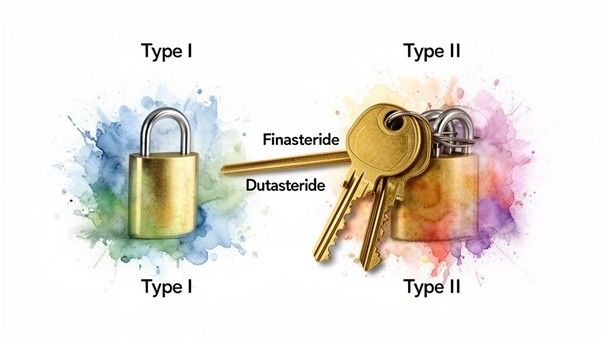
Both finasteride and dutasteride stop your body from turning testosterone into DHT. They do this by blocking an enzyme called 5-alpha reductase (5-AR). However, they block this enzyme in slightly different ways.
The two types of 5-AR enzyme
The 5-AR enzyme comes in two main forms, which are found in different parts of the body.
- Type I 5-AR: This is mostly found in your skin and scalp.
- Type II 5-AR: This is found mainly in your hair follicles and prostate gland.
This small difference explains why one medicine is more powerful than the other.
What is the main difference between finasteride and dutasteride? The main difference is that finasteride blocks only the Type II 5-AR enzyme, while dutasteride blocks both Type I and Type II, making it a stronger DHT inhibitor.
Finasteride: the targeted blocker
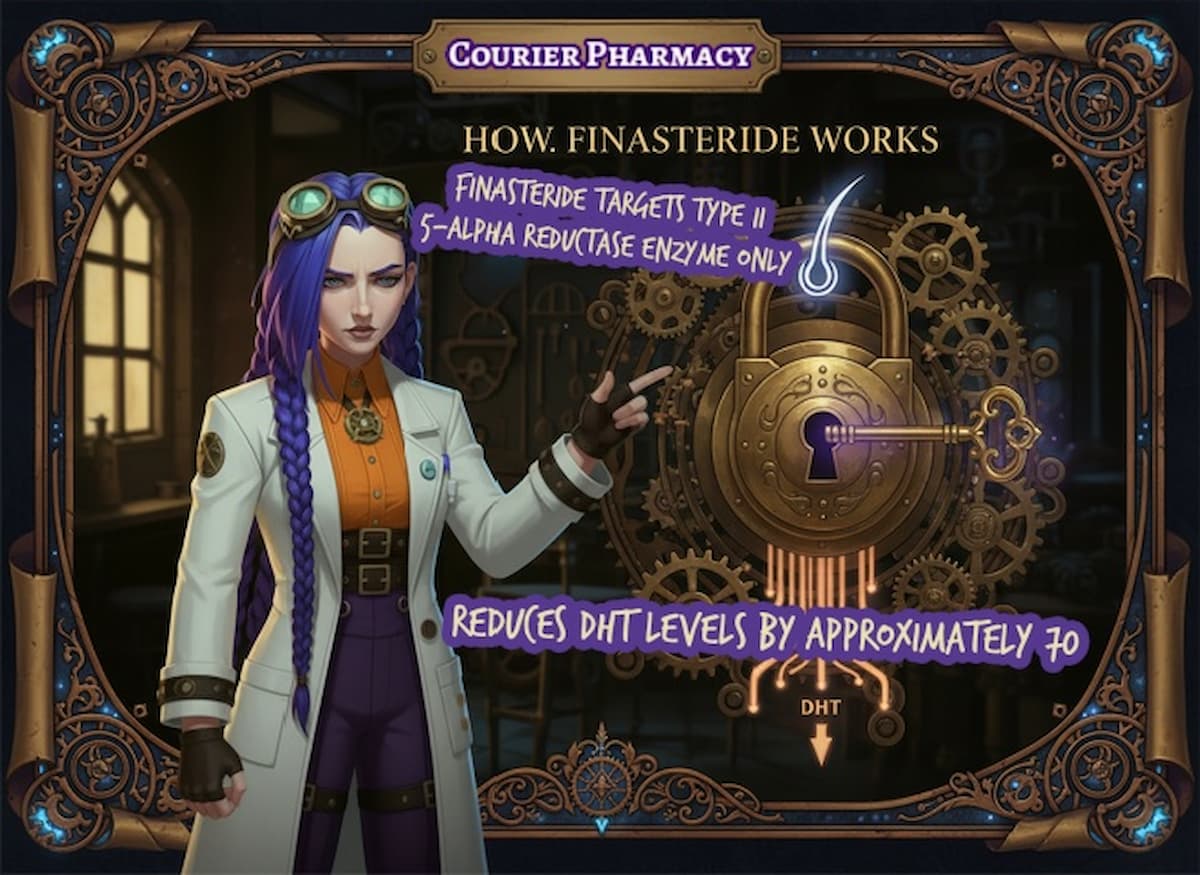
Finasteride is very selective. It only blocks the Type II 5-AR enzyme. Think of it like a key that only fits one specific lock.
By focusing on the Type II enzyme, finasteride lowers DHT where it matters most for hair loss and an enlarged prostate. This targeted approach is why it’s often the first treatment prescribed. It deals with the main problem without affecting the whole enzyme system.
Dutasteride: the dual-action blocker
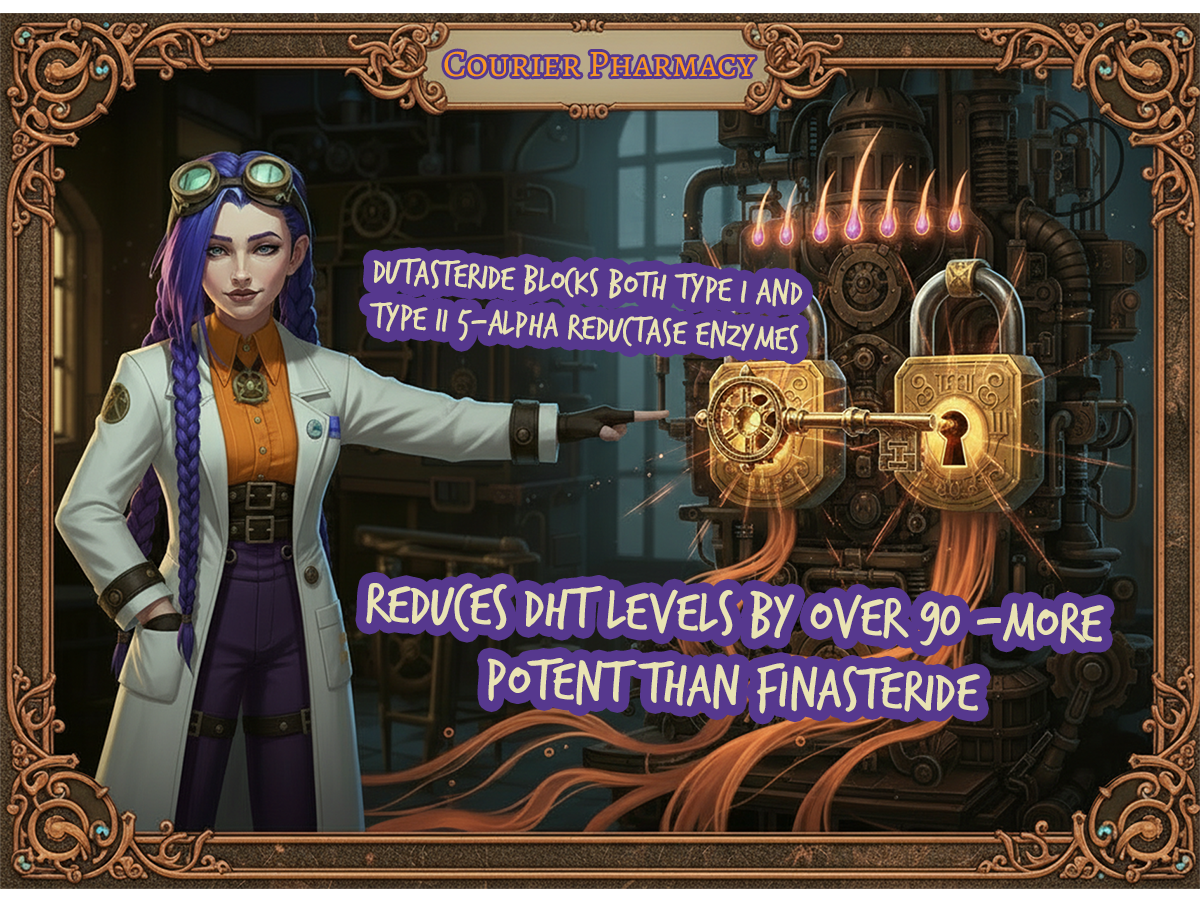
Dutasteride is a dual inhibitor. It blocks both Type I and Type II of the 5-AR enzyme. This is like having a master key that opens both locks.
This broader action means dutasteride lowers DHT levels much more effectively throughout the body. While this can lead to better results for some men, it’s also why it may have a slightly higher risk of side effects. For a closer look at how these treatments fit into a broader hair loss strategy, our ultimate UK guide on minoxidil and finasteride is a great resource.
The science supports this. Finasteride reduces DHT in the blood by about 70%. Dutasteride’s dual-action blockade slashes DHT levels by over 90% [1], [2].
How effective are they in real life?
Now for the important question: which one works better? Both finasteride and dutasteride are proven to help with hair loss and an enlarged prostate. However, their different strengths can lead to different results for different people.
Which is better for hair loss, finasteride or dutasteride? Both are effective, but studies suggest dutasteride may be slightly more effective for increasing hair count and thickness due to its stronger DHT-blocking ability.
Head-to-head for hair loss
For treating male pattern hair loss, finasteride is the standard first choice in the UK. It is licensed for this use and has a long history of success. Most men find it stops further hair thinning and can lead to noticeable regrowth.
Dutasteride is not officially licensed for hair loss in the UK but is often prescribed “off-label” by specialists. This usually happens if a man has not seen good results with finasteride. Research shows dutasteride can lead to a greater increase in hair count and thickness compared to finasteride [3].
In the UK, finasteride 1mg helps regrow hair in over 80% of users within 12 months. Dutasteride can show about 10-15% better hair density, but this may come with a slightly higher side effect risk. You can learn more about finasteride’s approval and efficacy from UK regulators.

Managing an enlarged prostate (BPH)
For an enlarged prostate, known as BPH, both medicines are effective and fully licensed. They work by shrinking the prostate gland over time. This helps to ease urinary problems, like a weak stream or feeling like you always need to go.
Because of its greater power, dutasteride can sometimes give faster and more significant relief from BPH symptoms. It can shrink the prostate more than finasteride, which is a big help for men with severe symptoms.
Finasteride vs dutasteride at a glance
| Feature | Finasteride | Dutasteride |
| Main Action | Blocks one enzyme type (Type II 5-AR) | Blocks two enzyme types (Type I & II 5-AR) |
| DHT Reduction | Reduces DHT by about 70% | Reduces DHT by over 90% |
| Hair Count | Significant increase in most users | Often a greater increase than finasteride |
| BPH Relief | Effective reduction in symptoms | May provide faster and more profound relief |
| UK Use | Licensed for hair loss & BPH | Licensed for BPH, used off-label for hair loss |
Example scenarios
Clinical data is one thing, but how do these differences play out in real life? These examples should make it clearer.
Example 1: The Gym-Goer
- Scenario: Alex, a 45-year-old gym-goer in Manchester, notices his hair is starting to thin at the crown. He’s otherwise healthy and wants to get on top of it early.
- Likely Treatment: His prescriber would almost certainly start him on finasteride 1mg. It’s the standard, effective, and well-tolerated choice for maintaining what he has and encouraging regrowth without being overly aggressive.
Example 2: The Shift Worker
- Scenario: David, a 62-year-old shift worker from London, has significant BPH symptoms that are ruining his sleep. He’s been on finasteride for a year but still gets up multiple times a night.
- Likely Treatment: His GP might suggest switching to dutasteride. Its more potent action could provide that extra bit of prostate shrinkage needed to give him more significant relief and, hopefully, a much better night’s sleep.
Are finasteride and dutasteride safe?
Choosing a medicine always means balancing the benefits against the risks. Side effects are possible with finasteride and dutasteride, but they only affect a small number of men. Most side effects are mild and often go away on their own.
This section gives you a balanced look at potential side effects. The best way to stay safe is to have a full chat about your health history with a qualified prescriber.
The most common side effects
The most talked-about side effects for both medicines are sexual. This makes sense, as they work by changing hormone levels. However, these issues are not common and often get better as your body adjusts.
For both finasteride and dutasteride, potential side effects include:
- Lower sex drive (libido).
- Problems getting or keeping an erection.
- A change in ejaculation, such as less semen.
Because dutasteride is more powerful, the risk of these side effects might be slightly higher than with finasteride. However, the difference is usually small. For more details, you can read our guide on Finasteride 1mg tablets.
Pharmacist’s tip: If you have side effects, talk to your prescriber before stopping the medicine. They can give you advice, and often these issues improve over time or with a change in treatment.

Mental health considerations
The UK’s medicines regulator (the MHRA) has noted rare reports of mood changes in men taking these drugs. This includes low mood, depression, and, very rarely, thoughts of self-harm [4].
This is a serious topic. While the risk is low, you must be aware of it. If you have a history of depression or other mental health conditions, it is vital to discuss this with your doctor before starting treatment.
Pharmacist’s tip: Give your prescriber your full medical history, including any past or present issues with depression or anxiety. Your mental well-being is just as important as your physical health.
Always watch your mood when you start a new medicine. If you notice any big changes for the worse, get medical advice straight away.
Less common side effects and safety tips
There are a few other, less common issues to know about.
- Breast Changes: A small number of men may notice breast tenderness or swelling. You should see a doctor straight away if you find any lumps or feel pain in your breast area.
- Allergic Reactions: Severe allergic reactions are very rare with any medicine. Look out for a rash, itching, or difficulty breathing.
- Prostate Cancer Screening: These medicines can lower levels of prostate-specific antigen (PSA), a marker used to screen for prostate cancer. You must tell any doctor testing your PSA that you are taking finasteride or dutasteride.
Pharmacist’s tip: Keep an up-to-date list of all your medicines and share it with your doctor and pharmacist. This simple step helps them spot any potential problems and keep you safe.
When to seek urgent medical help
Your safety is the top priority. While serious problems are rare, you need to know when to act fast.
You should get immediate medical help by calling 999 or going to A&E if you have:
- Signs of a severe allergic reaction: This includes swelling of your face, lips, or throat; or difficulty breathing.
- Thoughts of self-harm: If you have severe depression or suicidal thoughts, this is a medical emergency.
For any other new or worrying symptoms, like lumps in your breast tissue or a persistent low mood, book an appointment with your GP or prescribing clinician as soon as you can.
How to get treatment in the UK
Practical things like cost and how to get treatment can influence your decision. Here’s what to expect in the UK.
Generally, finasteride is cheaper than dutasteride. It has been available for a long time, so there are many low-cost generic versions. Dutasteride is also available as a generic but can be slightly more expensive.
NHS vs private treatment
You can get these medicines through the NHS or from a private service, like a registered online pharmacy, like courierpharmacy.co.uk.
For an enlarged prostate (BPH), GPs often prescribe finasteride and dutasteride on the NHS. For male pattern hair loss, treatment is almost always private. The NHS does not usually fund treatments for cosmetic concerns.
The rise of online pharmacies
Reputable UK-based online pharmacies offer a safe, convenient, and discreet way to get treatments like finasteride. These services are fully regulated, making the process simple and secure. The European finasteride market is growing, and online pharmacies are expected to make up over 60% of this share. You can discover more insights about the finasteride market here.
Pharmacist’s tip: When using an online pharmacy, always check for its GPhC (General Pharmaceutical Council) registration number. This proves the service is legitimate and follows strict UK safety standards.
A registered online pharmacy in the UK usually has a simple process:
- You fill out a secure online consultation form.
- A UK-registered prescriber reviews your information.
- If the treatment is suitable, your medicine is sent by discreet, tracked delivery.
This saves time and offers a level of privacy many people prefer.
How to choose the right treatment for you
Choosing between finasteride and dutasteride is not about which one is ‘better’. It is about finding the right fit for your health, your history, and your goals. This is a personal decision you should make with a clinician.
Who is finasteride best for?
For most men starting treatment for male pattern hair loss in the UK, finasteride is the standard choice. It has a long, proven record of safety and effectiveness.
Finasteride could be the right start if:
- This is your first time seeking hair loss treatment.
- Your main goal is to stop more thinning and keep the hair you have.
- You prefer a treatment with decades of use and safety data.
Who might dutasteride be a better fit for?
Dutasteride’s extra strength makes it a good option if finasteride hasn’t worked well enough. It is also a very effective choice for more severe symptoms of an enlarged prostate (BPH).
Dutasteride might be better if:
- You have used finasteride for at least 12 months without the results you hoped for.
- Your hair loss is more advanced and you want the strongest chance of regrowth.
- You have moderate to severe BPH and need more significant symptom relief.
The final step: your consultation
This guide gives you useful background information. However, you can only make the final decision during a professional medical consultation. A prescriber will look at your full health profile and help you choose between finasteride and dutasteride.
They will consider your medical history, your feelings about potential side effects, and what you want to achieve. Taking that next step to discuss your options is vital, and you can learn more about managing hair loss conditions in our dedicated guide.
-
Dutasteride 0.5mg capsulesPrice range: £22.79 through £81.99
-
Loniten 2.5mg tablets (Minoxidil 2.5mg tablets)Price range: £39.99 through £99.99
Frequently Asked Questions
Here are some quick answers to common questions about finasteride and dutasteride.
How long until I see results from finasteride or dutasteride?
Patience is key. You need to take either medicine daily for at least three to six months before you see any changes, like thicker hair or less shedding. The full results, such as clear regrowth, often take a year or more to become visible.
Can I switch from finasteride to dutasteride?
Yes, but you must do this under a clinician’s guidance. It is usually considered if you have been on finasteride for at least 12 months and are not happy with the results. Your prescriber can help you switch safely.
Are the side effects permanent?
For most men, any side effects are temporary and reversible. Issues like a lower sex drive usually go away once you stop taking the medicine. If you are worried about any side effects, always talk to your prescriber.
Can I use minoxidil at the same time?
Yes, combining finasteride or dutasteride with topical minoxidil is safe and very effective. Finasteride/dutasteride works from the inside by lowering DHT, while minoxidil works on the scalp to stimulate follicles. This two-part approach often gives better results.
Is it safe to drink alcohol while taking these medicines?
Moderate alcohol use is generally fine. However, heavy drinking puts a strain on your liver, which processes these medicines. If you have any liver problems, you must discuss your alcohol use with your doctor before starting treatment.
Will my hair fall out if I stop taking treatment?
Yes, the benefits only last as long as you take the medicine. If you stop, your DHT levels will rise again. Any hair you kept or regrew will likely be lost over the next 6 to 12 months. These treatments are a long-term commitment.
How this content was created
This article was written by a qualified pharmacist using evidence-based sources. Key information was gathered from NHS guidelines, MHRA safety updates, NICE recommendations, and peer-reviewed clinical studies. All content was clinically reviewed to ensure it is accurate, up-to-date, and easy for a UK audience to understand.
This article is for informational purposes only and is not a substitute for professional medical advice, diagnosis, or treatment. Always seek the advice of a qualified healthcare provider with any questions you may have regarding a medical condition.
References
- Richard V. Clark et al (2004 ) ,Available at : Marked Suppression of Dihydrotestosterone in Men with Benign Prostatic Hyperplasia by Dutasteride, a Dual 5?-Reductase Inhibitor | The Journal of Clinical Endocrinology & Metabolism | Oxford Academic
- Medical Mojo. (n.d.) ‘Dutasteride and minoxidil: the ultimate guide to hair regrowth’. Available at: https://medicalmojo.co.uk/dutasteride-and-minoxidil-the-ultimate-guide-to-hair-regrowth/ (Accessed: 10 March 2026).
- Harcha, W.G., Martínez, J.B., Tsai, T.F., Katsuoka, K., Kawashima, M., Tsuboi, R., Barnes, A., Ferron-Brady, G. and Chetty, D., 2014. A randomized, active-and placebo-controlled study of the efficacy and safety of different doses of dutasteride versus placebo and finasteride in the treatment of male subjects with androgenetic alopecia. Journal of the American Academy of Dermatology, 70(3), pp.489-498.
- Medicines and Healthcare products Regulatory Agency (2024). Finasteride: new advice for patients about the rare risk of suicidal thoughts and sexual dysfunction. Available at: https://www.gov.uk/drug-safety-update/finasteride-reminder-of-the-risk-psychiatric-side-effects-and-of-sexual-side-effects-which-may-persist-after-discontinuation-of-treatment .