

The best cream for dermatitis is one that matches your skin’s specific needs. For mild, dry skin, a good emollient (a medical moisturiser) is often enough to restore your skin’s barrier. However, for red, itchy, and inflamed flare-ups, you’ll likely need a mild steroid cream to calm things down.
This guide will help you understand the different types of creams available, from over-the-counter options to prescription treatments. We’ll show you how to use them safely and effectively, and explain when it’s time to speak to a healthcare professional. Think of this as your practical roadmap to achieving calmer, healthier skin.
Table of contents
- Five key takeaways
- Understanding what dermatitis is
- The most common types in the UK
- Why does it flare up?
- Real-life example: A busy parent’s challenge
- Navigating over-the-counter dermatitis creams
- Choosing your emollient: The three main types
- When you need more than a moisturiser: Mild steroid creams
- When to seek a prescription cream for dermatitis
- Key signs it’s time for a prescription
- Stepping up your treatment: Stronger steroid creams
- What about non-steroidal options?
- Real-life example: A shift worker’s success story
- How to use your dermatitis creams safely and effectively
- Understanding potential side effects
- Summary
- FAQs about dermatitis creams
- How this content was created
- References
-
 Betnovate OintmentPrice range: £7.99 through £21.99
 -
 Betamethasone 0.1% CreamPrice range: £7.99 through £21.99
 -
 Betamethasone 0.1% OintmentPrice range: £7.99 through £21.99
Five key takeaways
- Start with emollients: These medical moisturisers are the foundation of all dermatitis care, repairing the skin’s natural barrier.
- Choose the right texture: Use lotions for mild dryness, creams for moderate dryness, and ointments for very dry or cracked skin.
- Use mild steroids for flare-ups: Over-the-counter hydrocortisone 1% cream can quickly reduce redness and itching.
- Know when to seek help: If your skin isn’t improving after a week, or if the itch is severe, it’s time to see a clinician.
- Apply creams correctly: Always apply your emollient first, wait 20-30 minutes, then apply a thin layer of medicated cream only to affected areas.
Understanding what dermatitis is

Dermatitis happens when the skin barrier becomes leaky, as explained by courierpharmacy.co.uk
So, what exactly is dermatitis? It’s a general term for skin inflammation. To understand it better, think of your skin as a strong brick wall.
In healthy skin, the cells (“bricks”) and natural fats (“mortar”) are packed tightly together. This creates an excellent barrier that keeps moisture in and irritants out. When you have dermatitis, this wall develops cracks and becomes leaky. This allows moisture to escape, causing dryness. It also lets irritants and allergens get in, triggering redness, itching, and inflammation.
What is dermatitis? Dermatitis is an inflammation of the skin caused by a damaged skin barrier. This leads to moisture loss and allows irritants to enter, causing symptoms like itching, dryness, and redness.

The most common types in the UK
Dermatitis isn’t a single condition. Two types are particularly common in the UK. Knowing which one you have is the first step towards getting the right treatment. You can learn more in our detailed guide on eczema and dermatitis.
The main types are:
- Atopic dermatitis (eczema): This is the most common type, often starting in childhood but also affecting adults. It is linked to a family history of dry skin, asthma, or hay fever.
- Contact dermatitis: This happens when your skin reacts to something it touches. It can be an allergic reaction (e.g., to nickel in jewellery) or an irritant reaction (e.g., from harsh soap).
Why does it flare up?
Dermatitis often appears in cycles of calm periods and sudden flare-ups. A key part of managing the condition is identifying your personal triggers.
Common triggers include:
- Soaps, detergents, and perfumes
- Sudden changes in temperature
- Certain fabrics like wool
- Stress or hormonal changes
- Allergens like dust mites or pollen
Real-life example: A busy parent’s challenge
Imagine Sarah, a new mum in Manchester. Her baby, Leo, has red, dry patches on his cheeks and in his elbow creases. The GP suspects atopic eczema, which affects up to 20% of children in the UK [1]. Sarah needs to find out what is causing Leo’s flare-ups. Is it the new laundry powder? The family cat?
By keeping a simple diary and starting a gentle cream for dermatitis designed to repair the skin barrier, she can begin to control Leo’s symptoms. This shows how understanding the ‘why’ is a critical first step.
Navigating over-the-counter dermatitis creams
For a mild flare-up, your local pharmacy is the best place to start. The options can seem overwhelming, but understanding the basics makes choosing the right cream much easier.
The cornerstone of any dermatitis care plan is an emollient. These are medical-grade moisturisers that repair your leaky skin barrier. They work by soothing, hydrating, and protecting your skin, forming the foundation of any effective treatment. Emollients come in different formulas for different levels of dryness.

Choosing your emollient: The three main types
Understanding the difference between lotions, creams, and ointments is key to getting the best results. The choice depends on the balance of oil and water in the product.
- Lotions: These are the lightest option. They have a high water content, absorb quickly, and don’t feel greasy. This makes them great for daytime use, hairy areas, or very mild dryness.
- Creams: These are a good all-rounder. They balance oil and water, making them thicker than lotions but less greasy than ointments. Creams provide good hydration and are suitable for most types of dermatitis.
- Ointments: These are heavy-duty hydrators. Ointments are very greasy because they contain very little water. They create a powerful barrier on the skin, which is excellent for trapping moisture in very dry or cracked skin. They are usually best applied at night.
Pharmacist’s tip: When applying an emollient, always smooth it onto the skin in the direction of hair growth. This simple trick helps to prevent blocking your hair follicles, which can cause a condition called folliculitis.
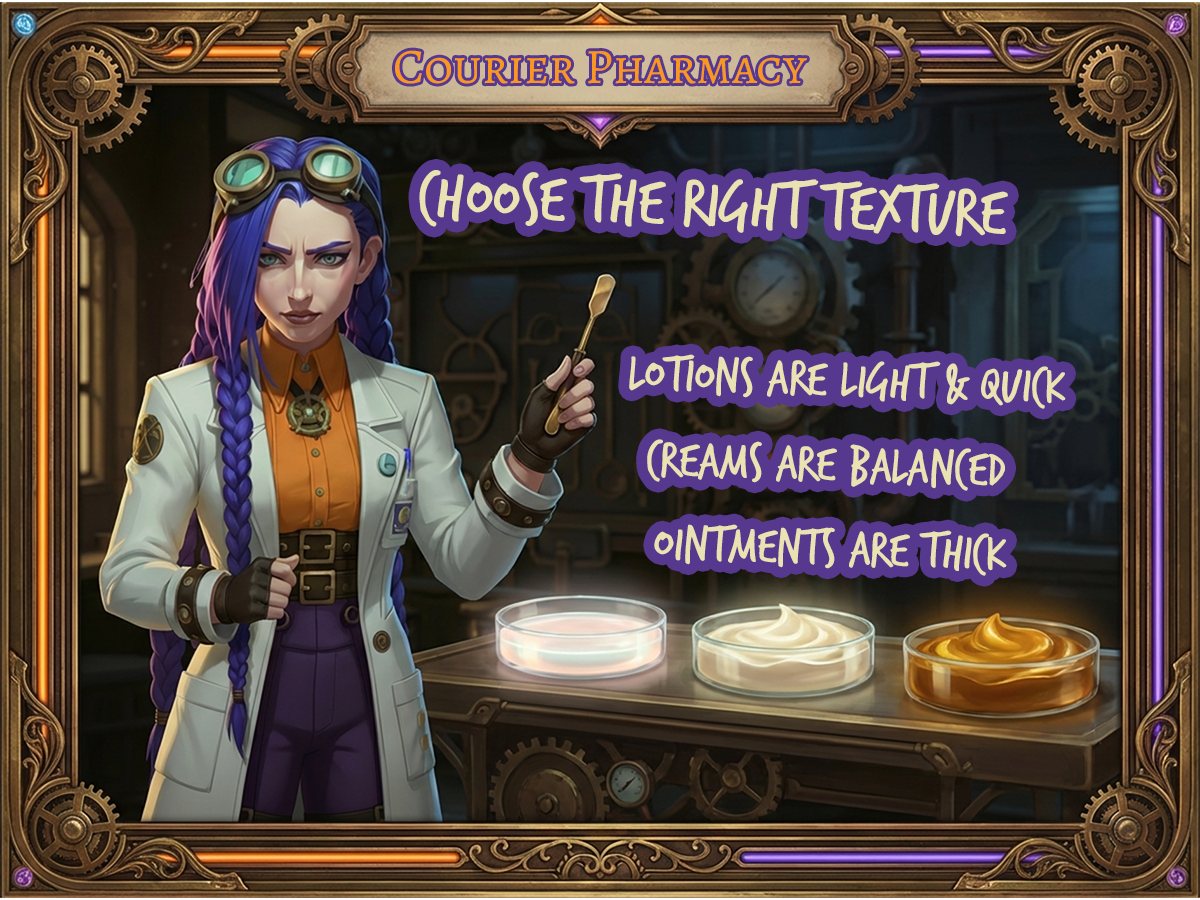
Table: Choosing your emollient
This table helps you select the right emollient based on your skin’s needs.
| Emollient Type | Best For | Texture | When to Use |
| Lotion | Mild dryness, hairy skin, daytime use | Thin, light, absorbs quickly | Ideal for the morning |
| Cream | Moderate dryness, general use | Thicker than lotion, non-greasy | Versatile for day and night |
| Ointment | Very dry, cracked, or thickened skin | Thick, greasy, intensive barrier | Best applied at night |

When you need more than a moisturiser: Mild steroid creams
Sometimes, moisturising alone isn’t enough for an angry flare-up. If your skin is red, inflamed, and itchy, a mild steroid cream can help. The most common one available without a prescription is hydrocortisone 1%.
These creams work by directly reducing inflammation in the skin. This helps to break the frustrating itch-scratch cycle, giving your skin a chance to heal. They are meant for short-term use to control flare-ups. You can also find products combining hydrocortisone with an antifungal, like Daktacort Hydrocortisone Cream.
How much steroid cream should I use? Use the Fingertip Unit (FTU) method: squeeze enough cream from the tip of your index finger to the first crease. This is enough for an area of skin twice the size of your flat hand.

When to seek a prescription cream for dermatitis
Over-the-counter creams work well for mild dermatitis, but they aren’t always enough. Sometimes, you need stronger, prescription-only treatments to control a serious flare-up. Knowing when to seek help is key to avoiding unnecessary discomfort.
If you have been using emollients and mild steroid creams for one to two weeks with little improvement, it’s time to seek advice.
Key signs it’s time for a prescription
Look for these red flags that show your dermatitis needs a more powerful approach.
- The itch is relentless: It disrupts your sleep or makes it hard to focus during the day.
- The rash is spreading: The redness is expanding to new areas despite treatment.
- Your skin is weeping or crusting: This could be a sign of a bacterial infection.
- Your skin feels hot or painful: This signals a level of inflammation needing stronger treatment.
- It’s affecting your quality of life: If dermatitis stops you from doing things you enjoy, that is a valid reason to see a clinician.
Stepping up your treatment: Stronger steroid creams
A prescriber may recommend a stronger topical corticosteroid. These creams work like hydrocortisone but are much more powerful against inflammation.
They are grouped by strength:
- Moderate: A common example is clobetasone butyrate.
- Potent: Used for more severe dermatitis. Betamethasone is a widely prescribed potent steroid.
- Very Potent: Reserved for the most stubborn areas and used for short periods.
A clinician will choose the right strength based on the severity of your flare-up and the area of your body affected. For example, you can learn more about betamethasone 0.1% cream.
Pharmacist’s tip: Never use someone else’s prescription steroid cream. A potent steroid that works for a friend’s hands could be too strong for your face and may cause side effects like skin thinning.
What about non-steroidal options?
Sometimes, steroids are not the best choice, especially for sensitive areas like the face or eyelids. In these cases, a prescriber might suggest a different medication. Calcineurin inhibitors, such as tacrolimus ointment, are a common non-steroidal alternative. They calm the immune system in the skin to reduce inflammation without the potential side effects of steroids.
Real-life example: A shift worker’s success story
Consider Mark, a 30-year-old warehouse worker in Derby who also works shifts. He develops severe contact dermatitis on his hands from handling boxes and using harsh soaps. The itching keeps him awake when he needs to rest between shifts.
He tries every over-the-counter cream, but nothing helps. He books an online consultation. The prescriber diagnoses severe irritant contact dermatitis and prescribes a potent steroid cream for two weeks, plus an intensive emollient. Within a week, the flare-up is controlled, and he can finally sleep properly. This shows how the right prescription cream for dermatitis can make all the difference.
How to use your dermatitis creams safely and effectively

Getting the right cream for dermatitis is the first step, but how you use it is just as important. Applying treatments correctly ensures you get all the benefits while minimising side effects.
The correct application routine
First, always apply your emollient generously over all affected skin and even nearby clear skin. Next, you need to wait. Give the emollient a good 20-30 minutes to absorb properly. This is a vital step. If you apply a medicated cream too soon, you will dilute it and spread it to healthy skin.
Finally, apply your medicated cream (like a steroid) sparingly, and only to the red, inflamed patches.
Getting the amount right with fingertip units
Using the right amount of steroid cream is critical. The Fingertip Unit (FTU) method is the standard way to get it right.
One Fingertip Unit (FTU) is the amount of cream squeezed from the tube onto an adult’s index finger, from the tip to the first crease. This is enough to treat an area of skin twice the size of a flat adult hand.
Following the FTU guide helps you apply a consistent, effective dose every time.
Understanding potential side effects
Modern topical steroids are safe when used correctly for short periods. However, problems can occur if very potent steroids are used for too long. The most common side effect is skin thinning (atrophy), which can make skin more fragile. These side effects are uncommon when creams are used as prescribed.
Pharmacist’s tip: When you start a new steroid cream, keep a simple diary. Note the date you started and how often you apply it. This helps you stay on track and avoid using it for too long. If you suspect a bacterial infection, it’s wise to know all your options. For instance, you can read our complete guide to treating skin infections with Fucidin cream.
Summary
Finding the right cream for dermatitis depends on your specific symptoms. Emollients are the foundation of care, repairing the skin barrier and preventing dryness. For inflamed flare-ups, over-the-counter hydrocortisone cream can provide short-term relief.
However, if your symptoms don’t improve after a week, or if the condition affects your daily life, it’s time to seek help. A clinician can prescribe stronger steroid creams or non-steroidal alternatives to get the inflammation under control. Always apply treatments as directed—emollient first, wait, then medicated cream—to ensure the best results.
FAQs about dermatitis creams
How quickly should a dermatitis cream start working?
You should see some improvement within a few days of using a medicated cream like a steroid. The itching and redness should begin to calm down. If you see no change after a full week of correct use, check back in with your GP or pharmacist.
What should I do if my cream stings when I apply it?
A mild, brief sting can be normal on very dry, cracked skin and usually fades quickly. However, if the stinging is severe, lasts a long time, or is joined by more redness, stop using it. Wash the area gently and speak to your pharmacist, as you might be reacting to an ingredient.
Can I use a steroid cream on my face?
Use steroid creams on your face only with extreme caution and under medical advice. Facial skin is thin and delicate. A very mild steroid like hydrocortisone 1% might be prescribed for a very short period (e.g., 5-7 days), but stronger steroids should be avoided to prevent side effects like skin thinning.
Is it safe to use these creams during pregnancy?
Most emollients are safe to use during pregnancy. For medicated creams like steroids, you must speak to your doctor or midwife first. Mild-to-moderate steroids are generally considered safe for short-term use on small areas, but getting professional approval is essential for you and your baby’s safety.
Can I become allergic to my dermatitis cream?
Yes, although it’s uncommon. You can develop an allergic reaction to any ingredient, including preservatives or even the active drug itself. If your skin suddenly gets worse after applying a cream, stop using it and seek medical advice.
What is the difference between an emollient and a moisturiser?
Emollients are medical-grade moisturisers specifically designed to manage dry skin conditions like dermatitis. They are often unperfumed and contain fewer additives than cosmetic moisturisers. Emollients create a protective barrier on the skin to lock in moisture and aid healing.
-
Betnovate OintmentPrice range: £7.99 through £21.99
-
 Betnovate CreamPrice range: £7.99 through £21.99
 -
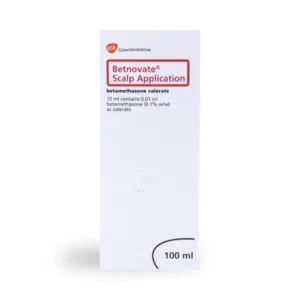 Betnovate Scalp ApplicationPrice range: £15.99 through £38.97
Disclaimer: This article is for informational purposes only and does not constitute medical advice. Always consult a healthcare professional for diagnosis and treatment of medical conditions.
How this content was created
This article was written based on reliable, evidence-based sources, including clinical guidelines from the NHS and NICE. The content was authored by a qualified pharmacist and clinically reviewed by a senior medical professional to ensure accuracy, clarity, and relevance for a UK audience.
References
At Courier Pharmacy, we know that great skin care is never one-size-fits-all. Whether you need a prescription for severe dermatitis or a bespoke compounded formulation for your unique sensitivities, our expert team is here to provide discreet, professional support. If you’re finding it hard to get your skin under control, see how our online pharmacy can help.
Explore our personalised dermatology treatments at Courier Pharmacy