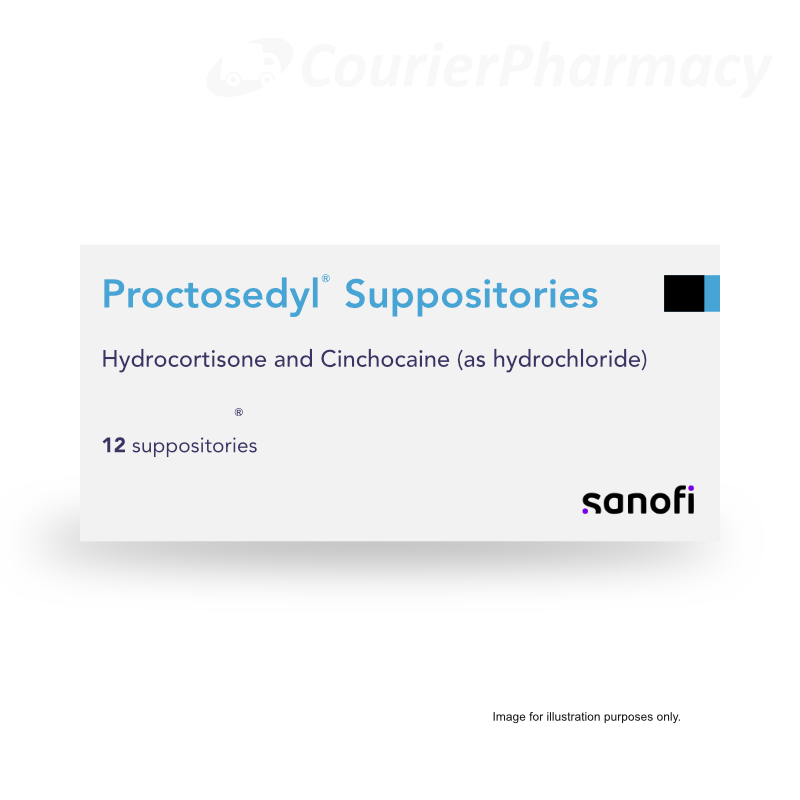
Proctosedyl suppositories are a short-course treatment for piles, combining hydrocortisone to calm inflammation with cinchocaine to relieve pain and itching.
Proctosedyl suppositories are a rectal medicine used to ease symptoms caused by haemorrhoids (piles). They can also be used for other painful irritation around the back passage. They’re designed to melt after insertion, so the medicine can work directly at the sore area rather than relying on your whole body to process it.[2]
They contain two key ingredients: hydrocortisone (a mild steroid that reduces inflammation and swelling) and cinchocaine hydrochloride (a local anaesthetic that helps numb pain, burning, and itching). That combo is why Proctosedyl suppositories are often used when symptoms feel “inside”, and a cream alone isn’t cutting it.[2]
It’s important to set expectations: Proctosedyl suppositories are about short-term symptom relief. They don’t remove the underlying causes of piles, like constipation, straining, pregnancy pressure, or sitting on the loo long enough to finish a whole podcast series.The best results come when you use them alongside self-care that keeps stools soft and reduces pressure on the veins.[1][2]
Hydrocortisone helps reduce swelling, irritation, and itching
Cinchocaine helps numb pain and discomfort
Used short term, usually 5–7 days, while you also tackle triggers like constipation
MOJO WISDOM
Take control of your health by understanding your condition and what this medication is doing for you.
READ:
More information about this treatment.
UK-based doctors and pharmacists
Discreet and Confidential
UK-based doctors and pharmacists
Free, Expert Advice
No video link provided.
No video link provided.
UK-based doctors and pharmacists
Free, expert advice
Discrete and confidential
Fast delivery
Giving you trusted clinical advice for over 40 conditions
A UK regulated pharmacy providing safe, effective treatments online since 2014
Proctosedyl suppositories are a short-term treatment for haemorrhoids (piles) and related anal discomfort. This deep dive explains what they are, what’s inside them, how to use them safely, and when it’s time to get checked.
Five key takeaways
Proctosedyl suppositories are for short-term symptom relief in piles, usually 5–7 days
They combine hydrocortisone (to calm inflammation) and cinchocaine (to numb pain and itching)
If you have ongoing bleeding, severe pain, or symptoms that don’t improve, get medical advice
Lifestyle steps (fibre, fluids, toilet habits) matter as much as the medicine
Repeating steroid courses too often can irritate skin and mask problems that need checking
Overview: Proctosedyl suppositories
Piles are swollen blood vessels in or around the anus. They’re common, and they’re often linked to constipation and straining. The NHS advice is refreshingly practical: keep poo soft, avoid pushing, and don’t spend ages on the toilet.[1]
Proctosedyl suppositories can help when symptoms are flaring and you need relief to get through the day (or, let’s be honest, to sit down without wincing). The anaesthetic can make bowel movements less painful, and the steroid can reduce swelling and irritation.[2]
But because Proctosedyl contains a steroid, it’s not something to use continuously. Repeated or prolonged use can increase the risk of local irritation and may mask symptoms that need a proper check.[2]
If bleeding is present, piles are a common cause, but not the only one. The NHS guidance is clear: persistent bleeding, a change in bowel habit, weight loss, or feeling unwell should be assessed.[2]
The sweet spot is using Proctosedyl suppositories as a short “calm it down” course, while you fix the triggers (fibre, fluids, and kinder toilet habits).
Buy Proctosedyl suppositories (Prescription Only)
Proctosedyl suppositories are a Prescription Only Medicine (POM) and are only available with a valid prescription.
You can buy Proctosedyl suppositories from courierpharmacy.co.uk by completing a quick online consultation. A UK-qualified prescriber reviews your answers to make sure they’re safe and suitable for you.
How it works:
Complete online consultation — answer a few straightforward questions about your symptoms and medical history
Prescriber reviews your answers — a UK-qualified prescriber assesses whether Proctosedyl suppositories are right for you
If approved, prescription is issued — we’ll send you a valid prescription
We dispense and deliver discreetly — your order arrives in plain packaging to your door
If Proctosedyl suppositories aren’t suitable, we’ll explain why and suggest the next best option. No judgement. Just good care.
Active ingredient in Proctosedyl suppositories
Proctosedyl suppositories contain hydrocortisone and cinchocaine hydrochloride.[2] Hydrocortisone is a corticosteroid used locally to reduce inflammation, swelling, and itching. Cinchocaine is a local anaesthetic that reduces pain and irritation by numbing nerve endings.[2]
This combination is common in prescription haemorrhoid preparations because it targets both the inflammation and the discomfort at the same time.
What is are Proctosedyl suppositories for?
Proctosedyl suppositories are used for short-term symptomatic relief of haemorrhoids (piles) and associated itching (pruritus ani). [2]
NICE CKS includes Proctosedyl among topical haemorrhoidal preparations, used to relieve symptoms while self-care measures are put in place.[2] That’s key: the medicine helps you feel better, but prevention is mostly about reducing constipation and straining.
If symptoms are new, severe, or keep coming back, it’s worth getting checked. A quick assessment can confirm piles and rule out other causes of rectal bleeding or pain.
How does Proctosedyl suppositories work
Hydrocortisone reduces inflammation in the affected tissue. When inflammation settles, swelling often reduces, and itching can calm down too. That can make bowel movements less painful and reduce that constant “I can’t stop thinking about my bum” feeling.[2]
Cinchocaine works by blocking nerve signals locally. That numbing effect can reduce pain, burning, and itching. It doesn’t fix the cause of piles, but it can make symptoms much more manageable while the area heals.[2]
Suppositories deliver medicine internally. That local delivery can be useful when symptoms feel inside the back passage, where an external cream may not reach well.[2]
Because steroids can be absorbed to some degree, especially if used longer than recommended, short courses are the safer approach. That’s why guidance focuses on limited duration use.[2]
How to use Proctosedyl suppositories
Try to empty your bowels first, if you can. Wash your hands before and after use. These steps sound basic, but they reduce irritation and help the suppository stay in place.
Remove the suppository from its wrapper and insert it gently into the anus. Many people find it easier lying on their side with one knee bent. Staying still for a short time afterwards can help it settle and start melting rather than sliding straight back out (not glamorous, but true).
If you’re also using other haemorrhoid treatments, avoid layering lots of products unless you’ve been advised to. Too many products can irritate the area and make symptoms harder to judge.
Warnings and precautions: Proctosedyl suppositories
If you have significant bleeding, severe pain, a change in bowel habit, weight loss, or you feel unwell, get medical advice. Don’t assume it’s “just piles”, even though piles are common.
If you have an infection in or around the anus, steroid-containing products may not be suitable. Steroids can reduce inflammation but may also affect local immune response, so it’s important to check first. [2]
Avoid prolonged or repeated use unless a clinician advises it. If you need Proctosedyl suppositories often, it’s a sign something else needs fixing (constipation, diarrhoea, pregnancy-related pressure, or another condition). [2]
If you’re pregnant or breastfeeding, ask for personalised advice. Short-term use may be considered, but it should be guided by a clinician.
Side effects: Proctosedyl suppositories
Most people tolerate short courses well. The most common issues tend to be local: mild burning, irritation, or discomfort after insertion.[2]
Some people can develop sensitivity reactions, such as a rash or worsening irritation. If symptoms feel clearly worse after starting, stop and seek advice.[2]
With steroid-containing products, long-term or frequent use can increase the risk of skin thinning and other steroid-related effects. That’s why the focus is on short-term use.[2]
If you think you’re having a serious allergic reaction (swelling, breathing difficulty, widespread rash), seek urgent medical help.
Drug interactions: Proctosedyl suppositories
Because Proctosedyl is used locally, interactions are less common than with tablets. Still, it’s sensible to tell your prescriber about your medicines, especially if you’re on treatments that affect immunity or if you’re using other steroid products.[2]
If you’re taking anticoagulants and have rectal bleeding, the priority is assessment rather than symptom-masking, because bleeding risk and causes need checking.[2]
If you’re using other rectal products, spacing them out may reduce irritation. If you’re unsure, ask a pharmacist for a simple plan.
FAQ: Proctosedyl suppositories
What are Proctosedyl suppositories used for?
They’re used for short-term relief of haemorrhoids (piles) and anal itching (pruritus ani).
How long should I use Proctosedyl suppositories?
They’re usually used short term, typically 5–7 days, unless your prescriber advises otherwise.
Do Proctosedyl suppositories cure piles?
They help symptoms, but they don’t fix causes like constipation or straining. Self-care is key for prevention.
Are Proctosedyl suppositories for internal piles?
They’re often used when symptoms are internal, because suppositories deliver medicine inside the back passage.
Can Proctosedyl suppositories help with itching?
Yes. Hydrocortisone reduces inflammation and cinchocaine numbs itching and discomfort.
Can Proctosedyl suppositories help with pain?
Yes. Cinchocaine is a local anaesthetic that reduces pain signals.
What if I have bleeding with piles?
Piles can bleed, but persistent or heavy bleeding should be assessed. Don’t keep self-treating without a check.
What are the red flags with piles symptoms?
Persistent bleeding, weight loss, change in bowel habit, severe pain, or feeling unwell should be assessed.
Can I use Proctosedyl suppositories if I’m pregnant?
Ask for personalised advice. Short-term use may be considered, but it should be guided by a clinician.
Can I use Proctosedyl suppositories while breastfeeding?
Ask for advice, especially if symptoms persist. Short courses may be considered, but it should be personalised.
Can I use Proctosedyl suppositories for longer than a week?
Not usually. Repeated or prolonged use can increase irritation and steroid-related risks. Get assessed if symptoms persist.
How do I insert Proctosedyl suppositories?
Wash hands, unwrap, insert gently into the anus, and stay still briefly so it can settle.
Should I use Proctosedyl suppositories before or after a bowel movement?
Many people use them after a bowel movement so the medicine stays in place longer. Follow your label directions.
Can I use Proctosedyl suppositories with other piles treatments?
Sometimes, but avoid stacking products without advice. Too many products can irritate the area.
Will Proctosedyl suppositories numb the area?
Yes. Cinchocaine numbs nerve endings to reduce pain and itching.
What if Proctosedyl suppositories sting?
Mild irritation can happen. If it’s severe or worsening, stop and seek advice.
Can Proctosedyl suppositories cause an allergic reaction?
Yes, though uncommon. Stop and get help if you get a rash, swelling, or breathing difficulty.
What can I do at home to prevent piles coming back?
Increase fibre, drink fluids, avoid straining, and don’t sit on the toilet for long periods.
Do I need to see a GP for piles?
Not always. But if symptoms persist beyond a week, recur often, or you have red flags, get checked.
Can constipation make piles worse?
Yes. Constipation and straining are major triggers, so stool-softening habits matter.
When should I speak to a pharmacist?
If you’re unsure it’s piles, you’re pregnant/breastfeeding, you have ongoing bleeding, or symptoms aren’t improving, ask.
Disclaimer: This article is for informational purposes only and does not constitute medical advice. Always consult with a qualified healthcare professional before starting any new treatment.