

A cholesterol blood test is a simple yet powerful tool for checking your heart health. It measures the different types of fats, known as lipids, in your blood, giving you a clear snapshot of your cardiovascular risk long before any symptoms appear. Think of it as a personal report card for your arteries, helping you understand what’s happening inside your body so you can take proactive steps towards a healthier future.
Table of contents
- Five key takeaways for your cholesterol test
- What a cholesterol test actually measures
- The main players in your lipid profile
- Why non-HDL cholesterol matters
- Key components of your cholesterol blood test
- Don’t focus one number
- Preparing for your test: Do you really need to fast?
- When you might still need to fast
- From your GP to at-home kits: How to get tested
- The traditional GP blood test
- The rise of at-home cholesterol testing
- Comparing at-home collection methods
- What your cholesterol results actually mean
- Decoding your Lipid Profile
- UK cholesterol level guidelines at a glance
- Building a complete picture of your health
- What to do if your cholesterol results are high
- Lifestyle first: Practical changes that make a real difference
- Understanding medical treatments like statins
- FAQs: Your cholesterol test questions answered

Five key takeaways for your cholesterol test
- 1. It’s more than one number: Your test measures several things: “bad” LDL cholesterol, “good” HDL cholesterol, triglycerides, and total cholesterol. Understanding how they work together is key.
- 2. Fasting is often not needed: Modern UK guidelines have made testing more convenient. For most routine checks, you no longer need to fast, making it easier to fit into your busy life.
- 3. At-home tests are reliable: Modern at-home kits from accredited providers like Courier Pharmacy are just as accurate as a GP test because they use the same certified labs as the NHS.
- 4. Your results are a starting point: A high reading isn’t a final diagnosis. It’s an opportunity to have a conversation with your healthcare provider about positive lifestyle changes or treatment options.
- 5. Context is everything: Your cholesterol levels are just one part of your overall health picture. Your doctor will consider them alongside your age, family history, and lifestyle to assess your true risk.

A pharmacist’s tip “Many people believe that if they feel healthy, their cholesterol must be fine. But high cholesterol often has no symptoms. I’ve seen many patients, like a fit 45-year-old marathon runner, who were shocked to find their levels were high due to genetics. A routine cholesterol blood test is a proactive check-up for your arteries, giving you the chance to make small changes now to prevent big problems later.”
What a cholesterol test actually measures
When you get the results of a cholesterol blood test, it can feel like you’re trying to decipher a secret code. But it’s not just one single number; it’s a detailed report on the different types of fats, or lipids, circulating in your bloodstream. Getting to grips with each part is the first step toward understanding your heart health.
To make sense of it all, let’s use an analogy. Think of your bloodstream as a busy motorway. Your cholesterol report—often called a lipid profile—breaks down the different kinds of “traffic” flowing through it. This helps us spot potential traffic jams or blockages long before they cause a serious problem.
The main players in your lipid profile
Your report will usually show four key measurements. Each one tells a different part of the story about what’s happening inside your arteries.
- Total cholesterol: This is your overall traffic count. It measures all the cholesterol in your blood, combining the good and the bad. While it gives a general overview, it doesn’t tell the full story on its own.
- Low-Density Lipoprotein (LDL): Often called the “bad” cholesterol, LDL is like slow, sticky traffic on the motorway. High levels can lead to a build-up of fatty deposits, called plaques, in your arteries—a process known as atherosclerosis. This narrows the road, increasing the risk of blockages that could cause a heart attack or stroke.
- High-Density Lipoprotein (HDL): This is the “good” cholesterol, acting as the motorway’s cleanup crew. HDL’s job is to pick up excess cholesterol from the arteries and carry it back to the liver, where it’s safely removed from the body. Higher HDL levels are a good thing, as they help keep the motorway clear.
- Triglycerides: These are another type of fat found in your blood, separate from cholesterol. Think of them as extra cargo being carried by lorries. High levels can also contribute to the narrowing of your arteries, particularly when combined with high LDL or low HDL.

Why non-HDL cholesterol matters
These days, many UK health professionals also look closely at your non-HDL cholesterol. The calculation is simple: it’s your total cholesterol figure minus your HDL cholesterol.
This number gives you a combined total of all the “bad” types of cholesterol, including LDL. It’s now considered one of the most accurate predictors of cardiovascular risk because it accounts for all the particles that can contribute to artery-clogging plaques.
A cholesterol test breaks down the different types of lipids, or fats, in your blood. This table explains what each measurement means and what the ideal targets are according to UK guidelines.
Key components of your cholesterol blood test
| Measurement | What it is | Healthy target (UK guidelines) |
| Total Cholesterol | The sum of all cholesterol types in your blood. | 5 mmol/L or less |
| LDL Cholesterol | “Bad” cholesterol that can build up in arteries. | 3 mmol/L or less |
| HDL Cholesterol | “Good” cholesterol that helps clear arteries. | Above 1 mmol/L |
| Non-HDL Cholesterol | All “bad” cholesterol types combined. | 4 mmol/L or less |
| Triglycerides | A type of fat that stores excess energy. | Below 2.3 mmol/L (fasting) |
By looking at these numbers together, you and your healthcare provider can build a much clearer picture of your heart health and decide on the best next steps.
Don’t focus one number
A pharmacist’s insight “I often tell patients not to panic if one number is slightly off. For example, your total cholesterol might be a bit high, but if your HDL is also high, that’s a positive sign. The non-HDL cholesterol and the ratio between your triglycerides and HDL often give us a much better real-world picture of your risk.”
The prevalence of high cholesterol is significant; in fact, around 1 in 2 adults in the UK have elevated levels. According to healthy cholesterol levels from the NHS, your total cholesterol should ideally be 5 mmol/L or less, while your non-HDL should be 4 mmol/L or less.
Understanding these components, including how they relate to your family history and genetics, empowers you to have a much more meaningful conversation with your healthcare provider. For those interested in how genetics can influence health markers, our guide to genomic testing in the UK is a great resource.
Preparing for your test: Do you really need to fast?
The advice on getting ready for a cholesterol blood test has changed over the years, and it’s a welcome shift. For a long time, the standard instruction was to fast for 8-12 hours, which meant nothing to eat or drink except water. This was mainly to get a precise reading of your triglycerides, as they can temporarily shoot up after a meal.
But let’s be honest, fasting was a pain. It meant scrambling for an early morning appointment, skipping your usual breakfast, and sometimes even delaying important medications. For many people, especially those managing conditions like diabetes, it was a genuine hurdle that could put them off getting tested altogether.
The modern approach to fasting
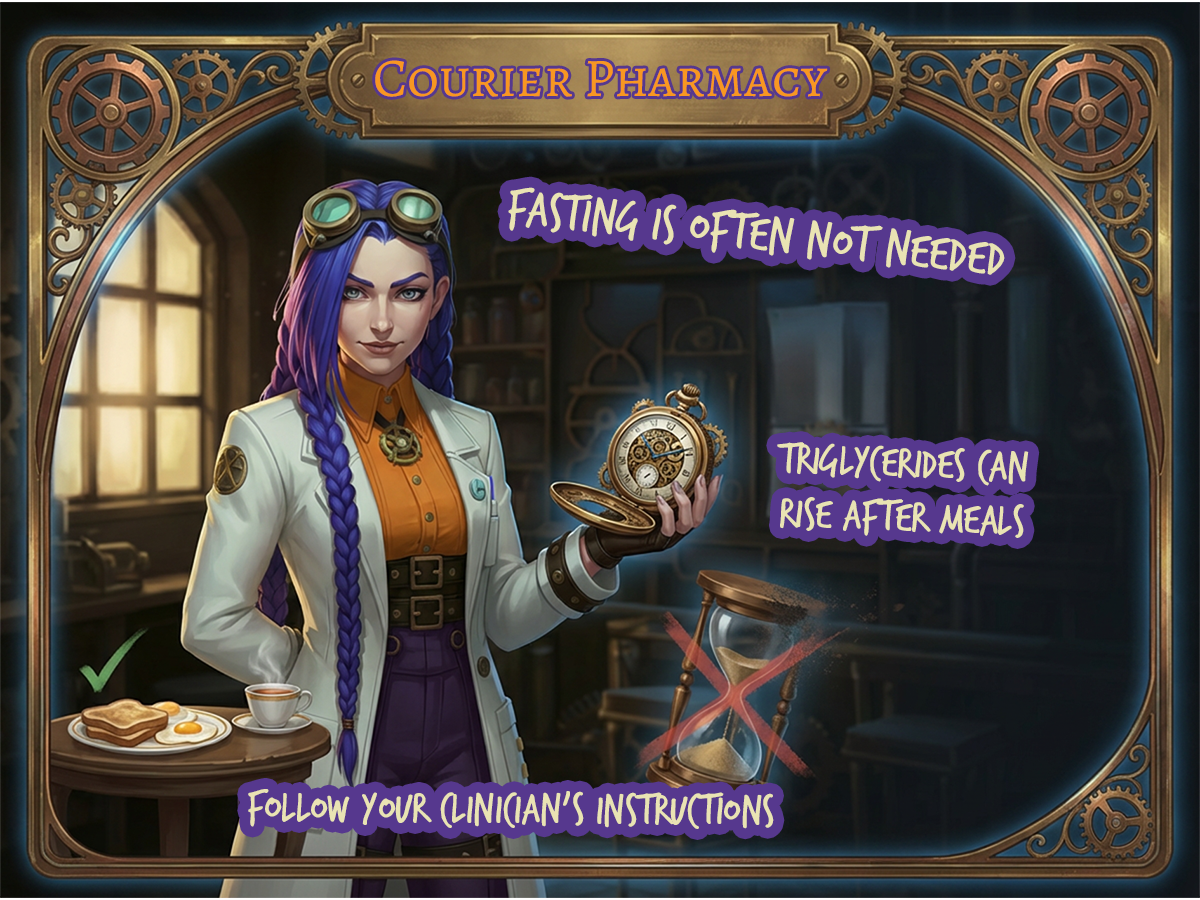
Thankfully, UK health guidelines have caught up with real life. For most routine cholesterol checks, a non-fasting test is now considered perfectly fine and just as useful for checking your overall cardiovascular risk. This practical approach gives a better snapshot of how your cholesterol levels actually behave throughout a normal day.
This is a big step forward in making preventative health checks easier for everyone. One of the major shifts in the upcoming 2025 guidelines is the formal move to non-fasting lipid panels as the go-to screening method for adults over 40, breaking from decades of clinical tradition. You can read more about how the NHS is closing in on cholesterol and what these changes mean.
When you might still need to fast
Although non-fasting tests are now the norm for routine screening, there are still a few situations where your doctor or pharmacist might ask you to fast.
- Monitoring high triglycerides: If your past results showed very high triglyceride levels, a fasting test gives a clearer baseline reading without the influence of a recent meal.
- Diagnosing certain conditions: Your doctor might need you to fast if they are looking into other metabolic conditions at the same time as your cholesterol.
- Before starting medication: Occasionally, a fasting level is taken before you start cholesterol-lowering medication to get an accurate starting point to measure progress against.
A pharmacist’s tip “My advice is always to follow the specific instructions you’re given. If your doctor requests a fasting test, there’s a good reason. However, if you’re using one of our home blood test kits for a routine check, a non-fasting sample is usually fine. Just be sure to note on any forms whether you have fasted or not—this context is vital for accurate interpretation.”
No matter what, always drink plenty of water before your test. Being well-hydrated makes it much easier to get a good blood sample. You should also take your regular medications as usual unless your doctor tells you otherwise. A little preparation helps ensure the whole process is smooth and your results are as reliable as possible.
From your GP to at-home kits: How to get tested
These days, checking your cholesterol is easier and more convenient than ever, putting you firmly in the driver’s seat of your own health. Knowing your options—from a traditional visit to your GP to the simplicity of a modern at-home kit—means you can choose the path that best fits your life.
Each method is designed to give you the crucial information needed for a clear picture of your cardiovascular health. Let’s walk through the different ways you can get a cholesterol blood test, comparing the familiar process at a doctor’s surgery with the new generation of reliable home testing services.
The traditional GP blood test
For most of us, the go-to route has always been a visit to the GP or a local clinic. It’s a straightforward and well-established process.
- Appointment: First, you’ll book an appointment, usually with a nurse or phlebotomist.
- Venous draw: They will collect a blood sample from a vein in your arm, typically from the inner elbow. This is what’s known as a venous blood draw.
- Lab analysis: The sample is then sent off to an accredited NHS laboratory to be analysed.
- Results: Your GP gets the results back, usually within a week or so, and will then get in touch to discuss them with you.
This method is tried and trusted, and it comes with the immediate benefit of a face-to-face chat if your results need a closer look.
The rise of at-home cholesterol testing
If you’ve got a packed schedule or simply prefer the comfort of your own home, at-home kits are a brilliant alternative. Services like Courier Pharmacy use the very same certified labs as the NHS, which means your results are just as accurate and reliable.
A pharmacist’s tip “I often recommend at-home testing for routine monitoring. A client of mine, a busy professional, used one of our weekend kits and discovered his cholesterol was high. He just hadn’t had time for a GP visit. This early detection allowed him to make simple diet changes that brought his levels back to normal, preventing a more serious issue down the line.”

Comparing at-home collection methods
At-home kits give you a few different ways to collect your sample, and each has its own perks.
- Finger-prick test: This is the most common method. You use a small, spring-loaded lancet to prick the side of your fingertip and collect a few drops of blood in a vial. It’s quick, simple, and feels like just a tiny pinch.
- Tasso device: This clever little device is a virtually painless alternative. You just place it on your upper arm, press a button, and it uses a slight vacuum to draw blood from the tiny capillaries just under the skin. It collects a larger, high-quality sample with much less fuss than a traditional finger-prick, making it a fantastic choice if you’re not a fan of needles.
These modern testing options remove many of the old barriers to getting checked. For a convenient and accurate way to monitor your health, you might be interested in our Wellman Home Blood Testing Kit, which provides comprehensive insights from a simple sample.
What your cholesterol results actually mean
Getting your cholesterol blood test report back is one thing, but figuring out what all those numbers actually mean for your health is the real prize. These aren’t just figures on a page; they’re valuable clues about your cardiovascular risk. They help you and your healthcare provider make smart decisions based on UK guidelines.
It’s less about seeing a label like ‘high’ or ‘low’ and more about piecing together your personal health story from these clinical numbers.
Decoding your Lipid Profile
Your results are measured against established healthy ranges. For instance, a common goal for most people is to keep total cholesterol below 5 mmol/L. But a single number almost never tells the whole story.
Your doctor is really looking at the balance between the different types of lipids. A total cholesterol reading that’s a bit on the high side might not be a major red flag if your ‘good’ HDL cholesterol is also high. This suggests your body is doing a good job of clearing out excess fats. It’s this bigger picture that’s so important for an accurate assessment.
This flowchart gives a great side-by-side look at the two main ways you can get your cholesterol checked: the traditional GP route or a convenient home test.
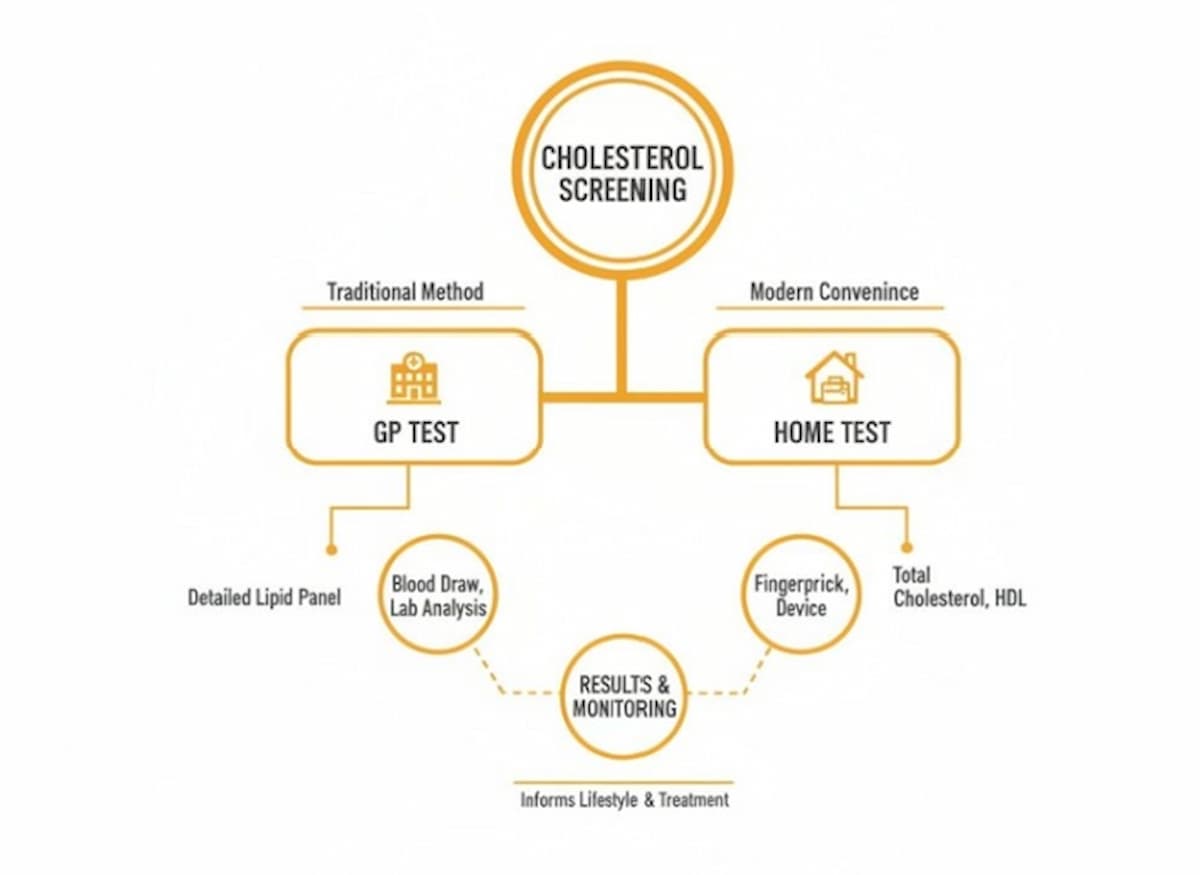
The key thing to notice here is that both paths lead to analysis at a certified lab. This means you can trust your results are reliable, whether you pop into a clinic or do the test from the comfort of your own home.
UK cholesterol level guidelines at a glance
So, what are the ideal numbers to aim for? This table breaks down the current UK targets for each part of your cholesterol test, giving you a clear benchmark.
| Lipid Component | Ideal Level (mmol/L) | High Level (mmol/L) |
| Total Cholesterol | Below 5.0 | 6.0 and above |
| Non-HDL Cholesterol | Below 4.0 | 5.0 and above |
| LDL Cholesterol | Below 3.0 | 4.0 and above |
| HDL Cholesterol | Above 1.0 (men), 1.2 (women) | N/A (higher is better) |
| Triglycerides | Below 2.3 | 2.3 and above |
Remember, these are just guidelines. Your doctor will help you understand what these numbers mean for you personally.
Building a complete picture of your health
Your cholesterol numbers are just one piece of a much larger puzzle. To get a truly personalised picture of your heart health, your healthcare provider will look at other crucial factors too.
- Age and gender: Your risk profile naturally shifts as you get older.
- Family history: If close relatives have had premature heart disease, that’s a significant factor.
- Lifestyle: Your diet, how active you are, whether you smoke, and your alcohol intake all play a huge role.
- Other health conditions: Things like high blood pressure and diabetes also have a big influence on your overall risk.
Research shows demographics really do matter. An analysis of over 2,600 customer blood tests found that lipid scores often get worse more significantly with age in men.
A pharmacist’s tip “Don’t get fixated on a single number from one test. It’s the overall pattern and the trend over time that really tells the story. A one-off slightly high reading could just be an anomaly, but a consistently rising LDL level over several tests is a clear signal to take action.”

What to do if your cholesterol results are high
Seeing a high number on your cholesterol blood test can be a bit of a shock, but it’s best to see it as an opportunity. Think of it as an early warning signal from your body, giving you a chance to take positive, proactive steps to protect your heart for the long run. It’s not a diagnosis in itself, but a crucial starting point for a conversation with your GP or pharmacist.
The next steps usually involve two main paths that often work in tandem: making meaningful lifestyle changes and, if needed, starting medical treatment. Your plan will be tailored to you, combining these approaches to best suit your individual health profile and risk factors. The goal is to move from a place of concern to one of confidence, armed with a clear, actionable strategy.
Lifestyle first: Practical changes that make a real difference
For many people, simple tweaks to daily habits can have a surprisingly big impact on cholesterol levels. Your GP or pharmacist can offer specific advice, but the focus is nearly always on diet and physical activity. We’re not talking about a drastic, miserable overhaul, just small, sustainable swaps that add up over time.
A pharmacist’s tip “I often suggest starting with breakfast. Swapping your usual cereal for a bowl of porridge or adding beans to your toast introduces more soluble fibre, which acts like a sponge to soak up ‘bad’ LDL cholesterol. Another easy win is replacing butter on your bread with mashed avocado or a nut butter to increase your intake of healthy fats.”
Other effective changes include:
- Eating more oily fish: Aim for two portions a week of fish like salmon or mackerel. The omega-3 fatty acids they contain are brilliant for heart health. If you don’t eat fish, high-quality supplements can be a good alternative: you can learn more about omega-3 acid capsules here.|
- Getting more active: Just 30 minutes of moderate exercise, like a brisk walk, five times a week can help raise your ‘good’ HDL cholesterol.
-
Product on sale
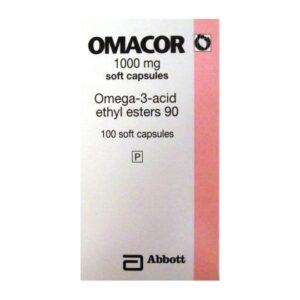 Omacor (Omega-3-Acid) 1000mg 100 CapsulesPrice range: £18.99 through £74.99
Understanding medical treatments like statins
If lifestyle changes alone aren’t getting your cholesterol down to a safe level, your doctor may recommend medication. The most commonly prescribed medications for high cholesterol in the UK are statins.
Statins work by reducing the amount of cholesterol your liver produces. You can think of them as turning down the tap on your body’s internal cholesterol factory. This directly lowers the level of LDL cholesterol in your blood, which in turn reduces the risk of those fatty plaques building up in your arteries.
It’s crucial to work closely with your healthcare provider to find the right approach for you. A high result isn’t a final verdict—it’s simply the first step on a journey towards better health.

FAQs: Your cholesterol test questions answered
How often should I get my cholesterol checked?
In the UK, the NHS invites all adults aged 40 to 74 for a health check, including a cholesterol test, every five years. However, if you have risk factors like a family history of heart disease, diabetes, or high blood pressure, your GP may recommend more frequent testing.
Can one unhealthy meal affect my results?
A single indulgent meal is very unlikely to have a significant impact on your core cholesterol numbers like LDL and HDL. Your lipid profile reflects your health over weeks and months, not just one meal. It’s your consistent dietary habits that truly matter.
Are at-home cholesterol tests reliable?
Yes, absolutely. High-quality at-home tests from accredited providers use the exact same certified labs as the NHS. As long as you follow the collection instructions carefully, the results are just as accurate and reliable as those from a GP visit, offering a convenient way to monitor your health.
A pharmacist’s insight “Patients often ask if a home test is ‘as good as’ a GP test. The lab analysis is identical. The main difference is convenience. For routine checks, an at-home test empowers you to take control of your health on your own schedule, which is a massive advantage for staying proactive.”
Summary
Understanding your cholesterol blood test is a vital step in managing your long-term heart health. The test provides a detailed breakdown of lipids in your blood, including LDL (“bad”), HDL (“good”), and triglycerides, offering much more than a single cholesterol number. With modern, convenient options like at-home testing, monitoring your levels has never been easier. Remember, your results are a starting point for a positive conversation with your healthcare provider. A high reading is not a final verdict but an opportunity to take proactive steps through lifestyle changes and, if necessary, medical treatment to protect your cardiovascular health for years to come.
Disclaimer: This article is for informational purposes only and does not constitute medical advice. Always consult a healthcare professional for diagnosis and treatment of medical conditions.
At Courier Pharmacy, we make it simple to monitor your health from home with accurate, easy-to-use testing kits and expert follow-up care. Take the first step towards understanding your cardiovascular health today. Learn more at https://courierpharmacy.co.uk.