

In this guide, we’ll look at how common chronic fatigue syndrome is in the UK, why the numbers have changed, who is most affected, why diagnosis can be missed, and what to do if you think you have it.
Table of contents
- Five key takeaways
- Quick answer: How many people have chronic fatigue syndrome in the UK?
- First, a quick note on names: ME/CFS and chronic fatigue syndrome
- Why the UK numbers have changed (and why it’s not just “better maths”)
- Who is most affected by chronic fatigue syndrome in the UK?
- Age: When does chronic fatigue syndrome peak?
- Where you live can affect your chance of diagnosis
- Ethnicity and chronic fatigue syndrome: why the data raises eyebrows
- Why chronic fatigue syndrome is so often missed
- Why a diagnosis still matters (even without a single cure)
- Practical tips: what to do if you think you have chronic fatigue syndrome
- FAQs about chronic fatigue syndrome in the UK
- References
-
 TRT eligibility home blood testing kit£49.99
 -
 Cholesterol home blood test kit£49.99
 -
 Wellman home blood test kit£149.99
Five key takeaways
- Around 400,000+ people may be living with ME/CFS in England based on newer NHS-record studies, which is higher than older estimates.
- Chronic fatigue syndrome is not rare, but it is often under-recognised, under-recorded, or mislabelled.
- Rates appear to vary by age, sex, ethnicity, and where you live, which suggests gaps in access to diagnosis.
- A diagnosis still matters, even without a single “cure”, because it unlocks support, symptom management, and validation.
- If you suspect chronic fatigue syndrome, the safest next step is a structured GP review using NICE guidance, plus careful pacing and red-flag checks, or contact Courier Pharmacy.

Quick answer: How many people have chronic fatigue syndrome in the UK?
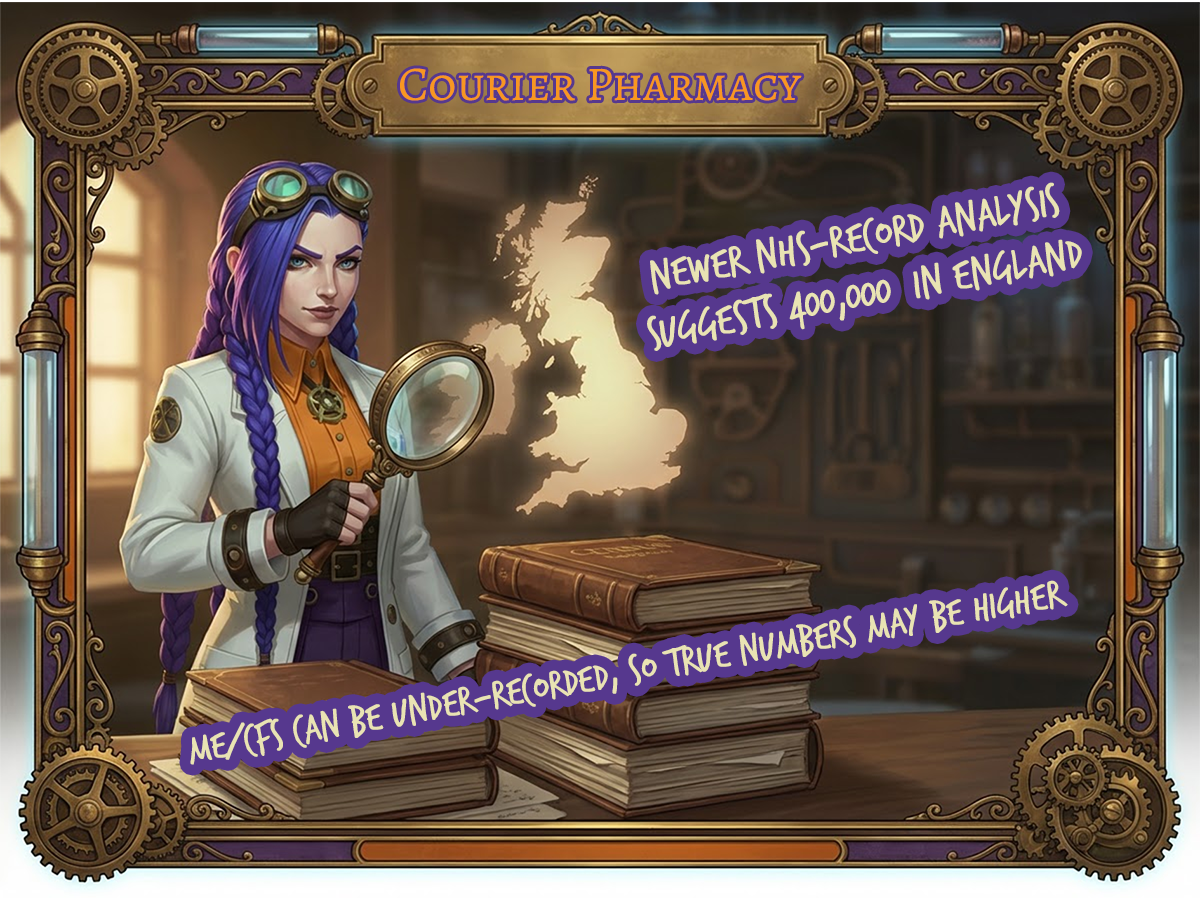
Most older UK figures quoted around 250,000 people with ME/CFS. A newer analysis of NHS records in England suggests the true number may be closer to 404,000 people (and possibly more if under-diagnosis is factored in) [1].
It’s worth saying this clearly: chronic fatigue syndrome is common enough that most of us will know someone affected, even if we don’t realise it yet.
First, a quick note on names: ME/CFS and chronic fatigue syndrome
You’ll often see:
- ME/CFS (myalgic encephalomyelitis/chronic fatigue syndrome)
- chronic fatigue syndrome
- post-viral fatigue syndrome
NICE uses ME/CFS, and many clinicians do too, but lots of patients still search for chronic fatigue syndrome (and that’s what this blog focuses on for clarity) [2].
If you want a plain-English overview of symptoms and diagnosis, our guide, “What is chronic fatigue syndrome?”, is a good starting point [3].
Why the UK numbers have changed (and why it’s not just “better maths”)
The newer estimate that points to about 404,000 people in England comes from research using NHS data from more than 62 million people. It focused on recorded diagnoses of ME/CFS and post-viral fatigue syndrome [1].
That matters because it’s not a small survey or a single clinic’s patient list. It’s big, real-world data.
But the bigger story is this: chronic fatigue syndrome is hard to count because it’s hard to diagnose consistently.
Here are the main reasons the numbers can shift:
- People don’t always get diagnosed (or they’re told it’s stress, burnout, depression, “just getting older”, or “just long COVID”).
- Coding varies between GP practices.
- Access to specialist services varies by region.
- Some groups may be underdiagnosed, which makes the recorded numbers look lower than reality.
So when you see a higher estimate, it doesn’t necessarily mean chronic fatigue syndrome suddenly became more common. It may mean we’re finally seeing more of what was already there.

Who is most affected by chronic fatigue syndrome in the UK?
The NHS-record study found a striking difference between women and men. The lifetime prevalence may be as high as 0.92% in women and 0.25% in men in England [1].
In plain terms, women appear far more likely to have a recorded diagnosis.
Why? There are a few possibilities:
- True biological differences (immune and hormonal factors are being studied).
- Differences in help-seeking and access.
- Differences in how symptoms are interpreted and recorded.
It’s probably a mix.

Age: When does chronic fatigue syndrome peak?
The same analysis suggested prevalence peaks around age 50 for women and 60 for men [1].
That doesn’t mean younger people can’t be affected. They can. But it does hint at a midlife “hot zone” where symptoms and diagnosis become more visible.
Where you live can affect your chance of diagnosis
One of the most uncomfortable findings in the NHS-record analysis is how much recorded diagnosis varies by region.
Some areas had much higher recorded rates than others [1]. That could reflect:
- different local services
- different GP awareness
- different recording habits
- different patient pathways
If diagnosis depends partly on postcode, that’s a system problem, not a patient problem.

Ethnicity and chronic fatigue syndrome: why the data raises eyebrows
The same research found that white people were far more likely to have a recorded diagnosis than people from other ethnic backgrounds, with substantially lower recorded rates in Chinese, Asian/Asian British, and Black/Black British groups [1].
This doesn’t automatically mean chronic fatigue syndrome is genuinely rarer in those communities. It may mean:
- symptoms are less likely to be recognised
- people face barriers to accessing care
- cultural factors affect whether people present to services
- clinicians may interpret fatigue differently
- diagnosis and coding may be inconsistent
If you’re building services, this is a big flashing light: we need fairer access to assessment and diagnosis.
Why chronic fatigue syndrome is so often missed
Chronic fatigue syndrome isn’t “just tiredness”. It’s a multi-system condition that can affect energy, sleep, cognition, pain, and how your body responds after activity.
A key feature is post-exertional malaise: symptoms can worsen after physical or mental effort, sometimes with a delay [2].
But in real life, people often get funnelled into other labels first:
- depression or anxiety
- insomnia
- iron deficiency
- thyroid issues
- burnout
- long COVID
- “medically unexplained symptoms”
Some of those can overlap, coexist but also need to be ruled out.
NICE is clear that ME/CFS should be considered when symptoms persist and aren’t explained by another condition, especially when post-exertional malaise is present [2].
Why a diagnosis still matters (even without a single cure)
Let’s be honest: people want a straightforward test and a straightforward treatment.
We don’t have that.
But a diagnosis of chronic fatigue syndrome can still be hugely valuable because it can:
- validate what you’re experiencing
- help you access support at work or in education
- support benefit applications where appropriate
- guide safer symptom management (especially pacing)
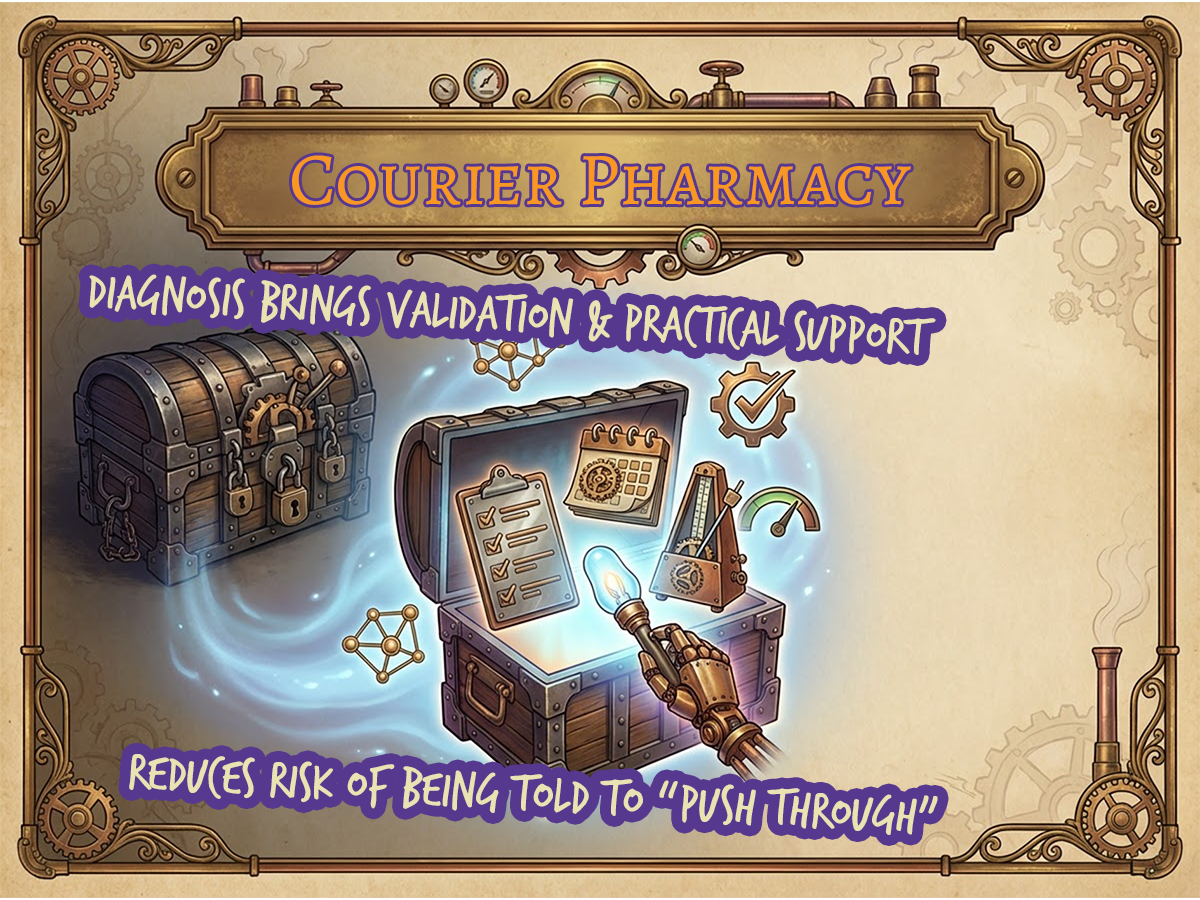
- reduce the risk of being pushed into unhelpful “just exercise more” advice
The authors of the NHS-record study and the quoted experts strongly made this point: diagnosis helps people be seen and supported [1].
Practical tips: what to do if you think you have chronic fatigue syndrome
If you’re reading this and thinking, “This sounds like me,” here’s a sensible next step plan.
1) Book a GP appointment and bring notes
Write down:
- when symptoms started
- what makes them worse (especially activity)
- how long “crashes” last
- sleep quality
- brain fog and concentration issues
- pain, dizziness, palpitations, gut symptoms
It’s not being dramatic. It’s being efficient.
2) Where does Courier Pharmacy fit in?
If you can’t get the support you need from your GP right now, we can help. Courier Pharmacy offers a free CFS consultation, and you can order eligible CFS treatments online after a confidential clinical review, such as the 3R CFS treatment plan.
2) Ask about NICE guidance for ME/CFS
NICE sets out how ME/CFS should be recognised and managed, including red flags and the importance of personalised energy management [2].
3) Rule out common lookalikes
Your GP may check for things like anaemia, thyroid disease, vitamin deficiencies, diabetes, inflammatory markers, coeliac disease, and more depending on symptoms [2].
4) Start pacing now (not after you’re “sure”)
If post-exertional malaise is part of your picture, pacing is often the safest early strategy.
A simple way to explain pacing is: stop trying to “push through” on good days, because it can steal from tomorrow.
5) Watch for red flags
Seek urgent medical advice if you have:
- chest pain, severe shortness of breath, fainting
- new neurological symptoms (weakness, severe headaches, confusion)
- unexplained weight loss, night sweats, persistent fevers
- severe mood changes or suicidal thoughts
These aren’t typical “wait and see” symptoms.
FAQs about chronic fatigue syndrome in the UK
How many people have chronic fatigue syndrome in the UK?
Newer NHS-record research suggests around 404,000 people may be affected in England alone, which is higher than older estimates of 250,000.
Is chronic fatigue syndrome the same as long COVID?
Not exactly. They can overlap, and long COVID can include post-exertional symptom worsening, but they’re not identical diagnoses. NICE has separate guidance for ME/CFS and for long COVID pathways.
Can chronic fatigue syndrome be cured?
There’s no single cure. Management focuses on symptom relief, pacing/energy management, and support for sleep, pain, and quality of life.
Why is chronic fatigue syndrome hard to diagnose?
Because there’s no single diagnostic test, symptoms overlap with other conditions, and access to consistent assessment varies.
What’s the most important symptom to mention to a GP?
If you have it, mention post-exertional malaise: feeling significantly worse after activity, often with a delay.
Disclaimer: This article is for informational purposes only and does not constitute medical advice. Always consult with a qualified healthcare professional for any health concerns or before making any decisions related to your health or treatment.
References
[1] Open Access Government (n.d.) ‘New study reveals over 400,000 people are affected by ME/CFS in the UK’. Available at: https://www.openaccessgovernment.org/new-study-reveals-over-400000-people-are-affected-by-me-cfs-in-the-uk/191840/ (Accessed: 14 February 2026).
[2] National Institute for Health and Care Excellence (2021) ‘Myalgic encephalomyelitis (or encephalopathy)/chronic fatigue syndrome: diagnosis and management (NICE guideline NG206)’. Available at: https://www.nice.org.uk/guidance/ng206 (Accessed: 14 February 2026).
[3] Courier Pharmacy (n.d.) ‘What is chronic fatigue syndrome?’. Available at: https://courierpharmacy.co.uk/what-is-chronic-fatigue-syndrome/ (Accessed: 14 February 2026).
[4] Medical Mojo (n.d.) ‘The evidence for low dose naltrexone (LDN) use in fibromyalgia’. Available at: https://medicalmojo.co.uk/the-evidence-for-low-dose-naltrexone-ldn-use-in-fibromyalgia/ (Accessed: 14 February 2026).
How this content was created
This article was written using UK clinical guidance and publicly available research, and reviewed for accuracy and safety by a UK-registered pharmacist. It is designed to support (not replace) a consultation with your GP or specialist.