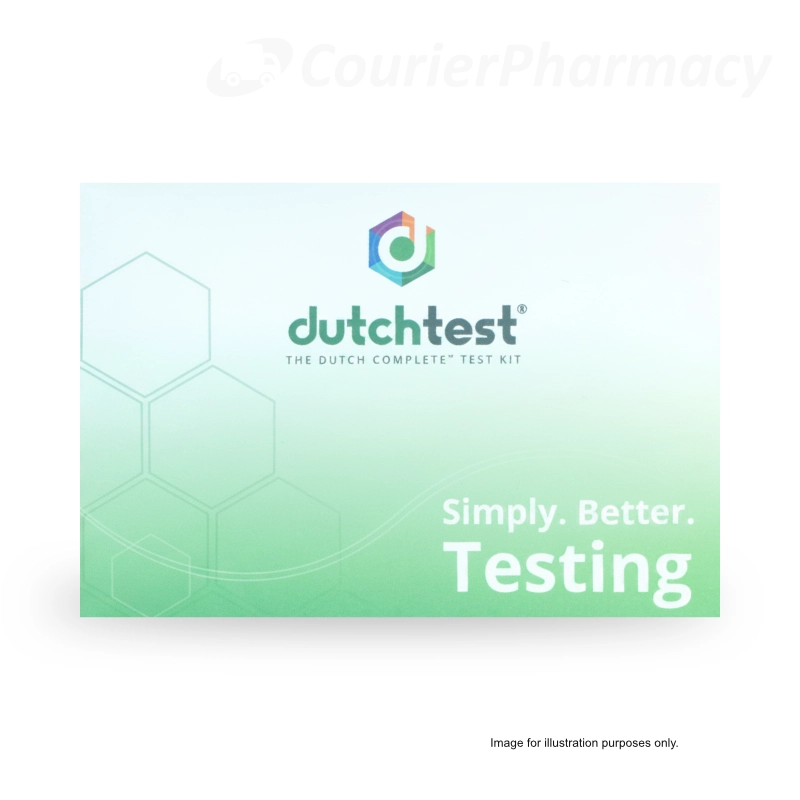
The DUTCH Complete™ is a private functional health test using dried urine samples collected at home across one day. It measures sex hormones (oestrogens, progesterone, androgens), their metabolites, daily free cortisol patterns, cortisone, melatonin markers, and selected organic acids using LC-MS/MS methodology.
The test is supplied in the UK as a wellness-focused exploration tool, not as an MHRA-regulated diagnostic test, and does not replace NHS or private medical investigation. Results are interpreted by a qualified practitioner alongside your wider clinical picture and lifestyle context. Available from Courier Pharmacy with practitioner-led interpretation built into the supply.
DUTCH Complete test (UK): what it is and what it measures
The DUTCH Complete™ is a private functional health test. You collect dried urine samples at home over one day. Then the lab analyses the samples.
What the test measures
This test looks at hormone and stress markers, including:
Sex hormones: oestrogens, progesterone, androgens
Hormone by-products (metabolites)
Cortisol pattern across the day (free cortisol)
Cortisone
Melatonin markers
Selected organic acids
How the lab tests your samples
The lab uses LC–MS/MS, which is a precise lab method. As a result, it can measure very small amounts of these markers.
Important UK note (wellness test, not a diagnosis)
In the UK, this test is a wellness tool, not a medical diagnosis. It is not an MHRA-regulated diagnostic test. So, it does not replace NHS or private medical investigations.
How to use your results
A qualified practitioner should review your results. Because symptoms often have more than one cause, they will also consider your medical history and lifestyle. Finally, they can help you decide what to do next.
Available from Courier Pharmacy
You can order the DUTCH Complete™ test from Courier Pharmacy. We include practitioner-led interpretation as part of the service.
MOJO WISDOM
Take control of your health by understanding your condition and what this medication is doing for you.
READ:
More information about this treatment.
UK-based doctors and pharmacists
Discreet and Confidential
UK-based doctors and pharmacists
Free, Expert Advice
No video link provided.
No video link provided.
UK-based doctors and pharmacists
Free, expert advice
Discrete and confidential
Fast delivery
Giving you trusted clinical advice for over 40 conditions
A UK regulated pharmacy providing safe, effective treatments online since 2014
Understanding how your body produces, uses, and clears hormones — across a full day rather than at a single blood-draw moment — can surface patterns that conventional snapshot testing misses. The DUTCH Complete™ test (Dried Urine Test for Comprehensive Hormones) uses LC-MS/MS analytical methodology to measure sex hormones, their metabolites, daily free cortisol patterns, and melatonin markers from four dried urine samples collected at home across one day. Results are interpreted by a qualified practitioner alongside your wider clinical picture, lifestyle context, and wellbeing goals.
At Courier Pharmacy, we believe healthcare should suit the person, not the marketing budget. The DUTCH Complete is a private functional health test, not an NHS diagnostic investigation, and we treat it that way: as a tool for wellness exploration and personal optimisation rather than for medical diagnosis or disease screening. Whether you’re navigating perimenopause and menopause questions, exploring patterns alongside chronic fatigue or MCAS, looking at hormone metabolism in the context of weight management or PCOS, or wanting to understand cortisol rhythms in the context of stress and sleep, this page is here to help you decide whether the DUTCH Complete fits your situation and how to use it well.
Important regulatory note before you read further
The DUTCH Complete is supplied in the UK and EU as a private functional health test for informational, educational, wellness, and research purposes only. It is not an MHRA-regulated in-vitro diagnostic medical device. It is not intended for medical diagnosis, disease screening, or clinical decision-making. It is not a replacement for licensed clinical laboratory testing through the NHS or private medical pathways.
The test results should be considered alongside your wider clinical picture, lifestyle context, and other health data by a qualified practitioner. Hormone-related concerns that warrant medical diagnosis (suspected hormone-producing tumours, severe menopause symptoms requiring HRT decisions, suspected adrenal disease, fertility investigations, suspected cancer) should be pursued through your GP and appropriate specialist medical pathways. The DUTCH Complete can sit alongside that medical pathway as a wellness-focused source of additional information, but it does not replace it.
Five key takeaways
The DUTCH Complete™ measures sex hormones (oestrogens, progesterone, androgens including testosterone and DHEA), their metabolites, daily free cortisol patterns across four time-points, cortisone, melatonin markers, and selected organic acid markers from four dried urine samples collected at home in a single day.
The analytical methodology is liquid chromatography-tandem mass spectrometry (LC-MS/MS), the same gold-standard technique used in research-grade hormone analysis.
The test is supplied as a private functional health test for informational, educational, and wellness purposes. It is not an MHRA-regulated diagnostic test and does not replace NHS or private medical diagnostic pathways.
Results are interpreted by a qualified practitioner alongside your wider clinical picture, lifestyle, and wellbeing context. We do not supply DUTCH results direct-to-consumer without practitioner interpretation, because the patterns are nuanced and require careful contextualisation.
The DUTCH Complete can support informed conversations about hormone metabolism, cortisol rhythm, menstrual cycle patterns, and lifestyle approaches to wellbeing, particularly for patients with complex chronic health pictures where standard snapshot blood testing has not given useful information.
Why choose Courier Pharmacy for the DUTCH Complete™ test
At Courier Pharmacy, our whole approach is built around the idea that healthcare should fit the person, not the marketing budget. For the DUTCH Complete specifically, that means handling a test that is widely marketed elsewhere with much more clinical caution than the standard functional medicine sales pitch. Our service is shaped by the philosophy of Dr Ada Jex-Cori, our brand pharmacist, who has built her practice around accessible, honest, personalised care. Her view is straightforward: you are not broken. The system is the problem. We are here to change that.
We supply the DUTCH Complete with practitioner-led interpretation built into the supply, not as a direct-to-consumer kit. This is deliberate. The test produces nuanced data that benefits from careful contextual interpretation, and the gap between what the analytical chemistry can measure and what specific clinical claims can reliably be made is where many DUTCH-supplying clinics overreach. Our practitioner will tell you honestly what the test can usefully add to your picture and where the limits of interpretation lie.
For perimenopause and menopause patients, we will not use the DUTCH to bypass the NICE NG23 menopause care pathway. If you need HRT decisions, you need a qualified menopause practitioner working with you on standard menopause assessment, with the DUTCH as supplementary information at most. We can support you through that pathway, including arranging menopause consultation alongside or separately from the DUTCH.
For MCAS, EDS, POTS, ME/CFS, and chronic illness patients, the DUTCH can occasionally add useful information to a complex picture, but the test is not a substitute for the wider clinical work of managing these conditions. We will be honest about whether DUTCH testing is likely to be the most useful next step for your situation, or whether other investigations and treatments deserve priority.
For patients hoping the DUTCH will provide a diagnosis or specific treatment direction, we will be honest about what the test can and cannot do. We would rather lose a sale than supply a test that won’t deliver what the patient is hoping for.
Trust is the part that has to be earned, not claimed. We’re GPhC-regulated, we ground our content in NHS, NICE, and peer-reviewed sources alongside the manufacturer information, and we follow the Nordic Laboratories wellness/educational positioning framework rather than the more aggressive clinical-diagnostic claims sometimes made by other suppliers. We’d rather give you the right answer than a quick sale.
Order the DUTCH Complete™ test from Courier Pharmacy
The DUTCH Complete™ is supplied as a private functional health test through Courier Pharmacy, with practitioner-led interpretation built into the supply.
Here is how our service works:
Complete a brief online consultation answering questions about your situation, your reasons for considering the DUTCH Complete, your medical history, current medicines, and (if applicable) menstrual cycle pattern.
A supporting practitioner reviews your situation and confirms whether the DUTCH Complete is appropriate for you. This pre-test conversation sets expectations and ensures the test fits your wellness goals.
If appropriate, your test kit is dispatched discreetly to your home.
You collect the four dried urine samples on your chosen collection day, following the kit instructions.
You post the samples back to the laboratory using the pre-paid return packaging.
Results take approximately 21 days from sample receipt.
You have a post-test consultation with the supporting practitioner to walk through the results, the patterns observed, and what (if anything) might be a useful next step.
If the DUTCH Complete isn’t suitable for you, we will explain why and suggest alternatives. That might be:
A different DUTCH version (Cortisol Awakening Response add-on, DUTCH Sex Hormone Metabolites only, DUTCH Cycle Mapping for women with complex cycle patterns).
A referral to your GP for conventional hormone testing through NHS pathways.
Referral to a qualified menopause practitioner if perimenopause and menopause questions are the main reason for testing.
A different functional health test more appropriate for your specific question.
A focus on lifestyle, nutrition, sleep, and stress conversations without the need for testing at all.
Our free fortnightly drop-in clinics at Insomnia, Derby run every other week from 12 to 1pm. Hormone health, perimenopause and menopause questions, cortisol and stress patterns, MCAS, fibromyalgia, chronic fatigue, low-dose naltrexone, and the wider questions about functional health testing are all conversations we have regularly at these sessions. No appointment needed, no charge, no pressure.
What's in the DUTCH Complete™ test kit
One sealed collection kit containing:
Four filter paper collection strips, each labelled for a specific time-point during the collection day
Sealed plastic pouches for sample storage
Pre-paid postal return packaging
Detailed written instructions for sample timing, collection technique, storage, and return
Patient information leaflet covering the test purpose, regulatory framing, and what to expect from results
The kit is for single-use, single-person testing. Collection happens at home; no clinic visit is needed for the sample collection itself. Practitioner consultations for pre-test discussion and post-test result interpretation are arranged separately.
Who is the DUTCH Complete™ for?
Common wellness-focused use scenarios
Perimenopausal women exploring hormone patterns alongside clinical menopause care. The test can add information about hormone metabolism patterns that conventional serum testing doesn't show, used as a context-building tool alongside (not instead of) NICE NG23 menopause pathway care with a qualified menopause practitioner.
Women with cycle-related symptoms (PMS, heavy periods, perimenopause irregular cycles, PCOS): used to understand individual hormone metabolism patterns as part of a wellness conversation, alongside conventional gynaecological investigation where appropriate.
Patients with chronic fatigue, ME/CFS, or unexplained low-energy patterns exploring cortisol rhythm as one piece of their wider clinical picture, alongside conventional investigation of fatigue causes.
Patients with MCAS, hypermobile EDS, POTS, or fibromyalgia where complex chronic illness often involves overlapping hormone and cortisol rhythm patterns. The DUTCH can add information that snapshot blood testing misses.
Men exploring patterns around energy, libido, mood, or body composition alongside conventional medical investigation of any underlying causes (low testosterone, depression, sleep disorders, metabolic syndrome).
Patients on (or considering) functional medicine or integrative care pathways where hormone metabolism is part of the wider conversation.
Not appropriate for
Patients seeking medical diagnosis: the DUTCH is not a diagnostic test. Hormone-related symptoms that warrant diagnosis (severe menopause symptoms requiring HRT decisions, suspected pituitary or adrenal disease, fertility investigation, suspected hormone-producing tumours) should be investigated through your GP and appropriate specialists.
Patients seeking to guide HRT dosing: HRT decisions are made on clinical grounds, not on urinary hormone metabolite testing. Patients considering or on HRT should work with a qualified menopause practitioner using standard menopause assessment pathways.
Patients on oral HRT or combined oral contraceptive pills: these significantly affect urinary hormone metabolite patterns and limit useful interpretation. The test is not appropriate during oral HRT or combined OCP use. (Transdermal HRT — patches, gels, sprays — affects results less but interpretation is still complex; discuss with your practitioner.)
Pregnant or breastfeeding women: hormone patterns during pregnancy and breastfeeding are physiologically very different and the DUTCH is not validated for use in these states.
Children and adolescents: the DUTCH is not appropriate for paediatric use.
Patients with significant renal impairment: urinary excretion patterns are affected by reduced renal function, limiting interpretation reliability.
Patients in acute medical crisis: hormone patterns during acute illness, hospitalisation, or acute stress do not reflect baseline patterns. Wait until at least 4 to 6 weeks after acute illness resolution before testing.
Patients hoping for diagnosis of "adrenal fatigue": this is not a recognised medical condition. The DUTCH can show interesting cortisol rhythm patterns but does not diagnose any specific clinical entity.
What the DUTCH Complete™ can and cannot do
This is the most important section of the page, because the gap between what the analytical chemistry can measure and what specific clinical claims can be made from those measurements is where careful judgement matters.
What the DUTCH Complete can do
Measure urinary hormone metabolites accurately using LC-MS/MS methodology, with good analytical precision.
Map daily cortisol rhythm across four time-points, providing a more nuanced picture than a single morning blood cortisol.
Show patterns in hormone metabolism including oestrogen metabolite ratios, androgen 5-alpha/5-beta ratios, and cortisol/cortisone ratios that can support practitioner-led conversations about lifestyle, nutrition, and wellness strategies.
Provide a snapshot of overnight melatonin production through urinary 6-OHMS.
Generate context-rich reports that can inform wellness exploration alongside conventional medical care.
What the DUTCH Complete cannot do
Diagnose medical conditions. Hormone-related disease (suspected hormone-producing tumours, primary adrenal disease, Cushing's syndrome, severe ovarian dysfunction, prostate disease, fertility-impacting endocrinopathies) requires NHS or private medical diagnostic investigation through your GP and specialists. The DUTCH cannot diagnose or rule out any specific medical condition.
Predict breast cancer risk reliably from oestrogen metabolite ratios. The 2:16 oestrogen metabolite ratio has been studied for decades as a potential breast cancer risk biomarker, with mixed and largely disappointing results. Current breast cancer risk assessment uses validated tools (Tyrer-Cuzick, BOADICEA, family history assessment, BRCA testing) and breast imaging. The DUTCH oestrogen metabolite pattern is interesting as a wellness-focused conversation starter but should not be relied on for breast cancer risk decisions.
Guide hormone replacement therapy (HRT) dosing. HRT decisions are made on the basis of clinical symptoms, age, menopausal status, individual risk profile, and clinical judgement by a qualified menopause practitioner, supported where appropriate by serum hormone testing and clinical guidelines (NICE NG23, British Menopause Society). Urinary hormone metabolite testing is not part of established UK HRT prescribing pathways.
Diagnose adrenal fatigue or HPA axis dysfunction as medical conditions. "Adrenal fatigue" is not a recognised medical diagnosis in the NHS, by the Royal College of Physicians, or by the Endocrine Society. Patterns in cortisol rhythm can be interesting wellness-focused information, but they are not a diagnosis. Genuine adrenal disease (Addison's disease, Cushing's syndrome) requires conventional medical investigation.
Replace conventional menopause care. NICE NG23 and the British Menopause Society set out the clinical pathway for menopause management, which is symptom-based assessment, individual risk profile discussion, and HRT decisions made with a qualified prescriber. The DUTCH may add information but does not replace this pathway.
Provide reliable results during certain conditions. The DUTCH has limitations and is less reliable when interpreted in certain situations: during use of oral HRT or oral contraceptive pills (which affect urinary metabolite patterns), during pregnancy, in patients with significant renal impairment (which affects urinary excretion), and in patients on certain medicines (steroids, some psychiatric medicines, some HRT preparations). Your practitioner will discuss whether the test is appropriate for your specific medication context.
Honest framing of evidence base
The analytical chemistry of the DUTCH (LC-MS/MS measurement of urinary metabolites) is genuinely good and well-established. The interpretive framework — the specific claims about what particular patterns mean for clinical decisions — is where the evidence base is more variable. Some interpretive elements (the broad cortisol daily rhythm picture, the basic sex hormone metabolite landscape) are well-supported. Others (the specific clinical decisions that should follow from a particular oestrogen metabolite ratio, the use of the test to guide HRT dosing, the use of the test to "diagnose" wellness conditions) are not strongly supported by peer-reviewed evidence and should be treated as conversation-starting wellness information rather than as clinical conclusions.
Our practitioner-led interpretation approach reflects this. The practitioner will tell you what the test can usefully add to your wider picture and where the limits of interpretation lie.
How to use the DUTCH Complete™ test
Before collection
Complete the pre-test consultation with the supporting practitioner (arranged through Courier Pharmacy). This conversation covers your reasons for testing, your wider clinical picture, your current medicines (some of which can affect results), the timing of collection (particularly important for women with menstrual cycles), and what you hope to learn from the test.
Arrange the test kit delivery. The kit ships discreetly to your home.
Plan the collection day. For women with regular menstrual cycles, collection is typically scheduled for days 19 to 22 of the cycle (the mid-luteal phase, when progesterone is at its peak). For perimenopausal women with irregular cycles, post-menopausal women, and men, collection can be on any day.
Avoid certain things before collection: stop melatonin supplements for at least 7 days before collection (they will skew the melatonin marker), discuss any prescription medicines with the practitioner, avoid alcohol for 24 hours before collection where possible, and aim for a typical day rather than an unusually stressful or unusually quiet one.
Sample collection day
The four samples are typically collected at:
Bedtime sample (the night before the main collection day, or first thing the morning of): this captures overnight melatonin production via the first morning urine.
Waking sample (morning): collected on waking, this provides the morning cortisol level and the morning sex hormone metabolite baseline.
Mid-morning sample: typically 2 to 3 hours after waking.
Late afternoon sample: typically late afternoon, around 4 to 6pm.
Bedtime sample of the collection day: just before bed, capturing the bedtime cortisol nadir.
(The exact number and timing of samples varies slightly between DUTCH Complete versions; the kit instructions are the definitive guide.)
Each sample involves saturating a small filter paper strip with urine and then allowing the strip to dry. Once dried, the strips are sealed in their plastic pouches.
After collection
Place all sealed sample pouches in the pre-paid postal envelope.
Post the samples back to the laboratory.
Results take approximately 21 days (+/- 4 days) from sample receipt at the laboratory.
When results are available, you will have a post-test consultation with the supporting practitioner. The practitioner will walk through the results, the patterns observed, what they may suggest in the context of your wider clinical picture, and what (if anything) might be a useful next step in your wellness exploration.
What to do with the results
Results are practitioner-interpreted because the report itself is dense and the interpretation requires nuance. Some patients find the results useful as starting points for lifestyle conversations (sleep, nutrition, stress management, exercise patterns). Others find that the results confirm patterns they already suspected. Some find that the results don't add much beyond what was already known from clinical assessment.
If the results suggest something that warrants conventional medical investigation, the practitioner will say so, and you should pursue that investigation through your GP or appropriate specialist medical pathway.
Warnings and precautions for the DUTCH Complete™ test
The DUTCH Complete is not a medicine; it is a private functional health test using dried urine samples. As such, the warnings and precautions are different from those for a medicine, but they are still substantial and worth working through carefully. The most important warnings relate to who the test is appropriate for, when results will be unreliable, and the clinical limits of what the test can be used for.
The test is not a medical diagnostic device
The most important warning is one already covered in the regulatory note at the start of this page, repeated here because it matters: the DUTCH Complete is supplied as a private functional health test for informational, educational, wellness, and research purposes only. It is not an MHRA-regulated in-vitro diagnostic medical device, and it is not intended for medical diagnosis, disease screening, or clinical decision-making.
Practical consequences of this:
Do not use the DUTCH to diagnose any specific medical condition. Symptoms that warrant diagnosis (severe menopause symptoms, suspected adrenal disease, suspected hormone-producing tumours, fertility investigation, suspected cancer) should be pursued through your GP and appropriate NHS or private medical specialists.
Do not use DUTCH results to make HRT dose decisions independently. HRT decisions are made on clinical grounds by a qualified menopause practitioner. Acting on DUTCH results without that clinical input can lead to inappropriate dosing.
Do not delay seeking medical investigation while waiting for DUTCH results. If you have symptoms that need medical attention, seek that attention through standard NHS or private medical pathways. The DUTCH 21-day turnaround is not appropriate for any situation that needs prompt medical assessment.
Specific clinical situations where the DUTCH should not be used
The test is not appropriate, and may produce misleading or uninterpretable results, in the following situations:
Pregnancy and breastfeeding: hormone patterns during pregnancy and breastfeeding are physiologically very different from baseline. The DUTCH is not validated for use in these states, and interpretation is unreliable.
Use of oral HRT or combined oral contraceptive pills: these significantly alter urinary hormone metabolite patterns and limit useful interpretation. The test should not be used during oral HRT or combined OCP use.
Significant renal (kidney) impairment: urinary excretion patterns are affected by reduced kidney function, which limits interpretation reliability. The test is generally not appropriate in moderate to severe renal impairment.
Acute illness or hospitalisation: hormone and cortisol patterns during acute medical conditions do not reflect baseline patterns. Wait at least 4 to 6 weeks after acute illness resolution before testing.
Use of systemic corticosteroids (prednisolone, hydrocortisone, dexamethasone, beclometasone above topical doses, etc.): these directly affect cortisol measurements and may also affect sex hormone patterns. The test is not appropriate during systemic corticosteroid use; results during inhaled or topical corticosteroid use may be partially affected.
Recent significant supplementation with hormone precursors (DHEA supplements, pregnenolone, melatonin, certain herbal hormone-active supplements): these can affect both the hormones being measured and the metabolite patterns reported. Stop supplements with hormone activity for at least 2 weeks before testing, except melatonin which should be stopped at least 7 days before. Discuss your specific supplement use with the supporting practitioner.
Children and adolescents under 18: the DUTCH is not appropriate for paediatric use.
Patients who do not want practitioner-led interpretation: we only supply the DUTCH with practitioner interpretation built into the supply. Patients seeking direct-to-consumer results without interpretation should look elsewhere; for our service this is a non-negotiable element of how we provide the test.
Cycle timing precautions for women with regular menstrual cycles
For women with regular menstrual cycles, the timing of sample collection significantly affects results, particularly for progesterone-related markers:
Collection is typically scheduled for days 19 to 22 of the menstrual cycle (the mid-luteal phase, when progesterone is at its peak).
Collection at other points in the cycle gives different (and often less useful) information.
For perimenopausal women with irregular cycles, post-menopausal women, and men, timing is less critical and collection can be on any day.
If you forget the correct day, restart the planning rather than collecting on the wrong day. The 21-day result turnaround makes a wasted collection costly in time and money.
Sample collection technique precautions
The test relies on correct collection technique:
Time the samples correctly: each filter paper strip is labelled for a specific time-point. Collecting at the wrong time produces misleading results, particularly for cortisol rhythm interpretation.
Dry the strips properly: incomplete drying can affect sample stability during postal transit. Follow the kit instructions exactly.
Avoid contamination: do not touch the absorbent portion of the strip; handle by the edges only.
Post the samples promptly: although dried samples are stable for some time, prompt return reduces the risk of degradation.
Keep samples at room temperature during transit: do not refrigerate or freeze. The kit packaging is designed for room-temperature postal return.
Mental health and psychological considerations
This is an area not often covered in product pages but worth mentioning honestly:
Receiving a complex hormone report with multiple "abnormal" or "outside reference range" markers can be psychologically destabilising for some patients, particularly those with health anxiety, complex chronic illness, or pre-existing distress about their symptoms.
The DUTCH report uses a "functional ranges" framework that often flags more markers as "abnormal" than conventional NHS reference ranges would. This is partly because functional ranges are narrower and partly because the test panel is broader. Many "abnormal" findings are not clinically significant.
Practitioner-led interpretation is partly designed to manage this: the practitioner contextualises the results, explains what is and isn't clinically meaningful, and helps avoid distress from over-interpretation of pattern variations.
If you have significant health anxiety, are in psychological distress about your symptoms, or are in a vulnerable mental health state, consider whether further testing is the right next step or whether other support (psychological therapy, GP review of the wider picture) would be more useful first.
Expectations and unmet expectations
Some patients order the DUTCH expecting it will "find the answer" to their symptoms. The honest reality is that for some patients it provides useful additional information, for some it confirms what was already known clinically, and for some it doesn't add much. If you order the DUTCH expecting a definitive answer that explains everything, you may be disappointed.
Our pre-test consultation is designed to set realistic expectations. If your expectations are out of line with what the test can deliver, the practitioner will discuss this honestly, and you can decide whether to proceed.
Cost and financial considerations
The DUTCH is a private test with a meaningful cost (typically £300 to £400 depending on the version and the practitioner support included). This is a real financial consideration:
The cost is not refundable once the kit has been dispatched.
A wasted collection (wrong timing, contaminated sample, lost in post) means repeating the test and the cost.
For patients on tight budgets, the same money may be better spent on other elements of their healthcare (a consultation with a specialist, a longer course of a treatment, lifestyle interventions). Be honest with yourself about whether the test is genuinely worth the spend for your situation.
Side effects of the DUTCH Complete™ test
The DUTCH Complete is a urine collection test rather than a medicine, so there are no pharmacological side effects in the conventional sense. The test does not enter the body, does not have a mechanism of action affecting physiology, and does not interact with body systems pharmacologically. However, there are some real considerations under the broader heading of "what could go wrong with this test":
Direct physical effects
There are essentially no direct physical side effects of urine collection. The collection technique involves saturating a small filter paper strip with urine and allowing it to dry. There is no needle, no injection, no medicine entering the body, and no physiological intervention.
Sample collection inconvenience
Collecting four samples at specific time-points during a single day requires planning and may be inconvenient:
The collection day needs to fit around your normal schedule but also allow accurate timing.
The morning and bedtime samples need to fit around sleep patterns.
For shift workers or patients with irregular schedules, collection timing may be more complex.
Some patients find the filter paper collection process slightly awkward.
These are practical issues rather than side effects, but worth flagging because they are part of the real experience of using the test.
Psychological effects of receiving results
This is the most clinically meaningful "side effect" of the DUTCH and is worth covering honestly:
Anxiety from "abnormal" findings: the DUTCH report uses functional medicine reference ranges that are often narrower than conventional NHS ranges, and the panel is broad. The combination means many patients see multiple markers flagged as "outside range" or "abnormal." Most of these are not clinically significant, but they can cause anxiety, particularly in patients already anxious about their health.
Disappointment if results don't explain symptoms: some patients order the DUTCH hoping the results will provide a clear explanation for their symptoms. When the results don't deliver this (because the test doesn't measure all relevant factors, or because the patient's clinical picture isn't primarily hormone-driven), the disappointment can be real.
Confusion about conflicting information: DUTCH results may seem to conflict with previous blood tests, with how you feel, or with clinical advice you've had elsewhere. The practitioner interpretation is designed to address this, but the conflict itself can be unsettling.
Inappropriate self-treatment based on results: a recognised concern with consumer functional medicine testing is that patients act on results without proper clinical context, starting supplements, hormones obtained through grey-market channels, or other treatments that aren't appropriate. Our practitioner-led interpretation is designed to reduce this risk, but the risk is real if patients seek interpretation elsewhere or attempt to self-interpret.
Consequences of acting on results inappropriately
If DUTCH results are acted on outside appropriate clinical pathways, the consequences can be significant:
Starting hormones inappropriately: some patients try to obtain HRT, testosterone, DHEA, or other hormone preparations based on DUTCH results without proper medical assessment. This can cause genuine harm, including cardiovascular risk, cancer risk, and metabolic complications.
Stopping conventional medical treatment: patients may abandon licensed medical treatment based on functional medicine interpretations, which can lead to worsening of underlying conditions.
Inappropriate supplement regimens: based on perceived metabolic patterns, some patients start aggressive supplement protocols that may interact with medicines or cause harm in their own right.
Pursuing further unhelpful testing: one DUTCH result can lead to a cascade of further functional tests, each interpreted in isolation, building a complex picture that isn't clinically meaningful but is financially significant.
Our practitioner-led interpretation is the main protection against these outcomes. If you have results interpreted elsewhere, particularly in a non-clinical functional medicine setting, the risk of these consequences increases.
Skin or postal issues
Very rare practical "side effects":
Some patients experience minor skin irritation from handling the filter paper strips. This is minimal and short-lived.
Samples lost in post are uncommon but possible. The kit includes pre-paid return packaging designed for safe transit, but postal services are not perfectly reliable. If your samples don't arrive at the laboratory within a reasonable timeframe, contact us.
Reporting concerns
If you experience any concerning effects, psychological distress, or clinical issues following DUTCH testing, contact our pharmacist or the supporting practitioner. Significant clinical concerns should be raised with your GP. The MHRA Yellow Card scheme is for licensed medicines and devices; it does not formally cover private functional health tests, but you can still report concerns through the GPhC or via direct contact with us.
Drug interactions and test interferences for the DUTCH Complete™ test
The DUTCH Complete is a urine collection test rather than a medicine, so there are no pharmacological drug interactions in the conventional sense. However, several medicines and supplements significantly affect the urinary hormone metabolite patterns the test measures, and these "test interferences" are important to understand and discuss with the supporting practitioner before testing.
Medicines and substances that significantly affect DUTCH results
The following directly affect the hormones or hormone pathways measured by the test, and either contraindicate testing or require careful interpretation:
Hormone replacement therapy (HRT)
Oral HRT (oral oestradiol, oral progesterone preparations): significantly alters urinary metabolite patterns. The test is generally not appropriate during oral HRT use.
Transdermal HRT (oestradiol patches, gels, sprays): affects results less than oral HRT but interpretation is still complex, particularly for the oestrogen metabolite patterns. Testing during transdermal HRT use is possible but requires careful practitioner interpretation, and patients should discuss specific timing of HRT application versus sample collection with the practitioner.
Cyclical or continuous combined HRT: results need interpretation in the context of the specific regimen and the cycle phase.
Combined oral contraceptive pills (COCP)
Combined OCPs (containing ethinylestradiol and a progestogen) significantly alter urinary hormone metabolite patterns. The test is generally not appropriate during combined OCP use.
Progestogen-only contraceptives (mini-pill, contraceptive injection, contraceptive implant, hormonal IUS): affect results less than combined OCPs but still interfere with interpretation. Discuss with the practitioner.
Other hormone-related medicines
Testosterone replacement therapy (gels, injections, oral preparations): significantly affects androgen and androgen metabolite patterns. Testing during TRT use is possible but requires careful interpretation.
DHEA supplements: directly affect DHEA and downstream androgen patterns. Stop for at least 2 weeks before testing.
Tamoxifen, aromatase inhibitors (anastrozole, letrozole): significantly affect oestrogen patterns. Testing during these medicines is not generally useful.
GnRH analogues (goserelin, leuprorelin, triptorelin): significantly suppress sex hormone production. Testing during use is not generally useful.
Cyproterone acetate, spironolactone (when used for anti-androgen effects): affect androgen patterns.
Finasteride, dutasteride: 5-alpha-reductase inhibitors that affect the 5-alpha/5-beta androgen ratio specifically.
Corticosteroids
Systemic corticosteroids (oral prednisolone, oral hydrocortisone, dexamethasone, methylprednisolone, etc.): directly affect cortisol measurements and may also affect sex hormone patterns. Testing is not appropriate during systemic corticosteroid use.
Inhaled corticosteroids (beclometasone, fluticasone, budesonide): can affect cortisol measurements at higher doses; lower-dose inhaled use is generally compatible with testing but discuss with the practitioner.
Topical corticosteroids: minimal systemic effect at standard doses; generally compatible with testing.
Melatonin and sleep-related supplements
Melatonin supplements: directly affect the 6-OHMS melatonin marker. Stop for at least 7 days before testing.
Sleep-aid herbal preparations containing valerian, hops, passionflower, or other hormone-active herbs: may affect results. Stop for at least 7 days before testing where possible.
Psychiatric medicines that affect cortisol or hormone pathways
SSRIs and SNRIs: can affect cortisol patterns and some hormone metabolism. Testing is possible during use but interpretation should account for this.
Tricyclic antidepressants: similar considerations to SSRIs.
Benzodiazepines: can affect cortisol patterns. Generally compatible with testing but worth flagging.
Antipsychotics: some affect prolactin, cortisol, and sex hormone patterns. Discuss with the practitioner.
Herbal supplements with hormone activity
A wide range of herbal preparations can affect hormone or cortisol patterns. Common ones include:
Ashwagandha: affects cortisol patterns.
Rhodiola: affects cortisol patterns.
Liquorice root: affects the cortisol/cortisone ratio through 11?-HSD enzyme inhibition.
Chasteberry (Vitex agnus-castus): affects progesterone and prolactin patterns.
Black cohosh: affects oestrogen patterns.
DIM (diindolylmethane), I3C (indole-3-carbinol): directly affect oestrogen metabolite pathways. Stop for at least 2 weeks before testing.
Resveratrol, quercetin: may affect hormone metabolism patterns.
Other relevant medicines
Anabolic steroids: significantly distort the entire hormone panel. Testing during anabolic steroid use is not useful.
Performance-enhancing supplements containing prohormones: similar considerations.
Insulin-sensitising medicines (metformin): generally compatible with testing but may have minor effects on hormone patterns over time, particularly in PCOS.
Medicines that do not significantly affect DUTCH results
For context, the following are generally compatible with DUTCH testing and do not significantly affect interpretation:
Most antihypertensive medicines (ACE inhibitors, ARBs, calcium channel blockers, beta-blockers, diuretics at usual doses).
Most statins.
PPIs (omeprazole, lansoprazole, esomeprazole, pantoprazole) and H2 antagonists (famotidine).
Most antibiotics at standard treatment doses.
Most pain medicines (paracetamol, NSAIDs, codeine combinations).
Most diabetes medicines other than the considerations noted above.
Low-dose naltrexone (LDN).
Most thyroid hormone replacement at stable doses (although thyroid status itself affects hormone patterns and should be discussed with the practitioner).
What to do about interfering medicines
The practical approach is:
List all your medicines and supplements during the pre-test consultation: prescription medicines, over-the-counter medicines, herbal supplements, vitamins, hormone-active products. Do not assume something is irrelevant; let the practitioner judge.
The practitioner will identify any items that significantly affect the test: some will mean the test should be postponed, some will mean the test should not be done at all in your current situation, and some will be flagged for interpretation purposes.
Stop interfering supplements as advised: typical recommendations are stopping melatonin for at least 7 days, hormone-active supplements (DHEA, DIM, I3C, etc.) for at least 2 weeks, and certain herbs for 7 to 14 days. Do not stop prescription medicines without prescriber advice.
Do not change prescription medicines for the test: the test is a wellness exploration tool. It is not worth changing licensed medical treatment to optimise results. If a prescription medicine interferes with testing, either accept the interference and have the practitioner interpret around it, or postpone testing.
Reporting test interference concerns
If you realise after sample collection that you forgot to mention a medicine or supplement, contact us promptly. The practitioner can decide whether the results are still interpretable, whether they should be interpreted with caveats, or whether retesting is appropriate.
Frequently asked questions about the DUTCH Complete™ test
What is the DUTCH Complete test?
The DUTCH Complete™ (Dried Urine Test for Comprehensive Hormones) is a private functional health test that measures sex hormones, their metabolites, daily free cortisol patterns, cortisone, melatonin markers, and selected organic acids from four dried urine samples collected at home across one day. It uses LC-MS/MS analytical methodology and is supplied for informational, educational, wellness, and research purposes.
Is the DUTCH a diagnostic medical test?
No. The DUTCH is supplied in the UK as a private functional health test, not as an MHRA-regulated in-vitro diagnostic medical device. It is intended for wellness exploration and personal optimisation, not for medical diagnosis, disease screening, or clinical decision-making. Hormone-related concerns that warrant medical diagnosis should be pursued through your GP and appropriate specialists.
How is the DUTCH different from a blood hormone test?
Blood hormone tests measure hormones at a single moment, which can miss daily variation patterns. The DUTCH measures hormone metabolites in urine across four time-points in one day, providing a picture of daily rhythm and metabolism. Blood tests are diagnostic (MHRA-regulated) where DUTCH is wellness-focused (not MHRA-regulated). For diagnostic purposes, blood tests through NHS or private medical pathways are the right approach; for wellness exploration of patterns and metabolism, the DUTCH adds different information.
Can the DUTCH diagnose menopause?
No. Menopause is diagnosed clinically by symptoms and age (12 months without a period after age 45 in most cases), not by hormone testing. NICE NG23 specifically advises against using hormone testing routinely to diagnose menopause in women over 45. For women under 45 or with atypical presentations, FSH testing through NHS pathways is the appropriate investigation. The DUTCH does not replace this.
Can the DUTCH guide my HRT dose?
No. HRT decisions are made on clinical grounds — symptoms, age, individual risk profile, response to treatment — by a qualified menopause practitioner working with standard menopause assessment guidelines (NICE NG23, British Menopause Society). Urinary hormone metabolite testing is not part of established UK HRT prescribing pathways. The DUTCH may add background information but should not guide HRT dose decisions.
Can the DUTCH predict my breast cancer risk?
No, not reliably. The oestrogen metabolite ratios reported in the DUTCH (particularly the 2:16 hydroxyoestrogen ratio) have been studied as potential breast cancer risk biomarkers for decades with mixed and largely disappointing results. Current breast cancer risk assessment uses validated tools (Tyrer-Cuzick, BOADICEA), family history, BRCA testing where appropriate, and breast imaging. The DUTCH oestrogen pattern is interesting wellness information but should not be relied on for breast cancer risk decisions.
Can the DUTCH diagnose adrenal fatigue?
"Adrenal fatigue" is not a recognised medical diagnosis in the NHS, by the Royal College of Physicians, the Endocrine Society, or by mainstream UK clinical practice. The DUTCH can show interesting patterns in daily cortisol rhythm, but these patterns are not a diagnosis of any specific clinical entity. Genuine adrenal disease (Addison's disease, Cushing's syndrome) is diagnosed through conventional medical investigation.
Is the DUTCH worth the money?
That depends on what you're hoping to learn and your specific situation. For wellness-focused exploration of hormone metabolism patterns alongside conventional clinical care, with practitioner-led interpretation, the DUTCH can add useful information. For patients hoping the DUTCH will provide a diagnosis or guide HRT decisions, it will not deliver that, and the spend may be better directed elsewhere. We will be honest about this during the pre-test consultation.
How is the sample collected?
Four small urine samples are collected on filter paper strips at specified time-points across one day, then dried, sealed in plastic pouches, and posted back to the laboratory. Collection is non-invasive and home-based; no clinic visit is needed.
When in my cycle should I collect the sample?
For women with regular menstrual cycles, collection is typically scheduled for days 19 to 22 of the cycle (the mid-luteal phase, when progesterone is at its peak). For perimenopausal women with irregular cycles, post-menopausal women, and men, collection can be on any day. Your practitioner will help with timing.
Do I need to stop my medicines before the test?
It depends on the medicines. Stop melatonin supplements at least 7 days before collection. Discuss any prescription medicines with the supporting practitioner; some medicines (oral HRT, oral contraceptives, steroids, some psychiatric medicines) significantly affect interpretation. The test is not appropriate during oral HRT or combined oral contraceptive use.
How long do results take?
Approximately 21 days (+/- 4 days) from sample receipt at the laboratory.
How are results delivered?
Results are delivered through a post-test consultation with the supporting practitioner. The practitioner walks through the report, explains the patterns, and discusses what (if anything) might be a useful next step in the context of your wider clinical picture. You also receive a copy of the report for your records.
Do I need a practitioner to interpret the results?
Yes, and we supply the test with practitioner interpretation built in. The DUTCH report is detailed and contains nuanced information that benefits from careful contextual interpretation. We do not supply DUTCH results direct-to-consumer without practitioner involvement.
Can men take the DUTCH Complete?
Yes. The test is used in men to explore patterns around androgen metabolism, cortisol rhythm, and overall hormone metabolism in the context of questions around energy, libido, mood, body composition, sleep, and stress.
Can people with MCAS, EDS, or chronic fatigue benefit from the DUTCH?
Possibly. Complex chronic illness often involves overlapping hormone and cortisol rhythm patterns that conventional snapshot testing doesn't capture. Some patients find the DUTCH adds useful information for the wider conversation about their condition. Others find it doesn't add much beyond what they already know. We will be honest about whether DUTCH testing is likely to be a useful next step for your specific situation.
Can I take the DUTCH if I'm on HRT?
Transdermal HRT (patches, gels, sprays) affects DUTCH results less than oral HRT, but interpretation is still complex. The test is not appropriate during oral HRT or combined oral contraceptive use, because the metabolite patterns are significantly altered. Discuss your specific HRT regime with the supporting practitioner before testing.
Can I take the DUTCH if I'm pregnant or breastfeeding?
No. Hormone patterns during pregnancy and breastfeeding are physiologically very different from baseline, and the DUTCH is not validated for use in these states.
How does the DUTCH compare to other functional hormone tests?
The DUTCH is one of the more comprehensive urinary hormone tests available, with LC-MS/MS methodology and a wide panel. Alternatives include simpler urinary hormone tests, salivary hormone tests (which sample more time-points but cover fewer hormones), and conventional serum testing (which is diagnostic where the DUTCH is wellness-focused). The right test depends on what question you're trying to answer.
Is the DUTCH available on the NHS?
No. The DUTCH is a private functional health test and is not provided through NHS pathways. NHS hormone testing uses different methodologies (serum testing, occasional 24-hour urine collections) for specific diagnostic indications.
Where does my sample go?
Samples are processed at the Precision Analytical laboratory in the US, the primary manufacturer of the DUTCH test. Nordic Laboratories (Denmark) is the UK and EU distributor that coordinates supply.
How do I order the DUTCH Complete from Courier Pharmacy?
Complete the online consultation at courierpharmacy.co.uk. A supporting practitioner will review your situation, confirm the test is appropriate, and arrange dispatch of the kit. The practitioner will also be available for the pre-test conversation and the post-test results interpretation.
Disclaimer: This article is for information only and isn’t a substitute for personal medical advice. Always speak to a qualified prescriber before starting or changing treatment.
More than a prescription: our community
Healthcare shouldn't only happen when you're paying for it. Every fortnight we run free drop-in talks and clinics at Insomnia, Derby, from 12pm to 1pm. Bring a question, bring a friend, bring a stack of bewildering letters from another clinic; we'll sit with you. We cover hormone health, perimenopause and menopause, cortisol and stress patterns, MCAS, fibromyalgia, chronic fatigue, low-dose naltrexone, hair loss, men's health, and whatever else people bring through the door. No appointment. No cost. No pressure. Learn more about our community talks.
How this content was created
Written by the Courier Pharmacy editorial team and reviewed by a GPhC-registered pharmacist, with regulatory framing aligned to the Nordic Laboratories wellness/educational positioning. Grounded in the latest NHS, NICE, BNF guidance on hormone-related conditions, manufacturer and distributor information, peer-reviewed studies on hormone metabolite testing, and the real questions patients bring to our drop-in clinics in Derby.