

If you’ve just been told that Nalcrom might help your MCAS, you’re probably juggling two questions at once. What exactly is it, and how do people in the UK manage with it in real life? The short answer is that Nalcrom is the UK brand name for sodium cromoglicate, an oral mast cell stabiliser used to help reduce mast cell symptoms, especially gut-related symptoms and food-triggered flares [1].
This guide explains what Nalcrom does, how to take it, where people often get confused, what supply problems can mean in practice, and why some patients need specific formulations. If standard leaflets have left you with more questions than answers, you’re in the right place.
-
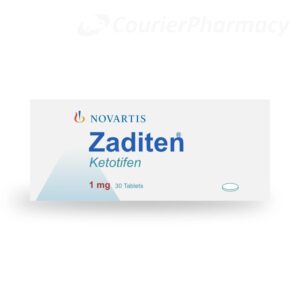 Ketotifen 1mg (Zaditen) tabletsPrice range: £29.99 through £199.99
 -
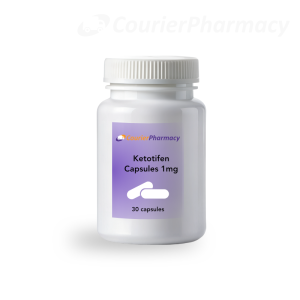 Ketotifen 1mg capsulesPrice range: £35.99 through £199.99
 -
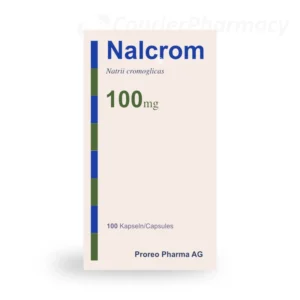 Nalcrom (sodium cromoglycate) 100mg capsulesPrice range: £99.99 through £279.99
What Nalcrom is and how it fits into MCAS care
Nalcrom for MCAS means using sodium cromoglicate to help calm mast cells before they release their chemical messengers. In the UK, Nalcrom is the brand name often first heard[1].
It isn’t a new or experimental medicine. A peer-reviewed review notes that cromolyn was first synthesised in 1965, and oral cromolyn is used for both systemic mastocytosis and MCAS [1]. That matters because it places Nalcrom in the category of long-used mast cell stabilisers, not a recent trend.
For many patients, doctors consider it when symptoms suggest mast cell activity in the gut or after food. Examples include abdominal pain, nausea, vomiting, diarrhoea, flushing, itching, and hives [1].
Practical rule: Nalcrom usually makes more sense as part of a daily prevention plan than as something you reach for during a flare.

What is Nalcrom?
Nalcrom is the UK brand name for sodium cromoglicate, an oral mast cell stabiliser used for mast cell-related symptoms, including in MCAS [1].
How Nalcrom works in plain English
Mast cells are immune cells. They release chemicals that can trigger itching, flushing, gut upset, hives, and other symptoms when they become overactive.
Nalcrom aims to stabilise those cells. In simple terms, it helps make them less likely to spill their contents at the wrong time. That’s why people often describe it as a “preventer” medicine.

Why timing matters
Product guidance for sodium cromoglicate capsules says they should be taken 15 minutes before meals [3]. Other clinical guidance commonly describes oral cromolyn as taken 30 minutes before meals and at bedtime [1]. Those two points can seem inconsistent at first, but they both support the same practical message. Take it before food exposure, not after.
That timing is important because oral cromoglicate is used to blunt mediator release at the point of exposure. If you remember only one thing, remember this: late dosing is less useful than planned dosing [3].
Why it is not a rescue medicine
If you take Nalcrom after a reaction has already started, it won’t act like an antihistamine or adrenaline. It isn’t designed to reverse severe or fast-moving symptoms.
The product information also makes clear that it does not replace avoiding trigger foods and does not replace emergency treatment for severe reactions [3].
Take Nalcrom as a seatbelt, not a fire extinguisher. You put it on before the journey.

How does Nalcrom work for MCAS?
It works as an oral mast cell stabiliser. That means it helps reduce mast cell chemical release, especially when taken before meals [1], [3].
How to take Nalcrom for MCAS
The most common confusion I hear is about dose, timing, and whether it needs to be taken with food. The short answer is no. It’s usually timed before food.
The usual adult schedule
The Mayo Clinic regimen described in the peer-reviewed review is 200 mg four times daily, taken 30 minutes before meals and at bedtime [1]. Product guidance for Nalcrom 100 mg capsules also gives a usual adult starting dose of 200 mg, which is 2 capsules, four times daily, taken 15 minutes before meals [3].
Here’s that in a simple table:
| Question | Practical answer |
| What is Nalcrom? | Sodium cromoglicate 100 mg capsules |
| Usual adult starting dose | 200 mg, 2 capsules, four times daily |
| When to take it | Before meals and often at bedtime depending on the regimen used |
| Best way to think of it | A preventer medicine, not a rescue medicine |
| Can the dose vary? | Yes. Product guidance says the dose should be individualised |
A simple way to remember it
Many patients find it easiest to anchor doses to routine points:
- Before breakfast
- Before lunch
- Before evening meal
- At bedtime or as your prescriber instructs
If your meal pattern is irregular, things can get messy. That doesn’t mean the medicine can’t work. It means you may need a plan that matches your actual life.
Pharmacist’s tip: If you often forget pre-meal medicines, set a phone reminder for the times you usually start preparing food, not the time you sit down to eat. That gives you a buffer.
Pharmacist’s tip: Keep one written schedule for weekdays and another for weekends if your routine changes. A realistic plan beats a perfect one you can’t follow.
When should you take Nalcrom for MCAS?
Take it before meals, rather than after symptoms start. Guidance commonly places doses before meals and at bedtime.

What symptoms it may help
Nalcrom is often considered when MCAS symptoms centre on the gut or seem closely linked to eating. The review source lists symptoms associated with mastocytosis-related use, including gastrointestinal pain, nausea, vomiting, diarrhoea, flushing, itching, and hives [1].
That doesn’t mean everyone gets the same benefit. MCAS is variable. One person mainly gets bowel urgency and cramping. Another gets flushing and itching after meals. Another feels “wired”, nauseated, and bloated after specific foods.
Common reasons a clinician might discuss Nalcrom include:
- Gut-led symptoms such as abdominal pain, nausea, diarrhoea, or vomiting
- Food-linked flares where symptoms tend to start around meals
- Skin symptoms like flushing, itching, or hives alongside digestive symptoms
- Incomplete control when H1 and H2 antihistamines alone aren’t enough, as noted in UK practice discussions around Nalcrom use [2]
A common misconception is that Nalcrom is only for obvious allergy. It’s better to think of it as one option for mast cell symptom control, especially where food exposure seems to be a trigger point.

The UK access problem patients often run into
This is the part standard drug leaflets rarely explain well. Sometimes the problem isn’t whether Nalcrom makes sense clinically. The problem is whether you can get it.
Why availability can vary
UK Masto reported that, primarily due to historical increases in demand, Sanofi had experienced challenges in maintaining a steady supply of sodium cromoglicate in the UK [2] A UK clinician-facing source in the same update also says Nalcrom may not be readily available on the NHS in all areas due to prescribing restrictions or supply issues [2]
That means two people with similar symptoms can have very different experiences. One gets a prescription filled without fuss. Another gets told the wholesaler can’t source it, or that local prescribing rules complicate access.
Sometimes a medicine is clinically reasonable and still hard to get. In the UK, Nalcrom has sat in that awkward space for some patients.
What to do if your pharmacy cannot get it
Those are not the same problem.
- Ask your prescriber to specify the generic name as well as the brand if appropriate. That can help clarify what is being requested.
- Check whether another community pharmacy can source it.
- Ask whether a specialist, private prescriber, or compounding route is needed, especially if formulation issues also apply.
There isn’t one fix for every patient. But there is a big difference between “this medicine doesn’t exist” and “this route isn’t working today”.
Pharmacist’s tip: If stock is unreliable, request your repeat in good time. Last-minute ordering and a medicine with supply pressure are a stressful combination.
What to do if your pharmacy cannot get it
If your usual pharmacy says Nalcrom is unavailable, try these steps:
- Ask whether the issue is temporary supply or local prescribing. Those are not the same problem.
- Ask your prescriber to specify the generic name as well as the brand if appropriate. That can help clarify what is being requested.
- Check whether another community pharmacy can source it.
- Ask whether a specialist, private prescriber, or compounding route is needed, especially if formulation issues also apply.
If you’re still having trouble sourcing sodium cromoglycate, it may help to use a pharmacy that deals with this sort of supply issue every day. courierpharmacy.co.uk are specialists in MCAS and hold sodium cromoglycate stock, which can be purchased online after completing a quick online consultation (so the supply is appropriate and safe for you).
There isn’t one fix for every patient. But there is a big difference between “this medicine doesn’t exist” and “this route isn’t working today”.
Pharmacist’s tip: If stock is unreliable, request your repeat in good time. Last-minute ordering and a medicine with supply pressure are a stressful combination.
Is Nalcrom available on the NHS in the UK?
Availability can vary. UK sources note local prescribing restrictions and supply issues, so some patients may find it harder to obtain than others.

When standard capsules are hard to tolerate
You finally get a prescription that makes sense on paper, then the capsule itself seems to set symptoms off. That experience is frustrating, and in MCAS it is not unusual.
Some people are not reacting to sodium cromoglicate itself. The problem may be the parts wrapped around it, such as capsule shells, dyes, fillers, or other inactive ingredients. In other words, the medicine may be suitable, but the format is not.
Why excipients matter in MCAS
Mast Cell Action notes that people with MCAS can struggle with common OTC excipients, dyes, and formulation intolerance [4]. For patients, this can feel confusing. You are told the medicine is appropriate, yet each dose still seems to cause trouble.
A useful way to look at it is this. The active drug is the key ingredient. The excipients are the packaging and binding materials that help turn that drug into a capsule or liquid. Many people never notice them. Some people with MCAS notice them a great deal.
That creates practical questions that standard medicine leaflets often do not answer:
- Which part of the capsule is causing the problem?
- Could the active ingredient still be right even if the standard product is not?
- Would a different form be easier to take?
- What happens if nausea, food reactions, or unpredictable routines already make pre-meal dosing difficult?
These questions often decide whether treatment is realistic in day-to-day life.
When a custom formulation may help
A different formulation may be worth discussing with your prescriber if a clear pattern keeps showing up. Common examples include:
- You react repeatedly to several commercial medicines, not just one
- Your symptoms seem to worsen with certain dyes, fillers, or capsule materials
- You need a different dosage form or stricter control over ingredients
- Your gut symptoms are prominent and standard timing around meals is difficult to manage
In these cases, a compounding pharmacy can be useful when the challenge involves both the medicine and the way it is made up. A prescriber may decide that a custom formulation is more practical than repeated trials of standard capsules.
For example, Courier Pharmacy is a UK-regulated pharmacy that provides specialist compounding and custom formulations for people with allergies or intolerances, including patients with MCAS when a prescriber considers that route appropriate. That matters in the UK because some patients face two problems at once. Standard stock can be hard to access, and standard capsules can be hard to tolerate even when they are available.
The goal is simple. Make the medicine easier to take consistently.
A medicine is only useful if the formulation lets you keep taking it without triggering a new set of problems.

Real life examples of using Nalcrom
The same prescription can feel easy for one person and awkward for another. These examples show why practical planning matters.
Busy parent with food-triggered gut flares
Sarah is a busy parent who often grabs toast while packing school bags. Her symptoms tend to hit after meals. She gets cramping, nausea, and flushing. Her doctor recommends Nalcrom.
Her biggest problem isn’t understanding the medicine. It’s remembering to take it before food when mornings are rushed.
What often helps in this kind of situation:
- Keeping the medicine near the kettle or breakfast area
- Setting a reminder slightly before the usual breakfast rush
- Planning school-run snacks around doses rather than taking the medicine after eating
For Sarah, the treatment plan becomes practical when it fits her real morning routine.
Shift worker who struggles with meal timing
James works changing shifts. Some days lunch is at noon. Some days it’s much later. He also has unpredictable nausea, so mealtimes aren’t fixed.
He keeps hearing “take before meals” but doesn’t know what that means when there is no normal mealtime. In practice, he may need advice from his prescriber or pharmacist on how to align doses with the meals he consumes and whether a specific formulation is needed if symptoms or ingredients interfere.
Many patients feel they’re “doing it wrong”. Often, the issue is that standard instructions assume a standard day.
Pharmacist’s tip: If your work pattern changes every week, write your doses into your rota when you get it. Don’t rely on memory when your routine is already stretched.
Safety notes and when to seek urgent help
Nalcrom is a preventive treatment. It is not an emergency treatment for severe allergic reactions [3].
Seek urgent medical help if you have symptoms such as:
- Trouble breathing
- Throat swelling or tightness
- Feeling faint or collapsing
- A severe, fast-moving reaction
If you’ve been prescribed emergency medication for severe reactions, follow that emergency plan. Don’t wait for Nalcrom to “kick in”.
Also remember that product guidance says it is not intended to replace avoidance of causative foods [3]. If you know a specific food reliably triggers severe symptoms, don’t use Nalcrom as permission to test your limits casually.
Can Nalcrom treat an acute MCAS flare?
No. Nalcrom is used as a preventive mast cell stabiliser and does not replace emergency treatment for severe reactions.
Practical questions to ask your prescriber or pharmacist
A short, clear list can save a lot of confusion. Consider asking:
- Is Nalcrom the best fit for my symptom pattern, especially if my symptoms are mostly gut-related?
- Exactly when should I take each dose in relation to meals?
- Do you want me to follow the product timing before meals, or a before-meals-and-bedtime schedule?
- What should I do if I miss a pre-meal dose?
- Could inactive ingredients be making me worse?
- If standard capsules are hard to tolerate, is a customized formulation worth discussing?
- What should I do if my local pharmacy says there is a supply issue?
Bring a symptom diary if you can. Not a perfect one. Just enough to show patterns around meals, flushing, itching, bowel changes, and missed doses.

Summary
Nalcrom is the UK brand name for sodium cromoglicate, an oral mast cell stabiliser used for mast cell-related symptoms, including MCAS [1]. It works best as a preventer, especially when symptoms cluster around food or affect the gut. The usual adult starting schedule commonly described is 200 mg four times daily, taken before meals, with some guidance also including bedtime dosing [1], [3]. In the UK, real-life use can be complicated by supply issues and local prescribing restrictions [2] Some patients also struggle with excipients or standard formulations, which can make customized options worth discussing [4]. If you’ve been prescribed Nalcrom, the two big practical questions are simple. Can you get it, and can you tolerate the form you’ve been given?
FAQs

Is Nalcrom the same as sodium cromoglicate?
Yes. Nalcrom is the UK brand name for sodium cromoglicate. You may also see the name sodium cromoglycate in product materials.
What is Nalcrom used for in MCAS?
It is used as an oral mast cell stabiliser to help reduce symptoms linked to mast cell activation. It is often discussed when symptoms include gut upset, flushing, itching, hives, or food-triggered reactions.
How long has cromolyn been around?
A recent peer-reviewed review states that cromolyn was first synthesised in 1965. That makes it a long-established therapy rather than a new treatment.
What dose of Nalcrom do adults usually take?
Common guidance describes a usual adult starting dose of 200 mg four times daily. Product guidance for Nalcrom 100 mg capsules expresses that as 2 capsules, four times daily.
Should I take Nalcrom before or after food?
Take it before meals, not after symptoms start. Product guidance says 15 minutes before meals, while clinical guidance also describes dosing 30 minutes before meals and at bedtime.
Can I use Nalcrom instead of avoiding trigger foods?
No. Product guidance states it is not intended to replace avoidance of the causative foods. It should sit within a wider management plan, not replace trigger management.
Why can’t I always get Nalcrom in the UK?
UK Masto reported supply challenges linked primarily to historical increases in demand, and UK availability can also vary because of local prescribing restrictions. So, the barrier may be supply, policy, or both.
What if I react to the capsule ingredients?
That can happen in MCAS. Mast Cell Action notes that some patients struggle with common excipients, dyes, and formulation intolerance. If that sounds familiar, ask your prescriber or pharmacist whether a customized formulation should be considered.
Is Nalcrom a rescue treatment for severe reactions?
No. It is not a rescue medicine and does not replace emergency treatment for severe reactions. If you have signs of a serious allergic reaction, seek urgent help and follow your emergency plan.
-
Ketotifen 1mg (Zaditen) tabletsPrice range: £29.99 through £199.99
-
Ketotifen 1mg capsulesPrice range: £35.99 through £199.99
-
Nalcrom (sodium cromoglycate) 100mg capsulesPrice range: £99.99 through £279.99
References
[1] Available at: Cromolyn Sodium – StatPearls – NCBI Bookshelf
[2] UK Masto. Available at: » Update on Nalcrom Supplies
[3] Health Canada Product Monograph. ‘Nalcrom sodium cromoglycate 100 mg capsules. Available at: 00064157.PDF
[4] Available at: Management | Mast Cell Action
Disclaimer: This content is for general information only and does not replace advice from your doctor, specialist, or pharmacist.