

Find the right fungal nail infection treatment for you
View All Products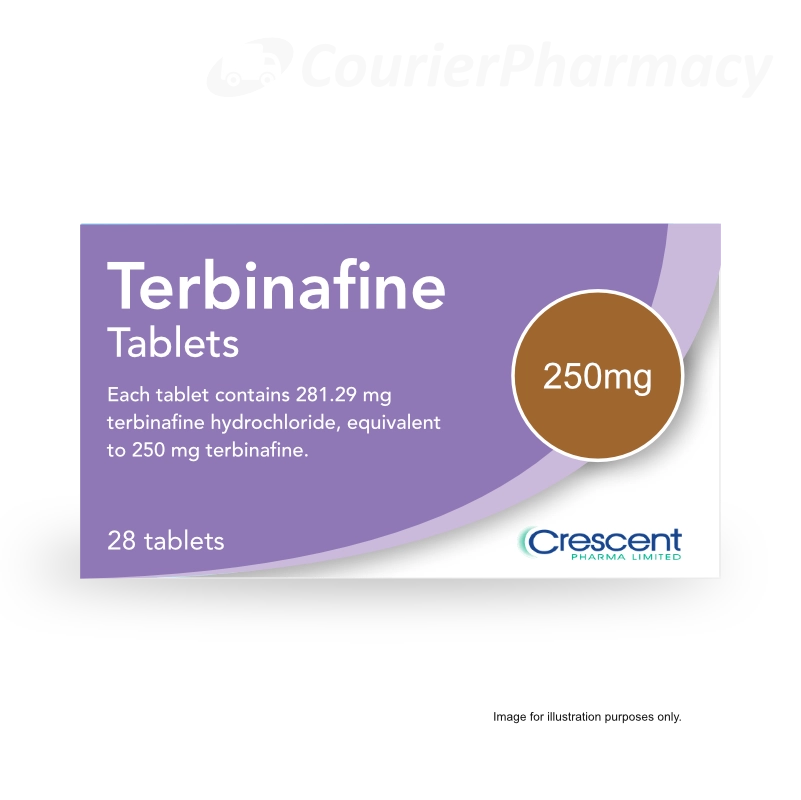



What you should know about fungal nail infections
Almost never. As the NHS explains, fungal nail infections rarely clear without treatment, and they tend to spread slowly to other nails or the surrounding skin. Treating them early, while only a small part of the nail is affected, means you’re more likely to succeed with a topical lacquer or solution rather than needing tablets.
Longer than most people expect, because nails grow slowly. Amorolfine lacquer and Trosyl solution are used for around six months for fingernails and nine to twelve months for toenails. Oral terbinafine is taken for six weeks to three months for fingernails, or three to six months for toenails, and the nail then takes many more months to grow out looking normal.
Both are topical options for milder infections affecting the nail edge. Amorolfine 5% lacquer is applied once or twice weekly, while Trosyl (tioconazole 28%) solution is brushed on twice a day. Both work best when the nail is kept filed and trimmed. A pharmacist can help you pick the one that suits your nails and your routine.
Because terbinafine can rarely affect the liver. UK prescribing guidance advises checking liver function before starting and again after around four to six weeks. It isn’t suitable if you have active or chronic liver disease. We include the liver function blood test with treatment as standard, because safety isn’t an optional extra.
Most people tolerate it well. Common effects include tummy upset, headache, rash, and taste disturbance. Rarely, it can affect the liver, so seek advice urgently if you develop nausea, unexplained tiredness, tummy pain, dark urine, pale stools, or yellowing of the skin or eyes. It interacts with some medicines, which is why a medication review comes first.
For oral treatment, yes. As UK guidance notes, only about half of thickened, discoloured nails are actually fungal, and psoriasis or old trauma can look identical. Since tablets involve months of treatment and blood tests, confirming the diagnosis with a nail sample first protects you from taking medicine you don’t need.
It usually persists and can slowly get worse. As the dermatology literature notes, untreated infections can spread to other nails and the surrounding skin, thicken further, and become uncomfortable in shoes. In people with diabetes or poor circulation, an untreated nail infection can lead to more serious foot problems, which is why they should always be checked by a doctor.
We assess your nails and your health, supply amorolfine 5% lacquer or Trosyl solution with proper guidance, and offer prescriber-assessed terbinafine 250mg with the liver function blood test included. Itraconazole is available where a prescriber judges it appropriate. We’ll also tell you honestly if your nail needs a doctor instead. It starts with a quick online consultation or a chat with a pharmacist.
Additional information
Fungal nail infections
Fungal nail infections are stubborn, slow, and quietly annoying. A nail turns thick, yellow, or crumbly, and no amount of hoping makes it better. They’re incredibly common, they rarely clear on their own, and the good news is they do respond to the right treatment and a bit of patience. At Courier Pharmacy, we believe healthcare should fit the person, not force the person to fit the system. So we build treatment around your nails and your health, from amorolfine lacquer to prescriber-assessed tablets with the blood tests they need. Honest guidance, real pharmacists, care you can trust. Healthcare that fits you, right down to your toes. Thick, discoloured, crumbling nails? We can help you treat a fungal nail infection.

Five key takeaways
- Fungal nail infections are common and won’t clear on their own. As the NHS explains, they usually need treatment, and they take time.
- Treatment is slow because nails are slow. Toenails can take up to a year to grow out, so patience is part of the plan.
- Topical lacquer works for mild cases. Amorolfine 5% nail lacquer can be bought from a pharmacy for adults and is applied once or twice weekly.
- Tablets are more effective for stubborn cases. Oral terbinafine is the first-line treatment for a confirmed dermatophyte infection, as UK guidance describes.
- Tablets need proper safety checks. Terbinafine 250mg requires liver function blood testing, as it can rarely affect the liver.
How Courier Pharmacy helps with fungal nail infections
- Amorolfine 5% nail lacquer, with pharmacist guidance on using it properly
- Tioconazole 28% nail solution (Trosyl) as an alternative topical option
- Prescriber-assessed oral terbinafine 250mg, with the liver function blood test included
- Itraconazole where a prescriber judges it appropriate, for certain infections
- Blood tests to check your liver function safely before and during treatment
- Honest advice on realistic timescales and preventing reinfection
- Free fortnightly drop-in clinics in Derby, with no cost and no pressure

What you should know about fungal nail treatments
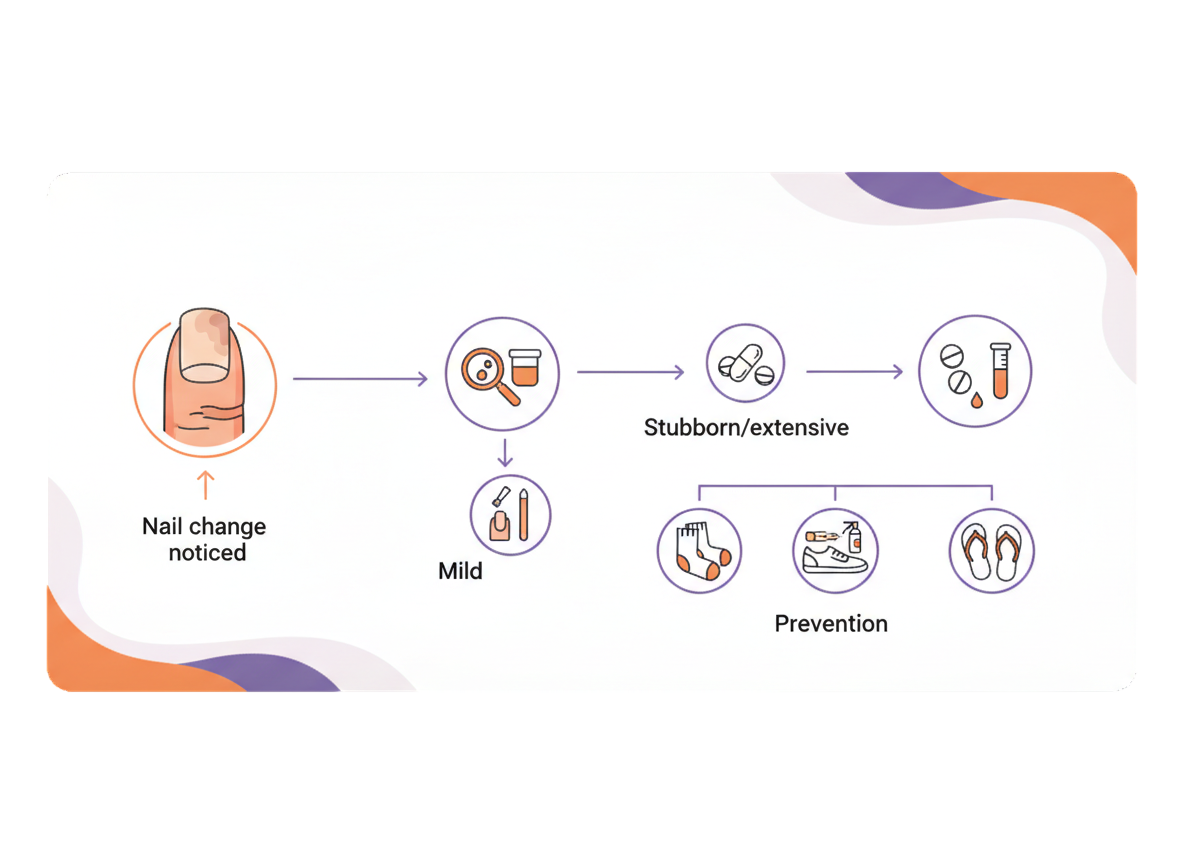
Good care for a fungal nail infection follows a clear, sensible path. First, confirm it really is fungal, because plenty of nail problems look similar. Second, match the treatment to the severity, from lacquer for mild cases to tablets for stubborn ones. Third, do the safety checks properly, especially the blood tests for oral treatment. Fourth, stick with it, and prevent reinfection.
This is the approach UK guidance takes, and the one we support at Courier Pharmacy. As NICE guidance describes, oral treatment is more effective but needs the infection confirmed first, because these courses are long and the medicines aren’t trivial. The goal isn’t a perfect nail overnight. It’s clearing the fungus and letting healthy nail grow through.
Fungal nail infection overview
A fungal nail infection, known medically as onychomycosis, is an infection of the nail plate and the nail bed underneath. As the NHS describes, it usually starts at the edge of the nail and spreads slowly towards the base, changing how the nail looks and feels.
The impact is usually more bothersome than dangerous. Nails become thick, discoloured, and brittle, and can lift away from the nail bed. Many people find them embarrassing, hiding their feet in summer or avoiding swimming pools. Thickened nails can also become genuinely uncomfortable, catching on socks and pressing inside shoes.
The important thing to understand is that these infections rarely clear by themselves. As the dermatology literature notes, untreated onychomycosis tends to persist and can spread to other nails or to the skin. It can also worsen over years. So while there’s no rush, there is a case for treating it properly rather than waiting and hoping.
Why does this matter? Because fungal nail infections are common, treatable, and often left too long. They’re also worth taking seriously if you have diabetes or circulation problems, where nail and foot problems need more careful attention. Getting the right diagnosis and the right treatment is the first step.

What is a fungal nail infection?
A fungal nail infection happens when fungi, most often dermatophytes, grow in and under the nail. As the NHS explains, they thrive in warm, damp conditions, which is why toenails are affected far more often than fingernails.
Common signs include:
- Thickening of the nail
- Discolouration, often white, yellow, brown, or green
- A brittle, crumbly, or ragged edge
- The nail lifting away from the nail bed
- Distortion of the nail’s shape
- Sometimes an unpleasant smell
- Occasionally pain or discomfort in shoes
As the dermatology literature notes, the big toenail is the most commonly affected. Many people also have athlete’s foot at the same time, since the same fungi are usually responsible.
How common are fungal nail infections?
Fungal nail infections are the most common nail disorder there is. As the dermatology literature reports, they account for over half of all nail problems, with a worldwide prevalence of around 5.5%, varying by region and population.
They become much more common with age, and they affect men slightly more often than women. Risk goes up if you have diabetes, poor circulation, a weakened immune system, athlete’s foot, or if you use communal changing rooms and swimming pools. If you’ve got one, you are in very large company, and there’s a well-trodden path to clearing it.
What causes fungal nail infections?
Fungal nails are caused by fungi, with several things making infection more likely. The NHS and dermatology literature describe the main points.
The fungi themselves
Most fungal nail infections are caused by dermatophytes, a group of fungi that feed on keratin, the protein your nails are made of. Less often, yeasts such as candida or non-dermatophyte moulds are responsible, which matters because they respond to different medicines.
How they spread
The fungi thrive in warm, moist places. As the NHS notes, they can spread in communal areas like gyms, pools, and changing rooms, and from athlete’s foot on your own skin. Sharing towels, nail clippers, or footwear can also pass them on.
What raises your risk
Several things make infection more likely, including age, sweaty feet, nail damage or trauma, wearing tight or non-breathable shoes, diabetes, poor circulation, and a weakened immune system. Some of these you can change, some you can’t, but knowing them helps you prevent reinfection.
What happens in the nail?
Nails are made of keratin, packed tightly into a hard plate. Dermatophyte fungi are unusual in that they can digest keratin, which is exactly why they can colonise a nail that other organisms can’t.
The infection usually starts at the free edge or the side of the nail, then works its way beneath the plate towards the base. As it spreads, it breaks down the keratin, causing the crumbling, thickening, and discolouration you see. Debris builds up under the nail, which lifts it away from the nail bed.
This explains why treatment takes so long. The medicine has to reach fungus living inside dense keratin, and even once the fungus is killed, the damaged nail doesn’t repair. It has to grow out and be replaced by healthy nail, which for a toenail can take up to a year. Judging success by how the nail looks in month two will only disappoint you.

When to see a doctor
Most fungal nail infections can be managed with pharmacy or online care, but some situations need a doctor. This advice reflects NHS guidance.
See a doctor rather than self-treating if:
- You have diabetes, since foot and nail problems need careful assessment
- You have poor circulation or peripheral vascular disease
- You have a weakened immune system, for example from medication or illness
- The nail is painful, the surrounding skin is red, swollen, or hot, or there’s pus
- The nail change follows an injury, or only one nail is affected and looks unusual
- You’re pregnant or breastfeeding, since oral antifungals need careful consideration
Other conditions can mimic a fungal nail, including psoriasis, trauma, and, rarely, a skin cancer of the nail. As UK guidance advises, that’s one reason a proper assessment matters before starting a long course of tablets.
Diagnosing a fungal nail infection
Getting the diagnosis right is more important here than people expect. As UK guidance sets out, only about half of thickened, discoloured nails turn out to be fungal, and treating a non-fungal nail with antifungals achieves nothing.
For that reason, guidance recommends confirming the infection with a nail sample before starting oral treatment. A clipping and some debris are sent to a laboratory for microscopy and culture, which can also identify whether the culprit is a dermatophyte, a yeast, or a mould. That identification directly changes which tablet is chosen.
This is where Courier Pharmacy can support you. Our prescribers assess your history and symptoms, arrange the necessary testing, and organise the liver function blood test required before oral treatment. Tests that answer the question, not just tick a box.
Treating fungal nail infections
Treatment depends on how much of the nail is affected, which fungus is involved, and your general health. As UK guidance describes, mild cases can be treated topically, while more extensive infections usually need tablets.
Self-care first
Simple measures help every treatment work better. Keep your feet clean and dry, file down the thickened nail, keep nails trimmed short, treat any athlete’s foot at the same time, and wear breathable footwear. As the NHS advises, these steps also reduce the chance of reinfection.

Amorolfine 5% nail lacquer
For mild infections affecting the nail edges, and where fewer than half the nail and only a couple of nails are involved, topical lacquer is a sensible first step. Amorolfine 5% nail lacquer can be bought from a pharmacy for adults, and it’s applied once or twice weekly after gently filing the nail surface. As UK guidance describes, treatment continues for around six months for fingernails and nine to twelve months for toenails. Studies report mycological cure rates of roughly 70 to 76%, with complete cure of the nail’s appearance less often, so expectations matter.
Tioconazole 28% nail solution (Trosyl)
Another topical option is tioconazole 28% nail solution, sold as Trosyl. It’s a prescription antifungal applied to the affected nail and surrounding skin twice a day using the brush provided, again for a long stretch, usually up to six months or longer. Like amorolfine, it suits milder infections and works best when the nail is kept filed and trimmed. It’s generally well tolerated, with occasional mild irritation around the nail. A pharmacist can help you decide whether a lacquer or a solution suits you better.

Oral terbinafine 250mg
For a confirmed dermatophyte infection that’s more extensive or hasn’t responded to lacquer, oral terbinafine is the first-line treatment. As UK guidance sets out, the usual adult dose is 250mg once daily, taken for around six weeks to three months for fingernails, and three to six months for toenails. It’s the most effective oral option, with studies reporting good mycological cure rates, though the nail still takes months to grow out afterwards.
Why terbinafine needs a blood test
Here’s the important safety point. Terbinafine can, rarely, affect the liver. As UK prescribing guidance advises, liver function should be checked with a blood test before starting treatment, and again after around four to six weeks. That’s why we include a liver function blood test with treatment, rather than treating it as optional. Terbinafine isn’t suitable if you have active or chronic liver disease, and you should stop and seek advice if you develop nausea, unexplained tiredness, tummy pain, dark urine, pale stools, or yellowing of the skin or eyes. It can also cause taste disturbance, rash, and it interacts with some medicines, including certain antidepressants and beta blockers, so a full medication review comes first.
Itraconazole
Where the infection is caused by candida or a non-dermatophyte mould, or where terbinafine isn’t suitable, a prescriber may consider itraconazole. In the UK this is used off-label for nail infections, often as a pulsed course, meaning a week of treatment followed by several weeks off. As prescribing guidance notes, itraconazole interacts with a great many medicines because of how the liver processes it, and it shouldn’t be used in heart failure or acute porphyria. It also needs liver monitoring. A prescriber will weigh all of this up with you.

When to stop and what success looks like
Treatment stops when new, healthy nail is growing steadily from the base, not when the whole nail looks perfect. As UK guidance notes, the nail may continue to look abnormal for months after the fungus is gone, simply because damaged nail takes time to grow out. Some scarring of the nail can be permanent, particularly after long-standing infection.
Preventing reinfection
Reinfection is common, and worth guarding against. As the NHS advises, a few habits make a real difference.
- Keep your feet clean, and dry thoroughly between the toes
- Treat athlete’s foot promptly, since it’s often the source
- Wear clean, breathable socks and rotate your shoes
- Wear flip-flops in communal showers and changing rooms
- Don’t share towels, nail clippers, or footwear
- Disinfect nail clippers, and consider replacing old shoes after treatment
Patient experiences and challenges
Fungal nails can be quietly demoralising. People tell us they’ve hidden their feet for years, or given up after a bottle of lacquer made no visible difference in three months. That frustration is completely understandable, and usually a timing problem rather than a treatment failure.
Others are surprised to learn their nail wasn’t fungal at all, or that they’d been treating a dermatophyte infection with a medicine aimed at a different organism. As UK guidance highlights, confirming the diagnosis before a long course of tablets isn’t bureaucracy, it’s what makes treatment work.
Here’s what we want you to hear. You’re not neglectful, and it isn’t a hygiene failing. Fungal nail infections are common, stubborn, and treatable, and the slow timescale is the nail’s fault, not yours. You’re the one living in your body, and you get to decide whether to treat it. Our job is to give you honest advice, safe treatment, and realistic expectations.
How Courier Pharmacy helps with fungal nail infections
We started Courier Pharmacy because too many people get rushed, generic care. Fungal nails are a good example. Your nails, your health, and your other medicines are unique, so your treatment should be assessed around them. That personalisation is the first of our four pillars.
The other pillars carry it through. Guidance means our pharmacists explain how to use amorolfine properly, why filing the nail matters, and what timescale to expect. Trust means we’re a UK-regulated pharmacy that includes the liver function blood test with oral terbinafine rather than skipping it, and that will tell you honestly when a nail should be seen by a doctor instead. Community means we show up for people, even when there’s nothing to buy.
That spirit has a face in Dr Ada Jex-Cori, the voice of our approach, whose message is simple: you deserve healthcare that fits your life. For a fungal nail infection, that means safe, properly monitored treatment and no false promises. Healthcare that fits you, not the other way round.
Frequently asked questions about fungal nail infections

Will a fungal nail infection go away on its own?
Almost never. As the NHS explains, fungal nail infections rarely clear without treatment, and they tend to spread slowly to other nails or the surrounding skin. Treating them early, while only a small part of the nail is affected, means you’re more likely to succeed with a topical lacquer rather than needing tablets.
How long does treatment take?
Longer than most people expect, because nails grow slowly. Amorolfine lacquer is used for around six months for fingernails and nine to twelve months for toenails. Oral terbinafine is taken for six weeks to three months for fingernails, or three to six months for toenails, and the nail then takes many more months to grow out looking normal.
Does amorolfine nail lacquer actually work?
For the right cases, yes. Amorolfine 5% lacquer suits mild infections affecting the nail edge, where fewer than half the nail and only one or two nails are involved. Studies report mycological cure rates of roughly 70 to 76%, though complete cosmetic cure is less common. Filing the nail before each application makes a real difference.
Why do I need a blood test for terbinafine?
Because terbinafine can rarely affect the liver. UK prescribing guidance advises checking liver function before starting and again after around four to six weeks. It isn’t suitable if you have active or chronic liver disease. We include the liver function blood test with treatment as standard, because safety isn’t an optional extra.
What are the side effects of terbinafine 250mg?
Most people tolerate it well. Common effects include tummy upset, headache, rash, and taste disturbance. Rarely, it can affect the liver, so seek advice urgently if you develop nausea, unexplained tiredness, tummy pain, dark urine, pale stools, or yellowing of the skin or eyes. It interacts with some medicines, which is why a medication review comes first.
When is itraconazole used instead?
When the infection is caused by candida or a non-dermatophyte mould, or when terbinafine isn’t suitable. In the UK it’s used off-label for nails, often as a pulsed course. It interacts with many medicines and isn’t used in heart failure or acute porphyria, so a prescriber will assess you carefully before choosing it.
Do I really need my nail tested first?
For oral treatment, yes. As UK guidance notes, only about half of thickened, discoloured nails are actually fungal, and psoriasis or old trauma can look identical. Since tablets involve months of treatment and blood tests, confirming the diagnosis with a nail sample first protects you from taking medicine you don’t need.
How can Courier Pharmacy help with a fungal nail infection?
We assess your nails and your health, supply amorolfine 5% lacquer with proper guidance, and offer prescriber-assessed terbinafine 250mg with the liver function blood test included. Itraconazole is available where a prescriber judges it appropriate. We’ll also tell you honestly if your nail needs a doctor instead. It starts with a quick online consultation or a chat with a pharmacist.
More than a condition: our community
Health worries are easier to face with company, even the ones that feel too trivial to mention. So we made a space where nothing’s too small. Every fortnight, we run free drop-in clinics and talks at Insomnia in Derby, from 12 to 1pm. No cost. No pressure. Just real support, honest answers, and people who understand.
Come with a question, come to listen, or come for a brew and a chat. You’re welcome either way.
How this content was created
Written by the Courier Pharmacy editorial team and reviewed by a GPhC-registered pharmacist. Grounded in the latest NHS, NICE and BNF guidance, peer-reviewed studies, and the real questions patients bring to our drop-in clinics in Derby.
By the Courier Pharmacy editorial team. Medically reviewed by a GPhC-registered pharmacist. Last reviewed: July 2026.
Important disclaimer
This page is for general information and education. It isn’t medical advice, and it isn’t a substitute for a consultation with a qualified healthcare professional. Oral antifungals such as terbinafine and itraconazole are prescription-only medicines, require a clinical assessment and liver function testing, and are not suitable for everyone, including in pregnancy or breastfeeding or with liver disease. If you have diabetes, poor circulation, or a weakened immune system, see a doctor about nail problems rather than self-treating. Always speak to a prescriber or pharmacist before starting any treatment.
References
- National Health Service (2024) Fungal nail infection. Available at: https://www.nhs.uk/conditions/fungal-nail-infection/ (Accessed: 4 July 2026).
- National Institute for Health and Care Excellence (no date) Fungal nail infection: Clinical Knowledge Summary. Available at: https://cks.nice.org.uk/topics/fungal-nail-infection/ (Accessed: 4 July 2026).
- Etgü, F. (2023) ‘Retrospective Analysis of Liver Enzyme Abnormalities in Patients Prescribed Terbinafine and Itraconazole for Onychomycosis’, Cureus. Available at: https://www.ncbi.nlm.nih.gov/pmc/articles/PMC10561530/ (Accessed: 4 July 2026).
- Gupta, A.K. et al. (2021) ‘Onychomycosis: Rapid Evidence Review’, American Family Physician. Available at: https://www.aafp.org/pubs/afp/issues/2021/1000/p359.html (Accessed: 4 July 2026).


BSc Pharmacy, Independent Prescriber, PgDip Endocrinology, MSc Endocrinology, PgDip Infectious Diseases
Superintendant Pharmacist, Independent Prescriber

BSc Pharmacy
Compounding Pharmacist

