



What you should know about alcohol addiction
Screening tools are a good starting point. Validated questionnaires like AUDIT and CAGE give a structured, honest picture. On AUDIT, a score of 8 or more suggests hazardous or harmful drinking; on CAGE, two or more yes answers is worth exploring. They aren’t a diagnosis, but they’re a useful prompt to talk to a professional, which we can do with you confidentially.
It’s a treatment for problem drinking that uses naltrexone to gradually reduce alcohol’s hold. Unlike abstinence-based approaches, you keep drinking at first but take naltrexone about an hour beforehand. This stops alcohol from reinforcing the habit and, over months, weakens the drive to drink, a process called pharmacological extinction. It’s done under prescriber supervision..
No, and that’s the point. You continue drinking as usual at first, but always take naltrexone about an hour before. The aim is that your drinking gradually reduces on its own as the reinforcement behind the habit fades. This makes it possible for people who aren’t ready, or don’t want, to stop completely.
There’s genuine evidence behind it, though it’s worth being balanced. Naltrexone is effective when taken alongside drinking rather than during abstinence, which supports the method’s theory, and it’s a well-established alcohol treatment. Supporters report high success rates over several months. It isn’t a guaranteed cure, and it works best with consistent use and proper support.
For suitable people, under supervision, it’s generally well tolerated, and it isn’t habit-forming. The most important safety point is that it must never be taken by anyone using opioid medicines like codeine, tramadol, or morphine, as it can trigger sudden, severe withdrawal. It can cause nausea, headache, and tiredness, and needs care in liver disease. A prescriber checks all of this first.
Not always, but we highly recommend it. This is because naltrexone is processed by the liver; we check your liver function first. If you have a recent result, you can share it; if not, we arrange our easy home finger-prick liver function test, which checks markers like ALT, AST, ALP, GGT, bilirubin, albumin and globulin, and includes a free follow-up consultation. Your prescriber reviews it before any naltrexone is supplied.
It can be, which is why this matters. If you drink heavily every day, stopping abruptly on your own can cause dangerous withdrawal, including, rarely, seizures or a life-threatening state called delirium tremens. Heavy daily drinkers need medically supervised support to stop safely. Never attempt a sudden detox alone; speak to your GP or a specialist service.
We offer a confidential assessment, a prescriber-led consultation to check the Sinclair Method is safe and suitable, and naltrexone with monitoring where appropriate. We’ll always signpost specialist services when that’s what you need. If you’re in crisis, contact your GP, call NHS 111, or in an emergency call 999. Drinkline offers free, confidential advice on 0300 123 1110.
Additional information
Alcohol dependence and the Sinclair Method
If your drinking has started to feel bigger than you, you are not weak, and you are not alone. Alcohol dependence is a recognised medical condition, and there is now a genuine, evidence-based alternative to the abstinence-or-nothing approach that has failed so many people. It’s called the Sinclair Method, and it uses a medication, naltrexone, to gradually reduce alcohol’s grip. At Courier Pharmacy, we believe healthcare should fit the person, not force the person to fit the system. So we start where you are, with honest assessment, real clinical support, and a method built around your goals. Healthcare that fits you, at your own pace. Worried your drinking is taking over? Let’s work out where you are, and what could help.

An important note before you read on
If you drink heavily every day, please do not suddenly stop on your own. Sudden withdrawal from heavy, regular drinking can be dangerous and, rarely, life-threatening. It needs proper medical support. This page explains a treatment that involves continuing to drink initially, under guidance, rather than stopping abruptly. If you are in crisis, or worried about your safety, contact your GP, NHS 111, or in an emergency call 999. You can also call Drinkline free on 0300 123 1110.
Five key takeaways
- Alcohol dependence is a medical condition. As NHS guidance describes, it’s not a moral failing or a matter of willpower.
- Screening tools can help you gauge it. Validated questionnaires like AUDIT and CAGE give an honest, structured picture.
- The Sinclair Method offers another route. It uses naltrexone to reduce the reinforcement that drives drinking, an approach called pharmacological extinction.
- It isn’t right for everyone. Naltrexone must never be used by anyone taking opioids, and dependence needs proper assessment first.
- Support makes the difference. Medication works best alongside guidance, monitoring, and honest, judgement-free care.
How Courier Pharmacy helps
- A confidential, structured assessment of your drinking, using validated tools
- Prescriber-led consultation to see whether the Sinclair Method is safe and suitable for you
- Naltrexone treatment where appropriate, supplied and monitored by a prescriber
- Our home finger-prick liver function test before starting, with a free follow-up consultation
- Honest guidance on what the method involves, and what to expect
- Clear signposting to specialist alcohol services and crisis support when needed
- Free fortnightly drop-in clinics in Derby, with no cost and no pressure
Alcohol dependence is best supported by a proper clinical team. We work alongside your GP and specialist services, never instead of them.
What you should know about treating problem drinking
Good care for problem drinking follows a clear, sensible path. First, understand honestly where your drinking sits, which is what screening tools help with. Second, get a proper clinical assessment, because dependence and withdrawal risk change everything about what’s safe. Third, choose an approach that fits your goals, whether that’s cutting down or stopping. Fourth, get the support and monitoring that make it work.
This is the approach we support at Courier Pharmacy. As NICE and NHS guidance describe, alcohol problems sit on a spectrum, and treatment should be matched to the individual. The goal isn’t judgement or a single “correct” outcome. It’s helping you build a healthier, safer relationship with alcohol, in whatever way fits your life.
Understanding alcohol dependence
Alcohol dependence means your body and brain have adapted to regular drinking, so that alcohol starts to feel necessary rather than optional. As NHS guidance explains, it exists on a spectrum, from hazardous drinking that raises your risk, through harmful drinking that’s already causing damage, to dependence, where stopping causes physical or psychological withdrawal.
The signs are familiar to many people. Needing a drink to feel normal, struggling to stop once you start, planning your day around alcohol, drinking more to get the same effect, and feeling anxious, shaky, or sweaty when you don’t drink. As the addiction literature describes, this is driven by real changes in the brain’s reward and stress systems, not by a lack of character.
Crucially, dependence is common and treatable. Many people carry deep shame about it, which is often the very thing that stops them seeking help. Understanding it as a health condition, one with effective treatments, is the first and most freeing step.

Is my drinking a problem? Assessments that help
One of the hardest parts of problem drinking is seeing it clearly. Validated screening questionnaires give you an honest, structured way to gauge it, and they’re the same tools clinicians use. They aren’t a diagnosis, but they’re a very useful starting point.
AUDIT
The Alcohol Use Disorders Identification Test, or AUDIT, is a ten-question tool developed by the World Health Organization. As the screening literature describes, it asks about how much and how often you drink, signs of dependence, and alcohol-related harm, and it’s one of the most widely validated tools there is. Scores of 8 or more suggest hazardous or harmful drinking, with higher scores pointing towards possible dependence.
AUDIT-C
The AUDIT-C is a shorter, three-question version focusing on how much and how often you drink. As the validation studies note, it’s quick and reliable for flagging risky drinking, with a score of 4 or more in men, or 3 or more in women, considered a positive screen worth exploring further.
CAGE
The CAGE questionnaire is four simple questions, asking whether you’ve felt you should Cut down, been Annoyed by criticism of your drinking, felt Guilty about it, or needed a drink first thing as an Eye-opener. As the addiction literature notes, two or more yes answers suggest it’s worth a fuller conversation.
A high score doesn’t label you. It’s simply information, and a prompt to talk to a professional who can help you make sense of it safely. We can walk through these with you as part of a confidential assessment.
Why the usual approach doesn’t work for everyone
For many people, drinking creeps up quietly over the years. A drink after work becomes two, a weekend habit becomes most evenings, and what was once a choice starts to feel automatic. Trying to rein that back in through willpower alone is genuinely hard, because the habit has been reinforced thousands of times. That’s not a character flaw, it’s how the brain works.
For decades, the main message to anyone with a drink problem has been the same: stop completely, and stay stopped. For some people that works well. For many others, it doesn’t, and they’re left feeling they’ve failed, when really the approach didn’t fit them.
As the addiction literature describes, abstinence-only approaches have high relapse rates, and the all-or-nothing framing can itself be a barrier to seeking help. People who aren’t ready to stop entirely, or who have tried and struggled, often fall through the gap. The Sinclair Method was developed precisely for that gap, offering a different mechanism and a different definition of success.
The Sinclair Method explained
The Sinclair Method, sometimes called TSM, is a treatment for alcohol dependence developed by the late Dr John David Sinclair. Rather than requiring you to stop drinking before treatment, it works while you continue to drink, using a medication to gradually weaken alcohol’s hold.
How it works: pharmacological extinction
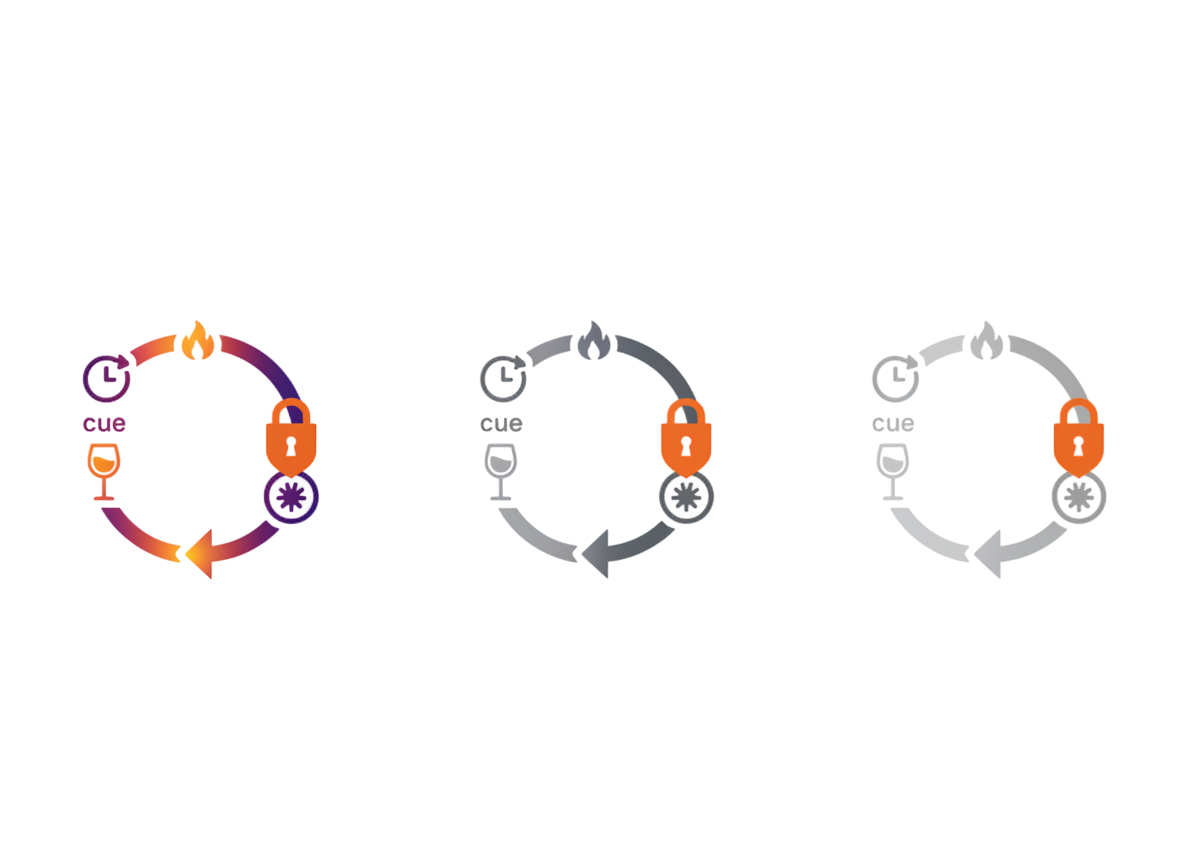
The idea rests on how the brain learns. As the addiction research describes, drinking alcohol releases endorphins that act on opioid receptors, and stimulates the brain’s dopamine reward pathways. This reinforcement is what strengthens the drinking habit over time, gradually wiring alcohol more deeply into behaviour. Naltrexone, an opioid antagonist, occupies those receptors so that the endorphins released by alcohol can no longer reinforce the habit.
It can help to picture the cycle. Normally, drinking releases endorphins, which the brain registers as a reward, which in turn drives cravings and more drinking. With naltrexone on board, drinking no longer delivers that reinforcement, so the reward is blunted and, over time, the cravings gradually loosen their grip.
Taken around an hour before drinking, naltrexone means the drinking is no longer reinforced. Over many repetitions, that learned reinforcement gradually weakens, a process Sinclair called pharmacological extinction. Importantly, this isn’t about blocking the pleasure of a drink in the moment. As Sinclair’s work describes, it’s about removing the reinforcement that would otherwise keep building the craving, which in turn reduces the alcohol deprivation effect, the surge in wanting and drinking that normally follows a period without alcohol. As the method’s evidence describes, the aim is that over months, the drive to drink fades, and many people find their consumption falls substantially.
What the evidence shows
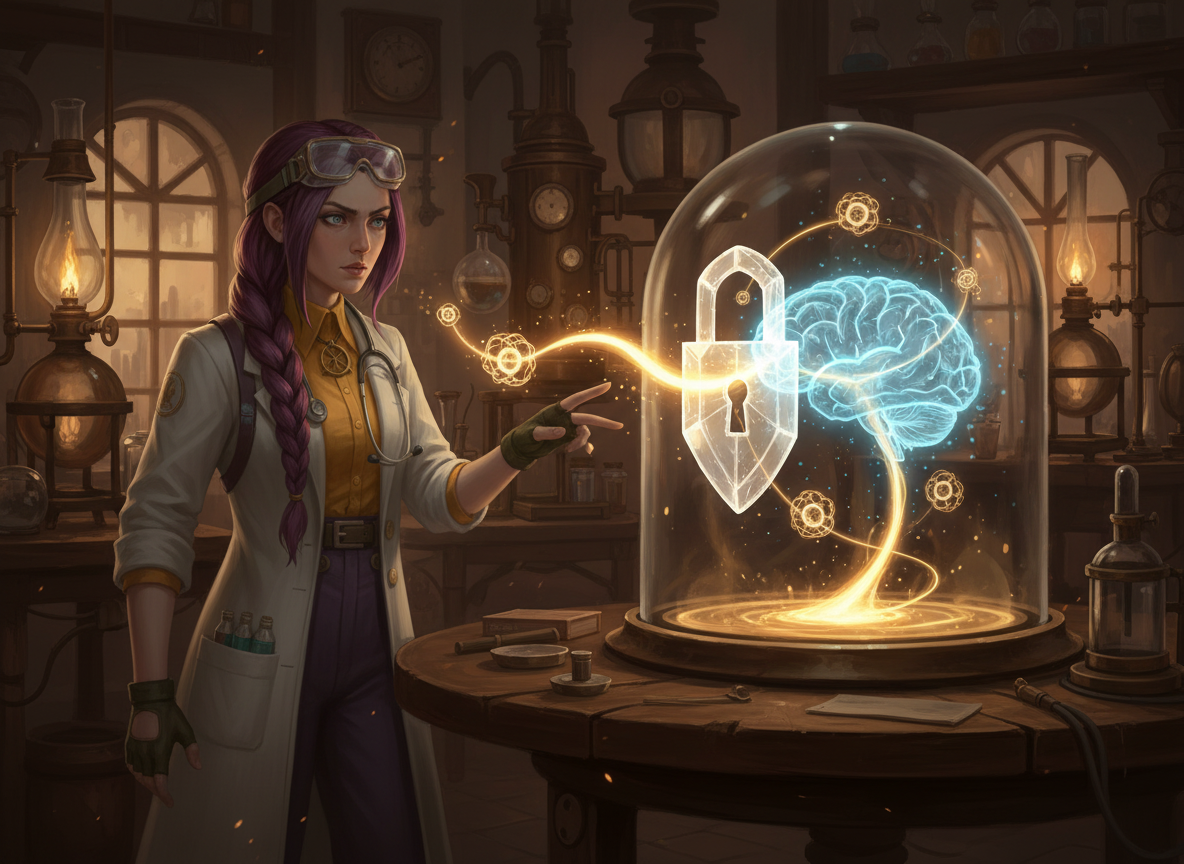
There is real evidence behind the mechanism. As a key review of naltrexone in the treatment literature explains, opioid antagonists like naltrexone were found to be effective when taken alongside drinking, but not when used to support abstinence, which supports the extinction theory. Supporters cite Sinclair’s report that a large proportion of people reached a marked reduction in drinking over several months when following the method consistently.
It’s worth being balanced here. Much of the strongest support comes from the method’s own developers and advocates, and naltrexone’s overall place in alcohol treatment is well established, though experts differ on this specific way of using it. It is a legitimate, evidence-informed option, not a guaranteed cure, and honesty about that is part of doing it properly.
The golden rule
The method only works if naltrexone is taken every single time before drinking. As the method’s guidance stresses, missing doses and drinking without the medication undermines the whole process, because the drinking is reinforced again. This consistency is central, and it’s why proper support matters.
Starting low: how the dose is tailored
Naltrexone’s standard dose in alcohol treatment is 50mg, but it doesn’t have to start there, and a gentler, staged approach can make the first weeks far more comfortable. A prescriber may begin you on a low introductory dose, building it up gradually over the first week or so towards a standard daily dose, and increasing further, up to 50mg, only if and when it’s needed. This start low, go slow approach gives your body time to adjust, tends to mean fewer early side effects, and makes the treatment much easier to stick with. It’s entirely prescriber-guided, and the capsule is always taken around an hour before you drink.
It’s worth knowing that this approach draws on research originally carried out in people who were alcohol dependent, often drinking heavily every day and struggling to cut down. The same principle is now used more broadly to help people reduce their drinking. A lower, gently increased dose can be particularly manageable for those of smaller build, or those drinking less heavily, though the right dose for you is always a decision for your prescriber.
Because these lower, stepped doses aren’t available as standard off-the-shelf strengths, we provide naltrexone as compounded capsules, made up specially at the strengths your prescriber chooses.
Made for you: compounded capsules by APC Labs
Compounding means a medicine is prepared individually, rather than taken from a mass-produced box. It’s what lets us offer naltrexone as a gentle 4.5mg capsule, a 25mg capsule, and everything the titration needs, strengths you simply can’t get in a standard licensed pack. Without compounding, the start low, go slow approach wouldn’t be possible.
Our compounding is carried out by APC Labs, a UK-registered specials manufacturer, working to pharmaceutical standards under the supervision of a superintendent pharmacist. Every capsule is prepared to order for you. This is the heart of what we do at Courier Pharmacy: medicine tailored to the person, rather than the person having to fit around a one-size-fits-all product. It does mean these are unlicensed special-order medicines, prepared for you on a prescriber’s direction, which your prescriber will explain as part of your assessment.
Reassuringly, naltrexone isn’t habit-forming and doesn’t cause withdrawal when you stop taking it. That makes it a practical option for longer-term support if it’s helping, and something you can step down from without a struggle.
What to expect: a typical journey
Everyone is different, but it helps to know roughly how things tend to unfold. Your prescriber will tailor the detail to you.
- In the first week or so, you start on a low dose, taken about an hour before drinking, and build up gradually while you and your prescriber watch for any side effects. It’s a good moment to start tracking your drinking too.
- Over roughly the next few weeks, you settle onto your regular dose. Many people find the pull of alcohol begins to ease, and drinking starts to feel less rewarding. The dose can be adjusted if it’s needed.
- Over the following weeks and months, new habits and routines take shape, and the urge to drink tends to fade further. Your prescriber reviews your progress, which may include a follow-up liver test.
Because the medication is taken before drinking, you only need it on the days you actually drink. Tracking your progress can be genuinely motivating, and free tools like the NHS Drink Free Days app or Alcohol Change UK’s Try Dry app make it easy to see how far you’ve come.

Is the Sinclair Method right for me? Safety first
The Sinclair Method suits some people very well, but it is not right for everyone, and safety has to come first. A proper assessment by a prescriber is essential before starting.
It might suit you if you:
- Regularly drink more than the recommended 14 units a week
- Want to cut down and regain control rather than stop completely
- Find it hard to stop once you’ve started
- Worry about the effect of alcohol on your sleep, health, or long-term habits
- Would prefer a private, medically supported way to reduce your drinking
Equally, it may not be suitable, or may need specialist input first, if you:
- Take any opioid medication, such as codeine, tramadol, morphine, or methadone, since naltrexone blocks opioids and can trigger sudden, severe withdrawal. This is an absolute safety issue.
- Are physically dependent to the point of experiencing withdrawal, where medically supervised care is needed first
- Have significant liver disease, since naltrexone is processed by the liver
- Are pregnant or breastfeeding
- Have certain other health conditions that a prescriber needs to weigh up
As the treatment guidance describes, naltrexone can cause side effects, most commonly nausea, headache, dizziness, and tiredness, particularly early on. A prescriber will review your health, your other medicines, and your drinking pattern to judge whether it’s safe and appropriate.
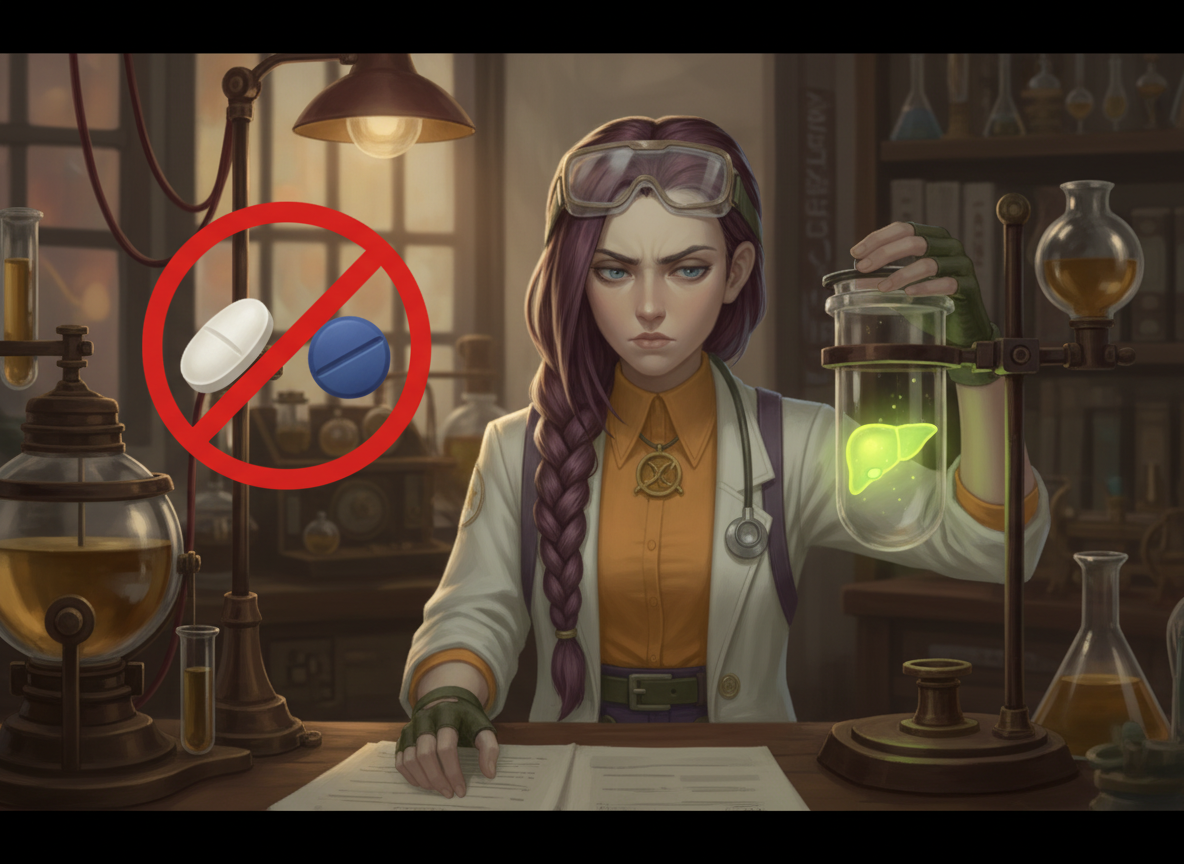
Because naltrexone is processed by the liver, and because heavy drinking can affect the liver, we check your liver function before you start. If you have a recent liver function test result, you can share that with us. If you don’t, we’ll arrange a simple home finger-prick liver function test to be completed first, and your prescriber will review the result before any naltrexone is supplied.
Checking your liver: our home blood test
Our home liver function test makes that safety check easy. It’s a straightforward finger-prick test you do at home, with no clinic visit and no venous blood draw. You collect a small sample, post it back to the laboratory in the prepaid packaging, and your results come back with clear reference ranges. Every test includes a free follow-up consultation, so you can talk through what the numbers mean and what, if anything, to do next.
The test looks at a panel of liver markers: ALT, AST, ALP, GGT, bilirubin, albumin, globulin and total protein. Together these build a useful picture of three things: whether your liver cells are under strain, shown by ALT and AST; how your bile flow looks, shown by ALP and GGT; and how well your liver is making proteins, shown by albumin, globulin and total protein. It’s best read as a pattern, not a single pass-or-fail number.
More than a baseline: tracking your progress
Beyond that first safety check, the same test can be a genuinely motivating tool. As your drinking reduces, repeating it every few months lets you see the difference in black and white. Many people find that measurable feedback reassuring, and a real spur to keep going. It’s a simple way to watch your health respond as you take back control, and some people choose to retest around every six months.
An honest word on results
A liver function test is a starting point, not a diagnosis, and it isn’t for emergencies. Mild changes are common and often just need a repeat after avoiding things that can nudge the numbers, like alcohol, hard exercise, or a recent illness. Your follow-up consultation is the place to make sense of it all. If you ever have red-flag symptoms such as yellowing of the skin or eyes, dark urine, pale stools, severe tummy pain, or confusion, don’t wait for a test, seek urgent medical care.
When you need more than a medication
The Sinclair Method is one tool, and for some people it’s not the right first step. This matters for your safety.
If you are drinking heavily every day and would experience withdrawal on stopping, or if you have ever had alcohol withdrawal seizures or a period of confusion and hallucinations called delirium tremens, you need specialist medical care, not a self-directed approach. As the clinical literature stresses, severe alcohol withdrawal can be life-threatening and sometimes requires a supervised medical detox.
Please also reach out for more support if alcohol is bound up with low mood, anxiety, trauma, or thoughts of harming yourself. These are common, they are treatable, and you deserve help with the whole picture. Speaking to your GP or a specialist alcohol service opens the door to that wider support, and we can help you take that step.
Patient experiences and challenges
People who’ve struggled with drinking often describe years of shame, secrecy, and feeling judged, both by others and by themselves. Many have tried to stop, succeeded for a while, and then relapsed, each cycle chipping away at their hope. That exhaustion is real, and it’s completely understandable.
Some tell us the abstinence-only message made them feel there was no point trying unless they were ready to give up alcohol forever, so they didn’t try at all. Others found the idea of a method that lets them start where they are, without demanding immediate perfection, was the first thing that felt possible in a long time.
Here’s what we want you to hear. You are not a failure, and you are not beyond help. Alcohol dependence is a health condition, not a character flaw, and needing support to manage it is completely normal. You’re the one living your life, and you get to define what a better relationship with alcohol looks like for you. Our job is to meet you there, honestly and without judgement.

How Courier Pharmacy helps
We started Courier Pharmacy because too many people feel dismissed, judged, or boxed into treatments that don’t fit them. Problem drinking is one of the clearest examples. Your relationship with alcohol, your history, and your goals are unique, so your support should be too. That personalisation is the first of our four pillars.
The other pillars carry it through. Guidance means we help you understand your assessment, weigh up whether the Sinclair Method fits, and know exactly what it involves. Trust means we’re a UK-regulated pharmacy that’s honest about the evidence and the limits, that puts your safety first, and that will always point you to specialist services and your GP when that’s what you need. Community means we show up for people, without judgement, even when there’s nothing to buy.
That spirit has a face in Dr Ada Jex-Cori, the voice of our approach, whose message is simple: you’re not broken, and you deserve healthcare that fits your life. For problem drinking, that means honest assessment, real options, and support without shame. Healthcare that fits you, not the other way round.

Getting started, simply
Starting is straightforward, and there’s no pressure at any point.
- It begins with a short, confidential online assessment, which takes just a few minutes. It asks about your drinking, your health, and what you’re hoping to change, so a prescriber can check whether the approach is safe and suitable for you.
- If it’s right for you, a prescriber directs you to a starter course, with clear instructions and a gentle dose schedule to follow.
- After your starter course, you’re welcome to a review to see how you’re getting on, and to arrange more if it’s helping. There’s no obligation to continue.
There’s no subscription and no hidden charges. You complete the assessment, and only then decide whether to go ahead. We’d also always encourage you to involve your GP in your care, so everyone supporting you has the full picture.
Our pricing
No subscriptions, no hidden charges, and free delivery on every pack. You complete a free suitability assessment first, then choose whether to go ahead. All treatment is subject to prescriber review.
Starting out
New to the method? There are two starter packs. Lighter drinkers who respond well to the medication often do fine on the standard starter pack, while those likely to need the full 50mg drinking-day dose may prefer the extended pack, which builds in room to increase the dose later in the course. Each starter pack begins with a low 4.5mg dose, taken about an hour before drinking and built up gradually over the first ten days, before moving to the 25mg dose.
Starter pack, £149
The starting point for everyone, and ideal if you settle on the 25mg dose.
- Full online assessment
- Around 4 to 8 weeks’ supply
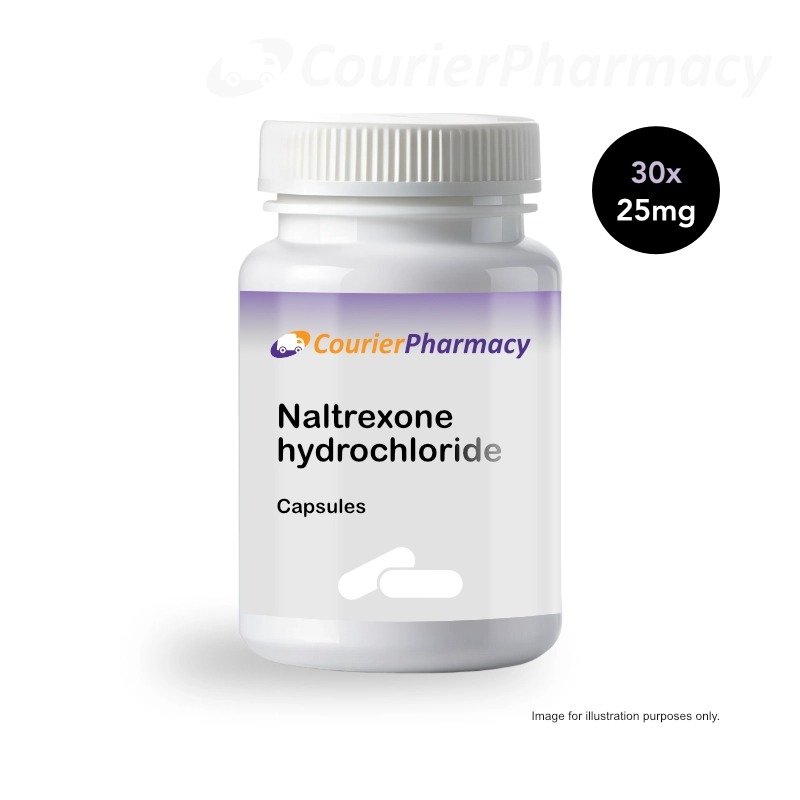
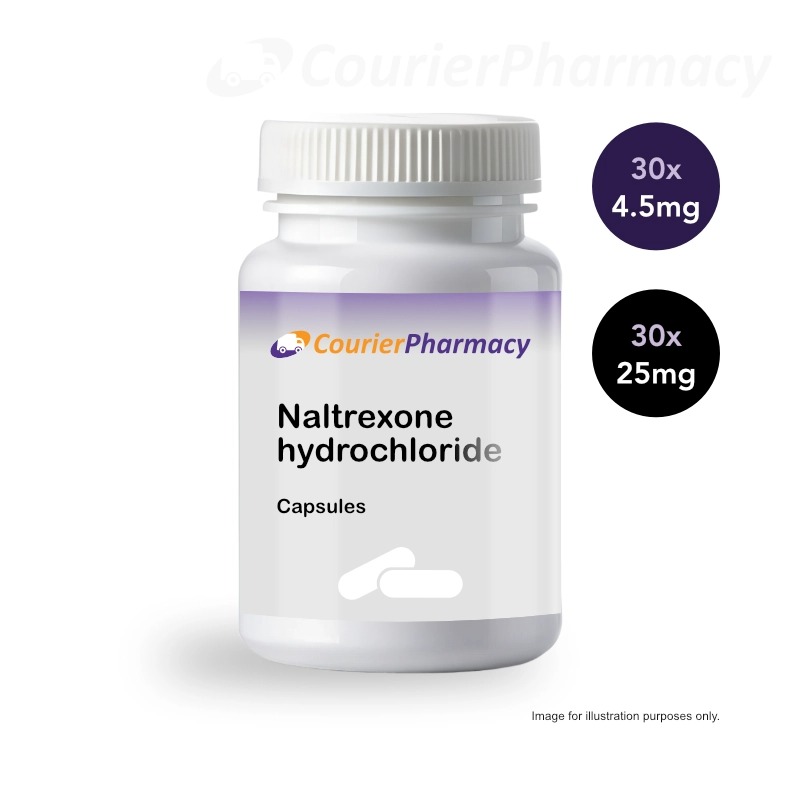
- 30 low-dose 4.5mg capsules, to build up gently over the first 10 days
- 30 medium-dose 25mg capsules
- Full instructions, no subscription, free delivery
Extended starter pack, £189
Our most popular starting option, with the flexibility to increase to the 50mg dose sooner.
- Full online assessment
- Around 8 to 12 weeks’ supply
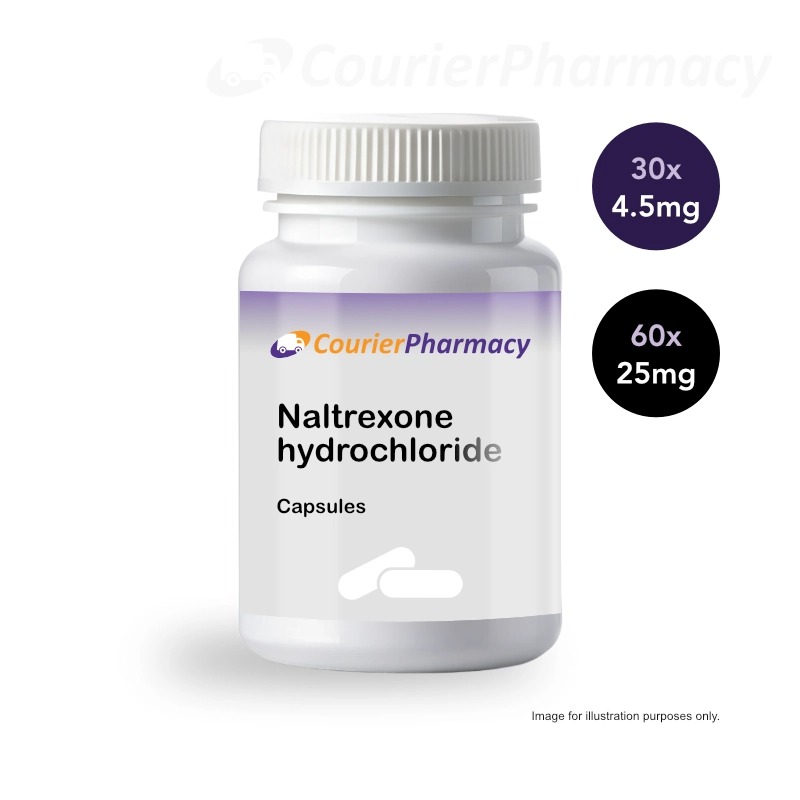
- 30 low-dose 4.5mg capsules
- 60 medium-dose 25mg capsules
- Full instructions, no subscription, free delivery
Continuing, if it’s helping
There’s no commitment to carry on after your starter course. If you’d like to continue, repeat packs come in three sizes, taken only on the days you drink. Frequent drinkers on the 50mg dose tend to prefer the large pack, while those drinking less often, or settled on 25mg, may find a small or medium pack lasts several months. Each repeat needs a quick repeat assessment.
Small repeat, £119
Our standard ongoing pack, suited to less frequent drinkers on the mid or full dose.
- Repeat online assessment
- 30 medium-dose 25mg capsules
- Full instructions, no subscription, free delivery
- Taken only on drinking days
Medium repeat, £159
For those needing a stronger dose, around 4 weeks at the full dose or 8 weeks at the mid dose.
- Repeat online assessment
- 60 x 25mg capsules
- Full instructions, no subscription, free delivery
- Taken only on drinking days
Large repeat, £219
For those needing a stronger dose, around 6 weeks at the full dose or 12 weeks at the mid dose.
- Repeat online assessment
- 100 x 25mg capsules
- Full instructions, no subscription, free delivery
- Taken only on drinking days
Not sure which pack is right? A quick assessment or a chat with our pharmacists will point you to the one that fits. Start your assessment.
Frequently asked questions about alcohol dependence and the Sinclair Method
How do I know if my drinking is a problem?
Screening tools are a good starting point. As the screening literature describes, validated questionnaires like AUDIT and CAGE give a structured, honest picture. On AUDIT, a score of 8 or more suggests hazardous or harmful drinking. On CAGE, two or more yes answers is worth exploring. They aren’t a diagnosis, but they’re a useful prompt to talk to a professional, which we can help with confidentially.
What is the Sinclair Method?
It’s a treatment for alcohol dependence that uses naltrexone to gradually reduce alcohol’s hold. Unlike abstinence-based approaches, you keep drinking initially, but take naltrexone about an hour beforehand. As the method’s evidence describes, this stops alcohol reinforcing the drinking habit and, over months, gradually weakens the drive to drink, a process called pharmacological extinction. It’s done under prescriber supervision.
Does the Sinclair Method actually work?
There’s genuine evidence behind it, though it’s worth being balanced. As the treatment literature notes, naltrexone is effective when taken alongside drinking rather than during abstinence, which supports the method’s theory, and naltrexone is a well-established alcohol treatment. Supporters report high success rates over several months. It isn’t a guaranteed cure, and it works best with consistent use and proper support.
Do I have to stop drinking to start?
No, and that’s the point of the method. You continue drinking as usual at first, but always take naltrexone about an hour before. The aim is that your drinking gradually reduces on its own as the reinforcement behind the habit fades. This is very different from approaches that require abstinence first, and it’s what makes it possible for people who aren’t ready to stop.
Is naltrexone safe?
For suitable people, under supervision, it’s generally well tolerated, though it needs proper assessment. The most important safety point is that naltrexone must never be taken by anyone using opioid medicines like codeine, tramadol, or morphine, as it can trigger sudden, severe withdrawal. It can also cause nausea, headache, and tiredness, and needs care in liver disease. A prescriber checks all of this first.
Do I need a blood test before starting?
Yes. Because naltrexone is processed by the liver, we check your liver function before you begin. If you have a recent result, you can simply share it. If not, we’ll arrange our easy home finger-prick liver function test, which checks markers like ALT, AST, ALP, GGT, bilirubin, albumin and globulin, and includes a free follow-up consultation. Your prescriber reviews the result before any naltrexone is supplied, so treatment only starts once it’s confirmed safe. Repeating the test as your drinking reduces can also be a motivating way to track your progress.
Is it dangerous to stop drinking suddenly?
It can be, which is why this matters. If you drink heavily every day, stopping abruptly on your own can cause dangerous withdrawal, including, rarely, seizures or a life-threatening state called delirium tremens. As the clinical literature stresses, heavy daily drinkers need medically supervised support to stop safely. Never attempt a sudden detox alone. Speak to your GP or a specialist service.
Where can I get urgent help?
If you’re in crisis or worried about your safety, contact your GP, call NHS 111, or in an emergency call 999. Drinkline offers free, confidential advice on 0300 123 1110. Organisations like Alcoholics Anonymous and local alcohol services also provide support. You don’t have to manage this alone, and reaching out is a sign of strength, not weakness.
Will I have to take naltrexone forever?
Not necessarily. The aim is to gradually reduce the hold alcohol has, so that many people increase their drink-free days and drink less overall. Some people then choose to take a tablet only before occasions where they know the temptation to overdo it will be strong. Because naltrexone isn’t habit-forming and causes no withdrawal, you can adjust or stop under prescriber guidance without difficulty.
How can Courier Pharmacy help?
We offer a confidential assessment of your drinking using validated tools, a prescriber-led consultation to see whether the Sinclair Method is safe and suitable, and naltrexone treatment with monitoring where appropriate. We’re honest about what it can and can’t do, and we’ll always signpost you to specialist services and your GP when that’s what you need. It starts with a confidential chat.
More than a condition: our community
Talking about drinking can feel impossible when you’re carrying shame about it. So we made a space where there’s no judgement. Every fortnight, we run free drop-in clinics and talks at Insomnia in Derby, from 12 to 1pm. No cost. No pressure. Just real support, honest answers, and people who understand.

How this content was created
Written by the Courier Pharmacy editorial team and reviewed by a GPhC-registered pharmacist. Grounded in NHS and NICE guidance, peer-reviewed studies, validated screening tools, and the real questions patients bring to our drop-in clinics in Derby.
Important disclaimer
This page is for general information and education. It isn’t medical advice, and it isn’t a substitute for a consultation with a qualified healthcare professional. Alcohol dependence needs proper clinical assessment. Sudden withdrawal from heavy drinking can be dangerous and sometimes life-threatening, and should only be managed with medical support. Naltrexone is a prescription-only medicine that isn’t suitable for everyone, and it must never be taken by anyone using opioids. It requires a liver function test before starting, either a recent result or a home test arranged for you, reviewed by a prescriber. The Sinclair Method is one option among several and is not guaranteed to work for everyone. If you are struggling, please speak to your GP or a specialist alcohol service. In an emergency, call 999.
Support and resources
- Drinkline: free, confidential helpline on 0300 123 1110
- Free tracking tools like the NHS Drink Free Days app or Alcohol Change UK’s Try Dry app, to monitor your drinking
- Your GP, who can refer you to local specialist alcohol services
- NHS 111 for urgent, non-emergency advice
- In an emergency, or if you feel unsafe, call 999
References
- National Health Service (2024) Alcohol misuse. Available at: https://www.nhs.uk/conditions/alcohol-misuse/ (Accessed: 27 July 2026).
- National Institute for Health and Care Excellence (2011, updated) Alcohol-use disorders: diagnosis, assessment and management of harmful drinking and alcohol dependence (CG115). Available at: https://www.nice.org.uk/guidance/cg115 (Accessed: 27 July 2026).
- World Health Organization (2001) AUDIT: The Alcohol Use Disorders Identification Test, Guidelines for Use in Primary Care. Available at: https://www.who.int/publications/i/item/audit-the-alcohol-use-disorders-identification-test-guidelines-for-use-in-primary-care (Accessed: 27 July 2026).
- Bush, K. et al. (1998) ‘The AUDIT alcohol consumption questions (AUDIT-C): an effective brief screening test for problem drinking’, Archives of Internal Medicine, 158(16), pp. 1789–1795. Available at: https://jamanetwork.com/journals/jamainternalmedicine/fullarticle/208954 (Accessed: 27 July 2026).
- Sinclair, J.D. (2001) ‘Evidence about the use of naltrexone and for different ways of using it in the treatment of alcoholism’, Alcohol and Alcoholism, 36(1), pp. 2–10. Available at: https://pubmed.ncbi.nlm.nih.gov/11139409/ (Accessed: 27 July 2026).
- British National Formulary (no date) Naltrexone hydrochloride. Available at: https://bnf.nice.org.uk/ (Accessed: 27 July 2026).
- Courier Pharmacy (2026) The Sinclair Method: Blocking Endorphin-Driven Reward. Courier Pharmacy. Available at: https://courierpharmacy.co.uk/the-sinclair-method-blocking-endorphin-driven-reward/ (Accessed: 27 July 2026).


BSc Pharmacy, Independent Prescriber, PgDip Endocrinology, MSc Endocrinology, PgDip Infectious Diseases
Superintendant Pharmacist, Independent Prescriber

BSc Pharmacy
Compounding Pharmacist

