

Choosing between tretinoin strengths raises one obvious question: does a higher percentage work better?
The short answer is no, or at least not reliably. The strength that works best is the one your skin tolerates for a year, not the one that sounds most powerful and drives you to give up in a fortnight.
This guide covers what the different percentages do, which suits which concern, how to move up safely, and one thing most articles on this subject get badly wrong for UK readers: what is actually available here.
Important: tretinoin must not be used in pregnancy or while trying to conceive, and it is unsuitable while breastfeeding. It is a prescription-only medicine in the UK, and it needs proper supervision.
Five Key Takeaways
- Stronger is not better. The most effective strength is whatever your skin tolerates consistently. Twelve months at 0.025% beats two weeks at 0.1%.
- Most people should start low. Typically 0.025% or below, two or three nights a week, whatever the goal.
- Give it three to four months before moving up. Skin needs that long to build tolerance, and results build slowly regardless.
- UK availability differs sharply from America. Retin-A was discontinued here years ago, and the familiar US brands are not sold in Britain.
- Sunscreen is not optional. Tretinoin increases sun sensitivity, and unprotected sun undoes the work you are paying for.
What Tretinoin Does at Any Strength
First, tretinoin is all-trans retinoic acid, the active form of vitamin A. It is also the original member of a drug family now four generations deep. That word “active” matters, and it explains why prescription tretinoin behaves so differently from the retinol in a cosmetic serum.
Your skin has to convert retinol before it does anything, through a two-step process that loses a great deal along the way. Tretinoin skips that step entirely. It binds to retinoic acid receptors directly and starts working immediately.
Then, once bound, it speeds up how quickly skin cells turn over, which unclogs pores. It also stimulates collagen production, which is the part that softens fine lines over months rather than weeks.
That combination is why one molecule treats acne, pigmentation and ageing at the same time. Very little else in dermatology does that.
The Tretinoin Strengths Available
In fact, tretinoin comes in a wider range of percentages than most people realise.
| Strength | Category | Typically used for |
| 0.01% | Very mild | Very sensitive skin, first-time users |
| 0.02% | Mild | Fine lines, sensitive skin |
| 0.025% | Standard starting | Most beginners, acne, early ageing |
| 0.04% | Intermediate | Step up from 0.025% |
| 0.05% | Standard maintenance | Established users, pigmentation, texture |
| 0.08% | Strong | Approaching maximum, experienced skin |
| 0.1% | Strongest | Resistant acne, advanced photoageing |
Prescribers reach for 0.025%, 0.05% and 0.1% most often. The intermediate percentages exist mainly through compounded preparations, and they genuinely help for people who find each standard step too big a jump.
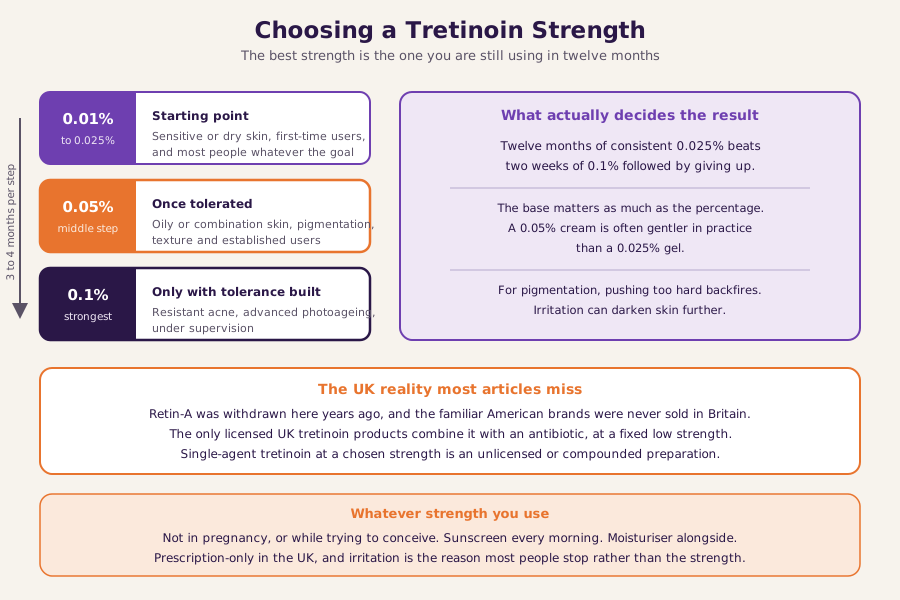
Pharmacist’s tip the gap between 0.025% and 0.05% is a doubling. If that feels harsh when you try it, an intermediate step is a reasonable thing to ask your prescriber about rather than giving up.
Which Tretinoin Strength Suits Your Concern
However, these are general patterns rather than rules. Your prescriber decides based on your skin, not on a chart.
| Skin type or concern | Usual starting range | Notes |
| Sensitive or dry skin | 0.01% to 0.025% | Buffer with moisturiser, build slowly |
| Fine lines and early ageing | 0.025% to 0.05% | Collagen changes take months |
| Oily or combination skin | 0.05% | Usually tolerates more, sooner |
| Pigmentation and melasma | 0.025% to 0.05% | Daily sunscreen is essential, not optional |
| Acne scarring and texture | 0.05% | Patience matters more than potency |
| Resistant or severe acne | 0.1% | Only once tolerance is established |
Notice, though, that pigmentation and ageing sit lower than people expect. Both respond to consistency over time rather than to strength, and irritated skin can actually worsen pigmentation by triggering inflammation.
Most people should start tretinoin at 0.025% or lower, two or three nights weekly, then build up. Stronger strengths such as 0.1% suit resistant acne once the skin has built tolerance over several months.
Which Tretinoin Strengths Are Available in the UK
Here is where most articles on tretinoin strengths mislead British readers, because they are written for an American market.
Retin-A is gone here.
Manufacturers withdrew the cream from the UK in 2008 and the gel in 2012. Other names you will see quoted, such as Retin-A Micro, Altreno, Atralin, Avita, Refissa and Renova, are American products never sold in Britain.
The licensed UK products are combinations.
Two exist. Treclin gel pairs tretinoin 0.025% with clindamycin 1%, and Aknemycin Plus combines tretinoin 0.02% with erythromycin 4%. Both hold a licence for acne, and both contain an antibiotic, which is appropriate for inflammatory acne but not what someone wants for wrinkles or pigmentation.
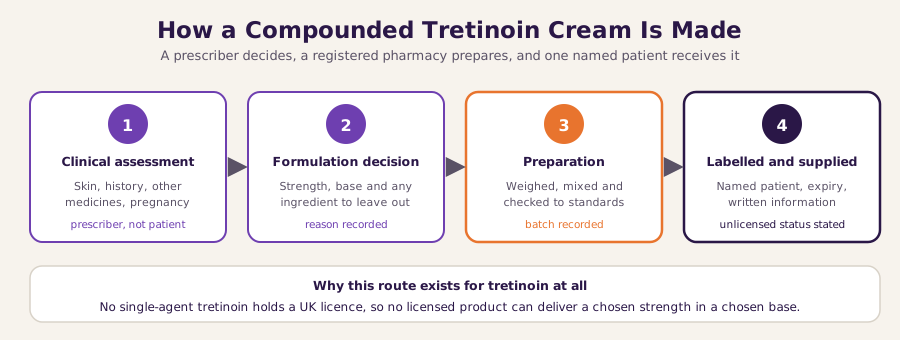
Single-agent tretinoin has no UK licence.
If you want plain tretinoin cream at a chosen strength, it comes either as an unlicensed imported product or as a compounded preparation made for you individually.
That is worth understanding rather than glossing over. The MHRA has not assessed an unlicensed medicine in the way it assesses a licensed one. A registered pharmacy prepares it to pharmaceutical standards, but no regulator reviews the finished product.
Tretinoin’s UK licence covers acne only.
Using it for pigmentation, melasma or ageing is off-label. That is legal and extremely common, and it should be an informed choice rather than something you discover later.
So a UK reader comparing tretinoin strengths is not simply picking a percentage off a shelf. They are choosing between a licensed combination product at a fixed low strength, or an unlicensed single-agent preparation where the strength can be chosen.

Compounding at Courier
When the standard option isn’t the right fit, we can make one to order
Courier is a compounding pharmacy. Where a prescriber decides it’s appropriate for you, we can prepare bespoke, made-to-order preparations — tailored to the individual, under full clinical governance. It’s the same principle that runs through everything we do.
Creams, Gels and Lotions
Meanwhile, the base matters nearly as much as the percentage, and people underestimate this.
Creams are richer and more moisturising, which suits dry, mature or sensitive skin. A 0.05% cream is often gentler in practice than a 0.025% gel.
Gels are lighter and dry faster, which suits oily and acne-prone skin. They tend to be more drying and more irritating at equivalent strengths.
Lotions and microsphere formulations release the active more slowly, which improves tolerance. These are common in the US and less available here.
A note on the alternative. Adapalene, a later-generation retinoid, is licensed in the UK as a single agent and tends to irritate less than tretinoin. If tolerance is your main obstacle, that is worth raising. You can find more information about adapalene on our Differin and Epiduo product pages.
Compounded bases can be adjusted, which is one genuine advantage of individually prepared preparations. Someone who reacts to a particular preservative or alcohol content has options that an off-the-shelf tube does not offer.
Starting Tretinoin Safely at Any Strength
In practice, most irritation comes from starting too fast rather than too strong. The following advice will help you when starting tretinoin:
- Begin two or three nights a week. Not nightly. Build up over six to eight weeks as your skin adapts.
- Use a pea-sized amount for the whole face. More is genuinely not better here, and excess simply increases irritation without improving results.
- Apply to dry skin. Wait twenty minutes after washing. Damp skin increases penetration and irritation together.
- Moisturise. Either before, after, or both. The sandwich method, moisturiser then tretinoin then moisturiser, buffers the effect considerably for sensitive skin.
- Wear sunscreen every day. SPF 30 or higher, all year. Tretinoin increases sun sensitivity, and sun exposure drives the pigmentation and ageing you are treating.
- Expect the adjustment phase. Flaking, redness and mild peeling in the first two to four weeks are normal, and often called retinisation. Acne can temporarily worsen as existing blockages surface.
Pharmacist’s tip if week three is miserable, drop to twice weekly rather than stopping. Almost everyone who abandons tretinoin does so during the adjustment phase, just before it settles.
When to Move Up a Tretinoin Strength
So allow three or four months at a given strength, minimum, before considering the next.
Consider moving up if all of these apply. Your skin tolerates the current strength with minimal dryness. You are using it nightly without difficulty. You are seeing improvement, but not as much as you want. And your prescriber agrees.
Stay where you are if any of these apply. Flaking or redness still appears. Nightly use is not yet comfortable. Progress is steady as it is. Or you simply feel no need.
Never jump from 0.025% straight to 0.1%. That skips two doublings, and the irritation usually costs more progress than the strength gains.

Why Higher Tretinoin Strengths Are Not Always Better
The gym comparison is worn, but accurate. Nobody improves faster by starting with the heaviest weights, and the person who does usually stops going.
Tretinoin works by gradually increasing cell turnover and collagen production. Both processes take months regardless of strength. What a higher percentage adds is speed at the margins, and it adds irritation considerably faster than it adds benefit.
Meanwhile, push too hard and several things happen. Intense peeling and burning. A damaged skin barrier, which brings dryness and stinging that outlast the flaking. Heightened sun sensitivity. And inconsistent use, which is what actually determines your result.
For pigmentation this matters even more, because, inflammation can trigger the very darkening you are trying to treat. Aggressive tretinoin can leave melasma worse than it started.
The honest position: twelve months of consistent 0.025% beats two weeks of 0.1% followed by abandonment, every single time.
Safety and Who Should Avoid It
- Pregnancy is an absolute stop. Tretinoin must not be used in pregnancy or while trying to conceive, and it is not suitable while breastfeeding. If you may become pregnant, discuss contraception with your prescriber before starting.
- Under-12s. Studies have not established safety or effectiveness below that age.
- Sun exposure. Daily SPF is a treatment requirement, not general advice.
- Other actives. Benzoyl peroxide, salicylic acid, resorcinol, sulfur and strong exfoliants all compound the irritation. You can combine some of them with care and a prescriber’s input, but not casually.
- Photosensitising medicines. Certain antibiotics and other drugs increase sun sensitivity, which stacks with tretinoin’s effect.
- Hair removal. Waxing, chemical depilatories and laser treatment on tretinoin-sensitised skin can cause real damage. Pause treatment beforehand and take advice on timing.
- Eczema, rosacea or a compromised barrier. None of these rules tretinoin out automatically, though they all need a slower approach and lower strengths.

Getting Tretinoin in the UK
Above all, tretinoin is prescription-only here, and you should avoid any site selling it without an assessment.
In short, three routes exist. Your GP can prescribe for acne, though many will start with other treatments first. A dermatologist can prescribe across the full range, privately or on referral. And a prescribing pharmacist or online clinic can assess you and prescribe where appropriate.
Courier Pharmacy offers an online consultation reviewed by a UK-registered prescriber, covering your skin concern, your history, your current products and anything else you take. Where a prescriber decides a strength or base outside the licensed range suits you better, our compounding service can prepare it for you individually. That decision is clinical rather than a menu choice, and your prescriber will explain what an unlicensed medicine means before anything is supplied.
Our hyperpigmentation page covers that concern in more detail, and our acne condition page sets out where retinoids sit in UK acne care.
Summary
Tretinoin strengths run from 0.01% to 0.1%, and the right one depends on your skin, your concern and how much irritation you can live with week after week.
Most people should start at 0.025% or lower, two or three nights weekly, and build up over months rather than weeks. Three to four months at a strength before moving up is a sensible minimum, and there is no prize for reaching 0.1%.
UK readers should be aware that most advice online is written for America. Retin-A disappeared here years ago, the familiar US brands never arrived, and the only licensed products combine tretinoin with an antibiotic at low strength. Single-agent tretinoin arrives as an unlicensed import or a compounded preparation.
Whatever strength you use, sunscreen daily and consistency over time matter more than the percentage on the tube.
FAQs
What tretinoin strength should I start with?
Usually 0.025% or lower, two or three nights a week, whether you are treating acne or ageing. Build frequency before strength.
Is 0.1% tretinoin better for wrinkles?
Not necessarily. Collagen changes take months at any strength, and irritation at 0.1% often costs more in missed applications than the extra potency gains.
How long before I can move up?
Three to four months at minimum, and only if your skin tolerates the current strength nightly without dryness.
Can I buy tretinoin over the counter in the UK?
No. It is prescription-only, and you should avoid any site selling it without an assessment.
Why is Retin-A not available in the UK?
The cream was discontinued here in 2008 and the gel in 2012. The licensed UK products now combine tretinoin with an antibiotic.
What is the difference between tretinoin and retinol?
Your skin must convert retinol before it works. Tretinoin is already active, which makes it considerably more potent and prescription-only.
Is cream or gel better?
Cream suits dry and sensitive skin, gel suits oily and acne-prone skin. The base affects tolerance as much as the percentage does.
Can I use tretinoin while pregnant?
No. It must not be used in pregnancy or while trying to conceive, and it is unsuitable while breastfeeding.
This article is for information only and does not replace a clinical assessment. Tretinoin is a prescription-only medicine and should be used under the supervision of a prescriber.


References
- Electronic Medicines Compendium (2026) Treclin 10 mg/g + 0.25 mg/g gel: Summary of Product Characteristics. Available at: medicines.org.uk (Accessed: 8 August 2026).
- Mukherjee, S., Date, A., Patravale, V., Korting, H.C., Roeder, A. and Weindl, G. (2006) ‘Retinoids in the treatment of skin aging: an overview of clinical efficacy and safety’, Clinical Interventions in Aging, 1(4), pp. 327-348.
- National Institute for Health and Care Excellence (2023) Acne vulgaris: management. NICE guideline NG198. Available at: nice.org.uk/guidance/ng198 (Accessed: 8 August 2026).
- Riahi, R.R., Bush, A.E. and Cohen, P.R. (2016) ‘Topical retinoids: therapeutic mechanisms in the treatment of photodamaged skin’, American Journal of Clinical Dermatology, 17(3), pp. 265-276.
- Zasada, M. and Budzisz, E. (2019) ‘Retinoids: active molecules influencing skin structure formation in cosmetic and dermatological treatments’, Advances in Dermatology and Allergology, 36(4), pp. 392-397.