


What you should know about LDN for CRPS
CRPS is a long-term pain condition that usually affects one limb, often after an injury or operation. As the medical literature describes, the pain is far more severe and persistent than expected, and it can come with swelling, changes in skin colour and temperature, and extreme sensitivity where light touch causes intense pain. It is thought to involve the nervous system and pain processing behaving abnormally.
Not in the way people sometimes hope. LDN is not a cure for CRPS, and the evidence is limited and early. Some case reports describe benefit in pain and sensitivity for some people, but there are no large, high-quality trials in CRPS confirming this. LDN is best understood as one option some people choose to explore, alongside physiotherapy, pain management and their specialist care, rather than as a treatment for CRPS itself.
LDN uses a low dose of naltrexone, usually about 1.5mg to 4.5mg at night, far lower than the 50mg used for addiction. As the research literature describes, it is thought to cause a rebound rise in the body’s endorphins and to calm immune cells in the nervous system that amplify pain, though these mechanisms remain theoretical in CRPS. Because these strengths are not available off the shelf, LDN is compounded to order, for us by APC Labs.
This needs careful checking, and it is one of the most important points. LDN must not be taken with opioid medicines, because it blocks them and can trigger sudden withdrawal or stop pain relief working. Since opioids are sometimes used in chronic pain, your prescriber will go through your current medicines carefully before considering LDN. Never stop or change prescribed pain medicines on your own, speak to your pain team first.
No. This is really important. LDN is not a replacement for physiotherapy, pain management or your specialist care. Those recognised approaches remain the foundation of managing CRPS. If you choose to explore LDN, it should be alongside your usual care and your pain team, never instead of them. We would always encourage you to keep them informed.
LDN is usually started low and increased slowly, and people who do respond often describe gradual change over several weeks to a few months rather than overnight. Keeping a simple pain and function diary helps you and your prescriber judge whether it is genuinely making a difference. If a fair trial brings no benefit, there is no reason to continue it.
Generally yes. LDN is not known to interact with common nerve pain medicines such as amitriptyline, gabapentin or pregabalin, and it is intended to sit alongside your existing pain management, not replace it. Your prescriber will still review your full medicine list, with particular attention to any opioids, before considering LDN.
Yes, and that is the intention. Physiotherapy, keeping the limb moving and pain management programmes are the backbone of CRPS care, and LDN would only ever sit alongside them. If anything, keeping up your rehabilitation matters more than any medicine, and we would encourage you to stay engaged with your pain team.
Additional information
LDN for complex regional pain syndrome
Living with relentless, out-of-proportion pain? You deserve to be believed, and to have real options
Complex regional pain syndrome, or CRPS, sometimes called chronic regional pain syndrome, is a condition where severe, persistent pain affects a limb, usually after an injury or surgery. The pain is often far greater than the original injury would explain, and it can come with swelling, changes in skin colour and temperature, and extreme sensitivity to the lightest touch. It is real, it is exhausting, and it is often misunderstood. At Courier Pharmacy, we believe healthcare should fit the person, not force the person to fit the system. So we work alongside your pain specialist and GP, never instead of them, and where it is right for you, we offer low dose naltrexone, or LDN, as one option some people with CRPS choose to explore. Healthcare that fits you, and your life with CRPS.

Five key takeaways
- CRPS is a chronic pain condition that usually affects one limb, often after an injury, with pain out of proportion to the original cause, as described in the medical literature.
- Specialist pain care matters. CRPS is best managed by a multidisciplinary pain team, and early treatment and movement are important.
- Standard treatment comes first. Physiotherapy, pain management and neuropathic pain medicines are the recognised mainstays.
- Low dose naltrexone is an option some explore. The evidence in CRPS is limited and mostly early, and LDN is used off-label here.
- LDN sits alongside your care. It never replaces your pain team or your standard treatment, and it is prescriber-assessed for safety.
How Courier Pharmacy helps
- Honest, personalised guidance on living with CRPS and your options
- Low dose naltrexone through a prescriber consultation, where it is appropriate for you
- A clear, evidence-based explanation of what LDN can and cannot do in CRPS
- Compounded LDN prepared to order by APC Labs, our specials partner
- Support that works alongside your GP and pain team, never instead of them
CRPS deserves proper, specialist pain care. We complement that care, we do not replace it, and we will always encourage you to stay under your pain team.
What is complex regional pain syndrome?
Complex regional pain syndrome is a long-term pain condition that usually affects one arm or leg. As the medical literature and patient resources describe, it often develops after an injury, fracture or operation, but the pain that follows is far more severe and long-lasting than expected, and it does not settle in the normal way.
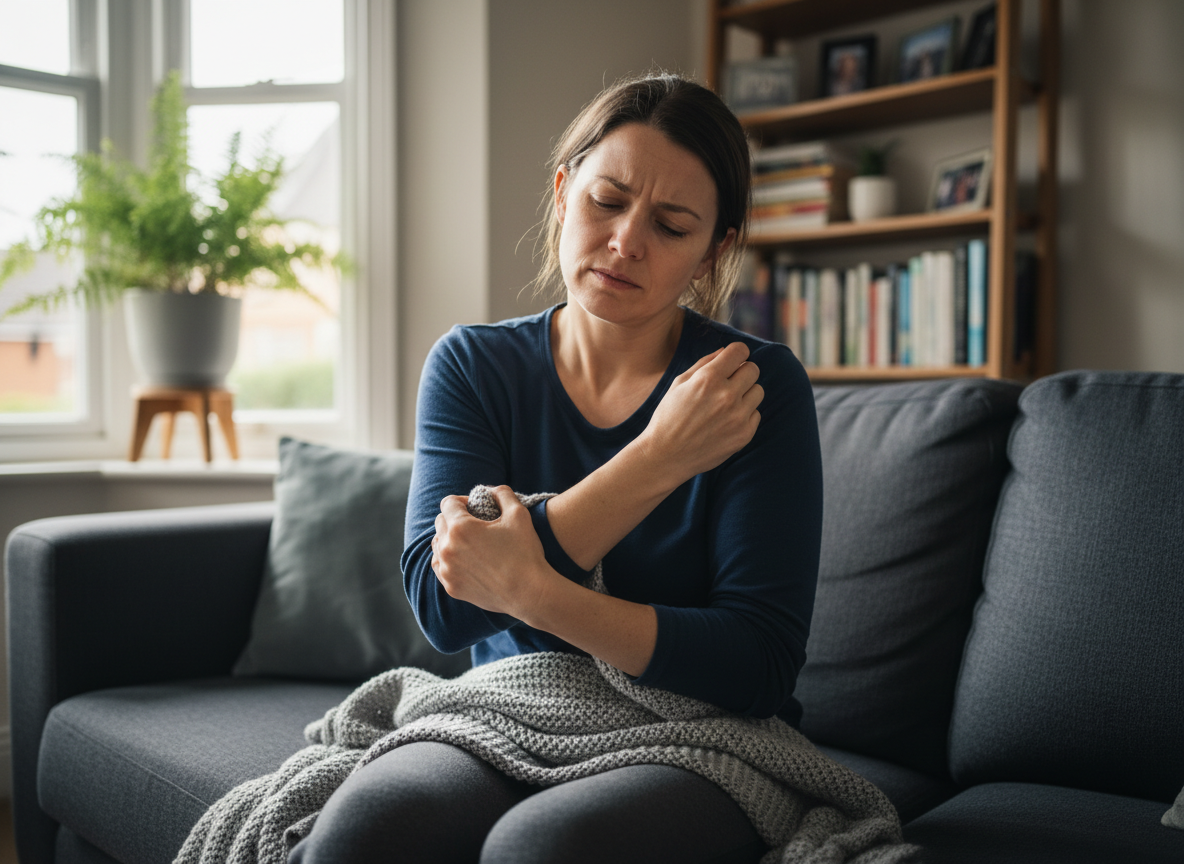
CRPS is thought to involve the nervous system and the body’s pain and inflammation responses behaving abnormally. The affected limb can become extremely sensitive, so that even a light touch, a breeze or clothing causes intense pain. This is called allodynia, and it is one of the features that makes CRPS so distressing.
The impact goes beyond pain. Living with a limb you cannot use normally, and with pain others cannot see, takes a heavy toll. Many people with CRPS have felt doubted. Their pain is real, and it deserves to be taken seriously.
What are the symptoms of CRPS?
CRPS affects the limb in several ways at once. As the medical literature describes, common features include:
- severe, continuous pain, often burning or throbbing
- pain that is out of proportion to any injury
- extreme sensitivity, where light touch causes intense pain
- swelling of the affected area
- changes in skin colour, becoming blotchy, red, purple or pale
- changes in skin temperature, feeling hotter or colder than the other limb
- changes to skin, hair and nail growth
- stiffness, weakness and difficulty moving the limb
Symptoms can change over time, and they vary from person to person. For some, CRPS improves over months. For others, it becomes long-term, which is why specialist input matters.
What happens in the body with CRPS?
The exact cause of CRPS is not fully understood, and more than one process is likely involved. As the research literature describes, proposed mechanisms include an exaggerated inflammatory response after injury, changes in how the nerves carry pain signals, and changes in how the brain and spinal cord process pain, a process sometimes called central sensitisation. The immune system appears to play a part too.
What this means in practice is that the pain system becomes amplified and stuck in an overactive state, out of step with any ongoing damage. That is part of why treatments that aim to calm nerve and immune activity, including options like LDN, have attracted interest. It is also why early movement and specialist pain care are so important, to stop the pain system becoming more entrenched.
How is CRPS diagnosed?
CRPS is diagnosed by a doctor, usually a pain specialist, based on your symptoms and examination rather than a single test. As the medical literature describes, doctors use recognised criteria, such as the Budapest criteria, which look at the pattern of pain, sensitivity, swelling, skin changes and movement, after ruling out other causes.
This careful approach matters because other conditions can cause limb pain, and getting the right diagnosis guides the right treatment. Early diagnosis and early rehabilitation are thought to give the best chance of improvement.
What are the standard treatment options for CRPS?
CRPS is best managed by a multidisciplinary team, and standard treatments come first. As the medical literature and pain guidelines describe, the recognised mainstays include:
Physiotherapy and keeping the limb moving
Gentle, guided movement and physiotherapy are central, to maintain function and prevent the limb from becoming stiff and weak. This is often combined with approaches that retrain how the brain perceives the limb.
Pain management
Medicines for nerve pain, such as amitriptyline or gabapentinoids, are commonly used, alongside other pain relief as needed and guided by a specialist. Pain management programmes also help people cope and stay active.
Treating specific problems
Swelling, skin changes and stiffness can each be addressed, and psychological support can help with the significant emotional impact of chronic pain.
Specialist procedures
In some cases, specialists consider other treatments such as nerve blocks or other interventions, decided within a pain service.
These standard treatments are the backbone of managing CRPS. Anything else, including low dose naltrexone, is considered alongside them, not instead of them.

Low dose naltrexone (LDN) and CRPS
Many people with CRPS come across low dose naltrexone and ask whether it could help. Because it is an option we can offer, and one that generates a lot of interest, we want to explain it clearly and honestly, including its limits.
What is LDN?
Naltrexone is a medicine licensed to treat opioid and alcohol dependence, at a dose of around 50mg. Low dose naltrexone uses a much smaller dose, typically between about 1.5mg and 4.5mg, taken at night. At this low dose it is used off-label, meaning outside its licensed purpose, for a range of conditions, including some chronic pain conditions where nerve and immune activity are thought to play a part. Because these low strengths are not available off the shelf, LDN is prepared as a compounded medicine, which for us is made by APC Labs, our compounding pharmacy partner.

The theory in CRPS
The idea behind LDN is interesting. As the research literature describes, a brief, low dose of naltrexone is thought to cause a rebound rise in the body’s own endorphins, and to calm certain immune cells in the nervous system, called glial cells, that are involved in amplifying pain. Because CRPS involves an overactive, sensitised pain system, some clinicians have proposed that LDN might help turn down that amplification. This is a plausible theory, and it is why LDN has attracted interest in chronic pain and CRPS, but it is important to understand that it remains theoretical.
What the evidence actually shows
Here is the honest picture, because you deserve it. The evidence for LDN in CRPS is limited and early. There are small case reports and series describing benefit in some people with CRPS, and broader early research into LDN for chronic pain, but there are no large, high-quality clinical trials in CRPS to confirm a benefit. This means we cannot promise that LDN will help your CRPS, and we will not pretend otherwise. What we can say is that some people report improvement in pain and sensitivity, and that it is one option to explore with clear eyes about how thin the evidence is.
What LDN is not
This is the most important part. LDN is not a cure for CRPS, and it is not a replacement for physiotherapy, pain management or your specialist care. Those recognised approaches remain the foundation. If you choose to explore LDN, it should sit alongside that proper care, never instead of it, and your pain team should stay informed.
Safety, and who might consider it
LDN is generally well tolerated, and side effects are usually mild, such as vivid dreams or sleep disturbance early on, and occasionally headache or stomach upset. But there are firm safety points, and one is especially important in CRPS. LDN must not be taken by anyone using opioid medicines, including many strong painkillers, because it blocks them and can trigger sudden withdrawal or stop pain relief working. Since opioids are sometimes used in chronic pain, this needs careful checking. LDN also needs caution in liver disease, and it is not recommended in pregnancy or breastfeeding without specialist advice. This is exactly why LDN is prescriber-assessed, so we can check it is safe and appropriate for you, and coordinate with your wider care.

Monitoring and ongoing care
If you and your prescriber decide LDN is worth trying, it is usually started at a low dose and increased slowly, which helps your body adjust and makes any reaction easier to spot. You will be asked how you are getting on, and whether your pain, sensitivity and function are changing. Because CRPS care involves a pain team, we encourage you to keep them updated, so everyone caring for you has the full picture. If LDN does not help after a fair trial, there is no benefit in continuing it.
Patient experiences and challenges
Living with CRPS can be a daily exercise in endurance. People tell us about pain that never lets up, about a limb that no longer feels like their own, and about the frustration of being doubted when they look well. That is a lot to carry.
Many also tell us they have spent hours researching every possible option, including LDN, and found it hard to get a straight, honest answer, caught between overblown promises and blanket dismissal. That gap is exactly what we try to fill. Your pain is real, and you are not giving up by staying under your pain team while exploring your options. Both can be true at once.
How Courier Pharmacy helps with CRPS
We started Courier Pharmacy because too many people feel either dismissed or oversold, especially when they are living with chronic pain that others cannot see. CRPS is a clear example. Your pain, your limits and your goals are unique, so your support should be too. That personalisation is the first of our four pillars.
The other pillars carry it through. Guidance means we give you honest, evidence-based information, including the real limits of options like LDN, so you can decide with clear eyes. Trust means we are a UK-regulated pharmacy that will always tell you when something is not a substitute for specialist care. Community means we show up for people, even when there is nothing to sell.
That spirit has a face in Dr Ada Jex-Cori, the voice of our approach, whose message is simple: you are not broken, and you deserve healthcare that fits your life. For CRPS, that means honest support, real options, and respect for you and your pain team. Healthcare that fits you, not the other way round.

Frequently asked questions about LDN for CRPS
What is complex regional pain syndrome?
CRPS is a long-term pain condition that usually affects one limb, often after an injury or operation. As the medical literature describes, the pain is far more severe and persistent than expected, and it can come with swelling, changes in skin colour and temperature, and extreme sensitivity where light touch causes intense pain. It is thought to involve the nervous system and pain processing behaving abnormally.
Does low dose naltrexone treat CRPS?
Not in the way people sometimes hope. LDN is not a cure for CRPS, and the evidence is limited and early. Some case reports describe benefit in pain and sensitivity for some people, but there are no large, high-quality trials in CRPS confirming this. LDN is best understood as one option some people choose to explore, alongside physiotherapy, pain management and their specialist care, rather than as a treatment for CRPS itself.
How does LDN work, and what dose is used?
LDN uses a low dose of naltrexone, usually about 1.5mg to 4.5mg at night, far lower than the 50mg used for addiction. As the research literature describes, it is thought to cause a rebound rise in the body’s endorphins and to calm immune cells in the nervous system that amplify pain, though these mechanisms remain theoretical in CRPS. Because these strengths are not available off the shelf, LDN is compounded to order, for us by APC Labs.
Can I take LDN if I use opioid painkillers for my CRPS?
This needs careful checking, and it is one of the most important points. LDN must not be taken with opioid medicines, because it blocks them and can trigger sudden withdrawal or stop pain relief working. Since opioids are sometimes used in chronic pain, your prescriber will go through your current medicines carefully before considering LDN. Never stop or change prescribed pain medicines on your own, speak to your pain team first.
Should I stop my usual CRPS treatment if I try LDN?
No. This is really important. LDN is not a replacement for physiotherapy, pain management or your specialist care. Those recognised approaches remain the foundation of managing CRPS. If you choose to explore LDN, it should be alongside your usual care and your pain team, never instead of them. We would always encourage you to keep them informed.
How long before I know if LDN is helping?
LDN is usually started low and increased slowly, and people who do respond often describe gradual change over several weeks to a few months rather than overnight. Keeping a simple pain and function diary helps you and your prescriber judge whether it is genuinely making a difference. If a fair trial brings no benefit, there is no reason to continue it.
Important disclaimer
This page is for general information and education. It is not medical advice, and it is not a substitute for a consultation with a qualified healthcare professional. CRPS should be diagnosed and managed by a doctor or pain specialist, and physiotherapy, pain management and specialist care are the recognised approaches.
Low dose naltrexone is an off-label, experimental option with limited evidence in CRPS. It is not a cure, and it must never replace specialist care or prescribed treatment. LDN must not be taken with opioid medicines, which matters particularly in chronic pain.
Always speak to your pain specialist, prescriber or pharmacist before starting, stopping or changing any treatment.
References
- Courier Pharmacy (no date) Low dose naltrexone and the growing evidence across chronic conditions. Available at: https://courierpharmacy.co.uk/low-dose-naltrexone-and-the-growing-evidence-across-chronic-conditions/ (Accessed: 17 October 2026).
- Courier Pharmacy (no date) What is low dose naltrexone? A clear guide to LDN. Available at: https://courierpharmacy.co.uk/what-is-low-dose-naltrexone-a-clear-guide-to-ldn/ (Accessed: 17 October 2026).
- Courier Pharmacy (no date) The evolution of low dose naltrexone. Available at: https://courierpharmacy.co.uk/the-evolution-of-low-dose-naltrexone/ (Accessed: 17 October 2026).
- Harden, R.N. et al. (2013) ‘Validation of proposed diagnostic criteria (the “Budapest Criteria”) for complex regional pain syndrome’, Pain, 150(2), pp. 268-274. Available at: [EDITOR: insert verified URL] (Accessed: 15 October 2026).
- Chopra, P. and Cooper, M.S. (2013) ‘Treatment of complex regional pain syndrome (CRPS) using low dose naltrexone (LDN)’, Journal of Neuroimmune Pharmacology, 8(3), pp. 470-476. Available at: [EDITOR: insert verified URL] (Accessed: 15 October 2026).


BSc Pharmacy, Independent Prescriber, PgDip Endocrinology, MSc Endocrinology, PgDip Infectious Diseases
Superintendant Pharmacist, Independent Prescriber

BSc Pharmacy
Compounding Pharmacist

