

Find the right morning sickness treatment for you
View All Products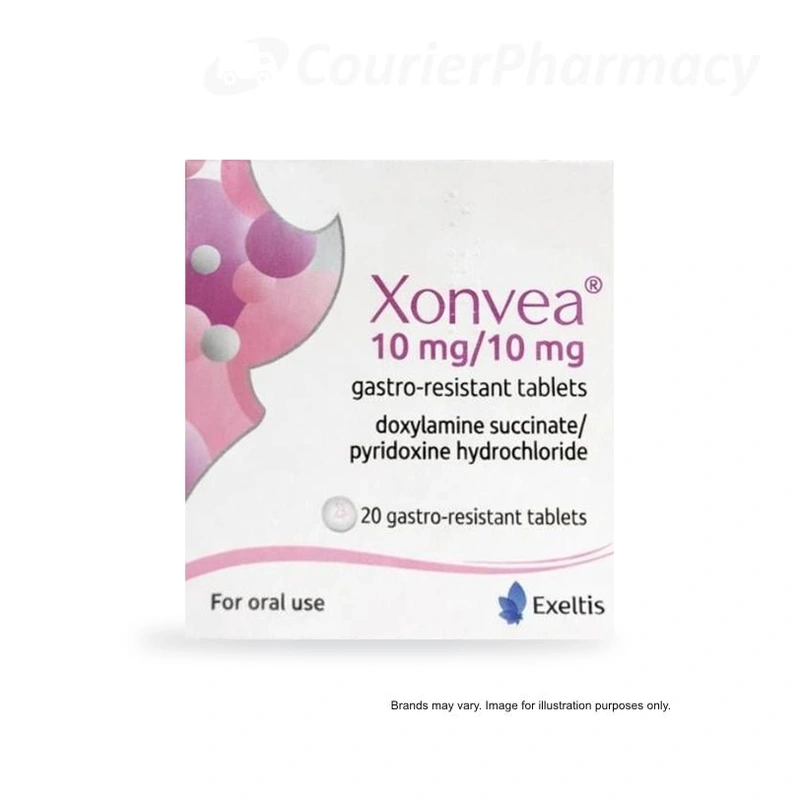


What you should know about morning sickness
Usually not. As the NHS explains, morning sickness, while unpleasant, doesn’t typically harm your baby, and most women feel better by around weeks 16 to 20. The exception is severe, persistent vomiting that stops you keeping food or fluids down, known as hyperemesis gravidarum, which needs prompt medical care to keep you well. For ordinary morning sickness, the focus is simply on helping you feel better.
The name is misleading. As the NHS notes, nausea and vomiting in pregnancy can happen at any time of day or night, not just the morning, and for many women it lasts throughout the day. The term is just a historical one. What matters is that, whenever it strikes, it’s a recognised condition with real treatments, so you don’t have to simply put up with it.
Xonvea is the first medicine licensed in the UK specifically for nausea and vomiting in pregnancy, available since early 2024. It’s a slow-release tablet combining doxylamine, an antihistamine that calms nausea signals in the brain, and pyridoxine, which is vitamin B6. As RCOG guidance describes, it’s a recommended first-line treatment when self-care hasn’t worked, with a well-established safety record from decades of use in the same combination abroad.
For the medicines used for morning sickness, the reassuring answer is yes, when taken on proper advice. As RCOG and teratology services describe, treatments like Xonvea and other established antiemetics are supported by extensive safety data and aren’t linked to harm to the baby when used appropriately. Being unable to eat or drink carries its own risks, so treating troublesome sickness is often the safer choice. A prescriber helps choose the right option for you.
Quite a lot can help. As the NHS advises, try eating small, frequent meals, keeping plain dry foods like crackers to hand, especially before getting up, sipping fluids often, resting, and avoiding smells or foods that set off your nausea. Ginger helps some women, and vitamin B6 is a recognised option. If these aren’t enough, that’s the point to consider medication.
Seek urgent advice if you can’t keep any food or fluids down, are passing little or very dark urine, feel very weak, dizzy, or faint, are losing weight, or have severe, unrelenting vomiting. As RCOG stresses, these can be signs of hyperemesis gravidarum, which needs prompt medical assessment and sometimes hospital treatment. Contact your midwife, GP, NHS 111, or maternity unit, and don’t try to manage it alone.
We can assess your symptoms and, where appropriate, provide treatment such as Xonvea through a prescriber consultation. That said, morning sickness is part of your wider pregnancy care, so we always encourage you to keep your midwife and maternity team informed, and we’ll direct you to them straight away if your sickness is severe. We work alongside your antenatal care, never instead of it.
We offer a confidential assessment, honest self-care advice, and prescriber-assessed treatment including Xonvea and other antiemetics used safely in pregnancy. We’re clear about what’s licensed and what’s used off-label, and we coordinate with your midwife and GP, especially if symptoms are severe. It starts with a consultation or a chat with a pharmacist.
Additional information
Morning sickness
Morning sickness, the nausea and vomiting so many women experience in early pregnancy, can be utterly miserable, and despite the name it can strike at any time of day. The reassuring news is that it’s common, usually settles as pregnancy goes on, and there are now safe, effective treatments when you need them, including Xonvea, the first medicine licensed in the UK specifically for it. At Courier Pharmacy, we believe healthcare should fit the person, not force the person to fit the system. So we take your symptoms seriously, offer honest advice and prescriber-assessed treatment, and work alongside your midwife and GP. Healthcare that fits you, and your pregnancy. Struggling with pregnancy sickness? We can help you feel more like yourself.

Five key takeaways
- Morning sickness is very common, and usually harmless. As the NHS notes, most women feel better by around weeks 16 to 20.
- The name is misleading. Nausea and vomiting in pregnancy can happen at any time of day, not just the morning.
- Self-care comes first. Small, frequent meals, fluids, rest, and avoiding triggers help many women.
- Effective medicines are available. Xonvea is the first UK-licensed treatment, alongside other well-established antiemetics.
- Severe sickness needs urgent care. Hyperemesis gravidarum is a serious form that requires medical help.
How Courier Pharmacy helps with morning sickness
- A confidential assessment of your symptoms and what might help
- Xonvea, the licensed treatment for nausea and vomiting in pregnancy, where appropriate
- Other prescriber-assessed antiemetics used safely in pregnancy
- Honest, practical self-care advice for easing symptoms
- Clear signposting to your midwife, GP, or maternity team, especially if sickness is severe
Pregnancy care is led by your midwife and maternity team. We work alongside them, never instead of them.

What you should know about treating morning sickness
Good care for morning sickness follows a clear, reassuring path. First, know that it’s common and usually eases as pregnancy progresses. Second, start with self-care, since simple measures help many women. Third, use medicine when you need it, because safe, effective options exist and there’s no need to simply suffer. Fourth, watch for the warning signs of severe sickness, which needs prompt medical care.
This is the approach the NHS and RCOG take, and the one we support at Courier Pharmacy. As RCOG guidance describes, nausea and vomiting in pregnancy can be treated effectively, and women should be offered help rather than told to put up with it. The goal is simple: to help you feel better and stay well, for you and your baby.
Morning sickness overview
Morning sickness is the common name for nausea and vomiting in pregnancy, or NVP. As the NHS explains, it affects a large proportion of pregnancies, usually beginning in the first few weeks, peaking around weeks 9 to 11, and easing for most women by weeks 16 to 20.
For some women it’s mild queasiness; for others it’s relentless nausea and frequent vomiting that affects eating, working, and daily life. As the pregnancy literature notes, its impact on wellbeing and quality of life is often underestimated, and feeling this unwell in early pregnancy can be isolating and demoralising. None of that is something you have to just endure.
The reassuring truth is that morning sickness, while unpleasant, is usually harmless to your baby, and it’s treatable. As RCOG guidance describes, effective treatments are available, and the outdated idea that women should simply cope has rightly been replaced with proper care. Understanding that help exists is the first step to feeling better.
Why does this matter? Because morning sickness is common, often dismissed, and very treatable. Too many women are told it’s just part of pregnancy and left to struggle. You deserve to be taken seriously, and to be offered real help.
What is morning sickness?
Morning sickness is nausea, with or without vomiting, that occurs in pregnancy, usually in the first trimester. As the NHS explains, it’s thought to be linked to the hormonal changes of early pregnancy, and it can range from mild to severe.
Common features include:
- Feeling sick or queasy, often in waves
- Vomiting, which may or may not be present
- Symptoms at any time of day, not just the morning
- Nausea triggered by certain smells, foods, or an empty stomach
- Tiredness and a general feeling of being run down
- Symptoms that usually begin in the first few weeks and ease by mid-pregnancy
As the pregnancy literature notes, most women find symptoms settle by around weeks 16 to 20, though a smaller number experience them for longer.

How common is morning sickness?
Morning sickness is one of the most common experiences in early pregnancy. As the NHS reports, the majority of pregnant women experience some degree of nausea or vomiting, making it a normal, if unwelcome, part of many pregnancies.
Because it’s so common, it’s also often normalised to the point where women don’t seek help they’re entitled to. Whether your symptoms are mild or severe, you’re in very large company, and there’s a clear path to feeling better.
What causes morning sickness?
The exact cause isn’t fully understood, but it’s closely tied to the changes of early pregnancy. The pregnancy literature describes the main factors.
Pregnancy hormones
Rising levels of pregnancy hormones, particularly human chorionic gonadotropin, or hCG, and oestrogen, are thought to play a central role. This fits with the timing, as symptoms often track the peak in hCG in early pregnancy.
The role of GDF15
More recent research has focused on a hormone called GDF15, produced by the developing pregnancy, which acts on the part of the brain that controls nausea. As the emerging research describes, differences in sensitivity to this hormone may help explain why some women are affected far more severely than others.
Individual factors
Some women are more prone to morning sickness, including those carrying twins, those who had severe sickness in a previous pregnancy, and those prone to nausea in other situations. It’s no reflection on you or your pregnancy, and there’s nothing you did to cause it.
When it’s more serious: hyperemesis gravidarum
While most morning sickness is manageable, a small number of women develop a severe form called hyperemesis gravidarum, or HG. As RCOG guidance describes, this involves persistent, severe nausea and vomiting that prevents you keeping food or fluids down, and can lead to dehydration, weight loss, and other complications.
Seek urgent medical advice, from your midwife, GP, NHS 111, or maternity unit, if you:
- Can’t keep any food or fluids down
- Are passing little or very dark urine, or not passing urine
- Feel very weak, dizzy, or faint
- Are losing weight
- Have severe, unrelenting vomiting
As RCOG stresses, hyperemesis gravidarum needs prompt medical assessment, and sometimes hospital treatment with fluids and medication. It is not something to manage alone, and getting help early makes a real difference.

When to see a doctor or midwife
It’s worth seeking help for morning sickness sooner than many women think. As the NHS advises, contact your midwife or GP if your nausea or vomiting is severe, isn’t improving, is stopping you keeping food or fluids down, or is affecting your daily life.
You should also seek advice before taking any medicine in pregnancy, which is exactly where a proper assessment helps. And any of the warning signs of hyperemesis gravidarum above need prompt medical attention. Staying in touch with your maternity team is always the right move.
Treating morning sickness
There’s a clear, stepwise approach to treating morning sickness, and no reason to simply suffer. As RCOG and NICE describe, it starts with self-care and moves on to medicines where needed.
Self-care and lifestyle
Simple measures help many women, and they’re the sensible first step. As the NHS advises, try eating small, frequent meals, having plain, dry foods like toast or crackers, especially before getting up, sipping fluids regularly, resting, and avoiding smells or foods that trigger your nausea. These won’t fix everything, but they often take the edge off.
Ginger and vitamin B6
Some non-drug options have supporting evidence. As the pregnancy literature notes, ginger can help reduce nausea for some women, and vitamin B6, known as pyridoxine, is a recognised option too. Acupressure bands help some women, though the evidence is mixed. A pharmacist can advise on what’s suitable.
Xonvea, the licensed treatment
Where self-care isn’t enough, Xonvea is a natural next step, and it holds a special place: it’s the first and only medicine licensed in the UK specifically for nausea and vomiting in pregnancy, available since early 2024. Xonvea is a modified-release tablet combining two ingredients, doxylamine, an antihistamine that calms the nausea signals in the brain, and pyridoxine, or vitamin B6. As RCOG guidance describes, it’s a recommended first-line medical treatment when conservative measures haven’t worked, and it has a well-established safety record, having been used in the same combination in Canada and the US for decades. It’s usually started as a couple of tablets at night, and the dose can be adjusted with your prescriber. Because it’s slow-release and can cause some drowsiness, it’s often taken to cover the morning ahead.
Other antiemetics used in pregnancy
If Xonvea isn’t suitable or isn’t enough, other antiemetics are well established in pregnancy. As RCOG guidance describes, these include the antihistamines cyclizine and promethazine, and the phenothiazines prochlorperazine and chlorpromazine. Although these are used off-label in pregnancy, they’re supported by extensive experience and safety data, and prescribers use them with confidence. Sometimes more than one medicine, from different classes, is needed to get symptoms under control.
Second-line options
Where first-line treatments don’t work, second-line medicines such as ondansetron and metoclopramide may be considered. As RCOG describes, these can be effective, but each has specific considerations, for example metoclopramide is usually limited to a short course, and the use of ondansetron in very early pregnancy is discussed individually because of a small possible risk. A prescriber will weigh these up carefully with you.
Treatment for hyperemesis gravidarum
Severe sickness needs more intensive care. As RCOG describes, hyperemesis gravidarum may require treatment with fluids given through a drip, antiemetics, vitamin supplements such as thiamine, and sometimes a hospital stay. This is specialist care, coordinated by your maternity team, and seeking it promptly protects both you and your baby.
Is it safe to take medicine for morning sickness in pregnancy?
This is one of the most common worries, and an understandable one. The reassuring answer, as RCOG and UK teratology services describe, is that the antiemetics used for morning sickness, including Xonvea and the others above, are supported by extensive safety data and are not associated with harm to the baby when used appropriately. Xonvea in particular is licensed precisely because its safety and effectiveness in pregnancy are well established.
The key is that any medicine in pregnancy should be taken after proper advice, so it can be chosen and dosed correctly for you. That’s exactly what a prescriber assessment provides. Being so unwell that you can’t eat or drink carries its own risks, so treating troublesome sickness is often the safer path, not a risk in itself.

Patient experiences and challenges
Morning sickness can be a genuinely tough start to pregnancy. Women tell us about feeling constantly nauseous, unable to face food or work, and struggling to look after other children, all while being told it’s normal and will pass. That combination of feeling awful and feeling dismissed is hard.
Many also tell us they were reluctant to take anything, worried it might harm their baby, and so soldiered on far longer than they needed to. Others didn’t realise there was a licensed treatment, or that help was available at all.
Here’s what we want you to hear. Feeling this unwell is not something you simply have to endure, and seeking treatment doesn’t make you weak or a worrier. Morning sickness is real, common, and treatable, and looking after yourself is looking after your baby. You’re the one going through it, and you deserve to be taken seriously. Our job is to help you feel better, safely, and alongside your maternity team.
Looking to the future: research and hope
There’s genuine progress in understanding morning sickness. As the emerging research describes, the discovery of the role of the hormone GDF15 is transforming how we think about pregnancy sickness and its most severe form, opening the door to better-targeted treatments and, one day, prevention. After decades of being under-researched, this is a hopeful shift.
Alongside that, the arrival of a licensed treatment in the UK has helped put pregnancy sickness on a firmer footing, encouraging women to seek help and clinicians to offer it. We won’t pretend morning sickness is ever pleasant. What we will say is that it’s better understood and better treated than ever, and that support is there for you.
How Courier Pharmacy helps with morning sickness
We started Courier Pharmacy because too many people, and too many women especially, are told to just put up with symptoms that deserve proper care. Morning sickness is a clear example. Your pregnancy, your symptoms, and your circumstances are unique, so your care should be too. That personalisation is the first of our four pillars.
The other pillars carry it through. Guidance means we give you honest, reassuring advice on self-care and on what treatments are safe and suitable. Trust means we’re a UK-regulated pharmacy that assesses carefully, is upfront about what’s licensed and what’s used off-label, and always works alongside your midwife, GP, and maternity team, sending you to them promptly when sickness is severe. Community means we show up for people, at every stage.
That spirit has a face in Dr Ada Jex-Cori, the voice of our approach, whose message is simple: you’re not broken, and you deserve healthcare that fits your life. For morning sickness, that means being believed, and safe, effective help. Healthcare that fits you, not the other way round.
Frequently asked questions about morning sickness

Is morning sickness harmful to my baby?
Usually not. As the NHS explains, morning sickness, while unpleasant, doesn’t typically harm your baby, and most women feel better by around weeks 16 to 20. The exception is severe, persistent vomiting that stops you keeping food or fluids down, known as hyperemesis gravidarum, which needs prompt medical care to keep you well. For ordinary morning sickness, the focus is simply on helping you feel better.
Why is it called morning sickness if it happens all day?
The name is misleading. As the NHS notes, nausea and vomiting in pregnancy can happen at any time of day or night, not just the morning, and for many women it lasts throughout the day. The term is just a historical one. What matters is that, whenever it strikes, it’s a recognised condition with real treatments, so you don’t have to simply put up with it.
What is Xonvea, and how does it work?
Xonvea is the first medicine licensed in the UK specifically for nausea and vomiting in pregnancy, available since early 2024. It’s a slow-release tablet combining doxylamine, an antihistamine that calms nausea signals in the brain, and pyridoxine, which is vitamin B6. As RCOG guidance describes, it’s a recommended first-line treatment when self-care hasn’t worked, with a well-established safety record from decades of use in the same combination abroad.
Is it safe to take medicine for morning sickness in pregnancy?
For the medicines used for morning sickness, the reassuring answer is yes, when taken on proper advice. As RCOG and teratology services describe, treatments like Xonvea and other established antiemetics are supported by extensive safety data and aren’t linked to harm to the baby when used appropriately. Being unable to eat or drink carries its own risks, so treating troublesome sickness is often the safer choice. A prescriber helps choose the right option for you.
What can I do at home to ease morning sickness?
Quite a lot can help. As the NHS advises, try eating small, frequent meals, keeping plain dry foods like crackers to hand, especially before getting up, sipping fluids often, resting, and avoiding smells or foods that set off your nausea. Ginger helps some women, and vitamin B6 is a recognised option. If these aren’t enough, that’s the point to consider medication.
When should I seek urgent help?
Seek urgent advice if you can’t keep any food or fluids down, are passing little or very dark urine, feel very weak, dizzy, or faint, are losing weight, or have severe, unrelenting vomiting. As RCOG stresses, these can be signs of hyperemesis gravidarum, which needs prompt medical assessment and sometimes hospital treatment. Contact your midwife, GP, NHS 111, or maternity unit, and don’t try to manage it alone.
Can I get treatment without going to my GP?
We can assess your symptoms and, where appropriate, provide treatment such as Xonvea through a prescriber consultation. That said, morning sickness is part of your wider pregnancy care, so we always encourage you to keep your midwife and maternity team informed, and we’ll direct you to them straight away if your sickness is severe. We work alongside your antenatal care, never instead of it.
How can Courier Pharmacy help with morning sickness?
We offer a confidential assessment, honest self-care advice, and prescriber-assessed treatment including Xonvea and other antiemetics used safely in pregnancy. We’re clear about what’s licensed and what’s used off-label, and we coordinate with your midwife and GP, especially if symptoms are severe. It starts with a consultation or a chat with a pharmacist.
Important disclaimer
This page is for general information and education. It isn’t medical advice, and it isn’t a substitute for a consultation with a qualified healthcare professional or your maternity team. Any medicine in pregnancy should be taken only after proper advice. Severe nausea and vomiting, or signs of hyperemesis gravidarum such as being unable to keep fluids down, need prompt medical assessment. Always speak to your midwife, GP, prescriber, or pharmacist before starting any treatment in pregnancy.
References
- National Health Service (2024) Vomiting and morning sickness in pregnancy. Available at: https://www.nhs.uk/pregnancy/related-conditions/common-symptoms/vomiting-and-morning-sickness/ (Accessed: 27 July 2026).
- National Institute for Health and Care Excellence (no date) Nausea/vomiting in pregnancy: Clinical Knowledge Summary. Available at: https://cks.nice.org.uk/topics/nausea-vomiting-in-pregnancy/ (Accessed: 27 July 2026).
- UK Teratology Information Service (no date) Treatment of nausea and vomiting in pregnancy. Available at: https://uktis.org/monographs/treatment-of-nausea-and-vomiting-in-pregnancy/ (Accessed: 27 July 2026).
- Electronic Medicines Compendium (emc) (no date) Xonvea 10 mg/10 mg gastro-resistant tablets: Summary of Product Characteristics (SmPC). Available at: https://www.medicines.org.uk/emc/product/14892/smpc (Accessed: 11 September 2026).
- Pregnancy Sickness Support (no date) Information and support. Available at: https://www.pregnancysicknesssupport.org.uk/ (Accessed: 27 July 2026).


BSc Pharmacy, Independent Prescriber, PgDip Endocrinology, MSc Endocrinology, PgDip Infectious Diseases
Superintendant Pharmacist, Independent Prescriber

BSc Pharmacy
Compounding Pharmacist

