

Find the right low libido treatment for you
View All Products



What you should know about low libido in women
Both can be true. Some change in desire is a normal part of life, perimenopause, and menopause. It becomes a recognised condition, HSDD, when the loss of desire is persistent and genuinely distresses you, and isn’t simply explained by something else. That distress is the key. If it’s bothering you, it’s worth addressing, and treatment can help.
Rarely one thing. Falling oestrogen and testosterone play a part, as can vaginal dryness, poor sleep, low mood, stress, relationship factors, and some medicines. That’s why a good assessment looks at the whole picture, since sorting one or two of these, or optimising your HRT, often makes the biggest difference.
Sometimes, and it’s the right place to start. Optimising your HRT can improve mood, sleep, and vaginal comfort, all of which support desire. As NICE advises, testosterone is only considered when HRT alone isn’t enough. So getting your HRT right first often helps, and it’s an essential foundation before adding anything else.
Women produce testosterone too, and it contributes to sexual desire. Levels fall with age. As the Global Consensus Statement describes, testosterone can improve desire, arousal, and pleasure, and reduce distress, in perimenopausal and postmenopausal women with HSDD. It’s added to your HRT when desire stays low. It isn’t recommended for tiredness or low mood alone.
Because there’s currently no testosterone product licensed for women in the UK. Rather than leave women without an option, prescribers use Testogel, a men’s product, at roughly a tenth of the male dose, adjusted to keep levels in the normal female range. This off-label use is well established, supported by menopause guidance, and always done with assessment and monitoring.
Yes. Because testosterone is processed by the liver and needs to stay within the female range, your levels are checked before starting and then periodically, usually total testosterone and SHBG. This keeps treatment safe and effective, and screens for using too much. We can arrange and interpret these tests for you.
Give it time. It can take up to twelve weeks to notice a difference, and prescribers usually suggest continuing for up to six months to judge it properly. If there’s been no real benefit by then, it’s sensible to stop. Testosterone helps many women, but not everyone, and being realistic about that is part of using it well.
Usually side effects are uncommon and mild, like acne or a little extra hair at the site, and most are linked to too high a dose. Rarely, and mainly with excess, it can cause changes that may not reverse, such as a deeper voice or clitoral enlargement, which is exactly why the dose is kept low and monitored. It isn’t suitable in pregnancy, active liver disease, or, without specialist advice, a history of hormone-sensitive breast cancer.
Additional information
Low libido in women
Low libido, a reduced interest in sex, is one of the most common, and least talked about, changes women notice, particularly perimenopausal and postmenopausal women. When it starts to bother you, it has a name, hypoactive sexual desire disorder, or HSDD, and it’s a recognised, treatable condition, not a failing or something to feel awkward about. At Courier Pharmacy, we believe healthcare should fit the person, not force the person to fit the system. So we look at the whole picture, make sure your HRT is working for you, and where it’s right, add testosterone using Testogel, with honest guidance and careful monitoring. Healthcare that fits you, and your life. Lost interest in sex, and it’s bothering you? We can help.

Five key takeaways
- Low desire that distresses you is a real condition. As the menopause literature explains, HSDD is recognised and treatable.
- It’s very common around menopause. Hormonal, physical, emotional, and relationship factors all play a part.
- Getting your HRT right comes first. As NICE advises, testosterone is considered when HRT alone isn’t enough.
- Testosterone can help desire specifically. The Global Consensus Statement supports its use for postmenopausal HSDD.
- It’s used off-label, and monitored. There’s no licensed female product, so Testogel is used carefully at a low dose, with blood tests.
How Courier Pharmacy helps
- A confidential, whole-picture assessment of what’s affecting your desire
- Review of your HRT, to make sure it’s optimised first
- Testosterone therapy using Testogel, prescribed off-label where appropriate
- Blood tests to guide and monitor treatment safely
- Honest guidance on realistic expectations, alongside your GP or specialist

What you should know about treating low libido
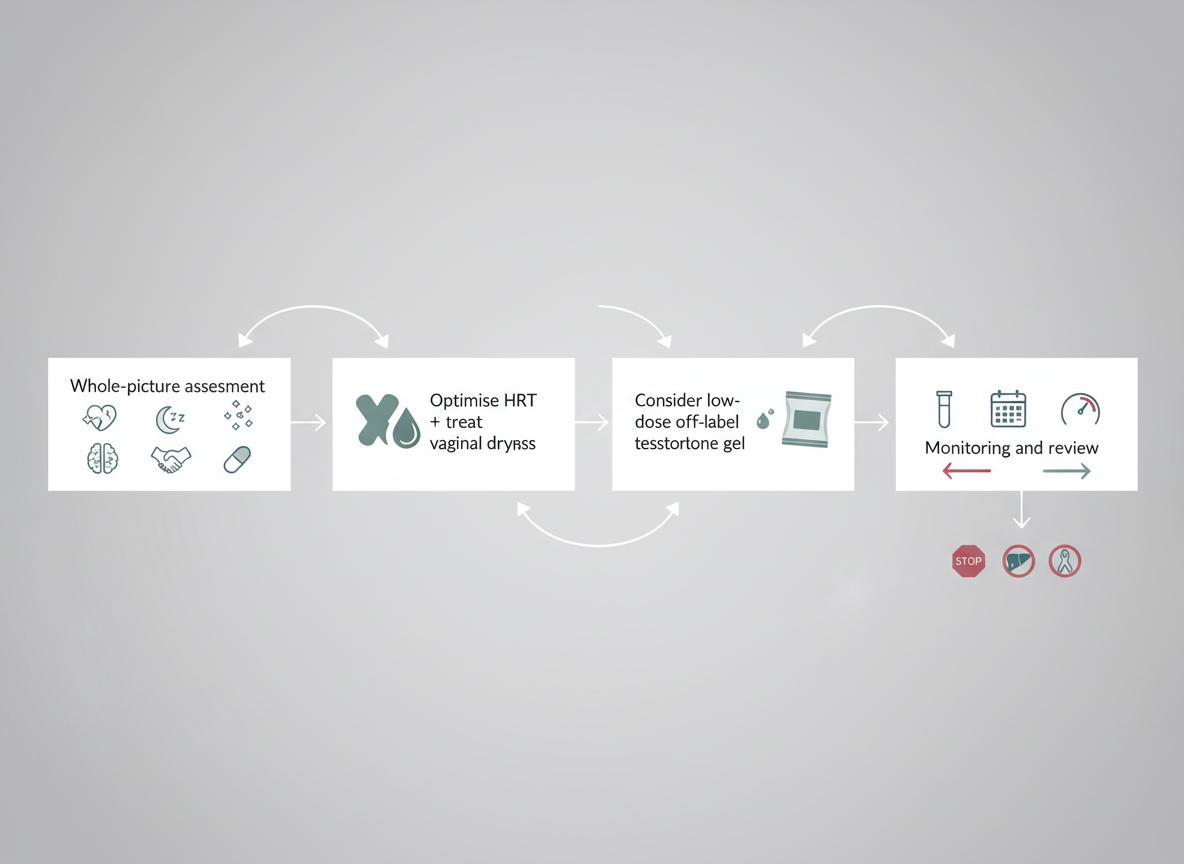
Good care for low libido follows a clear, sensible path. First, recognise that low desire which distresses you is a genuine, treatable condition. Second, look at the whole picture, since desire is rarely about hormones alone. Third, make sure your HRT is optimised, as that alone often helps. Fourth, consider testosterone where desire remains low, with proper monitoring.
This is the approach NICE and the menopause societies take, and the one we follow at Courier Pharmacy. As NICE guidance describes, testosterone can be considered for peri menopausal and menopausal women with low sexual desire when HRT alone isn’t effective. The goal isn’t a number or a comparison to anyone else. It’s helping you feel like yourself again, in a way that fits your life.
Low libido in women: an overview
Low libido means a reduced or absent interest in sex. As the menopause literature notes, it becomes far more common in perimenopausal and postmenopausal women, and for many it’s a real source of distress, affecting confidence, relationships, and wellbeing.
The key word is distress. Plenty of people have less interest in sex at different times of life, and that’s completely normal. It becomes hypoactive sexual desire disorder, sometimes now called female sexual interest and arousal disorder, when the loss of desire is persistent and genuinely bothers you, and isn’t simply explained by something else like a relationship difficulty or a medication. As the diagnostic literature stresses, that element of personal distress is what defines the condition.
The reassuring part is that it’s common, understood, and treatable. Too many women assume it’s just an inevitable part of ageing to be quietly endured. It isn’t. With the right assessment and treatment, most women can see a real difference.
Why does this matter? Because low desire is so often suffered in silence, wrapped in embarrassment, or dismissed. Naming it as the recognised condition it is, and knowing there are evidence-based options, is the first and most freeing step.
What is HSDD?
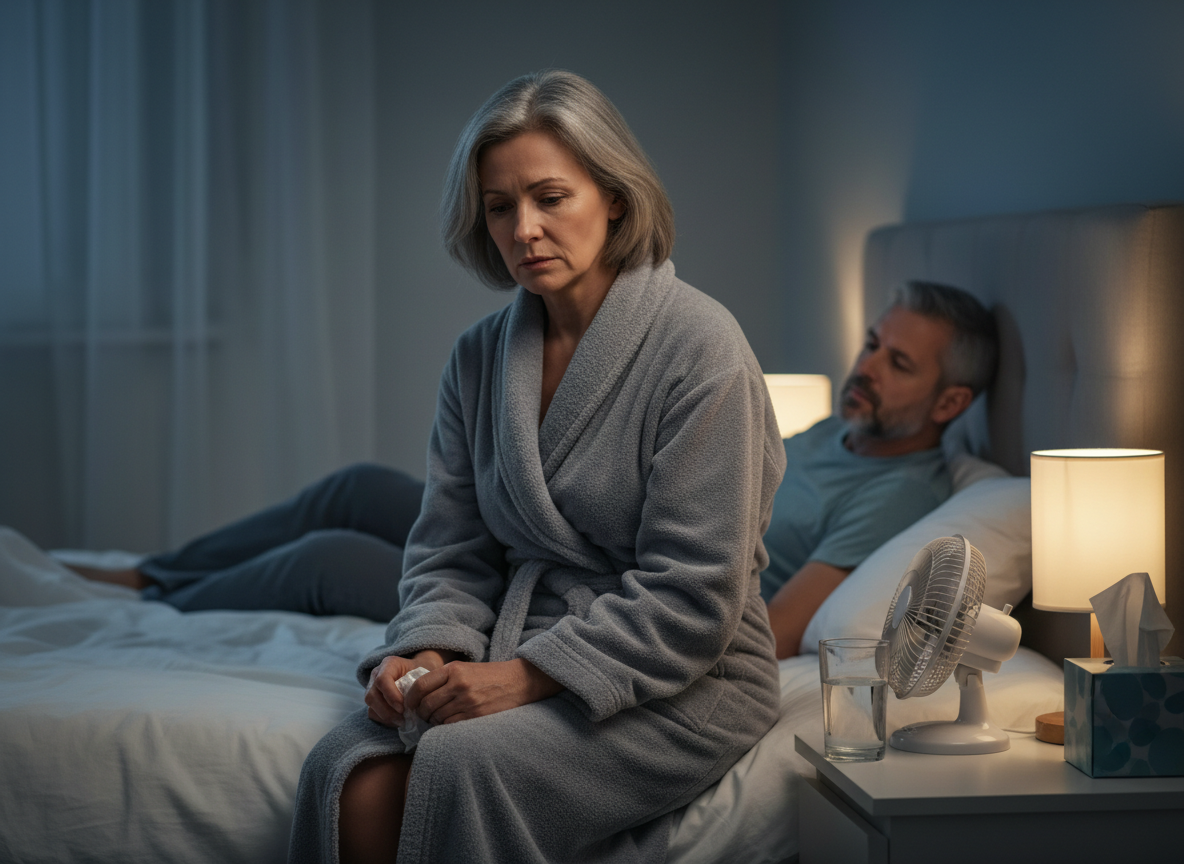
Hypoactive sexual desire disorder, or HSDD, is a persistent or recurrent lack of desire for sexual activity that causes you personal distress, and that isn’t better explained by another medical, psychological, or relationship cause. As the diagnostic literature describes, more recent classifications combine desire and arousal into a single condition, female sexual interest and arousal disorder, but the principle is the same.
Common features include:
- A noticeable drop in interest in sex, or in sexual thoughts and fantasies
- Reduced response to things that used to feel arousing
- Less initiation of, or openness to, sexual activity
- Genuine distress, frustration, or worry about the change
- A shift from how things used to be for you, rather than a lifelong pattern
As the menopause literature notes, the crucial distinction is distress. HSDD is not about how your desire compares to anyone else’s, or to some idea of what’s normal. It’s about a change that troubles you.
How common is low libido in women?
Low libido is one of the most frequently reported changes women experience, especially through the menopause transition. As the menopause literature reports, reduced libido is very common in perimenopausal and postmenopausal women, and a meaningful proportion find it distressing enough to meet the definition of HSDD, which is thought to affect around one in ten women.
It tends to increase as women move through perimenopause and into the postmenopausal years, reflecting the hormonal and physical changes of this time, alongside everything else life is doing at once. If this is you, you are in very large company, and there’s a well-established path to feeling better.
What causes low libido in women?
Desire is complex, and rarely comes down to one thing. The menopause literature describes several factors that often overlap, and they’re especially common in perimenopausal and postmenopausal women.
Hormonal changes
Falling oestrogen affects mood, sleep, and vaginal comfort, all of which influence desire. Testosterone, which women produce and which contributes to sexual desire, also declines with age. As the menopause literature notes, these hormonal shifts are part of the picture, though rarely the whole of it.
Vaginal dryness and discomfort
As oestrogen falls, many women experience vaginal dryness, irritation, or pain during sex, known as genitourinary syndrome of menopause. If sex becomes uncomfortable, desire understandably fades. This has its own effective treatment, which matters.
Mood, sleep, and stress
Low mood, anxiety, poor sleep, and exhaustion all dampen desire, and menopause can bring all of these. Addressing them is often part of restoring interest.
Relationships and life
Desire doesn’t exist in a vacuum. Relationship dynamics, how connected you feel, life stresses, and how you feel in your body all shape it. As the menopause literature stresses, these factors are central, not peripheral.
Medications and health
Some medicines, including certain antidepressants, can reduce desire, as can various health conditions. This is always worth reviewing as part of an honest assessment.

About testosterone for women
Testosterone is often thought of as a male hormone, but it’s an androgen that everyone produces, and it matters for women too. In women it’s made mainly in the ovaries, in much smaller amounts than in men, and it plays a role in sex drive, mood and energy, and in maintaining healthy bone, muscle, and red blood cells. As the menopause literature explains, before menopause women actually produce more testosterone than oestrogen.
Levels change across your life, rising from puberty and declining gradually with age, and they can fall more sharply after surgery to remove the ovaries. For some women, that decline contributes to a loss of sexual desire. That’s the rationale behind testosterone therapy: topping up a hormone that has fallen, to help restore desire when other steps haven’t been enough.
What testosterone therapy can, and can’t, do
Used in the right person, testosterone can help. As the Global Consensus Statement describes, in perimenopausal and postmenopausal women it can improve sexual desire, arousal, and pleasure, and reduce the distress that comes with low desire. Honestly, the effect is real but modest, which is why other factors that dampen desire, like relationship difficulties, low mood, or medication side effects, should be looked at and addressed first.
It’s also worth being clear about the limits. The one well-evidenced use of testosterone in women is for low sexual desire, specifically HSDD after menopause. It is not recommended for tiredness, low mood, or memory and concentration symptoms on their own, where the evidence doesn’t support it.
Do you need treatment just because your level is low?
Not necessarily. It’s completely normal for women’s testosterone to fall with age, and a lower level on its own, without symptoms that bother you, usually needs no treatment at all. Testosterone therapy is about troublesome symptoms, chiefly distressing low desire, not about chasing a number. If your levels are low but you feel fine, there’s no need to treat. If low desire is affecting you and other causes have been addressed, that’s when it’s worth considering.
Getting assessed: it’s rarely just hormones
Because desire is shaped by so many things, a good assessment looks at the whole picture. As the menopause societies stress, a thoughtful, whole-person assessment should come before testosterone, not after.
That means looking honestly at your hormones and HRT, your vaginal comfort, your mood and sleep, your relationship and life circumstances, and your medicines. Often, addressing one or two of these, or simply optimising your HRT, makes a real difference on its own. Where low desire remains and is distressing, testosterone becomes a sensible next step to consider. This isn’t a hurdle, it’s what makes treatment actually work.

Am I likely to be suitable?
Testosterone for low desire is aimed at a specific group, and a prescriber makes the final decision. You’re more likely to be suitable if you:
- Are a woman, generally between around 40 and 70 years old
- Are perimenopausal or postmenopausal, meaning your periods have changed or stopped
- Are already using HRT, such as a gel or patch, and have been for at least three months
- Have a low sex drive that genuinely distresses you and isn’t better explained by something else
- Have no condition that makes testosterone unsuitable, which your prescriber will check
If that doesn’t quite describe you, it doesn’t mean nothing can help, it just means a different starting point, such as optimising HRT or addressing another cause, may come first.
Diagnosis and blood tests
There’s no single test that diagnoses HSDD, which is based on your experience and an honest conversation. Blood tests do, however, play an important supporting role, especially before and during testosterone treatment.
As the British Menopause Society advises, testosterone treatment is guided by measuring your blood levels, usually total testosterone and a protein called SHBG, which together allow your free testosterone to be estimated. The aim is to keep testosterone within the normal female range, restoring what’s fallen without going too high. A thyroid check and a review of your general health can also help rule out other contributors.
This is where Courier Pharmacy can help directly. We can arrange the right blood tests, interpret them with you, and use them to guide safe, well-monitored treatment. Tests that answer the question, not just tick a box.
Treating low libido
Treatment works best in a sensible order, matched to what’s actually driving things. As NICE and the menopause societies describe, that usually means getting the foundations right before adding testosterone.
Optimising your HRT first
For most women, the first step is making sure systemic HRT is working well, providing enough oestrogen, with a progestogen if you have a womb. As NICE advises, testosterone is considered when HRT alone isn’t enough, so getting HRT right first is essential, and often helps desire on its own.
Treating vaginal dryness
If dryness or discomfort is part of the problem, vaginal oestrogen is a safe, effective, first-line treatment that can be used long term, and alongside everything else. Comfortable sex is a foundation for desire.
Addressing the wider picture
Where mood, sleep, stress, relationship factors, or medications are playing a role, addressing these is part of the plan. Sometimes this is all that’s needed. Sometimes it works alongside hormonal treatment.
Testosterone therapy with Testogel
Where desire remains low and distressing despite optimised HRT, testosterone can be added. As the Global Consensus Statement concludes, there’s sufficient evidence to support testosterone for postmenopausal women with HSDD, with recognised benefits including improved sexual desire, arousal, orgasm, and pleasure, and reduced distress about sex.
Testosterone replacement for women comes as gels and creams. Implants exist but aren’t available in the UK. These are the same medicines used for men, given at much lower doses, because women need far less testosterone to see a benefit. Because there is currently no testosterone product licensed for women in the UK, treatment uses a product made for men, prescribed off-label. We use Testogel, a testosterone gel supplied in sachets, at roughly a tenth of a man’s dose. In practice that’s a small amount, often around an eighth of a sachet, so a pack lasts a woman a good while. Your prescriber sets and adjusts the exact amount to keep your levels within the normal female range.
What to expect
Testosterone is not an instant switch, and it’s not a magic fix. As the menopause literature describes, it can bring a meaningful improvement in desire for many women, but the effect is gradual. It can take up to twelve weeks before you notice a difference, and prescribers usually suggest continuing for up to six months to judge it properly. If there’s been no real benefit by then, it’s sensible to stop and reconsider your plan. Realistic expectations are part of doing this well.
Monitoring and safety
Careful monitoring is central to safe treatment. As the British Menopause Society advises, your testosterone level is checked before starting and then periodically, usually total testosterone and SHBG, to keep it within the normal female range and screen for using too much. This monitoring genuinely matters, because it’s what keeps treatment both effective and safe.
Side effects are uncommon and usually mild, and most often linked to using more than prescribed. They can include acne, increased hair growth at the application site or elsewhere, and skin reactions. Less commonly, and mainly with excessive doses, testosterone can cause effects that may not fully reverse, such as a deepening of the voice, thinning of the hair at the front of the scalp, or enlargement of the clitoris. This is precisely why the dose is kept low, sticking to it matters, and blood tests are part of the plan. If you notice any of these, speak to your prescriber.
Testosterone should be used alongside, not instead of, your HRT. It isn’t suitable in pregnancy or breastfeeding, in active liver disease, or with a history of hormone-sensitive breast cancer without specialist input, and particular care is needed for competitive athletes and for women whose baseline testosterone is already in the upper range. Your prescriber checks all of this with you.
Applying the gel safely
A little care with how you apply it keeps it working well and stops it transferring to others. Apply your small measured amount to clean, dry skin on an area without much hair, such as the lower abdomen or outer thigh, either daily or on alternate days as directed. Rotate where you apply it rather than using the same spot each time, let it dry fully, and cover the area with clothing. Wash your hands afterwards, avoid washing or showering the area for a few hours, and avoid skin-to-skin contact at the site with partners or children until it’s absorbed. A pharmacist can talk you through the routine so it becomes second nature.

Patient experiences and challenges
Low desire in menopause often comes wrapped in silence and self-blame. Women tell us they felt broken, or worried something was wrong with them or their relationship, and that they were too embarrassed to raise it, even with a doctor. Others were told it was just their age, and to accept it.
Many are surprised, and relieved, to learn that it’s a recognised condition with real treatment options, and that testosterone is a legitimate, evidence-based part of menopause care for the right person. Some also tell us how much difference simply being taken seriously made.
Here’s what we want you to hear. There is nothing wrong with you, and this is not something you have to just live with. Low sexual desire is common, understood, and treatable, and wanting to feel like yourself again is completely valid. You’re the one living in your body, and you get to decide what matters to you. Our job is to listen properly, and help, without judgement.
Looking to the future: research and hope
The outlook is improving. As the menopause literature notes, there’s growing recognition of testosterone’s place in women’s health, and active research into products designed and licensed specifically for women, rather than adapted from men’s. Better evidence and better formulations are on the way.
There’s real reason for optimism. Women’s sexual health is finally getting the attention it deserves, and the stigma is slowly lifting. We won’t overpromise. What we will say is that, with an honest assessment and the right plan, most women can find meaningful improvement.
How Courier Pharmacy helps with low libido
We started Courier Pharmacy because too many people, and too many women especially, feel dismissed or embarrassed by symptoms that deserve proper care. Low sexual desire in menopause is a clear example. Your hormones, your history, and your life are unique, so your care should be too. That personalisation is the first of our four pillars.
The other pillars carry it through. Guidance means we look at the whole picture, get your HRT right, and explain honestly what testosterone can and can’t do. Trust means we’re a UK-regulated pharmacy that’s upfront about off-label treatment, monitors it properly, and works alongside your GP or specialist. Community means we show up for people, and talk openly about the things others won’t.
That spirit has a face in Dr Ada Jex-Cori, the voice of our approach, whose message is simple: you’re not broken, and you deserve healthcare that fits your life. For low libido, that means being taken seriously, and care built around you. Healthcare that fits you, not the other way round.
Frequently asked questions about low libido and HSDD
Is low libido in women normal, or is it a medical problem?
Both can be true. Some change in desire is a normal part of life and menopause. It becomes a recognised condition, HSDD, when the loss of desire is persistent and genuinely distresses you, and isn’t simply explained by something else. As the menopause literature stresses, that distress is the key. If it’s bothering you, it’s worth addressing, and treatment can help.
Will HRT fix my low libido?
Sometimes, and it’s the right place to start. Optimising your HRT, providing enough oestrogen, can improve mood, sleep, and vaginal comfort, all of which support desire. As NICE advises, testosterone is only considered when HRT alone isn’t enough. So getting your HRT right first often helps, and is an essential foundation before adding anything else.
How does testosterone help, and is it just for men?
Women produce testosterone too, and it contributes to sexual desire. Levels fall with age. As the Global Consensus Statement describes, testosterone can improve desire, arousal, orgasm, and pleasure, and reduce distress, in postmenopausal women with HSDD. It’s added to your HRT when desire stays low despite it. It isn’t recommended for tiredness or low mood on their own.
Why is Testogel used off-label?
Because there’s currently no testosterone product licensed for women in the UK. Rather than leave women without an option, prescribers use a product made for men, Testogel, at roughly a tenth of the male dose, adjusted to keep your levels in the normal female range. This off-label use is well established and supported by menopause guidance, and it’s always done with assessment and monitoring.
Do I need blood tests for testosterone treatment?
Yes. As the British Menopause Society advises, your testosterone level is checked before starting and then periodically, usually total testosterone and SHBG, so your free testosterone can be estimated. This keeps your level within the normal female range, restoring what’s fallen without going too high, and helps screen for using too much. We can arrange and interpret these tests for you.
How long until testosterone works, and what if it doesn’t?
Give it time. It can take up to twelve weeks before you notice a difference, and prescribers usually suggest continuing for up to six months to judge it properly. If there’s been no real benefit by then, it’s sensible to stop. Testosterone helps many women, but not everyone, and being realistic about that is part of using it well.
Are there side effects or risks with testosterone?
Usually side effects are uncommon and mild, and most are linked to using more than prescribed, such as acne, extra hair growth at the site, or skin reactions. Rarely, and mainly with excess doses, testosterone can cause changes that may not fully reverse, like a deeper voice, frontal hair thinning, or clitoral enlargement, which is exactly why the dose is kept low and monitored with blood tests. Because it’s a gel, take care not to transfer it to others by washing your hands and covering the area. It isn’t suitable in pregnancy or breastfeeding, in active liver disease, or, without specialist advice, with a history of hormone-sensitive breast cancer.
How can Courier Pharmacy help?
We offer a confidential, whole-picture assessment, review and optimise your HRT, and where it’s right, prescribe testosterone using Testogel off-label, with the blood tests to guide and monitor it safely. We’re honest about expectations and work alongside your GP or specialist. It starts with a confidential consultation or a chat with a pharmacist.

Important disclaimer
This page is for general information and education. It isn’t medical advice, and it isn’t a substitute for a consultation with a qualified healthcare professional. Testosterone treatment for women is off-label in the UK, requires a proper assessment and blood monitoring, and is used alongside HRT for distressing low sexual desire, not for fatigue or low mood alone. It isn’t suitable for everyone, and a history of hormone-sensitive cancer needs specialist advice. Always speak to a prescriber or pharmacist before starting any treatment.
References
- National Institute for Health and Care Excellence (2015, updated 2024) Menopause: identification and management (NG23). Available at: https://www.nice.org.uk/guidance/ng23 (Accessed: 27 July 2026).
- Davis, S.R. et al. (2019) ‘Global Consensus Position Statement on the Use of Testosterone Therapy for Women’, Journal of Clinical Endocrinology & Metabolism, 104(10), pp. 4660–4666. Available at: https://academic.oup.com/jcem/article/104/10/4660/5556019 (Accessed: 27 July 2026).
- Islam, R.M. et al. (2019) ‘Safety and efficacy of testosterone for women: a systematic review and meta-analysis’, The Lancet Diabetes & Endocrinology, 7(10), pp. 754–766. Available at: https://pubmed.ncbi.nlm.nih.gov/31353194/ (Accessed: 27 July 2026).
- British Menopause Society (2022) Testosterone replacement in menopause. Available at: https://thebms.org.uk/publications/tools-for-clinicians/testosterone-replacement-in-menopause/ (Accessed: 27 July 2026).
- National Health Service (2022) Menopause. Available at: https://www.nhs.uk/conditions/menopause/ (Accessed: 27 July 2026).


BSc Pharmacy, Independent Prescriber, PgDip Endocrinology, MSc Endocrinology, PgDip Infectious Diseases
Superintendant Pharmacist, Independent Prescriber

BSc Pharmacy
Compounding Pharmacist

