


What you should know about LDN for psoriasis
Psoriasis is a common, long-term immune-mediated skin condition. As the NHS explains, the immune system drives inflammation that makes skin cells build up too quickly, forming raised, scaly patches called plaques. It is not contagious. It tends to flare and settle, and it can also affect the nails and joints, which is why it is considered more than a skin condition.
Not in the way people sometimes hope. LDN is not a cure for psoriasis, and the evidence in psoriasis is very limited and mostly anecdotal. Proven treatments such as topicals, phototherapy, systemic medicines and biologics have a far stronger evidence base. LDN is best understood as one option some people choose to explore, alongside proper care, rather than as a treatment for psoriasis itself.
LDN uses a low dose of naltrexone, usually about 1.5mg to 4.5mg at night, far lower than the 50mg used for addiction. As the research literature describes, it is thought to cause a rebound rise in the body’s endorphins and to have anti-inflammatory effects, though these mechanisms remain theoretical in psoriasis. Because these strengths are not available off the shelf, LDN is compounded to order, for us by APC Labs.
No. This is really important. LDN is not a replacement for your prescribed skin treatment or your specialist care, and proven treatments for moderate to severe psoriasis should not be set aside for it. If you choose to explore LDN, it should be alongside your usual care and your GP or dermatologist, never instead of them. We would always encourage you to keep them informed.
LDN is usually well tolerated, with mild side effects like vivid dreams or sleep disturbance early on. The most important safety point is that it must not be taken with opioid painkillers, as it blocks them and can trigger withdrawal. It also needs caution in liver disease, and is not recommended in pregnancy or breastfeeding without specialist advice. This is why it is prescriber-assessed and coordinated with your wider care.
LDN is usually started low and increased slowly, and people who do respond often describe gradual change over several weeks to a few months rather than overnight. Keeping a simple record of your skin and symptoms helps you and your prescriber judge whether it is genuinely making a difference. If a fair trial brings no benefit, there is no reason to continue it.
LDN is taken as a daily or nightly tablet or liquid and is meant to sit alongside your existing treatment, not replace it. It is not known to interfere with topical creams or phototherapy. If you are on a biologic or other systemic medicine that affects the immune system, this needs careful discussion with your prescriber and dermatology team, so your proven treatment is not disrupted.
For psoriasis, LDN is normally taken by mouth, as a low-dose capsule or liquid at night, rather than applied to the skin. It is thought to work through the immune system from the inside, not as a topical cream on the plaques. Your prescriber will confirm the form and dose that is appropriate for you.
Additional information
LDN for psoriasis
Tired of psoriasis flaring whatever you try? You deserve honest options and support that fits you
Psoriasis is a long-term immune-driven skin condition that causes raised, scaly patches, and it can affect far more than the skin, from itch and discomfort to confidence and sleep. It tends to come and go, and living with it can be wearing. At Courier Pharmacy, we believe healthcare should fit the person, not force the person to fit the system. So we work alongside your GP and dermatology team, never instead of them, and where it is right for you, we offer low dose naltrexone, or LDN, as one option some people with psoriasis choose to explore. Healthcare that fits you, and your skin.

Five key takeaways
- Psoriasis is a long-term immune-mediated condition that speeds up the skin’s life cycle, causing raised, scaly plaques, as the NHS describes.
- It is more than skin deep. Psoriasis is linked to joint disease and other health conditions, and it can affect wellbeing and confidence.
- Standard treatment comes first. Topical treatments, phototherapy and, for more severe disease, systemic medicines and biologics are the recognised mainstays.
- Low dose naltrexone is an option some explore. The evidence in psoriasis is very limited and mostly anecdotal, and LDN is used off-label here.
- LDN sits alongside your care. It never replaces your GP, dermatologist or prescribed treatment, and it is prescriber-assessed for safety.
How Courier Pharmacy helps
- Honest, personalised guidance on living with psoriasis and your options
- Low dose naltrexone through a prescriber consultation, where it is appropriate for you
- A clear, evidence-based explanation of what LDN can and cannot do in psoriasis
- Compounded LDN prepared to order by APC Labs, our specials partner
- Support that works alongside your GP and dermatology team, never instead of them
- Free fortnightly drop-in clinics in Derby, with no cost and no pressure
Psoriasis deserves proper, evidence-based care. We complement that care, we do not replace it, and we will always encourage you to stay under your GP or dermatologist.
What is psoriasis?
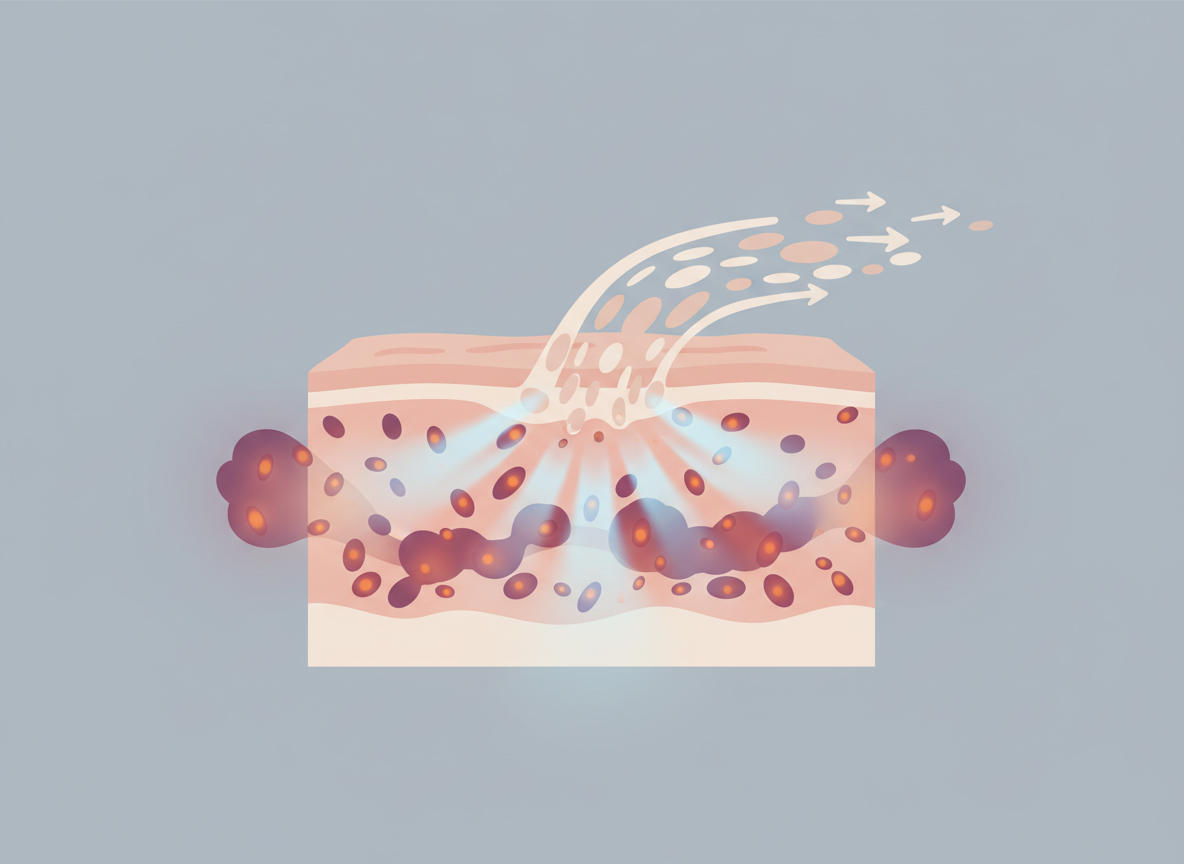
Psoriasis is a common, long-term skin condition. As the NHS explains, it happens when the process that makes new skin cells speeds up, so cells build up on the surface faster than they can be shed. This forms the raised, scaly patches, called plaques, that are the hallmark of the condition.
At its root, psoriasis is driven by the immune system. It is not an infection, and it is not contagious. Instead, an overactive immune response causes inflammation that drives the rapid skin turnover. This is why psoriasis is described as immune-mediated, and why many modern treatments work by calming that immune activity.
Psoriasis tends to flare and settle over time, often triggered by things like stress, infection, skin injury or certain medicines. It affects everyone differently, and its impact on confidence and daily life can be just as real as the visible patches.
What are the symptoms of psoriasis?
Psoriasis can look and feel different from person to person. As the NHS describes, common features include:
- raised patches of skin, often with silvery scale
- patches that can be itchy, sore or sometimes painful
- dry, cracked skin that may bleed
- changes to the nails, such as pitting or thickening
- flares that come and go over time
There are different types of psoriasis, including plaque psoriasis, which is the most common, as well as scalp, guttate, inflammatory and other forms. Some people also develop psoriatic arthritis, which affects the joints, which is one reason psoriasis is considered more than a skin condition.
What happens in the body with psoriasis?
Psoriasis is driven by the immune system. As the research literature describes, immune cells become overactive and release inflammatory signals that tell the skin to produce new cells far too quickly. Normally skin cells are renewed over weeks. In psoriasis this happens in a matter of days, so cells pile up on the surface as plaques.
This inflammation is not limited to the skin. It helps explain why psoriasis is linked with psoriatic arthritis and with a higher risk of some other conditions, which is why good care looks at the whole person, not just the patches. It also explains why treatments that calm the immune system, including options like LDN, have attracted interest, though the evidence varies enormously between proven treatments and experimental ones.

How is psoriasis diagnosed?
Psoriasis is usually diagnosed by a GP or dermatologist from the appearance of the skin and nails, and your history. As the NHS describes, a skin biopsy is rarely needed, but may occasionally be done to confirm the diagnosis or rule out other conditions.
Getting the right diagnosis matters, because other skin conditions can look similar, and because the type and severity of psoriasis guide treatment. If psoriasis is affecting your joints, your confidence or your daily life, that should be assessed too. Courier Pharmacy does not diagnose psoriasis. What we can do is support you alongside your GP or dermatologist once you are under their care.
What are the standard treatment options for psoriasis?
Psoriasis treatment follows a stepped approach, matched to how severe it is, and standard treatments come first. As the NHS and NICE describe, the recognised options include:
Topical treatments
For many people, creams and ointments applied to the skin are first-line. These include vitamin D analogues, topical corticosteroids, and combinations of the two, as well as other preparations for the scalp and body.
Phototherapy
Controlled light treatment, given under specialist supervision, can help more widespread psoriasis that has not responded to topical treatment.
Systemic and biologic medicines
For moderate to severe psoriasis, specialists may prescribe tablet treatments or biologic injections that target the immune system. These are powerful, well-studied treatments, prescribed and monitored by dermatology.
Lifestyle and general health
Looking after general health, managing stress, not smoking and keeping to a healthy weight can all support treatment, as can good skin care and moisturisers.
These standard treatments are the backbone of managing psoriasis, and for most people they work well. Anything else, including low dose naltrexone, is considered alongside them, not instead of them.

Low dose naltrexone (LDN) and psoriasis
Some people with psoriasis come across low dose naltrexone and ask whether it could help. Because it is an option we can offer, and one that generates interest, we want to explain it clearly and honestly, including its limits.
What is LDN?
Naltrexone is a medicine licensed to treat opioid and alcohol dependence, at a dose of around 50mg. Low dose naltrexone uses a much smaller dose, typically between about 1.5mg and 4.5mg, taken at night. At this low dose it is used off-label, meaning outside its licensed purpose, for a range of conditions where an immune or inflammatory process is thought to play a part. Because these low strengths are not available off the shelf, LDN is prepared as a compounded medicine, which for us is made by APC Labs, our specials partner.

The theory in psoriasis
The idea behind LDN is interesting. As the research literature describes, a brief, low dose of naltrexone is thought to cause a rebound rise in the body’s own endorphins, and to have anti-inflammatory effects on immune cells. Because psoriasis is driven by immune overactivity, some clinicians have proposed that LDN might help calm this. This is a plausible theory, and it is why LDN has attracted some interest in immune-mediated skin conditions, but it is important to understand that it remains theoretical.
What the evidence actually shows
Here is the honest picture, because you deserve it. The evidence for LDN in psoriasis is very limited. There are a small number of case reports and anecdotal accounts, but there are no large, high-quality clinical trials in psoriasis to confirm a benefit, and well-established treatments such as topicals, phototherapy, systemics and biologics have a far stronger evidence base. This means we cannot promise that LDN will help your psoriasis, and we will not pretend otherwise. What we can say is that a few people report benefit, and that it is one option some choose to explore with clear eyes about how thin the evidence is.
What LDN is not
This is the most important part. LDN is not a cure for psoriasis, and it is not a replacement for your prescribed skin treatment or your specialist care. The recognised treatments remain the foundation, and for moderate to severe psoriasis in particular, proven systemic and biologic medicines should not be set aside in favour of LDN. If you choose to explore LDN, it should sit alongside proper care, never instead of it, and your GP or dermatologist should stay informed.
Safety, and who might consider it
LDN is generally well tolerated, and side effects are usually mild, such as vivid dreams or sleep disturbance early on, and occasionally headache or stomach upset. But there are firm safety points. LDN must not be taken by anyone using opioid medicines, including many strong painkillers, because it blocks them and can trigger sudden withdrawal or stop pain relief working. It also needs caution in liver disease, and it is not recommended in pregnancy or breastfeeding without specialist advice. This is exactly why LDN is prescriber-assessed, so we can check it is safe and appropriate for you, and coordinate with your wider care.

Monitoring and ongoing care
If you and your prescriber decide LDN is worth trying, it is usually started at a low dose and increased slowly, which helps your body adjust and makes any reaction easier to spot. You will be asked how you are getting on, and whether your skin, itch and comfort are changing. Because psoriasis care often involves your GP or dermatology team, we encourage you to keep them updated, so everyone caring for you has the full picture. If LDN does not help after a fair trial, there is no benefit in continuing it.
Patient experiences and challenges
Living with psoriasis can affect far more than the skin. People tell us about the itch and discomfort, the time spent on creams, and the toll on confidence when patches are visible. That is a lot to carry, and it is easy to feel worn down by flares that keep returning.
Many also tell us they have spent hours researching every possible option, including LDN, and found it hard to get a straight, honest answer, caught between overblown promises and blanket dismissal. That gap is exactly what we try to fill. Wanting to explore your options is completely understandable, and you are not giving up on proven treatment by asking questions. Both can be true at once.
How Courier Pharmacy helps with psoriasis
We started Courier Pharmacy because too many people feel either dismissed or oversold, especially when a condition affects how they feel in their own skin. Psoriasis is a clear example. Your skin, your triggers and your goals are unique, so your support should be too. That personalisation is the first of our four pillars.
The other pillars carry it through. Guidance means we give you honest, evidence-based information, including the real limits of options like LDN and the strength of proven treatments, so you can decide with clear eyes. Trust means we are a UK-regulated pharmacy that will always tell you when something is not a substitute for proper care. Community means we show up for people, even when there is nothing to sell.
That spirit has a face in Dr Ada Jex-Cori, the voice of our approach, whose message is simple: you are not broken, and you deserve healthcare that fits your life. For psoriasis, that means honest support, real options, and respect for you and your care team. Healthcare that fits you, not the other way round.
Frequently asked questions about LDN for psoriasis

What is psoriasis?
Psoriasis is a common, long-term immune-mediated skin condition. As the NHS explains, the immune system drives inflammation that makes skin cells build up too quickly, forming raised, scaly patches called plaques. It is not contagious. It tends to flare and settle, and it can also affect the nails and joints, which is why it is considered more than a skin condition.
Does low dose naltrexone treat psoriasis?
Not in the way people sometimes hope. LDN is not a cure for psoriasis, and the evidence in psoriasis is very limited and mostly anecdotal. Proven treatments such as topicals, phototherapy, systemic medicines and biologics have a far stronger evidence base. LDN is best understood as one option some people choose to explore, alongside proper care, rather than as a treatment for psoriasis itself.
How does LDN work, and what dose is used?
LDN uses a low dose of naltrexone, usually about 1.5mg to 4.5mg at night, far lower than the 50mg used for addiction. As the research literature describes, it is thought to cause a rebound rise in the body’s endorphins and to have anti-inflammatory effects, though these mechanisms remain theoretical in psoriasis. Because these strengths are not available off the shelf, LDN is compounded to order, for us by APC Labs.
Should I stop my usual psoriasis treatment if I try LDN?
No. This is really important. LDN is not a replacement for your prescribed skin treatment or your specialist care, and proven treatments for moderate to severe psoriasis should not be set aside for it. If you choose to explore LDN, it should be alongside your usual care and your GP or dermatologist, never instead of them. We would always encourage you to keep them informed.
Is LDN safe to take with my other medicines?
LDN is usually well tolerated, with mild side effects like vivid dreams or sleep disturbance early on. The most important safety point is that it must not be taken with opioid painkillers, as it blocks them and can trigger withdrawal. It also needs caution in liver disease, and is not recommended in pregnancy or breastfeeding without specialist advice. This is why it is prescriber-assessed and coordinated with your wider care.
How long before I know if LDN is helping?
LDN is usually started low and increased slowly, and people who do respond often describe gradual change over several weeks to a few months rather than overnight. Keeping a simple record of your skin and symptoms helps you and your prescriber judge whether it is genuinely making a difference. If a fair trial brings no benefit, there is no reason to continue it.
Can Courier Pharmacy diagnose or manage my psoriasis?
We do not diagnose psoriasis, which should be assessed by your GP or a dermatologist, and we do not replace that care. What we can do is offer honest guidance, support you alongside your care team, and, where appropriate and safe, provide low dose naltrexone as an option to explore. We are clear about what it can and cannot do, and about the strength of proven treatments.
How do I start, and what will it cost?
It starts with a consultation, where a prescriber reviews your history, your current treatment and your suitability for LDN. If it is appropriate, your compounded LDN is prepared to order by APC Labs. You are welcome to speak to a pharmacist first if you have questions, and our free fortnightly drop-in clinics in Derby are open to anyone who wants to talk things through with no pressure.
Important disclaimer
This page is for general information and education. It is not medical advice, and it is not a substitute for a consultation with a qualified healthcare professional.
Psoriasis should be diagnosed and managed by your GP or a dermatologist, and topical treatments, phototherapy, systemic medicines and biologics are the recognised, evidence-based options. Low dose naltrexone is an off-label, experimental option with very limited evidence in psoriasis.
It is not a cure, and it must never replace proper care or proven prescribed treatment. LDN must not be taken with opioid medicines. Always speak to your GP, dermatologist, prescriber or pharmacist before starting, stopping or changing any treatment.
References
1] National Health Service (2022) Psoriasis. Available at: https://www.nhs.uk/conditions/psoriasis/ (Accessed: 22 June 2026).
[2] National Institute for Health and Care Excellence (2012, updated 2017) Psoriasis: assessment and management (CG153). Available at: https://www.nice.org.uk/guidance/cg153 (Accessed: 22 June 2026).
[3] National Institute for Health and Care Excellence (2017) Psoriasis: initial treatment with topical medication (CG153, information for the public). Available at: https://www.nice.org.uk/guidance/cg153/ifp/chapter/initial-treatment-with-topical-medication (Accessed: 22 June 2026).
[4] National Institute for Health and Care Excellence (2024) Psoriasis: Clinical Knowledge Summary. Available at: https://cks.nice.org.uk/topics/psoriasis/ (Accessed: 22 June 2026).
[5] Psoriasis Association (no date) About psoriasis. Available at: https://www.psoriasis-association.org.uk/about-psoriasis (Accessed: 22 June 2026).
[6] Untaaveesup, S. et al. (2024) ‘Oral and topical vitamin D treatment strategies in psoriasis: a review’, Journal of Clinical Medicine. Available at: https://www.ncbi.nlm.nih.gov/pmc/articles/PMC12202880/ (Accessed: 22 June 2026).


BSc Pharmacy, Independent Prescriber, PgDip Endocrinology, MSc Endocrinology, PgDip Infectious Diseases
Superintendant Pharmacist, Independent Prescriber

BSc Pharmacy
Compounding Pharmacist

