

Find the right acne scar treatment for you
View All Products


What you should know about acne scars
Acne scars are the marks and changes in the skin that are left behind after spots heal. Some are flat patches of colour, red, pink or brown, and some change the texture of the skin, leaving it indented or raised. They are very common and completely normal after acne.
No. Spots are the active acne, the raised, often sore blemishes that come and go. Acne scars are what can be left behind after those spots clear. You treat active spots to stop new scars forming, and you treat scars separately to fade what acne has already left.
To help prevent acne, maintain a skincare routine that includes gentle cleansing, avoid touching your face, use non-comedogenic products, and manage stress. Eating a balanced diet and staying hydrated can also help.
A mark is a change in colour only, and the skin still feels smooth, these usually fade over time. A true scar changes the texture, so the skin feels or looks indented or raised, and these are more stubborn. Many of the things people call scars are actually marks, which is good news, because marks are easier to fade.
They happen when a spot damages the skin and it does not heal back perfectly. Deeper, more inflamed spots are more likely to leave a scar, and picking or squeezing makes it more likely too. Ongoing acne is the biggest cause, because every new spot is a fresh chance to mark the skin.
These are the three main types of indented, or atrophic, scars. Ice pick scars are narrow and deep, like a tiny puncture. Rolling scars are broad with sloping edges, giving the skin a wavy look. Boxcar scars are wider with sharper, steeper sides, like small craters. Knowing the type matters, because each responds differently, and deeper ice pick and boxcar scars in particular often need a procedure rather than a cream alone.
Most people start two or three nights a week and build up as the skin adjusts, aiming for nightly use if it is well tolerated. Starting slowly reduces the early dryness and flaking. There is no benefit in using more than directed, as that just causes irritation without faster results. Your prescriber will give you a schedule suited to your skin.
Yes, and it is one of the most avoidable causes. Squeezing or picking pushes inflammation deeper and damages the surrounding skin, which raises the chance of both marks and true scars. However tempting it is, leaving spots alone, and treating the acne properly instead, is one of the best things you can do to prevent new scarring.
Additional information
Acne scars
The marks acne leaves behind don’t have to stay
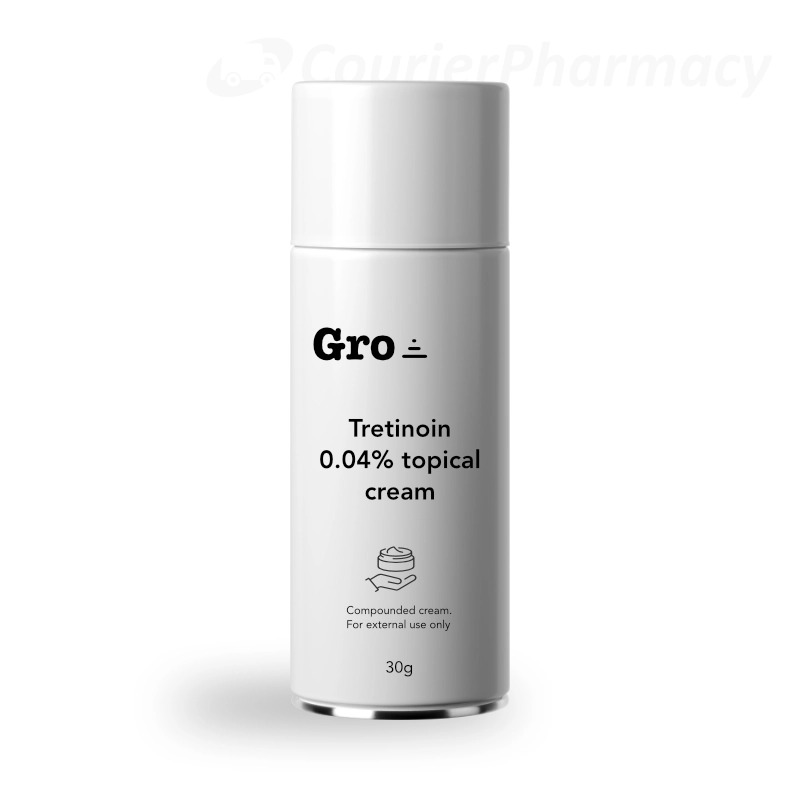
Acne scars are the marks and texture acne leaves behind long after the spots have gone, and they can be just as disheartening as the breakouts themselves. The good news is that most of what people call scarring responds well to the right treatment, and the single best-evidenced thing you can put on your skin is tretinoin. At Courier Pharmacy, we believe healthcare should fit the person, not force the person to fit the system. So we compound tretinoin into a cream made for your skin, at the strength you need, as part of our Gro Skin range. Healthcare that fits you, and your skin.
- Compounded tretinoin, niacinamide and azelaic acid creams, made for your skin as part of our Gro Skin range
- Honest guidance on your type of scarring, and when a cream is enough or when you need more

Five key takeaways
- Not all acne scars are the same. As the dermatology literature explains, flat marks and textured scars are different problems that need different treatment.
- Tretinoin is the hero ingredient. It speeds cell turnover and supports collagen, the two things fading marks and smoothing texture rely on.
- Strength should fit your skin. We compound tretinoin at 0.01%, 0.02%,0.025% 0.04%, 0.05%, 0.08% and 0.1%, so you can start gently and build up.
- Fresh matters. Our compounded tretinoin creams are made to order with a 30-day shelf life, to keep the active stable and effective.
- Deep scars need more than a cream. Pitted scars usually need procedures, with tretinoin supporting the result.
How Courier Pharmacy helps with acne scars
- Gro Skin compounded tretinoin cream, in 0.025%, 0.05% and 0.1% strengths
- Niacinamide and azelaic acid creams, for gentler support with pigment and redness
- A combination cream with niacinamide, azelaic acid and tretinoin 0.025%
- Freshly compounded, tailored strengths and bases, made for your skin
- Honest guidance on your type of scarring, plus treatment for active acne
- Free fortnightly drop-in clinics in Derby, with no cost and no pressure
What are acne scars?
Acne scars are the lasting marks left on the skin after spots have healed. As the dermatology literature explains, they form when a breakout disturbs the skin, and the healing process leaves either a change in colour or a change in texture behind. They are extremely common, affecting most people who have had inflammatory acne to some degree, and they are nothing to be embarrassed about.
It helps to know that the word scar is used loosely. Many of the marks people want to treat are not true scars at all, but flat patches of colour that fade with time and the right care. True scars, where the surface is indented or raised, are a separate problem. Knowing which you have changes everything about what to expect.
What do acne scars look like?
As the dermatology literature describes, acne marks and scars fall into a few main types:
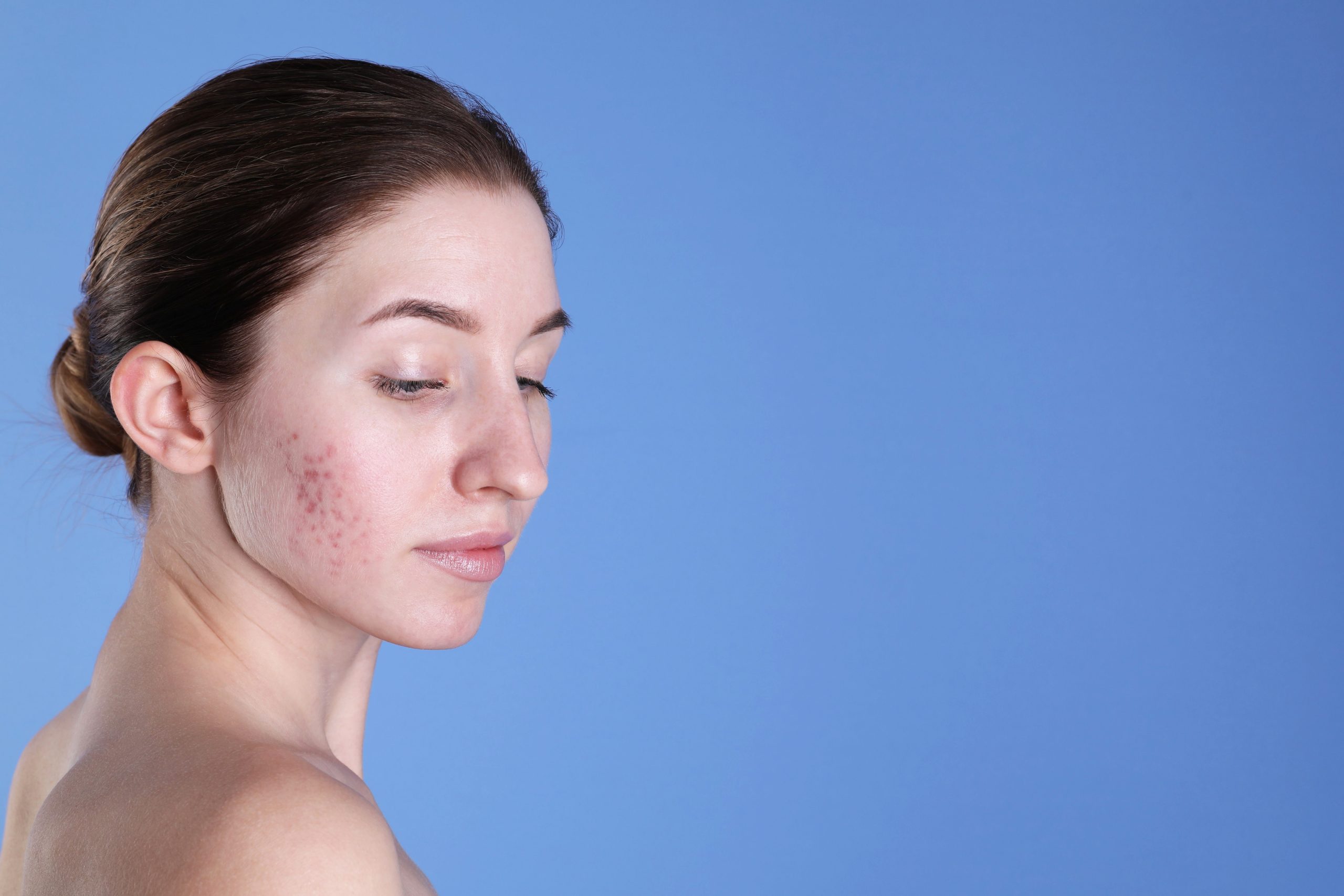
- red or pink marks, called post-inflammatory erythema, which are common in lighter skin and come from lingering blood vessels
- brown marks, called post-inflammatory hyperpigmentation, which are more common in darker skin and come from extra pigment
- indented or pitted scars, called atrophic scars, which include ice pick, rolling and boxcar shapes
- raised scars, called hypertrophic or keloid scars, which are less common with facial acne
The flat colour changes, red and brown marks, are the ones that respond best to creams and time. Indented and raised scars are textural, and usually need more than a cream alone.
What causes acne scars?
Acne scars happen when a spot damages the skin and the repair process does not restore it perfectly. As the research literature describes, deeper or more inflamed spots, such as cysts and nodules, are more likely to scar, and so is picking or squeezing, which adds to the damage.
Some people scar more easily than others, partly down to genetics and skin type. The single biggest driver, though, is ongoing or untreated acne, because every new inflamed spot is a fresh chance to mark the skin. This is why getting active acne under control is such an important part of preventing and treating scars.
Do acne scars go away on their own?
It depends on the type. Flat red and brown marks often do fade on their own, though this can take many months, and treatment and daily sun protection speed it up and even it out. True indented or raised scars, on the other hand, do not simply disappear, because the skin’s structure has changed.
So the honest answer is that some acne marks fade by themselves, while genuine scars need active treatment to improve. The sooner you treat active acne and start caring for the skin, the better the long-term result tends to be.
Are acne scars permanent, and how long do they last?
Flat marks are usually temporary. Post-inflammatory redness and pigmentation can take anywhere from a few months to over a year to fade, and are quicker to settle with treatment and sun protection. True textured scars are longer lasting and can be permanent if untreated, but their appearance can still be improved a great deal with the right approach.
In other words, permanent does not mean untreatable. Even long-standing scars can look markedly better with treatment, which is where a considered plan, rather than a quick fix, pays off.
How are acne scars treated?
Good care follows a clear, sensible path, and it is matched to the type of scarring you have. As the retinoid and dermatology literature describes, the approach we take is:
Treat active acne first
New spots make new marks, so getting any ongoing acne under control is the foundation. There is little point fading old marks while fresh ones keep forming.
Tretinoin, the hero ingredient
Tretinoin is a prescription retinoid and the best-evidenced topical for acne-prone skin. It speeds up cell turnover, helps fade pigmentation, and supports collagen, which gradually improves both marks and some texture. We compound it in our Gro Skin range at 0.025%, 0.05% and 0.1%, so you can start gently and build up as your skin tolerates it.
Niacinamide and azelaic acid
For gentler support, or for sensitive skin, niacinamide helps with tone, redness and the skin barrier, while azelaic acid helps with pigmentation and calms inflammation. These can be used alongside or instead of tretinoin, depending on your skin.
The combination cream
We also offer a combination cream with niacinamide, azelaic acid and tretinoin 0.025%, bringing these actives together in one preparation, made fresh for your skin.
When you need a procedure
Deep, pitted scars usually need more than a cream. Procedures such as microneedling, chemical peels, subcision or laser, done by a suitable practitioner, address texture directly, and tretinoin supports and maintains the result. We will always be honest about when a cream is enough and when a procedure would add more.
How to prevent acne scars
Preventing scars is far easier than treating them, and the principles are simple. As the dermatology literature describes:
- treat acne early and properly, so spots are less inflamed and less likely to mark
- resist picking or squeezing, which deepens the damage
- protect your skin from the sun daily, because UV darkens and prolongs marks
- see a professional for persistent or severe acne, rather than waiting
Getting on top of active acne is the most effective scar prevention there is, which is why we treat the acne and the marks together.
How Courier Pharmacy helps with acne scars, and why it is different
We started Courier Pharmacy because too many people feel either dismissed or oversold, especially with skin, where the promises can be wild and the results disappointing. Your skin, your scarring and your goals are unique, so your treatment should be too. That personalisation is the first of our four pillars.
The other pillars carry it through. Guidance means we tell you honestly what your type of scarring will and will not respond to, so you spend your money well. Trust means we are a UK-regulated pharmacy that compounds to proper standards and will say when a cream is not the answer. Community means we show up for people, including at our free drop-in clinics.
That spirit has a face in Dr Ada Jex-Cori, the voice of our approach, whose message is simple: you are not broken, and you deserve healthcare that fits your life. For acne scars, that means real treatment, honest expectations and skin you feel better in. Healthcare that fits you, not the other way round.
Frequently asked questions about acne scars
What are acne scars?
Acne scars are the marks and texture left on the skin after spots heal. As the dermatology literature explains, a breakout disturbs the skin, and healing can leave a change in colour, such as a red or brown mark, or a change in texture, such as an indented or raised scar. Many of the marks people call scars are flat colour changes that fade with time and treatment.
What do acne scars look like?
They vary. Flat red or pink marks, called post-inflammatory erythema, are common in lighter skin. Flat brown marks, called post-inflammatory hyperpigmentation, are more common in darker skin. Indented or pitted scars, called atrophic scars, include ice pick, rolling and boxcar shapes, and raised scars are less common on the face. The flat marks respond best to creams, while textured scars usually need more.
What causes acne scars?
They form when a spot damages the skin and it does not heal back perfectly. As the research literature describes, deeper, more inflamed spots like cysts and nodules are more likely to scar, and picking or squeezing adds to the damage. Genetics and skin type play a part too, but ongoing untreated acne is the biggest driver, because each new spot is a fresh chance to mark the skin.
Do acne scars go away on their own?
Some do. Flat red and brown marks often fade over months, and treatment and daily sun protection speed this up. True indented or raised scars do not simply disappear, because the skin’s structure has changed, so they need active treatment to improve. Treating acne early gives the best long-term result.
Are acne scars permanent, and how long do they last?
Flat marks are usually temporary, taking a few months to over a year to fade, quicker with treatment. True textured scars can be permanent if left untreated, but their appearance can still be improved a lot with the right approach. Permanent does not mean untreatable.
How do you get rid of acne scars?
First get any active acne under control, then match the treatment to the type of scarring. For flat marks, topical tretinoin is the best-evidenced option, with niacinamide and azelaic acid as gentler support, alongside daily sun protection. For deep, pitted scars, procedures such as microneedling, peels or laser address texture, with tretinoin supporting the result. There is no overnight fix, but steady treatment makes a real difference.
Can you get rid of acne scars naturally, for example in a week?
Honestly, no, not in a week, and be wary of anything promising that. Natural measures like sun protection, a gentle routine and not picking do help marks fade over time, but there is no quick natural cure, especially for true scars. Lasting improvement comes from consistent, evidence-based treatment over weeks to months.
How can I prevent acne scars?
The best prevention is treating acne early and properly, so spots are less inflamed, and resisting the urge to pick or squeeze. Daily sun protection stops marks darkening and lingering, and seeing a professional for persistent or severe acne helps you act before scarring sets in. Getting on top of active acne is the most effective scar prevention there is.
Why are my acne scars still red, and do red marks go away?
Red or pink marks are post-inflammatory erythema, caused by lingering blood vessels after a spot heals, and they are common in lighter skin. They usually fade on their own over several months, though it can take longer. Sun protection, a gentle routine and treatments like tretinoin can help them settle more quickly and evenly.
Do raised acne scars go away?
Raised scars, called hypertrophic or keloid scars, are less common with facial acne and do not usually fade on their own. They are treated differently from flat marks and indented scars, often with options such as silicone, steroid injections or other specialist treatments, so they are best assessed individually. A cream alone is not the answer for raised scars.
How do I treat acne scars on my back or body?
The same principles apply as for the face, treat active acne first, then the marks, with sun protection. The skin on the back is thicker, breakouts there can be more stubborn, and the area is harder to reach, so a tailored plan helps. We can advise on a suitable preparation and routine for body acne and its marks.
Does tretinoin, retinol or adapalene help with acne scars?
Yes, retinoids are the mainstay of topical treatment. Tretinoin is the best-evidenced, speeding cell turnover, fading pigmentation and supporting collagen, which improves marks and some texture over time. Adapalene is another prescription retinoid used for acne, and over-the-counter retinol is a milder relative. We compound tretinoin at tailored strengths so you can build tolerance.
Does azelaic acid help with acne scars?
Yes, particularly with the flat brown marks of post-inflammatory hyperpigmentation. Azelaic acid helps fade pigmentation and calms inflammation, and it tends to be well tolerated, including in sensitive skin and during pregnancy where retinoids are not suitable. We offer it alone and in a combination cream with niacinamide and tretinoin.
Do salicylic acid and glycolic acid help with acne scars?
They can help, mainly with flat marks and overall skin texture. Salicylic acid exfoliates inside the pores and suits oilier, acne-prone skin, while glycolic acid is an exfoliating acid that can brighten and smooth the surface. They are supportive rather than a cure for true scars, and should be introduced carefully alongside other actives to avoid irritation.
Do over-the-counter products like benzoyl peroxide, Duac, Epiduo or Sudocrem get rid of acne scars?
Not really, and it is worth being clear. Benzoyl peroxide, Duac and Epiduo treat active acne, which indirectly helps by preventing new marks, but they are not scar treatments as such. Sudocrem is a soothing barrier cream, not a scar treatment. The best way these products help is by controlling acne, so fewer new marks form.
Does isotretinoin (Accutane) or lymecycline get rid of acne scars?
These treat the acne, not the scars directly. Isotretinoin is a powerful prescription medicine for severe acne, and lymecycline is an antibiotic used for acne, both prescribed and monitored by a doctor. By clearing active acne, they help prevent new scarring, but existing scars still need their own treatment. Isotretinoin in particular needs specialist supervision.
What acne scar treatments does Courier Pharmacy offer?
We offer our Gro Skin compounded range, which includes tretinoin cream at 0.025%, 0.05% and 0.1%, niacinamide and azelaic acid creams, and a combination cream with niacinamide, azelaic acid and tretinoin 0.025%. Each is compounded for your skin, and we pair it with honest guidance on your type of scarring and on treating any active acne.
What strength of tretinoin should I use?
Most people start low, at 0.025%, and build up as the skin adjusts, moving to 0.05% or 0.1% if needed and tolerated. Starting gently reduces the early dryness and flaking that tretinoin can cause. Your prescriber will recommend a starting strength based on your skin and your experience with retinoids.
What is in the combination cream?
The combination cream brings together niacinamide, azelaic acid and tretinoin 0.025% in one preparation. The idea is to target pigment, redness and skin turnover together, in a single step, made fresh for your skin. Your prescriber will confirm whether it suits you.
Why is the cream made fresh with a 30-day shelf life?
Tretinoin is sensitive and can break down over time, which reduces how well it works. Compounding it fresh, with a 30-day shelf life, keeps the active stable and effective, so you get a cream that performs as it should rather than one that has degraded on a shelf.
Do I need a consultation, and is it prescription-only?
Tretinoin is a prescription-only medicine, so yes, it is supplied after a prescriber assessment to check it is safe and suitable for you. The consultation is straightforward, and you are welcome to speak to a pharmacist first if you have questions. Niacinamide and azelaic acid options can be discussed at the same time.
Can I use tretinoin with my other skincare?
Often yes, but some combinations need care. Strong exfoliating acids or several actives at once can cause irritation when you first start tretinoin, so it is best to simplify your routine at the beginning and introduce things gradually. A daily moisturiser and sun protection are encouraged. Your prescriber or pharmacist can help you build a routine.
Is tretinoin safe in pregnancy or breastfeeding?
No. Tretinoin and other retinoids are not recommended in pregnancy or when breastfeeding, and should be stopped if you are pregnant, trying to conceive or breastfeeding. Azelaic acid is usually considered a suitable alternative in these situations. Always tell your prescriber, so your treatment can be adjusted safely.
How long until I see results, and are there side effects?
Give it time. Marks and texture improve gradually over weeks to months, not days, and consistency matters more than strength. Early on, tretinoin can cause dryness, flaking, redness or mild irritation, which usually settles as the skin adjusts, especially if you start low and moisturise. If irritation is severe or persistent, speak to your prescriber.
Does the sun make acne scars worse?
Yes, especially the flat marks. Sun exposure darkens post-inflammatory pigmentation and can make red and brown marks linger far longer, so unprotected sun works directly against your treatment. Daily broad-spectrum sun protection is one of the most useful things you can do while treating acne scars, and it also protects skin that is more sensitive while using tretinoin.
Does vitamin C help with acne scars?
It can help, mainly with the flat marks and overall tone. Vitamin C is an antioxidant that can brighten pigmentation and supports collagen, so it is a reasonable supporting ingredient, usually used in the morning under sunscreen. It is not a standalone cure for true scars, and it works best alongside the better-evidenced actives like tretinoin rather than in place of them.
Do at-home dermarollers or microneedling devices work for acne scars?
Be cautious here. Professional microneedling, done by a trained practitioner, can help some textured scars, but cheap at-home dermarollers carry real risks of infection, irritation and even more scarring if used incorrectly, and they are far less effective. If you are interested in needling for textured scars, it is safer to see a suitable practitioner than to treat deep scars yourself at home.
Can acne scars be treated safely on darker skin tones?
Yes, but the approach needs to be gentler. Deeper skin tones are more prone to post-inflammatory hyperpigmentation, so aggressive treatments and strong lasers carry a higher risk of making marks worse. Tretinoin, azelaic acid and niacinamide, introduced carefully, along with strict sun protection, are usually well suited. The key is a measured, tailored plan rather than anything harsh, which is exactly how we approach it.
Can diet, supplements or drinking more water help acne scars?
A healthy diet and good hydration support skin health generally, but there is no strong evidence that any particular food, supplement or amount of water fades acne scars. Be wary of products promising to clear scars from the inside. The things that genuinely move the needle are controlling active acne, treating the marks topically, and daily sun protection.
How do I know whether I have true scars or just marks?
A simple test helps. Flat marks are a change in colour only, red, pink or brown, and the skin surface is smooth when you run a finger over it or look in side-on light. True scars change the texture, so the surface is indented or raised. Marks usually fade with creams and time, while textured scars often need more. If you are unsure, a quick assessment will tell you which you are dealing with.
Is it worth treating old acne scars from years ago?
Often, yes. Flat marks from old acne may have settled already, but long-standing pigmentation can still fade with treatment, and older textured scars can be improved with the right approach, usually creams plus a procedure for deeper scars. Scars being old does not make them untreatable, it just means expectations should be realistic and the plan matched to what you actually have.
Can acne scars get worse over time?
They can, in two ways. If active acne continues, new spots keep adding fresh marks and scars. And as skin naturally loses collagen with age, some indented scars can look a little more noticeable over the years. The encouraging flip side is that treating active acne now, and supporting collagen with tretinoin, works against both, so acting sooner tends to pay off.
Do chemical peels help acne scars?
They can, mainly for flat marks and milder surface texture. Peels remove the outer layer of skin to encourage fresher, more even skin underneath, and gentler peels suit pigmentation and tone. Stronger peels for deeper scars should be done by a trained practitioner, and anyone with darker skin needs a cautious approach to avoid pigmentation. Peels work best as part of a plan alongside your creams and sun protection.
In what order should I apply my acne scar products?
A simple routine works best. In the morning, cleanse, apply any lighter treatment such as vitamin C or niacinamide, then moisturiser, then sunscreen as the final step. At night, cleanse, apply your tretinoin or prescribed cream, then moisturiser. Keep it simple, especially at first, and leave a short gap after cleansing if your skin is sensitive. Sunscreen every morning is the non-negotiable part.
How often should I use tretinoin for acne scars?
Most people start two or three nights a week and build up as the skin adjusts, aiming for nightly use if it is well tolerated. Starting slowly reduces the early dryness and flaking. There is no benefit in using more than directed, as that just causes irritation without faster results. Your prescriber will give you a schedule suited to your skin.
Can popping or picking spots cause scarring?
Yes, and it is one of the most avoidable causes. Squeezing or picking pushes inflammation deeper and damages the surrounding skin, which raises the chance of both marks and true scars. However tempting it is, leaving spots alone, and treating the acne properly instead, is one of the best things you can do to prevent new scarring.
Does makeup cause or worsen acne scars?
Makeup does not cause scars, and covering marks while you treat them is perfectly reasonable. The main thing is to choose non-comedogenic products that are less likely to clog pores and trigger new spots, and to remove makeup gently at the end of the day. Avoid heavy scrubbing to take it off, as that can irritate skin that is already being treated.
What should I avoid if I have acne scars?
A few things work against you. Avoid picking or squeezing spots, which deepens damage. Avoid unprotected sun and sunbeds, which darken and prolong marks. Avoid harsh scrubs and piling on too many strong actives at once, which irritate the skin. And be wary of quick-fix products promising to erase scars overnight. Gentle, consistent care beats aggressive treatment.
Can men use the same acne scar treatments?
Yes, the treatments work the same regardless of sex. Tretinoin, azelaic acid, niacinamide and sun protection all apply equally, and the same approach of treating active acne first and matching treatment to scar type holds. Men who shave may find skin a little more sensitive while using tretinoin, so starting gently and moisturising helps.
What are acne scars?
Acne scars are the marks and changes in the skin that are left behind after spots heal. Some are flat patches of colour, red, pink or brown, and some change the texture of the skin, leaving it indented or raised. They are very common and completely normal after acne.
Are acne scars the same as spots?
No. Spots are the active acne, the raised, often sore blemishes that come and go. Acne scars are what can be left behind after those spots clear. You treat active spots to stop new scars forming, and you treat scars separately to fade what acne has already left.
What is the difference between an acne scar and a mark?
A mark is a change in colour only, and the skin still feels smooth, these usually fade over time. A true scar changes the texture, so the skin feels or looks indented or raised, and these are more stubborn. Many of the things people call scars are actually marks, which is good news, because marks are easier to fade.
What causes acne scars?
They happen when a spot damages the skin and it does not heal back perfectly. Deeper, more inflamed spots are more likely to leave a scar, and picking or squeezing makes it more likely too. Ongoing acne is the biggest cause, because every new spot is a fresh chance to mark the skin.
Are acne scars common?
Very. Most people who have had inflammatory acne will have some marks or scarring, to some degree. You are far from alone, and there is nothing to feel embarrassed about.
Do acne scars hurt?
No. Acne scars themselves are not painful or itchy, they are just a change in the skin’s colour or texture. If an area is sore, red and inflamed, that is more likely to be active acne, which is treated differently.
Can anyone get acne scars?
Yes, anyone who gets acne can develop scars, of any age, sex or skin tone. Some people scar more easily than others, partly down to genetics and skin type, and more inflamed acne carries a higher chance of scarring.
Can acne scars be treated?
Yes. Flat marks often fade with time, sun protection and creams such as tretinoin, while textured scars can be improved with treatment and, for deeper ones, procedures. There is no overnight fix, but most acne scarring can be improved with the right, steady approach.

Important disclaimer
This page is for general information and education. It is not medical advice, and it is not a substitute for a consultation with a qualified healthcare professional.
Tretinoin and other retinoids are prescription-only medicines, supplied only after a prescriber assessment, and are not suitable in pregnancy or breastfeeding.
Deep or raised scars may need assessment by a dermatologist or suitable practitioner. Results vary from person to person. Always speak to your prescriber or pharmacist before starting, stopping or changing any treatment.
References
- National Health Service (no date) Acne. Available at: https://www.nhs.uk/conditions/acne/ (Accessed: 23 October 2026).
- National Institute for Health and Care Excellence (2021) Acne vulgaris: management (NG198). Available at: https://www.nice.org.uk/guidance/ng198 (Accessed: 23 October 2026).
- British Association of Dermatologists (2024) Acne (patient information leaflet). Available at: https://www.skinhealthinfo.org.uk/wp-content/uploads/2018/10/Acne-PIL-July-2024-.pdf (Accessed: 23 October 2026).
Further reading from Courier Pharmacy
- Courier Pharmacy (no date) How tretinoin for scars works. Available at: https://courierpharmacy.co.uk/how-tretinoin-for-scars-works/ (Accessed: 23 October 2026).
- Courier Pharmacy (no date) How tretinoin works: the science behind a skincare staple. Available at: https://courierpharmacy.co.uk/how-tretinoin-works-the-science-behind-a-skin-care-stable/ (Accessed: 23 October 2026).
- Courier Pharmacy (no date) Which tretinoin strength shall I use for acne and wrinkles? Available at: https://courierpharmacy.co.uk/which-tretinoin-strength-shall-i-use-for-acne-and-wrinkles/ (Accessed: 23 October 2026).
- Courier Pharmacy (no date) Tretinoin strengths: which one is right for your skin? Available at: https://courierpharmacy.co.uk/tretinoin-strengths-which-one-is-right-for-your-skin/ (Accessed: 23 October 2026).
- Courier Pharmacy (no date) How to apply tretinoin cream. Available at: https://courierpharmacy.co.uk/how-to-apply-tretinoin-cream/ (Accessed: 23 October 2026).
- Courier Pharmacy (no date) What is the tretinoin purge? Available at: https://courierpharmacy.co.uk/what-is-the-tretinoin-purge/ (Accessed: 23 October 2026).
- Courier Pharmacy (no date) Adapalene vs tretinoin: what’s the difference. Available at: https://courierpharmacy.co.uk/adapalene-vs-tretinoin-whats-the-difference/ (Accessed: 23 October 2026).

BSc Pharmacy, Independent Prescriber, PgDip Endocrinology, MSc Endocrinology, PgDip Infectious Diseases
Superintendant Pharmacist, Independent Prescriber

BSc Pharmacy
Compounding Pharmacist

