Naltrexone Starter Pack — The Sinclair Method for Alcohol Use Disorder with Gentle 4.5mg to 25mg Titration
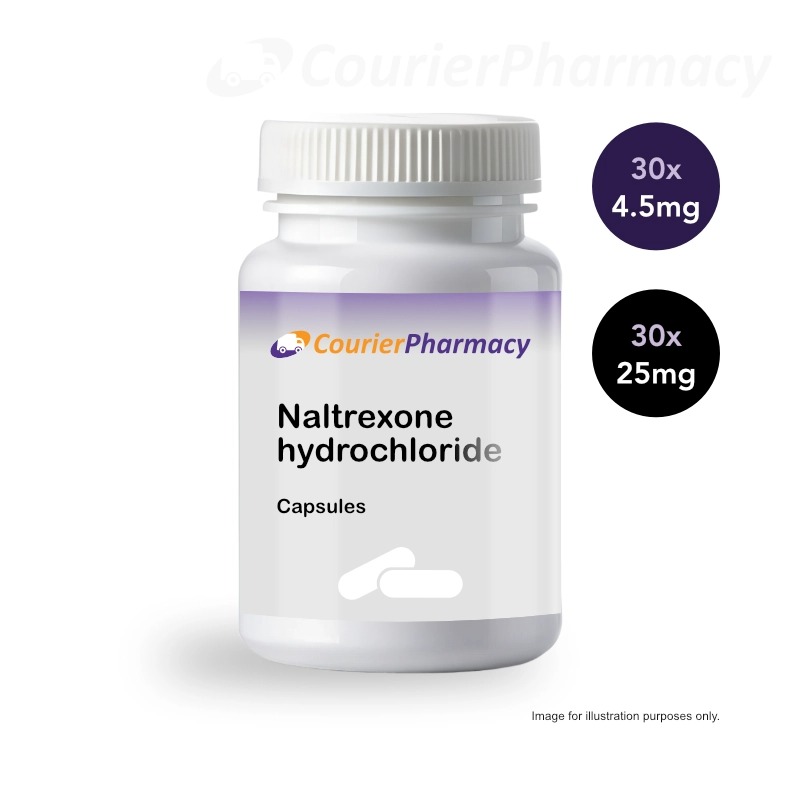
This is a specialist supply — the Naltrexone Starter Pack is designed for adults exploring The Sinclair Method (TSM) for alcohol use disorder, or receiving naltrexone treatment for other forms of pharmacological addiction under appropriate clinical assessment. So the pack provides a genuinely gentle introduction to naltrexone treatment — starting at 4.5mg to build tolerance over the first 10 days, then moving to 25mg for ongoing use. Furthermore, this gradual titration significantly reduces the common early side effects (nausea, headache, fatigue) that lead many patients to stop naltrexone treatment before it works. Each pack contains 30 x 4.5mg capsules and 30 x 25mg capsules, providing approximately 4-8 weeks of supply depending on drinking pattern under TSM. However, naltrexone treatment isn’t a quick fix — it works gradually over weeks and months through pharmacological extinction. Above all, this is a starting point rather than a finish line, and works best alongside proper clinical support and (where appropriate) psychosocial input. Available at Courier Pharmacy after comprehensive assessment. £149 with full online assessment, no subscription, free delivery.
At Courier Pharmacy, we believe in treatment that fits the person, but only where it’s honest, safe, and consented to.
This page covers what the Naltrexone Starter Pack is, why the gentle 4.5mg to 25mg titration approach genuinely helps, how The Sinclair Method works clinically, who the pack may suit and who it doesn’t, how it compares to other approaches, and the practical points that matter. Above all, we cover the safeguarding considerations that make this treatment appropriate for some adults with alcohol use disorder but not others.

The assessment gateway — please read first
Before going further, we want to be straight with you about how naltrexone supply works at Courier Pharmacy:
First of all, naltrexone treatment for alcohol use disorder requires proper clinical assessment. In fact, this isn’t a straightforward retail purchase because several safety considerations need to be checked before supply. So our full online assessment is genuinely important, not paperwork.
The assessment covers several critical areas:
- Alcohol use pattern — frequency, quantity, duration, any dependence features
- Severity assessment — including screening for severe alcohol dependence that would need medically-supervised detoxification first
- Opioid use — any current or recent opioid use (prescription or otherwise) is an absolute contraindication that risks precipitated withdrawal
- Liver function history — pre-existing liver disease affects treatment approach
- Mental health context — active depression, suicidal ideation, or unstable mental health needs different care
- Comprehensive medication review — potential interactions checked
- Support network — who else knows about your treatment journey
- Treatment goals — reduction versus abstinence, timescales, expectations
- Realistic expectations — what The Sinclair Method actually delivers
Second, some adults are not suitable for naltrexone starter pack supply through Courier Pharmacy. In particular:
- Adults with severe physical alcohol dependence who need medically-supervised detoxification
- Adults currently using opioid medications (prescription or otherwise)
- Adults who have used opioids in the past 7-10 days
- Adults with acute or chronic liver disease
- Adults with active suicidal ideation or unstable mental health crisis
- Adults where safer or more comprehensive support pathways would suit better
Third, if the assessment identifies you’re not suitable for the starter pack, we’ll signpost you to appropriate services. So this may include NHS alcohol services, private specialist addiction services, or GP-based support depending on your circumstances. Above all, this isn’t about turning people away — it’s about matching you with the right support for where you actually are.
If any of these points raise concerns, please talk to our prescriber before proceeding. After all, understanding what’s involved matters for informed choice.
Five key takeaways
- The Starter Pack is the starting point for adults beginning naltrexone treatment via The Sinclair Method (TSM) for alcohol use disorder, or for related pharmacological addiction under specialist assessment. So it provides a genuinely gentle introduction to naltrexone with proper clinical assessment before supply
- The gentle 4.5mg to 25mg titration approach reduces the early side effects (nausea, headache, fatigue) that lead many patients to stop naltrexone before it works. Furthermore, the 10-day build-up gives your body time to adjust before reaching the maintenance 25mg dose
- The Sinclair Method involves taking one naltrexone capsule one hour before drinking alcohol. So over weeks and months, this gradually reduces the brain’s reward response to alcohol through a process called pharmacological extinction. As a result, cravings and drinking typically reduce over time
- The pack contains 30 x 4.5mg capsules and 30 x 25mg capsules — around 4 to 8 weeks of supply depending on your drinking pattern. Includes full instructions, no subscription commitment, and free delivery
- Not suitable for severe physical alcohol dependence (which needs medically-supervised detoxification), current or recent opioid use (precipitated withdrawal risk), active or chronic liver disease, or acute mental health crisis. Prescriber assessment before supply is essential
Where the Starter Pack fits in alcohol use disorder management
A staged approach to problematic alcohol use:
- Stage 1: Recognition and initial support — identifying the issue, brief GP intervention, motivational discussion
- Stage 2: Screening and assessment — AUDIT or similar tools, severity assessment, comorbidity check
- Stage 3: Behavioural interventions — CBT, motivational interviewing, mutual support groups
- Stage 4: Pharmacological support — Naltrexone Starter Pack fits here for mild-to-moderate use disorder
- Stage 5: Standard-dose naltrexone (50mg) if 25mg proves insufficient
- Stage 6: Alternative pharmacological options — acamprosate, nalmefene, or disulfiram if naltrexone unsuitable
- Stage 7: Medically-supervised detoxification — for severe physical dependence
- Stage 8: Comprehensive specialist addiction services — inpatient or intensive outpatient care
So the Starter Pack sits at Stage 4 for mild-to-moderate alcohol use disorder where TSM is appropriate. In short, it’s the pharmacological entry point where behavioural approaches alone aren’t quite enough, positioned before severe dependence requires medically-supervised approaches.
Sinclair Method vs abstinence-only approaches
Different treatment philosophies:
- Sinclair Method: gradual reduction through pharmacological extinction
- In contrast, abstinence approaches (AA): immediate cessation and lifelong avoidance
- TSM allows continued drinking during treatment
- AA requires immediate stopping
- TSM works pharmacologically; AA works psychosocially
- TSM has strong evidence base for reduced drinking
- AA has strong evidence base for maintained abstinence
- Different approaches suit different people
- Some patients combine both approaches
- Choice depends on personal goals and preferences
Sinclair Method vs disulfiram (Antabuse)
Very different pharmacological approaches:
- Sinclair Method: naltrexone blocks alcohol’s rewarding effect
- In contrast, disulfiram: causes unpleasant reaction if you drink
- Naltrexone doesn’t make you unwell if you drink
- Disulfiram deliberately makes drinking uncomfortable
- Naltrexone works through extinction over time
- Disulfiram works through deterrence
- Naltrexone allows gradual behavioural change
- Disulfiram requires immediate abstinence
- Different treatment philosophies for different situations
Sinclair Method vs acamprosate
Alternative pharmacological approach:
- Sinclair Method: naltrexone for reducing consumption
- In contrast, acamprosate: for maintaining abstinence after detoxification
- Naltrexone works during drinking
- Acamprosate works after stopping
- Different clinical scenarios
- Sometimes combined in comprehensive treatment
- Both have NICE guidance support
Sinclair Method vs nalmefene
Two opioid antagonist options for the same approach:
- The Sinclair Method can be used with either naltrexone or nalmefene — both are opioid receptor antagonists
- Naltrexone is the original and most widely studied option for Sinclair Method use
- Nalmefene can also be used within the Sinclair Method framework, taken before drinking
- Both block alcohol’s rewarding effect through opioid receptor blockade
- Nalmefene has NICE guidance support for reducing alcohol consumption in the UK
- Naltrexone has the longer evidence base and broader international use
- Nalmefene has slightly different receptor binding (partial kappa agonist activity)
- Nalmefene is not metabolised by the liver — a significant advantage for patients with hepatic concerns
- Naltrexone is metabolised by the liver, making baseline liver function assessment more important
- So nalmefene may suit patients with pre-existing liver conditions where naltrexone would be problematic
- Tolerability profiles differ between individuals — some patients prefer one over the other
- Nalmefene is typically dosed 1-2 hours before drinking rather than the standard 1 hour for naltrexone
- Choice depends on individual response, tolerability, hepatic status, and prescriber preference
- Our Sinclair Method service currently uses naltrexone (with option to discuss nalmefene if clinically indicated)
Starter Pack vs standard 50mg naltrexone approach
Different starting philosophies:
- Starter Pack: gentle 4.5mg build-up to 25mg maintenance
- In contrast, standard: 25mg or 50mg from day 1
- Starter Pack significantly reduces early side effects
- Standard approach delivers therapeutic dose faster
- Starter Pack improves treatment continuation
- Standard approach works well for tolerant patients
- Starter Pack suits sensitive patients or side-effect concerns
- Some patients respond fully at 25mg (Starter Pack suits)
- Some patients need 50mg (step-up available if needed)
Who this pack may suit well
The Starter Pack may suit:
- Adults with mild-to-moderate alcohol use disorder
- Adults new to naltrexone treatment
- Adults concerned about medication side effects
- Adults who have stopped naltrexone previously due to side effects
- Adults wanting a gentler introduction to treatment
- Adults suspecting they may respond at lower doses
- Older adults who benefit from lower starting doses
- Adults with lower body weight
- Adults with medication sensitivities
- Adults committed to consistent pre-drinking dosing
- Adults with realistic expectations about gradual improvement
- Adults with adequate support networks
- Adults engaged with wider self-improvement work
Who might suit other options better
Other options may suit better for:
- Adults with severe physical alcohol dependence needing medically-supervised detoxification
- Adults currently or recently using opioid medications
- Adults with acute or chronic liver disease
- Adults with abnormal baseline liver function
- Adults in active mental health crisis
- Adults with active suicidal ideation
- Adults wanting immediate abstinence approach (disulfiram or AA)
- Adults who won’t complete comprehensive assessment
- Adults unable to commit to consistent dosing before drinking
- Adults preferring purely psychosocial approaches
- Adults with known naltrexone allergy or previous serious reaction
- Adults pregnant or planning pregnancy
- Breastfeeding mothers
- Adults under 18
Courier Pharmacy supply — the full pathway
This pack is supplied within a comprehensive clinical framework. So the supply pathway involves several sequential steps:
Step 1: Full online assessment
Complete the naltrexone consultation on courierpharmacy.co.uk. This covers:
- Alcohol use pattern assessment (frequency, quantity, duration)
- AUDIT-C or similar screening tool
- Signs of physical dependence
- Previous withdrawal experiences
- Any current or recent opioid use (prescription or otherwise)
- Liver function history and any known liver conditions
- Mental health status and stability
- Previous suicidal ideation
- Current medications comprehensive review
- Previous naltrexone or Sinclair Method experience
- Support network available to you
- Treatment goals (reduction vs abstinence)
- Expectations about timeline and outcomes
- Any pregnancy consideration
Step 2: Prescriber review
Your consultation goes to our UK-qualified prescriber, who assesses:
- Whether TSM via Starter Pack is clinically appropriate for you
- Whether the assessment reveals any red flags
- Whether severe dependence warrants specialist referral instead
- Whether opioid use makes naltrexone contraindicated
- Whether liver assessment is needed before supply
- Whether the gentle titration approach suits your situation
- Whether alternative treatment approaches would fit better
- Whether specialist services would suit better
Step 3: Prescription and dispensing
If the prescriber judges the Starter Pack is appropriate:
- Prescription issued for naltrexone at both strengths
- Compounded to specialist quality standards
- Dispensed from GPhC-regulated pharmacy premises
- Full written instructions included
Step 4: Discreet delivery and ongoing support
Your order arrives in plain packaging with clear supporting materials:
- Full day-by-day titration guide for the first 10 days
- Sinclair Method dosing protocol for maintenance phase
- Red flag symptoms to watch for
- When and how to contact us for support
- Free prescriber support available throughout treatment
Signposting when the pack isn’t right
If the assessment identifies the Starter Pack isn’t right for you, we signpost appropriately:
- Severe dependence — NHS alcohol services or medically-supervised detoxification
- Complex mental health needs — GP referral and specialist mental health support
- Opioid use situation — specialist addiction services
- Liver disease — hepatology review before considering treatment
- Crisis situations — Samaritans (116 123), NHS 111, A&E as appropriate
- This isn’t about turning people away — it’s about matching you with the right support
Why choose Courier Pharmacy for naltrexone treatment
At Courier Pharmacy, our approach starts with a simple idea: treatment should fit the person, not force the person to fit the system.
Dr Ada Jex-Cori
Our service is shaped by the philosophy of Dr Ada Jex-Cori, our brand pharmacist.
Dr Ada represents the spirit of the pharmacy: evidence-led, community-rooted, and willing to challenge the one-size-fits-all approach to medicine. She is named in honour of three pioneering women in science: Ada Lovelace, the mathematician and visionary; Sophia Jex-Blake, the first female doctor in the UK who fought the medical establishment; and Gerty Cori, the biochemist and Nobel Prize winner.
In our fictional world of Ethrewell, Dr Ada fights against pharma’s standardised approach to medicine. In the real world, she represents what we stand for. Her view is straightforward: you are not broken. The system is. And we are here to change that.
Alcohol use disorder deserves proper clinical framing
This is a sensitive clinical area. Courier Pharmacy is different. So we recognise that:
- Problematic alcohol use exists on a spectrum, not as a binary state
- Many adults want reduction rather than immediate abstinence
- Traditional pathways often feel inaccessible or misaligned with reality
- Evidence-based pharmacological approaches like TSM offer genuine alternatives
- Proper clinical assessment protects patients from unsuitable treatment
- Signposting to specialist services when needed matters more than always saying yes
- Treatment works best alongside broader support
Honest framing about extended supply
Why 8-12 weeks matters clinically:
- Shorter supply periods create pressure to reorder during unclear response
- 8-12 weeks matches actual TSM response timeline
- Adequate treatment time supports informed continuation decisions
- Better than committing to long-term supply before assessing response
- Better than multiple small reorders during ongoing assessment
- Value-conscious approach to entry-tier treatment
Honest framing about dose flexibility
Why the step-up option matters:
- Some patients respond fully at 25mg
- Others need 50mg for adequate effect
- You can’t reliably predict individual response in advance
- Extended Pack supports either outcome without additional reordering
- Prescriber support guides step-up timing and appropriateness
- Two 25mg capsules together provide 50mg equivalent
Honest framing about limits
What we don’t offer:
- We don’t offer treatment for severe physical dependence
- We don’t offer treatment for opioid-dependent patients
- We don’t offer treatment for acute mental health crisis
- We don’t replace comprehensive addiction services
- We don’t offer inpatient or intensive outpatient care
- For any of these needs, specialist services fit better
Alcohol use disorder and the bigger picture
Problematic drinking rarely sits in isolation. So our prescriber can discuss:
- Comprehensive assessment of drinking patterns and impact
- Underlying factors that drive drinking
- Mental health considerations
- Sleep and drinking patterns
- Relationship and social factors
- Work and stress considerations
- Physical health impact of drinking
- Liver function assessment
- Comprehensive support options
- When and how to combine approaches
- Long-term management strategy
- Relapse prevention thinking
Sometimes the drinking is one part of a wider picture worth talking through.
Prescriber support throughout treatment
Our team is here to discuss:
- Whether the Extended Starter Pack fits your specific situation
- Whether shorter Starter Pack or longer Maintenance Pack would suit better
- Whether standard 50mg approach would suit better from day one
- Whether specialist services would fit better
- Managing side effects during titration
- Practical questions about Sinclair Method protocol
- Tracking progress meaningfully over 8-12 weeks
- Assessing response and considering step-up decisions
- When and how to move to 50mg dosing
- Comprehensive support alongside pharmacological treatment
- Managing setbacks realistically
- Long-term treatment considerations after Extended Pack completion
Trust earned, not claimed
We are GPhC-regulated, and our content is grounded in the licensed naltrexone Summary of Product Characteristics, NICE guidance on alcohol use disorders (CG115), NICE clinical knowledge summaries on alcohol problem drinking, evidence from major clinical trials on The Sinclair Method, published research on pharmacological extinction, MHRA guidance on medicine supply, and the real experience of patients approaching alcohol use disorder through pharmacological approaches.
If the Extended Starter Pack isn’t the right answer for your situation, we’ll tell you honestly. After all, getting the right approach matters more than fulfilling a request.
More than a prescription: our community
Healthcare shouldn’t only happen when you’re paying for it.
Every fortnight we run free drop-in talks and clinics at Insomnia, Derby, from 10am to 12pm. So we show up, even when it’s free.
Bring a question, bring a friend, bring a stack of bewildering letters from another clinic. We’ll sit with you.
We cover weight management, GLP-1 therapy, MCAS, menopause, women’s health, men’s health, chronic pain, digestive health, allergies, asthma, sleep, migraine, skincare, acne, hair loss, alcohol use disorder support, and whatever else people bring through the door. No appointment. No cost. No pressure. Just real support and treatment that fits.

Key features and specs
- Active ingredient: naltrexone hydrochloride
- Class: opioid receptor antagonist
- Form: oral capsules (compounded to specialist quality standards)
- Route: oral, taken one hour before drinking during maintenance phase
- Pack contents: 30 x 4.5mg + 30 x 25mg capsules
- Supply duration: approximately 4-8 weeks depending on drinking pattern
- Titration phase: 10 days at 4.5mg (typically 3 capsules per day)
- Maintenance phase: 25mg taken one hour before drinking (Sinclair Method)
- Clinical indication: alcohol use disorder via The Sinclair Method
- Also indicated for: certain forms of pharmacological addiction under specialist assessment
- Legal status: prescription-only medicine (POM)
- Assessment: full online consultation required before supply
- Storage: below 25°C in original packaging, protect from light and moisture
- Price: £149 with no subscription commitment
- Delivery: free discreet plain packaging
- Not for: severe physical alcohol dependence, opioid use, active or chronic liver disease, active mental health crisis, pregnancy, breastfeeding, under 18
Naltrexone Starter Pack — Treatment Dosage and Active Ingredients
Full dosing instructions for the Naltrexone Starter Pack. So this document covers the 10-day titration schedule using 4.5mg capsules, the transition to 25mg maintenance dosing, and the Sinclair Method protocol for ongoing treatment. Furthermore, active ingredients and capsule composition are detailed for reference and allergy checking.
Active ingredients
Each capsule contains
- Naltrexone hydrochloride (as active ingredient) — at either 4.5mg or 25mg strength depending on the capsule
- Microcrystalline cellulose (as filler/bulking agent)
Capsule composition
- Vegetarian HPMC capsules (Hydroxypropyl methylcellulose)
- Suitable for vegetarian and vegan patients
- Free from gelatin (no animal-derived components)
- Free from common allergens (nuts, dairy, gluten, soy)
Two capsule strengths in your pack
- 30 x low-dose capsules containing 4.5mg naltrexone hydrochloride — for the 10-day titration phase
- 30 x medium-dose capsules containing 25mg naltrexone hydrochloride — for the maintenance phase
Both capsule strengths use the same excipients. So the only difference is the naltrexone hydrochloride content. Furthermore, both use vegetarian HPMC capsule shells.
Treatment schedule overview
Your treatment happens in two phases:
- Phase 1 (Days 1-10): Gentle titration using 4.5mg capsules, taken daily before food
- Phase 2 (Day 11 onwards): Maintenance at 25mg using 25mg capsules, taken before food and drinking (Sinclair Method protocol)
So the pack supports both phases in sequence. In fact, this gradual approach is what makes the treatment tolerable for most patients.
Phase 1: The 10-day titration schedule
During titration, take your 4.5mg capsules once daily with breakfast. So dosing before food helps reduce any early nausea. Furthermore, the dose builds gradually over 10 days to prepare your body for the maintenance phase.
Day-by-day titration schedule
- Days 1-2: Take 1 capsule (4.5mg) once daily before breakfast
- Days 3-4: Take 2 capsules (9mg total) once daily before breakfast
- Days 5-6: Take 3 capsules (13.5mg total) once daily before breakfast
- Days 7-8: Take 4 capsules (18mg total) once daily before breakfast
- Days 9-10: Take 5 capsules (22.5mg total) once daily before breakfast
Titration summary table
- Day 1 ? 1 capsule (4.5mg)
- Day 2 ? 1 capsule (4.5mg)
- Day 3 ? 2 capsules (9mg)
- Day 4 ? 2 capsules (9mg)
- Day 5 ? 3 capsules (13.5mg)
- Day 6 ? 3 capsules (13.5mg)
- Day 7 ? 4 capsules (18mg)
- Day 8 ? 4 capsules (18mg)
- Day 9 ? 5 capsules (22.5mg)
- Day 10 ? 5 capsules (22.5mg)
So this uses all 30 x 4.5mg capsules across the 10-day titration period. Furthermore, the graduated approach lets your body acclimatise gradually before reaching the maintenance dose.
How to take during titration
- Take your daily dose about 30-60 minutes before breakfast
- Swallow all capsules together with water
- If you experience nausea, take with a small snack instead of on an empty stomach
- Take at approximately the same time each day
- Continue the daily titration schedule even on non-drinking days
If you experience side effects during titration
- Mild nausea or headache are common in the first few days
- Take capsules with a small snack rather than on empty stomach
- Stay well hydrated
- Simple analgesics (paracetamol) can help with headache
- If side effects are significant, contact us — we can extend the titration phase
- Report any concerning symptoms immediately
Phase 2: Transition to 25mg maintenance
From Day 11 onwards, you'll move to the maintenance phase using the 25mg capsules. So this represents the shift from tolerance-building to actual Sinclair Method treatment.
The Day 11 transition
- Stop taking the 4.5mg capsules
- Start taking one 25mg capsule as needed per the Sinclair Method
- The 25mg dose provides the therapeutic level needed for pharmacological extinction
- Your body should now tolerate this dose after the 10-day preparation
The Sinclair Method protocol
- Take ONE 25mg capsule approximately ONE HOUR before drinking alcohol
- Take before food or with a small snack (reduces potential nausea)
- Only take on days you plan to drink alcohol
- Don't take on non-drinking days
- If you drink unexpectedly without having taken naltrexone, that's OK
- If you decide not to drink after taking naltrexone, no harm done
- Consistent pre-drinking dosing is what makes TSM work over time
How to take during maintenance
- Plan when you're likely to drink about an hour ahead
- Take one 25mg capsule with a small snack or before food
- Swallow the capsule with water
- Wait one hour before consuming alcohol
- Drink as you normally would
- Track your drinking pattern to see changes over time
Why 'before food' matters
- Naltrexone can cause nausea when taken on empty stomach
- A small snack before or with the capsule reduces this risk
- Doesn't significantly affect absorption
- Establishes a consistent routine that supports adherence
- Makes the treatment more tolerable long-term
Why 'one hour before drinking' matters
- Naltrexone reaches peak plasma concentrations approximately one hour after dosing
- Peak concentration provides optimal opioid receptor blockade
- Blockade must be present when alcohol enters the reward pathway
- Drinking before the one-hour mark reduces effectiveness
- Drinking later still works — coverage lasts several hours
Supply duration of the 25mg capsules
After completing titration on Day 11, you'll have 30 x 25mg capsules for the maintenance phase. So supply duration depends on your drinking frequency:
- 2 drinking days per week: 30 capsules last approximately 15 weeks
- 3 drinking days per week: 30 capsules last approximately 10 weeks
- 4 drinking days per week: 30 capsules last approximately 7-8 weeks
- 5-7 drinking days per week: 30 capsules last approximately 4-6 weeks
So the Starter Pack typically provides 4-8 weeks of overall supply. Furthermore, the exact duration depends on your specific drinking pattern.
Missed dose guidance
During titration phase
- If you forget your daily dose, take it as soon as you remember on that day
- If you remember the next day, resume your normal schedule (don't double dose)
- Continue with the planned titration schedule for remaining days
- Occasional missed doses during titration won't significantly affect the process
During maintenance phase
- If you drink without having taken naltrexone, don't worry — take next dose before your next drinking occasion
- The Sinclair Method works over time through consistent (not perfect) pre-drinking dosing
- Missed pre-drinking doses reduce extinction efficiency but don't undo previous progress
- Focus on establishing the habit rather than perfect adherence
Storage instructions
- Store below 25°C
- Keep in the original blister packaging
- Protect from light and moisture
- Keep out of sight and reach of children
- Use before the expiry date shown on the packaging
- Don't transfer to other containers
Critical safety reminders
Do not take if you
- Are currently using any opioid medication (prescription or otherwise)
- Have used opioids in the past 7-10 days
- Have acute or chronic liver disease
- Are pregnant or breastfeeding
- Are in acute alcohol withdrawal
- Have severe physical alcohol dependence (needs medically-supervised detoxification)
- Have known hypersensitivity to naltrexone
Emergency situations during treatment
- Naltrexone blocks opioid effects including emergency pain relief
- Carry a medical card noting current naltrexone treatment
- Inform any healthcare provider you're taking naltrexone
- Anaesthesia and surgery need advance discussion with your medical team
- Alternative pain management strategies may need adjustment
Contact us if you experience
- Persistent severe nausea, vomiting, or abdominal pain
- Yellowing of skin or eyes (possible liver issue)
- Dark urine or pale stools
- Severe headache or dizziness
- Significant mood changes or depression
- Any suicidal thoughts
- Signs of severe allergic reaction (facial swelling, breathing difficulty) — call 999
- Any concerning symptoms during treatment
Support throughout treatment
Our prescriber team is available for support throughout your treatment journey. So please contact us if you have questions about dosing, experience side effects, or want to discuss your progress. Furthermore, we can adjust the titration schedule if needed based on how you respond.
Disclaimer: These instructions are specific to your Naltrexone Starter Pack from Courier Pharmacy and shouldn't be used to guide other naltrexone treatments. Naltrexone is a prescription-only medicine (POM) supplied following full clinical assessment. Contact us immediately if you experience concerning symptoms, need to disclose new medications (particularly opioids), or have any changes in your health circumstances during treatment. Signs of severe allergic reaction (facial swelling, breathing difficulty, widespread rash) require immediate medical attention (999). Any suicidal thoughts should trigger immediate contact with your GP, NHS 111, Samaritans (116 123), or emergency services (999).
Prescriber contact
Courier Pharmacy prescriber support is available for questions about your treatment. Reach us via the courierpharmacy.co.uk platform or the contact details provided with your order.
What's in the pack
30 x low-dose 4.5mg capsules
- Provide the gentle build-up phase over the first 10 days
- Typical use: 3 capsules per day to build gradual tolerance
- Allows your body to adjust to naltrexone gradually
- Significantly reduces early side effect burden
- Compounded to specialist quality standards
- This is a specialist dose not routinely available in standard packs
30 x medium-dose 25mg capsules
- Provide the maintenance treatment phase after build-up
- Take one capsule one hour before drinking alcohol
- Standard TSM maintenance dose for many patients
- Effective dose for those who respond at 25mg without needing 50mg
- Compounded to specialist quality standards
- Around 4-8 weeks supply depending on drinking frequency
Full instructions
- Clear day-by-day titration guide for the first 10 days
- Sinclair Method dosing instructions for the maintenance phase
- Symptom monitoring guidance
- When to contact us for support
- Red flag symptoms to watch for
No subscription commitment
- One-off purchase pattern
- No automatic re-orders
- You control when to reorder based on your progress
- Reflects our belief that treatment should fit your circumstances
Free delivery
- Discreet plain packaging
- Suitable for home or workplace delivery
- No mention of contents on packaging
Why the gentle 4.5mg to 25mg titration approach
The dosing philosophy behind this pack matters clinically. In fact, many patients who try standard 50mg naltrexone stop within days due to nausea, headache, fatigue, or dizziness. So the standard approach loses genuinely responsive patients before treatment has a chance to work. Furthermore, some patients respond well at 25mg without needing 50mg — and starting them straight at higher doses simply increases side effects without adding benefit.
The 10-day build-up phase
Why gradual introduction matters:
- Opioid receptor blockade produces adjustment symptoms in some patients
- Sudden full blockade at 50mg produces more marked adjustment symptoms
- Gradual dose escalation allows adaptive changes
- Side effect burden significantly reduced
- Treatment continuation rates improved
- Patients complete initial phase and reach maintenance
- This directly affects treatment success
Why 25mg suits many patients
Not every patient needs 50mg:
- 25mg produces meaningful opioid receptor blockade
- Many patients respond to Sinclair Method at 25mg
- Standard TSM literature acknowledges 25mg as effective for many
- Lower dose means lower side effect burden long-term
- Some patients need 50mg — our other packs support this if needed
- Starting at 25mg allows assessment of individual response
- Step-up to 50mg possible if 25mg proves insufficient
Who benefits most from this approach
- Patients concerned about medication side effects
- Patients who have previously stopped naltrexone due to side effects
- Patients seeking the minimum effective dose
- Patients wanting to assess their response gradually
- Patients with sensitivity to medications generally
- Older adults who often benefit from lower starting doses
- Patients with lower body weight where standard doses may be excessive

What is the Starter Pack for?
The Naltrexone Starter Pack is designed for adults beginning naltrexone treatment for alcohol use disorder using The Sinclair Method (TSM) — an evidence-based pharmacological approach to reducing problematic alcohol use over time. Furthermore, it may suit adults receiving naltrexone treatment for other forms of pharmacological addiction under appropriate clinical assessment. So the pack fits the entry point of a genuine treatment journey rather than a standalone quick fix.
What The Sinclair Method actually is
Understanding TSM matters for realistic expectations:
- Evidence-based approach developed by Dr John Sinclair based on decades of research
- Uses naltrexone (a licensed opioid receptor blocker) to reduce alcohol's rewarding effect
- Naltrexone is taken one hour before drinking alcohol
- Over weeks and months, the brain's reward pathway is gradually retrained
- Cravings and consumption typically reduce over time
- Some patients achieve reduced controlled drinking; others reach abstinence
- Different from abstinence-only approaches like Alcoholics Anonymous
- Works alongside other support rather than replacing it
- Endorsed by the American Society of Addiction Medicine as a treatment option
What pharmacological extinction means
The mechanism explained:
- Alcohol triggers endorphin release in the brain's reward pathway
- Endorphins activate opioid receptors, producing the rewarding drinking feeling
- Over years, this reinforcement strengthens drinking behaviour
- Naltrexone blocks these opioid receptors before drinking
- So alcohol still enters the body but the reward signal is dampened
- Repeated blocked reinforcement gradually extinguishes the learned behaviour
- This is similar to how psychological extinction reduces conditioned responses
- Requires consistent naltrexone use before drinking to work
Who might the Starter Pack suit?
The pack may suit adults who:
- Have identified problematic alcohol use they want to address
- Are not severely physically dependent on alcohol
- Want a pharmacological approach alongside or instead of abstinence-only support
- Are motivated to reduce or eventually stop drinking
- Understand this is a gradual process over weeks and months
- Are not using opioid medications currently or recently
- Have normal or reasonable liver function
- Are mentally stable enough to engage with treatment
- Have realistic expectations about what naltrexone can and cannot do
- Are willing to complete the assessment properly
- Want a gentler introduction to naltrexone than the standard 50mg approach
- Suspect they may respond to lower doses (25mg rather than 50mg)
What the Starter Pack may help with
Based on naltrexone pharmacology and Sinclair Method evidence:
- Reduction in alcohol consumption over weeks to months
- Reduction in the rewarding feeling from drinking
- Reduction in cravings over time
- Reduction in binge drinking episodes
- Support for gradual behavioural change
- Better control over drinking situations
- Reduction in health harms from continued heavy drinking
- Improvement in liver function markers in many patients (as drinking reduces)
- Better sleep, mood, and general wellbeing as drinking reduces
However, an important honesty point: TSM doesn't work for everyone. In fact, response rates vary — some patients experience meaningful reduction while others find limited benefit. Furthermore, the process is gradual not immediate. Additionally, results depend on consistent naltrexone use before drinking (missing doses undermines the extinction process). So realistic expectations matter genuinely.
What the Starter Pack doesn't claim to do
Honest framing matters:
- It doesn't make you unable to drink (unlike disulfiram which causes reactions)
- It doesn't work immediately — the extinction process takes weeks to months
- It doesn't work if you don't take it before drinking (this is essential)
- It doesn't replace comprehensive addiction support where that's needed
- It doesn't help everyone equally — response varies significantly between individuals
- It doesn't treat severe physical alcohol dependence (needs medically-supervised detoxification)
- It doesn't work for people currently or recently using opioids
- It doesn't replace therapy, counselling, or support groups where those are helpful
- It doesn't address underlying reasons for drinking (mental health, trauma, life stress)
- It isn't a substitute for engaging with your GP if you're struggling

Frequently asked questions

What is The Sinclair Method exactly?
An evidence-based pharmacological approach:
- Uses naltrexone to gradually reduce alcohol's rewarding effect
- Take one hour before drinking, on drinking days only
- Works through pharmacological extinction over weeks to months
- Doesn't require immediate abstinence
- Endorsed by American Society of Addiction Medicine
- Growing recognition in UK addiction medicine
Why start at 4.5mg not 25mg or 50mg?
Gentler titration reduces side effects:
- Standard starting doses cause significant nausea, headache, fatigue
- Many patients stop naltrexone due to early side effects
- 5mg build-up over 10 days allows gradual adjustment
- More patients successfully reach maintenance phase
- Better treatment completion rates
Do I need to stop drinking to use this?
No — that's the point of TSM:
- Sinclair Method deliberately involves continued drinking
- Pharmacological extinction requires drinking with naltrexone present
- Consumption typically reduces over weeks to months
- Different from immediate-abstinence approaches
- Some patients eventually reach abstinence, others achieve controlled drinking
How long until I see results?
Weeks to months, not days:
- Days 1-10: titration phase, minimal drinking behaviour change
- Weeks 2-4: some patients notice reduced drinking pleasure
- Months 1-3: gradual consumption reduction for many
- Months 3-6: often the point of significant change
- Individual response varies significantly
What if I'm on opioid pain medication?
Naltrexone isn't suitable:
- Precipitated withdrawal risk with any opioid exposure
- Includes codeine, tramadol, morphine, oxycodone, others
- Includes past 7-10 days of opioid use
- Discuss pain management with your GP first
- Alternative approaches for AUD may fit better
What if I need emergency pain relief?
Important safety point:
- Naltrexone blocks opioid effects
- Emergency opioid pain relief needs higher doses to overcome blockade
- Carry a medical card noting naltrexone use
- Tell any healthcare provider
- Non-opioid pain management (paracetamol, NSAIDs) work normally
Will this affect surgery or anaesthesia?
Needs advance planning:
- Elective surgery: discuss stopping naltrexone in advance
- Emergency surgery: inform anaesthetic team of naltrexone use
- Higher opioid doses may be needed
- Alternative anaesthetic techniques may be considered
Can I drink alcohol without taking naltrexone?
Physically yes, but it undermines TSM:
- You can drink without naltrexone — no harmful reaction (unlike disulfiram)
- However, drinking without naltrexone reinforces the reward pathway
- This undermines the extinction process
- Try to always dose before planned drinking
- Occasional missed doses won't ruin treatment but consistency matters
What if I have depression?
Depends on stability:
- Well-controlled stable depression usually OK
- Active depression, particularly with suicidal ideation, contraindicated
- Naltrexone can affect mood — monitor closely
- Mental health support alongside often helpful
- Discuss thoroughly during assessment
Should I have therapy alongside?
Often helpful:
- Cognitive behavioural therapy (CBT) evidence-based
- Motivational interviewing helpful
- SMART Recovery aligns with TSM philosophy
- Counselling for underlying issues
- Peer support where accessible
- Combined approaches often work best
What if 25mg isn't enough?
Step-up available:
- Some patients need 50mg for full effect
- Response can be assessed after 4-8 weeks on 25mg
- Prescriber can discuss step-up if needed
- Higher-dose packs available separately
- Individual optimisation possible
Is this available on the NHS?
Depends on your area:
- Naltrexone is licensed and available on NHS
- Availability through NHS varies by area
- Specialist alcohol services may prescribe
- Some GPs comfortable prescribing, others refer
- Private supply through Courier Pharmacy offers assessment and support
What does £149 include?
Full pack and support:
- 30 x 4.5mg capsules
- 30 x 25mg capsules
- Full online clinical assessment
- Prescriber review
- Full written instructions
- Free discreet delivery
- Ongoing prescriber support
- No subscription commitment
Do I need blood tests before starting?
Depends on assessment:
- Not automatic requirement for all patients
- Recommended if any liver concerns identified
- Prescriber assesses need during consultation
- Home LFT kits available if needed
- Baseline LFT good practice for many patients
How do I order the Starter Pack?
Complete the naltrexone consultation on courierpharmacy.co.uk. Our prescriber will review your alcohol use pattern, medical history, current medications (particularly checking for opioid exposure), mental health status, and treatment goals. So the assessment identifies whether the Starter Pack genuinely fits your situation. Furthermore, if the pack isn't right, we'll signpost you to appropriate services. Your order arrives in plain discreet packaging with full instructions and ongoing prescriber support available throughout treatment.
Disclaimer: This page is for information only and isn't a substitute for personal medical advice. Naltrexone is a prescription-only medicine (POM) — the Naltrexone Starter Pack contains 30 x 4.5mg and 30 x 25mg capsules compounded to specialist quality standards for The Sinclair Method treatment of alcohol use disorder, or other forms of pharmacological addiction under appropriate specialist assessment. ABSOLUTELY CONTRAINDICATED in current or recent (past 7-10 days) opioid use of any kind — precipitated withdrawal risk can be genuinely dangerous. Also contraindicated in acute hepatitis or liver failure, severe hepatic impairment, hypersensitivity to naltrexone, pregnancy, breastfeeding, active mental health crisis, active suicidal ideation, acute alcohol withdrawal, severe physical alcohol dependence requiring medically-supervised detoxification, and under 18. Adults with severe alcohol dependence should not attempt to reduce alcohol consumption without medical supervision — withdrawal can be dangerous including seizures, delirium tremens, and cardiovascular effects. Sinclair Method works gradually over weeks to months through pharmacological extinction — not immediately. Consistent dosing one hour before drinking is essential. Missing doses undermines the extinction process. Adults with active suicidal thoughts should contact their GP, NHS 111, Samaritans (116 123), or emergency services (999) immediately — not attempt self-treatment through this pack. Signs of severe allergic reaction, hepatitis (jaundice, dark urine, abdominal pain), precipitated opioid withdrawal (severe nausea, vomiting, agitation), or alcohol withdrawal (tremor, sweats, hallucinations, seizures) require immediate medical attention. Emergency pain management during naltrexone treatment requires specialist input — carry a medical card noting current naltrexone use. Anaesthesia and surgery need advance discussion with medical team. This treatment works best alongside comprehensive psychosocial support where indicated. Courier Pharmacy assessment identifies patients suitable for the Starter Pack and signposts those needing different services to appropriate specialist care. This isn't a replacement for comprehensive addiction services when those are needed.
How this content was created
Written by the Courier Pharmacy editorial team and reviewed by a GPhC-registered prescribing pharmacist.
The content is grounded in the licensed Naltrexone Summary of Product Characteristics from UK manufacturers, NICE guidance on the diagnosis, assessment and management of harmful drinking and alcohol dependence (CG115), NICE Clinical Knowledge Summaries on alcohol problem drinking, published research on The Sinclair Method and pharmacological extinction, the American Society of Addiction Medicine guidance on alcohol use disorder pharmacotherapy, MHRA guidance on medicinal product supply, and the real experience of patients approaching alcohol use disorder through pharmacological treatment pathways.
Author: The Courier Pharmacy Clinical Editorial Team
Reviewed by: GPhC-registered Independent Prescriber and Superintendent Pharmacist, Courier Pharmacy
Date of last review: 14 June 2026.
References
- Electronic Medicines Compendium (emc) Naltrexone Summary of Product Characteristics. https://www.medicines.org.uk/emc/
- NICE Clinical Guideline CG115 — Alcohol-use disorders: diagnosis, assessment and management of harmful drinking (high-risk drinking) and alcohol dependence. https://www.nice.org.uk/guidance/cg115
- NICE Clinical Knowledge Summary — Alcohol problem drinking. https://cks.nice.org.uk/topics/alcohol-problem-drinking/
- American Society of Addiction Medicine — The Sinclair Method structured naltrexone protocol to reduce alcohol use. https://www.asam.org/
- Courier Pharmacy (2026) The Sinclair Method: Blocking Endorphin-Driven Reward. Courier Pharmacy. Available at: https://courierpharmacy.co.uk/the-sinclair-method-blocking-endorphin-driven-reward/ (Accessed: 28 July 2026).