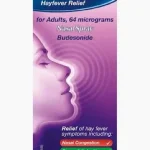
Benacort Hayfever Relief Nasal Spray is a UK Pharmacy (P) medicine containing budesonide 64 micrograms per spray, an established intranasal corticosteroid for the prevention and treatment of seasonal and perennial allergic rhinitis in adults aged 18 and over.
Intranasal corticosteroids are the most effective single medicine class for allergic rhinitis according to UK and international guidelines, particularly for nasal congestion.
Effect builds over days rather than minutes, so daily regular use through the allergy season produces substantially better control than as-needed use.
Available from Courier Pharmacy under pharmacist supervision.
Benacort Hayfever Relief Nasal Spray is a UK Pharmacy (P) medicine for hay fever and allergic rhinitis. It contains budesonide 64 micrograms per spray. Budesonide is a well?known intranasal corticosteroid. People in the UK have used it for decades.
Benacort works on the inflammation inside the nose. Because of that, it can help with a wider range of symptoms than an antihistamine alone.
What Benacort is used for
Benacort helps prevent and treat:
seasonal allergic rhinitis (hay fever)
year?round allergic rhinitis
It is suitable for adults aged 18 and over.
How Benacort works
When you have hay fever, your immune system triggers inflammation in the nasal lining. That inflammation causes congestion, sneezing, and a runny nose.
Benacort reduces that inflammation. As a result, it can help with:
blocked nose (often the hardest symptom to shift)
runny nose
sneezing
itching
It may also ease itchy, watery eyes for some people. This happens because the nose and eyes connect through the tear ducts.
Why people choose a steroid nasal spray
Oral antihistamines can help, especially for mild symptoms. However, they often struggle with congestion.
In contrast, steroid nasal sprays like Benacort usually work best for:
moderate to severe hay fever
symptoms that last most days
a mainly blocked nose picture
How to get the best results
Benacort works best when you use it every day during your allergy season. It does not work like a quick “rescue” spray.
You may notice some relief within 12 to 24 hours. However, full benefit often takes 1 to 2 weeks. So, start early if you can.
Good spray technique also matters. Aim the nozzle slightly outwards, away from the centre of your nose. This helps reduce irritation.
A simple stepped approach (what to try next)
If symptoms feel mild, you might start with trigger avoidance and an antihistamine.
If symptoms persist, add Benacort and use it daily. You can still use an oral antihistamine alongside it if needed. If you still struggle after that, speak to a clinician about other options.
Benacort from Courier Pharmacy
Courier Pharmacy supplies Benacort from a UK GPhC?registered pharmacy under pharmacist supervision. If you’re new to steroid nasal sprays, our pharmacist can help with technique, timing, and how to combine treatments safely.
Key features and specifications
Active ingredient: budesonide 64 micrograms per metered spray
Form: aqueous nasal spray (metered-dose pump)
Pack size: typically 120 sprays per bottle
Indication: seasonal and perennial allergic rhinitis in adults aged 18+
Standard adult dose: two sprays per nostril once daily (often reduced to one spray per nostril once controlled)
Onset: some benefit within 12–24 hours; best effect in 1–2 weeks
Max duration (OTC context): up to 3 months without prescriber review (longer use may be suitable with clinical advice)
Legal category: Pharmacy (P) medicine
Supplied by: Courier Pharmacy with pharmacist support
MOJO WISDOM
Take control of your health by understanding your condition and what this medication is doing for you.
READ:
More information about this treatment.
UK-based doctors and pharmacists
Discreet and Confidential
UK-based doctors and pharmacists
Free, Expert Advice
No video link provided.
No video link provided.
UK-based doctors and pharmacists
Free, expert advice
Discrete and confidential
Fast delivery
Giving you trusted clinical advice for over 40 conditions
A UK regulated pharmacy providing safe, effective treatments online since 2014
When hay fever has moved beyond what a daily antihistamine alone can control, particularly when nasal congestion, persistent runny nose, or itching are the dominant symptoms, an intranasal corticosteroid is the next step that genuinely changes outcomes. Benacort Hayfever Relief Nasal Spray delivers budesonide directly to the nasal lining, reducing the underlying inflammation that drives allergic rhinitis symptoms, rather than just blocking histamine after the fact.
At Courier Pharmacy, we believe healthcare should suit the person, not the marketing budget. Intranasal corticosteroids are the single most effective medicine class for allergic rhinitis according to UK, European, and international guidelines, yet they’re often used poorly: started too late in the season, stopped too early when symptoms briefly improve, or used with technique that means most of the dose ends up swallowed rather than reaching the nasal lining. This page covers where Benacort fits, how to get the best from it, and how to combine it with other options when needed.
Five key takeaways
Benacort Hayfever Relief Nasal Spray is a UK Pharmacy (P) medicine containing budesonide 64 micrograms per spray, an intranasal corticosteroid licensed for the prevention and treatment of seasonal and perennial allergic rhinitis in adults aged 18 and over
Intranasal corticosteroids are the most effective single medicine class for allergic rhinitis, particularly for nasal congestion (where antihistamines often underperform). UK, European, and ARIA guidelines all position them as the gold-standard treatment for moderate to severe allergic rhinitis
Effect builds over days rather than minutes. Started 1 to 2 weeks before the expected pollen season and used regularly through the season produces substantially better symptom control than starting late or using only when symptoms flare
Standard adult dose is 128 micrograms (two sprays) in each nostril once daily in the morning. Once symptoms are controlled, the maintenance dose can often be reduced to 64 micrograms (one spray) per nostril once daily
Budesonide has been used in millions of patients globally for over 30 years with an excellent long-term safety profile. Systemic absorption from the intranasal dose is very low, and effects on growth, adrenal function, and bone density at this dose are negligible in most patients#
Benacort Hayfever Relief Nasal Spray is a UK Pharmacy (P) medicine containing budesonide 64 micrograms per metered spray. Budesonide is an established intranasal corticosteroid (INCS) with over 30 years of clinical use in UK practice. It was one of the first synthetic glucocorticoids developed specifically for high topical potency combined with low systemic bioavailability, making it suitable for direct application to the nasal lining without the systemic effects of older oral or systemic steroids.
The clinical position of intranasal corticosteroids in modern UK allergic rhinitis care is well established. Multiple international guidelines, including the Allergic Rhinitis and its Impact on Asthma (ARIA) initiative, the European Academy of Allergy and Clinical Immunology (EAACI), the British Society for Allergy and Clinical Immunology (BSACI), and NICE Clinical Knowledge Summaries, position intranasal corticosteroids as the single most effective medicine class for allergic rhinitis, particularly for moderate to severe symptoms or where nasal congestion is prominent.
The stepped approach to allergic rhinitis in modern UK practice typically follows:
Mild intermittent symptoms: trigger avoidance plus oral antihistamine as needed (loratadine, cetirizine, fexofenadine over the counter; bilastine, desloratadine, levocetirizine, rupatadine on prescription)
Severe or refractory symptoms: combination intranasal spray (Dymista: fluticasone + azelastine), addition of leukotriene receptor antagonist (montelukast), or escalation to specialist care
Allergen-specific immunotherapy (Grazax for grass pollen, Acarizax for house dust mite, Itulazax for tree pollen) for patients with severe, specific-allergen-driven disease where symptomatic treatment is inadequate
Budesonide and other intranasal corticosteroids address the full spectrum of allergic rhinitis symptoms because they act on the underlying inflammatory process rather than blocking a single mediator downstream. Compared to oral antihistamines, they are:
More effective for nasal congestion (where antihistamines often underperform)
Comparable or superior for rhinorrhoea, sneezing, and itching
Effective for ocular symptoms of allergic conjunctivitis (despite being a nasal spray, the systemic effect via the nasolacrimal duct produces useful ocular effects)
Effective for the inflammatory component of the late-phase allergic response, which antihistamines don’t address
The trade-offs are practical rather than clinical: intranasal corticosteroids require regular daily use for full effect (not just symptomatic use), take days to build to maximum effect, and require correct spray technique that many patients aren’t taught properly.
We at Courier Pharmacy supply Benacort Hayfever Relief Nasal Spray from a UK-registered pharmacy under pharmacist supervision. The supply is appropriate for adults aged 18 and over with confirmed or likely allergic rhinitis. For patients new to intranasal corticosteroids, our pharmacist can talk through correct spray technique, the timing for maximum benefit, and how to combine with antihistamines and other measures.
Why choose Courier Pharmacy for Benacort Hayfever Relief Nasal Spray
At Courier Pharmacy, our whole approach is built around the idea that healthcare should fit the person, not the marketing budget. For intranasal corticosteroids specifically, that means honest framing of where Benacort fits in the wider allergy treatment plan, what proper technique looks like, and how to combine with other treatments effectively. Our service is shaped by the philosophy of Dr Ada Jex-Cori, our brand pharmacist, who has built her practice around accessible, honest, personalised care. Her view is straightforward: you are not broken. The system is the problem. We are here to change that.
Honest framing of where Benacort fits
For patients with moderate to severe allergic rhinitis, particularly where nasal congestion is significant or where oral antihistamine alone hasn’t been enough, intranasal corticosteroid is the next step that genuinely changes outcomes. Benacort is one reasonable choice within this class.
For patients with mild intermittent symptoms easily controlled on as-needed loratadine or cetirizine, we won’t push a more involved treatment when it isn’t needed. The right answer depends on your symptom pattern, not on what’s most expensive.
Technique support that actually helps
Most patients are never properly taught how to use intranasal sprays, and most use them in ways that put more medicine on the throat than the nasal lining. Our pharmacist can talk through correct technique (head tilted forward not back, aim away from the septum, gentle breathing in not deep inhalation) which substantially improves outcomes.
Pharmacist support before and after purchase
Our pharmacist is available for advice on:
Whether Benacort is the right option for your situation, or whether another intranasal corticosteroid (mometasone, fluticasone, beclometasone) or combination product (Dymista) would suit you better
Correct spray technique to maximise benefit
When to start treatment ahead of the allergy season for your dominant trigger
How to combine intranasal corticosteroid with oral antihistamine, intranasal antihistamine, or other treatments
Managing side effects or unexpected responses
Whether your symptoms warrant GP review, allergy testing, or specialist referral
This is free and available before and after purchase. Get in touch if you have any questions.
Care for specific patient groups
We are happy to provide tailored support for:
Patients with allergic rhinitis and asthma overlap (“united airway” patients) where effective rhinitis treatment often improves asthma control
Patients with chronic perennial rhinitis from house dust mite, animal dander, or indoor moulds where year-round treatment may be appropriate
Patients with allergic conjunctivitis alongside rhinitis, where intranasal corticosteroid often produces useful ocular effects via the nasolacrimal drainage
Patients considering allergen-specific immunotherapy (Grazax, Acarizax, Itulazax) where symptomatic treatment can continue during the early phase of immunotherapy
Patients with MCAS or histamine intolerance where intranasal corticosteroid fits within a broader mediator-targeted approach
Older patients with multiple comorbidities and medicines where careful interaction review is worthwhile
Coordination with your GP and other care
If you have a GP, allergist, ENT specialist, or other healthcare professional involved in your care, we are happy to coordinate. For patients with chronic allergic disease, joined-up care across primary care, pharmacy, and specialist services produces better outcomes than fragmented care.
Trust earned, not claimed
We are GPhC-regulated, we ground our content in NHS, NICE, BNF, EMC, BSACI, EAACI, and ARIA guidance, and we will tell you honestly if Benacort isn’t the right answer for your situation. We’d rather give you the right advice than a quick sale.
How to buy Benacort Hayfever Relief Nasal Spray from Courier Pharmacy
Benacort Hayfever Relief Nasal Spray is a UK Pharmacy (P) medicine supplied through Courier Pharmacy under pharmacist supervision. The supply does not require a prescription, but the pharmacist will check that the use is appropriate for your situation.
Here is how our service works:
Add Benacort Hayfever Relief Nasal Spray to your basket and complete a quick questionnaire about your symptoms, allergic history, what you’ve already tried, any current medicines, and any relevant medical conditions
Our pharmacist reviews your answers to confirm Benacort is suitable for you. Where the pharmacist needs to ask additional questions or recommend alternatives, we will do so before completing the supply
Once approved, your order is prepared and dispatched discreetly to your door
Free pharmacist support is available before and after your purchase for any questions
If Benacort isn’t the right product for your situation, we will explain why and suggest alternatives. That might be:
Trigger avoidance and oral antihistamine alone if you’ve not yet had a fair trial of these as first-line
Loratadine, cetirizine, or fexofenadine (over the counter) if you haven’t tried these
Bilastine, desloratadine, levocetirizine, or rupatadine (on prescription) if you’ve tried OTC antihistamines without sufficient effect
Mometasone furoate, fluticasone propionate, fluticasone furoate, or beclometasone dipropionate (alternative intranasal corticosteroids) if you’d prefer a different agent within the class
Dymista (fluticasone + azelastine combined intranasal spray) if your symptoms are severe and you want the combination in one spray
A nasal saline rinse (Sterimar, NeilMed) as an adjunct or first-step approach
Allergen-specific immunotherapy (Grazax for grass pollen, Acarizax for house dust mite, Itulazax for tree pollen) if your allergy is severe and driven by a single dominant allergen
A referral to an allergist, immunologist, or ENT specialist if your symptoms have features warranting specialist input
A GP appointment if you have features warranting medical assessment (recurrent nosebleeds, unilateral symptoms, loss of smell, facial pain suggesting sinusitis)
Our free fortnightly drop-in clinics at Insomnia, Derby run every other week from 10am to 12pm. Allergies, hay fever, chronic urticaria, asthma, MCAS, anaphylaxis, immunotherapy, hair loss, men’s health, weight management, and the broader conversations about quality of life are all topics we cover regularly at these sessions. No appointment needed, no charge, no pressure.
Key features and specifications
Active ingredient: budesonide 64 micrograms per metered spray
Form: aqueous nasal spray, metered-dose pump
Pack size: typically 120 actuations per bottle (approximately 30 days of treatment at standard adult dose)
Indication: prevention and treatment of seasonal allergic rhinitis (hay fever) and perennial allergic rhinitis in adults aged 18 and over
Standard adult dose: 128 micrograms (two sprays) per nostril once daily in the morning; maintenance often reduced to 64 micrograms (one spray) per nostril once daily once controlled
Onset of action: some benefit within 12 to 24 hours; maximum effect over 1 to 2 weeks of regular use
Maximum duration of continuous use: 3 months without prescriber review in the over-the-counter Pharmacy supply context; longer use is appropriate under prescriber guidance
Legal category: Pharmacy (P) medicine
Manufacturer: various UK-licensed manufacturers; Benacort is the branded version supplied in this pack
Supplied by: Courier Pharmacy, UK GPhC-registered, with pharmacist support
Where Benacort fits in allergic rhinitis treatment
Allergic rhinitis (hay fever and perennial allergic rhinitis) affects around 20 to 25% of UK adults, with grass pollen the dominant trigger across most of the country from May to August, tree pollens earlier in spring (March to May for birch, hazel, alder), weed pollens later in summer, and perennial triggers (house dust mite, animal dander, indoor moulds) producing year-round symptoms in some patients.
The clinical impact of allergic rhinitis goes well beyond annoying symptoms. Substantial research has demonstrated:
Sleep disturbance: nocturnal nasal congestion and post-nasal drip disrupt sleep architecture, with measurable effects on next-day cognitive function and energy
Impaired concentration and cognitive performance: studies have shown reduced exam performance, work productivity, and reaction time in patients with poorly controlled allergic rhinitis
Reduced exercise tolerance: particularly for outdoor activities during pollen season
Quality of life impact: across summer months in seasonal patients, year-round in perennial patients
Asthma exacerbation: in the substantial subset of patients with the "united airway" pattern of combined upper and lower respiratory allergic disease
The treatment of allergic rhinitis in modern UK practice follows a stepped approach.
First-line: trigger avoidance plus oral antihistamine
For mild intermittent symptoms, the starting point is:
Trigger avoidance where practical: pollen forecast monitoring, keeping windows closed at high-pollen times, eye protection outdoors, post-outdoor showering and hair washing, allergen-impermeable bedding for house dust mite allergy, reduced animal contact for animal dander allergy
Oral antihistamine as needed: loratadine 10mg, cetirizine 10mg, or fexofenadine 180mg from the over-the-counter range; bilastine 20mg, desloratadine 5mg, levocetirizine 5mg, or rupatadine 10mg on prescription
For around half of patients with mild symptoms, this is sufficient.
Second-line: regular oral antihistamine plus intranasal corticosteroid
For moderate to severe symptoms, or where first-line treatment isn't enough, the combination of:
Regular daily oral antihistamine (rather than as-needed)
Plus intranasal corticosteroid (Benacort budesonide, mometasone furoate, fluticasone propionate, fluticasone furoate, beclometasone dipropionate, or generic equivalents)
This is the standard guideline-recommended approach for most patients with significant allergic rhinitis. The antihistamine addresses the immediate histamine-mediated symptoms; the intranasal corticosteroid addresses the underlying inflammation across the full symptom spectrum.
Among intranasal corticosteroids, the main UK options:
Budesonide (Benacort, generic): well-established, available as Pharmacy (P) medicine
Mometasone furoate (Nasonex, generic Mometasone): once-daily, available over the counter (Clarinaze) and on prescription
Fluticasone propionate (Flixonase, Avamys, generic): widely used, available over the counter
Fluticasone furoate (Avamys): once-daily, prescription only in some markets
Beclometasone dipropionate (Beconase, generic): older established option, available over the counter
Clinical effects are broadly similar across these agents at equivalent doses, with some individual variation in patient response. The choice between them is often based on availability, cost, formulation preferences (some patients find one spray more pleasant than another), and patient response if one has been tried previously.
Third-line: combination intranasal spray
For severe or refractory symptoms not controlled by first or second-line treatment, the next step is often:
Dymista (fluticasone propionate + azelastine in a combined intranasal spray): combines intranasal corticosteroid with intranasal antihistamine in one spray, providing faster onset and additive effect for severe symptoms
Dymista is one of the most effective single products available for severe allergic rhinitis and is recommended in modern guidelines as an alternative to combination therapy with separate sprays.
Adjunct treatments
Intranasal antihistamines (azelastine, levocabastine): faster onset than corticosteroids, useful for as-needed top-up
Leukotriene receptor antagonists (montelukast): useful where allergic rhinitis overlaps with asthma, although the MHRA 2019 and 2024 neuropsychiatric warnings mean montelukast is reserved for specific clinical situations rather than first-line
Ocular antihistamines (olopatadine, ketotifen, sodium cromoglicate): for prominent conjunctivitis symptoms not fully controlled by oral antihistamine plus intranasal corticosteroid
Nasal saline rinses (Sterimar, NeilMed Sinus Rinse, or homemade isotonic saline): help clear nasal passages and may improve corticosteroid spray penetration
Oral corticosteroids (prednisolone): reserved for very severe acute exacerbations, short courses, under prescriber guidance; not appropriate for routine use
Fourth-line: allergen-specific immunotherapy
For severe symptoms inadequately controlled by symptomatic treatment, allergen-specific immunotherapy is the disease-modifying option:
Sublingual immunotherapy with Grazax (grass pollen), Acarizax (house dust mite), or Itulazax (tree pollen birch group)
Subcutaneous immunotherapy through specialist allergy clinics
Immunotherapy involves 3 years of daily treatment with the specific allergen extract and can produce sustained benefit lasting years after the treatment course is completed. This is for patients with severe disease and a clear single-allergen driver, not routine first-line treatment.
How budesonide works
Budesonide is a synthetic glucocorticoid corticosteroid with high topical anti-inflammatory potency. Applied directly to the nasal lining as a spray, it acts on multiple components of the allergic inflammatory response:
Receptor-mediated effects
Budesonide diffuses into nasal mucosal cells and binds to the intracellular glucocorticoid receptor. The activated receptor-glucocorticoid complex then enters the cell nucleus and binds to glucocorticoid response elements on DNA, modulating the transcription of many genes involved in inflammation. The net effect is:
Reduced production of pro-inflammatory cytokines (IL-4, IL-5, IL-13, TNF-alpha, and others)
Increased production of anti-inflammatory proteins (lipocortin-1, IL-10)
Reduced expression of adhesion molecules that recruit inflammatory cells to the nasal mucosa
Stabilisation of mast cells with reduced histamine and tryptase release
Reduced eosinophil recruitment, activation, and survival in nasal tissue
Reduced vascular permeability with less tissue oedema and congestion
Reduced mucus production and improved mucociliary clearance
Why this matters clinically
The breadth of action explains why intranasal corticosteroids are effective for the full spectrum of allergic rhinitis symptoms:
Nasal congestion: reduced through decreased vascular permeability, reduced mucosal oedema, and reduced eosinophilic inflammation. This is the symptom area where intranasal corticosteroids substantially outperform oral antihistamines
Rhinorrhoea: reduced through decreased mucus production and reduced gland activity
Sneezing and itching: reduced through mast cell stabilisation and reduced sensory nerve activation
Ocular symptoms: the nasolacrimal duct drains some of the medicine to the eye area, producing useful ocular effects despite being a nasal spray
Late-phase allergic response: the inflammatory component of allergic disease that persists hours after allergen exposure, which antihistamines don't fully address
Pharmacokinetics
After intranasal administration, budesonide acts primarily locally on the nasal mucosa. Some of the dose is swallowed and absorbed through the GI tract; this fraction undergoes very high first-pass metabolism in the liver (around 90%), producing minimal systemic exposure.
The fraction that is systemically absorbed has a plasma half-life of around 2 to 3 hours and is rapidly metabolised by CYP3A4 in the liver to metabolites with much lower glucocorticoid activity. The net effect is that systemic exposure from intranasal budesonide at standard doses is approximately 100 times lower than from equivalent oral or systemic corticosteroid doses, with corresponding low risk of systemic corticosteroid effects.
Why daily regular use matters
The cellular mechanisms of corticosteroid action (gene transcription, protein synthesis, cell turnover) take hours to days to produce maximum effect. This is fundamentally different from antihistamines (which block histamine receptors within 30 to 60 minutes) or decongestants (which act in minutes through vasoconstriction).
The clinical consequence is that:
Effect builds over days rather than minutes: some patients notice benefit within 12 to 24 hours of starting, but maximum effect takes 1 to 2 weeks of regular daily use
Started 1 to 2 weeks before the expected allergen season produces substantially better symptom control than starting after symptoms have appeared
Used regularly through the season, not just when symptoms flare, maintains the anti-inflammatory effect
Stopping and restarting loses the cumulative anti-inflammatory effect that takes days to rebuild
Patient education on this timing is one of the most important factors in getting good results from intranasal corticosteroids. Many patients are frustrated that the spray doesn't work in the first day or two and stop using it, missing the substantial benefit that proper sustained use would have provided.
How to use the spray
Correct technique substantially affects how much of the medicine reaches the nasal lining where it acts. Poor technique means most of the dose ends up swallowed (where it provides no benefit) or running back out (wasted). The technique that maximises benefit:
Shake the bottle gently before use to ensure even mixing of the suspension
Prime the spray if it is new or has not been used for a few days. Pump the spray several times into the air until a fine mist appears
Blow your nose gently to clear it before spraying
Tilt your head slightly forward, not back (this is counterintuitive but important; tilting back makes the spray run down the throat rather than coating the nasal lining)
Insert the nozzle into one nostril and close the other nostril with a finger
Aim the nozzle toward the outer wall of the nostril, not toward the septum (the cartilage in the middle). Aiming toward the outer wall reduces septal irritation and delivers the medicine to a larger surface area of the inflamed mucosa
Press the pump firmly while gently breathing in through the nose (not deeply; just a gentle inhale to draw the spray onto the nasal lining)
Repeat for the second spray in the same nostril if your dose is two sprays per nostril
Repeat the whole process for the other nostril
Do not blow your nose immediately after spraying; this would remove the medicine from where it needs to act
Wipe and replace the cap on the bottle
If you notice the spray running down the back of your throat or out of your nostril, your technique probably needs adjusting. Most commonly, this is because the head is tilted too far back or the nozzle is aimed at the septum.
When to expect results
Some patients notice benefit within 12 to 24 hours. Maximum effect typically takes 1 to 2 weeks of regular daily use. Don't stop in the first few days because the spray hasn't worked yet; the effect builds over time.
How long to use it
For seasonal allergic rhinitis: through the dominant pollen season, typically 2 to 4 months per year. Continue daily even on lower-pollen days; the cumulative anti-inflammatory effect is what produces sustained symptom control.
For perennial allergic rhinitis: continuous use over longer periods is appropriate. The over-the-counter Pharmacy (P) supply is licensed for up to 3 months without prescriber review; longer use is appropriate under GP or specialist guidance. The safety profile of intranasal budesonide supports long-term use in patients who benefit, with periodic review (every 6 to 12 months) to confirm ongoing need.
Missing a dose
If you miss a dose, take it as soon as you remember unless it's nearly time for the next dose. Don't double-dose to catch up. Missing the occasional dose is unlikely to affect overall control significantly, but consistent daily use is important for maintaining effect.
Stopping Benacort
Benacort can be stopped without a taper. There is no withdrawal effect from stopping intranasal corticosteroids (unlike oral corticosteroids, which require gradual reduction after prolonged use). Symptoms of the underlying allergic rhinitis will return if the medicine was effectively controlling them.
Storage
Store at room temperature, below 25°C, in the original packaging. Do not freeze. Keep out of sight and reach of children. After first opening, the spray should be used within the period stated in the patient information leaflet (typically 8 to 12 weeks).
Warnings and precautions for Benacort Hayfever Relief Nasal Spray
When not to use Benacort
Benacort should not be used in:
Patients with known hypersensitivity to budesonide or any spray excipient
Patients with active nasal or sinus infections (treat the infection first under GP guidance, then consider restarting Benacort)
Patients with recent nasal surgery or significant nasal trauma (delay until healing is complete)
Patients with untreated active tuberculosis, untreated fungal or bacterial systemic infections
Patients under 18 (the over-the-counter Pharmacy formulation; paediatric-licensed alternatives are available)
When to seek assessment rather than self-treat
Several situations warrant medical assessment rather than (or before) over-the-counter intranasal corticosteroid use:
Severe nasal symptoms with significant facial pain or pressure (possible sinusitis warranting different treatment)
Persistent or recurrent nosebleeds beyond minor amounts
Nasal polyps confirmed or suspected (these can sometimes be treated with intranasal corticosteroids but warrant GP review for the wider plan)
Loss of sense of smell that has been persistent for weeks (warrants ENT assessment)
Persistent unilateral symptoms (symptoms only on one side, particularly with blood-stained discharge, warrant assessment to exclude structural causes)
Symptoms not responding to standard allergic rhinitis treatment after a reasonable trial
If any of these apply, contact your GP rather than continuing self-treatment.
Pregnancy and breastfeeding
Budesonide has been used in pregnancy for many years (both as an intranasal spray for rhinitis and as an inhaled treatment for asthma) with reassuring safety data. It is generally considered one of the safer corticosteroid options in pregnancy. That said, all medicines in pregnancy warrant a risk-benefit discussion; discuss with your prescriber or our pharmacist if you become pregnant during treatment.
In breastfeeding, intranasal budesonide is considered safe because of the very low systemic absorption and minimal transfer to breast milk.
Older patients
Standard adult dose is appropriate. No specific dose adjustment is needed for age alone.
Patients with eye conditions
Intranasal corticosteroids have very rarely been associated with raised intraocular pressure (glaucoma) and cataract formation with prolonged use. The risk is much lower than with oral or inhaled corticosteroids and is mostly theoretical at standard nasal doses. Patients with established glaucoma or family history of glaucoma should mention this to the prescriber; periodic eye check-ups are sensible for any patient on long-term intranasal corticosteroids.
Nasal effects with continued use
Some patients develop nasal effects with prolonged intranasal corticosteroid use:
Dry nose or mild crusting: usually mild and self-limiting; nasal saline rinses can help
Minor nosebleeds: usually small and self-limiting; check spray technique (aiming away from the septum reduces septal irritation)
Persistent or significant nosebleeds: stop the spray and seek pharmacist or GP advice
Nasal septal perforation: very rare and usually associated with significant pre-existing septal damage or aggressive technique; presents as new nosebleeds, whistling on breathing, or visible perforation on examination. Stop the spray and seek immediate GP review
Asthma considerations
Many patients with allergic rhinitis also have asthma (the "united airway" pattern). Treating allergic rhinitis effectively often improves asthma control because the inflammatory processes are linked. If you have asthma, continue your asthma medicines as prescribed; intranasal budesonide does not replace inhaled asthma treatment.
Recent vaccinations
Standard adult vaccinations are compatible with ongoing intranasal corticosteroid use. Live vaccines (yellow fever, oral polio, BCG) warrant discussion with the prescriber if you are on high-dose systemic corticosteroids, but at standard intranasal doses the systemic exposure is too low to cause significant immunosuppression.
Systemic corticosteroid effects
At standard intranasal doses (256 micrograms daily during starting phase, 128 micrograms daily during maintenance), systemic absorption is very low and clinically significant systemic effects are very rare. The theoretical concerns (adrenal suppression, growth suppression in children, cataract, glaucoma, osteoporosis with long-term use) are essentially confined to higher doses, prolonged use over many years, or patients on multiple corticosteroid products simultaneously (intranasal plus inhaled plus oral). Discuss with the prescriber if you are using multiple corticosteroid products.
Patients on other corticosteroid treatments
If you are using an inhaled corticosteroid for asthma (Clenil, Pulmicort, Flixotide, Qvar, Symbicort, Seretide, Fostair, Trimbow), or have recently used oral corticosteroids (prednisolone), the cumulative systemic corticosteroid exposure should be considered. For most patients on standard inhaled doses, adding intranasal corticosteroid does not produce clinically significant cumulative effect, but the total picture is worth flagging during consultation.
Side effects of Benacort Hayfever Relief Nasal Spray
Benacort is generally well-tolerated. Most side effects are mild and local rather than systemic.
Common side effects (affecting up to 1 in 10 patients)
Nasal irritation or burning sensation, particularly in the first few days of use
Sneezing immediately after spraying (usually settles with continued use)
Dry nose or mild crusting
Mild nosebleeds (small amounts; usually due to technique and improve with adjustment)
Throat irritation from medicine running down the back of the nose
Cough
Unpleasant taste or smell sensation transiently after spraying
Less common side effects
Headache
Nasal congestion (paradoxically, in a small minority of patients)
Dry mouth
Skin reactions (rash, itching) at or around the application area
Significant nosebleeds requiring spray to be stopped
Rare but more significant side effects
Severe hypersensitivity reactions including anaphylaxis (very rare)
Nasal septal perforation (rare; usually associated with pre-existing septal damage or poor technique)
Raised intraocular pressure or glaucoma (very rare at standard intranasal doses; associated with prolonged use or pre-existing eye disease)
Cataract (very rare; associated with prolonged use over many years)
Significant systemic corticosteroid effects: adrenal suppression, growth suppression in children, osteoporosis with long-term use (very rare at standard intranasal doses)
Stop and seek advice if
You develop severe or persistent nosebleeds
You develop new visual symptoms (blurred vision, eye pain, change in vision)
You develop signs of severe allergic reaction (significant swelling, difficulty breathing, severe rash)
You develop persistent significant nasal pain
You develop a whistling sound on breathing through the nose (possible septal perforation)
Your symptoms are not improving despite 2 to 3 weeks of regular correct use (a different treatment approach may be needed)
Yellow Card reporting
Suspected adverse drug reactions can be reported to the MHRA via the Yellow Card scheme at yellowcard.mhra.gov.uk. Reporting helps build the safety picture for everyone.
Drug interactions with Benacort Hayfever Relief Nasal Spray
Intranasal budesonide has a low drug interaction profile because systemic absorption is minimal. The interactions to consider are mostly theoretical and relate to the small fraction of budesonide that is systemically absorbed.
Theoretical interactions worth flagging
Strong CYP3A4 inhibitors: ketoconazole, itraconazole, ritonavir, clarithromycin, and similar can theoretically increase systemic budesonide exposure. The effect is small at intranasal doses, but worth flagging if you are starting any of these alongside long-term intranasal budesonide
Other corticosteroid products: combined use of intranasal, inhaled, oral, and topical corticosteroids contributes to cumulative systemic corticosteroid exposure. Each on its own may be modest, but together can be significant. Discuss with the prescriber if you are on multiple corticosteroid products
Not significant interactions
Antihistamines (oral and intranasal): no interaction; the combination of intranasal corticosteroid plus oral antihistamine is standard practice for moderate to severe allergic rhinitis
Asthma medicines: inhaled bronchodilators, leukotriene receptor antagonists, and inhaled corticosteroids (with the cumulative corticosteroid consideration noted above) are compatible with intranasal budesonide
Most blood pressure medicines, statins, antidepressants, hormonal contraceptives: no significant interaction
PPIs and H2 antagonists: no significant interaction
Most antibiotics: no significant interaction (with the macrolide CYP3A4 consideration noted above)
For patients on any of the medicines above, our pharmacist will check the picture during your consultation.
Frequently asked questions about Benacort Hayfever Relief Nasal Spray
What is Benacort used for?
Benacort Hayfever Relief Nasal Spray is licensed in the UK for the prevention and treatment of seasonal allergic rhinitis (hay fever) and perennial allergic rhinitis in adults aged 18 and over. It contains budesonide, an intranasal corticosteroid that reduces the underlying inflammation driving allergic rhinitis symptoms.
How is Benacort different from antihistamines?
Antihistamines (loratadine, cetirizine, fexofenadine, bilastine) block histamine receptors and reduce histamine-mediated symptoms like sneezing, itching, and runny nose. Benacort acts on the underlying inflammation, addressing the full spectrum of symptoms including nasal congestion (where antihistamines often underperform). The two work through different mechanisms and are complementary; the combination of regular antihistamine plus intranasal corticosteroid is standard practice for moderate to severe allergic rhinitis.
How quickly does Benacort work?
Some patients notice benefit within 12 to 24 hours. Maximum effect typically takes 1 to 2 weeks of regular daily use. This is fundamentally different from antihistamines (which act within 30 to 60 minutes) or decongestants (which act in minutes). The slow onset is because the medicine works by reducing inflammation at the cellular level, which takes time to build.
When should I start using Benacort for the pollen season?
For seasonal hay fever, start 1 to 2 weeks before the expected pollen season for your dominant allergen. For UK grass pollen sufferers (the most common pattern), this means starting in mid to late April for the May to August grass pollen season. For tree pollen sufferers, start in February or early March. For weed pollen, start in mid to late June. Starting late means missing the maximum benefit period.
Can I use Benacort with my antihistamine?
Yes. Combining a regular daily oral antihistamine with Benacort is standard practice for moderate to severe allergic rhinitis. The two work through different mechanisms and have additive effect.
Can I use Benacort with my asthma inhaler?
Yes. Benacort is compatible with all standard asthma medicines including inhaled corticosteroids, combination inhalers, and short-acting bronchodilators. Many patients with allergic rhinitis also have asthma; treating the rhinitis effectively often improves asthma control because the inflammatory processes are linked. For patients on multiple corticosteroid products (intranasal plus inhaled plus oral), the total systemic corticosteroid exposure is worth discussing with your prescriber, although standard intranasal doses contribute minimal cumulative effect.
Can I use Benacort every day for months?
Yes. The over-the-counter Pharmacy (P) supply is licensed for up to 3 months without prescriber review. Longer continuous use is appropriate under GP or specialist guidance, and the safety profile of intranasal budesonide supports long-term use in patients who benefit. Periodic review (every 6 to 12 months) is sensible to confirm ongoing benefit.
What's the correct spray technique?
Correct technique substantially improves outcomes. The key points: blow your nose gently first to clear it; tilt your head slightly forward, not back; insert the nozzle into one nostril and close the other with a finger; aim the nozzle toward the outer wall of the nostril, not the septum (the cartilage in the middle); press the pump while gently breathing in (not deeply); don't blow your nose immediately after. If the spray runs down your throat or out of your nostril, your technique probably needs adjusting.
Does Benacort cause weight gain or other steroid side effects?
At standard intranasal doses, systemic absorption is very low and clinically significant systemic corticosteroid effects (weight gain, mood changes, bone thinning, adrenal suppression) are very rare. The theoretical concerns are essentially confined to high-dose or prolonged use over many years, or to patients on multiple corticosteroid products simultaneously. For most patients on standard intranasal doses, this is not a clinical concern.
Is Benacort safe in pregnancy?
Budesonide has been used in pregnancy for many years with reassuring safety data and is generally considered one of the safer corticosteroid options. Discuss with your prescriber or midwife if you become pregnant during treatment.
Is Benacort safe in breastfeeding?
Yes. Intranasal budesonide is considered safe because of the very low systemic absorption and minimal transfer to breast milk.
Can children use Benacort?
The Benacort Hayfever Relief Nasal Spray formulation is licensed for adults aged 18 and over only. Younger patients should use a paediatric-licensed alternative such as fluticasone furoate (Avamys, from age 6), beclometasone (from age 6 on prescription), or mometasone (from age 6 on prescription). Paediatric supply should be coordinated through the child's GP.
Can older patients use Benacort?
Yes. Standard adult dose is appropriate.
Can I drink alcohol while using Benacort?
Yes. Alcohol does not significantly interact with intranasal budesonide.
Can I drive while using Benacort?
Yes. Benacort does not affect alertness, reaction time, or driving ability.
What if Benacort gives me nosebleeds?
Mild small nosebleeds are common with intranasal corticosteroids and are usually related to spray technique. Check that you are aiming the nozzle away from the septum (toward the outer wall of the nostril) and not too aggressively. Nasal saline rinses can help with dryness. If nosebleeds are significant or persistent, stop the spray and seek pharmacist or GP advice.
What if Benacort doesn't work for me?
Give it at least 2 to 3 weeks of regular correct use before deciding it isn't working. If it still hasn't helped after that, options include checking your spray technique with our pharmacist, switching to a different intranasal corticosteroid (mometasone, fluticasone, beclometasone), upgrading to a combination intranasal spray (Dymista), adding other adjunct treatments, or pursuing further allergy assessment.
Can I stop Benacort suddenly?
Yes. Intranasal corticosteroids do not require a taper. Unlike oral corticosteroids, the very low systemic absorption means there is no withdrawal effect from stopping intranasal use. Underlying allergic rhinitis symptoms will return if the medicine was effectively controlling them.
How should I store Benacort?
Store at room temperature, below 25°C, in the original packaging. Do not freeze. Keep out of sight and reach of children. After first opening, use within the period stated in the patient information leaflet (typically 8 to 12 weeks).
How do I order Benacort Hayfever Relief Nasal Spray from Courier Pharmacy?
Add the product to your basket on courierpharmacy.co.uk and complete the brief questionnaire. Our pharmacist will review your answers to confirm suitability and dispatch your order. Free pharmacist support is available before and after your order.
More than a prescription: our community
Healthcare shouldn't only happen when you're paying for it. Every fortnight we run free drop-in talks and clinics at Insomnia, Derby, from 10am to 12pm. Bring a question, bring a friend, bring a stack of bewildering letters from another clinic; we'll sit with you. We cover allergies, hay fever, chronic urticaria, asthma, MCAS, anaphylaxis, immunotherapy, hair loss, men's health, weight management, and whatever else people bring through the door. No appointment. No cost. No pressure. Learn more about our community talks.
Disclaimer: This article is for information only and isn't a substitute for personal medical advice. Always speak to a qualified prescriber before starting or changing treatment.
How this content was created
Written by the Courier Pharmacy editorial team and reviewed by a GPhC-registered pharmacist. Grounded in the latest NHS, BNF, and EMC guidance, and the real questions patients bring to our drop-in clinics in Derby.
References
[1] Electronic Medicines Compendium (emc) (n.d.) [Title of SmPC as shown on page] – Summary of Product Characteristics (SmPC). Available at: https://www.medicines.org.uk/emc/product/10205/smpc (Accessed: 27 May 2026).