Home » Treatment » Dexcom One+ Sensor (Single Sensor)
Dexcom One+ Sensor (Single Sensor)
£34.99–£101.99Price range: £34.99 through £101.99
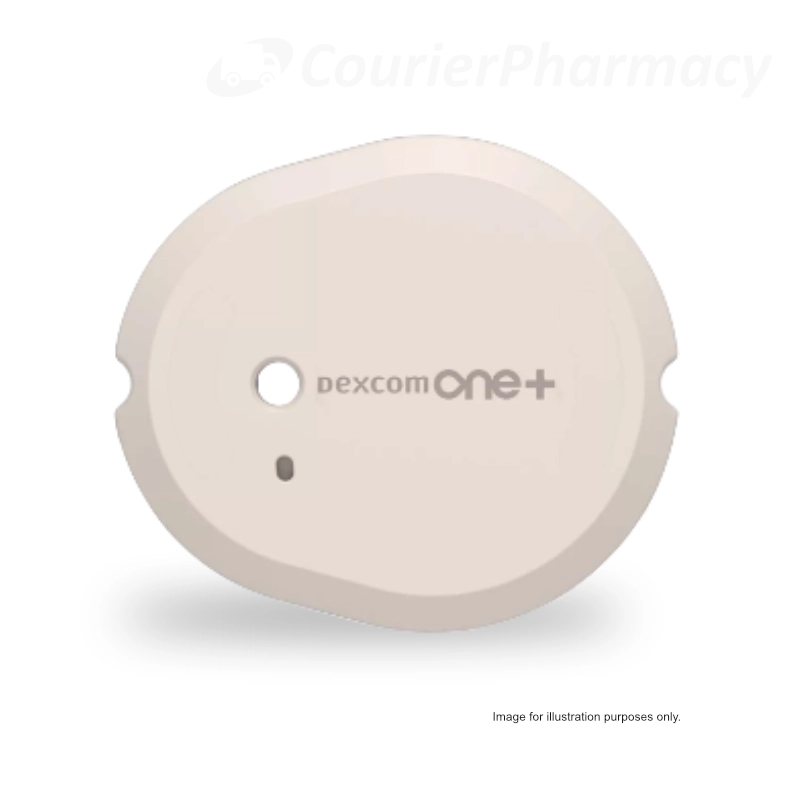
Dexcom One+ Sensor (single sensor) is a CE-marked Class IIb medical device for continuous glucose monitoring (CGM) in people with diabetes age 2 and over.
The single-sensor pack contains one all-in-one sensor and applicator, providing up to 10 days of continuous glucose readings plus a 12-hour grace period.
The sensor reads glucose every minute in interstitial fluid and sends data via Bluetooth to a compatible smartphone, the Dexcom One+ receiver, or directly to a compatible Apple Watch. Overall accuracy is excellent (MARD around 8 to 9%) with no routine fingerstick calibration required.
Sensor is water-resistant to 2.4m for showering, bathing, swimming, and exercise. The single sensor is appropriate for established users needing one-off replacement, trial use, intermittent CGM patterns, or top-up between regular supply orders.
Available from Courier Pharmacy under pharmacist supervision.
Dexcom One+ Sensor is a CE?marked Class IIb medical device for continuous glucose monitoring (CGM). Each pack includes one sensor and applicator. You can wear the sensor for up to 10 days, plus a 12?hour grace period. After that, it stops automatically.
The single sensor suits people who already use Dexcom One+. For example, it helps if you need a one?off replacement, want a short trial, or use CGM on and off.
Key features (at a glance)
Pack contents: 1 sensor with integrated transmitter + applicator
Wear time: up to 10 days + 12?hour grace period
Readings: every minute
Connectivity: Bluetooth to compatible phone, receiver, or Apple Watch
Calibration: factory?calibrated (fingersticks not usually needed)
Wear sites: back of upper arm (age 2+), abdomen (adults)
Water resistance: up to 2.4 metres for 24 hours
Device class: CE?marked Class IIb medical device
Manufacturer: Dexcom Inc. / Dexcom UK Limited
Supplied by: Courier Pharmacy with pharmacist support
What Dexcom One+ does
Dexcom One+ tracks glucose levels throughout the day and night. It shows your glucose as a line graph and adds trend arrows. So you can see where your glucose is now and where it is heading.
This helps you spot patterns, such as:
overnight highs and lows
post?meal spikes
how exercise affects glucose
how insulin, tablets, and food choices change your readings
time in range over days and weeks
Why CGM can be useful
Finger?prick tests give you single readings at specific times. In contrast, CGM gives you a continuous picture. That extra detail can help you make safer, more confident choices. It can also support discussions with your diabetes team.
What’s new with Dexcom One+
Dexcom launched Dexcom One+ in the UK in 2024. It builds on the earlier Dexcom One system.
Key updates include:
an integrated sensor and transmitter (no separate transmitter)
direct Apple Watch connectivity (on compatible setups)
improved insertion design for easier application
strong accuracy in studies (often reported as MARD around 8–9%)
Who can use Dexcom One+?
Dexcom One+ is for adults and children aged 2 years and over with diabetes. This includes type 1 and type 2 diabetes, as well as other forms. Access on the NHS depends on local criteria and specialist assessment. However, some people choose private supply if they self?fund or want quicker access.
Where the single sensor fits
Dexcom One+ comes in a few formats. The single sensor sits between a starter option and a multi?pack.
Starter Pack: sensor + receiver (useful if you don’t want to rely on a phone)
Single Sensor (this product): one sensor only (best for existing users)
3?Pack: three sensors (often better value for daily users)
When a single sensor makes sense
A single sensor can be a good choice if:
you already use Dexcom One+ and need a replacement
you want a 10?day trial before committing
you need a top?up between orders
you use CGM intermittently to check patterns
If you wear CGM continuously, the 3?pack is often the more cost?effective option.
Key features and specifications (full list)
Product: Dexcom One+ Sensor (single sensor)
Pack contents: 1 sensor with integrated transmitter and applicator
Wear time: up to 10 days + 12?hour grace period
Reading frequency: every minute
Accuracy: MARD approximately 8–9%
Water resistance: 2.4 metres for up to 24 hours
Connectivity: Bluetooth to compatible smartphone, receiver, or Apple Watch
Calibration: factory-calibrated, no routine fingerstick required
Wear sites: back of upper arm (adults and children 2+), abdomen (adults)
Indication: CGM for people with diabetes aged 2+
Legal category: CE?marked Class IIb medical device
Manufacturer: Dexcom Inc. (USA) / Dexcom UK Limited
Supplied by: Courier Pharmacy (UK GPhC?registered) with pharmacist support
Additional information
Quantity
1 box, 2 boxes, 3 boxes
MOJO WISDOM
Take control of your health by understanding your condition and what this medication is doing for you.
READ:
More information about this treatment.
UK-based doctors and pharmacists
Discreet and Confidential
UK-based doctors and pharmacists
Free, Expert Advice
No video link provided.
No video link provided.
UK-based doctors and pharmacists
Free, expert advice
Discrete and confidential
Fast delivery
Giving you trusted clinical advice for over 40 conditions
A UK regulated pharmacy providing safe, effective treatments online since 2014
Continuous glucose monitoring (CGM) has transformed diabetes care over the last decade, moving the conversation from intermittent finger-prick spot checks to continuous understanding of where glucose is, where it’s going, and how it responds to food, exercise, stress, sleep, and medicines. The Dexcom One+ is one of the established CGM systems in UK practice, and the single sensor pack is the option for established users who need a one-off replacement, a top-up between orders, or a stretched supply pattern that the larger 3-pack doesn’t fit.
At Courier Pharmacy, we believe healthcare should suit the person, not the marketing budget. Whether you’re an established Dexcom One+ user who has had a sensor fail early and need a replacement, you’re trialling the system before committing to ongoing supply, or you’re managing intermittent CGM use as part of your diabetes plan, this page covers what the single Dexcom One+ Sensor offers, how to use it well, and how it fits alongside the rest of the Dexcom range.
Five key takeaways
Dexcom One+ Sensor (single sensor) is a CE-marked Class IIb medical device for continuous glucose monitoring (CGM) in people with diabetes. The single-sensor pack contains one sensor with applicator, providing up to 10 days of continuous glucose readings plus a 12-hour grace period
Each sensor reads glucose levels in interstitial fluid every minute, sending data via Bluetooth to a compatible smartphone (iOS or Android), the optional Dexcom One+ receiver, or directly to a compatible Apple Watch without needing the phone present
Accuracy is excellent for a CGM system, with an overall MARD (mean absolute relative difference vs reference) of around 8 to 9%. The system does not require routine fingerstick calibration, though spot fingerstick checks remain useful in some clinical situations
The sensor is water-resistant to 2.4 metres for up to 24 hours, supporting showering, bathing, swimming, and exercise without removal. The applicator is single-use and designed for one-handed application to the back of the upper arm or abdomen
Dexcom One+ is licensed for use in adults and children aged 2 and over with diabetes (type 1, type 2, gestational, and other forms). NHS access is via diabetes specialist services for eligible patients; private supply through Courier Pharmacy provides an alternative pathway for patients self-funding
Dexcom One+ Sensor (single sensor) is a CE-marked Class IIb medical device providing continuous glucose monitoring (CGM) for people with diabetes. Each pack contains one sensor and applicator, providing up to 10 days of continuous glucose readings, with an additional 12-hour grace period before the sensor automatically stops working. The single-sensor format is the option for established Dexcom One+ users who need a one-off replacement, are trialling the system before committing to ongoing supply, or are managing intermittent CGM use.
Dexcom One+ is the most recent generation of Dexcom’s mass-market CGM system in the UK, launched in 2024 as a refinement of the previous Dexcom One platform. The key innovations in the One+ generation include the integrated sensor and transmitter design (replacing the older separate transmitter), direct Apple Watch connectivity without needing the phone in proximity, refined accuracy (overall MARD around 8 to 9% in clinical studies), and improved applicator design for one-handed insertion.
Continuous glucose monitoring has fundamentally changed diabetes care over the last decade. The traditional approach to glucose monitoring was intermittent fingerstick testing several times daily, producing a series of disconnected snapshots of glucose values at specific moments. CGM systems like Dexcom One+ provide a continuous stream of glucose readings, updated every minute, displayed as a continuous curve with trend arrows indicating direction and rate of change. This gives patients and clinicians a far richer picture of glucose patterns through the day and night, including:
Overnight glucose patterns (hypoglycaemia and hyperglycaemia during sleep)
Effects of insulin doses, oral medicines, and lifestyle interventions
Patterns of variability and time in range across days and weeks
Detection of asymptomatic hypoglycaemia and hyperglycaemia between fingerstick checks
The clinical impact of CGM has been demonstrated in multiple randomised trials and real-world studies, with improvements in HbA1c, reductions in hypoglycaemia frequency and severity, increased time in target glucose range, and improved patient quality of life across both Type 1 and selected Type 2 diabetes populations.
Dexcom One+ is licensed in the UK for use in adults and children aged 2 years and over with diabetes of any cause: type 1 diabetes, type 2 diabetes (insulin-treated or non-insulin-treated), gestational diabetes, post-transplant diabetes, and other forms. NHS access to CGM is provided through diabetes specialist services for eligible patients under NICE NG17 (type 1 diabetes), NG28 (type 2 diabetes), and NG3 (diabetes in pregnancy) guidance, with eligibility criteria varying by clinical commissioning group and individual circumstances. Private supply through Courier Pharmacy provides an alternative pathway for patients self-funding, including those not eligible for NHS CGM, those facing long waiting times for NHS technology assessment, those using CGM intermittently as part of a wellness or pre-diabetes optimisation approach, and those who have lost or damaged sensors between NHS supply intervals.
Where the single sensor fits
Within the Dexcom One+ product family, the single sensor sits between the Starter Pack and the 3-pack:
Dexcom One+ Starter Pack: one sensor plus a Dexcom One+ receiver, designed for first-time users who don’t want to rely on a smartphone or who want a dedicated device
Dexcom One+ Single Sensor (this product): one sensor, no receiver, suitable for established users who already have the app on their phone or have a receiver from a previous Starter Pack
Dexcom One+ 3-Pack: three sensors in one supply, providing approximately 30 days of CGM at the standard 10-day wear time, the most cost-effective option for established daily users
The single sensor is appropriate when:
You’re an established Dexcom One+ user and a sensor has failed early (it happens occasionally) and you need a one-off replacement
You’re trialling Dexcom One+ for a 10-day period before deciding whether to commit to ongoing supply
You’re between regular supply orders and need a top-up sensor
You use CGM intermittently rather than continuously (some Type 2 patients use CGM for 10 to 14 days every few months to spot-check patterns rather than wearing continuously)
You’re using CGM as part of pre-diabetes optimisation, metabolic health monitoring, or perimenopause symptom investigation under guidance from a clinician
You’re stretching supply across longer periods than the 3-pack 30-day window
The single sensor is less cost-effective per sensor than the 3-pack for established daily users. If you’re using CGM continuously day-to-day, the 3-pack supply is usually the better economic choice.
Why choose Courier Pharmacy for Dexcom One+ Sensor
At Courier Pharmacy, our whole approach is built around the idea that healthcare should fit the person, not the marketing budget. For Dexcom One+, that means honest framing of when CGM adds value to your diabetes care, how the different pack sizes fit different use patterns, and when other options might suit you better. Our service is shaped by the philosophy of Dr Ada Jex-Cori, our brand pharmacist, who has built her practice around accessible, honest, personalised care. Her view is straightforward: you are not broken. The system is the problem. We are here to change that.
Honest pack-size framing
For established Dexcom One+ users with continuous daily wear, the 3-pack supply is usually more cost-effective per sensor than the single sensor. We will be honest about this. For users who fit one of the single-sensor scenarios (early sensor failure, trial use, intermittent CGM, top-up between orders), the single sensor is the right choice. For first-time users, the Starter Pack with the receiver may be the better starting point.
Diabetes care that takes the technology seriously
CGM is a meaningful advance in diabetes care, and we recognise that the technology only delivers benefit when it integrates well with your overall diabetes plan. We are happy to discuss:
How CGM data fits with your insulin or oral medicine regimen
Pattern recognition and how to use trend arrows effectively
Time in range targets and how to interpret your Clarity reports
Practical questions about sensor wear, skin reactions, and adhesive strategies
When to involve your diabetes team in response to CGM patterns
Whether CGM is the right approach for your situation or whether other monitoring options might suit
Pharmacist support before and after purchase
Our pharmacist is available for advice on:
Whether Dexcom One+ is the right CGM system for your situation, or whether FreeStyle Libre 3 Plus, Dexcom G7, or other systems might fit better
Sensor application technique and troubleshooting
Skin reaction management and adhesive strategies
Data interpretation basics and when to escalate concerns to your diabetes team
Whether your situation warrants NHS specialist diabetes review or referral
This is free and available before and after purchase.
Care for specific patient groups
We are happy to provide tailored support for:
Patients with type 1 diabetes managing complex insulin regimens
Patients with type 2 diabetes exploring CGM for the first time as part of motivated self-management
Patients with pre-diabetes or metabolic syndrome using CGM for lifestyle optimisation
Patients exploring metabolic effects of perimenopause or other life transitions
Patients managing gestational diabetes or planning pregnancy with diabetes
Coordination with your diabetes team
Dexcom One+ supply through Courier Pharmacy does not replace your NHS diabetes team or any private diabetes specialist you see. We support the technology supply; clinical decisions about insulin dose adjustments, oral medicine changes, and overall diabetes management remain with your prescribing diabetes clinicians. We are happy to coordinate where appropriate and to signpost to specialist services if your situation needs more than CGM supply alone.
Trust earned, not claimed
We are GPhC-regulated, we ground our content in NHS, NICE, MHRA, and Dexcom’s official product guidance, and we will tell you honestly if Dexcom One+ isn’t the right answer for your situation. We’d rather give you the right advice than a quick sale.
How to buy Dexcom One+ Sensor from Courier Pharmacy
Dexcom One+ Sensor (single sensor) is supplied through Courier Pharmacy under pharmacist supervision. The supply does not require a prescription, but the pharmacist will check that the use is appropriate for your situation and confirm that you have the necessary app or receiver to use the sensor effectively.
Here is how our service works:
Add Dexcom One+ Sensor to your basket and complete a quick questionnaire about your diabetes type and current management, your previous experience with Dexcom or other CGM systems, your reason for buying a single sensor (replacement, trial, intermittent use, top-up), and your current medicines
Our pharmacist reviews your answers to confirm Dexcom One+ is suitable for you and that the single-sensor pack is the right choice. Where the pharmacist needs to ask additional questions or recommend a different product, we will do so before completing the supply
Once approved, your order is prepared and dispatched discreetly to your door, with appropriate temperature-controlled packaging if needed
Free pharmacist support is available before and after your purchase for any questions
If the single sensor isn’t the right product for your situation, we will explain why and suggest alternatives. That might be:
Dexcom One+ Starter Pack (one sensor plus receiver) if you are a first-time user and don’t already have the app or receiver
Dexcom One+ 3-Pack if you are an established user on continuous daily wear and the 3-pack is more cost-effective
FreeStyle Libre 3 Plus if you would prefer the Abbott CGM system, which has different sensor design and may suit some patients better
Dexcom G7 if you need pump integration (the One+ does not currently integrate with insulin pumps)
A referral to your GP or diabetes team if your situation suggests NHS CGM eligibility you haven’t yet explored
A different approach entirely (intermittently-scanned CGM, blinded CGM for diagnostic purposes, fingerstick monitoring with structured testing) if continuous CGM isn’t the right fit
Our free fortnightly drop-in clinics at Insomnia, Derby run every other week from 10am to 12pm. Diabetes, metabolic health, weight management, GLP-1 receptor agonists, MCAS, hair loss, men’s health, and the broader conversations about wellbeing are all topics we cover regularly at these sessions. No appointment needed, no charge, no pressure.
What is the Dexcom One + Sensor?
The Dexcom One+ Sensor (single sensor) pack contains:
One Dexcom One+ Sensor with integrated transmitter: a single-use, all-in-one sensor unit combining the glucose sensor (fine flexible filament inserted under the skin) and the transmitter (sends glucose data via Bluetooth Low Energy). The integrated design replaces the older Dexcom system where the sensor and transmitter were separate
One single-use applicator: a sterile, pre-loaded applicator that inserts the sensor with one-handed operation. The applicator is designed to be intuitive and produces minimal discomfort during insertion
Patient information leaflet and quick-start instructions
Key technical specifications:
Sensor wear time: up to 10 days of continuous glucose readings, with an additional 12-hour grace period after the 10-day mark before the sensor stops working
Warm-up period: 30 minutes after insertion before the first glucose reading
Reading frequency: glucose values are taken every minute and displayed in real-time on the compatible device
Accuracy: overall MARD of approximately 8 to 9% vs reference plasma glucose, which is excellent within the CGM device class
Water resistance: sensor is water-resistant to 2.4 metres (8 feet) for up to 24 hours, supporting showering, bathing, swimming, and exercise
Wear sites: licensed for application to the back of the upper arm (adults and children) and the abdomen (adults). Position rotation between sensor insertions is recommended
Connectivity: Bluetooth Low Energy connection to compatible smartphones running the Dexcom One+ app (iOS or Android), the optional Dexcom One+ receiver, or directly to compatible Apple Watch models without needing the phone
Calibration: no routine fingerstick calibration required. Optional fingerstick can be entered for personal comparison; results are still considered factory-calibrated
Alerts and alarms: customisable high and low glucose alerts, urgent low alert (fixed at 3.1 mmol/L for safety), rate-of-change alerts, and signal loss notifications
Data sharing: glucose data can be shared in real-time with up to 10 followers (family members, carers, healthcare professionals) via the Dexcom Follow app, and uploaded to Dexcom Clarity for retrospective analysis and reporting to your diabetes team
CE marking: Class IIb medical device, CE-marked under UK MDR 2002 / EU MDR 2017/745
Manufacturer: Dexcom Inc. (USA), with UK distribution through Dexcom UK Limited
The single sensor is identical to the sensors supplied in the Dexcom One+ Starter Pack and the 3-pack supply. The only difference between packs is the number of sensors and whether an introductory receiver is included (Starter Pack only).
Why choose Courier Pharmacy for Dexcom One+ Sensor
At Courier Pharmacy, our whole approach is built around the idea that healthcare should fit the person, not the marketing budget. For Dexcom One+, that means honest framing of when CGM adds value to your diabetes care, how the different pack sizes fit different use patterns, and when other options might suit you better. Our service is shaped by the philosophy of Dr Ada Jex-Cori, our brand pharmacist, who has built her practice around accessible, honest, personalised care. Her view is straightforward: you are not broken. The system is the problem. We are here to change that.
Honest pack-size framing
For established Dexcom One+ users with continuous daily wear, the 3-pack supply is usually more cost-effective per sensor than the single sensor. We will be honest about this. For users who fit one of the single-sensor scenarios (early sensor failure, trial use, intermittent CGM, top-up between orders), the single sensor is the right choice. For first-time users, the Starter Pack with the receiver may be the better starting point.
Diabetes care that takes the technology seriously
CGM is a meaningful advance in diabetes care, and we recognise that the technology only delivers benefit when it integrates well with your overall diabetes plan. We are happy to discuss:
How CGM data fits with your insulin or oral medicine regimen
Pattern recognition and how to use trend arrows effectively
Time in range targets and how to interpret your Clarity reports
Practical questions about sensor wear, skin reactions, and adhesive strategies
When to involve your diabetes team in response to CGM patterns
Whether CGM is the right approach for your situation or whether other monitoring options might suit
Pharmacist support before and after purchase
Our pharmacist is available for advice on:
Whether Dexcom One+ is the right CGM system for your situation, or whether FreeStyle Libre 3 Plus, Dexcom G7, or other systems might fit better
Sensor application technique and troubleshooting
Skin reaction management and adhesive strategies
Data interpretation basics and when to escalate concerns to your diabetes team
Whether your situation warrants NHS specialist diabetes review or referral
This is free and available before and after purchase.
Care for specific patient groups
We are happy to provide tailored support for:
Patients with type 1 diabetes managing complex insulin regimens
Patients with type 2 diabetes exploring CGM for the first time as part of motivated self-management
Patients with pre-diabetes or metabolic syndrome using CGM for lifestyle optimisation
Patients exploring metabolic effects of perimenopause or other life transitions
Patients managing gestational diabetes or planning pregnancy with diabetes
Coordination with your diabetes team
Dexcom One+ supply through Courier Pharmacy does not replace your NHS diabetes team or any private diabetes specialist you see. We support the technology supply; clinical decisions about insulin dose adjustments, oral medicine changes, and overall diabetes management remain with your prescribing diabetes clinicians. We are happy to coordinate where appropriate and to signpost to specialist services if your situation needs more than CGM supply alone.
Trust earned, not claimed
We are GPhC-regulated, we ground our content in NHS, NICE, MHRA, and Dexcom's official product guidance, and we will tell you honestly if Dexcom One+ isn't the right answer for your situation. We'd rather give you the right advice than a quick sale.
How to buy Dexcom One+ Sensor from Courier Pharmacy
Dexcom One+ Sensor (single sensor) is supplied through Courier Pharmacy under pharmacist supervision. The supply does not require a prescription, but the pharmacist will check that the use is appropriate for your situation and confirm that you have the necessary app or receiver to use the sensor effectively.
Here is how our service works:
Add Dexcom One+ Sensor to your basket and complete a quick questionnaire about your diabetes type and current management, your previous experience with Dexcom or other CGM systems, your reason for buying a single sensor (replacement, trial, intermittent use, top-up), and your current medicines
Our pharmacist reviews your answers to confirm Dexcom One+ is suitable for you and that the single-sensor pack is the right choice. Where the pharmacist needs to ask additional questions or recommend a different product, we will do so before completing the supply
Once approved, your order is prepared and dispatched discreetly to your door, with appropriate temperature-controlled packaging if needed
Free pharmacist support is available before and after your purchase for any questions
If the single sensor isn't the right product for your situation, we will explain why and suggest alternatives. That might be:
Dexcom One+ Starter Pack (one sensor plus receiver) if you are a first-time user and don't already have the app or receiver
Dexcom One+ 3-Pack if you are an established user on continuous daily wear and the 3-pack is more cost-effective
FreeStyle Libre 3 Plus if you would prefer the Abbott CGM system, which has different sensor design and may suit some patients better
Dexcom G7 if you need pump integration (the One+ does not currently integrate with insulin pumps)
A referral to your GP or diabetes team if your situation suggests NHS CGM eligibility you haven't yet explored
A different approach entirely (intermittently-scanned CGM, blinded CGM for diagnostic purposes, fingerstick monitoring with structured testing) if continuous CGM isn't the right fit
Our free fortnightly drop-in clinics at Insomnia, Derby run every other week from 10am to 12pm. Diabetes, metabolic health, weight management, GLP-1 receptor agonists, MCAS, hair loss, men's health, and the broader conversations about wellbeing are all topics we cover regularly at these sessions. No appointment needed, no charge, no pressure.
Where Dexcom One+ fits in diabetes care
Continuous glucose monitoring sits within the broader framework of diabetes self-management, alongside HbA1c testing (every 3 to 6 months), fingerstick glucose monitoring (still useful for spot checks and calibration in some situations), and the clinical management of insulin, oral diabetes medicines, lifestyle, and other factors. Modern UK diabetes guidance (NICE NG17 for type 1 diabetes, NG28 for type 2 diabetes, NG3 for diabetes in pregnancy, NG18 for diabetes in children and young people) recognises CGM as a meaningful advance in diabetes care, with specific recommendations on eligibility, technology choice, and integration with the wider diabetes plan.
CGM in type 1 diabetes
For people with type 1 diabetes, CGM is now the recommended standard of care for most patients in the UK. NICE NG17 supports CGM as a first-line glucose monitoring approach for type 1 diabetes, with NHS access provided through diabetes specialist services. Multiple high-quality randomised trials have shown CGM improves:
HbA1c by an average 0.4 to 0.6%, sustained over 12-month follow-up
Time in target glucose range (typically 3.9 to 10.0 mmol/L) by 60 to 90 minutes per day on average
Hypoglycaemia frequency, particularly nocturnal and severe hypoglycaemia
Quality of life measures including diabetes-related distress and fear of hypoglycaemia
Driving safety and the ability to detect overnight or asymptomatic hypoglycaemia
Dexcom One+ is one of the CGM options available through NHS pathways for eligible type 1 patients alongside other systems including Abbott FreeStyle Libre 2 and 3, and Dexcom G7 for users in NHS pump-integrated systems.
CGM in type 2 diabetes
For people with type 2 diabetes, the eligibility for NHS-funded CGM is more selective. NICE NG28 supports CGM for type 2 patients on multiple daily insulin injections (basal-bolus regimens) where there is recurrent hypoglycaemia, impaired hypoglycaemia awareness, or other specific clinical situations. For most type 2 patients on oral medicines or basal insulin alone, NHS CGM is not currently funded, although clinical practice is evolving and some commissioning groups have wider provision.
Private CGM purchase is a common pathway for type 2 patients seeking better understanding of their glucose patterns, particularly when:
HbA1c is not improving despite apparently good self-management and medicine adherence
Recurrent symptomatic high or low glucose excursions need investigation
Lifestyle modifications (diet, exercise, sleep) are being trialled and individual response patterns are useful to track
GLP-1 receptor agonist therapy (Wegovy, Mounjaro, Ozempic) is being started or titrated and glucose response is being monitored
Pre-diabetes is being managed and patient education benefits from real-time feedback
Insulin resistance, metabolic health, or perimenopause glucose effects are being explored
CGM in pregnancy
For pregnant women with type 1 diabetes, CGM is strongly recommended (NICE NG3) and NHS funded. For women with type 2 diabetes or gestational diabetes in pregnancy, CGM is increasingly used though NHS funding varies. Dexcom One+ is licensed for use in pregnancy, although patients pursuing CGM in pregnancy should coordinate with their diabetes specialist midwife and obstetric team.
CGM in non-diabetes use
CGM is increasingly used by patients without a formal diagnosis of diabetes for purposes including pre-diabetes monitoring, metabolic health investigation, perimenopause symptom mapping, sports performance optimisation, and general wellness. This use is off-label from the device's licensed indication of diabetes monitoring, but is a legitimate patient choice.
If you are using Dexcom One+ for non-diabetes purposes, our pharmacist is happy to discuss how to interpret the data sensibly. CGM readings in people without diabetes follow somewhat different patterns from the textbook ranges, and the absence of a diabetes diagnosis doesn't mean every glucose excursion is a sign of disease. Pattern recognition and individual response are usually more useful than absolute numbers in this context.
How Dexcom One+ works
The Dexcom One+ system measures glucose levels in the interstitial fluid (the fluid surrounding cells in subcutaneous tissue), not in the blood directly. The sensor consists of a fine flexible filament that sits just under the skin, with a glucose oxidase enzyme that reacts with glucose in the interstitial fluid to produce a small electrochemical signal proportional to glucose concentration.
The interstitial fluid glucose tracks blood glucose closely but with a small lag (typically 5 to 10 minutes), meaning that CGM readings during rapidly changing glucose (after a meal, during exercise, during insulin onset) lag slightly behind the actual blood glucose. The Dexcom algorithm corrects for this lag using mathematical modelling, producing CGM readings that match blood glucose closely for most practical purposes.
Once inserted, the sensor automatically:
Goes through a 30-minute warm-up phase to stabilise
Begins continuous glucose sensing, with readings updated every minute
Sends data via Bluetooth Low Energy to your compatible smartphone, receiver, or Apple Watch
Displays current glucose, trend arrow, glucose curve over time, and customisable alerts
Uploads data to Dexcom Clarity (cloud-based reporting) for retrospective analysis
Optionally shares real-time glucose data with up to 10 followers via Dexcom Follow
Continues for up to 10 days of continuous wear, with a 12-hour grace period before automatic shutoff
The system is designed to be largely autonomous after insertion, with minimal day-to-day technical intervention required. The patient role is to wear the sensor, respond to the glucose information appropriately (food choices, medicine dose adjustments under prescriber guidance, hypoglycaemia treatment), and replace sensors at the end of each 10-day cycle.
Compatible devices
Dexcom One+ connects via Bluetooth to:
iOS smartphones running iOS 15.5 or later (iPhone 8 and newer)
Android smartphones running Android 10 or later, with specific device compatibility published by Dexcom
Apple Watch (Series 6 or later) with direct connection, not requiring the iPhone in proximity
Dexcom One+ receiver (optional, included only in Starter Pack)
The full compatibility list is maintained by Dexcom and is updated as new device models are tested. Check the Dexcom UK website for the current compatible devices list.
How to use Dexcom One+ Sensor
The information below is a summary for reference. The definitive guide is the user manual supplied with the product and the in-app instructions. If you are unsure about any aspect of insertion, calibration, or use, contact our pharmacist or Dexcom UK support.
Setting up the app (first-time users)
Download the Dexcom One+ app from the iOS App Store or Google Play Store
Follow the in-app setup process: confirm your basic information, set your glucose target range, configure alerts to suit your needs, set up data sharing if you want followers (family, carers) to see your glucose in real-time
Pair the sensor with the app: scan the sensor box or sensor itself using the in-app QR code or NFC reader, depending on the model
If you are already an established Dexcom One+ user, the app is already set up and a new sensor pairs automatically.
Inserting the sensor
Wash your hands thoroughly with soap and water
Choose an insertion site: the back of the upper arm is the standard site for adults and children from age 2. The abdomen is an alternative site for adults. Rotate sites between sensor insertions to avoid repeated insertion at the same spot
Clean the chosen site with an alcohol wipe and let it dry fully
Remove the applicator from its sterile packaging
Position the applicator firmly against the skin at the chosen site
Press the button on the applicator to insert the sensor. Insertion is rapid and most patients find it relatively painless
Remove the applicator (it is single-use and disposable)
The sensor will adhere to your skin with the integrated adhesive patch
Use your app to confirm sensor pairing if it didn't happen automatically
Wait for the 30-minute warm-up period before the first glucose reading appears
During wear
The sensor is designed to be worn continuously for up to 10 days. During wear:
Showering, bathing, and brief swimming are fine (water-resistant to 2.4m for up to 24 hours)
Prolonged swimming, hot tubs, and saunas at very high temperatures may affect adhesive longevity; check the sensor periodically
Exercise including running, cycling, gym work, and most sports is generally fine. Heavy contact sports may risk dislodging the sensor
Sleep should be comfortable; some patients prefer to sleep on the side opposite the sensor in the first few days
Air travel is fine; the sensor can stay on through security screening, although you should declare it if asked. MRI scans require sensor removal; the sensor is not MRI-safe
Sunbathing and outdoor activities are fine; the sensor itself is not affected by sun exposure, although prolonged direct heat may affect adhesive
Responding to glucose readings
The app displays your current glucose, a trend arrow (showing direction and rate of change), a curve over the recent hours, and alerts when glucose moves outside your set range. How you respond depends on your overall diabetes plan, which should be agreed with your diabetes team.
General principles for most patients:
High glucose alerts: consider whether something explains the high (recent meal, missed insulin dose, illness, stress) and respond per your plan. For type 1 patients on insulin, correction doses should follow your individualised correction factor. For type 2 patients, sustained or recurrent highs warrant review of your overall regimen
Low glucose alerts: treat per your hypoglycaemia plan (typically 15g fast-acting carbohydrate, retest after 15 minutes, repeat if still low, follow with a snack containing complex carbohydrate if no meal is due soon)
Urgent low alert (3.1 mmol/L): treat immediately as severe hypoglycaemia; this alert cannot be disabled for safety reasons
Trend arrows: a rising or falling arrow tells you not just where glucose is now but where it's heading. A flat arrow at a satisfactory level is reassuring; a sharply rising or falling arrow warrants attention even if the current number is acceptable
Patterns: review the curve over the last few hours and overnight; CGM is most valuable for pattern recognition rather than single numbers
Ending sensor wear
At the end of the 10-day wear period, the sensor enters a 12-hour grace period before automatically stopping. During the grace period, you can plan when to insert the next sensor for a smooth transition. After the grace period, the sensor stops sending readings and should be removed.
To remove a sensor:
Gently lift one edge of the adhesive patch
Peel the sensor and patch slowly off the skin, supporting the skin with your other hand to minimise discomfort
Dispose of the used sensor in household waste (it is not hazardous; the small electronic components inside are sealed and inert)
If the sensor adhesive is reluctant to release, a small amount of medical adhesive remover, baby oil, or coconut oil applied to the edges can help. Insert the next sensor at a different site to allow the previous site to recover.
If a sensor fails early
Occasionally a sensor will fail before its 10-day wear time is up. Reasons include adhesive failure (sensor falls off), early sensor error, signal disruption, or rare technical faults. If this happens within the warranty period (early failures within the first few days are usually covered), Dexcom may replace the sensor at no cost. Contact Dexcom UK support to request a replacement; the process is usually straightforward.
If you are between Dexcom UK replacement supply and need a sensor urgently, the single-sensor product is the option to bridge the gap.
Warnings and precautions for Dexcom One+ Sensor
When not to use Dexcom One+
Dexcom One+ should not be used by:
People without a clinical indication for glucose monitoring, unless using under informed personal choice with awareness that the device is licensed for diabetes monitoring
Children under 2 years
People with known severe allergy to acrylic adhesives, isobornyl acrylate, or other components of the sensor adhesive (rare but reported)
People with significant skin disease at all potential insertion sites
MRI, CT, and radiation
The sensor is not MRI-safe and must be removed before any MRI scan. The sensor is also not safe for CT scans, X-ray therapy, or diathermy treatments. Remove the sensor before any of these procedures and insert a new sensor afterwards.
Skin reactions
Some patients develop irritation, redness, itching, or contact dermatitis at the sensor site. This is most commonly due to the adhesive rather than the sensor itself. Strategies that help:
Rotate sites between sensors
Use a skin barrier wipe (Cavilon, Skin Tac, or similar) before sensor application
Use an overpatch (Skin Grip, Simpatch, or similar) for additional adhesive coverage if the sensor lifts at the edges
Discuss with our pharmacist or your diabetes team if reactions are persistent or significant
In severe cases of contact dermatitis with confirmed adhesive allergy, an alternative CGM system or a different glucose monitoring approach may be needed.
Accuracy considerations
The overall MARD of 8 to 9% is excellent for CGM, but individual readings can vary from blood glucose by more in specific situations:
During very rapid glucose changes (post-meal, during exercise, during insulin onset), the interstitial fluid lag can produce CGM readings several mmol/L different from finger-prick blood glucose at the same moment
In the first 24 to 48 hours after sensor insertion, accuracy may be slightly lower than mid-wear period
Very low or very high glucose levels may produce somewhat less precise CGM readings
Certain medicines (high-dose paracetamol, high-dose vitamin C, hydroxyurea, some others) can interfere with CGM accuracy
For critical decisions (driving safety, severe hypoglycaemia treatment, before insulin dose adjustments where you're uncertain), a confirmatory fingerstick is sensible if the CGM reading doesn't match how you feel.
High-dose vitamin C (over 1g daily): can affect CGM accuracy
Hydroxyurea (used for sickle cell disease and some cancers): can falsely raise CGM readings
Mannitol IV solutions: can interfere
Most other medicines: no significant interference
Pregnancy and breastfeeding
Dexcom One+ is licensed for use in pregnancy. Pregnant women with diabetes benefit significantly from CGM, with substantial evidence of improved maternal and fetal outcomes in type 1 diabetes pregnancy. Discuss with your diabetes specialist midwife or obstetric diabetes team for individualised guidance.
Children and adolescents
Dexcom One+ is licensed from age 2. Paediatric supply through Courier Pharmacy should be coordinated with the child's paediatric diabetes team.
Air travel
The sensor can be worn through airport security screening including X-ray machines (not full-body radiation devices) and millimetre-wave scanners. Notify security if asked. Pat-downs are acceptable. The sensor should not go through a CT scanner, which means luggage X-ray is fine but you should not pass through a body scanner that uses ionising radiation.
Diabetic ketoacidosis and severe hyperglycaemia
CGM does not measure ketones. If you have type 1 diabetes and your glucose is persistently very high (above around 14 mmol/L) with symptoms of DKA (nausea, vomiting, abdominal pain, deep breathing, fruity breath), check ketones using a fingerstick ketone meter and follow your DKA action plan. Do not rely on CGM alone for ketone-related decisions.
Severe hypoglycaemia preparedness
Even with excellent CGM, severe hypoglycaemia can occur. Patients on insulin should maintain rapid-acting glucose for treatment of hypoglycaemia (glucose tablets, gel, or specific products) and consider whether glucagon (in injection or nasal forms) is appropriate. Discuss with your diabetes team.
Side effects and considerations
Common side effects
Skin reaction at the insertion site: redness, itching, or mild rash, usually due to the adhesive. Mild and self-limiting in most cases
Mild discomfort during insertion (usually brief; insertion is usually less uncomfortable than expected)
Small bruise or minor bleeding at insertion site (uncommon; usually small and self-limiting)
Sensor adhesive failing earlier than 10 days in some patients (manage with overpatches or by replacing the sensor)
Less common side effects
Significant contact dermatitis to adhesive (usually develops after multiple sensor use; may require alternative approach if persistent)
Infection at insertion site (very rare with good hygiene; presents as significant redness, warmth, swelling, or pus)
Sensor breakage during insertion or removal (rare)
Persistent skin pigmentation or scarring at repeated insertion sites (uncommon)
Rare but more significant considerations
Severe allergic reaction to sensor adhesive components (rare)
Sensor wire breakage with retention under the skin (very rare; requires medical removal)
Significant infection requiring antibiotic treatment (very rare with appropriate hygiene)
Reporting device issues
If you experience a device-related problem (sensor failure, accuracy concern, adhesive issue, or any safety concern), report it to Dexcom UK customer service. Significant adverse incidents involving medical devices can also be reported to the MHRA via the Yellow Card scheme.
Yellow Card reporting for device incidents
Suspected adverse incidents involving medical devices can be reported to the MHRA via the Yellow Card scheme at yellowcard.mhra.gov.uk. Device incidents are reported to MHRA's medical device safety team and contribute to ongoing post-market surveillance.
Compatibility and interaction considerations
Dexcom One+ is a medical device rather than a medicine, so the concept of "drug interactions" doesn't apply in the usual sense. The relevant considerations are:
Medicines that may affect CGM accuracy
High-dose paracetamol (over 1g): can falsely raise CGM readings. If you take regular paracetamol at therapeutic doses, this is generally a minor effect
High-dose vitamin C (over 1g daily): can affect CGM accuracy
Hydroxyurea (used for sickle cell disease and certain cancers): can falsely raise CGM readings
Mannitol intravenous solutions (used in some clinical settings): can interfere
Insulin and diabetes medicine considerations
CGM is designed to support, not replace, your diabetes medicine plan. The interactions are clinical rather than chemical:
Insulin therapy (basal-bolus, pump, or basal-only): CGM provides the data to guide dose adjustments under your diabetes team's guidance. Dexcom One+ does not currently integrate directly with insulin pumps in the UK (the Dexcom G7 system is used for pump integration)
Oral diabetes medicines (metformin, sulfonylureas, DPP-4 inhibitors, SGLT2 inhibitors): no direct CGM accuracy issues; CGM data helps understand individual response patterns
GLP-1 receptor agonists (Wegovy, Mounjaro, Ozempic, Saxenda, Trulicity, Victoza): no CGM accuracy issues; CGM data helps track glucose response during dose titration
Insulin pens and injection devices: no interaction; sensor and insulin injection sites should be separated where possible (typically several inches apart) to allow each to function optimally
Device compatibility
Dexcom One+ pairs only with the Dexcom One+ app and Dexcom One+ receiver, not with the older Dexcom One app (which is being phased out) or with the Dexcom G6/G7 systems. If you are switching from an older Dexcom system to One+, your existing app and any transmitters from previous Dexcom generations are not compatible; you will need the new One+ app and the integrated sensor design.
Frequently asked questions about Dexcom One+ Sensor
How long does the sensor last?
Up to 10 days of continuous wear, with an additional 12-hour grace period before the sensor automatically stops. The 12-hour grace period gives you flexibility to plan when to insert the next sensor for a smooth transition.
How accurate is Dexcom One+?
Overall MARD of approximately 8 to 9% vs reference plasma glucose, which is excellent for CGM. Accuracy is best during stable glucose periods and slightly reduced during very rapid glucose changes or at extreme values.
Does Dexcom One+ need fingerstick calibration?
No. The system is factory-calibrated and does not require routine fingerstick calibration. Optional fingerstick checks remain useful for personal comparison or for critical decisions (driving safety, severe hypo treatment) where you want confirmatory testing if the CGM reading doesn't match how you feel.
Can I swim, shower, and bathe with the sensor on?
Yes. The sensor is water-resistant to 2.4 metres for up to 24 hours, which covers normal showering, bathing, swimming, and water-based exercise. Prolonged or repeated water exposure may affect adhesive longevity; check the sensor periodically.
What if my sensor falls off early?
Adhesive failure happens occasionally. Strategies that help: clean and dry the skin thoroughly before insertion, use a skin barrier wipe (Cavilon, Skin Tac), apply an overpatch (Skin Grip, Simpatch) for additional adhesive coverage. If the sensor fails within the first few days, contact Dexcom UK support; replacements are often provided under warranty. If you need a sensor urgently between Dexcom UK replacement and your next order, the single-sensor pack is the option.
Can I get Dexcom One+ on the NHS?
It depends on your diabetes type and clinical situation. NHS access is provided through diabetes specialist services for eligible patients under NICE NG17 (type 1), NG28 (type 2 in specific situations), and NG3 (diabetes in pregnancy). Eligibility varies by region. If you have not yet explored NHS CGM, ask your diabetes team or GP about eligibility.
Why might I buy a single sensor rather than a 3-pack?
The single sensor is appropriate for established users needing a one-off replacement, trialling Dexcom One+ before committing, top-up between supply orders, intermittent CGM use rather than continuous wear, or stretching supply across longer periods. For continuous daily users, the 3-pack is usually more cost-effective per sensor.
How does Dexcom One+ compare to FreeStyle Libre?
Both are excellent CGM systems with strong evidence and good user satisfaction. Key differences: Dexcom One+ sends data continuously via Bluetooth and includes customisable alerts including hypoglycaemia alarms; FreeStyle Libre 3 Plus is similarly continuous with alerts. The Abbott system has a slightly different sensor design, applicator feel, and app interface. Choice between systems is often individual; if you've used one and want to try the other, the single-sensor product is a sensible way to do that.
How does Dexcom One+ compare to Dexcom G7?
Both are made by Dexcom and have similar accuracy. The key differences: Dexcom One+ is the consumer-direct system optimised for individual purchase and use; Dexcom G7 is the system integrated with insulin pumps in NHS settings. If you don't use an insulin pump, Dexcom One+ is the appropriate choice. If you use or plan to use an insulin pump that integrates with Dexcom, G7 is required.
Can I use Dexcom One+ without a smartphone?
Yes, by using the Dexcom One+ receiver (included in the Starter Pack but not in the single sensor or 3-pack supplies). If you don't have a smartphone or prefer not to use one, the Starter Pack is the appropriate first purchase to get the receiver.
Can I use Dexcom One+ with an Apple Watch?
Yes. Dexcom One+ supports direct Apple Watch connectivity without needing the iPhone in proximity (with compatible Apple Watch Series 6 or later). This is one of the key innovations of the One+ generation compared to the previous Dexcom One.
Will my CGM data be shared with my diabetes team?
If you set up data sharing via Dexcom Clarity, your data can be reviewed by your diabetes team during your appointments. This is set up through Dexcom Clarity (the cloud-based data platform) and is separate from the real-time sharing with family/carers via Dexcom Follow.
Can I use Dexcom One+ in pregnancy?
Yes. Dexcom One+ is licensed for use in pregnancy and is supported by NICE NG3 guidance for type 1 diabetes pregnancy. Coordinate with your diabetes specialist midwife and obstetric team for individualised guidance.
Can I use Dexcom One+ for non-diabetes purposes?
The device is licensed for diabetes monitoring. Use for other purposes (pre-diabetes optimisation, metabolic health, perimenopause symptom mapping, sports performance) is off-label but a legitimate personal choice. If you are using it for non-diabetes purposes, our pharmacist is happy to discuss sensible interpretation of the data.
What medicines can affect CGM accuracy?
High-dose paracetamol (over 1g), high-dose vitamin C (over 1g daily), hydroxyurea, and IV mannitol can affect CGM readings. Standard therapeutic doses of paracetamol have a minor effect that is usually not clinically significant. Most other medicines do not interfere.
Can I have an MRI or CT scan with the sensor on?
No. The sensor is not MRI-safe and is also not safe for CT scans, X-ray therapy, or diathermy. Remove the sensor before any of these procedures and insert a new sensor afterwards.
How should I dispose of used sensors?
Used sensors can be disposed of in household waste. The small electronic components are sealed and inert. The applicator is similarly disposable. No special disposal is required.
How should I store sensors?
Store at room temperature, between 2°C and 30°C, in the original packaging. Do not freeze. Avoid exposure to direct sunlight or high humidity. Do not use after the expiry date printed on the pack.
How do I order Dexcom One+ Sensor from Courier Pharmacy?
Add the product to your basket on courierpharmacy.co.uk and complete the brief questionnaire. Our pharmacist will review your answers to confirm suitability and dispatch your order. Free pharmacist support is available before and after your order.
More than a prescription: our community
Healthcare shouldn't only happen when you're paying for it. Every fortnight we run free drop-in talks and clinics at Insomnia, Derby, from 10am to 12pm. Bring a question, bring a friend, bring a stack of bewildering letters from another clinic; we'll sit with you. We cover diabetes, CGM technology, metabolic health, weight management, GLP-1 receptor agonists, MCAS, hair loss, men's health, and whatever else people bring through the door. No appointment. No cost. No pressure. Learn more about our community talks.
Disclaimer: This article is for information only and isn't a substitute for personal medical advice. Always speak to a qualified prescriber before starting or changing treatment.
How this content was created
Written by the Courier Pharmacy editorial team and reviewed by a GPhC-registered pharmacist. Grounded in the latest NHS, NICE, MHRA, and Dexcom official product guidance, and the real questions patients bring to our drop-in clinics in Derby.