Minoxidil 5% and 17-Alpha Oestradiol 0.05% Trichosol Solution — Compounded Combination Treatment for Pattern Hair Loss
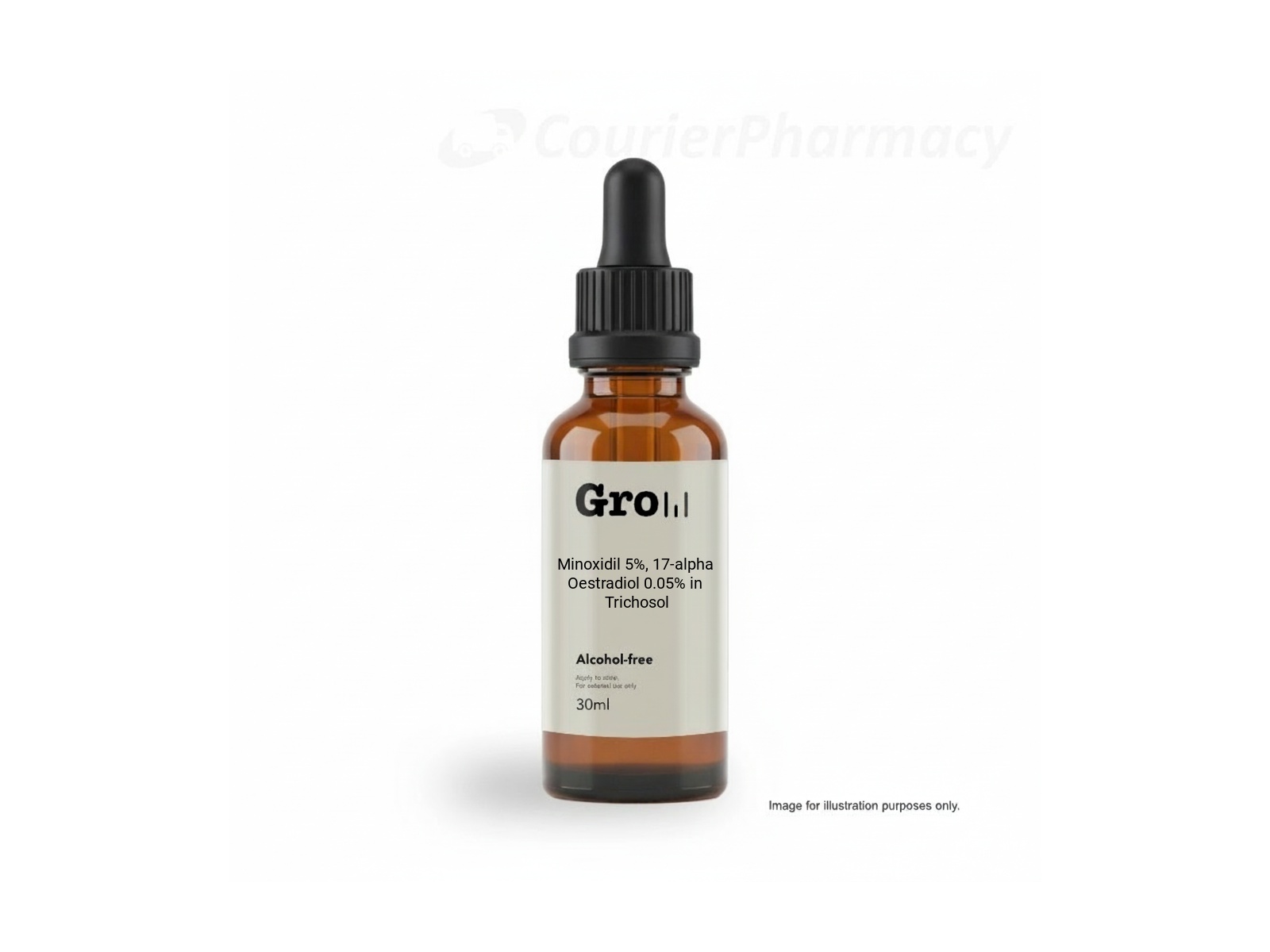
This is a UK compounded specials preparation — a combined topical solution for pattern hair loss containing two complementary actives in a Trichosol vehicle. So each 30ml bottle contains minoxidil 5% (the established hair loss active found in licensed Regaine 5%) and 17-alpha oestradiol 0.05% (a stereoisomer of estradiol that promotes hair growth and indirectly blocks DHT formation locally, without systemic estrogenic effects). As a result, the two actives target different parts of the hair loss pathway. Important: this is an unlicensed compounded medicine. Supply happens after a full prescriber consultation with documented informed consent. Part of the Gro hair loss range at Courier Pharmacy. This page is gated — you’ll only see it because you’ve completed the eligibility consultation.
At Courier Pharmacy, we believe in treatment that fits the person — but only where it’s honest, safe, and consented to.
This page covers what the Minoxidil 5% + 17-alpha Oestradiol Trichosol solution is, how the two actives work together, who it might suit, and the practical points that matter when starting a compounded combination treatment for pattern hair loss.
Regulatory position — please read first
Before going further, we want to be straight with you about three things:
First, this is an unlicensed compounded medicine. So it doesn’t have a UK Marketing Authorisation as a combination product. The individual actives are used in licensed products (minoxidil 5% is licensed as Regaine 5% Foam and Solution for male pattern hair loss), but the combination in this Trichosol vehicle is prepared specifically for individual patients under our Specials pharmacy licence.
Second, 17-alpha oestradiol isn’t licensed as a monotherapy in the UK. However, it’s licensed in some European countries (marketed as Ell-Cranell and Pantostin in Germany) for pattern hair loss. So its use in this combination reflects European clinical practice adapted to UK compounded special supply.
Third, pattern hair loss (androgenetic alopecia) is a long-term condition. So this isn’t a short-term treatment — continuous use is essential. Stopping the solution leads to gradual reversal of benefits over 3-6 months. Also, effects build slowly — realistic expectations matter.
If any of these points raise concerns, please pause and talk to our prescriber before proceeding. After all, informed consent is the foundation of supplying any unlicensed special — and pattern hair loss treatment requires patience and commitment.
What is Minoxidil 5%, 17-alpha Oestradiol 0.05% in Trichosol topical hair loss solution?
This compounded topical hair loss solution contains minoxidil 5% and 17-alpha oestradiol 0.05% in a Trichosol base that is completely free from propylene glycol and alcohol. It is designed for adults with pattern hair loss who need a focused two-ingredient approach — supporting follicle activity and shifting the local hormonal environment towards a more hair-friendly balance — particularly those whose clinical or genetic profile indicates that a topical oestrogen-signalling approach may suit them, women wanting an alternative to systemic anti-androgens, and those who need a gentler base because standard topical products have caused irritation.
- Two active ingredients working through complementary pathways to support hair growth
- Propylene glycol free, alcohol free Trichosol base for a more comfortable daily experience
- Minoxidil at 5%, 17-alpha oestradiol at 0.05% — a clinically considered combination targeting scalp blood flow and follicle hormone signalling
- May suit people with androgenetic alopecia who want to shift the local hormone balance towards oestrogen-led signalling, women looking for an alternative to systemic anti-androgens, or those whose scalps have reacted to standard topical bases
- Safe prescribing still matters — hair loss treatment needs proper screening, review, and follow-up
- Part of the Gro hair loss range, designed for personalised treatment at less than £1 per day
Pattern hair loss is personal
Pattern hair loss is common, but that does not make it any less personal. Many people first notice extra shedding, reduced density, or a hairline that seems to be quietly retreating. Many then try a product that does not match their biology, see little result, and quietly give up — not because treatment cannot work, but because they were never on the right treatment to begin with.
A formula for people who need a considered two-ingredient approach
This Trichosol solution is aimed at people who need a carefully considered two-ingredient approach — improving scalp blood flow and shifting the follicle’s local hormonal environment — in a base their scalp can genuinely tolerate. It is particularly relevant for those whose TrichoTest results indicate a strong minoxidil response profile alongside a clinical picture that favours a topical oestrogen-led approach, patients who cannot or do not want to use finasteride or dutasteride, women who want an alternative to systemic anti-androgens, and those who have previously reacted to alcohol or propylene glycol-based products but need a two-ingredient combination in a vehicle their scalp can tolerate.
The goal of treatment
Hair loss affects more than appearance. It chips away at confidence. It makes ordinary moments feel oddly loaded — a harsh bathroom mirror, a photo taken from an unexpected angle, a windy day when you would rather not think about what is visible.
The goal of treatment is not perfection. It is to slow loss, support healthier growth, and help you feel more in control — with a plan that addresses the full picture through complementary mechanisms and a base that makes daily use something you can actually stick to.
How minoxidil and 17-alpha oestradiol support hair growth
Minoxidil and 17-alpha oestradiol support hair growth in different (but complementary) ways, which is why they are often discussed as a strong pairing for pattern hair loss.
Minoxidil 5% (what it does)
Minoxidil mainly helps by improving blood flow in the scalp. This means hair follicles can receive more oxygen, nutrients, and growth signals, which may support thicker growth and reduce shedding. It is also linked with increases in growth factors such as VEGF, which is involved in supporting hair growth.
Minoxidil may also influence the local hormone environment in the scalp. In simple terms, it can reduce the impact of hormone pathways linked with hair thinning and support pathways that are more hair-friendly.
17-alpha oestradiol 0.05% (what it does — and what it doesn’t)
17-alpha oestradiol does not directly “block DHT” in the same way that 5-alpha reductase inhibitors do. Instead, it works more subtly by shifting the follicle’s local hormone balance.
Estradiol can affect how hair follicles grow and cycle by binding to oestrogen receptors and influencing aromatase activity (aromatase helps convert androgens into oestrogen). Research links hair growth improvement with changes such as lower SRD5A1 expression (an enzyme involved in producing DHT), higher CYP19A1 expression (aromatase), lower local testosterone and DHT levels, and stronger oestrogen receptor signalling.
A helpful way to think about it is that topical estradiol may create an environment where oestrogen signalling becomes more dominant in the follicle, which can make the scalp more supportive of hair growth. There is also evidence in other models that androgens can activate androgen receptor pathways, which supports the idea that shifting signalling balance may matter.
Why the combination can be beneficial (synergy)
Because they work through different routes, the combination can cover more ground:
- Minoxidil improves the follicle’s “supply line” (blood flow and growth signals), helping create better conditions for growth
- Topical 17-alpha oestradiol supports the follicle’s hormone signalling locally, encouraging oestrogen-led signalling and a more hair-friendly hormonal microenvironment
Together, they may promote a scalp environment that supports growth and reduces the influence of DHT-linked pathways — without claiming that 17-alpha oestradiol is a direct DHT blocker.

The Trichosol advantage
When the vehicle is the problem
For patients who have reacted badly to standard topical hair loss solutions, the problem is not always the active ingredients. Often it is the vehicle carrying them. Alcohol causes stinging on application and dries the scalp significantly over time. Propylene glycol is a common cause of contact irritation, particularly in patients with already sensitive or reactive scalps — and it is a standard excipient in most off-the-shelf hair loss products.
What Trichosol removes
The Trichosol base removes both of these excipients entirely. The result is a solution that absorbs without stinging, does not dry the scalp, and does not leave the tight or uncomfortable residue that causes so many people to abandon their routine. The active ingredients are unchanged. Only the vehicle is different — and when applying a combination hair loss treatment consistently over months, a base that makes treatment comfortable to sustain is not a luxury. It is a clinical necessity.
Why tolerability drives outcomes
A treatment only works if you use it consistently. If the daily experience of applying it is uncomfortable, consistency breaks down — and this two-ingredient formula only delivers its potential if applied night after night without interruption. The Trichosol base exists to remove that barrier, making it possible to maintain the kind of steady, sustained daily routine that this combination requires.
Why the Trichosol vehicle matters
The Trichosol base is clinically relevant as well as practically comfortable. It removes the excipients most likely to cause scalp irritation — making it possible for patients to apply their treatment consistently, which is one of the most important factors in whether any hair loss treatment succeeds over time.
Why compounding?
What compounding means
Compounding means a medicine is prepared to order by a licensed pharmacy for an individual patient. It is not a mass-produced one-size-fits-all product. In the UK, this sits within a regulated framework and should only be supplied when clinically appropriate.
Why compounding matters for this formula
Some people choose this compounded solution because no standard licensed product combines minoxidil with 17-alpha oestradiol in a Trichosol base — and this specific combination, in a vehicle the scalp can actually tolerate, is what their clinical profile requires. Others come to compounding because standard licensed monotherapies have not given enough response and they want to bring in the oestrogen-signalling pathway that 17-alpha oestradiol offers. Others are women who want a hair loss approach that does not rely on systemic anti-androgens like spironolactone or oral 5-alpha reductase inhibitors.
The Trichosol base addresses the tolerability concern directly. It removes both propylene glycol and alcohol — the two most common causes of topical scalp irritation — without reducing the effectiveness of either active ingredient.
Personalised medicine in practice
Hair loss is not identical from one person to the next. The right combination of ingredients, concentrations, and vehicle for one patient is not right for another. Compounding makes it possible to prescribe minoxidil 5% and 17-alpha oestradiol 0.05% together in a Trichosol base — a formulation that simply does not exist in any standard licensed product — when clinical assessment indicates that this is the most appropriate approach. The medicine is shaped around the patient, not the other way around.

Why this two-ingredient combination can be the right choice
Some patients need both mechanisms addressed — improved scalp blood flow and shifted local hormone signalling — in a way that does not require systemic anti-androgen treatment. Minoxidil at 5% improves the follicle’s supply of oxygen, nutrients, and growth signals. 17-alpha oestradiol at 0.05% works more subtly, encouraging oestrogen-led signalling in the follicle and shifting the local hormonal microenvironment towards one that is more supportive of hair growth.
For patients whose TrichoTest results indicate a strong minoxidil response via the SULT1A1 pathway, alongside a clinical profile that favours a topical oestrogen-signalling approach rather than direct 5-alpha reductase inhibition, this two-ingredient combination may be the most clinically targeted option available.
If finasteride, dutasteride, tretinoin, or other ingredients would deliver more benefit for a given patient, TrichoTest and clinical assessment will guide that decision. Compounding makes multiple paths possible.
TrichoTest: personalising the approach
TrichoTest reduces guesswork. It is a pharmacogenetic test that analyses 26 genetic polymorphisms linked to nine key treatment pathways relevant to hair loss. Rather than prescribing from standard protocols alone, TrichoTest combines your genetic profile with your medical history to predict which ingredients, dosages, and delivery methods are most likely to work for your biology.
How the TrichoTest informs this formula
This two-ingredient formula draws on multiple TrichoTest pathways. The sulphotransferase (SULT1A1) pathway predicts minoxidil response — patients with high SULT1A1 expression are strong responders to minoxidil and may benefit particularly from its inclusion at 5%. The anti-androgen metabolism pathway identifies how effectively a patient responds to different DHT-related interventions — including 17-oestradiol as a topical alternative to direct 5-alpha reductase inhibition.
TrichoTest can identify these factors before treatment begins — allowing the prescriber to arrive at a topical oestrogen-signalling approach with clinical justification, rather than defaulting to systemic anti-androgens without knowing whether they are actually needed.
How the TrichoTest informs this formula more broadly
If TrichoTest identifies that 17-alpha oestradiol is a suitable topical hormonal approach for the individual’s genetic profile, treatment can begin at this combination with confidence. If results suggest that finasteride, dutasteride, or tretinoin would add meaningful benefit, the prescriber can adjust the compounded formula accordingly.
The nine pathways TrichoTest analyses
- Prostaglandins and sulphotransferase — how you process minoxidil and latanoprost
- Anti-inflammatory response — your reaction to glucocorticoids and immunomodulators
- Anti-androgen metabolism — how effectively you respond to dutasteride, finasteride, and 17-oestradiol
- Circulation stimulation — response to vasodilators
- Collagen synthesis capacity
- Insulin-like Growth Factor (IGF-1) response
- Vitamin absorption — A, B7, B9, B12, C, D, E
- Mineral absorption — zinc, magnesium, iron, selenium
- Antioxidant needs and oxidative stress profile
Beyond ingredient selection
TrichoTest also identifies nutritional gaps and metabolic factors that affect hair health independently of topical treatment. If genetic variants reduce zinc or iron absorption, the prescriber can recommend targeted supplementation alongside this Trichosol formula — moving treatment from guesswork towards something shaped by your actual biology.
TrichoTest does not guarantee results, but it gives the prescriber better information to decide whether this specific two-ingredient Trichosol formula is right for you, or whether something different would serve you better.
The Gro hair loss range
What is the Gro brand?
Gro is the compounded hair loss range created by Courier Pharmacy. It exists because hair loss treatment should not feel one-size-fits-all.
Some people want a traditional liquid spray — direct, efficient, and familiar. Some prefer a foam. Others need an alcohol-free and propylene glycol-free base because their scalp reacts to standard excipients. Gro brings those options together under one brand, matching treatment to the person using it, not the other way around.
Each Gro product comes in a 30ml bottle designed to last one month. Every option costs £29.99 for up to three active ingredients — less than £1 a day.
Why Gro is different
Gro was built around three practical goals:
- Choice of formulation: topical liquid, topical foam, or Trichosol solution (propylene glycol free and alcohol free)
- Personalisation: single, dual, and triple-ingredient combinations across multiple concentrations
- Better tolerability: every format is designed to reduce the friction that stops people from maintaining their routine
The three formulation types
- Topical hair loss liquid — a traditional spray solution containing alcohol and propylene glycol. Well-established, with efficient scalp penetration. Chosen by patients who want a direct, familiar format.
- Hair loss foam — lighter, faster-drying, and easier to apply without dripping. Chosen by patients who want clinical results in a format that fits more easily into daily life.
- Trichosol topical solution — propylene glycol free and alcohol free. Designed for patients with sensitive or reactive scalps who need a gentler base. This is the formulation described on this page.

Ingredients used across the Gro range
Depending on the product selected, Gro formulations may include:
- Dutasteride
- Finasteride
- 17-alpha oestradiol
- Minoxidil 5%
- Tretinoin 0.01%
These can be prescribed alone or in combination, and at varying concentrations, depending on the individual treatment plan.
Gro product options
The Gro range includes the following compounded hair loss options, each supplied as a 30ml one-month bottle at £29.99.
Minoxidil + 17-alpha Oestradiol (this product family)
- Minoxidil 5%, 17-alpha oestradiol 0.05% — topical liquid
- Minoxidil 5%, 17-alpha oestradiol 0.05% — topical foam
- Minoxidil 5%, 17-alpha oestradiol 0.05% in Trichosol — topical solution (this product)
Minoxidil + 17-alpha Oestradiol + Tretinoin (this product family)
- Minoxidil 5%, 17-alpha oestradiol 0.05%, tretinoin 0.01%— topical liquid
- Minoxidil 5%, 17-alpha oestradiol 0.05%, tretinoin 0.01%— topical foam
- Minoxidil 5%, 17-alpha oestradiol 0.05%, tretinoin in Trichosol — topical solution (this product)
Dutasteride + Minoxidil + Tretinoin
- Dutasteride 0.05%, minoxidil 5%, tretinoin 0.01% — topical liquid
- Dutasteride 0.05%, minoxidil 5%, tretinoin 0.01% — topical foam
- Dutasteride 0.05%, minoxidil 5%, tretinoin 0.01% in Trichosol — topical solution
- Dutasteride 0.1%, minoxidil 5%, tretinoin 0.01% — topical liquid
- Dutasteride 0.1%, minoxidil 5%, tretinoin 0.01% — topical foam
- Dutasteride 0.1%, minoxidil 5%, tretinoin 0.01% in Trichosol — topical solution
- Dutasteride 0.2%, minoxidil 5%, tretinoin 0.01% — topical liquid
- Dutasteride 0.2%, minoxidil 5%, tretinoin 0.01% — topical foam
- Dutasteride 0.2%, minoxidil 5%, tretinoin 0.01% in Trichosol — topical solution
Dutasteride only
- Dutasteride 0.05% — topical liquid
- Dutasteride 0.05% — topical foam
- Dutasteride 0.05% in Trichosol — topical solution
- Dutasteride 0.1% — topical liquid
- Dutasteride 0.1% — topical foam
- Dutasteride 0.1% in Trichosol — topical solution
- Dutasteride 0.2% — topical liquid
- Dutasteride 0.2% — topical foam
- Dutasteride 0.2% in Trichosol — topical solution
Finasteride only
- Finasteride 0.05% — topical liquid
- Finasteride 0.05% — topical foam
- Finasteride 0.05% in Trichosol — topical solution
- Finasteride 0.1% — topical liquid
- Finasteride 0.1% — topical foam
- Finasteride 0.1% in Trichosol — topical solution
- Finasteride 0.2% — topical liquid
- Finasteride 0.2% — topical foam
- Finasteride 0.2% in Trichosol — topical solution
Minoxidil only
- Minoxidil 5% — topical liquid
- Minoxidil 5% — topical foam
- Minoxidil 5% in Trichosol — topical solution
Minoxidil + Tretinoin
- Minoxidil 5%, tretinoin 0.01% — topical liquid
- Minoxidil 5%, tretinoin 0.01% — topical foam
- Minoxidil 5%, tretinoin 0.01% in Trichosol — topical solution
Finasteride + Minoxidil + Tretinoin
- Finasteride 0.05%, minoxidil 5%, tretinoin 0.01% — topical liquid
- Finasteride 0.05%, minoxidil 5%, tretinoin 0.01% — topical foam
- Finasteride 0.05%, minoxidil 5%, tretinoin 0.01% in Trichosol — topical solution
- Finasteride 0.1%, minoxidil 5%, tretinoin 0.01% — topical liquid
- Finasteride 0.1%, minoxidil 5%, tretinoin 0.01% — topical foam
- Finasteride 0.1%, minoxidil 5%, tretinoin 0.01% in Trichosol — topical solution
- Finasteride 0.2%, minoxidil 5%, tretinoin 0.01% — topical liquid
- Finasteride 0.2%, minoxidil 5%, tretinoin 0.01% — topical foam
- Finasteride 0.2%, minoxidil 5%, tretinoin 0.01% in Trichosol — topical solution
Dutasteride + Minoxidil
- Dutasteride 0.05%, minoxidil 5% — topical liquid
- Dutasteride 0.05%, minoxidil 5% — topical foam
- Dutasteride 0.05%, minoxidil 5% in Trichosol — topical solution
- Dutasteride 0.1%, minoxidil 5% — topical liquid
- Dutasteride 0.1%, minoxidil 5% — topical foam
- Dutasteride 0.1%, minoxidil 5% in Trichosol — topical solution
- Dutasteride 0.2%, minoxidil 5% — topical liquid
- Dutasteride 0.2%, minoxidil 5% — topical foam
- Dutasteride 0.2%, minoxidil 5% in Trichosol — topical solution
Finasteride + Minoxidil
- Finasteride 0.05%, minoxidil 5% — topical liquid
- Finasteride 0.05%, minoxidil 5% — topical foam
- Finasteride 0.05%, minoxidil 5% in Trichosol — topical solution
- Finasteride 0.1%, minoxidil 5% — topical liquid
- Finasteride 0.1%, minoxidil 5% — topical foam
- Finasteride 0.1%, minoxidil 5% in Trichosol — topical solution
- Finasteride 0.2%, minoxidil 5% — topical liquid
- Finasteride 0.2%, minoxidil 5% — topical foam
- Finasteride 0.2%, minoxidil 5% in Trichosol — topical solution
In simple terms
Gro makes personalised hair loss treatment accessible and liveable.
You get a 30ml bottle for one month, £29.99 pricing, up to three active ingredients at a concentration chosen for you, and a choice of liquid, foam, or Trichosol alcohol-free and propylene glycol-free solution. If you want a treatment that fits your scalp, your sensitivities, and your treatment history — not a generic protocol — the Gro range gives you more than one route without making the choice unnecessarily complicated.
Buy Minoxidil 5%, 17-alpha Oestradiol 0.05% in Trichosol (prescription only)
This is a Prescription Only Medicine. You can request it from courierpharmacy.co.uk by completing a quick online consultation, reviewed by a UK-qualified prescriber for suitability and safety. If appropriate, Courier Pharmacy will dispense the compounded Trichosol solution and deliver it discreetly.
- Complete the online consultation
- Prescriber reviews your answers for suitability and safety
- Prescription issued if clinically appropriate
- Dispensed and delivered discreetly to your door
If the treatment is not suitable, this will be explained clearly and the next best option may be suggested.
Summary
- Prescription-only compounded two-ingredient treatment for pattern hair loss
- Minoxidil supports scalp blood flow and follicle growth signals; 17-alpha oestradiol shifts the follicle’s local hormone balance towards a more hair-friendly environment
- 17-alpha oestradiol is not a direct DHT blocker like 5-alpha reductase inhibitors — it works more subtly through oestrogen receptor signalling and aromatase activity
- Propylene glycol free, alcohol free Trichosol base for better scalp tolerability
- Minoxidil at 5%, 17-alpha oestradiol at 0.05% — a combination for patients whose clinical profile favours a topical oestrogen-signalling approach
- May help patients who cannot or prefer not to use oral or topical finasteride or dutasteride, those who have not tolerated standard topical bases, or those whose TrichoTest results support this combination
- Good outcomes depend on consistency, review, and realistic expectations
- Comes in a convenient 30ml bottle designed to last around one month, at less than £1 per day
Why choose Courier Pharmacy for the Gro range
At Courier Pharmacy, our approach starts with a simple idea: treatment should fit the person, not force the person to fit the system.
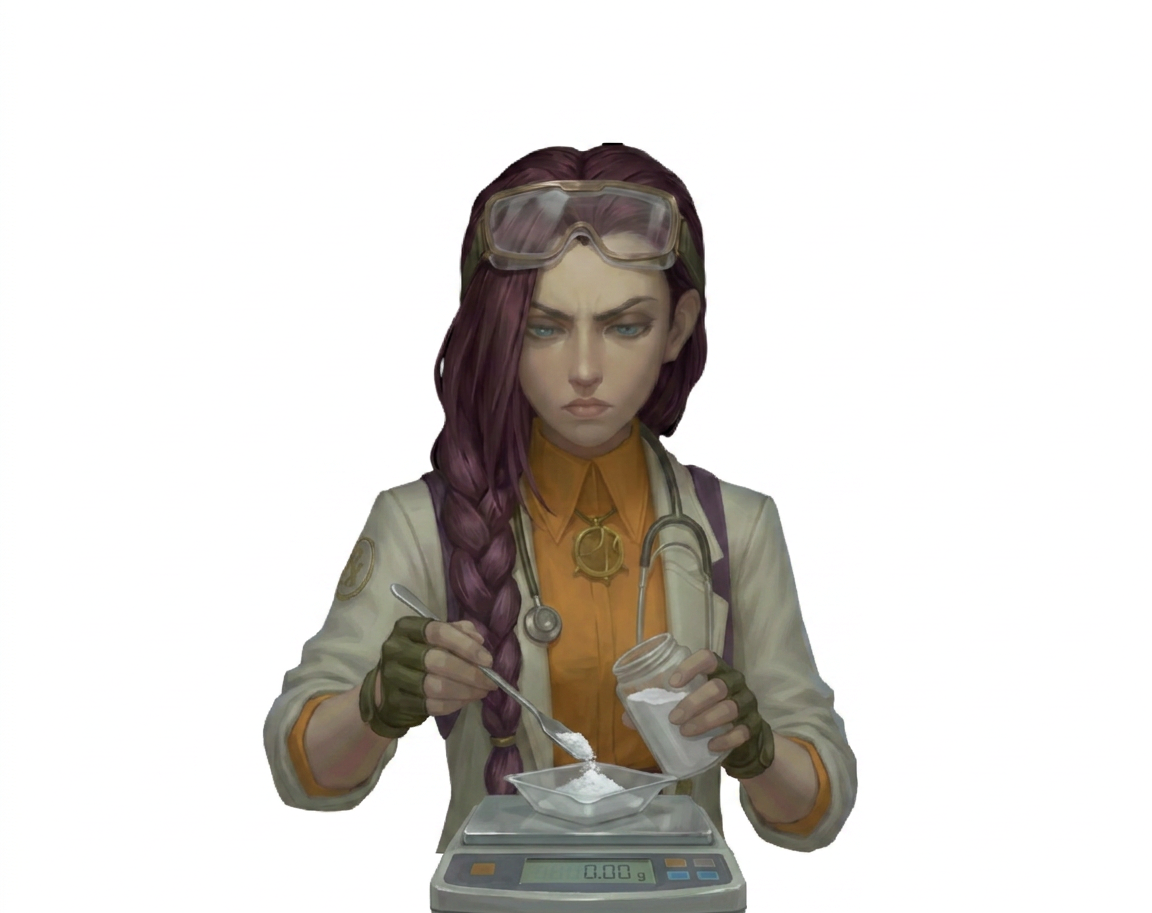
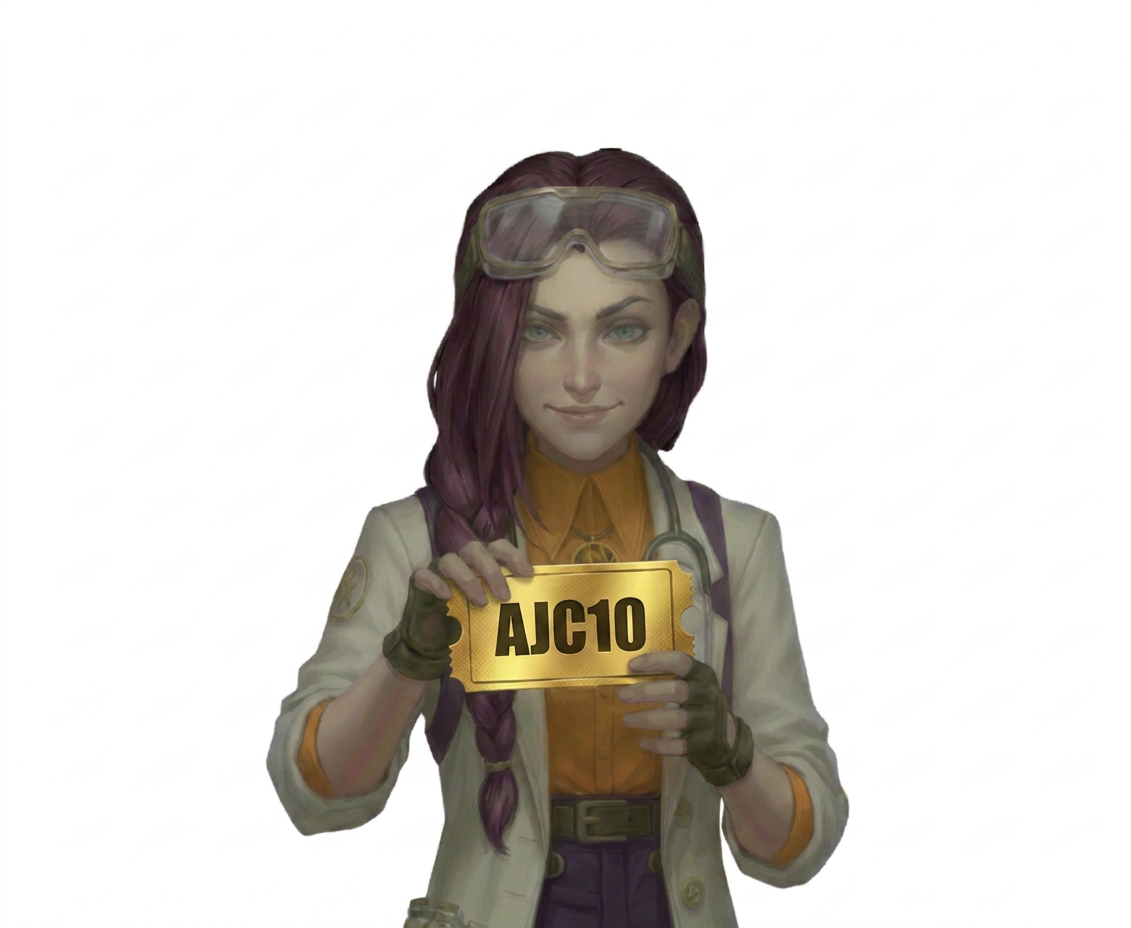
Dr Ada Jex-Cori
Our service is shaped by the philosophy of Dr Ada Jex-Cori, our brand pharmacist.
Dr Ada represents the spirit of the pharmacy: evidence-led, community-rooted, and willing to challenge the one-size-fits-all approach to medicine. She is named in honour of three pioneering women in science: Ada Lovelace, the mathematician and visionary; Sophia Jex-Blake, the first female doctor in the UK who fought the medical establishment; and Gerty Cori, the biochemist and Nobel Prize winner.
In our fictional world of Etherwell, Dr Ada fights against pharma’s standardised approach to medicine. In the real world, she represents what we stand for. Her view is straightforward: you are not broken. The system is. And we are here to change that.
Hair loss deserves serious attention
Pattern hair loss is often dismissed as “just cosmetic.” Courier Pharmacy is different. So we recognise that:
- Hair loss affects roughly 50% of men and 40% of women by age 50 in the UK
- It affects confidence, mental health, professional life, and relationships
- Depression and anxiety are significantly more common in people with visible hair loss
- Patients often feel dismissed by clinicians who see hair loss as trivial
- Effective treatment genuinely improves quality of life
- Early intervention preserves more hair than treating advanced loss
- The right treatment approach depends on the person, not a standard protocol
After all, hair loss has a real impact on mental wellbeing. So our prescriber takes it seriously.
Honest framing about how the two actives actually work
We’ll be straight with you about what’s happening at the follicle level:
- Minoxidil improves scalp blood flow and delivers growth signals — it doesn’t restore what’s completely gone
- 17-alpha oestradiol shifts hormone signalling — but it does NOT directly block DHT the way finasteride or dutasteride do
- Instead, 17-alpha oestradiol works through oestrogen receptor signalling and aromatase pathways
- Research links it with lower SRD5A1 expression, higher CYP19A1 (aromatase) expression, and stronger oestrogen receptor signalling in the follicle
- This creates a more hair-friendly hormonal microenvironment
- But we won’t pretend it’s the same as direct 5-alpha reductase inhibition
- If direct DHT blockade is what your clinical picture needs, we’ll recommend finasteride or dutasteride-based approaches instead
In short, we won’t overclaim the mechanism. So the honest framing is that this combination promotes a scalp environment supporting growth via two complementary but different pathways.
Honest framing about response rates
Realistic expectations matter:
- Response varies significantly between individuals
- Around 40% of patients see meaningful regrowth
- Around 40% see stabilisation of loss (no further loss but no regrowth)
- Around 20% see limited benefit
- Individual response can’t be predicted before starting
- The TrichoTest pharmacogenetic test can help guide expectations for some patients
Honest framing about the shedding phase
This surprises many patients:
- Increased shedding at 2-4 weeks is a good sign, not a bad one
- This is your hair cycle resetting
- Miniaturised hairs shed to make way for healthier growth
- Don’t stop treatment during the shedding phase
- Prepare mentally for this phase before starting
- Take pre-treatment photos to compare with post-treatment
Honest framing about continuous use
This is a commitment, not a course:
- Pattern hair loss is a lifelong condition
- Treatment is ongoing management, not a cure
- Stopping leads to gradual reversal of benefits
- Return to pre-treatment baseline within 6-12 months of stopping
- So consider this before starting
- Budget for ongoing supply, or plan an exit strategy
- Combining with lifestyle factors (nutrition, sleep, stress) helps
Honest framing about unlicensed compounded medicines
We won’t pretend this is something it isn’t:
- This combination isn’t licensed as a single product
- 17-alpha oestradiol has smaller evidence base than minoxidil
- Individual response to combination therapy varies
- We’re relying on clinical reasoning to combine well-established individual actives
- Informed consent matters more here than with licensed monotherapies
- Regular review is essential to assess response and continue safely
Hair loss and the bigger picture
Hair loss rarely sits in isolation. So our prescriber can discuss:
- Underlying causes: thyroid, iron, ferritin, vitamin D, stress, medication
- Nutrition and hair health
- Stress management and hair loss
- Sleep and hair growth cycles
- Mental health impact of hair loss
- When to consider combination therapy vs monotherapy
- When to consider adding direct DHT blockade (finasteride/dutasteride)
- When to consider procedural options (PRP, transplant)
- TrichoTest pharmacogenetic testing for treatment guidance
- DUTCH hormone testing where hormonal drivers are suspected
- Realistic timeline expectations
- Photographic tracking for objective assessment
Sometimes the visible hair loss is the visible part of a wider picture worth talking through.
Prescriber and pharmacist support before and after supply
Our team is here to discuss:
- Whether this combination fits your hair loss pattern
- Whether licensed monotherapies should be tried first
- Whether a direct DHT-blocking approach might fit better
- Realistic expectations for your specific situation
- How to apply the solution effectively
- How to recognise and respond to the shedding phase
- How to track your response objectively
- When to consider combining with other treatments
- Regular prescriber review at 3 months and 6 months
This is included in your supply and available throughout your treatment.
Trust earned, not claimed
We are GPhC-regulated, and our content is grounded in published clinical literature on minoxidil and 17-alpha oestradiol for pattern hair loss, the licensed Regaine Summary of Product Characteristics, the European Ell-Cranell and Pantostin product information, research on oestrogen receptor signalling and aromatase pathways in hair follicle biology, the British Association of Dermatologists guidance on androgenetic alopecia, NICE Clinical Knowledge Summary on hair loss, MHRA guidance on unlicensed specials, and the real experience of patients managing pattern hair loss.
If this combination isn’t the right answer for your situation, we’ll tell you honestly. After all, getting the right treatment matters more than fulfilling a request.
How supply works
This is a UK Prescription-Only Medicine supplied as an unlicensed compounded special. So the supply process has more steps than for licensed medicines.
How our service works
- Complete the detailed eligibility consultation (which you’ve done if you’re reading this page)
- Our UK-qualified prescriber reviews your responses thoroughly
- The prescriber may request pre-treatment photos for baseline assessment
- Our prescriber may recommend TrichoTest pharmacogenetic assessment for treatment guidance
- If approved, the prescriber issues an individualised prescription for the solution
- Our compounding pharmacy partner compounds the solution to your prescription
- Documented informed consent is recorded as part of the supply process — including clear explanation that 17-alpha oestradiol is not a direct DHT blocker
- Your order is dispatched in plain, discreet packaging
- Free prescriber and pharmacist support is available throughout treatment
- Regular review at 3 months and 6 months to assess response and continued suitability
When other options might suit better
If this solution isn’t right, we’ll explain why. Other options may include:
- Regaine 5% or 2% — licensed monotherapy for pattern hair loss
- Oral finasteride 1mg (Propecia) — licensed for male pattern hair loss, direct DHT blockade
- Oral dutasteride — off-label for male pattern hair loss, stronger direct DHT blockade
- Oral spironolactone — off-label anti-androgen for female pattern hair loss
- Compounded topical finasteride — for direct topical DHT blockade
- Compounded topical dutasteride — for stronger direct topical DHT blockade
- Other Gro range products (dutasteride Trichosol, tretinoin combinations)
- Investigation of underlying causes (thyroid, iron, ferritin, vitamin D)
- Nutritional support
- Platelet-rich plasma (PRP) injection therapy
- Low-level laser therapy (LLLT) devices
- Hair transplant surgery referral
- Cosmetic solutions (concealer sprays, hair fibres)
- Dermatology referral for complex cases
- Trichoscopy or scalp biopsy for diagnostic clarity
Our community service
Our free fortnightly drop-in clinics at Insomnia, Derby run every other week from 10am to 12pm.
Healthcare shouldn’t only happen when you’re paying for it. So we show up, even when it’s free.
We cover hair loss, dermatology, MCAS, weight management, menopause, women’s health, men’s health, chronic pain, digestive health, allergies, asthma, sleep, and whatever else people bring through the door. No appointment needed, no charge, no pressure.

Frequently asked questions

How is this different from Regaine 5%?
Two key differences:
- Regaine 5%: minoxidil 5% alone in traditional propylene glycol vehicle
- This solution: minoxidil 5% PLUS 17-alpha oestradiol 0.05% in Trichosol vehicle
- The 17-alpha oestradiol adds hormone signalling modulation to the vascular effects of minoxidil
- Trichosol vehicle is better tolerated for many patients
- Regaine is licensed, this is a compounded special
Is 17-alpha oestradiol a DHT blocker?
No — this is an important clinical distinction:
- 17-alpha oestradiol does NOT directly block DHT like finasteride or dutasteride do
- Finasteride and dutasteride are 5-alpha reductase inhibitors — they directly stop testosterone being converted to DHT
- 17-alpha oestradiol works differently — through oestrogen receptor signalling and aromatase activity
- It shifts the follicle's local hormone balance towards oestrogen-led signalling
- Research links it with lower SRD5A1 expression, higher CYP19A1 (aromatase) expression, and stronger oestrogen receptor signalling
- So while it may reduce the influence of DHT-linked pathways, it works through a different route to direct DHT blockade
- If you specifically need direct DHT blockade, finasteride or dutasteride-based products may fit better
Does 17-alpha oestradiol have hormonal effects?
Very minimal systemically:
- 17-alpha oestradiol is a stereoisomer of natural 17-beta estradiol
- It has different 3D structure that means it doesn't bind meaningfully to systemic oestrogen receptors like HRT estrogens do
- So systemic estrogenic effects are very unlikely
- This is why it's suitable for both men and women
- It works locally at the follicle level to shift oestrogen-related signalling
- Different from HRT estrogens which do have systemic effects
Can men use this solution?
Yes:
- This solution is suitable for both men and women
- 17-alpha oestradiol doesn't cause feminising effects because of its specific stereochemistry
- Men frequently use this combination for pattern hair loss
- Can be combined with oral finasteride for added direct DHT blockade
Can women use this solution?
Yes — particularly for those wanting an alternative to systemic anti-androgens:
- Suitable for women with pattern hair loss
- Doesn't have the systemic effects of spironolactone or oral estrogens
- Provides hormone signalling modulation without systemic hormonal changes
- Good option for women who can't or don't want to take spironolactone
- Good option for women wanting to avoid oral 5-alpha reductase inhibitors
Will I have to use this forever?
Honest answer: yes, for continued benefit:
- Pattern hair loss is a lifelong condition
- Treatment maintains benefit but doesn't cure
- Stopping leads to gradual reversal over 6-12 months
- Think of it as ongoing management like blood pressure medicine
- If cost or side effects are concerns, discuss alternatives with prescriber
What happens if I stop using it?
Gradual reversal:
- Hair gains reverse over 3-6 months
- Return to pre-treatment baseline within 6-12 months
- Underlying pattern hair loss then continues its natural progression
- Don't stop suddenly if you plan to switch treatments
- Discuss stopping or switching with prescriber
What's the shedding phase?
A confusing but positive sign:
- Increased shedding at 2-4 weeks after starting
- This is your follicle cycle resetting
- Miniaturised hairs shed to make way for healthier growth
- Shedding typically settles within 2-6 weeks
- Don't stop treatment during this phase
- New growth follows the shedding
How long until I see results?
Slower than most patients expect:
- Initial shedding phase: 2-6 weeks
- Early signs of improvement: 3-4 months
- Meaningful improvement: 6-12 months
- Continued improvement plus stabilisation: beyond 12 months
- Compare monthly photos to assess objectively
- If no response after 6-9 months, discuss alternatives
Can I combine with oral finasteride or dutasteride?
Yes — many patients do:
- Oral finasteride/dutasteride directly reduces DHT throughout the body
- This topical solution supports scalp circulation and shifts local hormone signalling
- So the two approaches address different parts of the picture
- Combined approaches often give better results
- Discuss combination approach with prescriber
- Requires separate prescriptions for the oral component
Will it cause facial hair growth?
Only if the solution runs onto the face:
- Applied to scalp, minoxidil doesn't grow facial hair
- However, if solution runs onto forehead/temples, unwanted facial hair can occur
- Take care with application to prevent runoff
- Apply carefully to affected scalp areas only
- Wash hands thoroughly after application
- Don't touch face after applying
Does it work for a receding hairline?
Variable response:
- Works best for crown and top-of-head thinning
- Frontal hairline response is generally more limited
- Combining with oral finasteride often helps more with hairline (adds direct DHT blockade)
- Hair transplant is often the best option for advanced hairline loss
- Discuss realistic expectations for your specific pattern with prescriber
Can I use this alongside minoxidil oral tablets?
Discuss with prescriber:
- Low-dose oral minoxidil is used off-label for hair loss
- Combining topical + oral may increase side effect risk
- Cardiovascular effects need consideration
- Requires careful monitoring under prescriber guidance
Is scalp itching normal?
Mild itching is common:
- Mild scalp itching in first few weeks is normal
- Should settle as scalp adapts
- Trichosol vehicle typically has lower irritation than traditional formulations
- Persistent or severe itching needs prescriber review
- Contact dermatitis to minoxidil can develop in some patients
Can I dye or bleach my hair while using this?
Generally yes with timing considerations:
- Don't apply solution immediately before colouring
- Allow solution to fully absorb before colouring (at least several hours)
- Colour treatments can be done normally otherwise
- Skip application on colouring day if timing is tight
- Doesn't affect colour uptake or longevity
How do I store the solution?
Simple storage:
- Room temperature (below 25°C)
- Away from direct sunlight
- Cap on securely after use
- Out of reach of children
- Don't refrigerate or freeze
- Use within expiry date shown on individualised label
How much does the ongoing supply cost?
Costs vary:
- Specific pricing is in your individualised consultation outcome
- Not available on NHS prescription (hair loss treatment isn't NHS-funded)
- Ongoing supply is arranged through repeat consultations
- Consider ongoing cost when starting — this is a long-term commitment
- Bulk supply (3 or 6 months) may reduce per-month cost
Is my packaging discreet?
Courier Pharmacy ships in plain packaging:
- No mention of contents on the outer packaging
- Plain box with delivery details only
- Suitable for delivery to home or workplace
How do I order from Courier Pharmacy?
Complete the consultation, which gates this page, and our prescriber will guide you through the rest. If you haven't yet completed the consultation, you can find it on courierpharmacy.co.uk. After the consultation, our prescriber will be in touch to discuss whether this Gro range solution suits your situation.
More than a prescription: our community
Healthcare shouldn't only happen when you're paying for it.
Every fortnight we run free drop-in talks and clinics at Insomnia, Derby, from 10am to 12pm. So we show up, even when it's free.
Bring a question, bring a friend, bring a stack of bewildering letters from another clinic. We'll sit with you.
We cover hair loss, dermatology, MCAS, weight management, menopause, women's health, men's health, chronic pain, digestive health, allergies, asthma, sleep, and whatever else people bring through the door. No appointment. No cost. No pressure. Just real support and treatment that fits.
This page is for information only and isn't a substitute for personal medical advice. This solution is an unlicensed compounded medicine. Supply only happens after a full prescriber consultation with documented informed consent. Important clinical note: 17-alpha oestradiol is NOT a direct DHT blocker like finasteride or dutasteride — it works through oestrogen receptor signalling and aromatase pathways instead. Pattern hair loss treatment requires patience and commitment — continuous daily use is essential, and stopping leads to gradual reversal of benefits. Always discuss any new or worsening symptoms with our prescriber, your GP, or seek urgent medical advice if symptoms are severe. Signs of systemic effects (rapid heartbeat, chest pain, significant swelling, sudden blood pressure changes) need immediate medical attention.
How this content was created
Written by the Courier Pharmacy editorial team and reviewed by a GPhC-registered prescribing pharmacist.
The content is grounded in published clinical literature on minoxidil and 17-alpha oestradiol for pattern hair loss, research on oestrogen receptor signalling, aromatase (CYP19A1) activity, SRD5A1 expression, and hair follicle biology, the licensed Regaine 5% Summary of Product Characteristics (comparison reference), the European product information for Ell-Cranell and Pantostin (17-alpha oestradiol references), the British Association of Dermatologists guidance on androgenetic alopecia, NICE Clinical Knowledge Summary on hair loss, MHRA guidance on unlicensed specials and compounded medicines, and the real experience of patients managing pattern hair loss under prescriber-led care. In addition, it draws on the real questions patients bring to our consultation pathway and drop-in clinics in Derby.
References
National Institute for Health and Care Excellence (2024) Androgenetic alopecia — Clinical Knowledge Summary. Available at: https://cks.nice.org.uk/topics/androgenetic-alopecia/
NHS (2024) Hair loss. Available at: https://www.nhs.uk/conditions/hair-loss/
Courier Pharmacy (2026) Comprehensive review of female hair loss: Pathophysiology, treatments, and emerging research. Courier Pharmacy. Available at: https://courierpharmacy.co.uk/comprehensive-review-of-female-hair-loss/ (Accessed: 3 July 2026).