A prescription lipase inhibitor used for weight management in adults with significant weight problems, taken alongside a reduced-calorie, lower-fat diet.
Orlistat 120mg capsules are prescribed at Courier Pharmacy after a brief online consultation reviewed by a UK clinician, then dispensed and delivered to your door.
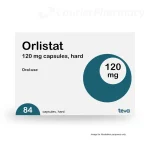
Orlistat 120mg capsules are a prescription weight loss medicine for adults with significant weight problems. You use Orlistat 120mg alongside a reduced?calorie diet and increased physical activity. Each capsule contains orlistat 120mg in a turquoise hard capsule. The branded version is Xenical, although generic orlistat is widely available.
Packs are often dispensed as 84 capsules, which is a four week supply if you take it three times a day with meals.
What Orlistat 120mg is used for
Orlistat 120mg is used as part of a structured weight management plan in adults who meet clinical criteria (for example, a higher BMI, sometimes with weight?related health risks). It’s not a “quick fix”, but it can help if lifestyle changes alone haven’t been enough.
In the UK, there are only a few licensed prescription weight loss medicines. Orlistat is one option, and newer medicines such as GLP 1 treatments (like semaglutide and liraglutide) work in a different way. Your prescriber will help decide what’s appropriate for your situation.
How orlistat works (it stays in the gut)
Orlistat works entirely in the digestive system. It blocks enzymes called lipases, which your body uses to break down fat from food. As a result, around 25–30% of the fat you eat may pass through without being absorbed when you take orlistat correctly.
This is the key point: orlistat doesn’t reduce appetite, and it doesn’t “speed up” your metabolism. Instead, it helps reduce the calories you absorb from dietary fat. So, your results depend heavily on what you eat.
Why diet matters so much with orlistat
Orlistat works best when you follow a reduced calorie diet with moderate fat, spread across three meals. If you eat a high fat meal while taking orlistat, the unabsorbed fat has to go somewhere — and that’s when side effects can become, frankly, memorable.
So, a lower fat eating pattern usually means:
Better tolerability
Fewer unpleasant surprises
More consistent weight loss
In other words, orlistat rewards planning and punishes “I’ll just have this one takeaway”.
Who Orlistat 120mg may not suit
Orlistat isn’t right for everyone. It may be a poor fit if you can’t realistically follow a lower fat diet, because side effects are more likely and adherence becomes difficult. It may also be unsuitable if you have certain gut conditions, malabsorption problems, or relevant medicine interactions. Your prescriber will screen for this.
How we supply Orlistat 120mg at Courier Pharmacy
At Courier Pharmacy, every orlistat prescription is reviewed by a UK registered prescriber. We’ll ask about your BMI, any weight related health conditions, what you’ve tried before, and your current eating pattern. If orlistat is suitable, we’ll explain how to take it properly so you get the benefit with fewer side effects. If it isn’t suitable, we’ll explain why and talk through safer alternatives.
Key features and specifications
Active ingredient: Orlistat 120mg
Form: Turquoise hard capsule
Pack size: Typically 84 capsules (four week supply at 3 times daily)
Class: Gastrointestinal lipase inhibitor
Prescription status: Prescription Only Medicine (POM) at 120mg strength
(Lower strength orlistat 60mg is available as a Pharmacy medicine, e.g., Alli)
Typical use (as directed): 1 capsule with each main meal containing fat, up to 3 times daily
Storage: Store below 25°C, in original blister packaging, protected from moisture
Weight that isn’t shifting with diet and exercise alone, even after months of trying. A clinically meaningful weight problem (BMI 30 or above, or 28 or above with related health conditions) where medical support would genuinely help. Orlistat 120mg capsules are one of the few licensed prescription weight-loss medicines in the UK, working locally in the gut to block absorption of about 30% of the fat in your meals.
At Courier Pharmacy we want you to understand exactly how orlistat works, who it suits, the strict dietary requirements that determine whether it works for you, and the realistic expectations for weight loss, so the choice feels properly yours.
Five key takeaways
Orlistat 120mg capsules contain orlistat, a gastrointestinal lipase inhibitor that blocks the absorption of approximately 30% of dietary fat by preventing pancreatic and gastric lipase from breaking down triglycerides in the gut.
It’s licensed in the UK for adults with a BMI of 30 kg/m² or above, or 28 kg/m² or above with associated risk factors (type 2 diabetes, hypertension, raised cholesterol), used alongside a reduced-calorie diet and increased physical activity.
The strict dietary requirement is essential. Orlistat must be taken with each main meal containing fat (or up to one hour after). Eating high-fat meals while on orlistat causes significant gastrointestinal side effects: oily stools, flatulence with discharge, faecal urgency, and oily spotting.
The medicine works only on dietary fat in the gut; it has no effect on absorbed fat in your body or on appetite. Weight loss is modest (typically 5-10% over a year), not dramatic, and requires sustained dietary change.
It is contraindicated in chronic malabsorption syndrome, cholestasis, pregnancy, and breastfeeding. Caution is needed with vitamin absorption (a daily multivitamin with fat-soluble vitamins A, D, E, K is usually recommended).
Treatment dosage Orlistat 120mg capsules
The standard adult dose is one 120mg capsule taken with each main meal containing fat, up to three times daily. The total daily dose ranges from one to three capsules depending on whether you have one, two, or three fat-containing meals that day.
Take the capsule immediately before, during, or up to one hour after a meal. The medicine needs to be in the stomach when fat-containing food arrives so the lipase enzymes are blocked at the right time. Taking orlistat without a fat-containing meal (or more than one hour after) doesn’t add benefit, since there’s no fat for the medicine to act on.
Swallow each capsule whole with a glass of water. Don’t open or chew the capsule.
If a meal contains very little or no fat, skip the orlistat dose for that meal. Common low-fat or no-fat meals include plain salads without dressing, plain rice or pasta with vegetables only, dry toast, or fruit. Taking orlistat for these would produce no benefit and unnecessarily expose you to side effects with any small amount of fat that’s present.
Treatment effect builds over several weeks. Most patients see meaningful weight loss within 12 weeks of starting orlistat alongside dietary change. If you haven’t lost at least 5% of your starting body weight after 12 weeks, treatment should be reviewed; continuing without meaningful response isn’t usually appropriate.
The recommended maximum treatment duration is generally up to 2 years for continuous use, though decisions about extending treatment are individualised based on response, tolerability, and continued need.
A multivitamin supplement containing fat-soluble vitamins (A, D, E, K) is generally recommended. Take it at bedtime, well away from orlistat doses, to allow absorption. Orlistat reduces absorption of these vitamins along with dietary fat, so supplementation maintains adequate vitamin status.
If you miss a dose with a fat-containing meal, you can take it within one hour after. If more than one hour has passed, skip that dose. Don’t take two doses with the same meal.
Overview of Orlistat 120mg capsules
Five things worth knowing:
Orlistat blocks approximately 25-30% of dietary fat absorption when taken correctly with fat-containing meals. The fat that isn’t absorbed is eliminated in the stool, producing the characteristic side effects when fat intake is high.
Average weight loss with orlistat plus reduced-calorie diet is around 5-10% of starting body weight over a year, compared to 2-3% with diet alone. The difference is meaningful but modest — orlistat enhances dietary change rather than replacing it.
The gastrointestinal side effects are best understood as a feedback signal: they’re more pronounced with higher dietary fat intake, which provides direct incentive to maintain the lower-fat eating pattern that maximises weight loss.
The 60mg strength is available without prescription as Alli, a Pharmacy medicine. The 120mg strength is the prescription dose for adults meeting eligibility criteria.
Orlistat doesn’t interact with most common medicines, but it does affect absorption of fat-soluble vitamins and several specific medicines (levothyroxine, ciclosporin, anticoagulants, antiepileptics, antiretrovirals).
Orlistat sits in the small group of UK-licensed prescription weight management medicines, alongside the newer GLP-1 receptor agonists (semaglutide/Wegovy, liraglutide/Saxenda, tirzepatide/Mounjaro). The mechanisms are fundamentally different: orlistat blocks fat absorption in the gut; GLP-1 receptor agonists work centrally on appetite and gut motility. Each has its own profile of benefits, risks, costs, and patient preferences.
For people choosing between orlistat and a GLP-1 medicine, several factors matter. Orlistat’s advantages include being well-established, oral (not injectable), generally lower cost (particularly generic versions), reversible immediately upon stopping, and not affecting blood glucose. The disadvantages include modest weight loss compared to newer options, gastrointestinal side effects, dietary restrictions, and frequent dosing (three times daily).
The GLP-1 medicines generally produce greater average weight loss (15-25%) but are injectable (weekly), more expensive, and have their own side effect profile (nausea, vomiting, potential pancreatitis risk). For some patients, orlistat is genuinely the better choice; for others, a GLP-1 medicine fits better. We don’t presume which is right; the decision depends on individual factors.
For people living with complex conditions and weight problems, orlistat has some specific advantages. It doesn’t affect blood glucose significantly, doesn’t have central nervous system effects, doesn’t significantly affect blood pressure, and doesn’t interact with most psychotropic medicines. For patients on multiple medicines where adding a centrally-acting weight medicine could be problematic, orlistat’s localised gut action can be a safer choice.
The realistic expectation conversation matters. Orlistat doesn’t produce dramatic weight loss. The 5-10% loss over a year is clinically meaningful (associated with improvements in blood pressure, cholesterol, diabetes risk) but is unlikely to produce the body transformation some patients hope for. Setting realistic expectations is essential to avoid disappointment and to recognise the benefits when they occur.
Why choose Courier Pharmacy for Orlistat 120mg capsules
Weight management medicines look straightforward but the right approach involves more than just dispensing capsules. The eligibility criteria matter, the realistic expectations conversation matters, the dietary requirements need to be set out clearly, and the alternatives (particularly the newer GLP-1 medicines) deserve honest comparison. Every orlistat prescription at Courier Pharmacy is reviewed by a UK-registered prescriber who reads your answers properly, asks about previous attempts at weight management, and explains the decision either way.
We’ll discuss whether orlistat is the right choice for you. For patients who meet the BMI criteria and can realistically follow a moderate-fat eating pattern, orlistat can be a useful adjunct to lifestyle change. For patients who would struggle with the dietary requirements, or who would benefit more from a GLP-1 medicine, we’ll have an honest conversation about alternatives. We’ll set realistic expectations for the modest weight loss orlistat typically produces (5-10% over a year), and we’ll be clear about the gastrointestinal side effects.
For patients on medicines that interact with orlistat (levothyroxine, warfarin, antiepileptics, ciclosporin), we’ll flag the specific considerations and how to manage them safely. We’ll recommend the multivitamin supplementation that’s generally needed.
Our brand guide, Dr Ada Jex-Cori, sums it up: you’re not broken. The system that’s failed you might be. We want to do the part we can do, properly, and connect you with the rest. That includes our free fortnightly drop-in clinics and talks at Insomnia in Derby, where you can ask questions face-to-face without spending a penny.
Buy Orlistat 120mg capsules (Prescription Only) from Courier Pharmacy
Orlistat 120mg capsules are a Prescription Only Medicine (POM) in the UK, which means they cannot be sold over the counter at this strength. (The lower 60mg strength is available as a Pharmacy medicine sold as Alli.) Buying through Courier Pharmacy is straightforward and built around your time, not ours.
Here’s how it works:
Complete a quick online consultation including height, weight, and relevant health conditions
A UK prescriber reviews your answers
If you meet the eligibility criteria, a prescription is issued
We dispense and deliver discreetly to your door
If it isn’t suitable for you, we’ll explain why and suggest the next best option.
Active ingredient in Orlistat 120mg capsules
The active ingredient is orlistat, a synthetic derivative of lipstatin (a naturally occurring compound produced by the bacterium Streptomyces toxytricini). Orlistat was developed in the 1980s and approved as a prescription weight-loss medicine in the late 1990s. The 60mg strength was later approved as an OTC product in the EU and UK in 2009.
Orlistat works by inhibiting gastric and pancreatic lipases, the enzymes that break down dietary fat (triglycerides) into absorbable fatty acids and monoglycerides. When you eat a fat-containing meal, these lipases normally split the triglycerides so the fat can be absorbed in the small intestine. With orlistat present, around 25-30% of the dietary fat passes through without being broken down, so it can’t be absorbed and is eliminated in the stool.
The medicine is uniquely localised in its action. Orlistat itself isn’t absorbed into the bloodstream to any significant extent; it works entirely within the gastrointestinal tract. Plasma concentrations of orlistat after a 120mg dose are below the limit of quantification (less than 5 ng/mL), demonstrating minimal systemic exposure. This is why orlistat has very few systemic side effects and minimal drug interactions through metabolic pathways.
Each 120mg capsule contains 120mg of orlistat as the only active ingredient, along with inactive ingredients including microcrystalline cellulose, sodium starch glycolate, povidone, sodium lauryl sulfate, and talc. The capsule shell contains gelatin, indigo carmine (E132), and titanium dioxide (E171). Some patients with strict vegetarian preferences may need to discuss the gelatin content.
The capsule is designed to release the orlistat in the stomach, where it begins acting as the food bolus enters. The medicine remains active through the stomach and proximal small intestine, where most fat digestion occurs.
What are Orlistat 120mg capsules for?
Orlistat 120mg capsules are licensed in the UK for the treatment of obesity in adults who meet specific criteria, used in conjunction with a reduced-calorie diet and increased physical activity:
BMI of 30 kg/m² or above (obese), OR
BMI of 28 kg/m² or above with associated risk factors such as type 2 diabetes, hypertension, dyslipidaemia, or cardiovascular disease
NICE guidance recommends orlistat as an adjunct to lifestyle measures for these eligible adults. The medicine should be continued only if at least 5% of initial body weight has been lost after 12 weeks of treatment; if this hasn’t happened, the medicine isn’t working sufficiently to justify continued use.
Orlistat is not licensed for:
Adults with BMI below 28 kg/m² (without significant comorbidities)
Children and adolescents under 18 (occasional specialist use in obesity clinics)
Pregnancy or breastfeeding
Chronic malabsorption syndrome
Cholestasis
Cosmetic weight loss in patients without clinical obesity
The licensed approach involves orlistat as one part of a comprehensive weight management plan, not a standalone treatment. The other essential components are dietary change (reduced calories, moderate fat intake), increased physical activity, and behavioural support where appropriate. Orlistat without these supporting changes produces minimal benefit and significant gastrointestinal side effects.
How do Orlistat 120mg capsules work?
Dietary fat is in the form of triglycerides, which are large molecules that can’t be absorbed directly. In the gut, two key enzymes — gastric lipase (produced in the stomach) and pancreatic lipase (produced by the pancreas and released into the small intestine) — break triglycerides down into fatty acids and monoglycerides. These smaller molecules are then absorbed across the small intestinal wall and incorporated into chylomicrons for transport in the lymphatic system.
Orlistat works by binding to and inactivating these lipases. The molecule forms a covalent bond with the serine residue in the lipase active site, blocking the enzyme’s ability to break down triglycerides. With the lipases inactivated, dietary triglycerides remain in their large undigested form and can’t be absorbed. They pass through the small intestine and large intestine, eventually being eliminated in the stool.
Approximately 25-30% of dietary fat is blocked from absorption when orlistat is taken correctly. The remaining 70-75% is still absorbed normally, since orlistat doesn’t completely inhibit all lipase activity. This partial inhibition is what makes orlistat tolerable; complete fat malabsorption would cause severe symptoms and nutritional problems.
The unabsorbed fat in the gut has direct consequences for bowel function. Fat that reaches the colon is acted on by colonic bacteria, producing the characteristic side effects: oily stools, oily spotting, flatulence with discharge, faecal urgency, and increased defecation frequency. These effects are dose-dependent on dietary fat intake: low-fat meals produce minimal side effects, high-fat meals produce significant symptoms. This creates a direct feedback loop — eating less fat reduces both the side effects and the calorie load.
The calorie reduction from orlistat is modest. A typical Western diet might contain 100-150g of fat daily (900-1350 kcal from fat). Blocking 25-30% of this absorption reduces calorie intake by 225-405 kcal per day. Over a year, this translates to a meaningful but not dramatic weight reduction when combined with overall reduced calorie intake.
The medicine has no effect on appetite, no effect on protein or carbohydrate absorption, no effect on metabolism, and no effect on existing body fat. Weight loss occurs solely through the reduced absorbed calories from dietary fat. This is why orlistat works best when combined with a genuinely reduced-calorie diet — the absorption blockade provides a multiplier effect on dietary change rather than substituting for it.
Onset of action is from the first dose. Side effects (with appropriate fat intake) typically appear within 24-48 hours. Weight loss builds over weeks of consistent use combined with dietary change.
How to use Orlistat 120mg capsules
Take one 120mg capsule with each main meal containing fat, up to three times daily. The capsule should be taken immediately before, during, or up to one hour after the meal. The medicine needs to be in the gut when fat-containing food arrives so the lipases are blocked at the right time.
Swallow the capsule whole with a glass of water. Don’t open or chew the capsule.
The dietary approach is essential to making orlistat work and tolerable. The recommended pattern is:
Three balanced meals daily with a moderate fat content (around 30% of calories from fat per meal)
Approximately 15g of fat per meal as the average target — neither too low (no benefit from orlistat) nor too high (significant side effects)
Avoid high-fat single meals like rich curries, fried foods, fatty cuts of meat, cheese-heavy dishes, creamy sauces, or fatty desserts
Distribute fat across the day rather than concentrating it in one meal
Reduced overall calorie intake consistent with weight loss goals (typically 500-600 kcal below maintenance)
The most common practical mistake is taking orlistat with a high-fat meal and experiencing significant gastrointestinal symptoms, then concluding the medicine doesn’t work for you. The medicine is doing exactly what it’s designed to do; the dietary approach needs adjustment.
If a meal is genuinely low-fat (less than 5-10g fat), skip the orlistat dose. Examples include: - A salad without oil-based dressing - Plain pasta or rice with vegetables only - Fruit only - Dry toast or plain bread - Lean protein with vegetables prepared without added fat
Taking orlistat with these meals provides no benefit (there’s minimal fat for it to act on) and unnecessarily exposes you to potential side effects with any small amount of fat present.
A daily multivitamin containing fat-soluble vitamins (A, D, E, K) is generally recommended. Take it at bedtime, at least 2 hours apart from orlistat doses, to allow proper absorption.
Treatment review at 12 weeks is important. If you haven’t lost at least 5% of starting body weight by then, the medicine isn’t producing sufficient response and continuing isn’t usually appropriate. If you have lost 5% or more, continuing alongside ongoing dietary change is reasonable.
Most people stay on orlistat for 6 months to 2 years. Decisions about longer-term use are individualised based on continued benefit, tolerability, and whether dietary patterns have become sustainable enough that orlistat is still needed.
If you miss a dose with a fat-containing meal and remember within one hour, take it. If more than an hour has passed, skip that dose.
Lifestyle support alongside orlistat improves outcomes significantly. Most people benefit from working with a dietitian, joining a structured weight management programme (Weight Watchers, Slimming World, NHS Digital Weight Management Programme), or having behavioural support to address eating patterns and habits.
Warnings and precautions for Orlistat 120mg capsules
Orlistat is contraindicated in:
Known hypersensitivity to orlistat or any excipient (including gelatin)
Chronic malabsorption syndrome
Cholestasis
Pregnancy
Breastfeeding
Use with care in:
Pre-existing gastrointestinal disorders (chronic diarrhoea, severe constipation, inflammatory bowel disease)
Patients on medicines where reduced absorption would be clinically important (ciclosporin, levothyroxine, anticoagulants, antiepileptics, antiretrovirals)
Type 1 or type 2 diabetes (weight loss may affect blood glucose control; diabetes medications may need adjustment)
Patients on antihypertensives (weight loss may reduce blood pressure; medications may need adjustment)
Patients with severe constipation or fissures (anal symptoms may worsen with oily stools)
History of kidney stones (calcium oxalate stones have been reported with orlistat use, related to increased oxalate absorption)
Patients with thyroid disease taking levothyroxine (separate orlistat from levothyroxine by at least 4 hours)
Patients with epilepsy on antiepileptic medication (orlistat can reduce absorption of antiepileptics, requiring monitoring)
Patients on warfarin (orlistat can affect vitamin K absorption, requiring INR monitoring)
Pregnancy: orlistat is contraindicated in pregnancy. Animal studies haven’t shown teratogenic effects, but the potential reduction in fat-soluble vitamin absorption (particularly vitamin K and D) raises theoretical concerns. Pregnant women have higher caloric needs and shouldn’t be on weight-loss medicines.
Breastfeeding: orlistat is contraindicated in breastfeeding. Although systemic absorption is minimal, the medicine isn’t recommended during breastfeeding because of insufficient safety data.
Children: orlistat is not licensed for use in children. Specialist obesity clinics may occasionally use it off-label in adolescents with severe obesity.
Fat-soluble vitamin deficiency is the most important medical consideration with long-term orlistat use. The medicine reduces absorption of vitamins A, D, E, and K along with dietary fat. Most people on orlistat should take a daily multivitamin with these fat-soluble vitamins, taken at bedtime well away from orlistat doses to allow proper absorption. Vitamin D deficiency is particularly common in UK populations regardless of orlistat use, so attention to vitamin D status is sensible.
Liver injury has been very rarely reported with orlistat. Most cases have been mild and reversible, but a small number of severe cases (hepatitis, liver failure) have occurred. The causal relationship isn’t fully established, but any signs of liver problems (jaundice, dark urine, severe fatigue, abdominal pain) should prompt urgent medical assessment.
Pancreatitis has been reported very rarely with orlistat. Risk factors include gallstones and alcohol use. Any new severe abdominal pain warrants urgent assessment.
Kidney stones (oxalate stones specifically) have been reported. Increased oxalate absorption from the gut after orlistat treatment is the proposed mechanism. Patients with a history of calcium oxalate kidney stones should mention this to their prescriber.
If gastrointestinal symptoms (oily stools, urgency, oily spotting) are severe enough to affect quality of life, the answer isn’t usually to stop orlistat but to reduce dietary fat. If symptoms persist with appropriate dietary changes, consider stopping the medicine.
Side effects of Orlistat 120mg capsules
The side effect profile of orlistat is dominated by gastrointestinal effects, which are direct consequences of the unabsorbed fat in the gut. These effects are dose-dependent on dietary fat intake — minimal with low-fat eating, prominent with high-fat eating.
Very common side effects, affecting more than 1 in 10 people, particularly in the first 3 months of treatment, include:
Oily spotting (oily discharge from the anus, often staining underwear)
Flatulence with discharge (passing wind that may carry oily material)
Faecal urgency (sudden need to pass stool)
Fatty/oily stools (greasy-looking, sometimes foul-smelling)
Oily evacuation (oily discharge when passing stool)
Liquid stools and increased defecation
Abdominal pain or discomfort
These effects typically reduce over time as dietary patterns adjust to lower fat intake. They’re more pronounced and disabling for patients who continue eating high-fat meals while on orlistat.
Common side effects, between 1 in 100 and 1 in 10 people, include headache, anxiety, hypoglycaemia in patients with type 2 diabetes (related to overall weight loss and dietary change), upper respiratory tract infection, lower respiratory tract infection, urinary tract infection, menstrual irregularities, and fatigue.
Uncommon side effects, between 1 in 1,000 and 1 in 100 people, include diverticulitis, rectal pain or discomfort, dental caries (related to dietary changes), and skin reactions.
Rare and very rare side effects, fewer than 1 in 1,000 people, include severe hepatitis or liver failure, severe pancreatitis, oxalate-related kidney problems (including kidney stones and rarely acute kidney injury), severe allergic reactions including anaphylaxis, angioedema, bullous skin eruptions, and Stevens-Johnson syndrome. Anaphylaxis is a medical emergency; call 999.
If you experience any side effect that worries you, you can report it directly to the MHRA’s Yellow Card scheme. This helps improve safety data for everyone who uses the medicine. Our pharmacy team are happy to help you submit a Yellow Card report if you’d like assistance.
Drug interactions with Orlistat 120mg capsules
Orlistat has fewer interactions through metabolic pathways than most medicines because it isn’t significantly absorbed. The interactions that do matter mostly involve reduced absorption of other medicines or nutrients in the gut.
Levothyroxine — orlistat reduces levothyroxine absorption. Take levothyroxine at least 4 hours before or after orlistat doses. Patients on thyroid replacement may need TSH monitoring during orlistat treatment.
Ciclosporin — orlistat significantly reduces ciclosporin absorption. The combination should generally be avoided, particularly in transplant patients where adequate ciclosporin levels are essential. If unavoidable, take ciclosporin at least 3 hours before or after orlistat with close monitoring of levels.
Anticoagulants (warfarin and similar coumarin anticoagulants) — orlistat can affect vitamin K absorption, with potential effect on INR. Patients on warfarin starting or stopping orlistat should have INR monitored closely. The newer direct oral anticoagulants (apixaban, rivaroxaban, dabigatran) don’t have the same vitamin K dependence and are less affected.
Antiepileptic medicines (phenytoin, carbamazepine, sodium valproate, lamotrigine, levetiracetam) — orlistat can reduce absorption of some antiepileptics, potentially leading to seizure breakthrough. Increased seizure frequency has been reported with orlistat in patients on these medicines. Close monitoring and possible dose adjustment may be needed.
Antiretroviral medicines — some HIV antiretrovirals (particularly protease inhibitors) may have reduced absorption with orlistat. Patients on antiretroviral therapy should discuss this carefully with their HIV team before starting orlistat.
Amiodarone — small reduction in amiodarone absorption has been reported. Monitoring is sensible.
Oral contraceptives — orlistat-induced severe diarrhoea can theoretically reduce contraceptive absorption and efficacy. Additional contraceptive precautions during episodes of severe diarrhoea are advisable.
Fat-soluble vitamins (A, D, E, K) — absorption is reduced. A multivitamin supplement taken at bedtime (well away from orlistat doses) maintains adequate vitamin status.
Acarbose — combination with orlistat isn’t recommended in patients with diabetes because of insufficient data.
Always tell your prescriber and pharmacist about everything you take, including over-the-counter medicines, vitamins, supplements, and herbal products, before starting orlistat.
Frequently asked questions about Orlistat 120mg capsules
What is orlistat used for?
Orlistat 120mg is licensed in the UK for the treatment of obesity in adults with a BMI of 30 or above, or 28 or above with associated risk factors (type 2 diabetes, hypertension, high cholesterol). It’s used alongside a reduced-calorie diet and increased physical activity.
How does orlistat work?
Orlistat blocks the enzymes (lipases) that break down dietary fat in the gut. Around 25-30% of the fat in your meals passes through undigested and is eliminated in the stool, reducing the calories absorbed from fat.
How much weight will I lose on orlistat?
Average weight loss with orlistat plus reduced-calorie diet is around 5-10% of starting body weight over a year. This is modest but clinically meaningful. Dramatic weight loss isn’t typical; the medicine enhances dietary change rather than replacing it.
How quickly will I see results?
Some weight loss may be seen within the first few weeks if dietary change is in place. Meaningful weight loss (5% or more) typically takes 12 weeks. If 5% loss hasn’t happened by 12 weeks, the medicine isn’t producing sufficient response and continuing isn’t usually appropriate.
Why do I need to follow a low-fat diet?
Two reasons. First, orlistat only works on dietary fat — if there’s no fat in your meal, there’s nothing for the medicine to block. Second, high-fat meals produce significant gastrointestinal side effects (oily stools, urgency, oily spotting) because the unabsorbed fat passes through the gut.
What happens if I eat a high-fat meal on orlistat?
You’ll experience prominent gastrointestinal side effects — oily stools, faecal urgency, oily spotting, increased flatulence. These are direct consequences of the unabsorbed fat in your gut. They’re unpleasant but generally not dangerous. Most patients learn quickly to maintain lower-fat eating patterns.
Can I take orlistat with snacks?
Take orlistat only with main meals that contain a meaningful amount of fat. Small fat-free snacks (fruit, plain crackers) don’t need orlistat. Snacks with significant fat (cheese, nuts, fatty crisps) ideally either fit into a planned meal pattern or shouldn’t be eaten in large amounts while on orlistat.
What’s the difference between orlistat 120mg and Xenical?
Xenical is the original brand name (Roche); orlistat is the generic name. Both contain the same active ingredient at the same dose. Generic orlistat 120mg is usually less expensive than branded Xenical.
How is orlistat 120mg different from Alli 60mg?
Same active ingredient at different doses. Orlistat 120mg is the prescription dose; Alli 60mg is available as a Pharmacy medicine without prescription. The 60mg strength produces somewhat less weight loss but with fewer gastrointestinal side effects. The 60mg is available for adults with BMI of 28 or above; the 120mg requires BMI of 30 or above (or 28 with comorbidities).
How does orlistat compare to Wegovy or Mounjaro?
These are different classes of weight management medicine. Orlistat blocks fat absorption in the gut. Wegovy (semaglutide) and Mounjaro (tirzepatide) are GLP-1 receptor agonists that work centrally on appetite. The newer GLP-1 medicines produce greater average weight loss (15-25%) but are injectable, more expensive, and have their own side effects. Choice depends on individual factors.
Can I drink alcohol while on orlistat?
Moderate alcohol is generally fine. Alcohol itself is calorie-dense (about 7 kcal/g) and contributes to weight gain regardless of orlistat. Some alcohol can come with fatty foods (such as beer with high-fat meals) which would trigger gastrointestinal effects from orlistat.
Should I take a multivitamin?
Yes, a daily multivitamin containing fat-soluble vitamins (A, D, E, K) is generally recommended during orlistat treatment. Take it at bedtime, at least 2 hours apart from orlistat doses, to allow proper absorption.
Can I take orlistat if I’m pregnant or breastfeeding?
No. Orlistat is contraindicated in both pregnancy and breastfeeding. Pregnant women shouldn’t be on weight-loss medicines anyway because of increased caloric needs.
What if I have type 2 diabetes?
Orlistat can be used in patients with type 2 diabetes who meet the BMI criteria, and weight loss often improves diabetes control. Diabetes medications may need adjustment as weight is lost. Discuss with your diabetes team.
Will orlistat affect my contraceptive pill?
Orlistat itself doesn’t significantly interact with oral contraceptives. However, severe orlistat-induced diarrhoea could theoretically reduce contraceptive absorption. Additional contraceptive precautions during episodes of severe diarrhoea are advisable.
Can I take orlistat with my thyroid medicine?
Yes, but separate orlistat from levothyroxine by at least 4 hours. Take levothyroxine in the morning on an empty stomach (as usual), and take orlistat with later meals. Your TSH may need monitoring during orlistat treatment.
What if orlistat doesn’t work for me?
If you haven’t lost at least 5% of starting body weight after 12 weeks of consistent use with appropriate dietary change, orlistat isn’t producing sufficient response and should be stopped. Discuss alternative approaches with your prescriber — this may include intensifying lifestyle support, trying a GLP-1 receptor agonist, or specialist obesity service referral.
How long can I stay on orlistat?
Most patients stay on orlistat for 6 months to 2 years. Decisions about longer-term use are individualised. Stopping orlistat doesn’t usually cause rapid weight regain if the dietary changes have become sustainable, although ongoing attention to dietary patterns is important.
Can I stop orlistat suddenly?
Yes, orlistat can be stopped immediately without tapering. The medicine has no withdrawal effects. Side effects resolve within a day or two of stopping. Weight regain depends on whether dietary patterns are maintained.
Will orlistat make me feel less hungry?
No. Orlistat has no effect on appetite. It only blocks fat absorption in the gut. If appetite suppression is a key need, GLP-1 receptor agonists work through that mechanism (centrally on appetite). Orlistat suits patients who can manage appetite through dietary planning but want help with the calorie load.
Disclaimer: This article is for information only and isn’t a substitute for personal medical advice. Always speak to a qualified prescriber before starting or changing treatment.