

Hyperpigmentation is among the most common dermatological presentations, arising when cutaneous melanin synthesis exceeds physiological requirements. Although melanin serves a protective function by absorbing and reflecting ultraviolet radiation, its overproduction, frequently precipitated by ultraviolet exposure, inflammatory processes, or cutaneous injury, results in the localised or diffuse discolouration characteristic of the condition. A clear understanding of the underlying pathophysiology is therefore essential to the rational selection of therapy.
This article examines the mechanisms that govern excess melanogenesis and evaluates the therapeutic roles of three well-established agents. Tretinoin promotes epidermal turnover and modulates melanin transfer, niacinamide inhibits the transfer of melanosomes from melanocytes to keratinocytes, and azelaic acid exerts a direct inhibitory effect on tyrosinase alongside antioxidant activity. Employed individually or in combination, these agents offer complementary, evidence-based approaches to the management of hyperpigmentation
-
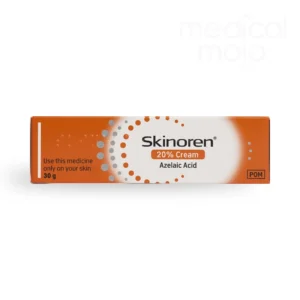 Skinoren 20% CreamPrice range: £19.99 through £50.97
Why Skin Hyperpigmentation Occurs
Skin hyperpigmentation results from excessive synthesis of melanin, the primary pigment responsible for skin darkening [1]. Melanin absorbs and reflects ultraviolet radiation, protecting skin from photodamage, but increased melanin content in combination with extrinsic stress factors—such as excess UV exposure, allergic reactions, or injury—can lead to discolouration [2].
The process involves several key mechanisms. UV exposure initiates a complex inflammatory cascade beginning with reactive oxygen species (ROS) generation and keratinocyte activation, leading to the release of TNF-alpha, which activates signalling pathways (predominantly NF-?B and MAPK cascades) that converge on the upregulation of microphthalmia-associated transcription factor (MITF), the master regulator of melanogenesis [3]. This results in increased expression of key melanogenic enzymes, including tyrosinase, TRP-1, and TRP-2, leading to increased melanin synthesis and deposition [3].
How Tretinoin Helps
Tretinoin 0.025% has been shown to be significantly more effective than 10% urea in treating acanthosis nigricans, with 63.2% of patients achieving more than 75% skin improvement [4]. Tretinoin 0.05% cream prevented hyperpigmentation during UV phototherapy without compromising treatment response [5]. The mechanism likely involves tretinoin’s ability to normalise skin cell turnover and reduce melanin transfer, though the specific depigmenting pathways require further investigation.
How Niacinamide Helps
Niacinamide is a well-established ingredient known for reducing hyperpigmentation by inhibiting melanosome transfer from melanocytes to keratinocytes [6]. Niacinamide induced significant colourimetric improvement in hyperpigmentation with antimelanogenic and anti-inflammatory properties [7]. Niacinamide inhibits melanogenesis by decreasing the melanin transfer to melanosomes [8], making it effective at preventing visible pigment accumulation even when melanin production occurs.
How Azelaic Acid Helps
Azelaic acid (AZA) is an inhibitor of tyrosinase, mitochondrial respiratory chain enzymes and DNA synthesis, and is a scavenger of harmful free radicals and inhibits the production of reactive oxygen species by neutrophils [9]. Azelaic acid in concentrations greater than 20% produces an induced chemical peel with progressive precipitation of epidermal proteins with minimal melanocytic reaction, antiproliferative and cytotoxic action in melanocytes, with inhibition of mitochondrial oxidoreductase activity and synthesis of DNA, reducing hyperpigmentation by inducing desquamation and an inhibitory effect on tyrosinase [10]. Azelaic acid demonstrated better results than hydroquinone in reducing melasma severity as measured by the Melasma Area Severity Index [11].
All three agents target hyperpigmentation through complementary mechanisms—tretinoin through cell turnover enhancement, niacinamide through blocking melanosome transfer, and azelaic acid through direct tyrosinase inhibition and antioxidant effects—making them useful options either alone or in combination.
Disclaimer: This content is for general information only and does not replace advice from your doctor, specialist, or pharmacist.
References: