

These three mast cell-related conditions form a complex spectrum of disorders with overlapping symptoms but distinct pathophysiological characteristics. In this article we will discuss understanding HAT, MCAS, and mastocytosis, their key differences and clinical challenges surrounding them.
-
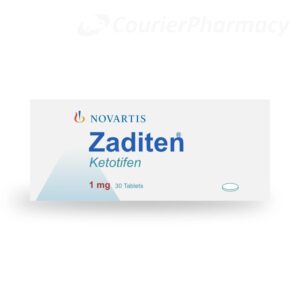 Ketotifen 1mg (Zaditen) tabletsPrice range: £29.99 through £199.99
 -
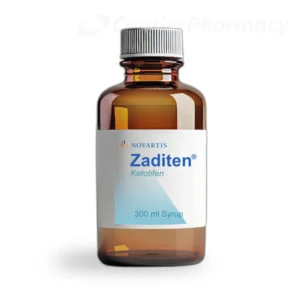 Zaditen Elixir – Ketotifen 1mg/5ml Elixir, 300mlPrice range: £34.99 through £99.99
 -
 Nalcrom (sodium cromoglycate) 100mg capsulesPrice range: £99.99 through £279.99
Fundamental differences
Hereditary Alpha-Tryptasemia (HAT) is a genetic trait characterised by an autosomal dominant inherited amplification of the TPSAB1 gene that encodes alpha-tryptase [1]. HAT is found in 5-6% of the general population and results in elevated baseline serum tryptase levels (>8-11.4 ng/mL) [1]. Importantly, HAT involves increased tryptase production without significant mast cell proliferation.
Mast Cell Activation Syndrome (MCAS) is fundamentally different—it’s characterised by episodic, severe, recurrent symptoms caused by abnormal mast cell activation and mediator release [2]. MCAS can be classified into primary (clonal), secondary, or idiopathic forms, depending on whether clonal mast cells are present and whether triggers can be identified [2].
Mastocytosis (primarily systemic mastocytosis) is a clonal hematologic neoplasm characterised by pathologic accumulation of abnormal mast cells in various organs, driven in approximately 90% of cases by an activating KIT D816V mutation [1]. Unlike HAT and many MCAS cases, mastocytosis involves actual proliferation of neoplastic mast cells [3].

Diagnostic challenges and distinctions
The overlap between these conditions creates significant diagnostic difficulty. All three can present with elevated baseline serum tryptase and similar mast cell-mediated symptoms, including gastrointestinal issues, neuropsychiatric symptoms, and anaphylaxis [1].
The key challenge lies in distinguishing them. HAT and SM both display elevated baseline serum tryptase levels and share mast cell-mediated symptoms, yet currently there is no readily available non-invasive test to discriminate between HAT and SM [1]. MCAS diagnosis requires objective evidence of acute, event-related tryptase elevation (a 20% increase over baseline plus 2 ng/mL within 4 hours of an episode), whereas elevated baseline tryptase alone is insufficient for MCAS diagnosis [2].
Diagnostic conventions for each condition:
For MCAS, the Vienna Consensus established three core criteria: (1) clinical criterion—severe recurrent symptoms involving two or more organs with anaphylactic features; (2) laboratory criterion—significant acute increase in tryptase (120% of baseline plus 2 ng/mL) during symptom episodes; and (3) therapeutic response criterion—symptoms improve with mast cell-targeting drugs [2]. The 20% + 2 formula is considered the gold standard for detecting acute mast cell activation [4].
For Mastocytosis, diagnosis requires a bone marrow biopsy showing multifocal dense mast cell aggregates, combined with either elevated baseline tryptase (>20 ng/mL as a minor criterion) or KIT D816V mutation detection [5]. Detection of this mutation is crucial—modern high-sensitivity assays can identify KIT p.D816V in peripheral blood with greater reliability than conventional methods [6].
For HAT, diagnosis is confirmed through molecular genetic testing detecting TPSAB1 copy number variations [7]. HAT should be suspected in all individuals presenting with mast cell-mediated symptoms and baseline serum tryptase >8 ng/mL [1].
Severity and clinical outcomes
The three conditions have markedly different severity profiles. HAT patients typically experience neuropsychiatric symptoms (exhaustion in 85%, sleep disturbances in 69%, memory impairment in 59-68%) and gastrointestinal symptoms, though these are usually manageable [7]. HAT does not result in organ damage and is generally considered a predisposition rather than a progressive disease.
MCAS severity is highly variable, ranging from episodic mild symptoms to life-threatening anaphylaxis [8]. Most patients with idiopathic MCAS have a favourable clinical course, though some require multiple medications for prevention and management [9].
Mastocytosis shows the most variable severity spectrum. Indolent systemic mastocytosis (ISM) has a favourable prognosis with good survival outcomes, while advanced systemic mastocytosis (AdvSM) subtypes, including aggressive SM (ASM), SM with associated hematologic neoplasm (SM-AHN), and mast cell leukaemia (MCL), have significantly worse prognosis [10]. Median overall survival differs markedly: ISM has not reached median OS, SSM 11.3 years, SM-AHN 10.3 years, ASM 6.1 years, and MCL only 0.9 years [10].
Treatment options
HAT treatment is primarily symptomatic, utilising antihistamines (H1 and H2 blockers), mast cell stabilisers, or IgE antibodies to manage symptoms [7]. HAT does not require cytoreductive therapy as there is no clonal mast cell expansion.
MCAS management begins with patient education on triggers and epinephrine auto-injectors for anaphylaxis episodes [9]. Prophylactic therapy starts with H1-antihistamines and escalates based on response, potentially adding H2 blockers, mast cell stabilisers, and IgE-blocking agents [9]. Recent evidence suggests imatinib may benefit some MCAS patients, with 78.6% showing clinical response [11].
Mastocytosis treatment is stratified by disease severity. Indolent forms focus on symptom control similar to MCAS, with emphasis on anaphylaxis prevention and treatment of comorbidities like osteoporosis [12]. Advanced mastocytosis requires cytoreductive therapy with tyrosine kinase inhibitors—avapritinib (a selective KIT D816V inhibitor) and midostaurin (multi-kinase inhibitor) are first-line agents [13]. Notably, avapritinib demonstrated superior overall survival compared to midostaurin in advanced disease, with 24-month survival of 89.8% versus 53.8% respectively [13].
Key clinical takeaways
The diagnostic challenge lies in recognising that elevated baseline tryptase does not indicate disease severity or the need for aggressive treatment. Simultaneously, non-invasive testing for both KIT D816V mutation and HAT genotype can discriminate between conditions [1]. For patients with BST >20 ng/mL or clinical signs of SM, bone marrow biopsy remains mandatory for definitive diagnosis [1]. Additionally, up to 21.4% of patients with very elevated tryptase (>20 ng/mL) have both HAT and SM, requiring combined diagnostic approaches [1]. Over-diagnosis of MCAS is common and problematic, potentially delaying diagnosis of underlying conditions that require different treatment [2].
Disclaimer: This article is for informational purposes only and is not a substitute for professional medical advice.
References:
[12] A. Pardanani, “Systemic mastocytosis in adults: 2023 update on diagnosis, risk stratification and management,” Wiley, May 2023, doi: https://onlinelibrary.wiley.com/doi/10.1002/ajh.26962