

Living with fibromyalgia means navigating persistent pain, profound fatigue, and the frustrating ‘fibro fog’. This guide explores a promising approach for managing these symptoms, low-dose naltrexone (LDN). It’s the story of a repurposed medication that uses a tiny dose to rebalance the body’s pain-relief systems. It can quieten underlying inflammation, offering a different kind of hope for those seeking relief in the UK.
Table of contents
- Key takeaways on LDN for fibromyalgia
- Your guide to Low-Dose Naltrexone and fibromyalgia
- How LDN works to relieve fibromyalgia symptoms
- The endorphin rebound effect
- Calming brain inflammation
- What the research says about LDN for fibromyalgia
- Translating clinical findings into daily life
- Key benefits identified in research
- Starting LDN therapy: A practical guide
- The titration process explained
- A typical dosing schedule and what to expect
- Courier Pharmacy’s LDN titration protocol (start low, go slow)
- Managing expectations and side effects
- How to get low dose naltrexone in the UK
- The role of a compounding pharmacy
- Essential safety information and contraindications
- Informing your healthcare team
- Summary
- FAQs on Low dose naltrexone for fibromyalgia
- References:
-
Product on sale
 Nutrigen genetic testOriginal price was: £499.99.£399.99Current price is: £399.99.
Key takeaways on LDN for fibromyalgia
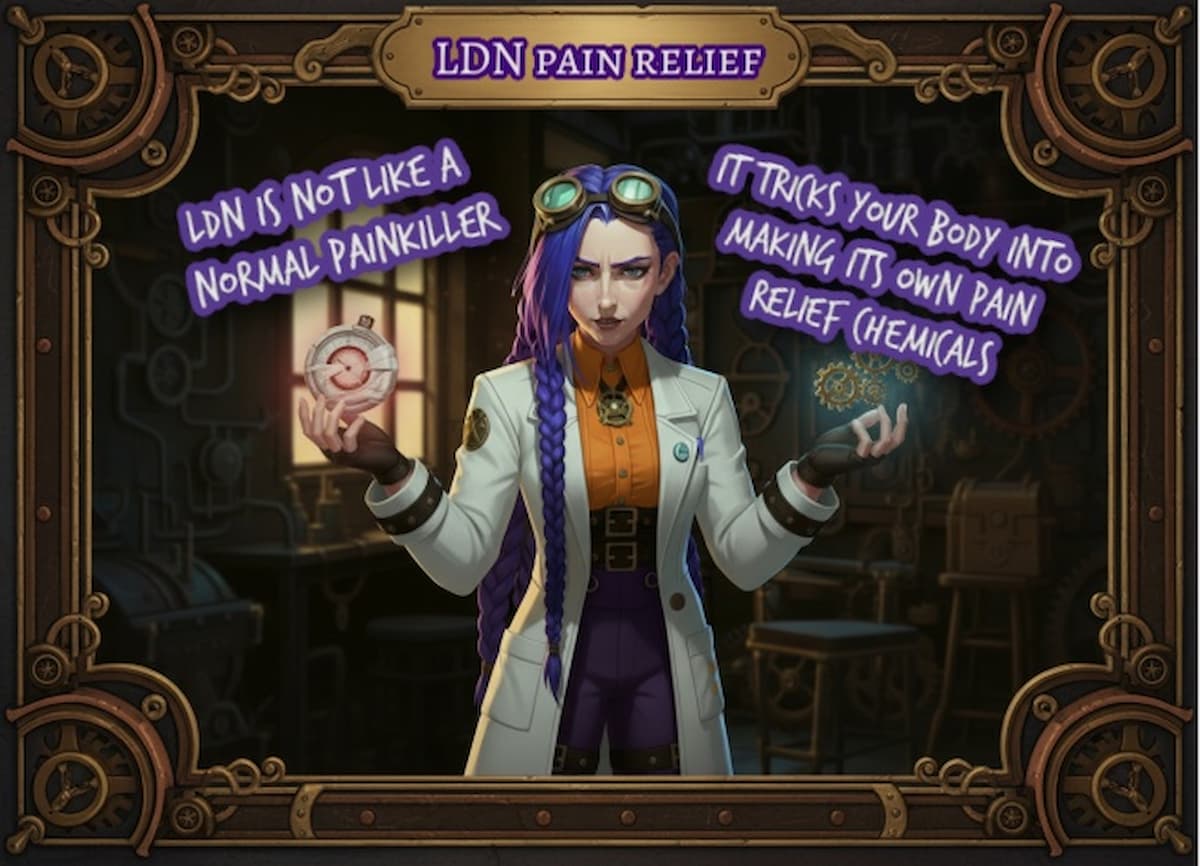
- It’s not a standard painkiller: LDN works differently. Instead of masking pain, it boosts your body’s natural pain-relieving endorphins and calms the overactive immune cells in your brain that contribute to fibromyalgia pain.
- ‘Start Low, Go Slow’ is the Golden Rule: Treatment begins with a very small dose (e.g., 0.5mg) and is gradually increased over weeks. This titration process is essential to minimise side effects and find the dose that works best for you.
- Opioids are a strict No-Go: You must avoid all opioid-based painkillers (like codeine or tramadol) while on LDN. Taking them together can block the opioid’s effect and trigger sudden withdrawal symptoms.
- Patience is crucial: Don’t expect overnight results. While some notice improvements sooner, it typically takes three to six months to feel the full benefits of LDN. Keeping a simple symptom diary can help you track subtle progress.
- A specialist prescription is required: In the UK, LDN is an ‘off-label’ treatment for fibromyalgia and requires a private prescription from a specialist service. The medication must be prepared by a compounding pharmacy to ensure the dose is accurate and safe. This service is all in-house at Courier Pharmacy.
Your guide to Low-Dose Naltrexone and fibromyalgia
Dealing with the widespread pain of fibromyalgia can feel like a relentless battle, impacting everything from simple daily chores to your ability to truly enjoy life. Many people find themselves exploring a long list of treatments in search of relief. In the UK, low dose naltrexone for fibromyalgia is an option that’s been steadily gaining attention from patients and clinicians alike [1].
LDN isn’t a cure, but it offers a unique strategy. Instead of just masking pain, it aims to correct some of the underlying imbalances within the body’s immune and pain-signalling systems that are thought to go haywire in fibromyalgia. It’s important to know that this is considered an ‘off-label’ treatment, which simply means it’s being used for a condition other than what it was originally licensed for.

Getting your head around these core points is the first step to figuring out if LDN could be a useful part of your overall management plan. For a broader look at different strategies for this condition, have a read of our comprehensive guide on managing fibromyalgia.
How LDN works to relieve fibromyalgia symptoms
To really get your head around why low-dose naltrexone for fibromyalgia is such a different approach, it’s useful to know where it came from. Its parent drug, naltrexone, is typically used at much higher doses (around 50mg) to completely shut down opioid receptors. This is great for treating addiction, as it stops opioids from giving a high.
But LDN is different. It uses a tiny fraction of that dose—usually between 1.5mg to 4.5mg—to do something far more clever. Instead of a complete shutdown, it causes a brief, gentle interruption [2].

The endorphin rebound effect
Think of LDN as hitting a temporary reset button on your body’s own pain-relief system. When you take it, the medication briefly occupies some of your opioid receptors for a few hours. This short-term blockade sends a simple message to your brain: “Hey, we need more of our natural pain relievers down here!”
In response, your body ramps up its production of endorphins—your own powerful, home-grown chemicals for killing pain and lifting your mood. A few hours later, as the LDN wears off, the receptors become free again, just in time for this fresh wave of endorphins to flood in [2].
This smart mechanism, often called the ‘rebound effect,’ leads to higher overall endorphin levels. This can translate into:
- A better pain threshold: You might find that daily activities hurt less.
- Improved mood regulation: Endorphins are famous for creating a sense of well-being.
- A more balanced immune system: These natural chemicals also help regulate immune function.
A pharmacist’s insight: “The elegance of LDN lies in its ability to prompt the body to heal itself. Rather than introducing a powerful external chemical to mask pain, it encourages your own system to produce more of what it naturally needs to manage pain and inflammation. It’s about restoring balance, not overriding the body’s processes.”
This endorphin boost is the first piece of the puzzle. If you’d like to dive deeper, you can explore our dedicated article on how LDN works within the body.

Calming brain inflammation
The second part of LDN’s action is just as vital when it comes to fibromyalgia. We now understand that the condition involves neuroinflammation—that is, persistent inflammation within the brain and spinal cord.
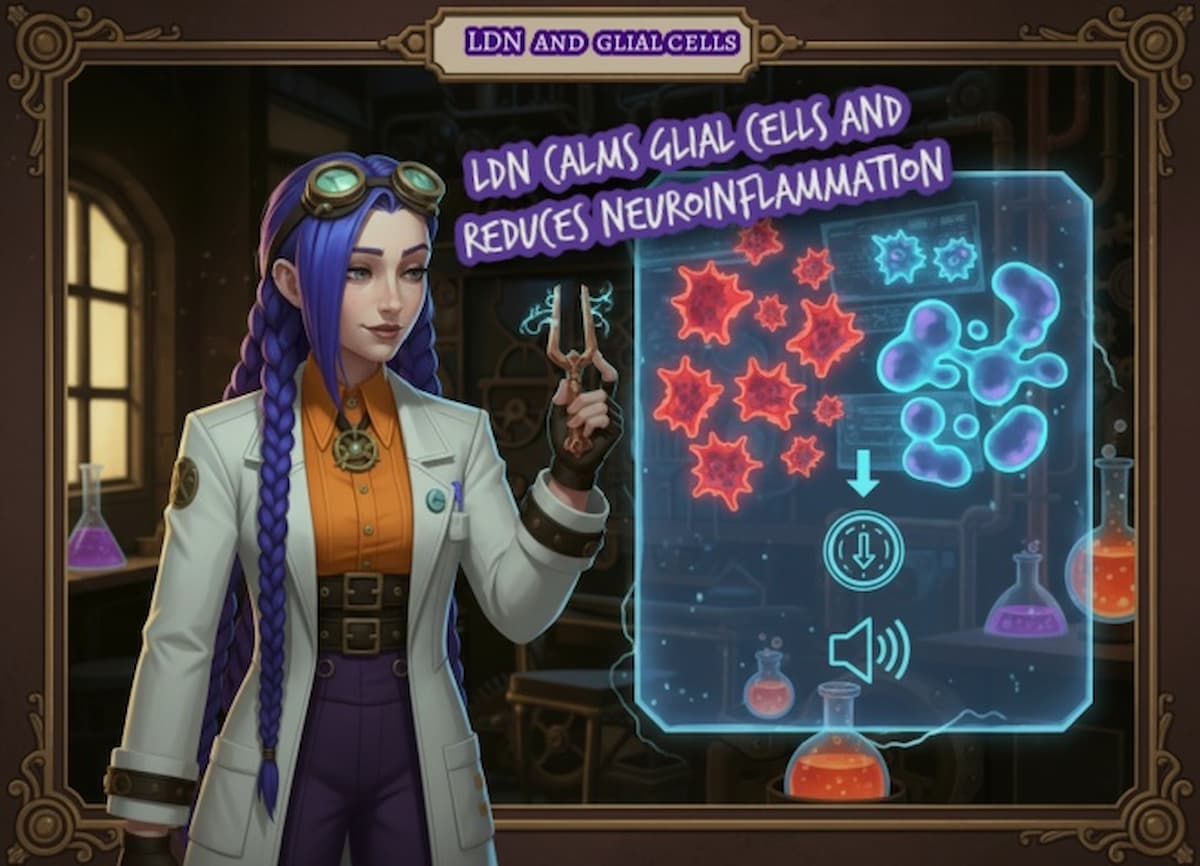
Specialised immune cells in your brain, called glial cells, are key players here. Normally, they support and protect your neurons. But in chronic conditions like fibromyalgia, these glial cells can become overactive, constantly pumping out inflammatory chemicals [3].
This chronic inflammation makes your entire nervous system hypersensitive, essentially turning up the volume on pain signals. It’s a big part of why a light touch can feel painful (a symptom called allodynia) and why the pain is so widespread [4].
LDN is thought to have a direct calming effect on these overactive glial cells. By soothing them, it helps to:
- Reduce the release of inflammatory substances in the brain.
- Lower the overall level of neuroinflammation.
- Turn down the amplification of pain signals.
This dual-action approach—boosting endorphins while simultaneously calming brain inflammation—is what makes low dose naltrexone a compelling option for fibromyalgia. It’s a condition that affects a huge number of people in the UK, with estimates suggesting that between 2.9% and 5.5% of the population live with it. That could be over two million individuals searching for real relief [5].
By tackling both the body’s pain-relief chemistry and the underlying neuroinflammatory drivers, LDN gets to the root of fibromyalgia symptoms, offering a more foundational way to manage this complex condition.
What the research says about LDN for fibromyalgia
When you’re looking into a treatment like low dose naltrexone for fibromyalgia, the big question is always the same: Does it actually work? Personal stories are compelling, but it’s the scientific evidence that gives you a solid footing for a conversation with your doctor. The research on LDN and fibromyalgia is genuinely promising, though it’s good to have a realistic picture of what the studies have found so far.
Much of the groundwork for LDN in fibromyalgia was laid at Stanford University in the US. Their early, smaller-scale studies were critical because they were the first to properly investigate the connection. The results were consistently positive and sparked a much wider interest in LDN as a potential therapy [6].

Translating clinical findings into daily life
When you read a study that reports a “statistically significant reduction in pain,” what does that actually mean for someone whose life is shaped by fibromyalgia? It’s about far more than numbers on a chart. It’s about real, tangible improvements that can completely change your day-to-day.
- Morning stiffness: That reduction in pain could mean waking up without the familiar, debilitating stiffness, making the simple act of getting out of bed less of a monumental effort.
- Increased activity: It could give you enough energy and pain relief to enjoy a walk, play with your kids, or get through your chores without paying a heavy “pain penalty” later.
- Improved sleep quality: Many studies highlighted better sleep, which is a massive piece of the puzzle for managing fibromyalgia. We’re not just talking about sleeping longer, but actually waking up feeling more rested.
- Enhanced mood and well-being: When pain eases, and sleep improves, it’s only natural that your overall sense of well-being gets a lift. This can help clear some of the “fibro fog” and brighten your mood.
In short, the research suggests LDN helps to turn down the volume on the relentless, widespread pain signals that are the hallmark of fibromyalgia. In one key study, nearly 60% of participants reported feeling “much improved” or “very much improved” after taking LDN [6].
A pharmacist’s tip: “When my patients tell me LDN is working, they don’t use scientific terms. They say things like, ‘I was able to go to the supermarket and cook dinner in the same day,’ or ‘It’s the first time in ten years I didn’t need to take paracetamol. ‘ That’s what clinical improvement really looks like.”
Key benefits identified in research
Looking across the various studies, a few key benefits for people using low dose naltrexone for fibromyalgia pop up again and again. These consistent findings are a big part of why it’s becoming such a compelling option for this notoriously complex condition.
The most obvious benefit, of course, is pain reduction. Researchers consistently found that LDN was effective at bringing down daily pain scores for a significant number of participants. This is thought to be down to its double-whammy effect: boosting your body’s natural painkillers (endorphins) while also calming down the overactive immune cells in the brain and spinal cord that are responsible for amplifying pain signals [6].
LDN does more than reduce pain
Other important improvements included:
- Reduced pain sensitivity: Many participants became less sensitive to touch and pressure. For anyone living with allodynia—where even the slightest touch can be painful—this is a huge deal.
- Better overall quality of life: With less pain and fatigue holding them back, people reported a real improvement in their life satisfaction and ability to do the things they love.
- Fewer side effects: Compared to many of the standard medications for fibromyalgia, LDN was found to be very well-tolerated. The most common side effect tends to be vivid dreams, which often settle down over time [7].
This mix of benefits is what makes low dose naltrexone so interesting. It isn’t just papering over one symptom; it appears to be getting at the underlying mechanisms of pain amplification and neuroinflammation that drive the condition. It’s an approach that’s also being explored for other chronic pain states, as you can see in our detailed guide on LDN for Complex Regional Pain Syndrome (CRPS).
It’s important to mention that the scientific community still sees much of this research as preliminary. Many of the studies have been small, and everyone agrees that larger, more definitive trials are needed. That said, the consistency of the findings across these smaller studies sends a strong signal that LDN is a genuinely useful tool for many people suffering from fibromyalgia, giving you a solid basis for a confident conversation with your doctor.
Starting LDN therapy: A practical guide
Starting any new treatment can feel like a big step, but beginning your journey with low dose naltrexone for fibromyalgia is a process that’s designed to be gradual and gentle. From a pharmacist’s point of view, the core principle is simple but absolutely essential: ‘start low, go slow.’ This isn’t just a catchy phrase; it’s the key to letting your body adapt and finding the dose that works for you with the least amount of fuss.
This guide will walk you through what to expect, from your first dose to managing your treatment long-term. We’ll cover typical dosing schedules, common side effects, and some insider tips to help make your experience as smooth as possible.
The titration process explained
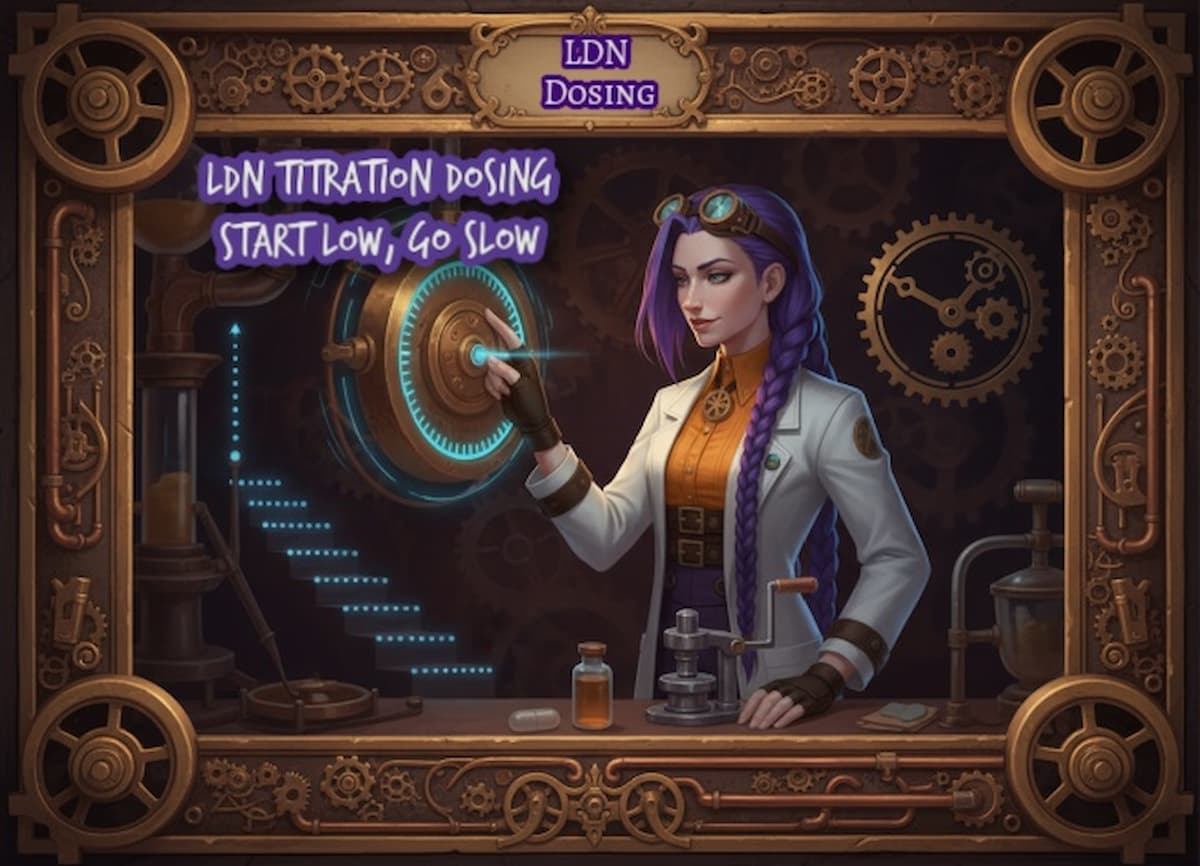
When you begin LDN, you won’t jump straight to your final dose. Instead, you’ll go through a careful process called titration, where the dose is slowly increased over several weeks, or sometimes even months. The best way to think about it is like turning up the volume on a radio—you find the perfect level without any sudden, jarring noise.
This slow and steady increase is crucial for two big reasons:
- It gives your body a chance to get used to the medication’s effects on your endorphin and immune systems.
- It dramatically reduces the chance of side effects and lessens their intensity, giving your body plenty of time to acclimate.
A typical starting dose is tiny, often somewhere between 0.5mg and 1.5mg a day. Your prescriber will map out a specific schedule for you, but the goal is always the same: to find your personal “sweet spot”—the lowest dose that gives you the benefits you need without causing unwanted side effects.
A typical dosing schedule and what to expect
To give you a clearer picture of how this works, we’ve put together an example of a common titration schedule. Just remember, this is a general guide. Your personal schedule will be tailored to you by your prescriber and could look different.
Here’s a look at what the first few weeks might involve.
Example LDN titration schedule and what to expect
| Week | Daily dose (mg) | Common side effects | Pharmacist’s tip |
| Weeks 1-2 | 1.5mg | Vivid dreams, temporary sleep disruption, and mild headache. | If sleep is affected, try taking your dose first thing in the morning instead of at night. Most initial side effects are mild and often resolve within the first week. |
| Weeks 3-4 | 3.0mg | You might notice the initial side effects return briefly as your dose increases, but they are often less intense than before. | Stay well-hydrated. Sometimes a simple headache is a sign of dehydration rather than a medication side effect. |
| Weeks 5+ | 4.5mg | By this stage, most side effects have settled. You will now be on a common maintenance dose, though some people find a lower dose is optimal for them. | Keep a simple symptom diary. Note your pain levels, energy, and sleep quality to track your progress and share this with your prescriber. |
This patient, methodical approach is the bedrock of successful LDN therapy. It’s not a race. It’s about carefully tuning the treatment to your body’s unique chemistry.
Courier Pharmacy’s LDN titration protocol (start low, go slow)
Low dose naltrexone (LDN) works best when you ease into it. That’s why our approach follows the golden rule: start low, go slow. The goal isn’t to rush to the “highest dose”. It’s to find the lowest dose that gives you the best benefit with the fewest side effects.
At courierpharmacy.co.uk, we offer two practical titration options, depending on what suits you best: capsules (including our Starter Pack) or LDN liquid.
Option 1: LDN liquid (1mg/ml) titration
Our LDN liquid is 1mg per 1ml, which makes dose changes straightforward.
How to take it
- Start with 0.5ml once daily (equivalent to 0.5mg).
- Increase by 0.5ml each step (equivalent to 0.5mg).
- Increase either:
- weekly, or
- every 3–4 days (if advised and tolerated),
- Continue until you reach a dose in the usual target range of 3mg to 4.5mg daily.
Simple weekly schedule (liquid)
- Week 1: 0.5ml daily
- Week 2: 1.0ml daily
- Week 3: 1.5ml daily
- Week 4: 2.0ml daily
- Week 5: 2.5ml daily
- Week 6: 3.0ml daily
- Week 7: 3.5ml daily
- Week 8: 4.0ml daily
- Week 9: 4.5ml daily (maintenance for many people)
If you feel great at 3.0ml (3mg), you may not need to go higher. If you feel nothing at all, it may simply mean you need more time or a different dose. LDN is a slow-burner, not a fireworks display.
Option 2: Courier Pharmacy LDN Starter Pack (capsules)
We also offer the Courier Pharmacy LDN Starter Pack — described as the first of its kind in the UK — designed to make titration simple and structured, without splitting tablets or guessing doses.
Courier Pharmacy LDN Starter dose schedule
- Days 1–7: 0.5mg capsule daily
- Days 8–14: 1mg capsule daily
- Days 15–21: 1.5mg capsule daily
- Days 22–28: 2mg capsule daily
- Days 29–35: 3mg capsule daily
- Day 36 onwards: 4.5mg capsule daily
This stepped approach helps your body adjust gradually and makes it easier to spot the dose that feels “just right”.
Which option is best?
- Liquid is great if you want fine control and the option to increase a bit faster (every 3–4 days) when appropriate.
- Starter Pack capsules are ideal if you want a clear plan with pre-measured doses and minimal faff.
This infographic shows the journey of LDN research for fibromyalgia, from early explorations to more formal trials.
LDN Fibromyalgia timeline

As you can see, while LDN itself isn’t new, its specific use for fibromyalgia has evolved through dedicated research, which is what has paved the way for its use today.
Managing expectations and side effects
One of the most important parts of starting LDN is setting realistic expectations. This isn’t an overnight fix for fibromyalgia. While some people report feeling subtle improvements within a few weeks, it’s far more common for the full benefits to emerge over three to six months. Patience is truly your greatest ally here.
The most frequently reported side effects are generally mild and tend to fade as your body adjusts. They include:
- Vivid dreams: Many people notice their dreams become more intense or memorable. This can be a bit strange at first, but it usually becomes less noticeable over time.
- Sleep difficulties: Some find it a bit harder to fall or stay asleep in the beginning.
- Mild headaches: These can pop up as your body gets used to the medication, but typically don’t last long.
A pharmacist’s tip: “The morning versus night dosing debate is a common one. There’s no right answer—it’s about what works for you. If LDN energises you or disrupts your sleep, morning dosing is the logical choice. If it doesn’t, taking it at bedtime is perfectly fine and may align better with the body’s natural endorphin cycles.”
LDN is a compounded medicine
Because the doses are so small and specific, low dose naltrexone for fibromyalgia must be prepared by specialists. To learn more about how these precise medications are created, you can explore the services of a UK compounding pharmacy, where pharmacists create bespoke formulations tailored to individual patient needs. This ensures you receive a safe, accurate, and consistent dose every time—something that’s impossible to achieve by trying to split standard tablets.
How to get low dose naltrexone in the UK
Figuring out treatment options for fibromyalgia here in the UK can feel like a maze, especially when you start looking into less common therapies like LDN. If you’re thinking about low dose naltrexone for fibromyalgia, it’s really helpful to know exactly how you can access it. Let’s break down the process.
Because LDN is used ‘off-label’ for fibromyalgia, you won’t typically get it through a standard NHS prescription for this particular condition. That doesn’t mean it’s off-limits, but it does mean taking a slightly different path.
The most common and trusted way to get LDN is through a private prescription from a doctor or a qualified prescriber who knows the ins and outs of LDN therapy. This is where specialist services really come into their own.
The private prescription pathway
Going down the private prescription route is the standard approach for patients in the UK. This makes sure you’re properly looked after by a clinician who can assess if low dose naltrexone is right for you, track your progress, and set up the correct dosing schedule to meet your specific needs.
This process is often a lot more straightforward than you might think. Services like ours at Courier Pharmacy have worked to make the system safe, secure, and completely focused on the patient. The journey usually follows these key steps:
- Secure online medical consultation: It all starts with you filling out a detailed and secure online medical questionnaire. This form goes over your health history, current symptoms, and any other medications you’re taking.
- Review by a UK prescriber: Your completed consultation is then carefully reviewed by a qualified UK prescriber who specialises in conditions like fibromyalgia and treatments such as LDN.
- Personalised assessment: The prescriber will then assess whether LDN is a suitable option for you based on all your medical information. In some situations, they might arrange a quick follow-up call to chat through your case in more detail, just to be certain it’s the right choice.
This structured process puts your health and safety first, ensuring a prescription is only ever issued if it’s clinically appropriate. For a closer look at how modern healthcare services are making treatments more accessible, you can learn about the benefits of a dedicated online pharmacy in the UK.
The role of a compounding pharmacy
Once you have that private prescription, the next vital step is getting the medication itself. This is another area where specialist services are absolutely crucial. Standard naltrexone comes in 50mg tablets, a dose that’s far, far too high for LDN therapy.
A pharmacist’s tip: “Never try to cut or crush a 50mg naltrexone tablet to create a low dose. It’s impossible to get an accurate or consistent dose this way, which is both unsafe and completely ineffective. The active ingredient isn’t spread evenly throughout the tablet, so one tiny piece could have a very different amount of medication than another.”
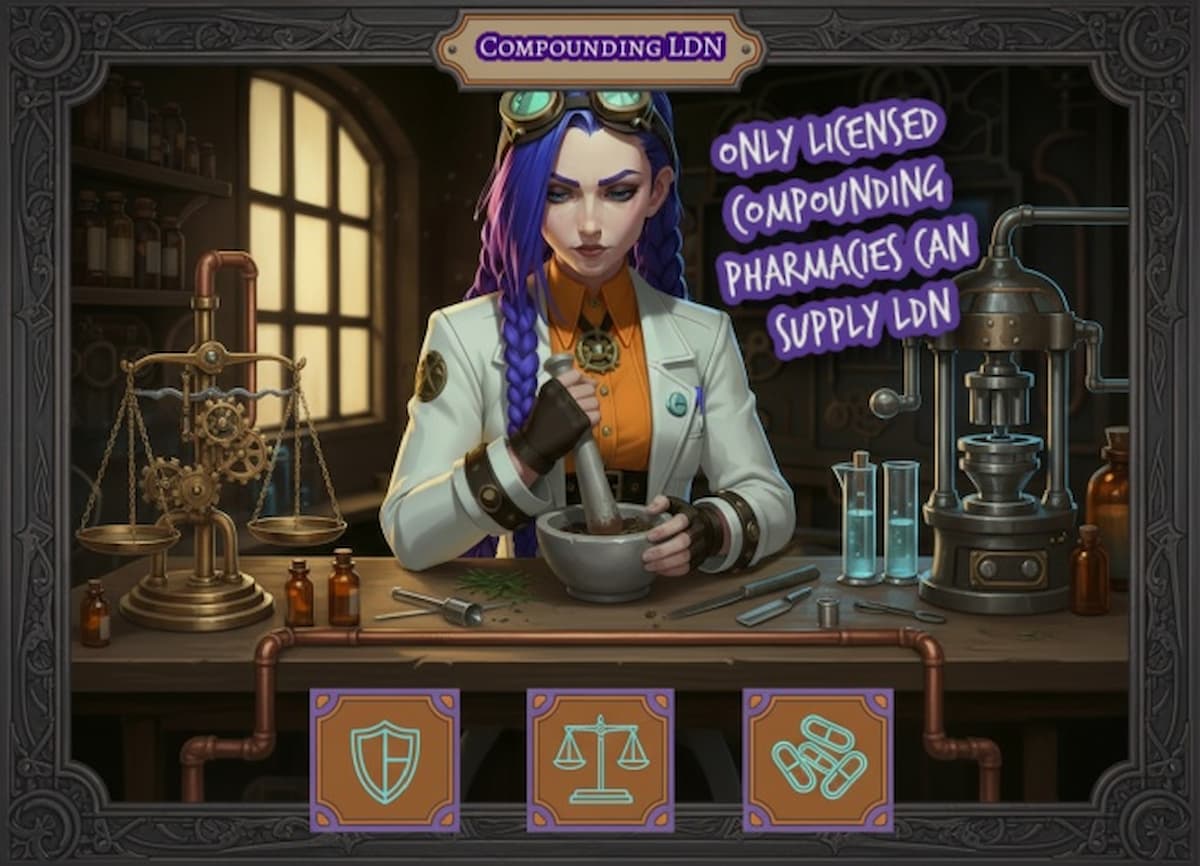
This is where a compounding pharmacy steps in. These are specialist pharmacies with the right equipment and expertise to create custom-made medications from scratch. For LDN, they take the pure, pharmaceutical-grade naltrexone powder and create precise, individual capsules at the exact low doses you need—for example, 1.5mg or 4.5mg.
Going down this route offers several key benefits:
- Accuracy: You get the exact dose your doctor prescribed, which makes your treatment consistent and reliable.
- Safety: Your medication is prepared in a controlled, sterile environment, meeting the highest pharmaceutical standards.
- Quality control: Every ingredient used is certified and pharmaceutical-grade, so you can be sure of the purity and stability of your medication.
By working with a service that brings together a private prescriber and a compounding pharmacy, you get a seamless experience. It provides a safe, accurate, and quality-controlled medication that’s tailored specifically to your fibromyalgia treatment plan.
Essential safety information and contraindications
Before you even think about starting a new treatment, your safety has to come first. While low dose naltrexone for fibromyalgia is known for being quite gentle on the body, there are a few non-negotiable safety rules and contraindications you need to get your head around. Following these guidelines is absolutely critical for your well-being.
The single most important rule is this: you absolutely must not take any opioid-based medications while on LDN. This is a hard and fast contraindication. LDN works by temporarily blocking your opioid receptors, so if you take it with an opioid drug, it won’t just stop the painkiller from working—it can trigger sudden, severe, and deeply unpleasant withdrawal symptoms.
Who should avoid LDN
This ban on opioids covers a surprisingly wide range of common painkillers and other substances. It’s crucial that you are completely free of these before you even consider starting LDN therapy.
- Prescription opioids: This includes medications like codeine, tramadol, morphine, oxycodone, and fentanyl.
- Illicit opioids: The same rule applies to substances like heroin.
- Alcohol dependence medications: You should also steer clear of LDN if you are already on high-dose naltrexone for alcohol dependence.
A pharmacist’s tip: “Always double-check the ingredients in over-the-counter cough and cold remedies, as some contain hidden opioids like codeine. Make it a habit to tell your pharmacist you’re taking LDN before buying anything off the shelf.”
Informing your healthcare team
Keeping your entire healthcare team in the loop is vital. Let your GP, surgeons, dentists, and anaesthetists know that you are taking LDN. This is especially important if you have any medical or dental procedures on the horizon that might involve opioid-based pain relief.
Because low dose naltrexone blocks opioid receptors, it messes with the standard ways doctors manage pain during and after surgery. Your medical team needs a heads-up so they can work out an alternative pain relief plan just for you. Usually, you’ll be advised to stop taking LDN for a set period before and after your procedure to make sure anaesthesia and post-op painkillers can do their job effectively.
On a related note, while LDN is often used to help regulate the immune system, it’s wise to have a chat with your doctor if you’re taking specific immune-suppressing medications, particularly those prescribed after an organ transplant. Making sure all your healthcare providers have the full picture allows them to work together to keep your care safe and effective.
Summary
Low dose naltrexone offers a unique and promising avenue for managing the complex symptoms of fibromyalgia. Unlike conventional treatments, it works by modulating the body’s own systems—boosting natural endorphins and calming neuroinflammation. The key to success with LDN lies in a patient, gradual approach, starting with a very low dose and slowly increasing under a prescriber’s guidance. While it isn’t a quick fix, research and real-world experience show it can lead to significant improvements in pain, fatigue, and overall quality of life. Accessing LDN in the UK requires a private prescription and the expertise of a compounding pharmacy to ensure the medication is both safe and effective.
FAQs on Low dose naltrexone for fibromyalgia
How long does LDN take to work for fibromyalgia?
Patience is key. While some people notice subtle improvements within a few weeks, it generally takes three to six months to experience the full benefits. Following the gradual titration schedule set by your prescriber is the best way to see results.
Can I take LDN with my other fibromyalgia medications?
Yes, in most cases. LDN can typically be used alongside other common fibromyalgia medications like amitriptyline, gabapentin, or pregabalin. The critical exception is opioid-based painkillers (e.g., codeine, tramadol), which must be stopped before starting LDN. Always provide your prescriber with a full list of your current medications.
What happens if I miss a dose of LDN?
If you miss a dose, simply skip it and take your next dose at the regular time. Do not double up to make up for the missed dose. Missing one dose is unlikely to cause any significant issues or withdrawal symptoms.
Why must LDN be made by a compounding pharmacy?
Standard naltrexone tablets are manufactured in a 50mg strength, which is far too high for LDN therapy. It’s impossible and unsafe to cut these tablets accurately. A specialist compounding pharmacy uses pure pharmaceutical-grade ingredients to create precise, stable low-dose capsules (e.g., 1.5mg, 4.5mg), ensuring you get the correct, safe dose every time.
Is LDN available on the NHS for fibromyalgia?
Typically, no. Because its use for fibromyalgia is ‘off-label’, LDN is not usually prescribed on the NHS for this condition. The standard route for accessing LDN in the UK is through a private prescription from a specialist clinic or online service.
At Courier Pharmacy, we specialise in providing these precisely compounded medications through a safe, supportive online consultation process. Our expert team is here to guide you, ensuring you receive a treatment plan that’s right for your specific needs. Start your consultation today to explore if LDN could be right for you.
Disclaimer: This article is for informational purposes only and is not a substitute for professional medical advice.
References:
[1] Courier Pharmacy. (2025). Can Low-Dose Naltrexone help in Fibromyalgia? [online] Available at: https://courierpharmacy.co.uk/can-low-dose-naltrexone-help-in-fibromyalgia/ [Accessed 10 Nov. 2025].
[2] Courier Pharmacy. (2025). How does LDN work? [online] Available at: https://courierpharmacy.co.uk/how-does-ldn-work/ [Accessed 10 Nov. 2025].
[5] Jones, G.T., Atzeni, F., Beasley, M., Flüß, E., Sarzi-Puttini, P. and Macfarlane, G.J. (2015) ‘The prevalence of fibromyalgia in the general population: a comparison of the American College of Rheumatology 1990, 2010 and modified 2010 classification criteria’, Arthritis & Rheumatology, 67(2), pp. 568–575. Available at: https://pmc.ncbi.nlm.nih.gov/articles/PMC4932255/ (Accessed: 22 January 2026).
[6] Courier Pharmacy. (n.d.) The evolution of low dose naltrexone. Available at: https://courierpharmacy.co.uk/the-evolution-of-low-dose-naltrexone/ (Accessed: 22 January 2026).
[7] Courier Pharmacy. (n.d.) What are the side effects of low dose naltrexone? Available at: https://courierpharmacy.co.uk/what-are-the-side-effects-of-low-dose-naltrexone/ (Accessed: 22 January 2026).