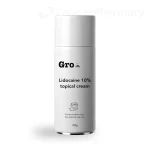
UK compounded unlicensed medicine— lidocaine hydrochloride 10% in a Versapro cream base with ethoxydiglycol penetration enhancer for localised neuropathic pain
Mainly used for post-herpetic neuralgia and other localised neuralgia where Versatis patches don’t fit the anatomical area
Also suitable for trigeminal, occipital, pudendal neuralgia, focal diabetic neuropathy, and procedural skin numbing
Prescriber-led supply with documented informed consent; 30g tube for daily neuralgia use with regular prescriber review
Post-herpetic neuralgia is one of the most overlooked conditions in UK clinical practice. After all, PHN affects daily life, sleep, mood, and quality of life in ways that aren’t always obvious to people who haven’t had it. Burning, stabbing, electric shock pains. Skin so sensitive that clothing hurts. Pain that wrecks every night’s sleep. So good topical treatment genuinely changes outcomes — for PHN and for other forms of localised neuralgia.
Lidocaine 10% Compounded Cream fills a specific gap. In particular, the higher strength and flexible cream format give targeted nerve pain relief where Versatis patches don’t fit well. For example, on the face, scalp, hands, feet, or scattered patches. As a result, patients with awkwardly-shaped neuralgia patterns can get the focused relief they need. However, the trade-off is honest: higher strength means tighter daily use limits, attention to safe use, and regular prescriber review.
Where Lidocaine 10% Cream fits in nerve pain management
The UK approach to nerve pain follows a stepped path:
Step 1: Find and treat the root cause where possible. For example shingles vaccination, diabetes control, or surgical decompression
Step 2: First-line whole-body medicines — for example amitriptyline, duloxetine, gabapentin, or pregabalin (any can be tried first per NICE)
Step 3: Topical capsaicin cream for localised nerve pain — for some patients
Step 5: Switch or combine whole-body medicines if first-line doesn’t work
Step 6: Tramadol or stronger opioid pain relief under specialist guidance
Step 7: Compounded high-strength topical lidocaine (this product) — when patches don’t fit and licensed options haven’t given enough relief
Step 8: Pain clinic referral for specialist input
Step 9: Procedural pain management — for example nerve blocks, neuromodulation, or spinal cord stimulation
So Lidocaine 10% Cream typically sits at Step 7. In short, it suits patients who have tried licensed options first, where the anatomy or response pattern means those options don’t quite fit.
Lidocaine 10% Cream vs Versatis 5% patches
This is the most important comparison:
Versatis 5% medicated plaster: the licensed UK product for PHN, with lidocaine 5% in a patch format
In contrast, Lidocaine 10% Cream is an unlicensed special at double the strength in a cream format
So Versatis is the licensed first-line option for PHN
Also, Versatis has more clinical trial evidence and regulatory approval
However, Versatis patches don’t fit some body areas (face, scalp, hands, feet, curved areas)
In addition, some patients react to the Versatis adhesive
Also, some patients don’t get enough relief from the 5% strength
In contrast, Lidocaine 10% Cream fits any body shape
Also, the cream covers scattered patches at the same time
However, the cream needs more frequent reapplication (Versatis lasts 12 hours per application)
In general, patients try Versatis first, while the cream suits situations where patches don’t fit
Lidocaine 10% Cream vs whole-body nerve pain medicines
Topical vs whole-body treatment:
Whole-body options include gabapentin, pregabalin, amitriptyline, duloxetine, and tramadol
So these are the licensed nerve pain treatments per NICE guidance
Also, they work throughout the body — suitable for widespread or multi-site pain
However, they cause whole-body side effects (drowsiness, weight gain, mood changes, dependence)
In contrast, topical Lidocaine 10% Cream works only where applied
So fewer whole-body side effects
However, it suits localised pain only
In general, the two approaches often work alongside each other — whole-body for background control, topical for breakthrough or focal areas
Lidocaine 10% Cream vs capsaicin cream
Different topical ways of working:
Capsaicin cream (Axsain, Zacin): extract from chilli peppers that drains substance P from pain nerve endings
In contrast, Lidocaine 10% Cream blocks sodium channels directly
However, capsaicin causes initial burning that some patients can’t put up with
Also, Lidocaine 10% gives immediate numbing without the burning
In addition, capsaicin needs 4 times daily use for several weeks before benefit
In contrast, Lidocaine 10% works much faster
So in some cases, patients use both at different times under prescriber guidance
Lidocaine 10% Cream vs Qutenza 8% capsaicin patch
Different ways to treat PHN topically:
Qutenza 8% patch: licensed high-strength capsaicin, applied once every 90 days in clinic under specialist supervision
In contrast, Lidocaine 10% Cream is for daily home use by the patient
So Qutenza is licensed for PHN, although it needs clinic visits
Also, Qutenza causes intense discomfort during application
However, Lidocaine 10% Cream is more practical for patients managing PHN at home
In some cases, patients use Qutenza now and then with Lidocaine 10% for daily upkeep
Lidocaine 10% Cream vs licensed lower-strength lidocaine creams
For procedural use, licensed options usually fit better:
In contrast, Lidocaine 10% Cream is unlicensed at twice the strength of LMX 5
So for routine procedural numbing, EMLA and LMX usually suit better
However, Lidocaine 10% may suit procedures where licensed options haven’t given enough numbing
Lidocaine 10% Cream vs amitriptyline cream
Different compounded topical options:
Amitriptyline cream (also a compounded special): a topical tricyclic antidepressant
In contrast, Lidocaine 10% Cream blocks nerve signal generation
However, amitriptyline cream can take 4-6 weeks to show effect
Also, Lidocaine 10% Cream works much faster
So some patients use both at different times under prescriber guidance
In general, both are unlicensed specials
Who Lidocaine 10% Cream may suit well
This product may suit:
Adults with PHN where Versatis patches haven’t fit, haven’t suited them, or haven’t given enough relief
Also, adults with PHN in body areas where patches aren’t practical (face, scalp, hands, feet)
Adults with trigeminal neuralgia alongside whole-body treatment
Adults with occipital neuralgia
In addition, adults with pudendal neuralgia (with specific use protocol)
Adults with focal diabetic peripheral neuropathy
Adults with CRPS focal areas
Also, adults with post-surgical nerve pain in localised areas
Adults wanting to reduce their reliance on whole-body nerve pain medicines for focal pain
In addition, adults having tattoo work, laser treatments, or cosmetic procedures (secondary use)
Patients who can follow the safe daily use protocol exactly
Patients who understand and accept the unlicensed nature
Patients who have given documented informed consent
Who might suit other options better
Other options may suit better for:
Children and adolescents — since Lidocaine 10% Cream isn’t licensed for under-18s
Also, anyone with widespread nerve pain — since whole-body options usually fit better
Anyone with PHN who hasn’t tried Versatis patches yet — since this is the licensed first-line option
Anyone with mostly nociceptive (non-nerve) pain
Also, patients with mostly inflammatory pain
Patients with known allergy to lidocaine or other amide local anaesthetics
Patients with significant liver disease — since the liver breaks down lidocaine
In addition, patients with severe heart disease (heart failure, severe arrhythmias)
Patients with heart block (without a pacemaker)
Patients with significant porphyria
Also, patients with methaemoglobinaemia or risk factors
Pregnant women — talk to your GP first
Breastfeeding women — talk to your GP first
In addition, patients with broken, infected, or significantly sore skin at the planned use site
Patients who can’t follow the safe daily use protocol
Patients who can’t accept the unlicensed special nature
Patients who haven’t yet tried first-line whole-body nerve pain medicines (if suitable for their condition)
Courier Pharmacy supply
Lidocaine 10% Cream is a UK Prescription-Only Medicine (POM) supplied as an unlicensed special. So supply only happens after our UK-qualified prescriber reviews your situation carefully.
The consultation covers a range of questions. For example, your neuralgia diagnosis and how it was made, whether shingles vaccination has come up (for PHN context), which whole-body nerve pain medicines you’ve tried, and whether you’ve tried Versatis patches.
In addition, the consultation covers which areas of your body are affected, your full medical history, your current medicines, any history of local anaesthetic reactions, and a clear discussion of the unlicensed nature.
We also cover the daily use protocol, document your informed consent for unlicensed special supply, and set a plan for review every 2-3 months.
In short, this isn’t a checkbox consultation — it’s a clinical conversation. So if our prescriber decides another approach would suit better — for example licensed Versatis patches, whole-body medicines, capsaicin cream, or specialist pain clinic referral — we’ll explain that clearly.
Key features and specs
Active ingredient: lidocaine hydrochloride 10% (100mg per gram)
Penetration enhancer: ethoxydiglycol
Cream base: Versapro pharmaceutical compounding base
Form: white to off-white smooth cream
Typical neuralgia use: apply 2-3 times daily to the affected area
Typical procedural use: apply 30-60 minutes before procedure, wipe off
Maximum application area: as directed by prescriber
Maximum daily amount: as directed by prescriber
Storage: room temperature, away from direct sunlight
Legal status: Prescription-Only Medicine (POM), supplied as unlicensed special
Made under: UK Specials pharmacy licence (Section 10 exemption)
Marketing authorisation: none (unlicensed)
Indications: localised nerve pain and procedural anaesthesia under prescriber-led care
Informed consent: documented as part of supply
Prescriber review: typically every 2-3 months for long-term use
MOJO WISDOM
Take control of your health by understanding your condition and what this medication is doing for you.
READ:
More information about this treatment.
UK-based doctors and pharmacists
Discreet and Confidential
UK-based doctors and pharmacists
Free, Expert Advice
No video link provided.
No video link provided.
UK-based doctors and pharmacists
Free, expert advice
Discrete and confidential
Fast delivery
Giving you trusted clinical advice for over 40 conditions
A UK regulated pharmacy providing safe, effective treatments online since 2014
Lidocaine 10% Compounded Cream — High-Strength Topical Treatment for Post-Herpetic Neuralgia and Localised Neuralgia
Lidocaine 10% Compounded Cream is a UK compounded preparation, a high-strength topical local anaesthetic cream prepared specifically for localised neuropathic pain. So each gram contains 100mg of lidocaine hydrochloride (10% strength), with ethoxydiglycol as a penetration enhancer and solubiliser in a Versapro cream base. The main use is targeted relief for post-herpetic neuralgia (PHN, the long-term nerve pain that follows shingles) and other forms of localised neuralgia where the area is hard to treat with patches.
Important: this is an unlicensed compounded medicine, Versatis 5% medicated patches are the licensed first-line option for PHN. So this cream is generally for patients where Versatis hasn’t fit anatomically, hasn’t been tolerated, or hasn’t given enough relief. As a result, supply only happens after a full prescriber consultation with documented informed consent.
At Courier Pharmacy, we believe in treatment that fits the person — but only where it’s honest, safe, and consented to.
This page covers what Lidocaine 10% Cream is, who it might suit for neuralgia, how it compares to licensed Versatis patches and systemic neuropathic pain medicines, and the practical points that matter when starting an unlicensed high-strength topical anaesthetic for long-term use.
Regulatory position — please read first
Before going further, we want to be straight with you about three things:
First, this is an unlicensed compounded medicine. So it doesn’t have a UK Marketing Authorisation. The licensed UK option for post-herpetic neuralgia (PHN) is Versatis 5% medicated plaster — a patch containing lidocaine 5%. So our prescriber will generally ask whether Versatis has been tried first, and discuss why it hasn’t fit if it has.
Second, the 10% strength is double the strongest licensed UK lidocaine cream (LMX 5). As a result, more lidocaine reaches the bloodstream when applied — particularly with ethoxydiglycol as a penetration enhancer. So lidocaine systemic toxicity is a real concern with misuse, and the daily-use protocol matters genuinely if you’re using the cream long-term for neuralgia.
Third, neuropathic pain has many causes and management isn’t just topical. So if our prescriber suggests trying systemic options first (gabapentin, pregabalin, amitriptyline, duloxetine) or alongside the cream, this reflects standard UK neuropathic pain practice. After all, topical treatment fits localised pain best — widespread or multi-site neuropathic pain often needs systemic treatment too.
If any of these points raise concerns, please pause and talk to our prescriber before proceeding. After all, informed consent is the foundation of supplying any unlicensed special.
Five key takeaways
Lidocaine 10% Cream is a UK unlicensed compounded special. So supply only happens after a full prescriber consultation with documented informed consent — and our prescriber will discuss whether licensed Versatis patches have been tried for PHN before considering this cream
Main use: targeted relief for post-herpetic neuralgia and other localised neuralgia where pain affects a specific anatomical area. After all, the cream format allows treatment of areas where Versatis patches don’t fit well (face, hands, feet, scalp, scattered patches)
Other uses: complex regional pain syndrome focal areas, and procedural skin numbing for tattoos, laser treatments, and minor dermatology procedures
Daily application protocol for neuralgia differs from one-off procedural use. In short, daily use raises cumulative absorption concerns, skin tolerance, and the need for regular prescriber review — typically every 2-3 months
Important practical points: never exceed prescriber-recommended amount, never apply to broken skin, never under occlusive dressings unless directed, and always take patch-free intervals as advised. So lidocaine toxicity is a real risk with misuse over time
Why choose Courier Pharmacy for Lidocaine 10% Cream
At Courier Pharmacy, our approach starts with a simple idea: treatment should fit the person, not force the person to fit the system.
Dr Ada Jex-Cori
Our service is shaped by the philosophy of Dr Ada Jex-Cori, our brand pharmacist.
Dr Ada represents the spirit of the pharmacy: evidence-led, community-rooted, and willing to challenge the one-size-fits-all approach to medicine. She is named in honour of three pioneering women in science: Ada Lovelace, the mathematician and visionary; Sophia Jex-Blake, the first female doctor in the UK who fought the medical establishment; and Gerty Cori, the biochemist and Nobel Prize winner.
In our fictional world of Etherwell, Dr Ada fights against pharma’s standardised approach to medicine. In the real world, she represents what we stand for. Her view is straightforward: you are not broken. The system is. And we are here to change that.
Neuralgia and chronic neuropathic pain deserve serious attention
Neuropathic pain is often underestimated by clinicians who haven’t experienced it. So we recognise that:
PHN can persist for months or years after the shingles rash has healed
Burning, stabbing, electric shock pains genuinely affect sleep, mood, and quality of life
Skin so sensitive that clothing hurts is debilitating
Patients are often told to “learn to live with it” without proper exploration of treatment options
Localised neuralgia can affect specific aspects of life (eating with trigeminal neuralgia, sitting with pudendal neuralgia, walking with diabetic neuropathy)
Effective topical treatment can substantially change daily function
After all, neuropathic pain affects millions of UK adults — particularly older adults with PHN. So our prescriber takes it seriously.
Honest framing about Versatis-first for PHN
We’re going to be straight with you about the licensed option:
Versatis 5% medicated plaster is the licensed UK option for PHN
If you haven’t tried Versatis yet, our prescriber will generally suggest trying it first
Versatis has more clinical trial evidence than compounded high-strength lidocaine
Versatis is on the NHS formulary in many areas
Many PHN patients respond well to Versatis
Lidocaine 10% Cream becomes relevant when Versatis doesn’t fit your specific situation
In short, we won’t supply this cream if licensed options haven’t been considered or tried. After all, that’s what genuine pharmacy care looks like.
Honest framing about unlicensed compounded medicines
We won’t pretend Lidocaine 10% Cream is something it isn’t:
It isn’t a licensed alternative to Versatis or other licensed neuropathic pain treatments
It isn’t backed by the same evidence base as licensed lidocaine products
Higher strength means higher absorption and tighter safety margins
Daily long-term use raises cumulative absorption concerns
It sits in a space where clinical reasoning fills the gap left by formal evidence
Informed consent matters more here than with licensed products
Regular prescriber review is essential, not optional
Pain that doesn’t fit the standard treatment shape
Some neuralgia presentations don’t suit standard products:
PHN on the face — Versatis patches don’t fit well
Scalp involvement — patches are impractical with hair
Hands and feet — patches don’t conform to curves
Scattered patchy distribution — multiple Versatis patches become impractical
Allodynia where adhesive can’t be tolerated
Need for stronger effect than Versatis 5% delivers
After all, the cream format provides flexibility that the patch format can’t. So this is the specific clinical gap that Lidocaine 10% Cream fills.
Neuropathic pain and the bigger picture
Neuralgia rarely sits in isolation. So our prescriber can discuss:
Sleep impact and management strategies
Mental health support — depression and anxiety are common with chronic pain
Shingles vaccination for those with PHN (and those at risk)
Diabetes control if peripheral neuropathy is the issue
Lifestyle factors that affect pain (alcohol, smoking, exercise, stress)
Other licensed treatments worth considering or already trying
When pain clinic referral becomes the right next step
Practical coping strategies and pacing
Sometimes localised neuralgia is the visible part of a wider picture worth talking through.
Prescriber and pharmacist support before and after supply
Our team is here to discuss:
Whether Lidocaine 10% Cream fits your neuralgia situation
Whether licensed Versatis or other options should be tried or retried
The exact safe application protocol for your situation
How to recognise and respond to side effects
How to track your response and adjust as needed
Coordination with your GP and any other specialists
Regular prescriber review every 2-3 months
This is included in your supply and available throughout your treatment.
Trust earned, not claimed
We are GPhC-regulated, and our content is grounded in published clinical literature on topical lidocaine in neuropathic pain, BNF guidance on neuropathic pain management, NICE Clinical Knowledge Summary on PHN, NICE guidance on neuropathic pain (CG173), MHRA guidance on unlicensed specials, the licensed Versatis Summary of Product Characteristics, and the real experience of patients managing PHN and other localised neuralgia.
If Lidocaine 10% Cream isn’t the right answer for your situation, we’ll tell you honestly. After all, getting the right treatment matters more than fulfilling a request — and that matters even more with unlicensed high-strength specials for long-term use.
How Lidocaine 10% Cream supply works
Lidocaine 10% Cream is a UK Prescription-Only Medicine supplied as an unlicensed compounded special. So the supply process has more steps than for licensed medicines.
How our service works
Complete the detailed eligibility consultation (which you’ve done if you’re reading this page)
Our UK-qualified prescriber reviews your responses thoroughly
The prescriber may request additional information about your neuralgia history and previous treatments
If approved, the prescriber issues an individualised prescription for the cream
Our Specials pharmacy partner compounds the cream to your prescription
Documented informed consent is recorded as part of the supply process
Your order is dispatched in plain, discreet packaging
Free prescriber and pharmacist support is available throughout treatment
Regular review (typically every 2-3 months) to assess response and continued suitability
When other options might suit better
If Lidocaine 10% Cream isn’t right, we’ll explain why. Other options may include:
Versatis 5% medicated patches — licensed first-line for PHN
Gabapentin or pregabalin — systemic neuropathic pain medicines, often first-line
Amitriptyline or duloxetine — tricyclic and SNRI antidepressants used for neuropathic pain
Capsaicin cream (Axsain) — topical alternative working differently
Qutenza 8% capsaicin patch — for PHN under specialist supervision
Tramadol or other opioid analgesia for severe neuropathic pain
Carbamazepine or oxcarbazepine — first-line for trigeminal neuralgia
Shingles vaccination — prevention for those at risk
Pain clinic referral for specialist neuropathic pain management
Our free fortnightly drop-in clinics at Insomnia, Derby run every other week from 10am to 12pm.
Healthcare shouldn’t only happen when you’re paying for it. So we show up, even when it’s free.
We cover neuralgia, chronic pain, post-shingles pain, MCAS, weight management, menopause, dermatology, hair loss, men’s and women’s health, ADHD, autism support, allergies, asthma, sleep, and whatever else people bring through the door. No appointment needed, no charge, no pressure.
Active ingredient
Each gram of Lidocaine 10% Compounded Cream contains:
Lidocaine hydrochloride 100mg (10%): an amide local anaesthetic
Why lidocaine for neuralgia
Lidocaine works particularly well on the damaged nerve endings of neuralgia:
Amide-class local anaesthetic with decades of clinical experience
Blocks sodium channels in nerve cell membranes
In neuralgia, damaged nerves have abnormal numbers and types of sodium channels
These abnormal channels generate spontaneous pain signals
Blocking them reduces the pain signals at their source
Topical application means treatment goes where the pain is, not throughout the body
Fewer systemic side effects than oral neuropathic pain medicines
Suitable for long-term use with appropriate monitoring
In short, lidocaine for neuralgia isn't just numbing — it's targeting the specific machinery that's gone wrong in damaged nerves. After all, this is why even the lower-strength Versatis patches work for many PHN patients.
Why 10% strength — honest framing
The 10% strength is the central topic for honest discussion:
Versatis patches deliver lidocaine 5% (50mg per gram of patch)
This cream contains lidocaine 10% (100mg per gram)
Higher strength means more lidocaine available at the application site
Deeper penetration to underlying damaged nerves
May provide better relief where Versatis 5% hasn't been enough
However, more lidocaine per gram also means more reaches the bloodstream
Systemic toxicity risk is therefore higher than with Versatis
Cumulative absorption matters more with daily long-term use
Safe daily application limits are tighter
After all, the 10% strength exists because some neuralgia cases genuinely need more than Versatis can deliver. However, the trade-off is real — and our prescriber will discuss it with you in detail.
Why ethoxydiglycolas penetration enhancer
Ethoxydiglycol is a pharmaceutical-grade penetration enhancer:
Increases skin permeability so lidocaine reaches damaged nerve endings more effectively
Disrupts the lipid structure of the outer skin layer temporarily
Helps lidocaine pass through the stratum corneum to reach deeper layers
Particularly useful for neuralgia where nerve endings sit below the surface
Used widely in transdermal and topical drug delivery
Generally well-tolerated on intact skin
Doesn't typically cause skin irritation at the concentrations used
Important point: the penetration enhancer makes the lidocaine work better — but it also means more lidocaine reaches the bloodstream than would happen without the enhancer. So this is part of why daily-use dose limits matter.
Why Versapro cream base
Versapro is a pharmaceutical-grade compounding base:
Designed specifically for compounded topical preparations
Provides consistent drug delivery characteristics
Pleasant cosmetic feel — not greasy or sticky
Stable with a wide range of active ingredients
Allows even distribution of lidocaine throughout the cream
Absorbs well without leaving heavy residue
Suitable for daily application without irritating the skin over time
In short, the base matters as much as the active — especially for daily long-term use. After all, a poor base can affect both drug delivery and skin tolerance over months of use.
Other ingredients
The Versapro base contains:
Purified water
Emulsifying agents
Stabilisers
Preservatives
Emollient agents
Specific excipients vary by batch and are listed on the individualised label. So mention any known allergies during your consultation — particularly to local anaesthetics or skin care products.
How Lidocaine 10% Cream is made
Important transparency points:
Compounded by a UK pharmacy under Section 10 exemption arrangements
Prepared specifically for individual patients on prescriber order
Lidocaine hydrochloride raw material from a recognised pharmaceutical-grade source
Quality control includes content uniformity testing
Cream packaged in tubes for cleanliness and accurate measurement
Room temperature storage — no cold chain needed
What is Lidocaine 10% Cream for?
This cream is designed primarily for targeted relief of localised neuropathic pain. So when a specific area of skin or underlying nerve generates pain signals — burning, tingling, shooting pains, sensitivity to light touch (allodynia), or hypersensitivity — the cream blocks those signals at the source. As a result, daily application can substantially reduce the constant background of neuralgic pain in conditions like post-herpetic neuralgia.
Post-herpetic neuralgia (PHN) — the main indication
PHN is the leading reason for using this cream:
Long-term nerve pain that follows a shingles (herpes zoster) infection
Affects roughly 10-20% of people who've had shingles, more often in older adults
Pain often described as burning, stabbing, electric shock-like, or constant aching
Skin in the affected area is often hypersensitive to touch, clothing, and temperature
Pain typically follows the dermatome (nerve distribution) of the original shingles rash
Can persist for months or years after the rash has healed
Hugely affects sleep, mood, daily activities, and quality of life
For PHN, the licensed first-line topical option is Versatis 5% medicated plaster. However, Versatis isn't always practical:
Patches don't fit well on the face, scalp, hands, feet, or curved body areas
Some patients react to the patch adhesive
Patches can be visible under clothing
Some patients find the 12-hour wear schedule restrictive
Some patients don't get enough relief from the 5% strength
In short, this is where the compounded 10% cream may suit. After all, it allows targeted treatment of awkwardly-shaped areas with a stronger preparation.
Other neuralgia types this cream may suit
Beyond PHN, our prescriber may consider Lidocaine 10% Cream for:
Trigeminal neuralgia (facial nerve pain) — typically alongside carbamazepine or other systemic treatment, for focal areas of facial pain
Occipital neuralgia (back of head pain) — for focal scalp pain following the greater occipital nerve distribution
Pudendal neuralgia (pelvic floor nerve pain) — for focal perineal or genital area pain (with specific application guidance)
Diabetic peripheral neuropathy — for focal painful patches on feet or hands
Complex regional pain syndrome (CRPS) — for focal allodynic areas
Post-surgical neuropathic pain — when nerve damage has caused persistent localised pain at a surgical site
Idiopathic small fibre neuropathy — for focal painful areas
Erythromelalgia — focal burning pain often in the hands or feet
Mortons neuroma — for focal forefoot pain
Meralgia paraesthetica — for thigh nerve pain
Important: in all these cases, the cream is off-label and is typically used alongside systemic neuropathic pain management rather than instead of it. So our prescriber will discuss the wider treatment plan with you.
Procedural uses (secondary)
This cream is also used for short-term procedural skin numbing:
Tattoo work, especially large or complex pieces
Laser hair removal in sensitive areas
Microneedling and dermaroller treatments
Dermal fillers and aesthetic injectable treatments
Cosmetic laser treatments where stronger numbing matters
Minor dermatology procedures
However, procedural use is less common than neuralgia use. So if you're considering this cream just for procedural numbing, our prescriber will discuss whether licensed lower-strength options (EMLA, LMX 4, LMX 5) would suit equally well first.
What it may help with
Based on lidocaine's mechanism as a topical anaesthetic for nerve endings:
Reducing constant background burning, aching, or stabbing neuropathic pain
Reducing allodynia (pain from light touch, clothing, or temperature)
Reducing hyperalgesia (excessive pain response to mild stimulation)
Improving sleep where pain has been disrupting it
Reducing the impact of focal neuropathic pain on daily activities
Numbing typically begins within 20-30 minutes of application
Sustained effect with regular twice-daily or three-times-daily application
Some patients can reduce systemic neuropathic pain medicines when topical control is good
Important honesty point: effects vary considerably between individuals. Some patients see major improvement; others find only modest benefit. So our prescriber will discuss realistic expectations during your consultation, and review progress after 4-6 weeks of use.
What Lidocaine 10% Cream doesn't claim to do
Honest framing matters:
It doesn't cure the underlying neuropathic pain condition
It doesn't repair nerve damage
It doesn't replace systemic neuropathic pain medicines (gabapentin, pregabalin, amitriptyline, duloxetine) where these are needed
It doesn't typically work for widespread, multi-site neuropathic pain
It isn't a treatment for nociceptive (regular non-nerve) pain
It isn't a treatment for inflammatory pain (better managed with anti-inflammatories where appropriate)
It isn't a replacement for medical assessment of new neurological symptoms
It isn't a substitute for proper investigation of underlying causes
How Lidocaine 10% Cream works
Understanding the mechanism helps explain both what to expect for neuralgia and why the safety protocol matters.
How lidocaine works on damaged nerves in neuralgia
Lidocaine targets the specific machinery of neuropathic pain:
Damaged nerves in neuralgia have abnormal sodium channels
These abnormal channels generate spontaneous pain signals — even without external stimulation
This explains the constant burning, aching, or shooting pains of neuralgia
Damaged nerves are also hypersensitive to light touch (allodynia)
Lidocaine binds to sodium channels and blocks them
Blocked channels can't generate pain signals
Both spontaneous pain and allodynia reduce
Effect lasts until lidocaine is metabolised away from the nerve endings
In short, this is why lidocaine works for neuralgia rather than just numbing healthy skin. After all, the damaged nerves are particularly sensitive to sodium channel blockade because they have more of these abnormal channels.
How the penetration enhancer helps reach damaged nerves
Ethoxydiglycol increases lidocaine delivery to deeper nerve endings:
Temporarily disrupts the lipid structure of the stratum corneum
Creates a more permeable pathway for lidocaine
More lidocaine reaches the deeper skin layers where damaged nerves sit
Stronger and longer-lasting effect on the affected nerves
Effect typically begins within 20-30 minutes of application
Peak effect usually at 45-60 minutes
Sustained relief with regular reapplication
Why systemic absorption matters with daily use
This is the honest position on cumulative absorption:
Some lidocaine inevitably reaches the bloodstream during application
With single procedural use, the amount absorbed is well within safe limits
With daily neuralgia use, cumulative absorption matters
Larger application areas mean more total lidocaine absorbed
Higher application frequency means more absorbed over time
Penetration enhancer means more reaches the bloodstream per application
Broken or inflamed skin dramatically increases absorption
Occlusion (covering) increases absorption further
Heat at the application site increases absorption further
After all, these are the factors that determine whether daily use is safe long-term. So our prescriber's instructions on amount, area, frequency, and patch-free intervals aren't arbitrary — they're based on keeping cumulative absorption within safe limits.
Why systemic toxicity matters with chronic use
Lidocaine systemic toxicity is genuinely dose-dependent:
Maximum safe lidocaine blood level varies by individual
Daily use can build up blood levels over time if amounts exceed metabolism rate
Liver function affects how quickly lidocaine is cleared from blood
Older patients metabolise lidocaine more slowly
Some other medicines (beta-blockers, cimetidine) slow clearance further
Early signs of toxicity: tingling around lips, metallic taste, dizziness, tinnitus
Severe toxicity: seizures, irregular heart rhythm, cardiovascular collapse
In short, this is why regular prescriber review matters. So we typically schedule review every 2-3 months to check for cumulative effects.
Why patch-free intervals help
Most neuralgia patients benefit from scheduled breaks:
Similar to how Versatis patches use 12 hours on, 12 hours off
Patch-free intervals allow blood lidocaine levels to clear
Allow skin to recover from any local effects
Reduce risk of tolerance developing
Reduce risk of skin sensitisation
Your prescriber will specify the schedule that suits your situation
Typical schedule: 2-3 applications daily with overnight or 6-8 hour break
How to use Lidocaine 10% Cream
This summary is for reference only. The definitive guide is the individualised patient information leaflet supplied with your prescription. So if anything isn't clear, contact our prescriber before applying the cream.
Daily neuralgia application protocol
Standard application for ongoing neuralgia treatment:
Wash your hands thoroughly with soap and water
Clean the application area gently with mild soap and water — pat dry completely
Don't apply if the skin is broken, inflamed, infected, or sunburnt
Apply a thin layer of cream to the affected area only
Don't exceed the maximum daily amount your prescriber has specified
Don't extend application beyond the specific affected area
Don't cover with occlusive dressing unless your prescriber has specifically directed this
Apply 2-3 times daily as your prescriber has directed (typical: morning, afternoon, evening)
Allow patch-free interval as directed (typically overnight)
Wash hands again after each application
Procedural application protocol (secondary use)
If using for procedural numbing:
Apply 30-60 minutes before procedure
Apply to clean intact skin in the planned procedure area
Don't cover with occlusive dressing unless your prescriber has specifically directed this
Wipe off thoroughly before the procedure starts
Don't use for multiple procedures in a short period without prescriber guidance
Maximum dose guidance
This matters genuinely:
Maximum safe single lidocaine dose for adult: typically around 200mg
Lidocaine 10% Cream contains 100mg per gram
So 2g of cream contains the maximum theoretical single dose
Daily maximum is lower — needs to account for cumulative absorption
Your prescriber will specify the maximum daily amount for your situation
Never use more than directed even if you'd like more pain relief
Never combine with other lidocaine-containing products
Application area limits
Area limits matter as much as total amount:
Apply only to the specific affected area
Don't apply to large body areas
Don't apply to inflamed or broken skin (absorption increases dramatically)
Don't apply near eyes, inside nose, or to mucous membranes
Don't apply to genital area unless specifically directed (for pudendal neuralgia, follow specific protocol)
Your prescriber will specify the maximum area for your situation
Things to avoid during application
Several factors increase absorption to unsafe levels:
Don't apply heat to the area (heating pads, hot water bottles, hot baths)
Don't apply under tight occlusive dressings unless directed
Don't cover with plastic wrap unless your prescriber has approved
Don't apply to broken or damaged skin
Don't apply after recent sun exposure
Don't apply during fever
Don't apply if you've already used another lidocaine product that day
Don't apply more often than directed
Tracking your response
Useful for prescriber review:
Keep a pain diary noting daily pain scores (0-10 scale)
Note which areas you've been applying cream to
Note any side effects or skin reactions
Note any changes to your sleep, mood, or daily activities
Note any changes to other neuropathic pain medicines you're taking
Bring this to your prescriber review appointments
Helps both you and the prescriber assess whether the cream is suiting you
If you miss a dose
Don't double up:
If you remember within 1-2 hours of the planned application, apply normally
If close to the next planned application, skip the missed one
Don't apply extra to compensate for missed doses
Don't apply more than directed even if pain is bothering you
Stopping or reducing the cream
Practical guidance:
If neuralgia improves significantly, discuss reducing use with prescriber
Don't stop abruptly if you've been using daily for months
Taper gradually under prescriber guidance
Some patients can maintain neuralgia control with reduced application frequency
Some patients move to occasional flare-only use
Don't restart without prescriber agreement after stopping
Storage
Store at room temperature (below 25°C)
Don't freeze
Replace cap securely after use
Keep out of sight and reach of children
Don't share with other household members
Use by the expiry date on the individualised label
Don't transfer to other containers
Warnings and precautions
Don't use Lidocaine 10% Cream if you
Don't use Lidocaine 10% Cream if you:
Have a known allergy to lidocaine or other amide local anaesthetics
Have a known allergy to any other ingredient in the cream
Are under 18 years old
Have severe liver disease
Have severe heart disease (heart failure, severe arrhythmias)
Have heart block (without a pacemaker)
Have porphyria
Have congenital or acquired methaemoglobinaemia
Are taking class I antiarrhythmic medicines
Have epilepsy that isn't well-controlled
Have broken, infected, or significantly inflamed skin at the planned application site
Are pregnant unless your prescriber has specifically advised use
Are breastfeeding unless your prescriber has specifically advised use
Use with care if you
Talk to our prescriber before using if you:
Have moderate liver disease
Have moderate heart disease or arrhythmia history
Have severe kidney disease
Have a history of seizures
Have eczema or skin conditions at the application site
Are taking other medicines that affect lidocaine metabolism (cimetidine, beta-blockers)
Are taking other local anaesthetics in any form
Are elderly (more sensitive to lidocaine effects)
Have a history of methaemoglobinaemia or related conditions
Are debilitated or acutely unwell
Have G6PD deficiency
The systemic toxicity warning
This is the most important warning for daily use:
Lidocaine systemic toxicity is dose-dependent
Higher cream strength means tighter safe application limits
Cumulative effects matter with daily long-term use
Toxicity can develop with misuse — too much, too frequent, too large area, or under occlusion
Early symptoms: tingling around lips, metallic taste, dizziness, ringing in ears
Severe allergic reaction (facial swelling, breathing difficulty, widespread rash)
Loss of consciousness — call 999
Side effects
Lidocaine 10% Cream side effects fall into two categories — local application site effects and systemic effects from absorbed lidocaine.
Common local side effects
Mild redness at the application site
Mild itching during or after application
Pale appearance of the treated skin
Mild burning or stinging sensation initially
Mild swelling at the application site
Less common local side effects (more common with daily use)
Skin irritation or contact dermatitis
Skin sensitivity at the application site
Hyperpigmentation or hypopigmentation
Skin sensitisation (allergic-type reaction to repeated use)
Skin dryness from repeated application
Systemic side effects (from absorbed lidocaine)
Tingling around lips or tongue
Metallic taste in mouth
Dizziness or light-headedness
Headache
Drowsiness
Mild nausea
Rare but serious side effects
Severe allergic reactions (anaphylaxis)
Methaemoglobinaemia
Seizures
Irregular heart rhythm or cardiovascular collapse
Respiratory depression
Severe skin reactions
Stop and seek urgent medical help if
You develop signs of systemic toxicity (tingling lips, metallic taste, dizziness, ringing ears)
Severe allergic reaction develops
Blue-grey skin colour develops
Seizures occur
Irregular heartbeat develops
Significant breathing difficulty develops
Loss of consciousness — call 999
Yellow Card reporting
If you notice any side effects, please report them through the MHRA Yellow Card scheme at https://yellowcard.mhra.gov.uk/, or talk to our pharmacist.
Reporting matters particularly for unlicensed specials used long-term for neuralgia. After all, the safety data for chronic high-strength compounded lidocaine is built largely from individual case reports, so your reports help build the evidence base.
Drug interactions
Lidocaine has several known interactions to consider, particularly with daily long-term use.
Important interactions to know about
Tell our prescriber if you take:
Other lidocaine products (creams, sprays, patches including Versatis, injections) — additive toxicity risk
Other local anaesthetics (any amide or ester class)
Class I antiarrhythmic medicines (mexiletine, flecainide, propafenone)
Beta-blockers (propranolol, metoprolol) — can reduce lidocaine clearance
Cimetidine — reduces lidocaine clearance
Phenytoin — combined cardiac depression risk
Other medicines that can cause methaemoglobinaemia (some sulphonamides, dapsone, prilocaine)
Medicines metabolised by CYP3A4 and CYP1A2 (lidocaine's main metabolic pathways)
Systemic neuropathic pain medicines (gabapentin, pregabalin, amitriptyline, duloxetine) — generally compatible but discuss
Don't combine with
Specifically avoid combining with:
Other lidocaine products in any form
Versatis patches at the same site or on the same day
Other amide local anaesthetics applied topically or injected
Your prescriber will specify the schedule for your situation
Don't exceed prescribed frequency even if pain is bothering you
Can I use it for trigeminal neuralgia?
Yes — but as an adjunct, not first-line:
Carbamazepine or oxcarbazepine is the first-line treatment for trigeminal neuralgia
Lidocaine 10% Cream can be used for focal facial pain areas
Apply carefully near sensitive areas (don't apply near eyes or mouth)
Discuss specific facial application protocol with prescriber
Can I use it for pudendal neuralgia?
Yes — with specific application protocol:
Pudendal neuralgia affects the pelvic floor nerve distribution
Lidocaine 10% Cream can provide focal relief
Application to perineal/genital area needs specific prescriber guidance
Avoid contact with mucous membranes
Follow specific protocol exactly
Can I use it for diabetic peripheral neuropathy?
For focal areas, yes:
Lidocaine 10% Cream suits focal painful patches on feet or hands
Doesn't replace good diabetes control
Doesn't replace systemic neuropathic pain medicines for widespread neuropathy
Check feet daily as usual for diabetic foot care
Don't apply to areas with broken skin or diabetic ulcers
Can I reduce my other pain medicines if the cream works?
Possibly — but only under prescriber guidance:
Don't stop systemic medicines abruptly
Some neuropathic pain medicines need careful tapering
Discuss with your prescriber if you're getting good relief from the cream
Your GP may also need to be involved if they prescribe your systemic medicines
Don't make changes without prescriber agreement
Is daily long-term use safe?
With proper monitoring, generally yes:
Daily use needs regular prescriber review (typically every 2-3 months)
Maximum daily amount must be respected
Patch-free intervals reduce cumulative absorption
Watch for skin sensitisation over time
Watch for systemic toxicity symptoms
Liver function may be monitored periodically
Stop if any concerning symptoms develop
Can I shower or bathe with the cream on?
Best to plan around application:
Don't apply immediately before bathing or showering
Allow at least 1-2 hours after application before water exposure
Hot baths or showers can increase absorption — avoid
If cream washes off during bathing, you may need to reapply (within daily limits)
Cool or warm water exposure is generally fine after absorption
Is the packaging discreet?
Courier Pharmacy ships in plain packaging:
No mention of contents on the outer packaging
Plain box with delivery details only
Suitable for delivery to home or workplace
Can I get it for a procedure rather than neuralgia?
Yes — but our prescriber will discuss alternatives first:
For routine procedural numbing, licensed lower-strength options (EMLA, LMX 4, LMX 5) usually suit
Lidocaine 10% Cream for procedures fits where licensed options haven't been enough
Procedural use protocol differs from neuralgia use
Apply 30-60 minutes before procedure, wipe off before procedure starts
How long does the 30g tube last for neuralgia use?
Depends on application area and frequency:
Most neuralgia patients use 0.5-2g per application
With 2-3 daily applications, a 30g tube typically lasts 1-3 weeks
Your prescriber will discuss expected duration based on your usage
Ongoing supply is arranged through repeat consultations
Don't ration the cream — use the prescribed amount consistently
How do I order from Courier Pharmacy?
Complete the consultation, which gates this page, and our prescriber will guide you through the rest. If you haven't yet completed the consultation, you can find it on courierpharmacy.co.uk. After the consultation, our prescriber will be in touch to discuss whether Lidocaine 10% Cream suits your situation.
More than a prescription: our community
Healthcare shouldn't only happen when you're paying for it.
Every fortnight we run free drop-in talks and clinics at Insomnia, Derby, from 10am to 12pm. So we show up, even when it's free.
Bring a question, bring a friend, bring a stack of bewildering letters from another clinic. We'll sit with you.
We cover neuralgia, post-shingles pain, chronic pain, MCAS, weight management, menopause, dermatology, hair loss, men's and women's health, ADHD, autism support, allergies, asthma, sleep, and whatever else people bring through the door. No appointment. No cost. No pressure. Just real support and treatment that fits.
This page is for information only and isn't a substitute for personal medical advice. Lidocaine 10% Cream is an unlicensed compounded special — Versatis 5% medicated patches are the licensed UK first-line option for post-herpetic neuralgia. So our prescriber will generally discuss whether Versatis has been tried before considering this cream. The 10% strength is double the strongest licensed UK lidocaine cream, so absorption and toxicity risks are genuinely higher — particularly with daily long-term use. Always discuss any new or worsening symptoms with our prescriber, your GP, or seek urgent medical advice if symptoms are severe. Signs of lidocaine systemic toxicity (tingling lips, metallic taste, dizziness, ringing ears, drowsiness, seizures, irregular heartbeat) need immediate medical attention.
How this content was created
Written by the Courier Pharmacy editorial team and reviewed by a GPhC-registered prescribing pharmacist.
The content is grounded in published clinical literature on topical lidocaine in neuropathic pain, BNF guidance on neuropathic pain management, NICE Clinical Knowledge Summary on PHN, NICE guidance on neuropathic pain in adults (CG173), MHRA guidance on unlicensed specials and compounded medicines, the licensed product Summaries of Product Characteristics for Versatis, EMLA, LMX 4, LMX 5, and Qutenza (comparison references), NHS guidance on shingles and PHN, and the real experience of patients managing post-herpetic neuralgia and other localised neuralgia under prescriber-led care. In addition, it draws on the real questions patients bring to our consultation pathway and drop-in clinics in Derby.
[3] National Institute for Health and Care Excellence (2020) Neuropathic pain in adults: pharmacological management in non-specialist settings (CG173). Available at: https://www.nice.org.uk/guidance/cg173