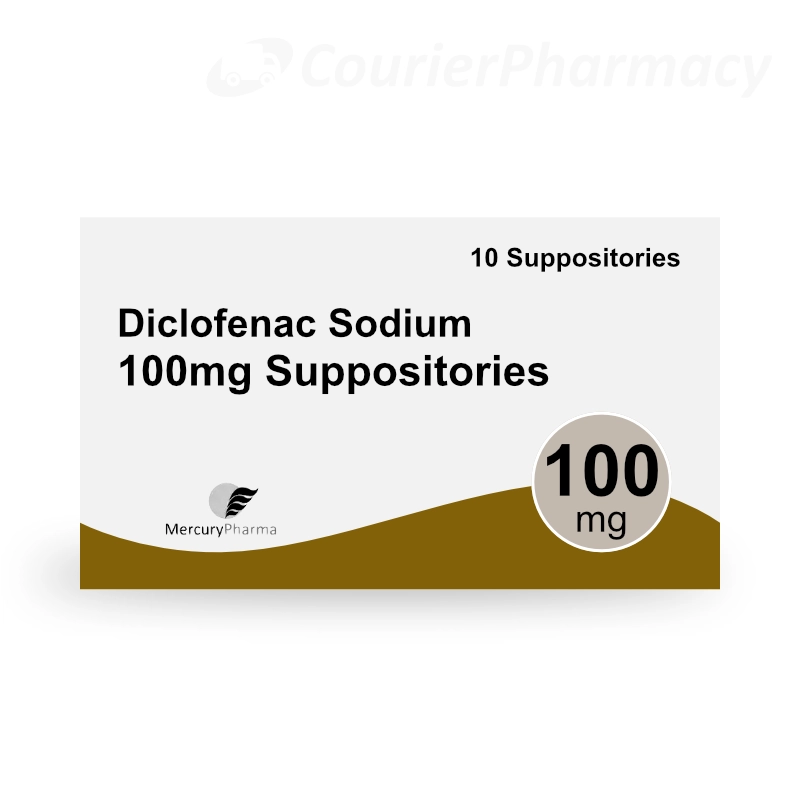
UK licensed POM, high-strength diclofenac delivered rectally for severe acute pain and inflammation
Fits situations where oral treatment isn’t practical: severe nausea/vomiting, renal colic, dysmenorrhoea, acute gout, post-surgical pain, severe migraine with vomiting
Cardiovascular and gastrointestinal contraindications matter — active peptic ulcer, previous MI or stroke, uncontrolled hypertension, severe renal/hepatic impairment all rule out use
Short-course acute use only, maximum 150mg total daily diclofenac, not for chronic pain management; caution with warfarin, ACE inhibitors, diuretics, lithium, methotrexate
Acute pain isn’t just a symptom — it’s genuinely disabling. After all, severe renal colic ranks alongside childbirth for pain intensity in patient reports.
Dysmenorrhoea can prevent women from working, studying, or functioning normally for several days each month.
Acute gout flares can be so painful that even the touch of bedsheets feels unbearable.
Post-surgical pain, acute back pain, and severe musculoskeletal injuries all cause significant distress.
So effective acute pain management genuinely matters — it’s the difference between being able to function through a difficult few days and being incapacitated.
Diclofenac 100mg suppositories fit specific situations where oral treatment isn’t practical. Specifically, when severe pain triggers nausea or vomiting, when gastric emptying is slowed by pain-related sympathetic activation, or when a patient can’t take tablets for post-surgical or other reasons.
As a result, the rectal route provides reliable absorption when oral routes fail. However, honest framing matters: diclofenac is a strong NSAID with real risks. Short-term acute use for the right indication has favourable risk-benefit. Chronic use, use in cardiovascular disease, or use alongside contraindicating medications has genuinely unfavourable risk-benefit. So this isn’t a casual painkiller — it’s a specific tool for specific situations, used appropriately for short courses.
Where suppositories fit in acute pain treatment
The UK approach to acute severe pain follows a stepped path:
Step 7: Strong opioids added when needed (morphine, oxycodone, tramadol)
Step 8: Specialist pain management (nerve blocks, IV analgesia)
Step 9: Interventional procedures for specific conditions
So diclofenac 100mg suppositories typically sit at Step 5 — an alternative NSAID route when oral treatment isn’t practical. In short, they’re a specific solution for a specific practical problem within the wider acute pain management landscape.
These suppositories vs oral diclofenac tablets
Same active, different route:
These suppositories: 100mg diclofenac delivered rectally
In contrast, oral diclofenac tablets: 25mg or 50mg per tablet delivered orally
Both contain diclofenac sodium
Suppositories: work with nausea/vomiting
Tablets: convenient but need swallowing
Suppositories: reliable absorption during severe illness
Tablets: variable absorption if gastric emptying slowed
Bioavailability similar between routes (around 54%)
Systemic side effect risk similar between routes
In general, tablets fit most situations; suppositories fit specific practical problems
These suppositories vs ibuprofen
Different NSAIDs with different profiles:
Diclofenac 100mg: stronger analgesic effect, higher single dose
In contrast, ibuprofen: available OTC, lower single doses (200-400mg)
Ibuprofen has better cardiovascular safety profile than diclofenac
Diclofenac has stronger anti-inflammatory action in some conditions
Both work through COX inhibition
Ibuprofen is available OTC (up to 400mg)
Diclofenac at 100mg is prescription-only
In general, ibuprofen fits mild-to-moderate pain; diclofenac 100mg fits severe acute pain
These suppositories vs naproxen
Two commonly prescribed NSAIDs:
Diclofenac: shorter half-life (1-2 hours), often twice-daily dosing
In contrast, naproxen: longer half-life (12-15 hours), twice-daily dosing
Naproxen has more favourable cardiovascular safety profile
Diclofenac may have stronger acute analgesic effect
Naproxen preferred for chronic use when NSAID is unavoidable
Diclofenac preferred for acute short-course use
Both available orally; only diclofenac widely available as suppository in UK
In general, naproxen fits chronic conditions; diclofenac suppositories fit acute severe pain with practical route problems
These suppositories vs paracetamol
Different mechanisms, often complementary:
Diclofenac: NSAID with anti-inflammatory, analgesic, and antipyretic effects
In contrast, paracetamol: mainly central analgesic and antipyretic; minimal anti-inflammatory action
Paracetamol is much safer for cardiovascular and gastrointestinal profile
In contrast, topical diclofenac (Voltarol gel, Emulgel): local application, minimal systemic absorption
Topical NSAIDs have much lower systemic side effect risk
Topical NSAIDs work well for localised musculoskeletal pain (sprains, strains, arthritis)
However, topical NSAIDs don’t work for deep or systemic inflammatory pain
Suppositories provide systemic anti-inflammatory action
In general, topical fits localised superficial pain; suppositories fit systemic acute pain
Who these suppositories may suit well
This product may suit:
Adults with acute severe pain who can’t tolerate oral treatment
Adults with renal colic during vomiting phase
Adults with severe dysmenorrhoea with nausea
Adults with acute gout flares
Adults with post-operative pain when oral route isn’t practical
Adults with severe migraine with vomiting
Adults with acute inflammatory joint conditions
Adults without cardiovascular or gastrointestinal contraindications
Adults needing short-term treatment (days to weeks, not months)
Adults who understand appropriate short-course use
Who might suit other options better
Other options may suit better for:
Adults with active peptic ulcer or previous NSAID-induced GI bleeding
Adults with coronary heart disease, previous heart attack, or heart failure
Adults with previous stroke or TIA
Adults with severe renal impairment
Adults with severe hepatic impairment
Adults with known aspirin/NSAID-induced asthma
Adults with inflammatory bowel disease (Crohn’s, ulcerative colitis)
Adults with recent lower GI or rectal surgery
Adults with active haemorrhoids or proctitis
Adults on warfarin (increased bleeding risk)
Adults with chronic pain needing long-term management (safer options exist)
Adults over 65 with multiple risk factors
Adults in the third trimester of pregnancy (contraindicated)
Adults with tension-type headache (paracetamol/ibuprofen suffice)
Adults uncomfortable with rectal administration when oral is practical
Courier Pharmacy supply
This is a UK Prescription-Only Medicine. So supply only happens after our UK-qualified prescriber reviews your situation thoroughly. The consultation covers:
Your specific pain condition and diagnosis
Why the rectal route is preferred over oral
Previous treatments tried (OTC and prescription)
Your full medical history including cardiovascular and GI risk factors
Blood pressure, cardiovascular history, GI history
Any previous NSAID intolerance or complications
Current medications and any potential interactions
Pregnancy status if applicable
Age and renal/hepatic function considerations
Expected duration of treatment
Discussion of alternative pain management approaches
Realistic expectations for NSAID response
Warning about long-term NSAID use risks
In short, this isn’t a checkbox consultation — it’s a clinical assessment. So even for a well-established licensed treatment, we take time to make sure it fits your specific situation safely.
Key features and specs
Active ingredient: diclofenac sodium 100mg per suppository
Class: non-steroidal anti-inflammatory drug (NSAID)
Form: torpedo-shaped rectal suppository
Route: rectal
Onset: typically 30 minutes to 1 hour
Duration: 4-6 hours per dose
Half-life: 1-2 hours
Maximum daily dose: 150mg total diclofenac (all routes combined)
Typical dosing: 100mg suppository once daily (usually at bedtime), can be split with morning 50mg oral
Indications: acute pain and inflammation (multiple conditions)
Legal status: Prescription-Only Medicine (POM)
Licensed as: Voltarol 100mg Suppositories
Storage: below 25°C, in original packaging
Shelf life: typically 3 years from manufacture
Duration of use: short-term (typically days to weeks), not chronic use
MOJO WISDOM
Take control of your health by understanding your condition and what this medication is doing for you.
READ:
More information about this treatment.
UK-based doctors and pharmacists
Discreet and Confidential
UK-based doctors and pharmacists
Free, Expert Advice
No video link provided.
No video link provided.
UK-based doctors and pharmacists
Free, expert advice
Discrete and confidential
Fast delivery
Giving you trusted clinical advice for over 40 conditions
A UK regulated pharmacy providing safe, effective treatments online since 2014
Diclofenac 100mg Suppositories — Prescription-Only Anti-Inflammatory for Acute Pain and Inflammation
This is a UK licensed Prescription Only Medicine (POM) — rectal suppositories containing 100mg diclofenac sodium, a non-steroidal anti-inflammatory drug (NSAID) used for the treatment of severe acute pain and inflammation. So each suppository delivers a full 100mg dose via the rectal route, giving effective pain relief when oral treatment isn’t practical — during severe nausea and vomiting, after surgery, during renal colic, acute gout, severe migraine, dysmenorrhoea, or musculoskeletal pain. As a result, the rectal route bypasses the stomach entirely, avoiding gastric irritation that can worsen an already inflamed situation. Important: diclofenac has significant cardiovascular and gastrointestinal warnings, and is contraindicated in several conditions — so supply happens after full prescriber assessment. Available on prescription at Courier Pharmacy.
At Courier Pharmacy, we believe in treatment that fits the person — but only where it’s honest, safe, and consented to.
This page covers what diclofenac 100mg suppositories are, who they may suit for acute pain, how they compare to oral NSAIDs and other pain management options, and the practical points that matter — cardiovascular risk, gastrointestinal safety, when suppositories fit better than tablets, and appropriate short-term use.
Five key takeaways
This is a UK licensed POM. It is a high-strength diclofenac delivered via the rectal route for severe acute pain and inflammation when oral treatment isn’t practical
The rectal route offers specific advantages: bypasses gastric irritation, works during nausea and vomiting, provides reliable absorption when oral medications may not be tolerated, and delivers effective plasma concentrations without the food-related absorption variability of oral tablets
Cardiovascular and gastrointestinal contraindications matter. Coronary heart disease, previous heart attack, uncontrolled hypertension, previous stroke, active peptic ulcer, and previous NSAID-induced GI bleed all rule out diclofenac use. Prescriber assessment before first supply isn’t optional
Intended for short-term acute use, typically 100mg once daily to a maximum of 150mg total daily dose (including any oral diclofenac). Not for long-term chronic pain management — the risk-benefit profile shifts unfavourably with prolonged use
Practical points: insert one suppository at bedtime for many indications, or as directed by prescriber; can be used alongside paracetamol for combined analgesia; don’t combine with other NSAIDs; caution with warfarin, ACE inhibitors, diuretics, lithium, and methotrexate
Why choose Courier Pharmacy for pain treatment
At Courier Pharmacy, our approach starts with a simple idea: treatment should fit the person, not force the person to fit the system.
Dr Ada Jex-Cori
Our service is shaped by the philosophy of Dr Ada Jex-Cori, our brand pharmacist.
Dr Ada represents the spirit of the pharmacy: evidence-led, community-rooted, and willing to challenge the one-size-fits-all approach to medicine. She is named in honour of three pioneering women in science: Ada Lovelace, the mathematician and visionary; Sophia Jex-Blake, the first female doctor in the UK who fought the medical establishment; and Gerty Cori, the biochemist and Nobel Prize winner.
In our fictional world of Etherwell, Dr Ada fights against pharma’s standardised approach to medicine. In the real world, she represents what we stand for. Her view is straightforward: you are not broken. The system is. And we are here to change that.
Acute pain deserves serious attention
Acute pain is often dismissed or under-treated. Courier Pharmacy is different. So we recognise that:
Acute severe pain is genuinely disabling
Renal colic ranks alongside childbirth for pain intensity
Severe dysmenorrhoea can prevent normal function for days each month
Acute gout is one of the most painful conditions in medicine
Post-surgical pain affects recovery and mobility
Under-treated acute pain increases risk of chronic pain development
Getting the right acute treatment matters
The route of administration matters — nausea makes tablets impractical
After all, acute pain has a real impact on quality of life during the acute phase and afterwards. So our prescriber takes it seriously.
Honest framing about the rectal route advantage
We’ll be straight about when this matters:
Rectal route fits situations where oral treatment isn’t practical
Especially useful during severe nausea, vomiting, or post-surgery
However, for pain without these features, oral tablets often work just as well and are more convenient
Suppositories are more expensive than tablets
Some patients find rectal administration uncomfortable culturally or personally
Rectal route doesn’t reduce systemic side effects — it only changes delivery
If tablets work for you, there’s no advantage to switching
Honest framing about short-term use
This isn’t for chronic pain:
NSAIDs at high dose should be used for as short a time as possible
Risk-benefit shifts unfavourably with prolonged use
Cardiovascular and GI risks accumulate with duration
Chronic pain needs different treatment approaches
If you need pain relief for weeks or months, alternative options should be considered
Long-term NSAID use should be under regular review
Honest framing about cardiovascular and GI risks
Not everyone can safely use NSAIDs:
Cardiovascular contraindications aren’t a formality
Coronary heart disease, previous MI, uncontrolled hypertension all rule out use
Previous stroke or TIA rules out use
Active peptic ulcer or previous NSAID-induced bleeding rules out use
If you have significant risk factors, careful assessment matters
Older adults have higher risk profile
Alternative pain management options exist for these situations
Honest framing about paired analgesia
Combining medications often works better:
Paracetamol plus diclofenac gives additive analgesia
Better than either drug alone at maximum dose
Different mechanisms — no additive side effects
Standard approach for post-operative and acute pain management
Consider paracetamol 1g four times daily alongside diclofenac
Antiemetic can be added if nausea is prominent
Pain and the bigger picture
Acute pain often has causes worth investigating. So our prescriber can discuss:
Whether the pain has been properly diagnosed
Whether investigations might be helpful
Whether specialist referral is appropriate
Whether the pain suggests a condition needing specific treatment
Whether triggers can be identified and modified
Whether non-drug approaches would help
Whether acute pain is becoming chronic pain (needing different approach)
Whether alternative pain management is more appropriate
When to consider chronic pain services
Sometimes the acute pain episode is the visible part of a wider picture worth talking through.
Prescriber support before and after supply
Our team is here to discuss:
Whether diclofenac suppositories fit your specific situation
Whether the rectal route is genuinely needed vs oral tablets
Cardiovascular and GI risk assessment
Correct insertion technique
Duration of treatment planning
Combined analgesia options (paracetamol addition)
Gastroprotection if higher GI risk
What to do if pain doesn’t respond
When to seek urgent medical help
Trust earned, not claimed
We are GPhC-regulated, and our content is grounded in the licensed Voltarol 100mg Suppositories Summary of Product Characteristics (Novartis), NICE Clinical Knowledge Summaries on acute pain, gout, renal colic, and dysmenorrhoea, British National Formulary guidance on NSAIDs, MHRA guidance on cardiovascular risk with NSAIDs, decades of published clinical evidence on diclofenac, and the real experience of patients managing acute pain.
If these suppositories aren’t the right answer for your situation, we’ll tell you honestly. After all, getting the right treatment matters more than fulfilling a request.
How supply works
This is a licensed UK Prescription-Only Medicine. So the supply process has proper clinical steps.
How our service works
Complete the detailed pain consultation on courierpharmacy.co.uk
Our UK-qualified prescriber reviews your pain condition, cardiovascular status, and GI history
If approved, the prescriber issues a prescription for the suppositories
Your order is dispatched in plain, discreet packaging
Free prescriber support is available throughout treatment
Duration reviewed based on your acute condition
When other options might suit better
If these suppositories aren’t right, we’ll explain why. Other options may include:
Oral diclofenac tablets — if you can tolerate oral route
OTC ibuprofen or naproxen — for milder pain
OTC paracetamol — safer first-line option
Codeine or dihydrocodeine — if NSAIDs contraindicated
Etoricoxib (Arcoxia) — COX-2 selective for higher GI risk patients
Topical diclofenac gel — for localised musculoskeletal pain
Paracetamol suppositories — safer alternative rectal option
Specialist pain management for severe or refractory pain
Condition-specific treatments (colchicine for gout, antispasmodics for renal colic)
GP or specialist review for undiagnosed severe pain
Our community service
Our free fortnightly drop-in clinics at Insomnia, Derby run every other week from 10am to 12pm.
Healthcare shouldn’t only happen when you’re paying for it. So we show up, even when it’s free.
We cover pain management, acute conditions, migraine, headache, skincare, acne, hair loss, MCAS, weight management, menopause, women’s health, men’s health, chronic pain, digestive health, allergies, asthma, sleep, and whatever else people bring through the door. No appointment needed, no charge, no pressure.
Active ingredient
Each suppository contains:
Diclofenac sodium 100mg (non-steroidal anti-inflammatory drug — NSAID)
Solid fatty base (adeps solidus / hard fat) for rectal delivery
Why diclofenac
Diclofenac is one of the most widely used NSAIDs:
Non-selective cyclooxygenase (COX-1 and COX-2) inhibitor
Slight preference for COX-2 inhibition (partially explains efficacy)
Reduces prostaglandin production — the key inflammatory mediators
Also reduces leukotriene production (unlike most other NSAIDs)
Strong analgesic effect comparable to opioids for some pain types
Anti-inflammatory action addresses the cause of inflammatory pain
Antipyretic (fever-reducing) effect
Decades of clinical evidence across multiple indications
Well-characterised pharmacology and side effect profile
In short, diclofenac is one of the reference NSAIDs. After all, when a molecule has been in clinical use for over 50 years with consistent evidence across acute pain, inflammation, and multiple indications, it earns its place in the pain management armoury.
Why the 100mg strength
The 100mg dose is specifically chosen for suppository use:
Standard licensed suppository strength for adults
Provides effective plasma concentrations comparable to 100mg oral
Higher single dose than typical oral tablets (which are 25mg or 50mg)
Reflects the once or twice-daily suppository dosing pattern
Maximum daily dose 150mg (combining all diclofenac routes)
Suitable for severe acute pain requiring effective NSAID coverage
Well-established safety at this dose for short-term use
After all, the 100mg suppository dose is the licensed strength backed by decades of clinical trial evidence. So this isn't an experimental concentration — it's the standard prescription dose in suppository form.
Why the rectal route
The suppository route offers specific advantages:
Bypasses the stomach entirely — no direct gastric mucosal exposure
Works during nausea and vomiting when oral treatment fails
Reliable absorption during severe illness or reduced consciousness
Alternative when oral route isn't practical (post-surgery, unconscious patient)
Doesn't require the patient to sit up or drink water
Some patients tolerate rectal route better during severe pain
Overnight use provides sustained overnight analgesia
Bioavailability similar to oral route (around 54%)
However, it's important to be honest about what the rectal route doesn't do — it doesn't reduce systemic side effects (heart, kidneys, blood still receive the drug), doesn't avoid gastric symptoms indirectly caused by the drug (the drug still reaches the stomach through the bloodstream), and doesn't reduce interactions with other medications. In short, the rectal route is about delivery route, not systemic safety.
Other ingredients
Standard suppository excipients include:
Adeps solidus (solid fatty base) — melts at body temperature to release drug
Additional excipients as listed in the licensed SmPC
Complete excipients list is on the patient information leaflet. So mention any known allergies during your consultation.
Pack details
Diclofenac 100mg suppositories come as:
Individually foil-wrapped suppositories
Typically supplied in packs of 5 or 10 suppositories
Torpedo-shaped for easy insertion
Each suppository is single-dose
Sealed until use
What are Diclofenac 100mg Suppositories for?
These suppositories are licensed for the treatment of pain and inflammation in a range of acute conditions. So diclofenac works by inhibiting cyclooxygenase (COX) enzymes, reducing prostaglandin production and thereby reducing pain, inflammation, and fever. As a result, it fits situations where inflammatory pain is prominent and where oral treatment isn't practical or preferred.
Who might these suppositories suit?
This product may suit:
Adults with acute severe pain who can't tolerate oral medication due to nausea or vomiting
Adults with acute renal colic (kidney stones) — NSAIDs are first-line, and rectal route works when patient is vomiting
Adults with severe dysmenorrhoea (menstrual pain) with associated nausea
Adults with acute gout flares
Adults with severe migraine attacks when oral treatment isn't practical
Adults with post-surgical pain requiring parenteral-alternative route
Adults with acute severe musculoskeletal pain
Adults with acute severe back pain
Adults with acute inflammatory joint conditions
Adults who've had good response to diclofenac previously and need alternative route
Adults without contraindicating cardiovascular or gastrointestinal conditions
Based on licensed indications and clinical evidence:
Acute renal colic (one of the strongest indications — NSAIDs work as well as opioids for kidney stone pain)
Severe dysmenorrhoea (menstrual pain)
Acute gout attacks
Post-operative pain management
Acute musculoskeletal pain and injuries
Acute low back pain
Severe migraine attacks (with acute treatment protocols)
Acute flares of inflammatory joint conditions
Post-traumatic pain
Acute soft tissue inflammation
Important honesty point: high-strength NSAIDs work well for acute pain but the risk profile increases with duration. After all, prostaglandin inhibition affects the stomach lining, kidney function, cardiovascular system, and platelet function — the same mechanism that reduces pain also creates the risks. So short-course use is essential.
What these suppositories don't claim to do
Honest framing matters:
They're not designed for chronic pain management (safer options exist for long-term use)
They don't treat the underlying cause of pain — they manage symptoms
They don't work well for neuropathic pain (different mechanism required)
They don't provide the maximum pain relief of strong opioids for severe post-op pain
They're not first-line for tension-type headache (paracetamol/ibuprofen suffice)
They don't replace disease-modifying treatment for chronic inflammatory conditions
They don't work faster than oral diclofenac in most patients — the advantage is route, not speed
They're not safe for everyone — cardiovascular and GI contraindications matter
How diclofenac works
Understanding the mechanism helps explain both the analgesic effect and the side effect profile.
The pain and inflammation mechanism
Prostaglandins are key mediators:
Tissue injury or inflammation triggers release of arachidonic acid
Cyclooxygenase (COX) enzymes convert arachidonic acid into prostaglandins
In short, diclofenac stops the production of the molecules that cause pain and inflammation. After all, this is why it works for inflammatory pain but is less useful for neuropathic pain (different mechanism).
Why the side effect profile matters
The mechanism explains the risks:
COX-1 inhibition reduces protective prostaglandins in the stomach lining ? GI risk
COX-1 inhibition reduces platelet function ? bleeding risk
Low-dose aspirin: increased GI risk, gastroprotection recommended
Discuss with prescriber before use
Do I need gastroprotection (PPI)?
Depends on risk factors:
Age over 65
Previous ulcer or GI bleeding history
Concurrent low-dose aspirin, corticosteroids, or SSRIs
Prolonged NSAID use
Multiple risk factors
If any apply, PPI (omeprazole, lansoprazole) often recommended
Discuss with prescriber
Can I drink alcohol while using them?
Best to avoid:
Alcohol significantly increases GI bleeding risk
Also affects hepatic metabolism
Not directly contraindicated but genuinely risky combination
Especially important during acute treatment
Can I use them during pregnancy?
Depends on trimester:
Third trimester: contraindicated
First and second trimester: only if benefit clearly outweighs risk
Paracetamol usually preferred first-line in pregnancy
Discuss with prescriber if pregnant or planning pregnancy
How should I store them?
Below 25°C
In original packaging
Away from direct heat and sunlight
Only refrigerate briefly if too soft to handle
Keep out of reach of children
Use by expiry date on packaging
Is my packaging discreet?
Plain packaging with no mention of contents
Suitable for delivery to home or workplace
How do I order from Courier Pharmacy?
Complete the consultation on courierpharmacy.co.uk. Our prescriber will review your pain condition, cardiovascular status, and GI history, then arrange dispensing if suitable. Your order goes out in plain, discreet packaging with support available throughout your treatment.
More than a prescription: our community
Healthcare shouldn't only happen when you're paying for it.
Every fortnight we run free drop-in talks and clinics at Insomnia, Derby, from 10am to 12pm. So we show up, even when it's free.
Bring a question, bring a friend, bring a stack of bewildering letters from another clinic. We'll sit with you.
We cover pain, migraine, headache, skincare, acne, hair loss, MCAS, weight management, menopause, women's health, men's health, chronic pain, digestive health, allergies, asthma, sleep, and whatever else people bring through the door. No appointment. No cost. No pressure. Just real support and treatment that fits.
This page is for information only and isn't a substitute for personal medical advice. Diclofenac is a licensed prescription-only medicine with important cardiovascular, gastrointestinal, and renal risks. Don't use if you have coronary heart disease, previous MI, uncontrolled hypertension, previous stroke or TIA, active peptic ulcer, previous NSAID-induced GI bleeding, severe renal or hepatic impairment, or several other conditions. Prescriber assessment before use is essential. Intended for short-term acute use, not chronic pain management. Seek urgent medical help for signs of GI bleeding (black tarry stools, vomiting blood), chest pain, stroke symptoms, severe allergic reaction, or severe skin reactions. Signs of severe allergic reaction (facial swelling, breathing difficulty, widespread rash) need immediate medical attention (999).
How this content was created
Written by the Courier Pharmacy editorial team and reviewed by a GPhC-registered prescribing pharmacist.
The content is grounded in the licensed Voltarol 100mg Suppositories Summary of Product Characteristics (Novartis), NICE Clinical Knowledge Summaries on acute pain, gout, renal colic, and dysmenorrhoea, British National Formulary guidance on NSAIDs, MHRA safety updates on NSAID cardiovascular and gastrointestinal risks, decades of published clinical evidence on diclofenac and NSAIDs, and the real experience of patients managing acute pain under prescriber-led care. In addition, it draws on the real questions patients bring to our consultation pathway and drop-in clinics in Derby.