Home » Treatment » Dutasteride 0.1%, Minoxidil 5%, and Tretinoin 0.01% in Trichosol
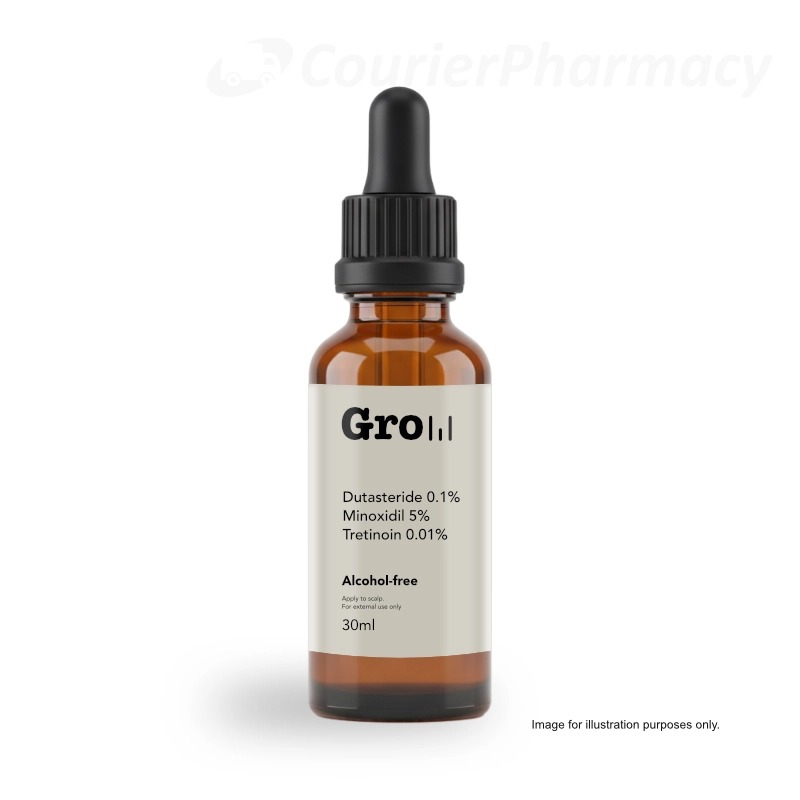
Dutasteride 0.1%, Minoxidil 5%, and Tretinoin 0.01% in Trichosol
from£29.99
A personalised topical hair loss solution containing dutasteride 0.1%, minoxidil 5%, and tretinoin 0.01% in a Trichosol base that is free from propylene glycol and alcohol. Designed for adults who want a gentler, more tailored approach to androgenetic alopecia — with a dutasteride concentration that reflects individual clinical need. Can be recommended by the TrichoTest genetic test for more precise treatment selection.
Dutasteride 0.1%, Minoxidil 5%, and Tretinoin 0.01% in Trichosol
Hair loss can feel like a small thing to everyone else and a very big thing to the person living with it. The visible problem may be thinning at the crown, a widening parting, or a hairline that seems to be quietly retreating.
The less visible part is often the hardest. The loss of confidence, the constant mirror checks, and the worry that things are getting worse. Also the addition anxiety that you have already tried the obvious options without much to show for it.
For many people, the problem is not just the hair loss itself. It is the treatment experience that comes with trying to address it. Standard topical solutions can sting. They can dry the scalp to the point of discomfort. The alcohol hits before the product has even had time to absorb.
The propylene glycol leaves a residue that makes the scalp feel tight and irritated for hours. After a while, using the product every day starts to feel like a punishment rather than a routine. This is when consistency breaks down.
The Dutasteride 0.1%, Minoxidil 5%, and Tretinoin 0.01% in a Trichosol base avoids this issue and encourages consistency. This is due to the handy Trichosol base.
The Trichosol solution
This compounded Dutasteride 0.1%, Minoxidil 5%, and Tretinoin 0.01% in a Trichosol base is designed to remove that barrier. By using a base that contains neither propylene glycol nor alcohol. It delivers the same three clinically active ingredients in a gentler vehicle that is far less likely to cause the kind of scalp irritation that puts people off their treatment.
Dutasteride 0.1% strength
The dutasteride concentration in this formulation is 0.1%, which is considered a mid-range strength. For some patients, this represents a starting point for a personalised compounded plan.
This is especially true for those who are new to dutasteride or transitioning from a lower-strength formula. For others, it may be the right long-term concentration based on their genetic profile, their previous response to treatment, and their prescriber’s clinical assessment.
Because this is a compounded medicine, the strength is not fixed in the way an off-the-shelf product would be. It is chosen as part of a plan that reflects your individual needs.
Three pronged attack on hair loss
It contains three active ingredients:
Dutasteride helps reduce DHT’s effects on hair follicles
Minoxidil supports the growth phase of the hair cycle
Tretinoin is sometimes added to hair loss solutions because it may help minoxidil work better, especially in people who do not respond well to minoxidil on its own
At Courier Pharmacy, the goal is not to throw a trendy formula at a frustrating problem. It is to offer a medically responsible path. It starts with proper assessment, considers suitability, and determines whether a personalised compounded treatment makes sense for your scalp, your history, and your goals.
Prescription-only compounded topical treatment for pattern hair loss
Propylene glycol free, alcohol free Trichosol base for better scalp tolerability
Mid-range 0.1% dutasteride concentration — suitable for personalised treatment planning
Reviewed for suitability by a UK-qualified prescriber
Additional information
Quantity
1 x 30ml, 2 x 30ml, 3 x 30ml, 4 x 30ml, 5 x 30ml, 6 x 30ml
MOJO WISDOM
Take control of your health by understanding your condition and what this medication is doing for you.
READ:
More information about this treatment.
UK-based doctors and pharmacists
Discreet and Confidential
UK-based doctors and pharmacists
Free, Expert Advice
No video link provided.
No video link provided.
UK-based doctors and pharmacists
Free, expert advice
Discrete and confidential
Fast delivery
Giving you trusted clinical advice for over 40 conditions
A UK regulated pharmacy providing safe, effective treatments online since 2014
What is the Gro Dutasteride 0.1%, Minoxidil 5%, Tretinoin 0.01% in Trichosol hair loss solution?
Hair loss is the external problem. The thinning at the crown, the parting that seems a little wider than it used to be, the hairline that has quietly shifted — these are the things other people might not notice, but you see every single day. The internal problem runs deeper: the gradual loss of confidence, the self-consciousness that builds around something you never expected to think about this much. And underneath both sits a philosophical frustration that is easy to dismiss but hard to ignore — the sense that you deserve a treatment that has been genuinely thought through for you, not just packaged for everyone.
This compounded topical solution combines dutasteride 0.1%, minoxidil 5%, and tretinoin 0.01% in a Trichosol base that is completely free from propylene glycol and alcohol. It is designed for adults with pattern hair loss who want a clinically considered, prescription-only approach — particularly those who have found standard topical products too irritating, too drying, or simply not the right fit for their scalp.
Combines three active ingredients that target hair loss from different angles
Uses a propylene glycol-free, alcohol free Trichosol base for better tolerability in sensitive scalps
Dutasteride at 0.1% — a mid-range concentration that may suit patients starting a personalised compounded approach or stepping up from lower-strength options
May suit people with androgenetic alopecia who need a more considered, gentler formulation
Safe prescribing still matters — this is a prescription-only treatment reviewed by a UK-qualified prescriber
The TrichoTest genetic hair loss test may help reduce guesswork by identifying your likely treatment response and supporting a truly tailored plan
May help poor responders to minoxidil
Good outcomes usually depend on consistency, review, and realistic expectations
Comes in a convenient 30ml bottle at less than £1 per day for a month’s supply
Prescription-only compounded treatment for pattern hair loss
Combines anti-androgen, growth-supporting, and minoxidil-enhancing ingredients
Overview
Pattern hair loss is common, but that does not make it easy. Many people first notice extra shedding, a hairline that seems to be quietly retreating, or a density that is simply not what it used to be. And many then try a product, struggle with the irritation or the format, and quietly give up — not because they stopped caring, but because the daily experience of using it became more trouble than it seemed worth.
This formula is aimed at people who want a more tailored treatment path in a base they can actually tolerate. The Trichosol vehicle makes it accessible to patients who have previously reacted to alcohol or propylene glycol-based products, while the three-ingredient combination ensures the treatment is still working across multiple parts of the hair loss pathway.
People often seek treatment because hair loss affects more than appearance. It chips away at confidence and makes everyday moments feel oddly loaded — the bathroom mirror in a harsh light, a photograph taken from an unexpected angle, a windy day when you would rather not think about what is visible from behind. The goal of treatment is not perfection. It is to slow loss, support healthier growth, and help you feel more in control — with a plan that makes clinical sense and a base that does not make daily use a chore.
This compounded solution is intended for adults with pattern hair loss who may benefit from a more targeted, prescription-only treatment combining:
Dutasteride 0.1% — helping lower the effect of DHT on the hair follicles at a considered mid-range concentration
Minoxidil 5% — helping support the growth phase of the hair cycle
Tretinoin 0.01% — helping improve how well minoxidil works, particularly for those who have not seen the response they hoped for from minoxidil alone
Why compounding?
Compounding means a medicine is prepared to order by a licensed pharmacy for an individual patient. It is not a mass-produced one-size-fits-all product. In the UK, this sits within a regulated framework and should only be supplied when clinically appropriate.
Some people choose a compounded version because standard products are not a good fit — whether due to scalp sensitivity, difficulty tolerating common excipients like alcohol or propylene glycol, or the need for a combination and concentration of ingredients that does not exist in any licensed product.
The dutasteride concentration in this formula — 0.1% — is one that cannot be obtained from a standard off-the-shelf product. It sits between the lowest compounded strength and the highest, and its selection reflects a clinical decision about what is most appropriate for the individual being treated. That flexibility is one of the most meaningful advantages of compounding. The medicine is shaped around the patient, not the other way around.
This formula also reflects the wider idea of personalised medicine. Hair loss is not identical from one person to the next. Genetic factors, scalp tolerance, previous treatment history, and response patterns all vary. A compounded option allows those details to shape the plan — and the Trichosol base ensures that even the vehicle carrying the active ingredients has been chosen with tolerability in mind.
What is the TrichoTest?
TrichoTest is a pharmacogenetic test that analyses 26 genetic markers (SNPs) linked to hair loss susceptibility and how your body is likely to respond to different treatments. It looks across multiple pathways — including how you metabolise key ingredients, how your hair follicles respond to hormones, and how well your scalp absorbs topical treatments. Essentially, it helps predict which ingredients, concentrations, and delivery methods are most likely to work for your genetics, rather than for the average patient.
The 0.1% dutasteride concentration in this formula is one example of where TrichoTest can be particularly informative. If genetic testing suggests a moderate response to anti-androgens, the prescriber may conclude that 0.1% is the appropriate starting or ongoing strength — rather than defaulting to the highest available concentration without clinical justification.
TrichoTest and compounding: A powerful combination
TrichoTest results can be especially valuable when considering a compounded approach. The test identifies 26 genetic markers linked to hair loss susceptibility and likely treatment response across multiple pathways. When combined with clinical assessment, this information helps the prescriber decide whether this three-ingredient Trichosol formula is right for you — and whether 0.1% dutasteride is the appropriate concentration, or whether a different strength might work better.
Real-world examples of how TrichoTest informs compounding decisions:
Strong minoxidil responder, or moderate dutasteride responder? The prescriber may determine that 0.1% dutasteride is the appropriate concentration alongside full-strength minoxidil, and may include tretinoin to help activate the minoxidil more effectively.
Genetic non-responder to minoxidil? The prescriber might adjust the formula — perhaps increasing the dutasteride concentration or adding alternative vasodilators — to better match your predicted response profile.
Poor collagen synthesis capacity? Tretinoin may be particularly valuable, or the prescriber might consider adding peptides or growth factor stimulators.
Genetic predisposition to nutritional deficiencies? The prescriber can recommend targeted supplementation — zinc, iron, vitamin D — alongside the topical solution to support treatment more broadly.
The TrichoTest report is colour-coded, identifying which of 62 active ingredients are predicted to be most effective for your genetics, which to avoid, and which delivery methods and formulations are most suitable. The Trichosol base is itself a delivery consideration — and TrichoTest can help confirm whether it is the right vehicle for your scalp and treatment profile.
At Courier Pharmacy, compounded treatments are reviewed for safety, suitability, and practical use. They are prepared under pharmacy oversight, supplied discreetly, and supported with follow-up where needed. If a standard option has not worked well for you, or if you want a more personalised route informed by genetic testing, compounding may be worth discussing with the prescriber.
Gro Hair Loss Range
What is the Gro Brand?
Gro is the compounded hair loss range created by Courier Pharmacy and Medical Mojo. It was developed to give patients a more flexible, personalised way to treat hair loss — with carefully selected topical formulations made through a regulated online pharmacy service.
The idea behind Gro is straightforward: hair loss treatment should not feel one-size-fits-all. Some people want a classic topical liquid with a spray applicator. Some prefer a foam. Others — particularly those with sensitive or reactive scalps — need a base without alcohol or propylene glycol. Gro brings those options together under one brand, so treatment can be matched more closely to the person using it, not the other way around.
Each Gro product is supplied in a 30ml bottle, designed to last around one month when used as directed. Every option is priced at £29.99 for up to three active ingredients, depending on the formulation prescribed. That works out at less than £1 a day for a personalised hair loss treatment plan.
Why Gro is different
Gro was built around three practical goals:
Choice of formulation: available as a topical liquid, topical foam, or Trichosol topical solution
Personalisation: options include single-ingredient, dual-ingredient, and triple-ingredient combinations across multiple concentrations
Better tolerability: the Trichosol option is alcohol-free and propylene glycol-free, designed for patients whose scalps react to standard bases
This means patients are not limited to one standard format or one fixed concentration. Instead, they can discuss a treatment option that fits their scalp, their response profile, and their life.
The three formulation types
Every Gro product is available in one of three formulation styles:
Topical hair loss liquid A traditional spray solution containing alcohol and propylene glycol. A well-established vehicle with efficient scalp penetration, chosen by patients who want a familiar, direct format.
Hair loss foam A foam version for patients who prefer a lighter feel and faster-drying application without the drip or run of a liquid.
Trichosol topical solution A propylene glycol-free and alcohol-free topical solution. Designed for patients who need a gentler base — whether because of scalp sensitivity, a history of irritation with standard products, or a preference for a more comfortable daily routine. This is the formulation you are currently reading about.
Ingredients used across the Gro Range
Depending on the product selected, Gro formulations may include:
Dutasteride
Finasteride
Minoxidil 5%
Tretinoin 0.01%
These can be prescribed alone or in combination, and at varying concentrations, depending on the individual treatment plan.
Gro product options
The Gro range includes the following compounded hair loss options, each supplied as a 30ml one-month bottle at £29.99.
Dutasteride 0.05%, minoxidil 5% in Trichosol — topical solution
Dutasteride 0.1%, minoxidil 5% — topical liquid
Dutasteride 0.1%, minoxidil 5% — topical foam
Dutasteride 0.1%, minoxidil 5% in Trichosol — topical solution
Dutasteride 0.2%, minoxidil 5% — topical liquid
Dutasteride 0.2%, minoxidil 5% — topical foam
Dutasteride 0.2%, minoxidil 5% in Trichosol — topical solution
Finasteride + Minoxidil
Finasteride 0.05%, minoxidil 5% — topical liquid
Finasteride 0.05%, minoxidil 5% — topical foam
Finasteride 0.05%, minoxidil 5% in Trichosol — topical solution
Finasteride 0.1%, minoxidil 5% — topical liquid
Finasteride 0.1%, minoxidil 5% — topical foam
Finasteride 0.1%, minoxidil 5% in Trichosol — topical solution
Finasteride 0.2%, minoxidil 5% — topical liquid
Finasteride 0.2%, minoxidil 5% — topical foam
Finasteride 0.2%, minoxidil 5% in Trichosol — topical solution
In simple terms
Gro is the compounded hair loss brand from Courier Pharmacy and Medical Mojo, designed to make personalised treatment more accessible — and more liveable.
You get:
A 30ml bottle for one month
£29.99 pricing
Up to three active ingredients at a concentration chosen for you
A choice of liquid, foam, or Trichosol alcohol-free and propylene glycol-free solution
If you are looking for a more tailored hair loss option — one that fits your scalp, your sensitivities, and your treatment history rather than a generic protocol — the Gro range gives you the flexibility to find that path without making the choice unnecessarily complicated.
This is a Prescription Only Medicine and is only available with a valid prescription. You can request it from courierpharmacy.co.uk by completing a quick online consultation, which is reviewed by a UK-qualified prescriber to check suitability and safety. If clinically appropriate, Courier Pharmacy will dispense the compounded solution and deliver it discreetly.
Complete the online consultation
Prescriber reviews your answers for suitability and safety
Prescription issued if clinically appropriate
Dispensed and delivered discreetly to your door
If the treatment is not suitable for you, this will be explained clearly and the next best option may be suggested.
Active ingredients
This formulation contains three active ingredients.
Dutasteride 0.1% is a 5-alpha reductase inhibitor that reduces the conversion of testosterone to dihydrotestosterone, or DHT — a key driver of androgenetic alopecia in susceptible hair follicles. At 0.1%, this is a mid-range concentration that may be clinically appropriate for patients at certain stages of their treatment journey, based on genetic profile, previous response, and prescriber assessment.
Minoxidil 5% is a vasodilator used topically to support the anagen, or active growth, phase of the hair cycle.
Tretinoin 0.01% is a retinoid that may help improve skin cell turnover and enhance the penetration and activation of topical treatments. It is sometimes included in hair loss solutions because it may improve how well minoxidil works — particularly for people who have not seen much benefit from minoxidil alone.
Together, these ingredients target different parts of the hair loss pathway. The Trichosol vehicle is also important. It offers a modern, gentle topical base that removes propylene glycol and alcohol from the equation entirely — making it a more comfortable daily experience for patients who have previously found standard vehicles problematic.
What is it for?
This product is used for pattern hair loss, also called androgenetic alopecia. In men, this often presents as a receding hairline or thinning at the crown. In women, it may appear as diffuse thinning or a widening parting. The aim is to support hair retention and encourage healthier growth where clinically appropriate.
The practical problem is visible thinning. The internal problem is often the quiet erosion of confidence that builds around it — and the frustration of having tried things that promised results but delivered irritation, discomfort, or simply nothing at all. The deeper issue is that people should not have to feel dismissed, or left to navigate treatment on their own for something that so clearly affects daily life and how they feel about themselves.
Some patients come to this formula after reacting badly to standard products and needing a gentler base. Others come after a TrichoTest result that suggests a specific concentration and ingredient combination. In either case, a compounded prescription treatment in a propylene glycol free, alcohol free base offers a more considered, personalised path than anything available off the shelf.
How Dutasteride, Minoxidil, and Tretinoin work in hair loss treatment
Understanding the three-ingredient approach
Hair loss treatment works best when it addresses the problem from multiple angles. This is why many compounded hair loss solutions combine dutasteride, minoxidil, and tretinoin. Each ingredient works differently, and together they may support a more complete treatment plan — delivered here in a Trichosol base that makes consistent daily use genuinely more comfortable for many patients.
Dutasteride: Blocking the hormonal signal
Hair follicles cycle through growth, transition, and rest phases. In pattern hair loss, follicles gradually shrink under the influence of DHT (dihydrotestosterone), which means hairs become finer, shorter, and less visible over time. Left unaddressed, this process continues until the follicle can no longer produce visible hair at all.
Dutasteride helps by reducing the hormonal signal that drives this miniaturisation. It blocks two forms of the enzyme 5-alpha reductase — types 1 and 2 — which converts testosterone into DHT. By blocking both forms, dutasteride is more comprehensive than finasteride, which only blocks type 2. This dual action may make it particularly effective for people who have not responded well to finasteride alone.
The concentration matters here. At 0.1%, dutasteride is present at a level that has been selected as clinically appropriate for the individual patient — not simply the highest available dose. For some people, this is the right starting point. For others, it is the right ongoing concentration. The prescriber's job is to make that determination based on your history, your genetics if TrichoTest has been used, and your previous treatment response.
Think of dutasteride as taking the foot off the brake — reducing the hormonal pressure that has been quietly shrinking follicles in the background.
Minoxidil: Supporting the growth phase
Minoxidil works differently from dutasteride. Rather than blocking a hormone, it supports the follicle's active growth phase and may improve the conditions for stronger, healthier hair production.
Minoxidil is a pro-drug, meaning it is not active in its original form. Your body needs to activate it inside the hair follicle using an enzyme called SULT1A1 (sulfotransferase). Once activated, it stimulates blood flow to the follicle, extends the growth phase, and supports overall follicle health.
Not everyone's body activates minoxidil equally well. Some people have a genetic advantage — their follicles are efficient at producing SULT1A1. Others are not. This is partly why minoxidil works brilliantly for some people and does relatively little for others. It is not that the medicine is weak, but that some people's follicles are not converting it efficiently into its active form. This is also one of the reasons TrichoTest can be so informative — it can identify whether you are likely to be a good minoxidil responder before you spend months finding out the hard way.
If dutasteride takes the foot off the brake, minoxidil helps press the accelerator — supporting the follicle's natural drive to grow.
Tretinoin: Enhancing activation and penetration
Tretinoin is included at 0.01% in this solution because it may improve how well the other ingredients work — and how effectively they reach the follicles that need them.
Tretinoin works by boosting the activity of SULT1A1, the enzyme that activates minoxidil inside the hair follicle. If minoxidil is the fuel, SULT1A1 is the engine that burns it. Without enough enzyme activity, the fuel sits there unused. Tretinoin helps turn up the engine — making it particularly valuable for patients who are poor minoxidil responders due to low SULT1A1 activity.
Beyond enzyme activation, tretinoin supports the overall health of the hair follicle. It encourages cell turnover, supports growth signals, and creates a better biochemical environment for hair production. Hair follicle cells are naturally sensitive to tretinoin, which is why even a small amount at the right concentration can make a meaningful difference to treatment outcomes.
Tretinoin also improves penetration through the scalp surface, helping dutasteride and minoxidil reach the follicles more effectively. In a Trichosol base — without the competing dryness caused by alcohol or propylene glycol — the scalp surface is in better condition to allow that penetration to happen comfortably.
Why combination matters
Adding tretinoin to a minoxidil and dutasteride solution may particularly help people who have tried single or dual-ingredient treatments without seeing the results they hoped for. This is one of the central reasons why compounded solutions combining multiple active ingredients tend to outperform single-ingredient treatments — they address the problem from different directions simultaneously.
Dutasteride reduces the hormonal brake at a concentration chosen for your treatment stage. Minoxidil presses the growth accelerator. Tretinoin helps activate minoxidil and supports the follicle environment. And the Trichosol base ensures that all three reach the scalp in a vehicle that the skin is willing to tolerate day after day — which is ultimately what makes any treatment work in the real world.
TrichoTest: Personalising the approach
TrichoTest can play a valuable role in reducing guesswork and supporting truly personalised treatment. It is a pharmacogenetic test that analyses 26 genetic polymorphisms (SNPs) linked to nine key treatment pathways relevant to hair loss. Rather than prescribing based on standard protocols alone, TrichoTest combines your genetic profile with your medical history to predict which ingredients, dosages, and delivery methods are most likely to work for your unique biology.
The 0.1% dutasteride concentration in this formula is one area where this precision is especially relevant. TrichoTest can indicate how effectively your body is likely to respond to anti-androgen treatment, helping the prescriber decide whether 0.1% is the appropriate starting or ongoing concentration — or whether a different strength would be more appropriate for your genetic profile.
How the TrichoTest informs this formula
If TrichoTest identifies genetic factors suggesting a good response to minoxidil and a moderate response to anti-androgens, the prescriber may determine that dutasteride at 0.1% — combined with full-strength minoxidil and tretinoin — is the most clinically appropriate combination.
If the test reveals that you are a genetic non-responder to minoxidil — due to SULT1A1 variants that affect how your body processes it — the prescriber might adjust the formula, perhaps placing greater emphasis on dutasteride or adding alternative vasodilators, while ensuring tretinoin is included to maximise whatever minoxidil activation is achievable.
The nine pathways TrichoTest analyses include:
Prostaglandins and sulphotransferase — how you process minoxidil and latanoprost
Anti-inflammatory response — your reaction to glucocorticoids and immunomodulators
Anti-androgen metabolism — how effectively you respond to dutasteride, finasteride, and 17?-oestradiol
Circulation stimulation — response to vasodilators
Collagen synthesis capacity
Insulin-like Growth Factor (IGF-1) response
Vitamin absorption — A, B7, B9, B12, C, D, E
Mineral absorption — zinc, magnesium, iron, selenium
Antioxidant needs and oxidative stress profile
Beyond ingredient selection
TrichoTest also reveals nutritional gaps or metabolic factors that could affect hair health independently of topical treatment. If the test shows genetic variants that reduce zinc or iron absorption, the prescriber can recommend targeted supplementation alongside this Trichosol formula — moving treatment away from guesswork and towards something shaped by your actual biology rather than averages.
TrichoTest does not diagnose or guarantee results, but it offers evidence-based insights that help the prescriber make more informed decisions about whether this specific formula — at this specific dutasteride concentration, in this specific base — is right for you, or whether something different might serve you better.
The Trichosol advantage
For patients who have reacted badly to standard topical solutions, the propylene glycol free and alcohol free Trichosol base is not just a preference — it can be the difference between being able to maintain a daily treatment routine and giving up entirely.
Sometimes the problem is not the active ingredient at all. It is the vehicle carrying it. Alcohol causes a burning or stinging sensation on application and can dry the scalp significantly over time. Propylene glycol is a common cause of contact irritation and sensitivity, particularly in patients with already reactive scalps. When either of these is the source of the problem, switching to a Trichosol base can make an immediate and substantial difference to daily tolerability — without changing the active ingredients or reducing their effectiveness.
If your scalp has tolerated previous treatments poorly, the Trichosol base may be the reason this formula finally becomes something you can stick with.
How to use the Compounded Dutasteride 0.1%, Minoxidil 5%, Tretinoin 0.01% in Trichosol hair loss solution
Apply the solution to a clean, dry scalp using the dropper bottle. Direct it to the areas of thinning rather than across the entire scalp, and massage in gently with your fingertips to help distribute it evenly. Allow it to dry before applying other scalp products, unless your prescriber has advised otherwise.
The dropper bottle gives you control over the dose and the placement. Applied at night and washed off in the morning, it fits into a routine that does not require you to rearrange your day around it — and the Trichosol base means the experience of applying it is far more comfortable than it might have been with previous alcohol or propylene glycol-containing products.
Try to build it into a consistent routine. Hair loss treatment rewards steady, sustained use far more than occasional bursts of effort. Many people find it easiest to apply as part of their evening wind-down — after a shower, before bed — and wash it off as part of their normal morning routine.
If your scalp becomes irritated even with the Trichosol base, do not push through. Ask for a review. One of the genuine advantages of compounded treatment is that the formulation can be adjusted if tolerability becomes an issue — whether that means changing the concentration, modifying an ingredient, or reconsidering the base entirely.
The typical dose is:
Apply 1ml at night to the scalp using the dropper bottle and wash off in the morning.
Warnings and precautions
This product is not suitable for everyone and requires careful prescribing review. Extra care is needed if you are pregnant, trying to become pregnant, breastfeeding, have a scalp condition that affects absorption, or have a history of allergy to any ingredient in the formulation.
Dutasteride is a 5-alpha reductase inhibitor and affects hormone pathways. It should not be used by women who are pregnant or may become pregnant, as it can affect male foetal development. Men with a history of prostate cancer, benign prostatic hyperplasia (BPH), or elevated prostate-specific antigen (PSA) levels need careful assessment before starting treatment. Dutasteride can lower PSA levels, which may mask early signs of prostate cancer, so baseline PSA screening may be needed. Men with a family history of prostate cancer should discuss this with the prescriber.
Minoxidil is a vasodilator and may not be appropriate for people with uncontrolled or poorly managed blood pressure, a history of heart attack, stroke, or other cardiovascular events, or those taking multiple blood pressure medications. Topical minoxidil can be absorbed systemically, and cardiovascular risk needs to be assessed.
People with unexplained hair loss, sudden patchy shedding, or scalp conditions that suggest an underlying medical problem should have these investigated before starting treatment.
Post-finasteride syndrome (PFS) is a rare but recognised concern associated with 5-alpha reductase inhibitors such as dutasteride and finasteride. It refers to persistent sexual dysfunction, mood changes, or other symptoms that may continue after stopping the medication. Although topical dutasteride carries lower systemic exposure than oral forms, the prescriber will discuss this risk during consultation. If you have previously experienced adverse effects from finasteride or other 5-alpha reductase inhibitors, this must be disclosed.
Tretinoin can increase scalp sensitivity and photosensitivity. It should be used with caution in people with sensitive skin, eczema, or rosacea. Sun protection is important during treatment.
The absence of propylene glycol and alcohol in this formula reduces a common source of irritation — but it does not remove the need for careful prescribing review. Compounded does not mean casual. The same thorough assessment for safety, suitability, and expected benefit applies here as with any other prescription treatment. A full medical history — including cardiovascular status, prostate health, previous medication reactions, and mood or sexual function concerns — will be reviewed during consultation.
If you have had TrichoTest, those results will also be considered as part of the overall assessment to ensure the formula and concentration match your predicted response profile and genetic risk factors.
Side effects
Common side effects may include scalp irritation, dryness, redness, itching, flaking, or temporary shedding early in treatment. The Trichosol base may reduce the likelihood of dryness and stinging compared to alcohol or propylene glycol-based alternatives, but it does not eliminate the possibility of local reactions entirely. That early shedding phase can be unsettling, but it may occur as follicles shift through the hair cycle in response to treatment and usually settles with time.
Because tretinoin is included, some patients may notice increased sensitivity or mild peeling, particularly at the start. Minoxidil can occasionally cause unwanted hair growth outside the treatment area if the solution spreads beyond the scalp — applying the dropper carefully to targeted areas helps reduce this risk.
Systemic absorption of topical minoxidil can occasionally cause dizziness, palpitations, chest discomfort, or changes in blood pressure, particularly in people with underlying cardiovascular concerns. Although this is uncommon with topical use, it remains important to monitor and report.
Dutasteride, even at 0.1% topical strength, may cause sexual dysfunction in some patients, including reduced libido, erectile dysfunction, or ejaculation disorders. These effects are uncommon with topical application but have been reported. Mood changes, depression, or anxiety have also been documented with 5-alpha reductase inhibitors, though causality remains debated. If you experience mood changes, persistent sexual dysfunction, or other concerning symptoms, report them promptly.
More serious concerns are less common but important. Seek advice if you develop marked irritation, swelling, chest symptoms, dizziness, palpitations, signs of allergy, severe mood changes, or persistent sexual dysfunction.
Drug interactions
Interaction checks still matter with topical treatment. Dutasteride, minoxidil, and tretinoin each bring their own considerations, and combining them in one formulation makes thorough review more important, not less.
Minoxidil may interact with medicines that affect blood pressure or cardiovascular function — including antihypertensives, beta-blockers, ACE inhibitors, calcium channel blockers, and NSAIDs. If you are taking any blood pressure medication, this must be reviewed. Minoxidil can potentiate the blood pressure-lowering effects of these drugs, increasing the risk of hypotension or dizziness.
Tretinoin may interact with other topical products that increase irritation or photosensitivity — including vitamin C, benzoyl peroxide, salicylic acid, glycolic acid, and other retinoids. Concurrent use may increase the risk of peeling, sensitivity, or irritation. Tretinoin also increases sun sensitivity, so concurrent use of photosensitising medicines — such as certain antibiotics, NSAIDs, or thiazide diuretics — should be discussed.
Dutasteride has potential interactions with medicines that inhibit or induce the cytochrome P450 enzyme system, particularly CYP3A4. Medicines such as ketoconazole, ritonavir, and other strong CYP3A4 inhibitors may increase dutasteride levels. Conversely, enzyme inducers may reduce dutasteride levels. Although topical absorption is lower than with oral dutasteride, the prescriber will review relevant medicines.
Other scalp treatments, harsh exfoliants, or irritating cosmetic products may increase the risk of local reactions. If you are using other prescription or over-the-counter hair loss products, they should be reviewed before starting. Concurrent use of multiple topical hair loss agents is not usually recommended without prescriber guidance.
If you have a history of post-finasteride syndrome or adverse effects from finasteride, this must be discussed before starting, as dutasteride is a related compound. If you have had TrichoTest, any genetic factors that might affect how your body processes these medicines — for example, CYP3A4 variants that influence dutasteride metabolism — will also be considered during prescribing review.
FAQs
How long does it take to see results?
Hair loss treatment usually needs patience. Many people need several months of regular use before they can properly judge whether a treatment is helping. The Trichosol base makes consistent daily use more comfortable, which is one of the most important factors in giving any treatment a fair chance.
Is this suitable for both men and women?
It may be suitable for some adults, but the prescriber will assess this carefully. Hormonal considerations and pregnancy risk are especially important. Women who are pregnant or may become pregnant should not use this product.
Why is the dutasteride concentration 0.1% rather than 0.05% or 0.2%?
The concentration is chosen as part of the prescribing process based on your individual clinical profile — including treatment history, previous response, and TrichoTest results if available. It is not a default. Compounding allows the concentration to be matched to what is most appropriate for you, rather than fixing it at a standard level.
Why is this formula in Trichosol?
Trichosol is a modern topical base that contains neither propylene glycol nor alcohol. For patients who have experienced irritation, dryness, or stinging with standard bases, it may make daily treatment significantly more comfortable, which in turn supports the consistency that good treatment outcomes depend on.
What makes this different from standard minoxidil?
It combines minoxidil with dutasteride at a personalised concentration and tretinoin in a compounded formula. Dutasteride targets the hormonal driver of hair loss, tretinoin helps activate minoxidil more effectively, and the Trichosol base removes the excipients most likely to cause scalp irritation. It is a more complete and more considered approach than standard minoxidil alone.
Can I use it if standard hair loss products have irritated my scalp?
Quite possibly. The absence of propylene glycol and alcohol removes two of the most common causes of scalp irritation in standard topical solutions. Suitability still needs to be assessed by a prescriber, but for patients with reactive scalps this formulation is often a more manageable option.
What is compounding?
Compounding is the preparation of a medicine to meet an individual patient's needs, rather than supplying a standard mass-produced version. It allows the ingredients, concentrations, and base to be tailored to the person being treated.
How can TrichoTest help with this treatment?
TrichoTest analyses 26 genetic markers linked to hair loss susceptibility and treatment response across nine key pathways. This helps the prescriber decide whether this three-ingredient Trichosol formula is right for you — and whether 0.1% is the appropriate dutasteride concentration — based on your unique genetics rather than a standard protocol. It can also reveal nutritional gaps and metabolic factors that could affect your broader response to treatment.
Does TrichoTest guarantee the right treatment?
No. It is a helpful tool that may support treatment selection and reduce guesswork, but it does not guarantee results. Genetic testing works best when combined with clinical assessment and your personal treatment history.
Will I need a prescription?
Yes. This is a Prescription Only Medicine and should only be supplied after review by a qualified prescriber, which can be done online at courierpharmacy.co.uk.
Can I stop if I see improvement?
Do not stop or change treatment without advice. Hair loss often returns to its previous pattern if treatment is stopped, even when results have been encouraging.
Disclaimer
This article is for informational purposes only and does not constitute medical advice. Always consult a qualified healthcare professional before starting any new treatment.
Written by the Courier Pharmacy clinical content team and reviewed in line with UK pharmacy standards.
How this content was created
This content was created using UK clinical guidance, peer-reviewed evidence, and patient-focused healthcare writing principles. It has been written to support safe understanding, not self-prescribing, and reviewed in line with pharmacy standards.
Download patient leaflet
Dutasteride 0.1%, Minoxidil 5%, and Tretinoin 0.01% in Trichosol