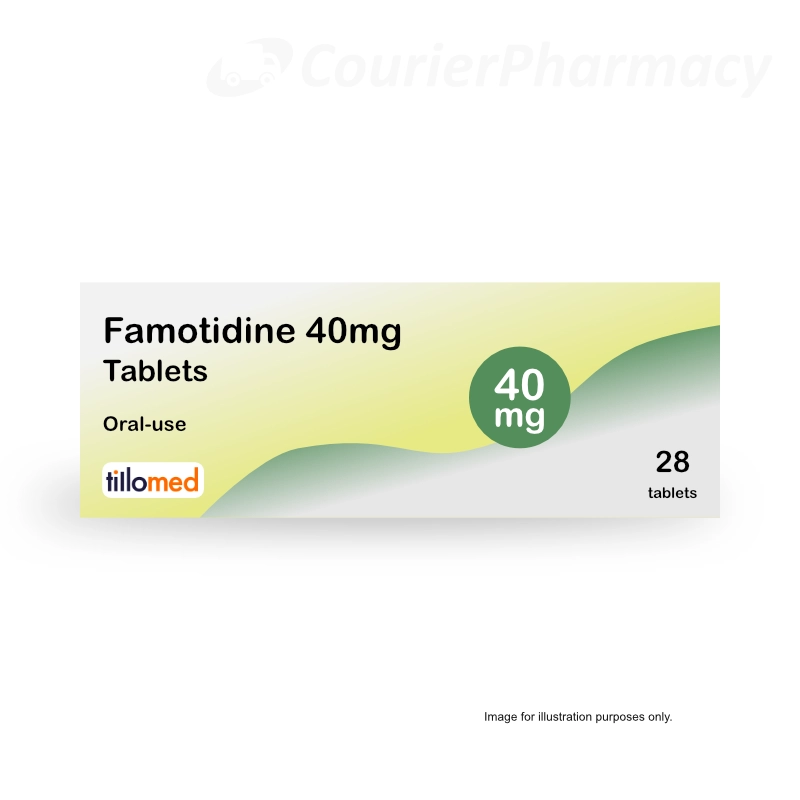
Famotidine 40mg tablets is a UK Prescription Only Medicine and a histamine H2-receptor antagonist used for the treatment and prevention of acid-related conditions including peptic ulcer disease, reflux oesophagitis, GORD, Zollinger-Ellison syndrome and Mast cell Activation Syndrome (MCAS) (unlicensed indication).
Famotidine is the principal H2 antagonist available in the UK.
Available from Courier Pharmacy after a quick online consultation reviewed by a UK-qualified prescriber.
Famotidine 40mg tablets is a UK Prescription Only Medicine (POM) that helps treat conditions where lowering stomach acid makes a real difference. Each tablet contains 40mg of famotidine, a histamine H2-receptor antagonist (H2 blocker). In simple terms, it blocks histamine signals in the stomach that tell acid-producing cells to switch on.
As a result, famotidine reduces acid production and can ease symptoms such as heartburn, reflux, and ulcer pain.
How famotidine works (and how it differs from PPIs)
Famotidine belongs to a different medicine group from proton pump inhibitors (PPIs) such as omeprazole, esomeprazole, lansoprazole, pantoprazole, and rabeprazole.
PPIs block the final “pump” step in acid release, so they often give stronger and longer-lasting acid control. However, famotidine works earlier in the chain. It blocks the H2 receptor on stomach cells, so it reduces acid more moderately — but still effectively for many people.
Because they work differently, clinicians sometimes use both. For example, a person may take a PPI in the morning and use famotidine at night for breakthrough nocturnal reflux. Alternatively, famotidine can suit people who cannot take a PPI.
Why famotidine matters in UK practice
Famotidine has been used since the 1980s, so it has decades of safety data behind it.
In addition, famotidine became the main H2 blocker option in the UK after ranitidine was withdrawn in 2020 due to concerns about NDMA contamination. Since then, famotidine has often served as the go-to H2 antagonist alternative to PPIs in both NHS and private care.
Why the 40mg strength is prescription-only
You can buy lower-dose famotidine (usually 20mg) over the counter for short-term heartburn in some branded products. However, famotidine 40mg is a higher-strength option.
Clinicians commonly use 40mg for:
active gastric or duodenal ulcers
more persistent GORD / reflux
reflux oesophagitis, including more severe symptoms in some cases
Because it needs clinical oversight, the 40mg strength requires prescriber review.
Why some people choose famotidine instead of a PPI
Famotidine can be a strong choice for three main reasons.
First, it offers a non-PPI option if you do not tolerate PPIs or you need an alternative approach.
Second, famotidine has a cleaner interaction profile than many medicines. It involves minimal CYP enzyme activity, so it often fits better when you take several medicines.
Third, people sometimes worry about long-term PPI use. While PPIs remain appropriate for many patients, famotidine does not share the same long-term risk profile in the same way (for example, concerns around low magnesium, low vitamin B12, fractures, or C. difficile risk).
How we supply famotidine at courierpharmacy.co.uk
We supply Famotidine 40mg tablets from a UK-registered pharmacy after an online consultation. A UK-qualified prescriber reviews your answers before supply.
During the consultation, we check:
your symptoms and treatment goals
your medical history
previous PPI or H2 blocker use
your current medicines and safety considerations
If famotidine does not suit your situation, our prescriber will explain why and suggest alternatives.
Key features and specifications
Active ingredient: famotidine 40mg per tablet
Form: film-coated tablets (swallow whole with water)
When mast cell activation is driving symptoms beyond what an H1 antihistamine alone can control, or when reflux, peptic ulcer, or GORD needs treating without the long-term considerations of a PPI, famotidine is the modern H2-receptor antagonist that fills the gap. It is licensed for acid-related conditions and widely used off-label in mast cell activation syndrome (MCAS), where it provides the H2 component of the H1+H2 antihistamine blockade approach that sits at the heart of modern MCAS care.
At Courier Pharmacy, we believe healthcare should suit the person, not the marketing budget. Whether you’re managing MCAS and looking for an established H2 antagonist as part of your antihistamine combination, dealing with reflux or peptic ulcer disease, looking for a non-PPI option because of drug interactions or long-term safety concerns, or stepping down from long-term PPI use, this page is here to help you decide whether Famotidine 40mg tablets fit your situation, and how to use them well.
Important note on licensing
Famotidine is licensed in the UK for the treatment and prevention of peptic ulcer disease, GORD, reflux oesophagitis, and Zollinger-Ellison syndrome. Its use in mast cell activation syndrome (MCAS) is off-label in the UK and across most of Europe. There is no UK-licensed product for MCAS, and prescribers who use famotidine for MCAS do so based on the off-label evidence base, international MCAS expert consensus, and their individual clinical judgement. This page covers both the licensed acid-related uses and the off-label MCAS use honestly, with clear disclosure of where each sits.
Five key takeaways
Famotidine 40mg tablets is a UK Prescription Only Medicine (POM) licensed for the treatment and prevention of acid-related conditions, including peptic ulcer disease, GORD, reflux oesophagitis, and Zollinger-Ellison syndrome.
Famotidine is widely used off-label as the H2 component of H1+H2 antihistamine blockade in mast cell activation syndrome (MCAS), histamine intolerance, and chronic urticaria. Typical off-label MCAS dose is 40mg twice daily, combined with a non-sedating H1 antihistamine.
The 40mg dose is the standard treatment strength for both the licensed acid indications and the off-label MCAS use; the 20mg dose is the lower-strength option for milder acid disease or for patients who don’t tolerate the 40mg dose.
Famotidine has a notably clean drug interaction profile, no significant clopidogrel interaction, and lacks the long-term safety considerations of the PPI class, which makes it particularly useful for patients on complex polypharmacy and for MCAS patients who are often on multiple medicines.
Famotidine became the principal H2 antagonist in UK clinical practice after ranitidine was withdrawn in 2020 due to NDMA contamination concerns; it has no equivalent contamination issue.
Mast cell activation syndrome (MCAS) and famotidine
Before getting into the standard licensed-indication content, it’s worth a substantial section on MCAS specifically, because this is a major reason patients seek famotidine and because the standard product description format doesn’t always do justice to the MCAS use case.
What is MCAS?
Mast cell activation syndrome (MCAS) is a clinical syndrome characterised by repeated episodes of mast cell degranulation with symptoms affecting two or more body systems, in the absence of an identifiable allergic trigger or clonal mast cell disease. Mast cells are immune cells that line the skin, gut, lungs, and other tissues, and that release histamine, tryptase, prostaglandins, leukotrienes, and dozens of other mediators when activated. In MCAS, this activation happens inappropriately and repeatedly, producing a wide range of symptoms.
Typical MCAS symptoms include flushing, itching, urticaria (hives), gastrointestinal symptoms (nausea, abdominal pain, diarrhoea, reflux), cardiovascular symptoms (tachycardia, blood pressure changes, presyncope or syncope), respiratory symptoms (wheeze, nasal congestion, throat tightness), neurological symptoms (brain fog, fatigue, headache, sensory disturbance), and a wide range of less specific symptoms. The condition often overlaps with other syndromes including hypermobile Ehlers-Danlos syndrome, postural orthostatic tachycardia syndrome (POTS), chronic fatigue syndrome / myalgic encephalomyelitis (CFS/ME), fibromyalgia, and long COVID.
Diagnosis of MCAS is based on consensus clinical criteria (Castells et al., Afrin et al., and others), typically involving a compatible symptom pattern, exclusion of clonal mast cell disease (mastocytosis) where appropriate, and evidence of response to mast cell mediator-targeted treatment. NHS recognition of MCAS in the UK has been limited and inconsistent, although awareness is improving. Many MCAS patients are diagnosed and managed by specialist allergists, immunologists, or by experienced GPs with an interest in the area.
Why H1+H2 antihistamine blockade is the foundation of MCAS treatment
Histamine is one of the most clinically important mediators released by mast cells. It acts on four receptor subtypes (H1, H2, H3, H4), of which H1 and H2 are the most clinically relevant. H1 receptors mediate most of the classical “allergy” symptoms (itching, sneezing, runny nose, urticaria, bronchoconstriction). H2 receptors mediate gastric acid secretion, cardiovascular effects (vasodilation, some contributions to tachycardia), and other less classical effects.
H1 antihistamines (loratadine, fexofenadine, cetirizine, desloratadine, levocetirizine) block H1 receptors and address the H1-mediated symptoms of MCAS. They are the first-line antihistamine treatment and are essentially universal in MCAS protocols.
H2 antihistamines (famotidine, and historically ranitidine before its withdrawal) block H2 receptors and address the H2-mediated symptoms. The historical evidence base for H2 antihistamines in MCAS is older and includes work from the 1980s and 1990s on systemic mastocytosis and chronic urticaria. The more recent MCAS literature (Afrin, Molderings, Castells, and others) has converged on the combination of H1+H2 blockade as the foundation of MCAS pharmacological treatment, with additional medicines (mast cell stabilisers like cromolyn or ketotifen, leukotriene antagonists like montelukast, low-dose naltrexone, and others) layered on as needed for individual patient response.
The clinical rationale for H1+H2 combined blockade is straightforward: histamine acts on both receptor types, and blocking only one leaves the other receptor activation unmodified. Patients who respond partially to H1 antihistamine alone often improve substantially when H2 blockade is added, because the H2-mediated symptoms (some gastrointestinal effects, some cardiovascular effects, some skin effects) had been continuing despite the H1 blockade.
How famotidine is used in MCAS
The typical off-label MCAS dosing of famotidine is 40mg twice daily (morning and evening), with the doses spaced roughly 12 hours apart. Some patients tolerate or respond better to 20mg twice daily; some patients on heavier MCAS pictures use 40mg three times daily or higher under specialist supervision. The choice of dose is individualised based on response, tolerability, and the wider clinical picture.
Famotidine in MCAS is essentially always combined with an H1 antihistamine. The H1 choice depends on the patient: fexofenadine is often preferred for its very minimal sedation profile and minimal drug interactions; loratadine and desloratadine are popular alternatives; cetirizine and levocetirizine are slightly more sedating but sometimes more effective at higher doses (often used at twice the licensed dose in MCAS); chlorphenamine and hydroxyzine are sometimes used at night for their additional sedation effect helping sleep but are not first-line because of daytime sedation.
The expected response to famotidine in MCAS is variable. Some patients notice clear improvement in days; others notice improvement over weeks; others find that famotidine adds little to their H1 antihistamine alone. The decision to continue or stop is based on symptomatic response over 4 to 8 weeks of consistent dosing, ideally with some form of structured symptom tracking.
Famotidine is not a complete MCAS treatment. It addresses the H2-mediated component of mast cell-released histamine, which is a meaningful but partial slice of the overall MCAS picture. Most patients on H1+H2 blockade also benefit from mast cell stabilisers (cromolyn sodium oral solution, ketotifen), leukotriene antagonists (montelukast), and lifestyle and trigger modification. Some patients add low-dose naltrexone for its anti-inflammatory effects. The H1+H2 backbone is the foundation, not the whole house.
MCAS-specific considerations for famotidine
Several factors make famotidine particularly suited to MCAS patients beyond the H2 blockade mechanism itself:
Clean drug interaction profile: MCAS patients are often on multiple medicines simultaneously (H1 antihistamine, montelukast, cromolyn, low-dose naltrexone, sometimes PPI, often supplements). Famotidine has minimal CYP enzyme involvement and adds few interaction concerns to an already complex polypharmacy picture.
No significant CYP2C19 inhibition: Many MCAS patients also have POTS or other cardiovascular involvement and may be on medicines that interact with PPIs (clopidogrel, some antidepressants, some heart medicines). Famotidine doesn’t add the PPI interaction concerns.
No long-term safety considerations of the PPI class: MCAS patients are often young (the condition typically presents in young to middle-aged adults), and the prospect of decades of medicine use makes the long-term safety profile relevant. Famotidine’s lack of the PPI long-term considerations (magnesium, B12, fracture, C. difficile) is meaningful for this group.
Excipient profile: MCAS patients are often sensitive to medicine excipients (lactose, certain colourings, certain preservatives). Famotidine is available from multiple UK manufacturers with different excipient profiles, allowing selection of a product that suits the individual MCAS patient. Some MCAS patients do better with one brand than another for purely excipient reasons. Our pharmacist can help with this.
Cost: famotidine is inexpensive compared to many MCAS medicines and supplements, making it a sustainable long-term option.
Limitations and caveats in MCAS
A few important caveats:
The off-label nature of famotidine in MCAS is real and matters. Prescribers who supply famotidine for MCAS take responsibility for the off-label decision, and patients accepting the medicine should understand that the indication is not UK-licensed.
The evidence base for MCAS treatment is generally less robust than for licensed indications. Most MCAS treatment is based on expert consensus, observational case series, and pathophysiological rationale rather than large randomised controlled trials. This is partly because MCAS is a relatively recently recognised clinical entity and partly because of the heterogeneity of the patient population.
Famotidine is not a complete or curative MCAS treatment. It addresses one mediator pathway (histamine through H2 receptors). Patients with significant MCAS will usually need a multi-component approach.
Tachyphylaxis (tolerance) is a real concern with continuous daily H2 antagonist use. Some MCAS patients find that famotidine’s effect diminishes over weeks or months. Strategies include dose increase, switching to twice or three times daily dosing, or short breaks alternating with other approaches.
Some MCAS patients have rebound symptoms when famotidine is stopped suddenly, more so than for the typical acid-related indication. Gradual taper is often more comfortable for established MCAS patients.
Famotidine is not the answer for all MCAS patients. Some respond minimally; some don’t tolerate it; some find the side effect profile (headache, occasional GI effects) unacceptable. The decision to continue is based on individual response.
Treatment dosage: Famotidine 40mg tablets
Always follow the dosing instructions from your prescriber. The information below is based on standard BNF and SmPC guidance for the licensed acid-related indications, and on international MCAS clinical literature and consensus for the off-label MCAS use.
Licensed acid-related dosing
For active peptic ulcer disease (gastric or duodenal ulcer) in adults: 40mg once daily at bedtime, or 20mg twice daily, for 4 to 8 weeks. Duodenal ulcers typically heal in 4 weeks and gastric ulcers in 8 weeks of treatment.
For maintenance treatment to prevent recurrent peptic ulcers: 20mg once daily at bedtime. The 40mg dose can be used for higher-risk patients with frequent recurrences.
For GORD and mild reflux oesophagitis in adults: 20mg twice daily or 40mg once daily at bedtime for 6 to 12 weeks.
For moderate to severe reflux oesophagitis: 40mg twice daily for 6 to 12 weeks.
For Zollinger-Ellison syndrome: starting dose is usually 20mg every 6 hours, with subsequent dosing individualised under specialist supervision based on gastric acid output measurements. Higher doses (up to 800mg daily in divided doses) are sometimes needed.
For nocturnal acid breakthrough in patients on PPI therapy: 40mg at bedtime, added to morning PPI dosing.
Off-label MCAS dosing
For mast cell activation syndrome (off-label): the typical adult dose is 40mg twice daily, combined with a non-sedating H1 antihistamine (fexofenadine 180mg twice daily, loratadine 10mg twice daily, cetirizine 10mg twice daily, or similar). Doses may be titrated upward to 40mg three times daily under specialist supervision for severe MCAS.
Some MCAS patients start at 20mg twice daily and titrate up to 40mg twice daily based on response and tolerability. Some find 40mg once daily sufficient for their picture.
The MCAS dose is individualised. Our prescriber will discuss the right starting dose and titration approach based on your specific clinical picture, symptom pattern, and what other MCAS treatments you are using.
General administration
Swallow the tablet whole with a glass of water. Famotidine tablets are not enteric-coated and can be taken with or without food. For the once-daily acid indication regimens, bedtime dosing is standard. For twice-daily dosing (acid or MCAS), space the doses roughly 12 hours apart.
Take famotidine consistently at the same times each day. For MCAS use particularly, consistent dosing matters because the H2 blockade needs to be sustained for the receptor effects to be useful.
If you miss a dose, take it as soon as you remember unless it’s nearly time for the next dose; don’t double-dose to catch up.
Stopping famotidine
For the licensed acid indications, famotidine can usually be stopped without significant rebound. Patients with severe oesophagitis or healed ulcer disease may experience symptom recurrence and benefit from a planned step-down.
For off-label MCAS use, some patients experience symptom flare on stopping famotidine, particularly if they have been on it for many months. Gradual taper (40mg twice daily to 40mg once daily for 1 to 2 weeks, then to 20mg once daily for 1 to 2 weeks, then stop, with H1 antihistamine continued) is often more comfortable than stopping cold.
Overview of Famotidine 40mg tablets
Five key facts
Famotidine blocks the H2-receptor selectively, with effects on both gastric parietal cells (reducing acid secretion) and other tissue H2 receptors (relevant in MCAS, histamine intolerance, and other histamine-mediated conditions).
The 40mg dose produces approximately 60 to 70% reduction in 24-hour gastric acid output, compared to 70 to 80% for omeprazole 20mg; the difference is more pronounced for daytime acid suppression than for nocturnal control.
Famotidine has minimal CYP enzyme involvement and a notably clean drug interaction profile, with no significant clopidogrel interaction, making it useful for patients on complex polypharmacy including MCAS patients on multiple medicines.
The long-term safety considerations of PPIs (low magnesium, low vitamin B12, fracture risk, C. difficile risk) do not apply to H2 antagonists in the same way; famotidine is a reasonable option for patients with long-term PPI safety concerns or for young MCAS patients facing decades of potential treatment.
After ranitidine’s withdrawal in 2020 due to NDMA contamination, famotidine became the principal H2 antagonist in UK clinical practice for both licensed acid-related indications and off-label MCAS use, with no equivalent contamination concerns affecting its safety profile.
Where famotidine sits in the modern treatment toolkit
Famotidine has two distinct clinical positions in modern UK practice. For the licensed acid-related indications, it sits as the H2 antagonist alternative to PPIs (omeprazole, lansoprazole, esomeprazole, pantoprazole, rabeprazole), useful in specific scenarios where PPIs are not the right answer. For the off-label MCAS use, it sits as the H2 antihistamine pillar of H1+H2 antihistamine blockade, which is the foundation of modern MCAS pharmacological treatment.
For the acid-related indications, the advantages of famotidine over PPIs include faster onset of action (within 30 to 60 minutes versus several days to steady-state for PPIs), better targeting of nocturnal acid (H2 antagonists work particularly well at night because histamine is a major driver of overnight acid secretion), no significant rebound acid hypersecretion on stopping (unlike PPIs), minimal drug interactions, no long-term safety considerations of the magnitude associated with PPIs, and lower cost in some scenarios. The disadvantages are less profound acid suppression than PPIs, tachyphylaxis with continuous use, less effective for severe erosive oesophagitis at high doses, and less effective for H. pylori eradication regimens.
For the off-label MCAS use, famotidine’s unique position comes from the fact that it is essentially the only widely available H2 antihistamine in the UK after ranitidine’s 2020 withdrawal. The alternatives (cimetidine, nizatidine) are either largely supplanted or have more drug interactions. Famotidine has become the de facto H2 antihistamine of choice in MCAS protocols across the UK and Europe.
Famotidine and the post-ranitidine landscape
Ranitidine (Zantac) was the dominant H2 antagonist in UK practice from the 1980s to 2020 and was widely used both for acid-related indications and as the H2 antihistamine in MCAS protocols. In 2019, the FDA identified concerning levels of NDMA in ranitidine products, with the contamination thought to result from the molecule’s chemical instability rather than from manufacturing impurities. The MHRA initiated a UK recall in late 2019, and ranitidine was effectively withdrawn from UK sale by 2020. The withdrawal applied to all ranitidine products regardless of manufacturer because the issue was inherent to the molecule.
For MCAS patients who had been on ranitidine for years as their H2 antihistamine, the withdrawal was significant. Many were switched to famotidine in 2019-2020, often with the dose translated approximately (ranitidine 150mg twice daily roughly corresponding to famotidine 20mg twice daily, ranitidine 300mg twice daily roughly to famotidine 40mg twice daily). For most patients the switch was straightforward and well-tolerated. For some, the response wasn’t quite the same and they needed dose adjustment or addition of other treatments. The MCAS clinical community generally accepted famotidine as the new standard H2 antihistamine of choice within a few months of the ranitidine withdrawal.
Long-term safety: a meaningful contrast with PPIs
One of the most useful aspects of famotidine for some patients is the contrast with PPI long-term safety considerations. The class concerns with long-term PPI use include hypomagnesaemia (low magnesium), particularly after 3 months to 1 year of continuous use; vitamin B12 deficiency, more relevant after several years of use; increased risk of Clostridioides difficile infection, mainly in hospital settings; small increase in fracture risk (hip, wrist, spine), particularly in older patients with other osteoporosis risk factors; small increase in chronic kidney disease risk in some observational studies; possible small increase in dementia risk (controversial; observational studies show inconsistent results).
These class effects of PPIs are real but small in absolute terms; they should not prevent appropriate PPI use, but they are reasons for using the lowest effective dose, reviewing long-term need regularly, and considering alternatives when reasonable.
H2 antagonists including famotidine do not produce the same class concerns. The mechanism (histamine blockade) does not produce the same effects on magnesium absorption, B12 absorption, gut flora, or bone metabolism as the more profound acid suppression of PPIs. The trade-off is that famotidine produces less complete acid suppression, which makes it less effective for severe erosive disease.
For MCAS patients particularly, who often start treatment in their 20s to 40s and may be on medicines for decades, the contrast in long-term safety matters. A young patient looking at 30-40 years of potential medicine use will often prefer the H2 antagonist with its cleaner long-term profile over a PPI with its small but accumulating long-term considerations.
Why choose Courier Pharmacy for Famotidine 40mg tablets
At Courier Pharmacy, our whole approach is built around the idea that healthcare should fit the person. For famotidine, that means careful conversation about why an H2 antagonist is the right choice for you, whether your situation is acid-related, MCAS-related, both, or something else, and how famotidine fits into your wider treatment plan. Our service is shaped by the philosophy of Dr Ada Jex-Cori, our brand pharmacist, who has built her practice around accessible, honest, personalised care. Her view is straightforward: you are not broken. The system is the problem. We are here to change that.
MCAS care that takes you seriously
For MCAS patients particularly, we believe that the standard NHS pathway often fails to provide the consistent, evidence-informed support that the condition requires. Many MCAS patients have been told their symptoms are anxiety, are dismissed at GP visits, or have spent years navigating between specialists without coherent care. We approach MCAS as a real clinical entity, with real pharmacological treatment options, and with the understanding that the H1+H2 antihistamine backbone is a foundational treatment rather than an experimental afterthought.
Famotidine for off-label MCAS use is supplied through our prescriber-led service. The prescriber takes responsibility for the off-label decision, considers your wider clinical picture (other MCAS treatments, overlapping POTS or EDS or CFS/ME or fibromyalgia, your medicine sensitivities, your history of antihistamine response), and arranges appropriate follow-up. We are happy to coordinate with your other MCAS clinicians, your GP, or your specialist if relevant.
We also understand that MCAS patients often have complex preferences around specific brands, excipients, formulations, and timing. Our pharmacist can advise on the excipient profiles of different famotidine brands available through our supply chain, and can flag if a particular brand has features (lactose-free, dye-free) that suit your specific sensitivities better.
Clean drug interactions and long-term safety considerations
For patients on complex polypharmacy (including MCAS patients on multiple medicines, patients on clopidogrel after cardiac events, patients on multiple psychiatric or neurological medicines), famotidine’s clean drug interaction profile is a genuine clinical advantage. Our prescriber will check the full interaction picture and confirm whether famotidine fits your specific medicine list better than a PPI alternative.
For young patients facing decades of potential medicine use, the contrast in long-term safety between famotidine and PPIs matters. We will discuss this honestly during the consultation rather than defaulting to the more aggressively-suppressing PPI option for a clinical picture that might not need it.
Trust earned, not claimed
We’re GPhC-regulated, we ground our content in NHS, NICE, BNF, peer-reviewed sources, and the international MCAS clinical literature, and we will tell you honestly if famotidine isn’t the right answer for your situation. We’d rather give you the right answer than a quick sale.
Buy Famotidine 40mg tablets (Prescription Only) from Courier Pharmacy
Famotidine 40mg tablets is a Prescription Only Medicine (POM) in the UK at the 40mg strength. It can only be supplied after a UK-qualified prescriber has reviewed your online consultation. The consultation takes a few minutes and covers your symptoms, medical history, previous acid-suppression or antihistamine treatment, current medicines, MCAS-related history if relevant, and treatment goals.
Here is how our service works:
Complete a quick online consultation answering questions about your symptoms, medical history (including any MCAS diagnosis or histamine-related condition), and current medications.
A UK-qualified prescriber reviews your answers to confirm famotidine 40mg is suitable for you, including consideration of off-label use if you are seeking famotidine for MCAS.
If approved, a prescription is issued and your order is prepared for dispatch.
We dispense and deliver discreetly to your door.
If Famotidine 40mg tablets isn’t suitable for you, we will explain why and suggest the next best option. That might be:
The lower-strength famotidine 20mg dose for milder symptoms or maintenance treatment.
A PPI (omeprazole, esomeprazole, lansoprazole, pantoprazole) if you have severe erosive oesophagitis or active ulcer disease that needs deeper acid suppression than famotidine provides.
Pantoprazole 20mg or 40mg if you’re on clopidogrel and need a PPI rather than an H2 antagonist.
A combination of PPI plus famotidine for refractory GORD with nocturnal breakthrough.
An H1 antihistamine alone if MCAS is the clinical picture and you haven’t yet started H1 treatment (the H1 component is usually started first, with H2 added if response is partial).
A referral to your GP or for endoscopy if your symptoms suggest something that needs a clinical look.
Our free fortnightly drop-in clinics at Insomnia, Derby run every other week from 12 to 1pm. Reflux, dyspepsia, MCAS, histamine intolerance, antihistamine therapy, choosing between H2 antagonists and PPIs, long-term safety of acid-suppression treatment, and “should I still be on this?” are all conversations we have regularly at these sessions. No appointment needed, no charge, no pressure.
Active ingredient in Famotidine 40mg tablets
The active ingredient is famotidine, a third-generation histamine H2-receptor antagonist. Famotidine selectively binds to the H2 receptor on the gastric parietal cell and on other body tissues, blocking histamine from stimulating the receptor.
For acid-related indications, the relevant H2 receptors are on the gastric parietal cell. The parietal cell, which produces stomach acid, has three main types of stimulating receptors on its surface: H2 (responsive to histamine), M3 (responsive to acetylcholine from vagal stimulation), and CCK2 (responsive to gastrin from the antrum of the stomach). When any of these receptors are stimulated, intracellular signalling pathways converge on the H+/K+ ATPase proton pump, which actively transports hydrogen ions into the gastric lumen. By blocking the H2 receptor, famotidine prevents histamine from stimulating acid secretion. The parietal cell can still respond to acetylcholine and gastrin stimulation, which is why H2 antagonists produce less complete acid suppression than PPIs.
For MCAS and other histamine-mediated conditions, the relevant H2 receptors are throughout the body. H2 receptors are expressed on blood vessels (where they mediate vasodilation), cardiac tissue (contributing to some cardiovascular effects of histamine), gastrointestinal smooth muscle (affecting motility), immune cells, and elsewhere. By blocking H2 receptors more broadly, famotidine reduces the H2-mediated effects of mast cell-released histamine in MCAS, contributing to control of gastrointestinal symptoms, some cardiovascular symptoms, and contributing to overall symptom burden reduction when combined with H1 antihistamine.
Each tablet contains famotidine in a film-coated formulation that is straightforward to swallow. There is no enteric coating because famotidine is not significantly degraded by stomach acid. The tablet can be taken with or without food. Famotidine is absorbed rapidly with peak plasma levels at 1 to 3 hours, and the plasma half-life is around 2.5 to 4 hours. The clinical duration of effect is around 10 to 12 hours after a 40mg dose.
Famotidine is excreted primarily unchanged in urine, with around 25 to 30% metabolised in the liver. This means dose adjustment is needed in significant renal impairment but generally not in liver impairment. The minimal hepatic metabolism is part of why famotidine has such a clean drug interaction profile.
What are Famotidine 40mg tablets used for?
Licensed UK indications
For active peptic ulcer disease (gastric or duodenal ulcer), famotidine 40mg once daily at bedtime (or 20mg twice daily) is the standard treatment dose, typically given for 4 to 8 weeks.
For maintenance treatment to prevent recurrent peptic ulcers, famotidine 20mg once daily at bedtime is the standard maintenance dose.
For GORD and mild to moderate reflux oesophagitis, famotidine is an established alternative to PPI therapy. The 20mg twice daily or 40mg once daily regimens are appropriate for mild to moderate disease, with 40mg twice daily for moderate to severe oesophagitis.
For Zollinger-Ellison syndrome, famotidine is used at individualised doses under specialist supervision, although PPIs are generally preferred as first-line.
For prevention of NSAID-associated ulcers in patients who don't tolerate PPIs, famotidine is a reasonable alternative.
Off-label use in MCAS and histamine-mediated conditions
For mast cell activation syndrome (MCAS), famotidine is widely used off-label as the H2 component of H1+H2 antihistamine blockade. Typical dose is 40mg twice daily, combined with a non-sedating H1 antihistamine. This is one of the foundational treatments in MCAS protocols across the UK, Europe, and US.
For histamine intolerance (a related but distinct condition where excess dietary histamine causes symptoms due to reduced DAO enzyme activity or other reasons), famotidine is sometimes used off-label, either alone or with an H1 antihistamine, alongside dietary modification.
For chronic spontaneous urticaria (CSU) refractory to H1 antihistamine alone, famotidine is sometimes added as an off-label adjunct, although the evidence base for this specific use is mixed. UK and European guidelines (EAACI/GA²LEN/EDF/WAO) for CSU recommend H1 antihistamine first-line, with omalizumab or ciclosporin as next-line for refractory cases, but some clinicians use H2 antihistamine as a bridge.
For nocturnal acid breakthrough in patients on PPI therapy (an established off-label combination), famotidine 40mg at bedtime added to the morning PPI dose is commonly used.
For mastocytosis (clonal mast cell disease, distinct from MCAS), famotidine is used as part of the antihistamine backbone of treatment alongside specialist input.
Not appropriate for
Self-treatment of red-flag symptoms (vomiting blood, dark stools, unexplained weight loss, persistent vomiting, difficulty swallowing, new onset of dyspepsia after age 55).
Patients with known hypersensitivity to famotidine or other H2 antagonists.
Significant uncorrected severe renal impairment without dose adjustment.
Children under 12 through this online consultation route.
How does Famotidine work?
Famotidine works by selectively blocking the histamine H2 receptor wherever it is expressed in the body. The two clinical applications use the same fundamental mechanism but target different H2 receptor populations.
For the acid-related indications, the relevant H2 receptors are on gastric parietal cells. By blocking H2 stimulation, famotidine reduces but does not abolish acid secretion. The parietal cell can still respond to acetylcholine and gastrin, which is why H2 antagonists produce less complete acid suppression than PPIs. However, histamine is the dominant stimulus for basal (resting) acid secretion and for nocturnal acid secretion, so famotidine is particularly effective at reducing basal and nocturnal acid output. Intragastric pH is held above 4 for around 10 to 12 hours per 24 hours at the 40mg dose.
For the off-label MCAS use, the relevant H2 receptors are distributed throughout the body. By blocking H2 receptors more broadly, famotidine reduces the H2-mediated effects of mast cell-released histamine. This contributes to control of:
Gastrointestinal symptoms in MCAS: H2 receptors in the gut influence motility, secretion, and inflammatory responses. H2 blockade can help with reflux symptoms, abdominal pain, and some diarrhoea or other motility-related MCAS symptoms.
Cardiovascular symptoms in MCAS: H2 receptors on blood vessels mediate vasodilation, and some MCAS patients with significant flushing, tachycardia, or blood pressure variability find that H2 blockade helps.
Skin symptoms in MCAS: H2 receptors contribute to some aspects of urticaria and pruritus, alongside the H1-mediated effects.
General histamine-load reduction: by blocking one of the two main histamine receptor pathways, H2 blockade reduces the overall physiological impact of histamine release.
After you swallow a famotidine tablet, the active drug is absorbed from the small intestine into the bloodstream. Absorption is rapid but moderate in extent; oral bioavailability is around 40 to 45%, lower than for many other medicines. The drug is distributed widely in body tissues, including crossing into the central nervous system in small amounts. Famotidine reaches peak plasma levels at 1 to 3 hours after dosing, with the plasma half-life of 2.5 to 4 hours.
A clinically important feature of H2 antagonists including famotidine is the phenomenon of tachyphylaxis (also called tolerance). With continuous daily dosing, the acid-suppressive effect can diminish over a few weeks as the parietal cell adapts. The same phenomenon can affect the response to famotidine in MCAS over months of use. Strategies to manage tachyphylaxis include intermittent or as-needed dosing patterns, increasing the dose, switching to twice or three times daily dosing, taking short breaks, or using H2 antagonists for short-term courses rather than indefinite use.
Famotidine is excreted primarily unchanged in urine, with around 25 to 30% metabolised in the liver. The minimal hepatic metabolism, particularly the minimal CYP enzyme involvement, is the reason for famotidine's clean drug interaction profile.
How to use Famotidine 40mg tablets
Take according to your prescriber's instructions. The general approaches for the licensed acid indications and the off-label MCAS use differ in timing.
Licensed acid indications
For once-daily dosing (acid indications), take one 40mg tablet with a glass of water at bedtime, around 30 to 60 minutes before going to sleep. The bedtime timing covers the overnight acid surge well.
For twice-daily acid indication dosing, take one 40mg tablet around breakfast time and one around bedtime, with approximately 12 hours between doses.
Off-label MCAS use
For twice-daily MCAS dosing, take one 40mg tablet around morning antihistamine time (often with your H1 antihistamine, or 30 minutes before breakfast) and one around evening antihistamine time (with your evening H1 antihistamine, or before bed). Consistency matters more than precise timing.
For three times daily MCAS dosing (if prescribed for more severe MCAS), space doses roughly 8 hours apart.
General use rules
Take consistently at the same times each day.
Skipping doses produces less consistent symptom control.
If you miss a dose, take it as soon as you remember unless it's nearly time for the next dose; don't double-dose to catch up.
Take with or without food; food does not significantly affect absorption.
Swallow tablets whole with a glass of water. Tablets are not enteric-coated and can be split or crushed if needed for swallowing difficulties.
For MCAS use, take your H1 antihistamine alongside famotidine for the combined H1+H2 effect.
Duration of treatment
For ulcer treatment, the typical course is 4 to 8 weeks, with review at the end to determine whether maintenance treatment is needed.
For GORD and reflux oesophagitis, 6 to 12 weeks of treatment is typical, followed by review.
For off-label MCAS use, treatment is typically long-term (months to years) because MCAS is generally a chronic condition. Regular review (every 6 to 12 months) is sensible to assess whether the dose is still right, whether tachyphylaxis is developing, and whether changes are needed.
When tachyphylaxis develops
If your symptoms have been well-controlled on famotidine for some weeks or months and then start to return despite consistent dosing, tachyphylaxis may be developing. Options include increasing the dose, switching to twice or three times daily dosing, taking short breaks alternating with other approaches, or considering additional MCAS treatments (mast cell stabilisers, leukotriene antagonists, low-dose naltrexone). Discuss with our prescriber for advice.
Stopping famotidine
For the licensed acid indications, famotidine does not produce significant rebound acid hypersecretion on stopping. Patients with mild disease can usually stop without a taper.
For off-label MCAS use, some patients experience symptom flare on stopping famotidine, particularly if they have been on it for many months. Gradual taper is usually more comfortable than stopping cold. A typical taper might be 40mg twice daily to 40mg once daily for 1 to 2 weeks, then to 20mg once daily for 1 to 2 weeks, then stop, with H1 antihistamine continued.
Warnings and precautions for Famotidine 40mg tablets
Famotidine is well-tolerated by most patients, but a few cautions apply.
Do not use famotidine if you have a known hypersensitivity to famotidine or to other H2 antagonists, or to any of the tablet excipients.
Use with caution and at reduced dose in significant renal impairment. Famotidine is excreted primarily unchanged in urine, so renal impairment leads to drug accumulation. In moderate renal impairment (creatinine clearance 30 to 60 mL/min), the dose is often reduced to 20mg once daily. In severe renal impairment (creatinine clearance below 30 mL/min), the dose is reduced further or the dosing interval extended.
Liver impairment generally does not require dose adjustment because hepatic metabolism contributes only a small fraction of famotidine clearance.
In older patients, particularly those over 80, famotidine has been associated with reversible mental status changes (confusion, agitation, hallucinations) in rare cases, typically in the context of underlying cognitive vulnerability or reduced renal function. The 40mg dose may need to be reduced to 20mg in this population.
Pre-existing red-flag symptoms (vomiting blood, dark stools, unexplained weight loss, persistent vomiting, difficulty swallowing, new onset of dyspepsia after age 55) need proper assessment before starting famotidine, because the medicine can mask symptoms of more serious underlying disease, including gastric cancer.
In pregnancy and breastfeeding, famotidine is considered low-risk based on available data. For off-label MCAS use in pregnancy, the off-label nature combined with limited specific MCAS-in-pregnancy data means the prescriber should discuss the decision carefully with the patient. Many MCAS patients do continue antihistamines including famotidine through pregnancy after discussion, but the decision is individualised.
In children, famotidine has some paediatric licensing for specific acid-related indications, but the 40mg strength is generally used in older children or adolescents. Supply through this online consultation route is restricted to adults.
A clinically important warning: famotidine should not be used to treat acute chest pain or symptoms that could be cardiac in origin. Heartburn-like symptoms can sometimes represent cardiac ischaemia, and using an acid suppressant to mask symptoms without proper assessment can delay appropriate cardiac care. New onset of upper abdominal or chest discomfort, particularly in older patients or those with cardiovascular risk factors, warrants medical assessment before starting famotidine.
For MCAS patients specifically, famotidine is one of many medicines being managed alongside the wider clinical picture. New or unusual symptoms during famotidine treatment should be discussed with the prescriber to determine whether they are MCAS-related, medicine-related, or something else entirely.
Side effects of Famotidine 40mg tablets
Famotidine has an excellent safety profile and is generally very well-tolerated. The side effect rate is low and the side effects that do occur are usually mild and self-limiting.
Common side effects (affecting up to 1 in 10 patients) include headache, dizziness, diarrhoea or constipation, and mild nausea.
Less common side effects include skin rash, itching, fatigue, dry mouth, loss of appetite, and mild taste changes.
Rare side effects include reversible mental status changes (confusion, agitation, hallucinations) more common in older patients and those with renal impairment, cardiovascular effects (rare cases of bradycardia, arrhythmia, prolonged QT interval in patients with renal impairment), liver enzyme abnormalities (usually mild and reversible), blood disorders (rare reports of thrombocytopenia, leucopenia, pancytopenia), and severe skin reactions (Stevens-Johnson syndrome, toxic epidermal necrolysis; very rare).
Very rare but serious side effects include severe skin reactions, severe liver injury, and severe blood disorders. If you notice any severe rash, blistering, jaundice, dark urine, fever with rash, or sudden swelling, stop the medicine and seek urgent medical attention.
For MCAS patients specifically
MCAS patients often have heightened awareness of medicine side effects and may experience reactions to medicine excipients or to the medicines themselves more readily than the general population. Famotidine is generally well-tolerated in MCAS, but some patients react to specific brands, often because of excipient differences (lactose, certain colourings, certain preservatives). If you experience reactions to one brand of famotidine, switching to a different manufacturer often resolves the issue. Our pharmacist can advise on excipient profiles of available brands.
Headache from famotidine, when it occurs, sometimes overlaps with MCAS-related headache, making attribution difficult. If headache develops or worsens after starting famotidine and persists despite continued treatment, discuss with the prescriber.
Long-term safety advantage over PPIs
A notable contrast with PPIs: the long-term safety profile of famotidine is reassuringly free of the class concerns associated with long-term PPI use. Famotidine does not produce significant hypomagnesaemia, vitamin B12 deficiency, increased C. difficile risk, or increased fracture risk in the same way that long-term PPI use does. For MCAS patients particularly, who often face decades of treatment, this matters.
Yellow Card reporting
Suspected adverse drug reactions can be reported to the MHRA via the Yellow Card scheme at yellowcard.mhra.gov.uk. Reporting helps build the safety picture for everyone, particularly for off-label uses where the safety database is less developed.
Drug interactions with Famotidine 40mg tablets
Famotidine has a notably clean drug interaction profile, which is one of its main advantages in patients on complex polypharmacy (including most MCAS patients).
The minimal interaction profile is because famotidine has minimal hepatic CYP enzyme involvement (unlike cimetidine, the older H2 antagonist that has many interactions), and because it does not significantly affect CYP2C19, the enzyme that activates clopidogrel and metabolises several other commonly co-prescribed medicines.
Significant interactions
Atazanavir (HIV protease inhibitor): atazanavir requires an acidic stomach for absorption; famotidine reduces this absorption significantly. The combination is generally not recommended.
Cefuroxime axetil: an antibiotic whose absorption is reduced by gastric acid suppression. Clinical significance is small but worth noting.
Ketoconazole, itraconazole, posaconazole (azole antifungals): require an acidic stomach for absorption; famotidine reduces this absorption. Fluconazole (not affected by gastric pH) is generally preferred if systemic antifungal treatment is needed.
Iron supplements: reduced absorption when gastric acid is suppressed. Take iron supplements with vitamin C, or take iron at a time when famotidine effect is wearing off.
Antacids containing magnesium or aluminium: can reduce famotidine absorption if taken at the same time. Separate doses by at least 1 hour.
Not significant interactions (the famotidine advantages)
Clopidogrel: famotidine does not significantly inhibit CYP2C19 and does not reduce clopidogrel activation.
Methotrexate: minimal interaction with famotidine, unlike PPIs.
Warfarin: minimal effect on INR, unlike cimetidine.
CYP2C19 substrates (citalopram, diazepam, phenytoin): minimal effect with famotidine.
Tacrolimus and other immunosuppressants: minimal effect.
Interactions relevant to MCAS patients specifically
MCAS patients are often on multiple medicines, and famotidine's clean interaction profile is one of its main advantages in this population. Common MCAS medicine combinations including famotidine include:
H1 antihistamines (fexofenadine, loratadine, cetirizine, levocetirizine, desloratadine): no significant interaction with famotidine, designed to be used together.
Montelukast (leukotriene antagonist): no significant interaction with famotidine.
Cromolyn sodium oral solution (mast cell stabiliser): no significant interaction with famotidine.
Low-dose naltrexone (LDN): no significant interaction with famotidine.
Ketotifen (mast cell stabiliser, antihistamine, unlicensed in UK): no significant interaction with famotidine.
Quercetin and other flavonoid supplements (used by some MCAS patients): no significant interaction with famotidine.
For patients on any other medicines, our prescriber will check the interaction profile during your consultation.
Frequently asked questions about Famotidine 40mg tablets
What is Famotidine 40mg used for?
Famotidine 40mg tablets is licensed in the UK for the treatment and prevention of acid-related conditions, including peptic ulcer disease (gastric and duodenal), GORD, reflux oesophagitis, and Zollinger-Ellison syndrome. It is also widely used off-label in mast cell activation syndrome (MCAS), histamine intolerance, and chronic urticaria as the H2 component of H1+H2 antihistamine blockade.
What is MCAS and how does famotidine help?
Mast cell activation syndrome (MCAS) is a condition in which mast cells degranulate inappropriately and repeatedly, releasing histamine and other mediators that cause symptoms across multiple body systems (skin, gut, cardiovascular, respiratory, neurological). Histamine acts on H1 and H2 receptors throughout the body. H1 antihistamines (loratadine, fexofenadine, cetirizine) block one side of the histamine effect; H2 antihistamines like famotidine block the other side. The combination of H1 and H2 blockade is the foundation of MCAS pharmacological treatment and often produces better symptom control than either alone. The typical off-label MCAS dose of famotidine is 40mg twice daily.
Is famotidine licensed for MCAS in the UK?
No. Famotidine is licensed in the UK for the treatment of acid-related conditions only. Its use in MCAS is off-label. Off-label prescribing is permitted under UK GMC guidance where the prescriber takes responsibility for the decision and the patient is properly informed. Our prescriber takes this responsibility and will discuss the off-label nature, the international evidence base, and realistic expectations with you.
How is famotidine different from omeprazole?
Famotidine is an H2-receptor antagonist; omeprazole is a proton pump inhibitor (PPI). They work through different mechanisms. PPIs produce deeper and more sustained acid suppression, making them more effective for severe erosive disease. H2 antagonists produce more moderate acid suppression with faster onset, better targeting of nocturnal acid, no significant rebound on stopping, minimal drug interactions, and a cleaner long-term safety profile. Critically for MCAS, famotidine is an H2 antihistamine with effects on H2 receptors throughout the body; PPIs are not antihistamines and have no equivalent role in MCAS.
Why might famotidine be a better choice than a PPI?
Several reasons. If you don't tolerate PPIs. If you're on clopidogrel after a heart attack or stent. If you're concerned about long-term PPI safety considerations. If you mainly have nocturnal symptoms. If you're trying to step down from long-term PPI use. If you have mild reflux that doesn't need PPI-level suppression. And critically, if you have MCAS or histamine intolerance and need H2 antihistamine blockade (PPIs cannot substitute for famotidine in this use, because PPIs do not act on body-wide H2 receptors).
What is the typical MCAS dose of famotidine?
The typical adult off-label MCAS dose is 40mg twice daily (morning and evening), combined with a non-sedating H1 antihistamine. Some patients start at 20mg twice daily and titrate up; some need 40mg three times daily for more severe MCAS under specialist supervision. The dose is individualised based on response and tolerability.
What H1 antihistamine should I take with famotidine for MCAS?
The choice is individualised. Non-sedating H1 antihistamines commonly used in MCAS include fexofenadine (often preferred for its very minimal sedation and minimal drug interactions, typically 180mg twice daily), loratadine (10mg twice daily), cetirizine (10mg twice daily, sometimes higher in MCAS), and desloratadine (5mg daily, sometimes twice daily). Some patients add a more sedating antihistamine at night (chlorphenamine, hydroxyzine) for sleep support. Discuss the right H1 choice with your prescriber.
What happened to ranitidine?
Ranitidine was withdrawn from UK sale in 2020 because of concerns about NDMA contamination, a probable human carcinogen. The contamination was thought to result from the chemical instability of the ranitidine molecule itself rather than from manufacturing impurities. Famotidine does not have the same contamination issue and became the principal H2 antagonist available in UK practice from 2020 onwards, including as the H2 antihistamine of choice in MCAS protocols.
Is famotidine safe long-term?
Yes, more so than PPIs in some respects. The long-term safety considerations associated with PPIs (hypomagnesaemia, vitamin B12 deficiency, C. difficile risk, fracture risk) do not apply to famotidine in the same way. For young MCAS patients facing decades of treatment, this matters. The main long-term consideration with H2 antagonists is tachyphylaxis (tolerance).
What is tachyphylaxis and should I worry about it?
Tachyphylaxis means the effect of famotidine can diminish over weeks or months of continuous daily use. It is real but variable; some patients maintain good response for years, others develop tolerance more quickly. Strategies if tachyphylaxis develops include increasing the dose, switching to twice or three times daily dosing, intermittent use, taking short breaks, or considering additional medicines (other MCAS treatments alongside famotidine, or a PPI as alternative for acid indications).
How quickly does famotidine work?
Onset of acid suppression is within 30 to 60 minutes of dosing, which is much faster than PPIs. For MCAS use, some patients notice symptom improvement within days of starting famotidine; others notice change over weeks. The decision to continue is based on response over 4 to 8 weeks of consistent dosing.
Can I take famotidine alongside other MCAS medicines?
Yes. Famotidine is designed to be combined with H1 antihistamines and is compatible with the common additional MCAS medicines (montelukast, cromolyn sodium oral solution, low-dose naltrexone, ketotifen). Its clean drug interaction profile is one of the main reasons it suits the complex polypharmacy typical of MCAS care.
Can I take famotidine with antacids like Gaviscon?
Yes, but separate the doses by at least 1 hour, because some antacids can reduce famotidine absorption.
Can I take famotidine with a PPI?
Yes, this is a recognised combination for nocturnal acid breakthrough on PPI therapy (PPI in the morning, famotidine at bedtime). It is less commonly used in MCAS, where the PPI doesn't add H2 blockade and may add long-term safety considerations the patient is trying to avoid.
Can I take famotidine with clopidogrel?
Yes, and this is one of the main reasons famotidine is prescribed. Unlike omeprazole and esomeprazole, famotidine does not significantly inhibit CYP2C19 and does not reduce clopidogrel activation.
Is famotidine safe in pregnancy?
Famotidine is considered low-risk in pregnancy based on available data, although the safety database is smaller than for omeprazole. For MCAS patients, many continue antihistamines including famotidine through pregnancy after prescriber discussion, because uncontrolled MCAS in pregnancy carries its own risks. The decision is individualised.
Is famotidine safe in breastfeeding?
Famotidine passes into breast milk in small amounts. It is generally considered compatible with breastfeeding, but discuss with your prescriber.
Can older patients take famotidine?
Yes, but with some caveats. Older patients (particularly over 80) and those with reduced renal function are more sensitive and may need a lower dose (20mg rather than 40mg). Rare reversible mental status changes have been described in this population.
Can I take famotidine if I have kidney problems?
Yes, with dose adjustment. In moderate renal impairment, the dose is often reduced to 20mg once daily. In severe impairment, the dose is further reduced. The prescriber will adjust based on your renal function.
Can I take famotidine if I have liver problems?
Yes, generally without dose adjustment. Famotidine has minimal hepatic metabolism.
Can I stop famotidine suddenly?
For licensed acid indications, yes. Famotidine does not produce significant rebound acid hypersecretion. For long-term MCAS use, some patients experience symptom flare on stopping suddenly; a gradual taper is often more comfortable.
Does famotidine affect weight?
There's no strong evidence that famotidine directly affects weight. Some MCAS patients find their weight stabilises or improves once their symptoms are better controlled, which is an indirect effect.
Can famotidine interact with other medicines?
Famotidine has a notably clean drug interaction profile. Significant interactions include atazanavir, cefuroxime axetil, azole antifungals (ketoconazole, itraconazole, posaconazole), iron supplements, and magnesium/aluminium antacids if taken at the same time. Famotidine does not significantly interact with clopidogrel, methotrexate, warfarin, citalopram, diazepam, phenytoin, tacrolimus, common MCAS medicines, or most psychiatric medicines.
Which brand of famotidine should I choose if I'm sensitive to excipients?
Famotidine is available in the UK from multiple licensed generic manufacturers with different excipient profiles. Some are lactose-free, some are dye-free, some have minimal additional excipients. If you have known sensitivities, our pharmacist can advise on the excipient profile of available brands. Many MCAS patients find that one brand suits them better than another for purely excipient reasons.
How should I store famotidine?
Store at room temperature, below 25°C, in the original packaging to protect from moisture and light. Keep out of sight and reach of children. Do not use after the expiry date printed on the pack.
How do I order Famotidine 40mg tablets from Courier Pharmacy?
Complete the online consultation at courierpharmacy.co.uk. A UK-qualified prescriber will review your answers, issue a prescription if appropriate, and our pharmacy team will dispense and deliver discreetly. Free pharmacist support is available before and after you order, including advice on dosing, timing, brand selection, and integration with your wider MCAS treatment plan if relevant.
Disclaimer: This article is for information only and isn’t a substitute for personal medical advice. Always speak to a qualified prescriber before starting or changing treatment.
More than a prescription: our community
Healthcare shouldn't only happen when you're paying for it. Every fortnight we run free drop-in talks and clinics at Insomnia, Derby, from 10 am to 12 pm. Bring a question, bring a friend, bring a stack of bewildering letters from another clinic; we'll sit with you. We cover MCAS, histamine intolerance, hypermobile EDS, POTS, fibromyalgia, chronic fatigue / ME, long COVID, acid reflux, GORD, low-dose naltrexone, hair loss, men's health, and whatever else people bring through the door. No appointment. No cost. No pressure. Learn more about our community talks.
How this content was created
Written by the Courier Pharmacy editorial team and reviewed by a GPhC-registered pharmacist. Grounded in the latest NHS, NICE, BNF, EMC guidance, international MCAS clinical literature, peer-reviewed studies, and the real questions patients bring to our drop-in clinics in Derby.
References
[1] Electronic Medicines Compendium (emc) (n.d.) [Title of SmPC as shown on page] – Summary of Product Characteristics (SmPC). Available at: https://www.medicines.org.uk/emc/product/11524/smpc (Accessed: 26 May 2026).