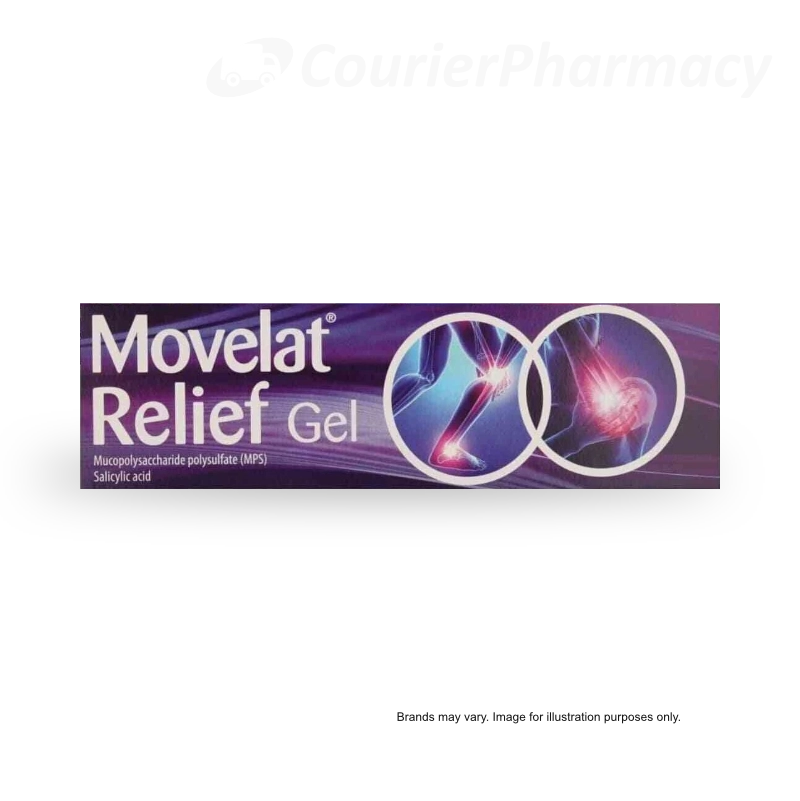
Movelat Relief Gel is a medicine combining mucopolysaccharide polysulphate 0.2% with salicylic acid 2.0% in a dual-active gel formulation.
Licensed for symptomatic relief of soft tissue inflammation, sprains, strains, bruising, muscular and rheumatic pain in adults and adolescents from age 12.
The combination provides anti-inflammatory and tissue-conditioning effects through complementary mechanisms.
The 80g pack provides approximately 4 to 5 weeks of treatment at typical use.
Available from Courier Pharmacy under pharmacist supervision, with treatment that fits your needs.
Movelat Relief Gel is a UK General Sales List (GSL) topical gel for aches, bruises, and minor injuries. It combines mucopolysaccharide polysulphate 0.2% with salicylic acid 2.0% in an alcohol?based gel. Because it uses two active ingredients, it sits slightly apart from standard NSAID gels like ibuprofen or diclofenac.
Movelat can be a useful option when you want local support for soft tissue inflammation. It can also suit people who prefer a familiar, well?known product.
What Movelat Relief Gel is used for
Movelat is used for the symptomatic relief of:
sprains, strains, and bruising
soft tissue inflammation and local swelling from minor injuries
muscular and rheumatic pain (adults and adolescents aged 12+)
occasional flare-ups of ongoing joint or soft tissue problems (as an add?on)
How Movelat works (in simple terms)
Movelat uses two ingredients that support recovery in different ways:
Salicylic acid helps with local pain and inflammation at the skin surface.
Mucopolysaccharide polysulphate (a heparinoid) supports tissue recovery. It may help with bruising and swelling in some people.
As a result, Movelat can feel helpful for minor injuries where tenderness and bruising sit close to the surface.
Who may prefer Movelat over an NSAID gel
Topical NSAID gels often work best for stronger inflammatory pain. However, Movelat can still be a reasonable choice if:
you cannot use NSAIDs, or you do not tolerate them well
you mainly have bruising, swelling, or a mild sprain
you have used Movelat for years and want to stick with what you know
you want a milder option for day-to-day aches
Movelat vs topical NSAIDs (honest comparison)
For many people with more intense inflammatory pain, topical NSAIDs can give better relief. They target prostaglandin-driven inflammation more directly.
However, Movelat can suit the “right problem”. For example, it may fit mild soft tissue injuries, bruising, or situations where NSAIDs are not a good match. So, it’s not one-size-fits-all.
Movelat Relief Gel from Courier Pharmacy
Courier Pharmacy supplies Movelat Relief Gel from a UK GPhC?registered pharmacy with pharmacist support. The 80g tube typically covers around 4 to 5 weeks of use, depending on how often and how widely you apply it.
Key features and specifications
Active ingredients: mucopolysaccharide polysulphate 2mg per gram (0.2%) + salicylic acid 20mg per gram (2.0%)
Form: clear, alcohol?based gel for skin application
When localised musculoskeletal pain has more than one driver, when a single anti-inflammatory mechanism hasn’t quite been enough, or when the skin discomfort and warmth that often comes alongside joint pain needs addressing in its own right, Movelat Relief Gel offers a dual-active topical formulation that does something most other pain gels don’t. By combining mucopolysaccharide polysulphate with the anti-inflammatory salicylic acid, Movelat delivers both anti-inflammatory and tissue-conditioning effects through one application.
At Courier Pharmacy, we believe treatment that fits the person, not the marketing budget. Movelat occupies an unusual position in the topical pain relief landscape. It is neither a pure NSAID gel (like piroxicam, ibuprofen, or diclofenac) nor a pure rubefacient (like methyl salicylate or capsaicin) but combines features of both alongside the distinctive mucopolysaccharide component. This page covers where Movelat fits, how it compares to NSAID gels, and how to use it well.
Five key takeaways
Movelat Relief Gel is a medicine combining mucopolysaccharide polysulphate 0.2% with salicylic acid 2.0% in a topical gel for symptomatic relief of soft tissue inflammation, sprains, strains, bruising, and rheumatic and muscular pain in adults and children from age 12
The dual-active formulation provides anti-inflammatory and tissue-conditioning effects through complementary mechanisms. Mucopolysaccharide polysulphate has heparinoid-like effects on tissue and microcirculation; salicylic acid provides local anti-inflammatory and mild keratolytic action
Movelat differs from NSAID gels (piroxicam, ibuprofen, diclofenac) in mechanism and tolerability. Patients who cannot use NSAIDs because of asthma, GI history, anticoagulant therapy, or NSAID sensitivity may find Movelat a useful alternative, though clinical effect for severe inflammatory pain may be modest compared to topical NSAIDs
Standard adult dose is approximately 1g of gel (a 3 to 5cm strip) applied to the affected area up to four times daily. The 80g pack provides approximately 4 to 5 weeks of treatment at typical use patterns
Movelat is one of the few combination topical pain products available without prescription in the UK and has been an established option in UK pharmacy for several decades, with reasonable real-world evidence and tolerability across acute soft tissue injuries, chronic mild osteoarthritis, and post-exercise muscle discomfort
Product description: Movelat Relief Gel
Movelat Relief Gel is a UK General Sales List (GSL) topical medicine combining mucopolysaccharide polysulphate 0.2% with salicylic acid 2.0% in an alcohol-based gel formulation. Movelat has been an established option in UK pharmacy for several decades, occupying a distinct position in the topical pain relief landscape. Unlike single-active NSAID gels (piroxicam, ibuprofen, diclofenac, ketoprofen, felbinac) or pure rubefacient preparations (methyl salicylate, capsaicin), Movelat combines two complementary actives that work through different but related mechanisms to support the resolution of localised musculoskeletal inflammation.
The licensed UK indications for Movelat Relief Gel include:
Symptomatic relief of soft tissue inflammation from sprains, strains, and contusions
Symptomatic relief of muscular and rheumatic pain in adults and adolescents from age 12
Symptomatic relief of bruising and localised swelling from minor injuries
Adjunctive use alongside other treatments for chronic joint conditions where the patient wants additional topical support
The clinical position of combination topical preparations like Movelat in modern UK musculoskeletal pain care is somewhat distinct from the position of pure NSAID gels. Most international guidelines specifically recommend topical NSAIDs as first-line pharmacological treatment for localised musculoskeletal pain, and the evidence base supporting topical NSAIDs is substantially stronger than for combination heparinoid-salicylate preparations. That said, Movelat retains a clinically useful place for:
Patients who cannot use NSAIDs because of asthma, GI history, anticoagulant therapy, or NSAID sensitivity
Patients who have used Movelat reliably for years and prefer the familiar product
Patients with acute bruising and soft tissue injury where the mucopolysaccharide component’s microcirculatory effects may support faster resolution
Patients who want to combine topical anti-inflammatory effect with the tissue-conditioning properties of the heparinoid component
Patients who tolerate Movelat better than NSAID gels (some patients with sensitive skin find Movelat less irritating; others find the opposite)
We at Courier Pharmacy supply Movelat Relief Gel from a UK-registered pharmacy under pharmacist supervision. The 80g pack provides approximately 4 to 5 weeks of treatment at typical use patterns, suitable for acute soft tissue injuries, occasional flares of chronic conditions, or supportive ongoing use alongside other measures.
Honest framing: Movelat versus topical NSAIDs
For most patients with significant inflammatory musculoskeletal pain (active osteoarthritis flares, significant soft tissue injury, persistent localised joint pain), topical NSAIDs (piroxicam, diclofenac, ibuprofen, ketoprofen) generally produce better symptom control than Movelat because the NSAID mechanism more directly addresses the prostaglandin-driven inflammatory pathway. The evidence base supporting topical NSAIDs for osteoarthritis is substantial and consistent across multiple guidelines.
For patients where:
NSAIDs are contraindicated or poorly tolerated
The injury is acute soft tissue (bruising, swelling, minor sprain) and the heparinoid component is relevant
Symptoms are mild and the patient prefers a milder, well-tolerated option
The patient has used Movelat reliably for years and prefers continuity
Movelat remains a reasonable choice. The right product for the right patient, rather than one-size-fits-all.
Key features and specifications
Active ingredients: mucopolysaccharide polysulphate 2mg per gram (0.2%) and salicylic acid 20mg per gram (2.0%)
Form: clear, alcohol-based gel for cutaneous application
Pack size: 80g tube (approximately 4 to 5 weeks of treatment at typical use)
Indication: symptomatic relief of soft tissue inflammation, sprains, strains, bruising, muscular and rheumatic pain in adults and adolescents from age 12
Standard adult dose: approximately 1g of gel (a 3 to 5cm strip) applied to the affected area up to four times daily
Onset of effect: some relief within hours of initial application; cumulative effect over several days of regular use
Maximum duration without prescriber review: 2 weeks for acute soft tissue injuries; longer use for chronic conditions is appropriate under prescriber or GP guidance
Supplied by: Courier Pharmacy, UK GPhC-registered, with pharmacist support
Why choose Courier Pharmacy for Movelat Relief Gel
At Courier Pharmacy, our whole approach is built on a simple idea: treatment that fits the person, not force the person to fit the system. For musculoskeletal pain, that means honest framing of where Movelat fits in the wider topical pain relief landscape, when its dual-active formulation adds genuine value, and when a topical NSAID or different approach would suit you better.
Our service is shaped by the philosophy of Dr Ada Jex-Cori, our brand pharmacist. Dr Ada represents the spirit of the pharmacy: evidence-led, community-rooted, and willing to challenge the one-size-fits-all approach to medicine. She is named in honour of three pioneering women in science: Ada Lovelace, the mathematician and visionary; Sophia Jex-Blake, the first female doctor in the UK who fought the medical establishment; and Gerty Cori, the biochemist and Nobel Prize winner. In our fictional world of Ethrewell, Dr Ada fights against pharma’s standardised approach to medicine. In the real world, she represents what we stand for. Her view is straightforward: you are not broken. The system is. And we are here to change that.
Honest framing of where Movelat fits
For patients with acute soft tissue injury involving bruising and swelling, Movelat’s mucopolysaccharide component adds genuine value over pure NSAID gels for the microcirculatory effects on haematoma resolution. For patients who cannot use NSAIDs because of asthma, GI history, anticoagulant therapy, or sensitivity, Movelat is a useful alternative that delivers anti-inflammatory effect through a different mechanism.
For patients with significant inflammatory pain from osteoarthritis or other conditions where topical NSAIDs would be clinically appropriate, we’ll be honest: topical NSAIDs (piroxicam, diclofenac, ibuprofen, ketoprofen) generally produce better symptom control than Movelat. We supply both, and the right answer depends on your situation.
Treatment that fits, not one-size-fits-all
Most online pharmacies deliver the same protocol to everyone. Courier Pharmacy is different. We think through your situation: what type of pain, what you’ve already tried, what other medicines you’re on, whether NSAIDs are clinically appropriate, what your wider health picture looks like. Movelat may be the right answer; a topical NSAID may suit you better; an oral analgesic combined with physiotherapy may be more appropriate; or referral for assessment may be what you really need. We’ll tell you honestly.
Pharmacist support before and after purchase
Our pharmacist is available for advice on:
Whether Movelat is the right option for your situation, or whether an alternative topical pain product (piroxicam, diclofenac, ibuprofen, ketoprofen gels) or different approach would suit you better
How to apply the gel for best effect, including amount, frequency, and timing
How to combine topical pain relief with paracetamol, physiotherapy, and other self-management
Managing side effects or unexpected responses
When your situation warrants GP review or specialist referral
How the gel fits with your other medicines
This is free and available before and after purchase. Get in touch if you have any questions.
Care for specific patient groups
We are happy to provide tailored support for:
Patients who cannot use NSAIDs (asthma, GI history, anticoagulant therapy, NSAID sensitivity, severe cardiovascular disease) where Movelat provides a useful non-NSAID topical option
Patients with acute soft tissue injury and bruising where the mucopolysaccharide component’s microcirculatory effects are particularly relevant
Older patients with multiple comorbidities where careful product selection and interaction review matter
Patients with mild chronic joint pain where ongoing topical support alongside other measures is appropriate
Patients with sports injuries or overuse syndromes where short-term topical support aids recovery
Patients with MCAS or multiple sensitivities where the excipient profile of topical preparations matters
Patients who have used Movelat reliably for years and prefer continuity
Coordination with your GP and other care
If you have a GP, rheumatologist, physiotherapist, or other healthcare professional involved in your care, we are happy to coordinate. For patients with chronic musculoskeletal conditions, joined-up care across primary care, pharmacy, and specialist services produces better outcomes than fragmented care.
Trust earned, not claimed
We are GPhC-regulated, we ground our content in NHS, NICE, BNF, and EMC guidance, and we will tell you honestly if Movelat isn’t the right answer for your situation. We would rather give you the right advice than a quick sale.
How to buy Movelat Relief Gel 80g from Courier Pharmacy
Movelat Relief Gel is a medicine supplied through Courier Pharmacy under pharmacist supervision. The supply does not require a prescription, but the pharmacist will check that the use is appropriate for your situation.
Here is how our service works:
Add Movelat Relief Gel 80g to your basket and complete a quick questionnaire about your symptoms, any other treatments you’ve tried, your current medicines, and any relevant medical conditions
Our pharmacist reviews your answers to confirm Movelat is suitable for you. Where the pharmacist needs to ask additional questions or recommend alternatives, we will do so before completing the supply
Once approved, your order is prepared and dispatched discreetly to your door
Free pharmacist support is available before and after your purchase for any questions
If Movelat isn’t the right product for your situation, we will explain why and suggest alternatives. That might be:
Self-management and paracetamol if you have not yet had a fair trial of these as first-line
A topical NSAID gel (Piroxicam 0.5% Gel, Voltarol Pain Relief Gel, Voltarol 12-Hourly, Ibuleve) if your pain is significantly inflammatory and you are suitable for topical NSAID use
A topical heat patch or rub for muscle tension and mild discomfort
An oral NSAID with gastroprotection if topical treatment has not been sufficient and you are clinically suitable for oral NSAID use
Co-codamol or other compound analgesics for breakthrough pain in short courses
A referral to physiotherapy for guided exercise and movement-based management
A GP appointment if your symptoms have features warranting medical assessment
A referral to rheumatology or pain services if you have features suggesting inflammatory arthritis or refractory chronic pain
Our free fortnightly drop-in clinics at Insomnia, Derby run every other week from 10am to 12pm. Healthcare shouldn’t only happen when you’re paying for it. We cover osteoarthritis, chronic pain, musculoskeletal injuries, MCAS, CFS, fibromyalgia, allergies, hair loss, men’s health, weight management, and whatever else people bring through the door. We show up, even when it’s free. No appointment needed, no charge, no pressure.
Active ingredients
Each gram of gel contains:
Mucopolysaccharide polysulphate (MPS) 2mg (0.2%) (active ingredient): a sulphated polysaccharide extracted from animal tissue with heparinoid-like properties. MPS has anti-inflammatory, anti-oedema, and mild anti-thrombotic effects on local microcirculation, supporting resolution of soft tissue inflammation and bruising
Salicylic acid 20mg (2.0%) (active ingredient): a beta-hydroxy acid with local anti-inflammatory, mild analgesic, and mild keratolytic action. Salicylic acid penetrates the stratum corneum to deliver anti-inflammatory effect in underlying tissue and supports the penetration of other components
Excipients commonly include: ethanol, glycerol, sodium hydroxide, thymol (as preservative and mild antimicrobial), and purified water.
The ethanol content gives the gel its cooling sensation on application and supports transcutaneous absorption. Patients with skin sensitivities to alcohol-based preparations, or with broken or eczematous skin at the application site, should consider alternative formulations or discuss with our pharmacist. The gel does not contain lactose, gluten, soya, or sugar.
The mucopolysaccharide polysulphate component is derived from animal tissue (typically bovine source); patients with strict vegetarian or vegan dietary preferences should be aware of this. Patients with concerns about specific excipients should check the patient information leaflet of the specific pack supplied.
Movelat Relief Gel is supplied as a branded product manufactured to UK regulatory standards. The 80g tube supplied by Courier Pharmacy provides approximately 4 to 5 weeks of treatment at typical use patterns.
Where Movelat fits in musculoskeletal pain treatment
Musculoskeletal pain is one of the most common reasons UK adults seek pharmacy advice and GP appointments. Osteoarthritis affects around 8.5 million UK adults, soft tissue injuries (sprains, strains, contusions) affect a much wider group across all age ranges, and chronic back pain affects around one third of UK adults at any given time. The treatment landscape includes a spectrum of pharmacological and non-pharmacological options that need matching to the specific clinical situation.
First-line: lifestyle and self-management
For most localised musculoskeletal problems, the foundation is non-pharmacological:
Rest in the acute phase of soft tissue injuries, transitioning to gradual mobilisation as healing progresses (the RICE approach: rest, ice, compression, elevation for acute injuries)
Activity modification for chronic conditions, identifying movements or activities that worsen symptoms and adjusting accordingly
Weight management for lower limb osteoarthritis, where modest weight loss can substantially reduce joint loading
Physiotherapy for guided exercise and movement retraining
Heat and cold therapy, particularly cold in the acute phase of injuries and heat for chronic muscle tension
Supportive devices such as knee braces, wrist splints, or insoles for specific clinical situations
These measures address the underlying contributors to pain rather than just suppressing symptoms, and many patients respond well enough that pharmacological treatment is not needed at all or only as an adjunct.
Second-line: topical pain relief
When first-line measures are insufficient, topical pain relief is the next step. The main UK options include:
Topical NSAIDs: piroxicam, diclofenac, ibuprofen, ketoprofen, felbinac. Recommended as first-line pharmacological treatment for localised musculoskeletal pain by NICE and international guidelines
Combination heparinoid-salicylate gels: Movelat Relief Gel (mucopolysaccharide polysulphate + salicylic acid). Useful alternative where NSAIDs are unsuitable
Pure rubefacient preparations: methyl salicylate, menthol, camphor-based products (Deep Heat, Tiger Balm, Ralgex). Work through counter-irritant effect; provide temporary relief but generally less effective for inflammation
Capsaicin cream: licensed for some chronic pain conditions; works through depletion of substance P in sensory nerves; requires regular application and adherence
The choice between these depends on:
The specific clinical situation (acute injury vs chronic joint, primarily inflammatory vs muscular, severity)
Previous patient response if products have been tried before
Patient preference for sensation, application frequency, and product feel
Cost and availability
Where Movelat sits in this landscape
Movelat occupies a specific clinical niche:
For acute soft tissue injury with bruising and swelling: the mucopolysaccharide component's microcirculatory effects may be particularly useful, supporting resolution of haematoma and tissue oedema. This is a clinical scenario where topical NSAIDs and Movelat both have a place, with patient preference often deciding
For patients unsuitable for NSAIDs: significant asthma, peptic ulcer history, anticoagulant therapy, NSAID sensitivity, or simply preference. Movelat provides topical anti-inflammatory effect without the NSAID mechanism
For mild chronic joint pain: Movelat is generally less potent than topical NSAIDs for active osteoarthritis flares, but reasonable for milder ongoing symptoms or alongside other measures
For muscle pain and stiffness: the salicylic acid component provides mild analgesic effect and the gel's cooling sensation is often appreciated for muscle discomfort
For patients with sensitive skin who don't tolerate NSAID gels: some patients find Movelat better tolerated; others find the opposite. A short trial can settle this
For patients with significant inflammatory pain where the choice is genuinely between Movelat and a topical NSAID, topical NSAIDs generally produce better symptom control. Where the choice is between Movelat and a pure rubefacient, Movelat generally provides more clinically meaningful anti-inflammatory effect.
Third-line: oral pain relief
If topical treatment is insufficient, oral options may be considered:
Paracetamol as the first oral analgesic for most musculoskeletal pain
Oral NSAIDs (ibuprofen, naproxen, diclofenac, celecoxib) where topical treatment is inadequate, with appropriate gastroprotection (PPI) for patients at GI risk
Compound analgesics (co-codamol, co-dydramol) for moderate pain in short courses
Opioid analgesics for short-term use in significant pain where NSAIDs are inadequate or contraindicated; long-term opioid use is moved away from in modern UK chronic pain guidance
Specific situations and adjuncts
Topical capsaicin: useful for some chronic pain conditions, particularly post-herpetic neuralgia and some forms of osteoarthritis
Topical lidocaine plasters (Versatis 5%): useful for localised neuropathic pain
Intra-articular corticosteroid injection: useful for specific joint problems, under GP or specialist guidance
Specialist referral: for refractory cases, suspected inflammatory arthritis, or where structural intervention is being considered
Fourth-line: chronic pain management
For chronic musculoskeletal pain that doesn't respond to standard stepped treatment, modern UK approach emphasises:
Multidisciplinary chronic pain services
Selective antidepressants (duloxetine, amitriptyline) for chronic pain modulation
Cognitive behavioural therapy and acceptance-and-commitment approaches
Exercise therapy as the most evidence-based long-term intervention
Pacing and self-management education
When specialist input is appropriate
Several patterns warrant medical or specialist assessment rather than continued self-treatment:
Joint swelling, warmth, or redness suggesting active inflammatory arthritis
Significant joint deformity or substantial functional impairment
Pain not improving despite a reasonable trial of standard treatment
Constitutional symptoms (weight loss, fevers, night sweats, fatigue) accompanying pain
New severe back pain with red flags (saddle anaesthesia, bladder or bowel dysfunction, leg weakness)
Pain following significant trauma where fracture or structural injury hasn't been excluded
Suspected septic arthritis (single hot, swollen, painful joint with fever; medical emergency)
How Movelat Relief Gel works
Movelat's dual-active formulation provides anti-inflammatory effect through two complementary mechanisms.
Mucopolysaccharide polysulphate (MPS) effects
Mucopolysaccharide polysulphate is a sulphated polysaccharide with heparinoid-like properties. Its effects on local tissue include:
Anti-inflammatory action: MPS interferes with the inflammatory cascade in soft tissue, reducing the release and effect of pro-inflammatory mediators including some cytokines and complement components
Anti-oedema effect: MPS improves microcirculation and lymphatic drainage in inflamed tissue, supporting resolution of tissue swelling
Anti-thrombotic and microcirculation effects: similar to heparin (though much weaker and given topically rather than systemically), MPS supports microcirculation and helps prevent or resolve small thrombi in damaged tissue
Effect on haematoma: in bruising and soft tissue injury, MPS may support faster resolution of extravasated blood
Tissue conditioning: MPS supports the resolution of fibrotic tissue and may improve the recovery of connective tissue after injury
These effects are particularly relevant in:
Acute soft tissue injuries with bruising and swelling
Post-traumatic or post-exercise muscle inflammation
Localised oedema from minor injuries
Tissue conditions with both inflammatory and microcirculatory components
Salicylic acid effects
Salicylic acid is a beta-hydroxy acid with multiple actions:
Local anti-inflammatory action: salicylic acid (like its more famous relative aspirin) inhibits cyclooxygenase pathways, reducing local prostaglandin production. The effect is weaker than dedicated NSAIDs but adds to the gel's overall anti-inflammatory action
Mild keratolytic action: salicylic acid loosens the stratum corneum, supporting transcutaneous absorption of both itself and the mucopolysaccharide polysulphate
Mild analgesic effect: local analgesic action through reduction of inflammation and direct effects on sensory nerve endings
Penetration enhancer: by loosening the stratum corneum, salicylic acid acts as a penetration enhancer for the other components
Combined effect
The two actives work complementarily. Salicylic acid loosens the skin barrier to allow better penetration of both components and provides mild anti-inflammatory and analgesic effect. Mucopolysaccharide polysulphate provides the heparinoid-like microcirculatory and anti-oedema effects on deeper tissue. The result is a combined topical action that addresses inflammation, oedema, microcirculation, and pain through complementary mechanisms.
Pharmacokinetics and absorption
Both active ingredients show topical action with limited systemic absorption. The salicylic acid component is the more systemically absorbed of the two; standard topical use produces salicylate plasma levels far below those associated with systemic salicylate effects. Mucopolysaccharide polysulphate is large and poorly absorbed systemically, acting predominantly at the site of application.
The alcohol-based vehicle supports rapid skin penetration of the actives, with onset of local effect within hours of application. Cumulative effect builds over several days of regular use.
Comparison with topical NSAIDs
Compared to topical NSAIDs:
Topical NSAIDs more directly and powerfully inhibit cyclooxygenase, providing stronger anti-inflammatory effect for prostaglandin-driven pain (such as osteoarthritis flares)
Movelat provides milder direct anti-inflammatory effect but adds microcirculatory and tissue-conditioning effects through the heparinoid component
For acute bruising and soft tissue injury, both can be useful; Movelat's microcirculatory effect may be particularly relevant
For chronic joint inflammation, topical NSAIDs are generally more effective
For patients with NSAID contraindications, Movelat is a useful alternative
How to use Movelat Relief Gel
The information below is a summary for reference. The definitive guide is the patient information leaflet supplied with the product. If you are unsure about any aspect of dosing or application, contact our pharmacist for support.
Dosing
Adults and adolescents from age 12: apply approximately 1g of gel (a 3 to 5cm strip, roughly the length of an adult fingertip) to the affected area, up to four times daily. The exact amount depends on the size of the affected area; cover the affected area in a thin layer of gel and massage gently into the skin until absorbed.
Children under 12: Movelat is not licensed for children under 12. Paediatric supply should be coordinated through the child's GP if topical treatment is being considered.
Older patients: standard adult dose is appropriate. Older patients may benefit particularly from the topical route given the very low systemic exposure compared to oral pain medicines.
How to apply
Wash and dry your hands before application
Squeeze approximately 1g of gel (a 3 to 5cm strip) onto your fingertip or directly onto the affected area
Apply to clean, dry, intact skin over the affected joint, muscle, or area of bruising or swelling
Gently massage the gel into the skin in a thin layer until it has absorbed
Wash your hands thoroughly after application (unless your hands are the area being treated)
Do not cover the treated area with occlusive dressings (cling film, waterproof plasters); these can increase absorption and irritation
Allow the gel to dry fully before dressing or contact with clothing
Where to apply
Movelat Relief Gel can be applied to any localised area of musculoskeletal pain, bruising, or soft tissue swelling with intact skin. Common application sites:
Knees and ankles for acute injuries or chronic mild joint pain
Shins and forearms for bruising and contusions
Calves and thighs for muscle strains and post-exercise discomfort
Shoulders, elbows, and wrists for periarticular conditions
Back muscles for localised mechanical back pain
Hands and fingers for mild hand stiffness (small amounts, careful application)
Do not apply to:
Broken, cut, or weeping skin
Areas with eczema, psoriasis, or significant dermatitis
The face, lips, mouth, eyes, or genital area
Mucous membranes
Areas of skin with active infection
Large areas of skin simultaneously (avoid extensive application)
When to expect results
Some patients notice symptomatic effect within hours of the first application. Cumulative effect builds over several days of regular use. For acute bruising and soft tissue injury, the microcirculatory effects of MPS may show progressive resolution over several days to a week.
How long to use Movelat
For acute soft tissue injuries (sprains, strains, contusions, bruising): typically 7 to 14 days of regular use is sufficient, continuing until pain, swelling, and bruising have settled.
For chronic mild conditions or supportive ongoing use: weeks to months is reasonable, with periodic review (every 4 to 6 weeks) to confirm ongoing benefit. The GSL classification means the product is available without prescription for self-treatment; longer continuous use should be discussed with prescriber or GP.
For self-treatment without prescriber review, the GSL supply is typically recommended for up to 2 weeks for acute injury, longer for chronic mild conditions with periodic review.
Missing a dose
If you miss an application, apply it as soon as you remember unless it is nearly time for the next application. Do not apply a double dose to catch up.
Stopping Movelat
Movelat can be stopped without a taper. Underlying symptoms will return if the gel was effectively controlling them.
Storage
Store at room temperature, below 25°C, in the original packaging. Do not freeze. Keep out of sight and reach of children. The gel is flammable while wet because of the alcohol content; keep away from naked flames until fully dry on the skin. After first opening, the gel should be used within the period stated in the patient information leaflet (typically 6 months).
Warnings and precautions for Movelat Relief Gel
When not to use Movelat
Movelat Relief Gel should not be used in:
Patients with known hypersensitivity to mucopolysaccharide polysulphate, salicylic acid, salicylates (including aspirin), or any gel excipient
Patients with significant active skin disease at the application site (eczema, psoriasis flares, dermatitis, infected skin, weeping wounds)
Patients on systemic anticoagulant therapy without prescriber discussion (theoretical interaction with the heparinoid component)
Children under 12 (unless under specific prescriber guidance)
Patients with broken skin, open wounds, or recent surgical sites
When to seek assessment rather than self-treat
Several patterns warrant medical assessment rather than (or before) over-the-counter topical pain relief use:
Joint swelling, warmth, or redness suggesting active inflammatory arthritis
Significant joint deformity or substantial functional limitation
Pain not improving despite a reasonable trial of standard treatment
Constitutional symptoms (weight loss, fevers, night sweats) accompanying pain
New severe pain following significant trauma where fracture hasn't been excluded
Back pain with red flags (saddle anaesthesia, bladder or bowel dysfunction, leg weakness)
A single hot, swollen, painful joint with fever (possible septic arthritis, medical emergency)
Bruising that is severe, extensive, or appears spontaneously without injury (could indicate bleeding disorder)
Pregnancy and breastfeeding
Salicylates in general (including topical preparations) should be used with caution in pregnancy, particularly in the third trimester because of theoretical risk of premature closure of the fetal ductus arteriosus and effects on labour. Use during pregnancy should be after risk-benefit discussion with a prescriber. Although topical systemic absorption is low, salicylates are conventionally avoided in pregnancy where reasonable alternatives exist; paracetamol is the preferred analgesic in pregnancy for most situations.
In breastfeeding, topical salicylates are generally considered safe in small amounts because of the low systemic absorption. Discuss with your prescriber if you are breastfeeding.
Older patients
Standard adult dose is appropriate. Older patients are particularly suitable candidates for topical pain relief given the substantially lower systemic exposure compared to oral medicines.
Patients with bleeding disorders or on anticoagulants
The mucopolysaccharide polysulphate component has heparinoid-like properties, raising a theoretical concern for combined use with systemic anticoagulants (warfarin, DOACs like apixaban, rivaroxaban, dabigatran, edoxaban). Standard topical use produces very low systemic exposure, and the clinical interaction is probably minimal, but caution is appropriate. Discuss with your prescriber if you are on long-term anticoagulant therapy or have a bleeding disorder.
Patients with salicylate sensitivity
Patients with known sensitivity to aspirin or other salicylates (urticaria, asthma exacerbation, severe reactions) should avoid Movelat because of the salicylic acid component. Even topical salicylates can trigger systemic reactions in highly sensitive patients.
Patients with asthma
Patients with severe asthma, particularly aspirin-sensitive asthma or Samter's triad (asthma, nasal polyps, NSAID/aspirin sensitivity), should avoid Movelat because of the salicylic acid component. The cross-reactivity risk is significant in this patient group even with topical preparations.
Application area considerations
Avoid extensive application over large skin areas, particularly for prolonged periods. Wide-area application can increase systemic absorption of both actives. Limit application to the focal painful area rather than spreading widely.
Sun exposure
Salicylates can occasionally cause photosensitivity reactions, particularly with prolonged daily use. Avoid prolonged sun exposure on treated areas or use sun protection during use.
Skin sensitivities
The alcohol content can cause mild skin irritation in sensitive individuals. If you develop significant skin reactions (severe redness, rash, blistering), stop the gel and seek pharmacist or GP advice.
Side effects of Movelat Relief Gel
Movelat is generally well-tolerated. Most side effects are local and mild, related to the application site.
Common side effects (affecting up to 1 in 10 patients)
Local skin irritation, redness, or burning sensation at the application site
Mild itching at the application site
Dryness or scaling of the treated skin
Transient stinging on application, particularly to sensitised skin
Less common side effects
Contact dermatitis (more significant skin reaction at the application site)
Mild photosensitivity (increased skin reaction to sun exposure on treated areas)
Localised eczema-type reactions
Headache (uncommon with topical use)
Persistent skin changes at frequently-treated sites
Rare but more significant side effects
Severe skin reactions including blistering or widespread rash (very rare)
Severe contact dermatitis requiring discontinuation
Allergic reactions including angio-oedema or anaphylaxis (rare)
Asthma exacerbation in salicylate-sensitive patients (rare but recognised)
Systemic salicylate effects (tinnitus, dizziness, nausea) with very extensive prolonged application (very rare with standard use)
Stop and seek advice if
You develop a severe skin reaction (blistering, widespread rash, peeling)
You develop signs of allergic reaction (significant swelling, difficulty breathing, severe widespread rash)
You develop new asthma symptoms or wheezing (possible salicylate sensitivity)
You develop tinnitus (ringing in the ears), dizziness, or nausea after significant application (possible systemic salicylate effect)
You develop persistent skin changes at the treated site that are not settling
Yellow Card reporting
Suspected adverse drug reactions can be reported to the MHRA via the Yellow Card scheme at yellowcard.mhra.gov.uk. Reporting helps build the safety picture for everyone.
Drug interactions with Movelat Relief Gel
Movelat has a low drug interaction profile because systemic absorption is minimal under standard use. The interactions to consider are mostly theoretical and become relevant with extensive prolonged application or pre-existing conditions.
Significant considerations
Systemic anticoagulants (warfarin, DOACs: apixaban, rivaroxaban, dabigatran, edoxaban): theoretical additive effect from the heparinoid component plus the antiplatelet effect of salicylate. Standard topical use is generally acceptable but discuss with the prescriber if you are on long-term anticoagulant therapy
Antiplatelet medicines (aspirin, clopidogrel, ticagrelor, prasugrel): theoretical additive effect from the salicylate component. Low-dose aspirin (75 to 100mg daily) for cardiovascular prevention is generally compatible with standard Movelat use, but discuss with the prescriber for clinical reassurance
Other topical pain preparations: avoid combining Movelat with other topical NSAID gels, salicylate-based rubs, or other topical pain relief on the same area at the same time. Multiple topical preparations increase the risk of skin irritation and systemic absorption
Methotrexate: theoretical reduction of clearance from systemic salicylate effect, more relevant with oral salicylates than topical use; discuss with the prescriber
Probenecid and similar uricosurics: salicylates can reduce the effectiveness of uricosuric medicines
Less significant interactions
Most blood pressure medicines, statins, antidepressants, hormonal contraceptives: no significant interaction with topical Movelat at standard use
Most antibiotics: no significant interaction
Paracetamol: no interaction; paracetamol can be combined with topical Movelat safely
PPIs and H2 antagonists: no interaction
For patients on any of the significant-interaction medicines above, our pharmacist will check the picture during your consultation.
Frequently asked questions about Movelat Relief Gel
What is Movelat Relief Gel used for?
Movelat Relief Gel is licensed in the UK for symptomatic relief of soft tissue inflammation, sprains, strains, bruising, contusions, and muscular and rheumatic pain in adults and adolescents from age 12. It combines mucopolysaccharide polysulphate with salicylic acid in a dual-active topical gel.
How is Movelat different from NSAID gels like Voltarol or Ibuleve?
Movelat combines two active ingredients (mucopolysaccharide polysulphate and salicylic acid) working through different mechanisms, providing anti-inflammatory plus microcirculatory effects. NSAID gels (diclofenac, ibuprofen, piroxicam, ketoprofen) contain a single NSAID active ingredient that more directly inhibits prostaglandin production. NSAIDs are generally more effective for significant inflammatory pain; Movelat may suit patients who can't use NSAIDs or who have acute bruising where the microcirculatory effects are useful.
How is Movelat different from rubs like Deep Heat or Tiger Balm?
Pure rubefacient products (Deep Heat, Tiger Balm, Ralgex) work through counter-irritant warming or cooling effect rather than direct anti-inflammatory action. Movelat provides genuine anti-inflammatory effect through its two active ingredients in addition to the cooling sensation from the alcohol vehicle. Movelat is generally more effective for inflammation; rubefacients can be useful for muscle stiffness and warming sensation.
How quickly does Movelat work?
Some patients notice symptomatic effect within hours of the first application. Cumulative effect builds over several days of regular use. For acute bruising and swelling, the microcirculatory effects may be progressive over a week.
How much gel should I apply?
Approximately 1g of gel (a 3 to 5cm strip, roughly the length of an adult fingertip) to the affected area, up to four times daily. The exact amount depends on the size of the affected area.
Can I use Movelat with paracetamol?
Yes. Paracetamol and Movelat work through different mechanisms and can be combined safely. Many patients use this combination for moderate musculoskeletal pain.
Can I use Movelat with oral NSAIDs?
Generally yes, but discuss with the prescriber. The systemic absorption from Movelat is minimal, so the cumulative NSAID/salicylate exposure with concurrent oral NSAID is usually small. However, combining multiple anti-inflammatory products without prescriber guidance is not ideal.
Can I use Movelat with other topical pain products?
No, avoid combining Movelat with other topical NSAID gels or salicylate-based rubs on the same area at the same time. Multiple topical preparations increase the risk of skin irritation and systemic absorption.
Can I use Movelat if I'm on warfarin or other anticoagulants?
Standard topical use is generally acceptable, but the mucopolysaccharide polysulphate component has heparinoid-like properties with theoretical additive effect to systemic anticoagulants. Discuss with the prescriber if you are on warfarin, apixaban, rivaroxaban, dabigatran, edoxaban, or other anticoagulants.
Can I use Movelat if I have asthma?
Patients with severe asthma, particularly aspirin-sensitive asthma, should avoid Movelat because of the salicylic acid component. The cross-reactivity risk is significant in this group. Patients with mild controlled asthma not associated with NSAID sensitivity can usually use Movelat safely.
Can I use Movelat if I'm allergic to aspirin?
No. Patients with known sensitivity to aspirin or other salicylates should avoid Movelat because of the salicylic acid component. Discuss with our pharmacist for alternative topical pain options.
Can I use Movelat during pregnancy?
Topical salicylates should be used with caution in pregnancy, particularly the third trimester. Use during pregnancy should be after risk-benefit discussion with a prescriber; paracetamol is the preferred analgesic in pregnancy for most situations.
Can I use Movelat while breastfeeding?
Topical Movelat is considered relatively safe in breastfeeding because of the low systemic absorption. Discuss with your prescriber if you are breastfeeding.
Can children use Movelat?
Movelat is licensed for adolescents from age 12. Younger children should not use Movelat without prescriber guidance.
Can older patients use Movelat?
Yes, standard adult dose is appropriate. Older patients may benefit from the topical route given the very low systemic exposure.
What if Movelat causes skin irritation?
Mild skin irritation (redness, slight burning) is common in the first few applications and usually settles. If significant or persistent irritation develops, stop the gel and seek pharmacist or GP advice.
Can I cover the treated area with a bandage?
No. Occlusive dressings (cling film, waterproof plasters, tight bandages) over treated skin can increase absorption and skin irritation. Allow the gel to dry fully before contact with clothing.
What if Movelat doesn't work for me?
Give it at least one to two weeks of regular correct use before deciding it isn't working. If it still hasn't helped, options include checking application technique with our pharmacist, switching to a topical NSAID gel if you are suitable, adding paracetamol, or considering whether other treatments (physiotherapy, oral medicines, specialist assessment) would suit better.
Can I stop Movelat suddenly?
Yes. Movelat can be stopped without a taper. Underlying pain symptoms will return if the gel was effectively controlling them.
Is Movelat the same as Movelat Cream?
The Movelat range historically included both a gel and a cream formulation with similar active ingredients in different bases. Current UK availability may vary; check the specific product supplied. The gel and cream provide similar clinical effect through similar mechanisms.
How should I store Movelat?
Store at room temperature, below 25°C, in the original packaging. Do not freeze. Keep out of sight and reach of children. The gel is flammable while wet because of the alcohol content; keep away from naked flames until fully dry. After first opening, use within the period stated in the patient information leaflet (typically 6 months).
How do I order Movelat Relief Gel from Courier Pharmacy?
Add the product to your basket on courierpharmacy.co.uk and complete the brief questionnaire. Our pharmacist will review your answers to confirm suitability and dispatch your order. Free pharmacist support is available before and after your order.
More than a prescription: our community
Healthcare shouldn't only happen when you're paying for it. Every fortnight we run free drop-in talks and clinics at Insomnia, Derby, from 10am to 12pm. We show up, even when it's free. Bring a question, bring a friend, bring a stack of bewildering letters from another clinic; we'll sit with you. We cover osteoarthritis, chronic pain, musculoskeletal injuries, MCAS, CFS, fibromyalgia, allergies, hair loss, men's health, weight management, and whatever else people bring through the door. No appointment. No cost. No pressure. Just real support and treatment that fits.
Disclaimer: This article is for information only and isn't a substitute for personal medical advice. Always speak to a qualified prescriber before starting or changing treatment.
How this content was created
Written by the Courier Pharmacy editorial team and reviewed by a GPhC-registered pharmacist. Grounded in the latest NHS, BNF, and EMC guidance, and the real questions patients bring to our drop-in clinics in Derby.
References
[1] Electronic Medicines Compendium (emc) (n.d.) [Title of SmPC as shown on page] – Summary of Product Characteristics (SmPC). Available at: https://www.medicines.org.uk/emc/product/8043/smpc (Accessed: 30 May 2026).
[2] British National Formulary (2026) Mucopolysaccharide polysulphate with salicylic acid. Available at: https://bnf.nice.org.uk/drugs/