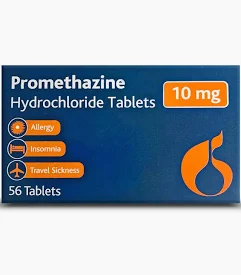
Lower-strength sedating antihistamine for patients who need gentler dosing, finer titration
Same four uses as the 25mg tablet — allergic conditions, anti-emetic, short-term insomnia in adults, short-term paediatric sedation — at half the standard dose
Particularly suited to older patients, sensitive patients, and children needing prescriber-supervised sedating antihistamine treatment
UK prescriber-supervised supply with free advice on whether 10mg suits you, or 25mg or a non-sedating alternative would work better
Promethazine 10mg Tablets provide a lower-strength alternative to the standard 25mg tablet.
Both strengths contain the same active ingredient (promethazine hydrochloride). Furthermore, both cover the same range of clinical uses. The differences come down to dose flexibility and paediatric licensing.
Why a 10mg strength matters
The 10mg tablet exists for several practical reasons:
Sensitive patients: some adults experience excessive sedation, dizziness, or other dose-related effects on the standard 25mg dose. Therefore, starting at 10mg allows gentler titration
Older patients: where sedating antihistamine use is judged clinically necessary, starting at lower doses reduces side effect risk. The 10mg tablet provides easier dose adjustment
Paediatric use: the 10mg tablet is licensed from age 2 (versus age 6 for the 25mg tablet). As a result, this allows treatment of younger children under prescriber guidance
Fine dose titration: patients responding well to lower doses can use 10mg or 20mg rather than being limited to the 25mg standard dose
Short-term use: for occasional motion sickness or short-term sleep difficulties, the 10mg dose may provide adequate effect with less impact on next-day function
Same indications as the 25mg tablet
Promethazine 10mg Tablets share the licensed indications with the 25mg tablet:
Allergic conditions: symptomatic treatment of allergic conditions of the upper respiratory tract and skin, including allergic rhinitis, urticaria, and as an adjunct in anaphylactic reactions to drugs and foreign proteins
Anti-emetic use: nausea, vomiting, and motion sickness
Short-term insomnia in adults
Short-term paediatric sedation: in children from age 2 under prescriber guidance
All other clinical features (mechanism of action, drug interactions, safety profile, side effects) match the 25mg tablet. The dose is simply lower.
The shift away from first-generation antihistamines
Second-generation antihistamines (cetirizine, loratadine, fexofenadine, bilastine, desloratadine, levocetirizine, rupatadine) were developed to retain the histamine-blocking efficacy with substantially reduced CNS penetration.
For most UK patients with allergic conditions in 2026, the first-line choice is a non-sedating second-generation antihistamine. However, promethazine retains specific clinical roles where its particular profile is useful.
Where promethazine 10mg specifically fits
The 10mg strength is particularly useful for:
Patients new to sedating antihistamines: starting at 10mg allows assessment of tolerability before considering higher doses
Older patients (where sedating antihistamine use is judged clinically appropriate despite the cautions): lower starting doses reduce fall risk and cognitive effects
Children aged 2 to 5 with allergic conditions under specialist guidance: where the 25mg tablet is contraindicated, the 10mg provides a licensed paediatric option
Patients with allergic conditions disrupting sleep where the modest sedation at bedtime is wanted: 10mg or 20mg may provide adequate effect
Motion sickness prophylaxis where minimal sedation is preferred: 10mg taken before travel
Short-term occasional use where the impact on next-day function matters
Patients tolerating non-sedating antihistamines poorly who need an alternative
Patients needing fine dose titration
Where alternatives may suit better
Promethazine 10mg may not be the best choice for:
Routine allergic rhinitis or mild urticaria: non-sedating second-generation antihistamines (cetirizine, loratadine, fexofenadine, bilastine) are usually first-line
Patients who need strong sedation: the 25mg tablet provides more pronounced effect
Severe lactose intolerance: even the smaller 69.41mg lactose content may be problematic
Children under 2 years: absolutely contraindicated
Patients on MAOI antidepressants or within 14 days of stopping: contraindicated
Key features and specifications
Active ingredient: promethazine hydrochloride 10mg per tablet
Form: pale blue film-coated tablet (Phenergan brand marked PN 10; generic appearance may vary)
Pack size: 28 tablets (lasts 9 to 28 days depending on indication and dose)
Licensed indications: allergic conditions (allergic rhinitis, urticaria, anaphylactic reactions as adjunct); anti-emetic use (nausea, vomiting, motion sickness); short-term insomnia in adults; short-term paediatric sedation
Paediatric licensing: from age 2 (under 2 years contraindicated; age 6 was the threshold for the 25mg tablet)
Standard adult dose for allergic conditions: 20mg to 25mg per day (two to two-and-a-half tablets), taken once at night or in divided doses; maximum 75mg per day
Onset of action: 20 minutes for sedating effect; 1 to 2 hours for peak antihistamine effect
Duration of effect: 4 to 6 hours for antihistamine effect; sedation can persist into the next day at higher doses
Legal category: Prescription-Only Medicine (POM)
Supplied by: Courier Pharmacy, UK GPhC-registered, with prescriber and pharmacist support
MOJO WISDOM
Take control of your health by understanding your condition and what this medication is doing for you.
READ:
More information about this treatment.
UK-based doctors and pharmacists
Discreet and Confidential
UK-based doctors and pharmacists
Free, Expert Advice
No video link provided.
No video link provided.
UK-based doctors and pharmacists
Free, expert advice
Discrete and confidential
Fast delivery
Giving you trusted clinical advice for over 40 conditions
A UK regulated pharmacy providing safe, effective treatments online since 2014
Promethazine 10mg Tablets offer a lower-strength alternative to the standard 25mg promethazine tablet. The reduced dose provides a gentler entry point for patients who tolerate sedating antihistamines poorly. Furthermore, the 10mg tablets are licensed for paediatric use from age 2 (with appropriate dosing under prescriber guidance), making them more flexible for family use than the 25mg version. The licensed indications match the 25mg tablet: allergic conditions, anti-emetic use, short-term insomnia in adults, and short-term paediatric sedation.
At Courier Pharmacy, we believe in treatment that fits the person.
That means matching the dose to the patient’s needs rather than defaulting to standard strengths. Furthermore, it means honest framing of where promethazine fits in modern UK practice. This page covers the 10mg tablet, what it’s licensed for, how it compares to the 25mg version, and when the lower strength suits patients better.
Five key takeaways
Promethazine 10mg Tablets is a UK Prescription-Only Medicine (POM) containing promethazine hydrochloride 10mg per tablet. It is a first-generation sedating antihistamine with the same active ingredient as the 25mg version, but at a lower dose suitable for sensitive patients, gentler treatment courses, and paediatric use from age 2 under prescriber guidance
Licensed indications: allergic conditions (allergic rhinitis, urticaria, anaphylactic reactions as adjunct); anti-emetic use including nausea, vomiting, and motion sickness; short-term insomnia in adults; and short-term paediatric sedation
Crucial difference from the 25mg tablet: the 10mg tablet is licensed from age 2, not age 6. As a result, this allows paediatric use in younger children where clinically appropriate. However, under 2 years remains absolutely contraindicated because of fatal respiratory depression risk
Standard adult dose for allergic conditions: 20mg to 25mg (two tablets, taken once at night or in divided doses). The 10mg strength suits patients needing finer dose titration, those who tolerate sedating antihistamines poorly, and patients starting treatment cautiously
Same comprehensive safety considerations apply as for 25mg. Specifically: contraindicated within 14 days of MAOI antidepressants; significant cautions in older patients; respiratory disease cautions; driving and machinery warnings; alcohol contraindication; photosensitivity; cumulative anticholinergic burden
Why choose Courier Pharmacy for Promethazine 10mg
At Courier Pharmacy, our approach starts with a simple idea: treatment should fit the person, not force the person to fit the system.
Dr Ada Jex-Cori
Our service is shaped by the philosophy of Dr Ada Jex-Cori, our brand pharmacist.
Dr Ada represents the spirit of the pharmacy: evidence-led, community-rooted, and willing to challenge the one-size-fits-all approach to medicine.
She is named in honour of three pioneering women in science: Ada Lovelace, the mathematician and visionary; Sophia Jex-Blake, the first female doctor in the UK who fought the medical establishment; and Gerty Cori, the biochemist and Nobel Prize winner.
In our fictional world of Ethrewell, Dr Ada fights against pharma’s standardised approach to medicine. In the real world, she represents what we stand for. Her view is straightforward: you are not broken. The system is. And we are here to change that.
Honest framing of where the 10mg fits
We won’t supply promethazine routinely without consideration of whether it’s the right choice for you.
For most patients with allergic conditions, a non-sedating second-generation antihistamine is a better first choice. However, the 10mg tablet has specific advantages over the 25mg version:
Gentler starting dose for sensitive patients
Better suited to older patients where lower doses reduce side effects
Paediatric licensing from age 2 (versus age 6 for the 25mg)
Fine dose titration in 10mg steps
Suitable for patients who experienced excessive sedation on the 25mg dose
Our prescriber will discuss your situation honestly. Furthermore, if an alternative would suit you better, we’ll say so.
Treatment that fits, not one-size-fits-all
Most online pharmacies supply standard doses without thinking through whether finer titration would work better.
Courier Pharmacy is different. We think through your situation: what symptoms you have, what you’ve already tried, what you tolerate, what fits with your life, and your wider clinical picture.
The 10mg tablet may be the right answer for you. Alternatively, the 25mg tablet may suit. Furthermore, a non-sedating antihistamine may suit better than either.
Careful screening for safety
Our prescriber screens carefully for the patient groups where promethazine warrants extra caution:
Children under 2 (contraindicated even for the 10mg)
Children 2 to 6 where the 10mg provides a licensed option (under prescriber guidance)
Older patients over 65
Patients on MAOI antidepressants
Patients with significant respiratory disease
Patients with prostate enlargement or glaucoma
Patients on other sedating or anticholinergic medicines
Patients on QT-prolonging medicines
Patients who drive for work or operate machinery
If any of these apply, we’ll discuss the trade-offs before supplying.
Pharmacist support before and after purchase
Our pharmacist is available to discuss:
Whether the 10mg or 25mg strength suits your situation better
Paediatric dosing for children aged 2 and over (in coordination with the child’s GP or paediatrician)
How to take promethazine for best effect
Managing side effects, particularly daytime drowsiness and photosensitivity
Drug interactions and what to be aware of
When your situation warrants GP review, allergy testing, or specialist referral
This is free and available before and after purchase.
Care for specific patient groups
We provide tailored support for:
Patients new to sedating antihistamines who want to start at a lower dose
Older patients where sedating antihistamine use is judged appropriate but lower doses reduce risk
Patients who experienced excessive sedation on the 25mg dose
Patients needing fine dose titration
Families with children aged 2 and over needing prescriber-supervised paediatric sedating antihistamine
Patients with MCAS, CFS, fibromyalgia, or other long-term conditions where sleep difficulties overlap with the broader picture
Patients with multiple comorbidities and medicines
Coordination with your GP and other care
If you have a GP, allergist, paediatrician, dermatologist, or other healthcare professional involved in your care, we are happy to coordinate.
Joined-up care across primary care, pharmacy, and specialist services produces better outcomes than fragmented care.
Trust earned, not claimed
We are GPhC-regulated. Furthermore, we ground our content in NHS, NICE, BNF, EMC, BSACI, and MHRA guidance.
We will tell you honestly if promethazine isn’t the right answer for your situation. We would rather give you the right advice than a quick sale.
How to buy Promethazine 10mg from Courier Pharmacy
Promethazine 10mg Tablets is a UK Prescription-Only Medicine (POM). Therefore, our prescriber issues a prescription following an online consultation. Alternatively, you can supply your own prescription from your GP or another prescriber.
How our service works
Add Promethazine 10mg Tablets to your basket and complete a brief online consultation. The consultation covers your symptoms, what you’ve already tried, current medicines, relevant medical conditions, your driving and work situation, and your alcohol intake
Our prescriber reviews your answers to confirm promethazine 10mg is suitable. If the prescriber needs additional information or wants to recommend the 25mg strength or a non-sedating alternative, we will get in touch
Once approved, your prescription is dispensed and dispatched discreetly
Free pharmacist support is available before and after your purchase
When alternatives might suit better
If Promethazine 10mg isn’t the right product for your situation, we will explain why. Alternatives may include:
Loratadine 10mg, cetirizine 10mg, or fexofenadine 180mg (non-sedating, over the counter) for routine allergic conditions
Bilastine 20mg, desloratadine 5mg, levocetirizine 5mg, or rupatadine 10mg (prescription, non-sedating) as alternatives
Promethazine 25mg tablets if you need a stronger sedating effect
Cetirizine 5mg/5ml Oral Solution for paediatric allergic conditions where the liquid format and non-sedating profile suits better
Cyclizine for nausea where antihistamine effect is wanted but less sedation preferred
Hyoscine hydrobromide (Kwells) for motion sickness as a less sedating alternative
Sleep hygiene improvements and CBT-I for routine sleep difficulties
Short-course melatonin for sleep difficulties
Referral to an allergist, paediatrician, or other specialist for complex presentations
GP appointment if you have features warranting medical assessment
Our community service
Our free fortnightly drop-in clinics at Insomnia, Derby run every other week from 10am to 12pm.
Healthcare shouldn’t only happen when you’re paying for it. We show up, even when it’s free.
We cover allergies, hayfever, chronic urticaria, asthma, MCAS, CFS, fibromyalgia, anaphylaxis, immunotherapy, sleep difficulties, paediatric allergic conditions, hair loss, men’s health, weight management, and whatever else people bring through the door. No appointment needed, no charge, no pressure.
Active ingredients
Each tablet contains:
Promethazine hydrochloride 10mg (active ingredient): a first-generation phenothiazine antihistamine. The active ingredient is identical to the 25mg tablet; only the dose differs. Promethazine has H1 receptor antagonist activity plus additional anticholinergic, anti-emetic, anti-motion-sickness, and sedating effects
Excipients
Excipients commonly include:
Lactose monohydrate (69.41mg per tablet): less than the 173.52mg in the 25mg tablet, but still substantial. Patients with severe lactose intolerance or galactose intolerance should be aware
Maize starch
Povidone
Magnesium stearate
Polyethylene glycol
Titanium dioxide (E171)
Hypromellose (E464)
Indigo carmine aluminium lake blue (E132): produces the characteristic pale blue colour
Lactose content matters
The 69.41mg of lactose per tablet is meaningful. Therefore, patients with severe lactose intolerance, total lactase deficiency, or glucose-galactose malabsorption should not take this medicine.
For most patients with mild lactose sensitivity, the amount is unlikely to cause clinical problems. However, alternative antihistamines without lactose may suit better if you are highly sensitive.
Branded versus generic
Promethazine 10mg Tablets are available as branded Phenergan (Opella Healthcare UK, formerly Sanofi) and as generic promethazine hydrochloride from various manufacturers.
The active ingredient and clinical effect are identical. However, generic versions are typically more affordable.
Phenergan 10mg tablets are pale blue film-coated tablets marked PN 10 on one side. Generic versions may vary in appearance.
Where Promethazine 10mg fits in modern UK practice
Promethazine 10mg sits within the broader promethazine product range. Furthermore, it shares the same four licensed clinical areas as the 25mg tablet. However, the lower dose creates specific clinical positioning.
Allergic conditions
The licensed allergic indications cover three main presentations:
Allergic rhinitis (hayfever and perennial): symptoms of sneezing, itchy nose, watery rhinorrhoea, and ocular itching
Urticaria (hives): itchy raised wheals on the skin, both acute and chronic
Anaphylactic reactions to drugs and foreign proteins: as an adjunct alongside adrenaline (which is the primary life-saving treatment)
For most patients with routine allergic conditions, non-sedating second-generation antihistamines are first-line. However, the 10mg promethazine tablet can suit:
Patients with night-time itching from urticaria where modest bedtime sedation is helpful
Children aged 2 to 5 with allergic conditions where the 25mg tablet is contraindicated
Older patients who need a sedating antihistamine but tolerate the 25mg dose poorly
Patients trying sedating antihistamines for the first time who want a gentle starting dose
Anti-emetic use and motion sickness
Promethazine has substantial anti-emetic and anti-motion-sickness effects.
The 10mg dose suits:
Motion sickness prophylaxis where minimal sedation is preferred (10mg or 20mg taken 1 to 2 hours before travel)
Mild nausea where a small dose may be adequate
Paediatric anti-emetic use under specialist guidance
Older patients where lower starting doses reduce side effects
For severe nausea or where alternative anti-emetics (ondansetron, cyclizine, metoclopramide, hyoscine, prochlorperazine) are appropriate, those options may suit better. However, promethazine's combination of antihistamine and anti-motion-sickness effects is useful in specific situations.
Short-term insomnia in adults
Promethazine is licensed for short-term insomnia in adults.
NICE guidance considers sedating antihistamines a third-line or fourth-line sleep option:
First-line: sleep hygiene improvements
Second-line: cognitive behavioural therapy for insomnia (CBT-I)
Third-line for specific patients: short-course melatonin; short-course Z-drugs or benzodiazepines
Sedating antihistamines including promethazine: an option where other approaches haven't worked
The 10mg dose may suit:
Patients new to sedating antihistamines who want to assess tolerability
Older patients (where sedating antihistamine use is judged appropriate)
Patients who experience excessive sedation or next-day hangover on the 25mg dose
Patients needing only mild sedation for sleep onset
Tolerance to the sedating effect develops with regular use. Therefore, short-course use is appropriate; long-term use is not.
Short-term paediatric sedation
The 10mg tablet is licensed from age 2 for short-term paediatric sedation. This is the key difference from the 25mg tablet, which is contraindicated under age 6.
Paediatric sedation should be coordinated with the child's GP or paediatrician rather than self-supplied. The 10mg tablet provides appropriate dose flexibility for children aged 2 to 12 where sedating antihistamine use is clinically indicated.
Critical paediatric considerations:
Under 2 years: absolutely contraindicated because of fatal respiratory depression risk
Children with suspected Reye's Syndrome features: avoid
Paediatric dosing depends on age and weight; specialist guidance is appropriate
Where Courier Pharmacy positions Promethazine 10mg
We supply Promethazine 10mg Tablets for patients in specific clinical situations:
Patients new to sedating antihistamines who want to start at a lower dose
Older patients where sedating antihistamine use is judged appropriate but lower doses reduce risk
Patients who experienced excessive sedation on the 25mg dose
Patients needing fine dose titration around the 20mg to 25mg range
Paediatric supply coordinated with a GP or paediatrician for children aged 2 and over
Motion sickness prophylaxis where minimal sedation is preferred
Short-term insomnia where 10mg may provide adequate effect with less next-day impact
For patients with routine allergic conditions, mild sleep difficulties, or occasional nausea, we'll discuss whether a different approach would suit better.
How promethazine works
The mechanism of action is identical to the 25mg tablet. Only the dose differs.
H1 histamine receptor antagonism
The primary therapeutic effect for allergic conditions. Promethazine competitively blocks histamine binding to H1 receptors throughout the body.
This reduces the typical histamine-mediated symptoms of allergic reactions:
Itching, sneezing, watery eyes, rhinorrhoea
Urticaria and angioedema
Capillary leak and oedema in allergic responses
Central nervous system effects
Promethazine readily crosses the blood-brain barrier. As a result, it produces significant CNS effects:
Sedation through central H1 receptor blockade and additional CNS receptor effects
Anti-emetic effect through blockade of histamine and dopamine receptors in the vomiting centre
Anti-motion-sickness effect through additional vestibular system effects
Anti-cholinergic effect on cognitive function
Dose-related effects
At the 10mg dose, the sedating and anticholinergic effects are typically less pronounced than at 25mg. As a result, this may suit patients who tolerate higher doses poorly.
However, individual responses vary considerably. Some patients experience significant sedation even at 10mg, while others tolerate 25mg without difficulty.
Anticholinergic effects
Promethazine has substantial muscarinic acetylcholine receptor antagonist activity. As a result, this contributes to:
Drying of secretions (basis for some uses but also causes dry mouth)
Urinary retention (problem in patients with prostate enlargement)
Blurred vision
Constipation
Cognitive effects (confusion, particularly in older patients)
These effects are dose-related. Therefore, the 10mg tablet may produce milder anticholinergic burden than the 25mg tablet.
Additional phenothiazine class effects
Promethazine is structurally a phenothiazine, related to antipsychotic medicines. As a result, it has additional pharmacological effects:
Alpha-adrenergic antagonism: can cause orthostatic hypotension
Effects on cardiac repolarisation: QT prolongation potential at higher doses
Photosensitivity: increased skin sensitivity to sunlight
Pharmacokinetics
After oral administration, promethazine is well-absorbed from the GI tract. Peak plasma concentrations occur 1 to 3 hours after dosing.
The half-life is around 10 to 14 hours. Therefore, this allows once-daily dosing for sustained allergic condition control. However, the antihistamine effect is shorter (around 4 to 6 hours), while sedation can persist for 6 to 12 hours.
Metabolism is primarily hepatic via CYP2D6. Furthermore, promethazine is a moderate inhibitor of CYP2D6 itself, creating clinically relevant drug interactions.
How to take Promethazine 10mg tablets
This summary is for reference only. The definitive guide is the patient information leaflet supplied with the product. If you are uncertain about any aspect of dosing, contact our pharmacist for support.
Symptomatic relief of allergy such as hay fever and urticaria, Insomnia associated with urticaria and pruritus for promethazine hydrochloride
By mouth
Child 2–4 years: 5 mg twice daily, alternatively 5–15 mg once daily, dose to be taken at night.
Child 5–9 years: 5–10 mg twice daily, alternatively 10–25 mg once daily, dose to be taken at night.
Child 10–17 years: 10–20 mg 2–3 times a day, alternatively 25 mg once daily, dose to be taken at night, increased if necessary to 25 mg twice daily.
Adults: 10–20 mg 2–3 times a day.
Adult dosing for sedation and short-term insomnia
Starting dose: 20mg to 25mg as a single dose at bedtime
Sensitive patients: 10mg may be sufficient
Use for short courses only (typically 7 to 10 days) to avoid tolerance and dependence patterns
Combine with sleep hygiene improvements and consider CBT-I for sustained benefit
Nausea, Vomiting, Vertigo, Labyrinthine disorders, Motion sickness for promethazine hydrochloride
By mouth
Child 2–4 years: 5 mg, to be taken at bedtime on night before travel, repeat following morning if necessary.
Child 5–9 years: 10 mg, to be taken at bedtime on night before travel, repeat following morning if necessary.
Child 10–17 years: 20–25 mg, to be taken at bedtime on night before travel, repeat following morning if necessary.
Adults: 20–25 mg, to be taken at bedtime on night before travel, repeat following morning if necessary.
Older patients
Sedating antihistamine use over 65 is generally not recommended because of fall risk, cognitive effects, and anticholinergic burden.
Where promethazine is judged the right choice despite these concerns, the 10mg tablet allows safer starting doses. Begin with 10mg (one tablet) and titrate carefully. Furthermore, non-sedating alternatives remain strongly preferred in this age group.
Pregnancy and breastfeeding
Pregnancy: limited human data. Manufacturer advises against use in pregnancy unless considered essential.
For allergic conditions in pregnancy, loratadine and cetirizine have more extensive safety data. For pregnancy-related nausea, alternative anti-emetics (cyclizine, prochlorperazine, ondansetron) have more established pregnancy safety profiles.
Breastfeeding: promethazine is excreted in breast milk and can cause sedation, irritability, and feeding effects in the infant. As a result, it is not recommended during breastfeeding.
How to take
Swallow the tablet whole with a glass of water
Can be taken with or without food; food doesn't significantly affect absorption
Time doses to suit your symptom pattern: bedtime dose for night-time symptoms or sleep; daytime doses spread across the day for sustained allergy control
The 10mg strength allows fine dose adjustment in 10mg steps
When to expect results
Sedating effect begins within 20 to 30 minutes. Therefore, take 30 to 60 minutes before bedtime for sleep effect.
Peak antihistamine effect occurs at 1 to 2 hours; duration of antihistamine effect is 4 to 6 hours. However, sedation can persist at lower doses too.
How long to take
Duration depends on indication:
Acute allergic reactions: short course of a few days
Seasonal allergic rhinitis: through the dominant pollen season
Chronic urticaria: longer-term use with periodic prescriber review
Motion sickness: single dose before travel or short course
Sedation/insomnia: short courses only (7 to 10 days typically)
Nausea and vomiting: short course addressing the underlying cause
Missing a dose
If you miss a dose, take it as soon as you remember. However, skip the missed dose if it's nearly time for the next one. Don't double-dose to catch up.
Stopping promethazine
Promethazine can be stopped without a taper after short-course use. However, after prolonged use for insomnia, you may experience rebound insomnia for a few nights. This typically settles within 1 to 2 weeks.
For chronic urticaria use, symptoms of the underlying condition will return if promethazine was effectively controlling them.
Storage
Store at room temperature, below 25°C, in the original packaging to protect from moisture and light. Keep out of sight and reach of children.
Warnings and precautions for Promethazine 10mg
Absolute contraindications
Promethazine 10mg must not be used in:
Children under 2 years of age (absolutely contraindicated because of serious respiratory depression risk and reported fatalities)
Patients with known hypersensitivity to promethazine, other phenothiazines, or any tablet excipient
Patients in coma or suffering from CNS depression of any cause
Patients taking monoamine oxidase inhibitors (MAOIs) or within 14 days of stopping MAOIs
Patients with severe lactose intolerance, total lactase deficiency, or glucose-galactose malabsorption (because of the lactose content)
Breastfeeding women
Critical paediatric warning
The MHRA has issued specific warnings about promethazine in young children. Critical points:
Under 2 years: absolutely contraindicated. Reported fatalities from respiratory depression
Children 2 and over: licensed for use, but should be coordinated with GP or paediatrician rather than self-supplied
Children with suspected Reye's Syndrome features: avoid because of risk of worsening the condition
Paediatric dosing depends on age and weight; specialist guidance is appropriate
Older patients
MHRA guidance and the Beers Criteria advise against routine use of first-generation sedating antihistamines in patients over 65.
The reasons:
Increased fall risk from sedation and dizziness
Cognitive impairment, particularly in patients with dementia or delirium risk
Urinary retention with prostate enlargement
Worsening of glaucoma
Cumulative anticholinergic burden contributing to longer-term cognitive decline
Driving safety concerns
CO2 retention risk in patients with chronic respiratory disease
Where sedating antihistamine use is judged clinically necessary in older patients, the 10mg strength allows lower starting doses. However, non-sedating second-generation antihistamines remain strongly preferred.
Respiratory disease
Promethazine may thicken or dry lung secretions and impair expectoration. Therefore, use with caution in patients with:
Asthma
Bronchitis
Bronchiectasis
COPD: risk of CO2 retention from reduced respiratory drive
Sleep apnoea: worsening of respiratory depression during sleep
Other cautions
Use promethazine with care in patients with:
Severe coronary artery disease
Narrow-angle glaucoma
Epilepsy (theoretical seizure threshold lowering)
Hepatic insufficiency
Renal insufficiency
Bladder neck obstruction or pyloro-duodenal obstruction
Prostate enlargement
Masking of other conditions
Promethazine has some clinically important masking effects:
May mask the warning signs of ototoxicity caused by ototoxic drugs (e.g. high-dose salicylates)
May delay the early diagnosis of intestinal obstruction through suppression of vomiting
May delay the early diagnosis of raised intracranial pressure through suppression of vomiting
Therefore, persistent unexplained vomiting in patients on promethazine warrants investigation rather than just symptomatic treatment.
Driving and operating machinery
Promethazine causes sedation in most patients. Even at the lower 10mg dose, individual sensitivity varies.
The MHRA has issued specific guidance on driving with sedating medicines. Patients on promethazine should:
Not drive or operate machinery until they know how the medicine affects them personally
Avoid driving if they experience any drowsiness, slowed reactions, or impaired concentration
Be aware that the legal drug-driving regulations in the UK include certain medicines; impairment from prescribed medicines can still result in driving offences
Be aware that sedation can persist into the next day, particularly after evening doses
Consider non-sedating alternatives if regular driving is essential
Alcohol and other sedating substances
Avoid alcohol while taking promethazine. The combined sedation can be substantial.
Other sedating antihistamines (cyproheptadine, chlorphenamine, diphenhydramine, hydroxyzine)
Anticholinergic burden
Promethazine contributes to overall anticholinergic burden. Furthermore, high anticholinergic burden is associated with confusion, increased dementia risk, urinary retention, constipation, falls, and hospital admissions in vulnerable patients.
The 10mg dose contributes less than 25mg, but the consideration remains. Patients already on anticholinergic medicines (amitriptyline, oxybutynin, hyoscine, some Parkinson's disease medicines) should generally avoid adding promethazine.
Photosensitivity
Promethazine, like other phenothiazines, can cause photosensitivity. As a result, skin becomes more sensitive to ultraviolet light, sometimes producing severe sunburn with relatively low sun exposure.
Patients taking promethazine should:
Use high-factor sunscreen (SPF 30 to 50)
Wear protective clothing in strong sun
Avoid prolonged sun exposure during peak UV hours
Be aware that the photosensitivity can persist for several days after stopping promethazine
QT prolongation
Promethazine can prolong the QT interval at higher doses or in patients with predisposing factors.
Special caution is required when combining promethazine with other QT-prolonging medicines:
Some antiarrhythmics (amiodarone, sotalol)
Some antimicrobials (macrolides, fluoroquinolones, antimalarials)
Some antidepressants (citalopram, escitalopram at higher doses)
Some antipsychotics
Pregnancy and breastfeeding
Pregnancy: limited human data. Avoid use unless considered essential by the prescriber.
Loratadine and cetirizine have more extensive pregnancy safety data and are preferred for allergic conditions in pregnancy. For pregnancy-related nausea, cyclizine, prochlorperazine, and ondansetron are alternatives with more established pregnancy use.
Breastfeeding: not recommended. Promethazine is excreted in breast milk and can cause sedation, irritability, and feeding effects in the infant.
Surgery, anaesthesia, and allergy testing
Stop promethazine at least 72 hours before any allergy testing because it interferes with skin prick test results.
For surgery, mention promethazine use to the anaesthetist. The medicine can interact with anaesthetic agents and contribute to anticholinergic effects.
Side effects of Promethazine 10mg tablets
The side effect profile is the same as the 25mg tablet, though dose-related effects may be less pronounced at 10mg.
Very common side effects (more than 1 in 10 patients)
Sedation, drowsiness, fatigue (the most common side effect; less pronounced at 10mg than 25mg but still common)
Dry mouth
Common side effects (up to 1 in 10 patients)
Dizziness
Impaired concentration and slowed reaction time
Headache
Blurred vision
Constipation
Urinary retention or difficulty starting urination
Hangover effect into the next day after evening doses
Nausea (paradoxical)
Restlessness or agitation (paradoxical, particularly in children and older patients)
Less common side effects
Confusion, particularly in older patients
Insomnia or sleep disturbance (paradoxical, more common in children)
Tremor
Skin rash
Photosensitivity
Hypotension and dizziness on standing
Palpitations
Tinnitus
Rare but more significant side effects
Severe hypersensitivity reactions including anaphylaxis (very rare)
Hepatic dysfunction with jaundice or significant abnormal liver function tests
Blood dyscrasias (rare reports of leucopenia, agranulocytosis, thrombocytopenia)
Seizures (very rare)
Significant cardiovascular effects including QT prolongation, arrhythmias, and significant hypotension
Extrapyramidal effects: dystonic reactions (rare)
Severe anticholinergic syndrome
Acute angle-closure glaucoma in susceptible patients
Severe respiratory depression (particularly in children and patients with respiratory disease)
Stop and seek advice if
You develop severe drowsiness affecting safety or daily functioning
You develop significant urinary retention
You develop new visual symptoms (sudden blurring, eye pain, halos around lights)
You develop significant confusion, particularly in an older patient
You develop signs of severe allergic reaction
You develop jaundice, persistent significant nausea, or right upper abdominal pain
You develop unexplained bruising, bleeding, or frequent infections
You develop irregular heartbeats, fainting, or palpitations
You develop severe sunburn with relatively low sun exposure
Yellow Card reporting
You can report suspected adverse drug reactions to the MHRA via the Yellow Card scheme at yellowcard.mhra.gov.uk. Reporting helps build the safety picture for everyone.
Drug interactions with Promethazine 10mg tablets
Drug interactions are the same as the 25mg tablet. Our pharmacist checks the picture during your consultation.
Absolute contraindications
Monoamine oxidase inhibitors (MAOIs): phenelzine, tranylcypromine, isocarboxazid, moclobemide. Wait at least 14 days after stopping MAOI before starting promethazine
QT-prolonging medicines: some antiarrhythmics, some antimicrobials, some antidepressants, some antipsychotics
Allergy testing: stop promethazine at least 72 hours before testing
Not significant interactions
Most blood pressure medicines, statins, hormonal contraceptives, most antibiotics (apart from QT-prolonging or CYP2D6-interacting ones)
Intranasal corticosteroids and other allergy medicines: compatible
PPIs and H2 antagonists: no significant interaction
Frequently asked questions about Promethazine 10mg
What is Promethazine 10mg used for?
Promethazine 10mg Tablets is licensed in the UK for four main uses: allergic conditions (allergic rhinitis, urticaria, anaphylactic reactions as adjunct); anti-emetic use (nausea, vomiting, motion sickness); short-term insomnia in adults; and short-term paediatric sedation.
How is 10mg different from 25mg?
Same active ingredient at a lower dose. Furthermore, the 10mg tablet is licensed for paediatric use from age 2 (versus age 6 for the 25mg). The 10mg suits patients who tolerate sedating antihistamines poorly, older patients, patients needing fine dose titration, and children aged 2 and over under prescriber guidance.
Should I take the 10mg or 25mg tablet?
Our prescriber will discuss this during your consultation. In general, the 10mg suits patients new to sedating antihistamines, older patients, sensitive patients, paediatric use, and situations where minimal sedation is preferred. The 25mg suits patients who need stronger effect or who have used promethazine successfully at this dose before.
Can children take Promethazine 10mg?
Yes, from age 2 under prescriber guidance. Children under 2 years are absolutely contraindicated because of fatal respiratory depression risk.
Paediatric use should be coordinated with the child's GP or paediatrician rather than self-supplied through online pharmacy. Paediatric dosing depends on age and weight.
How quickly does Promethazine 10mg work?
Sedating effect begins within 20 to 30 minutes. Peak antihistamine effect occurs at 1 to 2 hours. Duration of antihistamine effect is 4 to 6 hours; sedation can persist longer.
Can I drive while taking Promethazine 10mg?
Not until you know how the medicine affects you personally. Even at 10mg, promethazine causes sedation in most patients.
If you experience any drowsiness, slowed reactions, or impaired concentration, don't drive. For patients who drive for work, a non-sedating alternative is strongly preferred.
Can I drink alcohol while taking Promethazine 10mg?
Avoid alcohol while taking promethazine. The combination produces substantial additive sedation.
Can older patients take Promethazine 10mg?
Generally, sedating antihistamine use in patients over 65 is not recommended. However, where promethazine is judged clinically necessary, the 10mg strength allows safer starting doses than 25mg. Non-sedating alternatives remain strongly preferred.
Can I take Promethazine 10mg during pregnancy?
Limited human data. Manufacturer advises against use in pregnancy unless considered essential by the prescriber.
Loratadine and cetirizine have more extensive pregnancy safety data and are preferred for allergic conditions in pregnancy.
Can I take Promethazine 10mg while breastfeeding?
No, not recommended. Promethazine is excreted in breast milk and can cause sedation, irritability, and feeding effects in the infant.
Does Promethazine 10mg help me sleep?
Yes, promethazine has sedating effects. However, NICE guidance considers sedating antihistamines a third-line or fourth-line sleep option. First-line is sleep hygiene improvements and CBT-I.
Tolerance to the sedating effect develops with regular use. Therefore, use promethazine for sleep in short courses only.
Does Promethazine 10mg help with motion sickness?
Yes, the 10mg dose can be effective for motion sickness, particularly taken 1 to 2 hours before travel. The lower dose minimises sedation while providing prophylactic benefit. Hyoscine hydrobromide (Kwells) is an alternative with less sedation.
How long can I take Promethazine 10mg for?
Duration depends on the condition. For acute allergic reactions: a few days. For chronic urticaria: longer-term use under prescriber review. For motion sickness: single dose or short course. For sleep: short courses only (7 to 10 days).
What if 10mg makes me too sleepy the next day?
Even at 10mg, some patients experience next-day sedation. Options:
Take earlier in the evening
Take with food
Switch to a non-sedating alternative
What if 10mg isn't strong enough?
If 10mg doesn't provide adequate effect, the 25mg strength may suit better. Discuss with our prescriber. Alternatively, a different antihistamine may be more effective for your situation.
Why do I need to avoid sun while taking Promethazine 10mg?
Promethazine, like other phenothiazines, can cause photosensitivity. Your skin becomes more sensitive to ultraviolet light, sometimes producing severe sunburn with relatively low sun exposure.
Use high-factor sunscreen, wear protective clothing, and avoid prolonged sun exposure during peak UV hours.
Can I stop Promethazine 10mg suddenly?
After short-course use, yes. After prolonged use for insomnia, you may experience rebound insomnia for a few nights. This typically settles within 1 to 2 weeks.
How should I store Promethazine 10mg?
Store at room temperature, below 25°C, in the original packaging to protect from moisture and light. Keep out of sight and reach of children.
How do I order Promethazine 10mg from Courier Pharmacy?
Add the product to your basket on courierpharmacy.co.uk and complete the online consultation. Our prescriber will review your answers and confirm suitability.
If you already have a prescription from another prescriber, you can supply that. Free pharmacist support is available before and after your order.
More than a prescription: our community
Healthcare shouldn't only happen when you're paying for it.
Every fortnight we run free drop-in talks and clinics at Insomnia, Derby, from 10am to 12pm. We show up, even when it's free.
Bring a question, bring a friend, bring a stack of bewildering letters from another clinic. We'll sit with you.
We cover allergies, hayfever, chronic urticaria, asthma, MCAS, CFS, fibromyalgia, anaphylaxis, immunotherapy, sleep difficulties, hair loss, men's health, weight management, and whatever else people bring through the door. No appointment. No cost. No pressure. Just real support and treatment that fits.
Disclaimer: This article is for information only and isn't a substitute for personal medical advice. Always speak to a qualified prescriber before starting or changing treatment.
How this content was created
Written by the Courier Pharmacy editorial team and reviewed by a GPhC-registered pharmacist.
The content is grounded in the latest NHS, BNF, and EMC guidance. Furthermore, it draws on the real questions patients bring to our drop-in clinics in Derby.