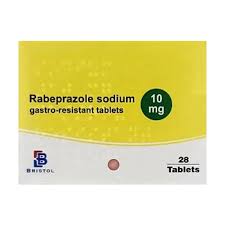
This is one of several proton pump inhibitor options used for acid-related stomach conditions. So the 10mg strength suits milder symptoms and ongoing care. In short, it’s a long-established PPI with a proven safety record going back to the late 1990s.
Where rabeprazole sits among PPIs
First, several PPIs are available in the UK. So the choice comes down to symptoms, response, cost, and interactions:
Omeprazole: the most widely used PPI, available in 10mg, 20mg, and 40mg
Also, esomeprazole: a single isomer of omeprazole; 20mg and 40mg
Plus, lansoprazole: 15mg and 30mg, available as capsules and orodispersible tablets
Likewise, pantoprazole: 20mg and 40mg
Equally, rabeprazole (this product): 10mg and 20mg
So all five PPIs work in much the same way. Also, response varies between people. In short, if one PPI doesn’t suit, switching to another often helps.
What rabeprazole is used for
First, the UK licence covers several conditions:
Gastro-oesophageal reflux disease (GORD) with oesophageal inflammation or ulceration
Also, symptomatic GORD (heartburn and reflux without visible damage)
Plus, ongoing care of healed reflux oesophagitis to stop it coming back
Likewise, active duodenal ulcer (in the first part of the gut)
Equally, active benign stomach ulcer
Also, H. pylori eradication, alongside two antibiotics (usually amoxicillin and clarithromycin)
Finally, Zollinger-Ellison Syndrome (a rare condition causing too much acid) — usually treated with the 20mg strength
So the 10mg strength is used mainly for symptomatic GORD and ongoing reflux care. Also, the 20mg strength is used for more severe reflux, ulcers, and H. pylori eradication.
Where rabeprazole fits in UK acid-reflux care
First, UK reflux care follows a stepped path:
Step 1: lifestyle moves (losing weight, smaller meals, less alcohol, less caffeine, raising the head of the bed)
Also, Step 2: antacids and alginates (Gaviscon, Rennie) for occasional symptoms
Plus, Step 3: H2 antagonists (famotidine) for milder ongoing symptoms
Likewise, Step 4: PPIs (omeprazole, lansoprazole, pantoprazole, esomeprazole, rabeprazole) for stronger or ongoing symptoms
Equally, Step 5: combined PPI plus alginate for resistant symptoms
Finally, Step 6: specialist referral for endoscopy or surgical options (fundoplication) if needed
So rabeprazole 10mg sits at Step 4. In short, it’s used when lifestyle, antacids, and H2 antagonists haven’t given enough relief.
Who Rabeprazole 10mg suits well
To start with, this product suits adults who:
Have GORD, heartburn, or acid reflux that needs daily treatment
Also have mild to moderate symptoms rather than severe
Plus need ongoing care after their reflux has healed
Likewise have tried antacids or H2 antagonists without enough relief
Equally have tried other PPIs that didn’t suit
Also want a once-daily option taken in the morning
Finally have completed prescriber assessment
Who might suit other options better
On the other hand, other options may suit people who:
First, have only occasional heartburn: antacids or alginates (Gaviscon) may be enough
Or have milder symptoms: famotidine (an H2 antagonist) may be enough
Also have more severe reflux or ulcers: the 20mg strength may be more suitable
Plus are pregnant or breastfeeding: rabeprazole isn’t recommended; speak to your GP about alternatives
Likewise are taking methotrexate, rilpivirine, atazanavir, or nelfinavir: PPI interaction risk
Equally have had alarm symptoms (weight loss, swallowing difficulty, vomiting blood, black stools): need endoscopy first
Also have liver problems: dose may need careful review
Finally are children: rabeprazole isn’t recommended in this group
Courier Pharmacy supply
First, Rabeprazole 10mg is a UK Prescription-Only Medicine (POM). So supply only happens after a UK-qualified prescriber reviews your online consultation. In short, if the prescriber decides another approach would suit better, we’ll explain that clearly.
Key features and specs
First, active ingredient: rabeprazole sodium 10mg per tablet
Confirmed reflux symptoms that need ongoing control — maybe diagnosed GORD that’s well-managed on a lower-dose PPI, maybe a maintenance regimen after initial healing, maybe a duodenal ulcer that’s been treated and now needs follow-through. Maybe omeprazole hasn’t suited you for some reason and your prescriber has chosen rabeprazole for its slightly different profile. Rabeprazole 10mg is a prescription proton pump inhibitor at the lower of two strengths (10mg or 20mg), used for confirmed acid-related conditions where lower-dose maintenance is appropriate. At Courier Pharmacy we want you to understand exactly how rabeprazole works, who it suits, how it differs from other PPIs, the periodic review framework for long-term use, and where the 10mg dose fits compared to the 20mg, so the treatment makes sense.
Five key takeaways
Rabeprazole 10mg gastro-resistant tablets are a prescription proton pump inhibitor used for the symptomatic treatment of gastro-oesophageal reflux disease (GORD), long-term management of healed reflux oesophagitis, and (at higher doses) treatment of gastric and duodenal ulcers and H. pylori eradication regimens.
It works by blocking the proton pumps in the stomach lining that produce stomach acid. Like all PPIs, the effect builds over 1-4 days and lasts about 24 hours per dose. Rabeprazole has a slightly faster onset than omeprazole and esomeprazole.
Rabeprazole’s metabolism differs from other PPIs — it’s metabolised mainly through a non-enzymatic pathway plus some CYP3A4 and CYP2C19 activity. This means less variation between patients based on CYP2C19 status, and fewer drug interactions through CYP enzymes than omeprazole or esomeprazole.
The 10mg dose is appropriate for symptomatic GORD treatment, long-term maintenance after healing, and for patients responding well to lower doses. The 20mg dose is used for more substantial disease, including erosive oesophagitis treatment.
For long-term use, the safety considerations that matter for any PPI apply: bone density, magnesium, B12, kidney function, C. difficile risk, and rebound acid hypersecretion on stopping. These warrant periodic review and the lowest effective dose for the indication.
Treatment dosage Rabeprazole 10mg
The dose and duration depend on the specific indication. Always take rabeprazole as directed by your prescriber.
Standard adult doses by indication:
Symptomatic GORD:
10mg once daily for up to 4 weeks initially
If symptoms respond, continue at 10mg or step down to as-needed use
If symptoms don’t respond, the dose may be increased to 20mg or an alternative considered
Maintenance of healed reflux oesophagitis:
10mg or 20mg once daily ongoing, depending on previous response and risk of recurrence
The lowest effective dose is sought, with periodic review
Erosive reflux oesophagitis (treatment):
20mg once daily for 4-8 weeks (the 20mg strength)
After healing, maintenance at 10mg or 20mg
Gastric and duodenal ulcer treatment:
20mg once daily for 4-6 weeks (the 20mg strength)
If H. pylori positive, eradication therapy alongside
Eradication of H. pylori (as part of triple therapy):
Rabeprazole 20mg twice daily for 7 days combined with two antibiotics (typically amoxicillin and clarithromycin, or in penicillin allergy, metronidazole and clarithromycin)
Achieves eradication in around 80-90% of cases
Zollinger-Ellison syndrome:
Higher doses, individualised by the prescriber based on acid output measurement
How to take:
Take in the morning, 30-60 minutes before breakfast (or the first meal of the day)
Swallow whole with a glass of water — don’t crush, chew, break, or split the tablet
The gastro-resistant coating must remain intact for the medicine to work
Continue for the duration prescribed; don’t stop early without discussing with your prescriber
For long-term maintenance use:
Periodic review (typically annual at minimum) to assess ongoing need
Consideration of the lowest effective dose
Consideration of step-down or stopping where clinically appropriate
Monitoring for the long-term considerations (magnesium, B12, kidney function, bone density) as relevant
Don’t take rabeprazole if:
You have known hypersensitivity to rabeprazole, other PPIs, or any ingredient
You have osteoporosis or fracture risk (long-term concern)
You’re an older patient
If you miss a dose, take it as soon as you remember on the same day if possible. If it’s nearly time for the next dose, skip the missed one and take the next normal dose. Don’t double up.
Overview of Rabeprazole 10mg
Five things worth knowing:
Rabeprazole’s distinctive pharmacology among PPIs centres on its non-enzymatic metabolism. Unlike omeprazole and esomeprazole (which depend heavily on CYP2C19 for elimination), rabeprazole is mostly metabolised through a non-enzymatic pathway. This produces more uniform response across patients and fewer drug interactions.
The faster onset of acid suppression (rabeprazole reaches active form more quickly in parietal cells than omeprazole or esomeprazole) is modest but real. For patients who notice slow response to other PPIs, switching to rabeprazole sometimes helps with earlier symptom improvement.
The 10mg dose is licensed for symptomatic GORD treatment and maintenance — situations where lower-dose acid suppression is sufficient. The 20mg dose is used for more substantial disease (erosive oesophagitis, ulcer treatment, H. pylori eradication).
For most patients, the choice between PPIs comes down to cost (generic versions of all PPIs are now available), individual response, and specific interaction considerations. Rabeprazole is sometimes chosen specifically for patients on multiple medicines where the cleaner interaction profile matters.
Like all PPIs, rabeprazole has long-term safety considerations relevant for prolonged use: bone density and fracture risk, magnesium deficiency, vitamin B12 deficiency, kidney function, C. difficile risk, and rebound acid hypersecretion on stopping. These warrant periodic medical review.
The PPI landscape includes:
Omeprazole (Pyrocalm Control OTC; many generic prescription versions) — the original PPI, most heavily prescribed, more CYP2C19 dependence, more drug interactions
Esomeprazole (Nexium Control OTC; Nexium and generic prescription) — S-isomer of omeprazole, slightly more consistent pharmacokinetics
Lansoprazole (generic prescription, Zoton dispersible tablets) — widely used, available as orodispersible formulation
Pantoprazole (generic prescription, Pantoloc Control OTC at 20mg) — cleanest drug interaction profile of the class
Rabeprazole (Pariet and generic, 10mg and 20mg) — fast onset, mostly non-enzymatic metabolism
For most clinical situations, the PPIs are broadly equivalent. NICE prescribing guidance typically defaults to the cheapest available generic for routine use, with branded or specific PPI choices reserved for specific clinical reasons. The choice between PPIs matters more in particular situations:
Clopidogrel co-prescription: pantoprazole or rabeprazole have less effect on clopidogrel than omeprazole or esomeprazole
Patients on multiple medicines: pantoprazole or rabeprazole have cleaner interaction profiles
CYP2C19 variants: rabeprazole’s lower CYP2C19 dependence may matter
Inadequate response to one PPI: switching to a different PPI sometimes helps
For people living with complex conditions, rabeprazole’s interaction profile makes it a reasonable choice in patients on multiple medicines where the broader PPI interactions are concerning. The long-term considerations are the same as for any PPI and warrant periodic review.
The 10mg-vs-20mg question for rabeprazole comes up. The 10mg dose is appropriate for symptomatic GORD, maintenance after healing, and patients responding well to lower doses. The 20mg dose is for more substantial disease or specific indications (H. pylori eradication, erosive oesophagitis). Step-down from 20mg to 10mg after initial healing is a common pattern, balancing effectiveness against long-term considerations.
Why choose Courier Pharmacy for Rabeprazole 10mg
Prescription PPI choice involves more than picking any PPI off a list — it’s about matching the medicine to the patient. Rabeprazole’s distinctive profile (faster onset, mostly non-enzymatic metabolism, cleaner interactions) makes it a particular choice for certain situations. Every rabeprazole supply at Courier Pharmacy is dispensed against a valid prescription by a UK pharmacist who checks the prescription, dispenses correctly, and supports you through the treatment.
We’ll discuss your treatment with you. For symptomatic GORD or maintenance after healing, we’ll explain what to expect, when to follow up with the prescriber, and how to recognise problems requiring earlier review. We’ll explain the run-in to full effect (1-4 days), the rebound considerations if eventually stopping, and the long-term safety considerations relevant to ongoing use.
We’ll discuss why rabeprazole might have been chosen over other PPIs — perhaps because you’re on multiple medicines and the cleaner interaction profile matters, perhaps because you haven’t responded well to other PPIs, perhaps because your prescriber prefers the faster onset.
For long-term maintenance use, we’ll discuss the principles that matter — lowest effective dose, periodic review, attention to magnesium and B12 in vulnerable patients, calcium and vitamin D for bone health, and step-down strategies if clinically appropriate.
We’ll discuss generic-vs-branded honestly. Rabeprazole is available as generic at lower cost than branded versions; both work equivalently. NHS prescribing typically uses generic. Branded versions are sometimes used in private prescribing or where specific reasons exist.
Our brand guide, Dr Ada Jex-Cori, sums it up: you’re not broken. The system that’s failed you might be. We want to do the part we can do, properly, and connect you with the rest. That includes our free fortnightly drop-in clinics and talks at Insomnia in Derby, where you can ask questions face-to-face without spending a penny.
Buy Rabeprazole 10mg from Courier Pharmacy
Rabeprazole 10mg is a prescription-only medicine in the UK. Buying through Courier Pharmacy is straightforward and built around your time, not ours.
Here’s how it works:
Complete a quick online consultation about your condition
A UK prescriber reviews your information; if appropriate, a private prescription is issued (or you can supply an existing NHS or private prescription)
A UK pharmacist dispenses correctly
We deliver discreetly to your door
If it isn’t suitable for you, we’ll explain why and suggest the next best option.
Active ingredient in Rabeprazole 10mg
The active ingredient is rabeprazole sodium 10mg, a proton pump inhibitor with some distinctive properties among the PPI class.
Rabeprazole works through the same fundamental mechanism as other PPIs: selective irreversible inhibition of the H+/K+ ATPase enzyme (the “proton pump”) on the secretory surface of the gastric parietal cells. By blocking this enzyme, rabeprazole substantially reduces stomach acid production regardless of the stimulus (food, gastrin, histamine, vagal activity).
The features that distinguish rabeprazole from other PPIs:
Higher pKa, faster activation in the acidic canaliculi: rabeprazole has a higher pKa (around 5.0) than omeprazole (around 4.0). This means rabeprazole converts to its active sulphenamide form at a higher pH than omeprazole — it activates in conditions that are less extremely acidic. The parietal cell secretory canaliculi reach pH of about 1, well below either drug’s activation threshold, but the higher pKa means rabeprazole begins activating earlier as it reaches the cells, contributing to its faster onset.
Reversible binding component: rabeprazole’s binding to the proton pump has both irreversible covalent and reversible components, distinguishing it slightly from omeprazole and lansoprazole (which bind more purely irreversibly). The clinical relevance is modest.
Non-enzymatic metabolism: rabeprazole is metabolised primarily through a non-enzymatic chemical breakdown pathway (forming thioether-rabeprazole), with smaller contributions from CYP2C19 and CYP3A4. Omeprazole and esomeprazole, by contrast, are metabolised primarily through CYP2C19. This metabolism difference has practical implications:
Less variation in patient response across CYP2C19 metaboliser types (rapid, intermediate, poor metabolisers)
Less impact from medicines that inhibit CYP2C19 (fluvoxamine, fluconazole, voriconazole) or induce it (rifampicin, St John’s wort)
Fewer interactions through CYP2C19 with other medicines (clopidogrel is the most clinically important — rabeprazole has less effect on clopidogrel than omeprazole/esomeprazole)
Comparable acid suppression: at equivalent doses, rabeprazole produces acid suppression comparable to other PPIs. The 24-hour effect, the build-up over 1-4 days, the substantial acid reduction (60-80% of 24-hour acid production) — all similar to omeprazole, esomeprazole, lansoprazole, and pantoprazole.
The gastro-resistant (enteric) coating is essential because rabeprazole, like all PPIs, is destroyed by stomach acid. The coating protects the drug through the stomach and dissolves in the more alkaline small intestine, where rabeprazole is absorbed.
Elimination: rabeprazole has a relatively short elimination half-life (about 1-2 hours), but the irreversible component of pump binding means the clinical effect lasts about 24 hours, requiring once-daily dosing for most indications.
After stopping a course, acid production gradually returns to baseline over 3-5 days as the parietal cells synthesise new proton pumps, sometimes with a rebound increase above baseline (rebound acid hypersecretion), particularly after prolonged use.
The other ingredients in rabeprazole tablets include excipients for the enteric coating, tablet-forming agents, and inactive substances. Specific excipients vary by manufacturer.
What is Rabeprazole 10mg for?
Rabeprazole 10mg is licensed in the UK as a prescription-only medicine for:
Pregnant or breastfeeding women (without prescriber advice)
Children and adolescents under 12 (except in specialist settings)
Use without a clear indication — the prescription framework is for confirmed or strongly suspected acid-related conditions
For occasional or short-term frequent heartburn without other concerns, OTC options (antacids, alginate-antacids, OTC PPIs like Pyrocalm Control or Nexium Control) are appropriate self-management. Prescription rabeprazole 10mg is for situations where confirmed diagnoses warrant the prescription indications, where step-down to lower-dose maintenance is appropriate, or where the specific PPI profile of rabeprazole fits a patient’s clinical situation.
NICE clinical guidance on GORD recommends PPI treatment as the mainstay of pharmacological therapy for confirmed reflux disease, with attention to lowest effective dose, step-down strategies, and consideration of long-term safety. Rabeprazole is included in the recommended PPI options.
How does Rabeprazole 10mg work?
Stomach acid is produced by parietal cells in the stomach lining through proton pumps (H+/K+ ATPase enzymes) on their surface. These pumps are stimulated by histamine (acting on H2 receptors), gastrin, and acetylcholine — all converging on activating the proton pump as the final acid-producing step.
In reflux disease and acid-related conditions, stomach acid causes problems through several mechanisms:
Reflux into the oesophagus producing the burning of heartburn and (over time) inflammation, erosion, and rarely Barrett’s oesophagus
Erosion of the stomach lining producing gastritis or gastric ulcers
Erosion of the duodenal lining (often associated with H. pylori) producing duodenal ulcers
Stimulation of NSAID-related ulcer formation (NSAIDs reduce prostaglandin protection; acid does the damage)
Excessive acid production in rare conditions like Zollinger-Ellison syndrome
Rabeprazole addresses these at the source — by reducing acid production:
Direct irreversible inhibition of the proton pump: rabeprazole, like other PPIs, is a prodrug. After absorption from the small intestine, it reaches the parietal cells and enters their secretory canaliculi (the highly acidic compartments where acid is produced). In the acidic environment, rabeprazole converts to its active sulphenamide form, which then binds (largely irreversibly) to the proton pump enzyme. The disabled pump can no longer produce acid.
Faster onset than omeprazole or esomeprazole: rabeprazole’s higher pKa means it begins activating at a slightly higher pH than the older PPIs. This translates to somewhat faster initial acid suppression — clinical studies suggest rabeprazole reaches meaningful acid suppression slightly earlier in the first day than omeprazole.
Substantial acid reduction: at standard doses, PPIs typically reduce 24-hour acid production by 60-80%. Rabeprazole’s effect is in this range, similar to other PPIs.
24-hour effect from a single dose: despite a short elimination half-life, the irreversible pump inhibition means the acid suppression effect lasts about 24 hours from a single dose. Once-daily dosing is sufficient for most indications.
Build-up over 1-4 days: like all PPIs, the full effect builds over several days of consecutive dosing as more proton pumps are progressively disabled. The first dose starts the effect; subsequent days add to it. Full clinical effect is typically established by day 4.
For GORD specifically, the reduced acid level means that any reflux that does occur is less acidic and less irritating to the oesophagus. Inflammation can heal, symptoms improve substantially, and erosive damage can repair.
For ulcer treatment, the reduced acid level allows the ulcer to heal — the acid that was preventing healing is substantially reduced.
For H. pylori eradication, the reduced acid level allows the co-administered antibiotics to work more effectively (clarithromycin and amoxicillin both work better at higher pH).
For NSAID-ulcer prevention, the reduced acid level partly compensates for the loss of prostaglandin protection from the NSAID.
The mechanism is essentially the same across the PPI class. The differences between specific PPIs (rabeprazole vs omeprazole vs others) are in the details: onset speed, metabolism pathway, interaction profile, individual response variability.
Onset of effect: rabeprazole starts working within hours of the first dose. Some symptom improvement is often noticed within the first 1-3 days; full effect builds by day 4 and is maintained for the rest of the course.
How to use Rabeprazole 10mg
The principles are the same as for other PPIs.
Step-by-step:
Take in the morning, 30-60 minutes before breakfast (or the first meal of the day)
Swallow the tablet whole with a glass of water
Don’t crush, chew, break, or split the tablet — the gastro-resistant coating must remain intact
Continue for the duration prescribed by your doctor
Don’t stop early without discussing with your prescriber
Why before meals: PPIs work best on actively secreting proton pumps. Eating stimulates acid production by activating proton pumps. Taking 30-60 minutes before eating gives the rabeprazole time to reach the parietal cells before meal-stimulated acid production starts. This maximises the proportion of proton pumps that are active and therefore vulnerable to rabeprazole’s inhibition.
If you don’t eat breakfast:
Take it 30-60 minutes before the first meal of the day
The principle is the same — take before a meal so that meal-stimulated proton pumps are active when the rabeprazole reaches them
During the run-in period (days 1-4):
Some symptom improvement often within the first 1-3 days; full effect by day 4
For breakthrough symptoms, antacids (Rennie, Tums) or alginate-antacids (Peptac, Gaviscon) can be used as needed
These work through different mechanisms and don’t conflict with the PPI
For long-term use:
Take consistently — daily, ideally at the same time
Plan periodic review (typically annually) to assess ongoing need
Consider whether the dose can be stepped down or stopped
Be aware of rebound acid hypersecretion if eventually stopping
Combining with other approaches:
Lifestyle measures often help significantly (smaller meals, posture after eating, raised bed head, trigger foods, weight management, stopping smoking)
These often allow lower doses or step-down strategies
For breakthrough symptoms despite PPI treatment, alginate-antacids or simple antacids can be used for symptomatic relief
Stopping the medicine:
Don’t stop suddenly after long-term use without discussing with your prescriber
After prolonged use, rebound acid hypersecretion can produce a temporary surge in acid for days to weeks
Planned tapering (gradually reducing dose) or alginate-antacid bridging during the post-stopping period can help
If you miss a dose:
Take it as soon as you remember on the same day
If it’s nearly time for the next dose, skip the missed one
Don’t double up
Red flags during treatment — contact your prescriber:
Symptoms worsening rather than improving
New symptoms (difficulty swallowing, weight loss, vomiting blood, blood in stool, severe pain)
Side effects troubling you
Symptoms recurring after a course of treatment
Warnings and precautions for Rabeprazole 10mg
Rabeprazole 10mg is contraindicated in:
Known hypersensitivity to rabeprazole, other PPIs, or any other ingredient
Concurrent use of atazanavir (HIV antiretroviral)
Concurrent use of rilpivirine (HIV antiretroviral)
Pregnancy and breastfeeding (without prescriber advice)
Children under 12 (except in specialist settings)
Use with care in:
Patients with severe liver impairment (rabeprazole is partly metabolised in the liver)
Patients with severe kidney impairment (rare but possible interstitial nephritis with PPIs)
Patients on methotrexate (PPIs can increase methotrexate levels — particularly with high-dose methotrexate)
Patients on warfarin (PPIs can affect INR — monitor)
Patients on digoxin (slight level increase possible through pH effects on absorption)
Patients on tacrolimus, ciclosporin (PPIs can affect levels)
Patients on HIV antiretrovirals beyond atazanavir and rilpivirine (some interact significantly)
Patients with osteoporosis or increased fracture risk (long-term concern)
Older patients (more vulnerable to long-term effects)
Patients with low magnesium levels or on diuretics (long-term concern)
Patients with vitamin B12 deficiency or risk factors
Long-term safety considerations are important for patients on ongoing PPI treatment, including with rabeprazole:
Bone density and fracture risk: long-term PPI use has been associated with a modest increase in hip, wrist, and spine fracture risk. Ensuring adequate calcium and vitamin D intake, weight-bearing exercise, and falls prevention is sensible
Magnesium deficiency (hypomagnesaemia): long-term PPI use can rarely cause low magnesium, more likely with prolonged use alongside diuretics. Periodic magnesium levels may be appropriate in long-term users
Vitamin B12 deficiency: PPIs reduce B12 absorption from food. With long-term use, B12 levels can fall, particularly in older adults
Acute interstitial nephritis: rare but recognised; presents with rising creatinine, usually reversible on stopping
difficile and other gut infections: PPIs slightly increase risk of C. difficile and other gut infections
Rebound acid hypersecretion: stopping PPI after prolonged use can cause a temporary surge in acid production
Various observational associations: with dementia, kidney disease, gastric cancer; causality generally not established but the principle of lowest effective dose, periodic review applies
Hiding more serious conditions: PPIs effectively treat acid-related symptoms regardless of cause. Proper diagnosis before starting prescription PPI (endoscopy where indicated, H. pylori testing) is part of the prescribing framework.
Pregnancy: rabeprazole hasn’t been as widely studied in pregnancy as omeprazole, which has more reassuring data. For pregnant women requiring PPI treatment, omeprazole or lansoprazole are often preferred. Discuss with your prescriber.
Breastfeeding: small amounts of rabeprazole likely pass into breast milk; data are limited. Alternative PPIs with more breastfeeding data (omeprazole) are sometimes preferred.
Children: rabeprazole’s licensed indications are primarily adult. Use in younger children is restricted.
Severe liver disease: rabeprazole is partly metabolised in the liver. Dose adjustment or alternative may be appropriate in severe liver impairment.
If you experience signs of an allergic reaction (rash, swelling, difficulty breathing), stop the medicine and seek immediate medical attention. Severe skin reactions (Stevens-Johnson syndrome, toxic epidermal necrolysis) and subacute cutaneous lupus erythematosus are rare but recognised with PPIs. Anaphylaxis is a medical emergency; call 999.
Side effects of Rabeprazole 10mg
Rabeprazole, like other PPIs, is generally well-tolerated. Side effects are usually mild.
Common side effects, between 1 in 100 and 1 in 10 people, include headache, abdominal pain, constipation, diarrhoea, flatulence, nausea, vomiting, infection (typically minor respiratory or urinary tract), insomnia, asthenia (weakness), back pain, and pharyngitis.
Uncommon side effects, between 1 in 1,000 and 1 in 100 people, include nervousness, somnolence, dizziness, chest pain, dry mouth, dyspepsia, eructation (belching), rash, itching, increased blood pressure, fracture of hip, wrist or spine (with long-term use), increased liver enzymes on blood tests, and muscle pain.
Rare side effects, fewer than 1 in 1,000 people, include hyponatraemia, depression, anxiety, taste disturbance, blurred vision, dry eye, bronchitis, sinusitis, hepatitis (occasionally with jaundice), severe skin reactions (Stevens-Johnson syndrome, toxic epidermal necrolysis — very rare), interstitial nephritis, hair loss, photosensitivity, joint pain, peripheral oedema, gynaecomastia, leukopenia (low white blood cells), thrombocytopenia (low platelets), increased sweating, fever.
Very rare and serious side effects include severe hepatic dysfunction, severe allergic reactions including anaphylaxis, hypomagnesaemia (particularly with prolonged use), low B12 (with prolonged use), subacute cutaneous lupus erythematosus, and C. difficile colitis.
For most patients on a typical course, the most likely side effects (if any) are mild gastrointestinal effects or headache. Most people tolerate rabeprazole with no side effects.
If you experience any side effect that worries you, report it to your prescriber and consider reporting it directly to the MHRA’s Yellow Card scheme. This helps improve safety data for everyone who uses the product. Our pharmacy team are happy to help you submit a Yellow Card report if you’d like assistance.
Drug interactions
First, rabeprazole has several drug interactions. Also, our prescriber checks the picture during your consultation.
Also, atazanavir and nelfinavir (HIV medicines): PPIs reduce absorption significantly
Care needed with
First, methotrexate (used for rheumatoid arthritis, psoriasis, some cancers): PPIs can raise methotrexate levels; the combination may need careful timing or temporary pause
Also, digoxin (heart medicine): PPIs can slightly raise digoxin levels
Plus, ketoconazole and itraconazole (antifungals): PPIs reduce their absorption
Likewise, iron supplements: PPIs reduce iron absorption
Equally, warfarin: small effect on INR possible; monitor INR more closely on starting or stopping rabeprazole
Also, clopidogrel (blood thinner): rabeprazole has less effect on clopidogrel than omeprazole or esomeprazole, but care is still sensible
Plus, mycophenolate (immunosuppressant after transplant): PPIs can reduce mycophenolate absorption
Finally, tacrolimus (immunosuppressant): PPIs can raise tacrolimus levels
Not significant interactions
Also, no major issues with:
Most blood pressure medicines
Plus, statins
Likewise, beta-blockers
Equally, most antidepressants
Also, most pain medicines (paracetamol, NSAIDs — though NSAIDs themselves can cause reflux)
Plus, antacids (can be taken with rabeprazole)
Finally, most asthma inhalers
Frequently asked questions about Rabeprazole 10mg
What is Rabeprazole 10mg used for?
Rabeprazole 10mg is used for symptomatic gastro-oesophageal reflux disease (GORD), long-term maintenance of healed reflux oesophagitis, and other acid-related conditions. At the higher 20mg dose, it’s also used for ulcer treatment and H. pylori eradication.
How does Rabeprazole work?
The rabeprazole blocks the proton pumps in the stomach lining that produce stomach acid. With reduced acid production, reflux is less burning and the oesophagus can heal. Each dose lasts about 24 hours, with full effect building over 1-4 days.
How is Rabeprazole different from other PPIs?
Rabeprazole has slightly faster onset than omeprazole or esomeprazole, is metabolised mostly through a non-enzymatic pathway (less CYP2C19 dependence), and has fewer drug interactions through CYP enzymes. The clinical differences are modest for most patients but can matter in specific situations — patients on clopidogrel, patients on multiple medicines, patients with CYP2C19 variants.
How quickly does Rabeprazole work?
Faster initial onset than omeprazole or esomeprazole, but full effect still takes 1-4 days to build because not all proton pumps are active at any single moment. Some symptom improvement often within the first 1-3 days.
When should I take Rabeprazole?
Morning, 30-60 minutes before breakfast (or the first meal of the day). PPIs work best on actively secreting proton pumps, and meal-stimulated acid production starts soon after eating.
Can I crush or chew the tablets?
No. The tablets have a gastro-resistant coating that protects the rabeprazole from stomach acid. Crushing or chewing destroys the coating, and the rabeprazole is then destroyed in the stomach before it can be absorbed.
What if I miss a dose?
Take it as soon as you remember on the same day. If it’s nearly time for the next dose, skip the missed one. Don’t double up.
How is the 10mg dose different from 20mg?
The 10mg dose is appropriate for symptomatic GORD treatment, long-term maintenance of healed reflux oesophagitis, and patients who respond well to lower doses. The 20mg dose is for more substantial disease (erosive oesophagitis, ulcer treatment, H. pylori eradication in combination with antibiotics).
Can I take Rabeprazole with clopidogrel?
Rabeprazole has less effect on clopidogrel than omeprazole or esomeprazole, making it a reasonable PPI choice for patients on clopidogrel. Pantoprazole is sometimes considered the cleanest option, but rabeprazole is a reasonable alternative. Discuss with your prescriber.
Can I take Rabeprazole with warfarin?
PPIs including rabeprazole can occasionally affect INR. If you’re on warfarin, your INR should be monitored more closely when starting or stopping rabeprazole. Discuss with your prescriber.
What about long-term safety concerns?
Like all PPIs, rabeprazole has long-term considerations: bone density and fracture risk, magnesium deficiency, vitamin B12 deficiency, acute interstitial nephritis (rare), increased C. difficile risk, and rebound acid hypersecretion on stopping. These don’t outweigh the benefits for patients who genuinely need PPI treatment, but they’re reasons for periodic review and lowest-effective-dose principles.
Can I take Rabeprazole during pregnancy?
Rabeprazole hasn’t been as widely studied in pregnancy as omeprazole, which has more reassuring data. For pregnant women requiring PPI treatment, omeprazole or lansoprazole are often preferred. Discuss with your prescriber.
Is it safe while breastfeeding?
Data are limited; alternative PPIs with more breastfeeding data (omeprazole) are sometimes preferred. Discuss with your prescriber.
Can children take Rabeprazole?
Rabeprazole’s licensed indications are primarily adult. Use in children under 12 is restricted; use in adolescents may be possible under specialist supervision.
Why was Rabeprazole chosen over omeprazole or another PPI?
Common reasons: you’re on multiple medicines and the cleaner interaction profile matters; you’ve had an inadequate response to another PPI; you’re on clopidogrel and rabeprazole’s lower interaction is helpful; your prescriber prefers rabeprazole’s faster onset; or specific individual factors. Your prescriber’s reasoning matters; if unclear, ask.
Can I switch between PPIs?
Generally yes — the PPI class has broad equivalence at standard doses. Reasons to switch include inadequate response, side effects, drug interaction concerns, or cost considerations. Switching should be discussed with your prescriber.
What if Rabeprazole doesn’t work for my reflux?
Options include increasing to 20mg, twice-daily dosing, switching to a different PPI (some patients respond better to a different one), adding an H2 blocker for night-time control, investigating other causes (motility disorders, eosinophilic oesophagitis, functional heartburn), or surgical/endoscopic interventions for refractory severe GORD. Discuss with your prescriber.
Will I need ongoing monitoring on long-term Rabeprazole?
Periodic review (typically annual) to assess ongoing need is sensible. For specific situations (long-term use plus diuretics, older patients with prolonged use, multiple risk factors), periodic magnesium and B12 levels may be appropriate. Discuss what monitoring fits your situation.
What about stopping Rabeprazole after a long course?
After prolonged use, the body upregulates its acid-producing machinery (a compensatory response). When stopping, this can produce a temporary surge in acid (rebound hypersecretion) for days to several weeks. Planned tapering or alginate-antacid bridging can help. Don’t stop abruptly after long-term use without discussing with your prescriber.
When should I contact my prescriber?
For symptoms worsening rather than improving, new symptoms (difficulty swallowing, weight loss, vomiting blood, blood in stool, severe pain), side effects troubling you, symptoms recurring after a course of treatment, or any concerns about the treatment.
Disclaimer: This article is for information only and isn’t a substitute for personal medical advice. Always speak to a qualified prescriber before starting or changing treatment.