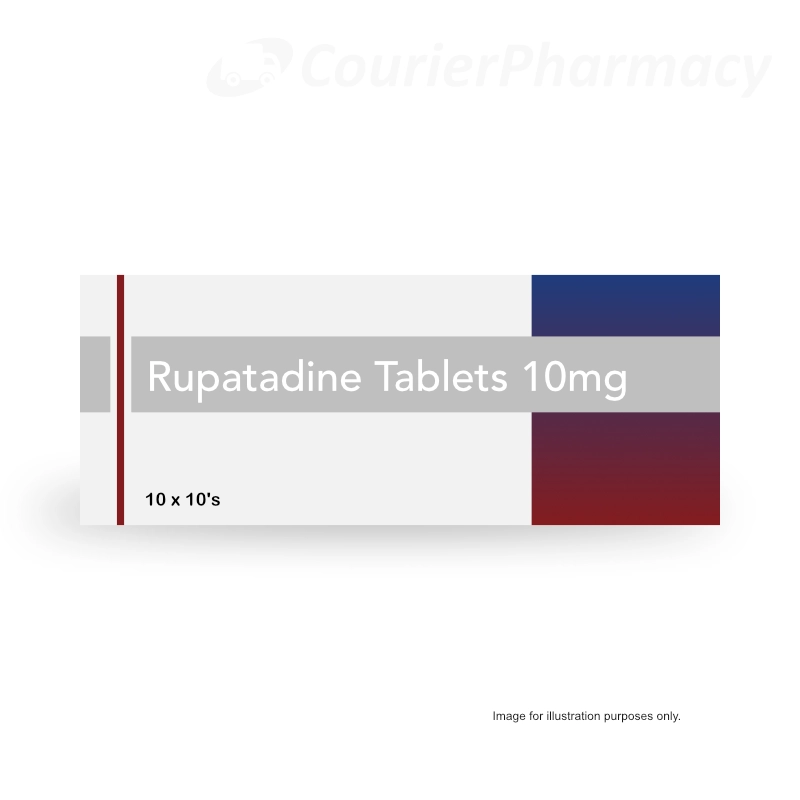
Rupatadine 10mg tablets is a UK Prescription Only Medicine and a second-generation antihistamine with dual mechanism, acting as both an H1 histamine receptor antagonist and a platelet-activating factor (PAF) antagonist.
Licensed for symptomatic treatment of allergic rhinitis (seasonal and perennial) and chronic spontaneous urticaria in adults and adolescents from age 12.
Standard adult dose is one 10mg tablet once daily, taken with or without food. Onset is within 30 to 60 minutes, with 24-hour duration supporting once-daily dosing.
The dual mechanism may particularly help where nasal congestion or the inflammatory component of allergic disease is prominent and where standard antihistamines have given incomplete response.
Pack size: 30 tablets
Available from Courier Pharmacy after a quick online consultation reviewed by a UK-qualified prescriber.
Rupatadine 10mg Tablets are a UK Prescription Only Medicine (POM). They are a second generation antihistamine used for allergy symptoms. The active ingredient is rupatadine (as rupatadine fumarate). Rupatadine has been used in UK practice since 2008, so there is strong real world experience with it.
What Rupatadine is used for
Rupatadine is licensed in the UK for:
Allergic rhinitis (seasonal or year round) in adults and adolescents aged 12+
Chronic spontaneous urticaria (long lasting hives) in adults and adolescents aged 12+
How Rupatadine works (dual action)
Rupatadine works in two main ways. Because of this, it can suit people who need more than basic antihistamine cover.
First, it blocks the H1 histamine receptor. This helps reduce common allergy symptoms such as:
sneezing
itching
runny nose
watery, itchy eyes
In addition, rupatadine also blocks the PAF (platelet activating factor) receptor. PAF is another inflammatory signal in the body. It can contribute to:
swelling and fluid leakage into tissues
nasal blockage
redness and flushing
eosinophil activity (cells linked with allergic inflammation)
So, rupatadine may help when inflammation feels like a bigger part of the picture, especially when nasal congestion is a main symptom.
Where Rupatadine fits in allergy care
Second generation antihistamines are often the first medicine people try for hay fever and hives. However, not everyone responds the same way. So, if one antihistamine hasn’t helped enough, it can make sense to try another.
Rupatadine can be a good option when:
other antihistamines have given an incomplete response
you get troublesome nasal congestion
you want a once daily prescription option
That said, for mild hay fever, many people do well with OTC options such as cetirizine or loratadine.
Rupatadine for chronic hives (urticaria)
For chronic spontaneous urticaria, guidelines often start with a second generation antihistamine once daily. If symptoms persist, clinicians may step treatment up. Your prescriber will advise what’s appropriate for you.
Rupatadine from Courier Pharmacy
Courier Pharmacy supplies Rupatadine 10mg Tablets from a UK GPhC registered pharmacy after an online consultation. A UK qualified prescriber reviews your answers. We check your symptoms, current medicines, and treatment goals. We also ask about heart history where relevant.
Key features and specifications
Active ingredient: rupatadine 10mg per tablet (as rupatadine fumarate)
Form: tablet, swallowed whole with water
Pack sizes: commonly 7, 10, 20, or 30 tablets (varies by supplier)
Licensed indications: allergic rhinitis and chronic spontaneous urticaria (age 12+)
Standard adult dose: 10mg once daily, with or without food
Onset: often within 30–60 minutes
Duration: around 24 hours (once daily dosing)
Legal category: Prescription Only Medicine (POM)
Supplied by: Courier Pharmacy (UK GPhC?registered) after online consultation
MOJO WISDOM
Take control of your health by understanding your condition and what this medication is doing for you.
READ:
More information about this treatment.
UK-based doctors and pharmacists
Discreet and Confidential
UK-based doctors and pharmacists
Free, Expert Advice
No video link provided.
No video link provided.
UK-based doctors and pharmacists
Free, expert advice
Discrete and confidential
Fast delivery
Giving you trusted clinical advice for over 40 conditions
A UK regulated pharmacy providing safe, effective treatments online since 2014
When standard antihistamines (loratadine, cetirizine, fexofenadine) haven’t given you the symptom control you wanted, or when you’re dealing with allergic rhinitis or chronic urticaria that has a strong inflammatory component beyond histamine alone, rupatadine is the second-generation antihistamine that does something different. As well as blocking H1 histamine receptors, rupatadine also blocks platelet-activating factor (PAF), an inflammatory mediator that contributes to nasal congestion, vascular leakage, and the persistent symptoms that pure antihistamines sometimes don’t fully address.
At Courier Pharmacy, we believe healthcare should suit the person, not the marketing budget. Whether you’re managing seasonal hay fever, perennial allergic rhinitis, chronic spontaneous urticaria, or a complex allergic picture that hasn’t responded well to first-line antihistamines, this page is here to help you decide whether Rupatadine 10mg Tablets fit your situation, and how to use them well.
Five key takeaways
Rupatadine 10mg Tablets is a UK Prescription Only Medicine, a second-generation antihistamine with dual H1 receptor antagonist and platelet-activating factor (PAF) antagonist activity, licensed for symptomatic treatment of allergic rhinitis and chronic spontaneous urticaria in adults and adolescents from age 12
The dual mechanism is the differentiator. Most second-generation antihistamines (loratadine, cetirizine, fexofenadine, desloratadine, levocetirizine, bilastine) block H1 receptors only. Rupatadine adds PAF blockade, which contributes to its effect on nasal congestion and the inflammatory component of allergic disease
Standard adult dose is one 10mg tablet once daily, taken with or without food. Onset is within 30 to 60 minutes, with effect lasting around 24 hours, supporting convenient once-daily dosing
Rupatadine is well-tolerated overall. Common side effects include drowsiness (more common than with bilastine or fexofenadine but generally less than with cetirizine), headache, and fatigue. The QT interval effect is mild and clinically relevant only in patients with specific cardiac considerations
Rupatadine is one option within the second-generation antihistamine class; the choice between rupatadine, loratadine, cetirizine, fexofenadine, desloratadine, levocetirizine, and bilastine is often individual, depending on response, side effect tolerance, and the specific allergic picture
What are Rupatadine 10mg tablets
Rupatadine 10mg Tablets is a UK Prescription Only Medicine and a second-generation antihistamine with a distinctive dual mechanism. The active ingredient, rupatadine fumarate, was developed by the Spanish pharmaceutical company J. Uriach y Compañía and launched as Rupafin in Europe in the early 2000s. It received UK marketing authorisation in 2008 and has been available in UK practice for over a decade and a half, with accumulated clinical and real-world experience confirming its place as one of the second-generation antihistamine options for allergic rhinitis and chronic urticaria.
What makes rupatadine clinically distinctive is its dual action on two different inflammatory pathways. Like other second-generation antihistamines, rupatadine selectively blocks the H1 histamine receptor, preventing histamine from binding and triggering the typical allergic symptoms of sneezing, itching, rhinorrhoea, and conjunctivitis. Unlike most other second-generation antihistamines, rupatadine also blocks the platelet-activating factor (PAF) receptor. PAF is a phospholipid-derived inflammatory mediator that contributes to:
Increased vascular permeability and tissue oedema
Recruitment and activation of eosinophils
Bronchoconstriction in susceptible patients
Nasal congestion (which is often poorly addressed by pure H1 antihistamines)
Vasodilation and erythema
By blocking both pathways, rupatadine addresses a broader range of inflammatory effects than H1 blockade alone, which is the rationale for its clinical positioning in patients where the inflammatory component of allergic disease is prominent or where pure antihistamines have given an incomplete response.
The licensed UK indications for rupatadine are:
Symptomatic treatment of allergic rhinitis (seasonal and perennial) in adults and adolescents from age 12
Symptomatic treatment of chronic spontaneous urticaria in adults and adolescents from age 12
The clinical position of rupatadine in modern UK allergy care follows the standard approach to second-generation antihistamines. For allergic rhinitis and chronic urticaria, UK and European guidelines (NICE Clinical Knowledge Summaries, BSACI, EAACI) recommend second-generation antihistamines as first-line pharmacological treatment, with the specific medicine choice based on:
Patient response: some patients respond better to one antihistamine than another, often without a predictable pattern. A trial of an alternative is reasonable if response is inadequate
Side effect tolerance: drowsiness is the most common concern, varying substantially between agents. Bilastine and fexofenadine have the lowest sedation profile; cetirizine and rupatadine have moderate sedation; older agents have more
Specific symptom pattern: nasal congestion responds variably to pure H1 antihistamines; rupatadine’s PAF blockade may help where congestion is prominent
Cost and availability: generic loratadine and cetirizine are available over the counter at very low cost; rupatadine is prescription-only and typically more expensive
Patient preference and previous experience
Rupatadine sits alongside the other prescription-only or branded second-generation antihistamines as a reasonable choice for patients seeking an alternative to first-line options, particularly where nasal congestion is significant, where the inflammatory component of allergic disease is prominent, or where previous antihistamines have given an incomplete response. It is not generally first-line for uncomplicated mild hay fever where cetirizine or loratadine would do the job.
For chronic spontaneous urticaria specifically, modern UK and European guidance (EAACI/GA²LEN/EDF/WAO 2022) recommends second-generation antihistamines as first-line, with up-dosing to four times the standard dose if standard dosing is inadequate. Rupatadine can be used in this stepped approach, although the marketing authorisation in the UK covers standard dosing rather than up-dosed regimens.
We at Courier Pharmacy supply Rupatadine 10mg Tablets from a UK-registered pharmacy after an online consultation reviewed by a UK-qualified prescriber. The consultation covers your allergic history, previous antihistamine response, current medicines, any cardiac history (relevant for the QT interval consideration), and your treatment goals.
Key features and specifications
Active ingredient: rupatadine 10mg (as rupatadine fumarate) per tablet
Form: light salmon-coloured round tablet, swallowed whole with water
Pack sizes: 30
Licensed UK indications: symptomatic treatment of allergic rhinitis (seasonal and perennial) and chronic spontaneous urticaria, in adults and adolescents from age 12
Standard adult dose: 10mg once daily, with or without food
Onset of action: typically 30 to 60 minutes after dosing
Duration of action: approximately 24 hours, supporting once-daily dosing
Legal category: Prescription Only Medicine (POM)
Supplied by: Courier Pharmacy, UK GPhC-registered, after online consultation
Why choose Courier Pharmacy for Rupatadine 10mg tablets
At Courier Pharmacy, our whole approach is built around the idea that healthcare should fit the person, not the marketing budget. For rupatadine, that means honest framing of where it fits in the second-generation antihistamine class, when its dual mechanism adds value, and when a more standard option would do the job. Our service is shaped by the philosophy of Dr Ada Jex-Cori, our brand pharmacist, who has built her practice around accessible, honest, personalised care. Her view is straightforward: you are not broken. The system is the problem. We are here to change that.
Honest framing of where rupatadine fits
For patients with allergic rhinitis or chronic urticaria who have not had adequate response to standard antihistamines, who have prominent nasal congestion that pure H1 antihistamines haven’t addressed, or who specifically want the dual H1+PAF mechanism, rupatadine is a genuinely useful option. We will work through this with you during the consultation.
For patients with uncomplicated mild hay fever where over-the-counter loratadine or cetirizine would be perfectly adequate, we will be honest about that too. There is no clinical case for pushing a prescription-only antihistamine when an over-the-counter option would do the job, and we won’t try.
Allergy care that takes you seriously
Allergic rhinitis and chronic urticaria can be dismissed as minor inconveniences by people who don’t have severe symptoms. For patients with significant symptoms, the impact on sleep, concentration, work performance, and quality of life is real. We treat your situation with the seriousness it deserves and we are happy to think with you about the wider picture (allergen identification, intranasal corticosteroids, immunotherapy options, biologics for refractory urticaria).
Pharmacist support before and after purchase
Our pharmacist is available for advice on:
Whether rupatadine is the right option for your situation, or whether another antihistamine would suit you better
How to combine antihistamines with intranasal corticosteroids effectively for allergic rhinitis
Managing side effects or unexpected responses
The wider stepped approach to chronic urticaria if you’re dealing with a persistent pattern
Whether your symptoms warrant GP review or specialist referral (allergy, immunology, dermatology)
This is free and available before and after purchase. Get in touch if you have any questions.
Care for specific patient groups
We are happy to provide tailored support for:
Patients with allergic rhinitis and asthma overlap where rupatadine’s PAF blockade may add value alongside asthma maintenance
Patients with chronic spontaneous urticaria including those needing stepped management
Patients with MCAS or histamine intolerance where antihistamine choice fits into a wider mediator-targeted treatment approach
Patients on multiple medicines where the interaction profile needs careful review
Patients pursuing allergen immunotherapy (Grazax, Acarizax, Itulazax) where antihistamines remain part of the symptomatic regimen during the early stages of treatment
Coordination with your GP and other care
If you have a GP, allergist, dermatologist, or other healthcare professional involved in your care, we are happy to coordinate. For patients with chronic or complex allergic disease, joined-up care across primary care, pharmacy, and specialist services produces better outcomes than fragmented care.
Trust earned, not claimed
We are GPhC-regulated, we ground our content in NHS, NICE, BNF, EMC, BSACI, and EAACI guidance, and we will tell you honestly if rupatadine isn’t the right answer for your situation. We’d rather give you the right advice than a quick sale.
How to buy Rupatadine 10mg tablets (Prescription Only) from Courier Pharmacy
Rupatadine 10mg Tablets is a Prescription Only Medicine (POM) in the UK. It can only be supplied after a UK-qualified prescriber has reviewed your online consultation. The consultation covers your symptoms, allergic history, previous antihistamine response, current medicines (particularly any that could prolong QT or that are CYP3A4 inhibitors), cardiac history, and treatment goals.
Here is how our service works:
Complete a quick online consultation answering questions about your symptoms, what you’ve already tried, any cardiac or hepatic history, and your current medicines
A UK-qualified prescriber reviews your answers to confirm rupatadine is suitable for you, including the interaction and QT interval considerations
If approved, a prescription is issued and your order is prepared for dispatch
We dispense and deliver discreetly to your door
If Rupatadine 10mg Tablets isn’t suitable for you, we will explain why and suggest the next best option. That might be:
Loratadine 10mg or cetirizine 10mg (over the counter) if you haven’t yet had a fair trial of these
Fexofenadine 180mg (over the counter from age 12) if very low sedation matters and you need stronger antihistamine effect
Bilastine 20mg if you want a newer prescription antihistamine with very low sedation
Desloratadine 5mg or levocetirizine 5mg as alternative prescription options
An intranasal corticosteroid (mometasone, fluticasone) if allergic rhinitis has prominent congestion and antihistamines alone aren’t enough
A combination intranasal spray (Dymista: fluticasone + azelastine) for refractory allergic rhinitis
Allergen-specific immunotherapy (Grazax for grass pollen, Acarizax for house dust mite, Itulazax for tree pollen) for patients with severe, specific-allergen-driven disease
Referral to an allergist or immunologist for complex, refractory, or atypical allergic disease
Referral to a dermatologist for chronic urticaria needing biological therapy (omalizumab)
Our free fortnightly drop-in clinics at Insomnia, Derby run every other week from 10am to 12pm. Allergies, hay fever, chronic urticaria, asthma, MCAS, anaphylaxis, immunotherapy, hair loss, men’s health, weight management, and the broader conversations about quality of life are all topics we cover regularly at these sessions. No appointment needed, no charge, no pressure.
Active ingredients
Each tablet contains:
Rupatadine 10mg (as rupatadine fumarate) (active ingredient): a second-generation antihistamine with dual mechanism, acting as both a selective H1 histamine receptor antagonist and a platelet-activating factor (PAF) receptor antagonist. The dual action addresses both the histamine-mediated and the PAF-mediated components of allergic inflammation
Patients with lactose intolerance, galactose intolerance, or glucose-galactose malabsorption should check the patient information leaflet of the specific pack supplied. Rupatadine tablets do not contain gluten, soya, or aspartame. Patients with concerns about specific excipients should contact our pharmacist before purchase.
Where Rupatadine fits in allergy treatment
Allergic conditions including allergic rhinitis (hay fever, perennial allergic rhinitis), chronic urticaria, and other histamine-mediated conditions affect a substantial proportion of the UK population. Allergic rhinitis alone affects around 20 to 25% of UK adults, with most managing symptoms through over-the-counter antihistamines, intranasal corticosteroids, and trigger avoidance. Chronic spontaneous urticaria affects around 1% of the population at some point, with significant impact on quality of life when symptoms are persistent.
The treatment approach for these conditions in modern UK practice follows a stepped framework.
First-line: second-generation antihistamines
For allergic rhinitis and chronic urticaria, second-generation antihistamines are first-line pharmacological treatment. The class includes:
Loratadine (Clarityn, generic): available over the counter, low sedation, well-tolerated
Cetirizine (Zirtek, Piriteze, generic): available over the counter, moderate sedation in some patients
Fexofenadine (Telfast, generic): available over the counter from age 12, very low sedation, effective for both allergic rhinitis and chronic urticaria
Desloratadine (Neoclarityn, generic): the active metabolite of loratadine, prescription-only, low sedation
Levocetirizine (Xyzal, generic): the active enantiomer of cetirizine, prescription-only, moderate sedation
Bilastine (Ilaxten, generic): newer agent, very low sedation, prescription-only, particularly useful where minimal sedation is important
Onset and duration of action (most are once-daily; cetirizine is also once-daily with some patients dosing twice daily)
Sedation profile (bilastine and fexofenadine are essentially non-sedating; loratadine is low sedation; cetirizine and rupatadine are moderate sedation; older first-generation agents are heavily sedating)
Mechanism beyond pure H1 blockade (rupatadine adds PAF blockade; others are essentially H1-selective)
Drug interactions (bilastine and fexofenadine should be taken away from food, calcium-rich drinks, and fruit juices; the others are food-flexible)
Cost (loratadine and cetirizine are very cheap; the prescription-only agents are more expensive)
Availability (loratadine, cetirizine, and fexofenadine are over the counter; the others are prescription-only)
The choice between agents is often individual. A reasonable starting point is loratadine or cetirizine from the over-the-counter range. If response is inadequate or side effects are problematic, switching to fexofenadine, bilastine, desloratadine, levocetirizine, or rupatadine is reasonable. There is no single right answer; what works for one patient may not for another, even within the same medicine class.
When rupatadine is particularly worth considering
The clinical scenarios where rupatadine's dual mechanism may add value:
Nasal congestion is the dominant symptom: pure H1 antihistamines often address sneezing, itching, and rhinorrhoea well but are less effective for congestion. Rupatadine's PAF blockade may help here
The inflammatory component of allergic disease is prominent: patients with significant tissue oedema, eosinophilic inflammation, or vascular leakage may benefit from the broader inflammatory blockade
Incomplete response to other second-generation antihistamines: when loratadine, cetirizine, fexofenadine, or others haven't been enough, switching to rupatadine sometimes produces better control
Chronic urticaria refractory to standard antihistamines: rupatadine is one of the options for stepped urticaria management
Allergic rhinitis with asthma overlap: PAF is implicated in bronchoconstriction; rupatadine may have a slight additional benefit in patients with both conditions, although it is not licensed as an asthma treatment
Second-line: combination treatment
For patients whose symptoms aren't controlled by second-generation antihistamine alone, the next step in allergic rhinitis is usually addition of:
Intranasal corticosteroids (mometasone, fluticasone, beclometasone): the most effective single class for allergic rhinitis, particularly for congestion
Intranasal antihistamines (azelastine, levocabastine): faster onset, useful for as-needed use
Combination intranasal sprays (Dymista: fluticasone + azelastine): combines both mechanisms in one spray
Leukotriene receptor antagonists (montelukast): useful where allergic rhinitis overlaps with asthma
Up-dosed second-generation antihistamine to four times standard dose (step 2)
Addition of omalizumab (anti-IgE biologic) for refractory cases (step 3, specialist setting)
Addition of ciclosporin for cases unresponsive to omalizumab (step 4, specialist setting)
Rupatadine is one of the second-generation antihistamines that can be used at steps 1 and 2 of this approach, although the up-dosed regimen is off-label.
When specialist input is appropriate
A small proportion of patients have allergic disease that doesn't respond to standard treatment. Refractory allergic rhinitis or chronic urticaria may warrant assessment for:
Allergen-specific immunotherapy (Grazax for grass pollen, Acarizax for house dust mite, Itulazax for tree pollen) where a specific allergen is the dominant driver
Biological agents (omalizumab for chronic spontaneous urticaria, dupilumab for severe atopic dermatitis or asthma) under specialist care
Mast cell activation syndrome (MCAS) assessment if the symptom pattern extends beyond typical allergy
How Rupatadine works
Rupatadine works through a dual mechanism that is its main clinical differentiator from other second-generation antihistamines.
H1 histamine receptor antagonism
The primary mechanism is selective inhibition of the peripheral H1 histamine receptor. Histamine is released by mast cells and basophils during allergic reactions, binding to H1 receptors on multiple cell types to produce:
Rupatadine binds competitively to H1 receptors, preventing histamine from triggering these effects. Like other second-generation antihistamines, rupatadine has very limited penetration of the blood-brain barrier compared to first-generation agents (chlorpheniramine, promethazine, diphenhydramine), which means much less central sedation.
The distinctive secondary mechanism is competitive inhibition of the PAF receptor. PAF is a phospholipid-derived inflammatory mediator produced by mast cells, basophils, eosinophils, neutrophils, macrophages, and endothelial cells. PAF binds to its own specific receptors to produce:
Substantial increases in vascular permeability (often greater than histamine)
Eosinophil recruitment and activation
Platelet aggregation and microthrombus formation
Bronchoconstriction in susceptible airways
Persistent inflammatory effects beyond the acute histamine phase
By blocking both pathways, rupatadine addresses both the immediate histamine-mediated symptoms and the more persistent PAF-mediated inflammatory component of allergic disease. The clinical consequence is broader symptomatic coverage, particularly for nasal congestion and persistent inflammation that pure H1 antihistamines sometimes don't fully address.
Pharmacokinetics
After oral administration, rupatadine is absorbed from the small intestine, reaching peak plasma levels at around 0.75 to 1 hour. Food may slightly increase the rate of absorption but does not significantly affect total exposure, so rupatadine can be taken with or without food.
Rupatadine is highly protein-bound (around 98 to 99%) and is extensively metabolised in the liver, primarily by CYP3A4. Two of its metabolites (desloratadine, which is the active metabolite of loratadine, and 3-hydroxydesloratadine) are themselves active antihistamines and contribute to the overall antihistamine effect.
The plasma half-life of rupatadine is approximately 5 to 6 hours, but the clinical effect lasts around 24 hours because of the contribution of the long-acting metabolites and the receptor binding profile. This supports the convenient once-daily dosing.
Elimination is primarily through faecal excretion (around 60%) with a smaller proportion (around 35%) excreted in urine, mostly as metabolites. Significant hepatic impairment can affect rupatadine metabolism; dose adjustment is sometimes considered.
Cardiovascular effects
Like several second-generation antihistamines, rupatadine has a mild effect on the cardiac QT interval, related to weak blockade of the cardiac hERG potassium channel. At standard therapeutic doses (10mg daily), the QT effect is small and not clinically significant in patients without other QT-prolonging factors. Caution is appropriate in patients with:
Known long QT syndrome
Other QT-prolonging medicines (some antiarrhythmics, certain antipsychotics, certain antibiotics like erythromycin and clarithromycin, certain antifungals like ketoconazole and itraconazole)
The information below is a summary for reference. The definitive guide is the patient information leaflet supplied with the product. If you are unsure about any aspect of dosing or timing, contact our pharmacist for support.
Dosing
Adults and adolescents from age 12: one 10mg tablet once daily.
Children under 12: rupatadine 10mg tablets are not licensed for children under 12. A 1mg/ml oral solution (Rupafin oral solution) is available for use in children from age 2 in some European markets, but supply through Courier Pharmacy is for adults only.
Older patients: standard adult dose is generally appropriate, but use with care in patients with significant hepatic or renal impairment. There is limited specific data in patients over 65, so individualised assessment is sensible.
Patients with hepatic impairment: rupatadine should be used with caution. Significant hepatic impairment may warrant dose reduction or alternative therapy under prescriber guidance.
Patients with renal impairment: limited data is available. Use with caution in significant renal impairment, particularly severe renal impairment, and discuss alternatives with the prescriber.
When to take
Once daily, at a consistent time. Some patients prefer morning dosing for daytime symptom control; others prefer evening dosing if symptoms are worse overnight or if mild sedation from the medicine is undesirable during the day. The 24-hour duration supports either choice. Consistent timing matters more than the specific time of day.
How to take
Swallow the tablet whole with a glass of water
Take with or without food; food does not significantly affect absorption
Do not take with grapefruit juice (see drug interactions; grapefruit juice can substantially increase rupatadine plasma levels)
The tablet can be broken in half if needed, although this is not generally required at the 10mg dose
How long can I take rupatadine?
For seasonal allergic rhinitis: typically across the pollen season, often a few months per year. Stop when symptoms have settled and the trigger has passed.
For perennial allergic rhinitis: continuous use over longer periods is reasonable, although periodic review (every 6 to 12 months) is sensible to confirm ongoing benefit and to consider whether trigger management or alternatives might allow stepping back.
For chronic spontaneous urticaria: continuous daily use is typical, often for months or years. Review every 6 months or so to consider whether the urticaria has settled enough to try a treatment break.
There is no specific maximum duration limit on rupatadine use. Long-term safety data from clinical use is reassuring, and the medicine can be continued as long as it provides benefit and is well-tolerated.
Missing a dose
If you miss a dose, take it as soon as you remember unless it's nearly time for the next dose; don't double-dose to catch up. Missing the occasional dose is unlikely to affect overall control significantly.
Stopping Rupatadine
Rupatadine can be stopped without a taper. There is no withdrawal effect from stopping. Symptoms of the underlying allergic condition will return if the medicine was effectively controlling them, but this is the underlying disease returning rather than a withdrawal phenomenon.
Storage
Store at room temperature, below 25°C, in the original packaging to protect from moisture. Keep out of sight and reach of children. Do not use after the expiry date printed on the pack.
Warnings and precautions for Rupatadine 10mg tablets
When not to use rupatadine
Rupatadine should not be used in:
Patients with known hypersensitivity to rupatadine or any tablet excipient
Patients with severe hepatic impairment (use with caution in moderate impairment; avoid in severe)
Patients with significant prolongation of the QT interval or known long QT syndrome (unless under specialist guidance with monitoring)
Patients on QT-prolonging medicines without prescriber assessment
Children under 12 (the tablet form; oral solution is available for younger children)
QT interval and cardiovascular considerations
Rupatadine has a mild effect on the QT interval at therapeutic doses. The effect is small and not clinically significant in most patients, but caution is appropriate in:
Known long QT syndrome (congenital or acquired)
Patients on other QT-prolonging medicines (some antiarrhythmics like amiodarone, sotalol; some antipsychotics; macrolide antibiotics like erythromycin and clarithromycin; some antifungals like ketoconazole and itraconazole; some antidepressants including some tricyclics and citalopram at higher doses)
Our prescriber will check your medicines and cardiac history during consultation.
Hepatic impairment
Rupatadine is extensively metabolised in the liver by CYP3A4. Patients with mild to moderate hepatic impairment may need careful assessment; patients with severe hepatic impairment should generally use alternative agents. Discuss with the prescriber if you have liver disease.
Renal impairment
Limited data is available in significant renal impairment. Use with caution in severe renal impairment, and discuss with the prescriber.
Pregnancy and breastfeeding
Limited data is available on rupatadine in pregnancy. The medicine has not been associated with specific safety signals, but the database is smaller than for older antihistamines (loratadine, cetirizine) which have more extensive pregnancy safety data. For most patients, loratadine or cetirizine is the preferred antihistamine in pregnancy.
Rupatadine is excreted in breast milk in small amounts in animal studies; human data is limited. Discuss with your prescriber if you are breastfeeding.
Older patients
Standard adult dose is generally appropriate. Older patients may be more sensitive to the mild sedation, mild QT effect, and any anticholinergic-like effects (although rupatadine has minimal anticholinergic activity compared to first-generation antihistamines).
Driving and machinery
Rupatadine can cause drowsiness or reduced alertness in some patients, particularly when starting treatment or at higher doses. Most patients tolerate the standard 10mg daily dose without significant sedation, but individual responses vary. Avoid driving or operating machinery until you know how the medicine affects you. The DVLA does not have specific restrictions on second-generation antihistamines, but it is the patient's responsibility to ensure their fitness to drive.
Alcohol
Rupatadine does not significantly enhance the central effects of alcohol at therapeutic doses, but combining sedating medicines with alcohol is generally inadvisable. If you find rupatadine produces noticeable sedation, avoid alcohol or significantly limit intake.
Grapefruit juice
Grapefruit juice substantially inhibits CYP3A4 (the main enzyme metabolising rupatadine) and can significantly increase rupatadine plasma levels. This is a clinically relevant interaction. Avoid grapefruit juice while taking rupatadine.
Skin test reactions
Antihistamines suppress the skin reactions used in allergy testing (skin prick testing). If you are scheduled for allergy testing, stop rupatadine at least 5 to 7 days before the test (and discuss with the testing service for their specific recommendations). Failing to stop the antihistamine can produce a false-negative skin test result.
Lactose content
The tablets contain lactose. Patients with hereditary galactose intolerance, lactose intolerance, or glucose-galactose malabsorption should check the patient information leaflet and discuss with our pharmacist.
Side effects of Rupatadine 10mg tablets
Rupatadine is generally well-tolerated. Most side effects are mild and gradually resolve with continued treatment as the body adjusts.
Common side effects (affecting up to 1 in 10 patients)
Drowsiness or somnolence
Headache
Fatigue
Dry mouth
Dizziness
Less common side effects
Increased appetite
Weight gain
Insomnia
Anxiety, irritability
Nausea, vomiting
Abdominal pain
Diarrhoea
Constipation
Pharyngitis (sore throat)
Cough
Rash
Itching
Joint pain or muscle pain
Palpitations
Increased liver enzymes (mild and reversible in most cases)
Rare but more significant side effects
Severe allergic reactions including anaphylaxis (rare; antihistamines very rarely trigger paradoxical allergic reactions)
Severe skin reactions (Stevens-Johnson syndrome, toxic epidermal necrolysis: very rare)
Significant hepatic dysfunction (rare; presents with jaundice, dark urine, severe fatigue)
Clinically significant QT prolongation (rare at therapeutic doses; more relevant with overdose, drug interactions, or pre-existing QT issues)
Tachycardia or arrhythmia
Comparison with other antihistamines
Sedation profile of second-generation antihistamines (rough ranking from least to most sedating):
Bilastine: essentially non-sedating
Fexofenadine: very low sedation
Loratadine, desloratadine: low sedation
Rupatadine: low to moderate sedation
Levocetirizine, cetirizine: moderate sedation (cetirizine has the highest rate of sedation among second-generation agents)
This is an approximate ranking and individual responses vary considerably. Some patients have minimal sedation with cetirizine; others have notable sedation with bilastine. A trial of an alternative agent is reasonable if sedation is problematic.
Stop and seek urgent help if
You develop signs of severe allergic reaction (significant swelling of face/lips/tongue, difficulty breathing, severe rash)
You develop signs of severe skin reaction (widespread rash with blistering or peeling, mouth ulcers)
You develop jaundice (yellow skin or eyes), dark urine, or severe upper abdominal pain (possible hepatic injury)
You develop palpitations with chest pain, fainting, or pre-syncopal symptoms
You develop significant or persistent neurological symptoms
Yellow Card reporting
Suspected adverse drug reactions can be reported to the MHRA via the Yellow Card scheme at yellowcard.mhra.gov.uk. Reporting helps build the safety picture for everyone.
Drug interactions with Rupatadine 10mg tablets
Rupatadine has a moderate drug interaction profile, primarily related to CYP3A4 metabolism and QT interval considerations.
Significant interactions
Strong CYP3A4 inhibitors: substantially increase rupatadine plasma levels and the risk of side effects. Avoid the combination or use rupatadine with caution:
Ritonavir, cobicistat, and other HIV protease inhibitors
Nefazodone
Grapefruit juice: substantial CYP3A4 inhibition. Avoid grapefruit juice while taking rupatadine.
QT-prolonging medicines: combination increases the cumulative QT effect. Use with caution or avoid:
Class IA and III antiarrhythmics (amiodarone, sotalol, quinidine)
Certain antipsychotics (haloperidol, pimozide, sertindole, ziprasidone)
Methadone
Some antidepressants (some tricyclics, citalopram at higher doses)
Some antibiotics (macrolides as above, fluoroquinolones like moxifloxacin)
Some antimalarials
Less significant interactions
CYP3A4 inducers (rifampicin, carbamazepine, phenytoin, St John's Wort): can reduce rupatadine plasma levels. Clinical significance is small but worth flagging
Diltiazem, verapamil (calcium channel blocker CYP3A4 inhibitors): mild increase in rupatadine levels; usually not clinically significant
Alcohol: mild additive sedation potential
Other sedating medicines (opioids, benzodiazepines, sedating antidepressants): mild additive sedation
Not significant interactions
Most blood pressure medicines (other than the QT-prolonging considerations above): no significant interaction
Statins: no significant interaction
Hormonal contraceptives: no significant interaction
PPIs and H2 antagonists: no significant interaction
Most paracetamol, ibuprofen, codeine combinations: no significant interaction
Most asthma inhalers and intranasal corticosteroids: no significant interaction; rupatadine is compatible with combination allergic rhinitis or asthma management
For patients on any of the significant-interaction medicines above, our prescriber will check the interaction profile during your consultation.
Frequently asked questions about Rupatadine 10mg tablets
What is rupatadine used for?
Rupatadine 10mg Tablets is licensed in the UK for symptomatic treatment of allergic rhinitis (seasonal hay fever and perennial allergic rhinitis) and chronic spontaneous urticaria in adults and adolescents from age 12.
How is rupatadine different from other antihistamines?
Most second-generation antihistamines (loratadine, cetirizine, fexofenadine, desloratadine, levocetirizine, bilastine) block H1 histamine receptors only. Rupatadine adds a second mechanism: blockade of the platelet-activating factor (PAF) receptor. PAF is an inflammatory mediator that contributes to nasal congestion and inflammatory effects beyond what pure H1 blockade addresses. The dual mechanism may help in patients where standard antihistamines have not given complete control, particularly where congestion is prominent.
Is rupatadine sedating?
Rupatadine has low to moderate sedation potential, less than older first-generation antihistamines but somewhat more than bilastine or fexofenadine. Most patients tolerate it without significant sedation at the standard 10mg daily dose, but individual responses vary. If you find rupatadine sedating, switching to bilastine, fexofenadine, loratadine, or desloratadine is reasonable.
How quickly does it work?
Onset is typically within 30 to 60 minutes of dosing. For allergic rhinitis, regular daily dosing produces optimal effect within several days. For chronic urticaria, response can take 1 to 2 weeks at the standard dose, and longer at up-dosed regimens.
When should I take rupatadine?
Once daily at a consistent time. Morning dosing suits most patients for daytime symptom control; evening dosing suits patients with worse overnight symptoms or who find the medicine mildly sedating during the day. The 24-hour duration supports either choice.
Can I take rupatadine with food?
Yes, food does not significantly affect absorption. Take with or without food as suits you. Avoid grapefruit juice, which can substantially increase rupatadine plasma levels.
Can I take rupatadine every day for months or years?
Yes, for perennial allergic rhinitis or chronic urticaria, continuous daily use is appropriate. Long-term safety data is reassuring. Periodic review (every 6 to 12 months) to confirm ongoing benefit and consider whether trigger management or alternatives might allow stepping back is sensible.
Can I take rupatadine with my asthma inhaler?
Yes. Rupatadine is compatible with inhaled corticosteroids (Clenil, Pulmicort, Flixotide, Qvar), combination inhalers (Symbicort, Seretide, Fostair, Trimbow), short-acting beta-2 agonists (salbutamol), and most other asthma medicines. Rupatadine is not licensed as an asthma treatment but does not interfere with asthma medicines.
Can I take rupatadine with intranasal corticosteroid spray?
Yes. Combining a second-generation antihistamine with an intranasal corticosteroid (mometasone, fluticasone, beclometasone) is standard practice for allergic rhinitis when antihistamine alone isn't sufficient. The two work through different mechanisms and have additive effect.
Can I take rupatadine with my MCAS medicines (famotidine, montelukast, mast cell stabilisers)?
Yes. Rupatadine is compatible with the standard MCAS regimen including H2 antihistamines (famotidine), leukotriene receptor antagonists (montelukast), and mast cell stabilisers (cromolyn sodium, ketotifen). For some MCAS patients, the H1+PAF dual mechanism of rupatadine may be particularly useful as the H1 component of the regimen.
What about pregnancy?
Limited data is available on rupatadine in pregnancy. For most pregnant patients, loratadine or cetirizine is the preferred antihistamine because of the larger pregnancy safety database. Discuss with your prescriber if you become pregnant during treatment.
What about breastfeeding?
Limited data is available. Discuss with your prescriber.
Can children take rupatadine?
The 10mg tablet is licensed from age 12. A 1mg/ml oral solution is available for younger children in some European markets but not always in UK distribution. Through Courier Pharmacy this online supply is for adults.
Can older patients take rupatadine?
Yes, standard adult dose is generally appropriate. Older patients may be more sensitive to mild sedation. Hepatic or renal impairment may require dose adjustment.
Can I drink alcohol while taking rupatadine?
Moderate alcohol is not specifically contraindicated, but combining sedating medicines with alcohol generally increases drowsiness. If rupatadine produces noticeable sedation for you, avoid or significantly limit alcohol.
Can I drive while taking rupatadine?
Most patients drive without difficulty on rupatadine, but individual responses vary. Avoid driving until you know how the medicine affects you. The DVLA does not have specific restrictions on second-generation antihistamines, but it remains the patient's responsibility to ensure fitness to drive.
What's the interaction with grapefruit juice?
Significant. Grapefruit juice inhibits CYP3A4 (the enzyme that metabolises rupatadine) and can substantially increase rupatadine plasma levels. Avoid grapefruit juice while taking rupatadine.
What if rupatadine doesn't work for me?
Response varies. If you've used rupatadine for 1 to 2 weeks at the standard dose without meaningful benefit, discuss with our pharmacist or your GP. Options include trying a different second-generation antihistamine (responses vary considerably between agents even within the same class), adding an intranasal corticosteroid, considering up-dosing for chronic urticaria, or pursuing further allergy assessment.
Can I stop rupatadine suddenly?
Yes. Rupatadine can be stopped without a taper and produces no withdrawal effect. Underlying symptoms may return if the medicine was effectively controlling them.
How should I store rupatadine?
Store at room temperature, below 25°C, in the original packaging to protect from moisture. Keep out of sight and reach of children. Do not use after the expiry date.
How do I order Rupatadine 10mg Tablets from Courier Pharmacy?
Complete the online consultation at courierpharmacy.co.uk. A UK-qualified prescriber will review your answers, assess the interaction and cardiac considerations, and issue a prescription if appropriate. Free pharmacist support is available before and after you order.
More than a prescription: our community
Healthcare shouldn't only happen when you're paying for it. Every fortnight we run free drop-in talks and clinics at Insomnia, Derby, from 10am to 12pm. Bring a question, bring a friend, bring a stack of bewildering letters from another clinic; we'll sit with you. We cover allergies, hay fever, chronic urticaria, asthma, MCAS, anaphylaxis, immunotherapy, hair loss, men's health, weight management, and whatever else people bring through the door. No appointment. No cost. No pressure. Learn more about our community talks.
Disclaimer: This article is for information only and isn't a substitute for personal medical advice. Always speak to a qualified prescriber before starting or changing treatment.
How this content was created
Written by the Courier Pharmacy editorial team and reviewed by a GPhC-registered pharmacist. Grounded in the latest NHS, BNF, and EMC guidance, and the real questions patients bring to our drop-in clinics in Derby.
References
[1] Electronic Medicines Compendium (emc) (n.d.) [Title of SmPC as shown on page] – Summary of Product Characteristics (SmPC). Available at: https://www.medicines.org.uk/emc/product/2501/smpc (Accessed: 27 May 2026).