Home » Treatment » Solpadeine Headache Soluble Tablets
Solpadeine Headache Soluble Tablets
from£2.99
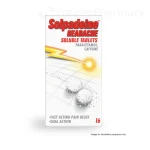
Solpadeine Headache Soluble Tablets (16 pack) are effervescent soluble tablets containing paracetamol 500mg and caffeine 65mg, licensed in the UK for the fast-acting relief of headache, migraine and other mild to moderate pain.
Codeine-free.
Supplied in the UK by Courier Pharmacy with pharmacist-led advice, GPhC-registered oversight, and discreet home delivery.
Solpadeine Headache Soluble Tablets are effervescent soluble tablets containing paracetamol 500mg and caffeine 65mg per tablet. The soluble format dissolves in a glass of water, which speeds up absorption compared with a swallowed tablet.
Easier to swallow
This make it for anyone who struggles to swallow standard tablets. The caffeine dose (65mg per tablet) is higher than in Solpadeine Plus or Max (which contain 30mg). This gives it a more pronounced caffeine-augmented paracetamol effect.
Codeine free
This product is the codeine-free member of the Solpadeine family. Solpadeine Plus and Solpadeine Max contain codeine and are Pharmacy (P) medicines with three-day continuous-use limits; Solpadeine Headache contains only paracetamol and caffeine, which makes it a General Sales List (GSL) medicine available without a pharmacist consultation.
We supply it from a UK-registered pharmacy where every order is sense-checked by a GPhC-registered pharmacist. Solpadeine Headache is currently marketed by Omega Pharma.
If you’ve found Solpadeine Plus effective but worry about codeine, or if you simply want a faster-acting paracetamol option than tablets you have to swallow, Solpadeine Headache Soluble is worth considering.
Caffeine boost
The caffeine adds a small boost to paracetamol’s analgesic effect and helps counteract the fatigue that often accompanies pain. It isn’t suitable for everyone, particularly anyone on a sodium-restricted diet, anyone sensitive to caffeine, or anyone who’s already taking other paracetamol-containing products.
Key features and specifications:
Active ingredients: paracetamol 500mg + caffeine 65mg per effervescent tablet
Form: white effervescent tablets for dispersion in water
Pack size: 16 tablets
Contains no codeine
Sodium content: approximately 427mg per tablet
Indications: headache, migraine, backache, toothache, rheumatic and muscular pain, period pain, sore throat, fever and aches of colds and flu
Suitable from: adults and adolescents aged 12 and over (different dose by age)
Legal status: General Sales List (GSL) medicine
Manufacturer: Omega Pharma
Supplied by: Courier Pharmacy, UK GPhC-registered
MOJO WISDOM
Take control of your health by understanding your condition and what this medication is doing for you.
READ:
More information about this treatment.
UK-based doctors and pharmacists
Discreet and Confidential
UK-based doctors and pharmacists
Free, Expert Advice
No video link provided.
No video link provided.
UK-based doctors and pharmacists
Free, expert advice
Discrete and confidential
Fast delivery
Giving you trusted clinical advice for over 40 conditions
A UK regulated pharmacy providing safe, effective treatments online since 2014
The familiar pulse behind the temples. A migraine threatening to derail the morning. A cold that’s settled into a fever and a heavy head. Solpadeine Headache Soluble Tablets are a UK paracetamol-and-caffeine combination in a soluble effervescent form, designed for headache and migraine relief that absorbs faster than swallowed tablets.
Unlike Solpadeine Plus and Max, this version contains no codeine, which means it can be sold off-the-shelf and used more flexibly. At Courier Pharmacy, we believe pain relief should suit the person, not the marketing budget. Whether you’re managing recurring headaches, migraine, period pain, or the aches of cold and flu, this page is here to help you decide whether Solpadeine Headache Soluble fits your situation.
Five key takeaways
Solpadeine Headache Soluble Tablets contain paracetamol 500mg and caffeine 65mg per effervescent tablet. They do not contain codeine.
They’re licensed in the UK as a General Sales List (GSL) medicine for headache, migraine, backache, toothache, rheumatic pain, period pain, sore throat, and the fever and aches of colds and flu.
Adults and adolescents aged 16 and over take 2 tablets dissolved in water every 4 to 6 hours, with a maximum of 8 tablets in 24 hours.
Each tablet contains approximately 427mg of sodium, so the maximum daily dose delivers around 3.4g of sodium from the medicine alone, relevant for anyone on a sodium-restricted diet.
Courier Pharmacy supplies Solpadeine Headache Soluble with full pharmacist oversight, personalised guidance, and free fortnightly community clinics in Derby.
For adults and adolescents aged 16 and over, the dose is 2 tablets dissolved in a glass of water every 4 to 6 hours as needed, leaving at least four hours between doses, with a maximum of 8 tablets in 24 hours. For adolescents aged 12 to 15 years, the dose is 1 tablet dissolved in water every 4 to 6 hours, with a maximum of 4 tablets in 24 hours.
Tablets must be fully dissolved in a glass of water before drinking; don’t swallow them whole. Take with or without food, although a small amount of food can be useful if you’re prone to nausea. The soluble format means the actives are typically absorbed faster than from a swallowed tablet, so onset of relief can be slightly quicker.
Solpadeine Headache must not be combined with other paracetamol-containing products because accidental exceedance of the 4g daily paracetamol ceiling can cause severe liver injury. The 16-tablet pack is sized for a few short-term episodes rather than long-term continuous use; if you find yourself needing headache treatment most days, the underlying cause warrants assessment for medication-overuse headache or another condition.
Overview of Solpadeine Headache Soluble Tablets
A UK GSL paracetamol-and-caffeine effervescent painkiller
Codeine-free (unlike Solpadeine Plus and Solpadeine Max)
Soluble format may offer faster absorption than swallowed tablets
Higher caffeine content (65mg) than the codeine-containing Solpadeine products
Available from Courier Pharmacy with pharmacist-led advice and discreet UK delivery
Combination painkillers exist because some pain patterns respond better to two or more mechanisms acting together than to a single ingredient. Solpadeine Headache pairs paracetamol’s well-known central analgesia with caffeine’s documented ability to enhance paracetamol’s effect. Cochrane review evidence suggests caffeine added to a standard analgesic improves pain relief by a small but clinically meaningful margin, particularly for tension-type headache.
The soluble format adds practical value beyond the active ingredients themselves. Dissolved actives bypass the slower disintegration step that solid tablets have to go through in the stomach, which typically reaches peak blood levels earlier. For some people, especially those whose pain comes with nausea or who struggle to swallow tablets when in pain, this is genuinely useful. The dissolved form is also gentler on the stomach lining for some users.
It’s worth being honest about what Solpadeine Headache isn’t. It isn’t a long-term solution for recurrent headaches. Regular use of any painkiller for headache, including paracetamol and caffeine combinations, can paradoxically cause medication-overuse headache: the painkiller you take to treat headaches becomes the cause of more headaches. The pattern is more obvious with codeine and triptans, but it occurs with simple analgesics too. If you find yourself needing Solpadeine Headache more than two or three times a week regularly, the right next step is to talk to a clinician about prevention rather than continuing acute treatment.
Many of our patients arrive after years of cycling through OTC painkillers without a clear plan for what comes next. We don’t subscribe to that framing. Whether you’re managing chronic migraine, tension-type headache, fibromyalgia overlap, MCAS care, or chronic fatigue care that fits your life, the goal is to find a regimen that respects your body’s signals rather than overriding them.
The bigger picture for any persistent headache pattern involves identifying triggers, sleep, hydration, regular meals, screen-time management, and where appropriate, preventive treatment. Combination OTC painkillers are a tool, not the whole toolkit. Our community work in Derby is one way we try to live up to that.
Why choose Courier Pharmacy for Solpadeine Headache Soluble Tablets
We started Courier Pharmacy because too many people were being told their recurring headaches were just stress, with no plan beyond keeping a packet of painkillers in the bag. Personalisation means looking at your headache pattern, your other medicines, your sodium status, and your wider health context, then deciding together whether Solpadeine Headache fits. For frequent headaches, we’ll also flag whether a different approach makes sense.
Guidance carries through after the order goes out. Our GPhC-registered pharmacists are reachable for the smaller questions that often go unasked: am I at risk of medication-overuse headache? Is the sodium load OK with my blood pressure medication? Should I be tracking my headache pattern? Our medical lead, the figure behind much of our clinical thinking, is Dr Ada Jex-Cori, an evidence-led, community-rooted clinician who built her practice on the belief that people with chronic pain conditions deserve to be heard before they’re prescribed.
Trust is the part that has to be earned, not claimed. We’re a UK-regulated pharmacy, we publish our processes, we tell you when something isn’t suitable, and we’d rather lose a sale than place a medicine where it doesn’t belong. Whether you’re navigating chronic migraine, tension-type headache, fibromyalgia support, MCAS care, or chronic fatigue care that fits your life, we’ll meet you where you are.
Buy Solpadeine Headache Soluble Tablets from Courier Pharmacy
Solpadeine Headache Soluble Tablets are a General Sales List (GSL) medicine, meaning they can be sold without a pharmacist consultation in most settings. We still sense-check every order with a GPhC-registered pharmacist, because even familiar over-the-counter products deserve a moment of attention to make sure they suit your situation. Here’s how the process works at Courier Pharmacy:
Add the product to your basket
A UK GPhC-registered pharmacist sense-checks the order
Your order is confirmed
We dispatch and deliver discreetly to your door
If it isn’t suitable for you, we’ll explain why and suggest the next best option. Sometimes that’s a different painkiller, sometimes a less-sodium form (such as Solpadeine Headache Tablets, which are not effervescent), sometimes a referral if your headache pattern suggests something that needs assessment. We also run free fortnightly drop-in clinics and talks at Insomnia, Derby, 12 to 1pm. No appointment, no cost, no obligation.
Active ingredients in Solpadeine Headache Soluble tablets
Paracetamol 500mg is a familiar analgesic and antipyretic, working centrally on pain perception and the brain's temperature regulation. The exact mechanism remains debated but likely involves COX inhibition in the central nervous system and effects on the endocannabinoid and serotonin systems. It's well-tolerated at standard doses but causes severe liver injury in overdose, which is why combining Solpadeine Headache with other paracetamol-containing products is dangerous.
Caffeine 65mg is a mild stimulant that boosts paracetamol's analgesic effect, helps combat the fatigue that often accompanies pain, and has a modest analgesic contribution of its own. The 65mg per tablet is roughly equivalent to two-thirds of a cup of filter coffee. At maximum daily dose (8 tablets), that's 520mg of caffeine, which is significant and approaches the lower-end European Food Safety Authority guidance maximum of 400mg for adults. Other excipients include sodium bicarbonate (which drives the effervescent action), sorbitol, saccharin sodium, citric acid and sodium carbonate.
What are Solpadeine Headache Soluble tablets used for?
Solpadeine Headache Soluble Tablets are licensed in the UK for the fast-acting relief of headache, migraine, backache, toothache, rheumatic pain, dysmenorrhoea (period pain), sore throat, and the fever, aches and pains of colds and flu. The soluble format and the caffeine boost make them particularly well-suited to headache and migraine, where speed of onset and the combination effect can both make a useful difference.
Solpadeine Headache is not licensed for daily long-term pain management. Regular use of painkillers for headache eventually causes more headaches in many people (medication-overuse headache), and the sodium load from continuous use of the soluble form is significant. Use it for the occasional episode rather than as a daily preventive.
A note on chronic illness contexts. People with chronic migraine, fibromyalgia, CFS/ME or MCAS sometimes look for fast-acting combination painkillers when standard options aren't enough. Solpadeine Headache Soluble can have a role in acute episode management for some, but it's not a long-term answer. The caffeine can be problematic in MCAS or in anyone with caffeine sensitivities, and the sodium load matters for anyone managing blood pressure or heart failure. We'll explore your specific pattern during the consultation.
How do Solpadeine Headache Soluble tablets work?
Pain perception is a complex experience involving signalling at the site of damage, transmission through the spinal cord and brainstem, and processing in higher brain centres. Different painkillers target different points along this pathway, and combination products like Solpadeine Headache aim to act on multiple points at once.
Paracetamol works centrally. Its precise mechanism is still being unpicked, but it likely inhibits central COX enzymes and affects descending pain pathways. The result is reduced pain perception without significant peripheral anti-inflammatory effect. Onset is typically within 30 minutes for soluble forms, peak effect at 60 to 90 minutes.
Caffeine has been shown in trials to enhance paracetamol's analgesic effect by roughly 5 to 10%, which can translate to clinically meaningful relief at the margins. The mechanism is partly through blockade of adenosine receptors (which dampens pain signalling) and partly through improved absorption and central nervous system activity. Caffeine also reduces the fatigue that often accompanies pain, which can be a useful side benefit. For migraine specifically, caffeine has a documented role in acute treatment because it constricts cerebral blood vessels mildly and improves the absorption of co-administered analgesics.
The soluble format matters here. By dissolving the actives in water before swallowing, you bypass the slower disintegration step that a solid tablet has to go through in the stomach. The result is typically faster absorption and a slightly earlier onset of relief, which can be especially useful when you want pain to ease quickly. The dissolved form is also gentler on the stomach lining for many people.
After absorption, paracetamol and caffeine reach peak blood levels within 30 to 90 minutes. The combined effect typically lasts four to six hours per dose. Paracetamol is metabolised in the liver to non-toxic metabolites in normal dosing (a minor pathway produces a toxic metabolite that becomes important only in overdose). Caffeine has a half-life of around 4 to 6 hours in most adults, which is why the caffeine in an evening dose can affect sleep.
How to use Solpadeine Headache Soluble tablets
Drop the tablets into a glass containing roughly 150ml of water and allow them to fully dissolve before drinking. Don't swallow tablets whole. Drink the dissolved solution within a few minutes of it being ready. Take with or without food; a small amount of food can help if you're prone to nausea, but it isn't essential.
Take Solpadeine Headache at the earliest point that pain is becoming an issue rather than waiting for it to peak. Painkillers generally work better when started earlier in a pain episode, and this is particularly true for migraine. Stay well hydrated, since dehydration is a common headache trigger and the soluble format already provides some additional fluid.
Practical tips from our pharmacists: avoid Solpadeine Headache close to bedtime because caffeine can affect sleep; don't combine with energy drinks, multiple coffees or other caffeinated products because the caffeine adds up; stop Solpadeine Headache as soon as your pain has settled rather than continuing 'just in case'; and keep a pain diary if you find yourself reaching for it more than a couple of times a week, so you can spot patterns and have an evidence-based conversation with a clinician about prevention. People on low-sodium diets should mention this during the consultation, since each tablet contains around 427mg of sodium.
Warnings and precautions for Solpadeine Headache Soluble tablets
Solpadeine Headache Soluble Tablets are not suitable for everyone. They must not be used by anyone allergic to paracetamol or caffeine; children under 12 years; anyone with severe liver impairment; or in pregnancy and breastfeeding without medical advice (paracetamol alone is generally preferred in pregnancy).
Solpadeine Headache must not be combined with other medicines containing paracetamol because of the risk of liver injury from inadvertent overdose. That includes co-codamol, Anadin, Lemsip, Beechams, Solpadeine Plus and Max, Migraleve, Veganin, Sudafed combinations, Ultramol and many other cold and flu preparations. Check labels carefully and tell your prescriber and us about everything you take.
Each tablet contains around 427mg of sodium, which is meaningful if you are on a sodium-restricted diet for hypertension, heart failure, or kidney disease. Two tablets four times daily delivers approximately 3.4g of sodium per day from the medicine alone, exceeding the WHO recommended daily intake of 2g for an adult. The maximum daily dose alone exceeds the WHO limit by 70%, before accounting for sodium from food. Discuss with us if you're sodium-restricted.
Caffeine sensitivity warrants caution. The 65mg per tablet adds up at higher doses; 8 tablets in 24 hours provides 520mg of caffeine, which is significant. People with anxiety, atrial fibrillation, palpitations, or other conditions affected by stimulants may find Solpadeine Headache uncomfortable. Avoid combining with strong coffee, energy drinks, or other caffeinated products. The caffeine can also affect sleep if doses are taken late in the day.
Medication-overuse headache is a recognised risk with regular use of any acute headache treatment. If you find yourself using Solpadeine Headache more than 10 days per month, this is the threshold above which medication-overuse headache becomes likely, and the right next step is a clinical conversation about prevention rather than continuing acute treatment.
Side effects of Solpadeine Headache Soluble tablets
Most people who use Solpadeine Headache short-term experience no problems. When side effects do occur, the most common are mild nausea, occasional dizziness, and caffeine-related effects like jitteriness, palpitations, or sleep disturbance if doses are taken late in the day.
Less common effects include skin rash, abdominal pain, anxiety, restlessness, and worsening of pre-existing conditions like reflux disease. People who don't usually consume caffeine may notice these effects more strongly. Some people experience headache as a paradoxical side effect, often as part of medication-overuse headache after regular use.
Rare but serious effects include allergic reactions ranging from urticaria to anaphylaxis, hepatotoxicity from paracetamol (almost always in overdose), and very rare cases of serious skin reactions including Stevens-Johnson syndrome and toxic epidermal necrolysis. Paracetamol overdose can cause severe liver injury that may not be apparent for hours; the threshold for toxicity can be lower in people who drink alcohol regularly, are malnourished, or are taking certain enzyme-inducing medications.
If something feels wrong, trust that signal. Stop Solpadeine Headache and seek urgent medical attention if you experience widespread rash, facial swelling, breathing difficulty, severe abdominal pain, dark urine, jaundice, or any signs of paracetamol overdose. Paracetamol overdose can be life-threatening even when symptoms initially seem mild.
Suspected side effects can and should be reported to the MHRA via the Yellow Card scheme at yellowcard.mhra.gov.uk. Reporting helps build the safety picture for everyone.
Drug interactions with Solpadeine Headache Soluble tablets
Solpadeine Headache interacts with several common medicines. Most importantly, never combine Solpadeine Headache with other paracetamol-containing products. That risks accidental paracetamol overdose, which can cause severe liver injury. Read labels on cold-and-flu products, co-codamol, Migraleve, Solpadeine Plus and Max, Veganin, Ultramol and other combination painkillers carefully.
Anticoagulants like warfarin can have unpredictable interactions with paracetamol at higher doses, with INR sometimes affected. Occasional use is usually fine, but regular daily dosing alongside warfarin warrants more frequent INR monitoring. Some enzyme-inducing medicines (carbamazepine, phenytoin, rifampicin, St John's Wort) can theoretically increase paracetamol toxicity by promoting the toxic metabolic pathway.
Caffeine interacts with several medicines: theophylline (used for asthma), some quinolone antibiotics (ciprofloxacin), and some thyroid medicines. Combining Solpadeine Headache with strong coffee, energy drinks, or other caffeinated products can increase jitteriness, palpitations and sleep disruption. Lithium levels can also be affected by caffeine.
Metoclopramide and domperidone (used for nausea) speed up gastric emptying, which can slightly accelerate paracetamol absorption. This isn't usually clinically problematic but is worth mentioning if you're prescribed these together. Colestyramine can reduce paracetamol absorption if taken at the same time; separate doses by at least an hour.
Alcohol significantly increases the risk of paracetamol-related liver injury, particularly in regular drinkers. The safe upper limit of paracetamol is reduced for people who drink alcohol regularly. Avoid alcohol while taking Solpadeine Headache, and be cautious about exceeding 14 units of alcohol per week if you use paracetamol regularly.
Frequently asked questions about Solpadeine Headache Soluble tablets
What are Solpadeine Headache Soluble Tablets used for?
Solpadeine Headache is licensed for the fast-acting relief of headache, migraine, backache, toothache, rheumatic and muscular pain, period pain, sore throat, and the fever and aches of colds and flu. The combination of paracetamol and caffeine in a soluble format makes them particularly suited to headache and migraine.
Do Solpadeine Headache Soluble Tablets contain codeine?
No. This is the codeine-free Solpadeine product. Solpadeine Plus and Solpadeine Max both contain codeine and are Pharmacy (P) medicines with three-day continuous-use limits. Solpadeine Headache contains only paracetamol and caffeine and is a GSL medicine.
How quickly do Solpadeine Headache Soluble Tablets work?
Most people feel pain relief beginning within 20 to 40 minutes of taking the dissolved tablets. The soluble format reaches peak blood levels slightly faster than solid tablets, typically at 30 to 60 minutes. The combined effect lasts roughly four to six hours per dose.
Can I take Solpadeine Headache Soluble Tablets with ibuprofen?
Yes, ibuprofen works on a different pathway and can be taken alongside Solpadeine Headache safely. Many people find the combination more effective for stubborn headaches than either alone. Stick to standard ibuprofen dosing (200-400mg up to three times daily with food) and mention everything you take during your consultation.
Can I take Solpadeine Headache Soluble Tablets with other paracetamol products?
No, never combine Solpadeine Headache with other paracetamol-containing products. Solpadeine Headache already contains 500mg of paracetamol per tablet, and accidentally exceeding 4g of paracetamol in 24 hours can cause severe liver injury. Read labels on cold-and-flu products, co-codamol, Migraleve, other Solpadeine variants and similar very carefully.
Why do Solpadeine Headache Soluble Tablets contain so much sodium?
The effervescent action that makes the tablets dissolve in water relies on sodium bicarbonate. That delivers approximately 427mg of sodium per tablet. At maximum daily dose (8 tablets) that's around 3.4g of sodium, which exceeds the WHO recommended maximum of 2g for an adult. If sodium intake is a concern, a non-effervescent paracetamol-caffeine tablet (Solpadeine Headache Tablets or Hedex Extra) is a lower-sodium alternative.
How are Solpadeine Headache Soluble Tablets different from regular paracetamol?
Regular paracetamol contains only paracetamol. Solpadeine Headache adds caffeine (65mg per tablet), which boosts paracetamol's analgesic effect by a small but clinically meaningful margin. The soluble format also speeds up absorption compared to swallowed paracetamol tablets. The trade-offs are higher caffeine intake and significant sodium content.
Will the caffeine in Solpadeine Headache Soluble Tablets keep me awake?
It can. Each tablet contains 65mg of caffeine, roughly two-thirds of a cup of filter coffee. At maximum daily dose (8 tablets), that's 520mg of caffeine, similar to four to five coffees. Avoid Solpadeine Headache close to bedtime if you're caffeine-sensitive, and consider a non-caffeine alternative if sleep is being affected.
Can I take Solpadeine Headache Soluble Tablets for period pain?
Yes, period pain is a licensed indication. However, for period pain specifically, ibuprofen is often more effective than paracetamol because it directly blocks the prostaglandins that drive cramping. Many people get the best result by combining ibuprofen with a paracetamol product, which Solpadeine Headache provides.
How long can I take Solpadeine Headache Soluble Tablets for?
Solpadeine Headache is intended for short-term use during pain episodes. The 16-tablet pack is sized for several short courses. Using painkillers for headache more than 10 days a month is the threshold above which medication-overuse headache becomes likely. If you find yourself using it that frequently, see a clinician about the underlying cause.
Can I drink alcohol with Solpadeine Headache Soluble Tablets?
Avoid alcohol while taking Solpadeine Headache. Alcohol significantly increases the risk of paracetamol-related liver injury, particularly in regular drinkers. If you've had alcohol earlier in the day and are now in pain, occasional standard dosing is usually fine, but heavy drinkers should use paracetamol cautiously and discuss with a clinician.
Can I drive while taking Solpadeine Headache Soluble Tablets?
Yes, for almost everyone. Neither paracetamol nor caffeine impair driving at standard doses. The caffeine might in fact reduce the fatigue that contributes to drowsy driving. The DVLA does not list paracetamol or caffeine as notifiable for driving.
Are Solpadeine Headache Soluble Tablets safe in pregnancy?
Paracetamol alone is generally considered safe in pregnancy when used at standard doses for the shortest time needed. However, the caffeine content in Solpadeine Headache means it isn't the ideal first choice in pregnancy. Pregnant people are advised to limit caffeine to under 200mg per day, and 2 tablets contains 130mg of caffeine. Plain paracetamol is usually preferred. Speak to us during your consultation if you're pregnant.
Can children take Solpadeine Headache Soluble Tablets?
Solpadeine Headache is suitable for adolescents aged 12 and over at an age-appropriate dose. Children aged 12-15 take 1 tablet every 4-6 hours, maximum 4 in 24 hours. Children under 12 must not take Solpadeine Headache because of the caffeine content. Paediatric paracetamol suspensions are available for younger children.
What is medication-overuse headache?
Medication-overuse headache is a paradox: using painkillers regularly for headache eventually causes more headaches. Caffeine-containing combination products are particularly likely to cause this if used frequently. The threshold is using acute headache treatment more than 10 days per month. If this describes you, see a clinician about prevention rather than continuing acute treatment.
Can people with MCAS take Solpadeine Headache Soluble Tablets?
Some people with MCAS tolerate Solpadeine Headache well; others react to paracetamol, caffeine, or excipients. We always review the full ingredient list during your consultation if you have known mast cell reactivity, and where appropriate we can discuss whether a different formulation suits you better.
Will Solpadeine Headache Soluble Tablets interact with my antidepressants?
Most modern antidepressants (SSRIs, SNRIs) have no significant interaction with paracetamol or caffeine at standard doses. Tricyclic antidepressants can have caffeine effects compounded, with possible jitteriness or palpitations. Tell us about every antidepressant during your consultation so we can give you specific advice.
How are Solpadeine Headache Soluble Tablets stored?
Store below 25°C, in the original packaging, away from direct sunlight and moisture. The effervescent tablets are particularly sensitive to humidity, so keep the foil intact until just before use. Keep out of sight and reach of children. Return any unused tablets to a pharmacy for safe disposal rather than household waste.
What happens if I take too much Solpadeine Headache Soluble Tablets?
Seek immediate medical advice, even if you feel okay. Paracetamol overdose can cause severe liver damage that may not be apparent for hours. Caffeine overdose can cause agitation, palpitations, vomiting and seizures. Take the packaging with you to the hospital or call 999. Paracetamol overdose is treatable if caught early, so don't wait.
How do I order Solpadeine Headache Soluble Tablets from Courier Pharmacy?
Add the product to your basket on our site, complete the short questionnaire so a UK GPhC-registered pharmacist can confirm it's suitable, and we'll dispatch your order discreetly to your door. If it isn't suitable, we'll tell you why. You can also drop into our free fortnightly clinic at Insomnia, Derby, to ask in person.
Disclaimer: This article is for general information only and isn’t a substitute for personal medical advice, diagnosis, or treatment. Always check with a GP, pharmacist, or specialist before starting a new supplement if you have a medical condition or take regular medicines.
More than a prescription: our community
Healthcare shouldn't only happen when you're paying for it. Every fortnight we run free drop-in talks and clinics at Insomnia, Derby, from 12pm to 1pm. Bring a question, bring a friend, bring a stack of bewildering letters from another clinic; we'll sit with you. We cover migraine, chronic pain, hair loss, men's health, MCAS, fibromyalgia, low-dose naltrexone, and whatever else people bring through the door. No appointment. No cost. No pressure.
How this content was created
Written by the Courier Pharmacy editorial team and reviewed by a GPhC-registered pharmacist. Grounded in the latest NHS, NICE, BNF and EMC guidance, peer-reviewed studies, and the real questions patients bring to our drop-in clinics in Derby.
Joint Formulary Committee (2026) British National Formulary: Paracetamol. London: BMJ Group and Pharmaceutical Press. Available at: https://bnf.nice.org.uk/drugs/paracetamol/
National Institute for Health and Care Excellence (2021) Headaches in over 12s: diagnosis and management. NICE Guideline CG150. London: NICE. Available at: https://www.nice.org.uk/guidance/cg150
National Institute for Health and Care Excellence (2023) Clinical Knowledge Summaries: Migraine. London: NICE. Available at: https://cks.nice.org.uk/topics/migraine/