

Low-Dose Naltrexone (LDN) may help reduce the pain and fatigue of fibromyalgia by calming inflammation in your nervous system. Living with the constant, widespread pain of fibromyalgia can feel like an uphill battle. If you’ve been searching for relief, you’ve probably heard about Low-Dose Naltrexone (LDN). It’s a treatment that creates a lot of buzz in patient forums, but finding clear, reliable information can be tough. We’re here to cut through the noise. This guide explains what LDN is, how it might work for fibromyalgia, and the practical steps for exploring it as a treatment option in the UK. We’ll look at the science, real-life examples, and what to expect if you decide to try it.
Table of contents
- Five key takeaways
- What is LDN and how might it help fibromyalgia?
- LDN for fibromyalgia at a glance
- How does LDN tackle fibromyalgia pain at its source?
- It boosts your body’s own painkillers
- What does the research say about LDN for fibromyalgia?
- What the research shows
- Clinical Trial Snapshot: LDN vs Placebo for Fibromyalgia
- Could LDN be right for you?
- How to start LDN safely in the UK
- Critical safety information you must know
- Summary
- FAQs
- References:
-
Product on sale
 Nutrigen genetic testOriginal price was: £499.99.£399.99Current price is: £399.99.
Five key takeaways
- What is LDN? LDN is a very small dose of the drug naltrexone, used ‘off-label’ to help manage chronic conditions like fibromyalgia.
- How does it work? It is thought to reduce nerve inflammation and boost your body’s natural painkillers (endorphins).
- Is it for me? It doesn’t work for everyone, but a significant number of patients report life-changing reductions in pain and fatigue.
- How do I get it in the UK? You need a private prescription from a doctor with specialist experience, as it’s not a standard NHS treatment.
- What’s the #1 safety rule? You must stop all opioid painkillers (like codeine or tramadol) before starting LDN to avoid severe withdrawal.
What is LDN and how might it help fibromyalgia?
Low-Dose Naltrexone is a very small dose of a medication called naltrexone. The full-strength version helps people with addiction. But at a tiny fraction of that dose—typically between 0.5mg and 4.5mg—it works in a completely different way.
Instead of just masking pain, researchers believe LDN may target an underlying cause of fibromyalgia: neuroinflammation. Think of it as calming down the overactive immune cells in your brain that are amplifying pain signals. It’s less about blocking pain and more about turning down the volume on the system creating it.

We understand just how hard it is to live with an invisible illness. Let’s walk through what LDN is, the science behind it, and what it takes to explore it as a treatment option in the UK.
What is LDN for fibromyalgia? LDN is a treatment where a tiny dose of the drug naltrexone is used ‘off-label’ to reduce fibromyalgia symptoms like widespread pain, fatigue, and ‘fibro fog’.

LDN for fibromyalgia at a glance
This table gives a quick overview of using LDN for fibromyalgia symptoms.
| Aspect | Summary |
| Primary Goal | To reduce widespread pain, fatigue, and cognitive issues (“fibro fog”) by modulating the immune system and central nervous system. |
| Mechanism | Believed to reduce neuroinflammation and increase the body’s production of endorphins, which are natural pain-relieving chemicals. |
| Status in the UK | An “off-label” treatment for fibromyalgia, meaning it is not officially licensed for this condition. It is prescribed privately by doctors who have specialist experience with LDN. |
| Dosing Approach | Treatment follows a “start low, go slow” principle. Doses begin as low as 0.5mg and are gradually increased over weeks or months to find the optimal effective dose while minimising side effects. |
| Key Precaution | Must not be taken with opioid-based painkillers (e.g., codeine, tramadol, morphine). A washout period is required before starting LDN to avoid adverse reactions. |
| Potential Benefits | Many patients report significant reductions in pain, improved sleep quality, less fatigue, and clearer thinking. However, it is not a cure, and results vary from person to person. |
This table provides a high-level summary, but understanding the details is key to deciding if LDN is right for you.
How does LDN tackle fibromyalgia pain at its source?
To understand how Low-Dose Naltrexone (LDN) might help, you first need to forget about its high-dose counterpart. The full-strength version (50mg or more) treats addiction by completely blocking opioid receptors. LDN, however, uses a much subtler, completely different approach.
At a tiny dose, LDN gently re-regulates the very systems that have gone haywire in fibromyalgia. It’s not a traditional painkiller that simply masks the pain. Instead, researchers believe it performs two critical jobs: calming an overactive immune response in your nervous system and encouraging your body to produce more of its own natural painkillers.
Let’s dive into what that actually looks like.
It turns down the volume on brain inflammation
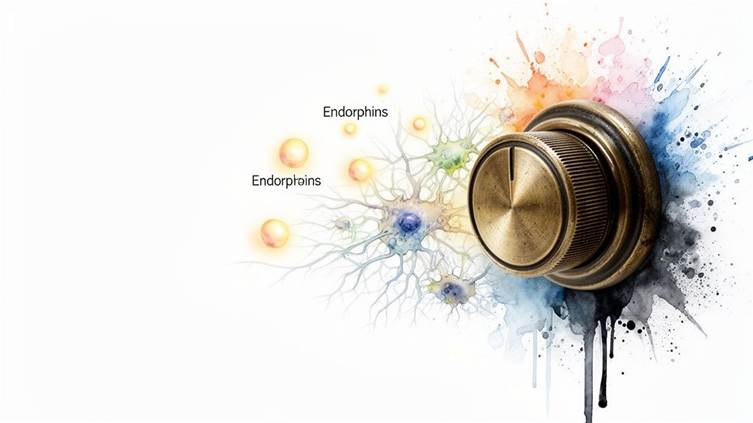
One of the hallmarks of fibromyalgia is a process called central sensitisation. Imagine the volume knob for your entire nervous system is jammed at maximum. Normal sensations, like the touch of clothing, are amplified by your brain until they feel painful. A major driver behind this hypersensitivity is neuroinflammation.

Deep within your central nervous system, you have specialised immune cells called glial cells. Their job is to protect your nerve cells. But in chronic conditions like fibromyalgia, these glial cells can become overactive, constantly pumping out inflammatory signals that keep your nervous system on high alert.
How it Works: Low-Dose Naltrexone is thought to work by soothing these overactive immune cells (glial cells) in the central nervous system. This helps to reduce the neuroinflammation that makes pain signals feel so much worse in fibromyalgia.
LDN seems to gently interact with specific receptors on these glial cells (known as Toll-like receptor 4), essentially telling them to stand down. This action helps dial back the inflammatory static, quieting the system that was amplifying your pain. To learn more about this process, you can read our full guide on how LDN works.
Pharmacist’s tip: The anti-inflammatory effect of LDN isn’t like taking an ibuprofen; it won’t work in an hour. It functions by gradually re-regulating your system, so it’s vital to be patient. Give the medication several weeks or even months to see how your body responds.
It boosts your body’s own painkillers
The second part of LDN’s clever mechanism is the “endorphin rebound effect.” Endorphins are your body’s own powerful, natural painkillers. They work by latching onto opioid receptors to ease pain and lift your mood.
When you take a very small dose of LDN at bedtime, it briefly blocks some of these opioid receptors for a few hours. Your body senses this temporary blockade and thinks, “We need more endorphins to get the job done!” In response, it not only ramps up endorphin production but also increases the sensitivity of your receptors. After a few hours, the LDN is gone, but you’re left with an upgraded pain-relief system powered by your own body.
- The Blockade: LDN temporarily occupies some opioid receptors for a few hours overnight.
- The Rebound: Your body compensates by producing more endorphins and making receptors more sensitive.
- The Result: You are left with higher levels of natural pain relief after the LDN wears off.
This daily cycle is thought to gradually raise your baseline endorphin levels, leading to better pain control and an improved sense of wellbeing over time. Understanding these two actions is key to seeing why LDN is such a promising approach for fibromyalgia.
What does the research say about LDN for fibromyalgia?
We’ve covered the theory, but the real question is: what does the science say? When you’re considering any off-label treatment like LDN, it’s essential to look at the research with a clear eye. What have clinical trials actually found?
The evidence for LDN is often described as promising but still developing. While initial studies are encouraging, we don’t yet have the huge, definitive trials that would make it a standard NHS treatment. It’s a field of active research, so our understanding is improving all the time. Let’s break down what the findings mean for someone living with fibromyalgia.
What the research shows
Several small-scale studies and reviews have looked at LDN’s effect on fibromyalgia symptoms. A consistent theme emerges: LDN appears to reduce pain for a good number of patients, but it’s certainly not a silver bullet that works for everyone.
A key 2024 meta-analysis, which combined data from four trials involving 222 fibromyalgia patients, gives us some of the clearest insights [1]. The analysis found that patients taking LDN saw a significant drop in their pain scores compared to those taking a placebo. It also showed that LDN helped increase the pressure pain threshold—a clinical measure of how much pressure you can tolerate before it becomes painful.
In a nutshell: Research shows that LDN can significantly lower pain scores in some fibromyalgia patients compared to a placebo. However, it may not improve all symptoms, particularly overall daily function.
Understanding the limitations
It’s crucial to understand why, despite these positive signs, the evidence for LDN is still officially considered ‘low-grade’ by researchers. This doesn’t mean the findings are wrong; it simply means the studies have some built-in limitations.
- Small Sample Sizes: Many LDN studies have only included a small number of participants. This makes it difficult to say with certainty that the results would apply to everyone with fibromyalgia.
- Variations in Study Design: Different trials use different doses and ways of measuring outcomes. This inconsistency makes it tricky to compare their results directly.
- Need for Long-Term Data: Most studies only track patients for a few months. We need more research that follows people for years to understand LDN’s effectiveness and safety over the long haul.
This is why many UK medical bodies remain cautious. Before they can confidently recommend LDN as a standard treatment, they need to see more robust, large-scale evidence. Our comprehensive guide explores the wider benefits of Low-Dose Naltrexone in the UK that patients hope to achieve.
Clinical Trial Snapshot: LDN vs Placebo for Fibromyalgia
To help you visualise the evidence, the table below summarises key findings from the 2024 meta-analysis [1]. It shows where LDN seems to have the biggest impact.
| Outcome Measured | LDN Group Result | Placebo Group Result | What This Means for Patients |
| Pain Score Reduction | Statistically significant improvement | No significant change | LDN has a measurable effect on reducing the intensity of pain for some individuals. |
| Pressure Pain Threshold | Significant increase in tolerance | Minimal change | Your body may become less sensitive to painful stimuli, meaning it takes more pressure to cause pain. |
| Fibromyalgia Impact (FIQ) | No significant difference | No significant difference | LDN may not improve overall daily function, work ability, or psychological distress on its own. |
So, where does that leave us? The science shows that LDN for fibromyalgia holds genuine promise, especially for managing pain. But it’s vital to have realistic expectations. The evidence is still growing, and LDN is best seen as one potential tool in a much broader toolkit for managing this complex condition.
Could LDN be right for you?
The science on LDN for fibromyalgia paints a promising but complicated picture. Clinical trials report on averages, but you’re an individual. The effects of LDN can be incredibly personal. A dose that changes one person’s life might barely register for someone else.
To make an informed decision, it helps to understand this from the get-go and set realistic expectations.
Pharmacist’s tip: When starting a new treatment for fibromyalgia, keep a simple symptom diary. Each day, jot down a score from 1 to 10 for your pain, fatigue, sleep quality, and mood. This helps you and your doctor spot subtle but important patterns of improvement you might otherwise miss.
Is it worth a try for you?
So, knowing that LDN doesn’t work for everyone, is it worth a shot? This is a personal decision to make with a doctor who understands the treatment. You’ll need to weigh the potential for real improvement against the generally mild side effects and the cost of a private prescription. You can check out our guide on the side effects of Low-Dose Naltrexone to get a clearer picture.
The evidence suggests that while it’s no miracle cure, LDN offers a genuine chance of significant relief for a meaningful number of people. For many, the possibility of being a ‘high responder’ makes it a chance worth taking, especially when other treatments haven’t delivered.

How to start LDN safely in the UK
Thinking about trying LDN for fibromyalgia and want to know where to begin? It’s different from getting a standard NHS prescription because its use for fibromyalgia is “off-label.” This means it requires a private prescription from a doctor with real-world experience.
Your first step will be a consultation with a private GP or a specialist. They will discuss your medical history, symptoms, and any other medications you’re taking. This is to make sure LDN is a suitable and safe choice for you.
How can I get LDN in the UK? To get LDN for fibromyalgia in the UK, you need a private prescription from a qualified doctor, as it is not typically prescribed on the NHS for this condition.

The ‘start low, go slow’ approach
When it comes to LDN, the key philosophy is to “start low, go slow.” The idea is to let your body get used to the medication gently. This approach minimises potential side effects while you and your doctor find the dose that works for you.
Here’s what that typically looks like:
- Your First Dose: You will likely start on a tiny dose, often just 0.5mg or 1.0mg taken once a day.
- Gradual Increases (Titration): Every week or two, your prescriber will probably advise you to increase the dose bit by bit.
- Finding Your ‘Sweet Spot’: For many people with fibromyalgia, the target dose lands between 3.0mg and 4.5mg per day. But this is completely individual. Patience is your best friend here.
This careful, step-by-step process is the safest and most effective way to begin your LDN treatment.

Critical safety information you must know
Your safety is paramount. Before starting LDN, you must stop taking all opioid-based painkillers. This is a non-negotiable rule.
We’re talking about medications such as:
- Codeine
- Tramadol
- Morphine
- Buprenorphine
- Dihydrocodeine
If you take LDN while opioids are in your system, it will block their effects and can trigger sudden, severe withdrawal symptoms. Your doctor will advise you on the necessary “washout period”—the time you need to wait after your last opioid dose before safely starting LDN.
Pharmacist’s tip: If you find LDN gives you vivid dreams or interferes with your sleep, speak with your prescriber. They may suggest taking your dose in the morning instead of at night. This simple switch often works wonders.
Pharmacist’s tip: LDN must be made by a specialist pharmacy to guarantee the tiny doses are accurate and safe. You can learn more about how a UK compounding pharmacy creates these bespoke medicines. Never try to cut or split a full-strength naltrexone tablet yourself—it’s dangerous and impossible to get an accurate dose.

Summary
In summary, Low-Dose Naltrexone offers a different approach to managing fibromyalgia. Rather than just masking pain, it seems to work by calming inflammation in the nervous system and helping your body produce more of its own natural painkillers. It’s important to be realistic, though. For some, it’s a genuine game-changer, while for others, it might not make much difference. The research is still developing, and its effectiveness is very personal.
Remember that LDN for fibromyalgia is prescribed ‘off-label’ in the UK, so you will need a private doctor with experience in this treatment. Your safety is the top priority. This means you must be completely off any opioid-based medication before starting LDN to avoid severe withdrawal symptoms. Feeling ready to explore this further? Start a symptom diary, talk to a specialist, and see LDN as one part of a bigger wellness plan.
FAQs
How long does it take for LDN to work for fibromyalgia?
It’s different for everyone. LDN isn’t a typical painkiller that provides immediate relief. It works by helping re-regulate your body’s systems, and that takes time. Some people feel small shifts in energy or sleep within a few weeks. For a noticeable impact on pain, you should be prepared to give it three to six months.
Why won’t my NHS GP prescribe LDN for me?
Your NHS GP is unlikely to prescribe LDN for fibromyalgia because it’s an “off-label” use. This means the UK’s medicines regulator has not officially licenced it for treating this specific condition. The NHS typically only funds treatments supported by large clinical trials, and the evidence for LDN hasn’t met that high bar yet.
What are the most common side effects of LDN?
The good news is that most people tolerate LDN well. When side effects do occur, they are usually mild and temporary. The most common one is having very vivid dreams when you first start, but this usually settles down. Other possible effects include mild headaches or a temporary change in your sleep pattern.
Can I take LDN with my other medications?
In most cases, yes. LDN is compatible with most common medications like antidepressants or blood pressure tablets. However, there is one critical exception: opioid-based painkillers. You absolutely must not take LDN with medications like codeine or tramadol, as it can trigger sudden, severe withdrawal.
How much does a private LDN prescription cost in the UK?
Getting LDN privately in the UK involves a few costs. First, there’s the initial consultation with a private specialist, which can be anywhere from £150 to £300. After that, the medication itself is usually quite affordable. A one-month supply of LDN capsules typically costs £45, depending on the pharmacy. However, at Courier Pharmacy, the online consultation is FREE, and one month’s supply of LDN costs £29.99.
Is LDN addictive?
No, not at all. LDN is the opposite of an addictive substance. It is an opioid antagonist, which means it blocks the effects of opioids. Addictive drugs work by activating those same receptors. You cannot become physically or psychologically dependent on LDN.
Can LDN help with ‘fibro fog’?
Yes, for many people it can. We often hear from patients that LDN helps lift the ‘fibro fog’—the frustrating brain fog that affects concentration and memory. It’s thought that by reducing inflammation in the nervous system, LDN can lead to better mental clarity. This is sometimes one of the first improvements people notice.
Disclaimer: This article is for informational purposes only and does not constitute medical advice. Always consult with a qualified healthcare professional for any health concerns or before making any decisions related to your treatment.
References: