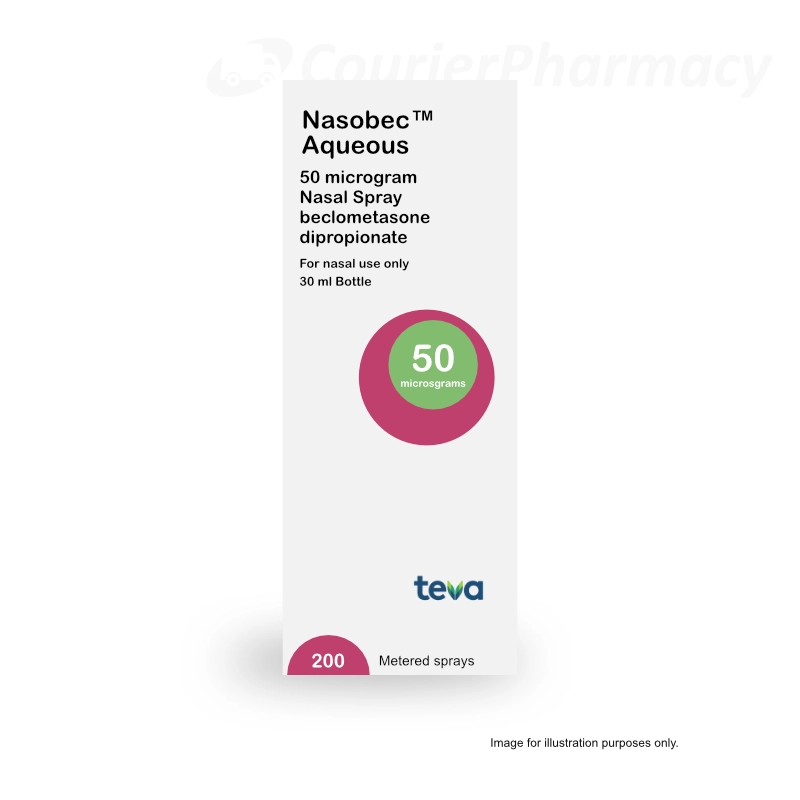
Beclometasone Aqueous Nasal Spray 50 micrograms/dose (200-dose pack) is a UK Prescription-Only Medicine (POM) containing beclometasone dipropionate 50 micrograms per metered spray.
Beclometasone dipropionate has been on the UK market since the early 1980s. Therefore, it is one of the longest-established intranasal corticosteroids in pharmacy. Furthermore, it has an extensive safety track record over four decades of clinical use.
Two Beconase products in UK pharmacy
It helps to understand the two distinct Beconase products on the UK market:
Beconase Hayfever Relief for Adults Nasal Spray: Pharmacy (P) classification, available over the counter through pharmacist consultation. It covers seasonal allergic rhinitis (hayfever) in adults 18 and over only. Pack sizes are commonly 100 doses or 180 doses
Beconase Aqueous Nasal Spray (this product, also available as generic beclometasone aqueous): Prescription-Only Medicine (POM) classification. Notably, it covers broader licensed indications including perennial and seasonal allergic rhinitis (including hayfever) and vasomotor rhinitis. In addition, it is licensed from age 6 with appropriate paediatric dosing. The 200-dose pack is the standard prescription size
Both products contain the same active ingredient at the same concentration. However, the prescription version covers more indications, more ages, and provides a larger pack for longer treatment courses.
Why the prescription version may suit you better
The prescription Beclometasone Aqueous Nasal Spray suits patients who:
Have perennial allergic rhinitis from house dust mite, animal dander, or indoor moulds (the OTC version is hayfever-only)
Have vasomotor (non-allergic) rhinitis (the OTC version doesn’t cover this indication)
Are children aged 6 to 17 (the OTC version is adults only)
Need continuous treatment beyond 3 months (the OTC version is licensed for shorter seasonal use)
Want a larger pack (200 doses lasts substantially longer than the 100 or 180 doses in OTC packs)
Have used Beconase successfully before and want their GP or our prescriber to issue ongoing prescription supply
Where intranasal corticosteroids sit in allergy treatment
Multiple international guidelines position intranasal corticosteroids as the most effective single medicine class for allergic rhinitis. These include the ARIA initiative, EAACI, BSACI, and NICE Clinical Knowledge Summaries.
They are particularly effective for moderate to severe symptoms or where nasal congestion is prominent.
How intranasal corticosteroids compare to oral antihistamines
Beclometasone and other intranasal corticosteroids act on the underlying inflammatory process. In contrast, oral antihistamines block only the histamine pathway downstream.
As a result, intranasal corticosteroids are:
More effective for nasal congestion (where antihistamines often underperform)
Comparable or superior for rhinorrhoea, sneezing, and itching
Effective for ocular symptoms of allergic conjunctivitis (despite being a nasal spray)
Effective for the inflammatory component of the late-phase allergic response, which antihistamines don’t address
The stepped approach to allergic rhinitis
Modern UK practice approaches allergic rhinitis in stages:
Mild intermittent symptoms: trigger avoidance plus oral antihistamine as needed (loratadine, cetirizine, fexofenadine over the counter; bilastine, desloratadine, levocetirizine, rupatadine on prescription)
Severe or refractory symptoms: combination intranasal spray (Dymista: fluticasone propionate + azelastine), or addition of leukotriene receptor antagonist (montelukast, with appropriate caution per MHRA 2019 and 2024 neuropsychiatric warnings)
Allergen-specific immunotherapy: Grazax for grass pollen, Acarizax for house dust mite, Itulazax for tree pollen. This is for severe disease driven by specific allergens
How beclometasone compares to other intranasal corticosteroids
Clinical effects are broadly similar across intranasal corticosteroids at equivalent doses. However, the differences matter for individual patients:
Beclometasone dipropionate (Beconase Aqueous, generic): twice-daily dosing, oldest established option, longest clinical track record
Budesonide (Benacort, generic): twice-daily dosing, well-established, preferred INCS in pregnancy where treatment is needed
Triamcinolone acetonide (Nasacort): once-daily dosing, alcohol-free aqueous formulation, available OTC
Fluticasone propionate (Flixonase, generic): once or twice daily, widely used, available OTC
Fluticasone furoate (Avamys): once-daily, prescription only, licensed from age 6
What’s distinctive about Beclometasone Aqueous
Several features distinguish this product from alternatives:
Longest clinical track record: over 40 years of clinical use with extensive evidence base
Established and trusted: many patients have used Beconase successfully in previous seasons
Broad licensed indications: covers seasonal hayfever, perennial allergic rhinitis, and vasomotor rhinitis in one product
Paediatric licensing: appropriate from age 6 with adjusted dosing
Large pack: 200 doses cover longer treatment courses than the OTC alternatives
Cost-effective: generic versions are typically more affordable than newer once-daily INCS options
Who Beclometasone Aqueous suits well
This product suits patients who:
Have perennial allergic rhinitis needing year-round or extended treatment
Need treatment for vasomotor (non-allergic) rhinitis
Are children aged 6 to 17 with allergic rhinitis
Have used beclometasone successfully in the past and want ongoing prescription supply
Prefer the established twice-daily routine to once-daily INCS
Want a large 200-dose pack for extended use
Who might suit alternatives better
Alternative INCS may suit:
Patients preferring once-daily dosing (mometasone, fluticasone furoate, or triamcinolone)
Pregnant women (budesonide has more extensive pregnancy safety data)
Patients with previous benzalkonium chloride or phenylethyl alcohol sensitivity
Patients with severe allergic rhinitis warranting combination therapy (Dymista)
Courier Pharmacy supply
Courier Pharmacy supplies Beclometasone Aqueous Nasal Spray under prescriber and pharmacist supervision. Our prescriber issues the prescription following an online consultation. Alternatively, you can supply your own prescription from your GP.
Key features and specifications
Active ingredient: beclometasone dipropionate 50 micrograms per metered spray
Form: aqueous nasal spray, metered-dose pump
Pack size: 200 actuations per bottle (approximately 25 days at standard starting dose, 50 days at maintenance dose)
Indications: prophylaxis and treatment of perennial and seasonal allergic rhinitis (including hayfever) and vasomotor rhinitis
Beclometasone Aqueous Nasal Spray is a prescription intranasal corticosteroid that treats the inflammation behind hayfever and other allergic rhinitis. The 200-dose pack delivers 50 micrograms of beclometasone dipropionate per spray. Furthermore, it works through your full pollen season with one prescription. It also covers perennial allergic rhinitis caused by house dust mite, animal dander, and indoor moulds, plus non-allergic vasomotor rhinitis.
At Courier Pharmacy, we believe in treatment that fits the person.
That means knowing which Beconase product suits you. The OTC Pharmacy version covers seasonal hayfever in adults. However, the prescription Aqueous version covers more ground. Specifically, it adds perennial rhinitis, vasomotor rhinitis, and paediatric use from age 6.
This page explains what Beclometasone Aqueous Nasal Spray treats. In addition, it covers how to use it correctly, who it suits, and how it compares to other intranasal corticosteroids.
Five key takeaways
Beclometasone Aqueous Nasal Spray is a UK Prescription-Only Medicine (POM) containing beclometasone dipropionate 50 micrograms per spray. Notably, it covers perennial and seasonal allergic rhinitis (including hayfever) plus vasomotor rhinitis, in adults and children from age 6
Intranasal corticosteroids are the most effective single medicine class for allergic rhinitis. Specifically, they outperform oral antihistamines for nasal congestion, the symptom that tablets often miss
Standard adult dose: 100 micrograms (two sprays) in each nostril twice daily, totalling 400 micrograms per day. Once symptoms are controlled, you can reduce to 50 micrograms (one spray) per nostril twice daily for maintenance
The 200-dose pack provides approximately 25 days at the standard starting dose, or around 50 days at maintenance. Therefore, multiple packs typically cover a full hayfever season
Effect builds over days rather than minutes. As a result, you should start 1 to 2 weeks before your expected pollen season and use the spray daily through the season for best results
Why choose Courier Pharmacy for Beclometasone Aqueous Nasal Spray
At Courier Pharmacy, our approach starts with a simple idea. Treatment should fit the person, not force the person to fit the system.
Dr Ada Jex-Cori
Our service is shaped by the philosophy of Dr Ada Jex-Cori, our brand pharmacist.
Dr Ada represents the spirit of the pharmacy: evidence-led, community-rooted, and willing to challenge the one-size-fits-all approach to medicine.
She is named in honour of three pioneering women in science: Ada Lovelace, the mathematician and visionary; Sophia Jex-Blake, the first female doctor in the UK who fought the medical establishment; and Gerty Cori, the biochemist and Nobel Prize winner.
In our fictional world of Ethrewell, Dr Ada fights against pharma’s standardised approach to medicine. In the real world, she represents what we stand for. Her view is straightforward: you are not broken. The system is. And we are here to change that.
Honest framing of where Beclometasone Aqueous fits
For patients with moderate to severe allergic rhinitis, particularly where nasal congestion is significant, intranasal corticosteroid is the next step that genuinely changes outcomes.
Beclometasone Aqueous is one well-established choice within this class. Furthermore, it has the longest clinical track record and extensive evidence base.
For patients with mild intermittent symptoms easily controlled on as-needed loratadine or cetirizine, we won’t push a more involved treatment. The right answer depends on your symptom pattern.
Treatment that fits, not one-size-fits-all
Most online pharmacies deliver the same protocol to everyone. Courier Pharmacy is different.
We think through your situation: what symptoms you have, what you’ve already tried, what you tolerate well, what fits with your wider life.
Beclometasone Aqueous may be the right answer for you. Alternatively, a once-daily INCS like Nasacort or mometasone may suit better for adherence. Furthermore, a combination spray like Dymista may be needed for severe symptoms.
Technique support that actually helps
Most patients are never properly taught how to use intranasal sprays. As a result, most use them in ways that put more medicine on the throat than the nasal lining.
Our pharmacist can talk through correct technique:
Patients with MCAS, CFS, fibromyalgia, or other long-term conditions where allergic symptoms overlap with the broader picture
Older patients with multiple comorbidities and medicines
Coordination with your GP and other care
If you have a GP, allergist, ENT specialist, or other healthcare professional involved in your care, we are happy to coordinate.
Joined-up care across primary care, pharmacy, and specialist services produces better outcomes than fragmented care.
Trust earned, not claimed
We are GPhC-regulated. Furthermore, we ground our content in NHS, NICE, BNF, EMC, BSACI, EAACI, and ARIA guidance.
We will tell you honestly if Beclometasone Aqueous isn’t the right answer for your situation. We’d rather give you the right advice than a quick sale.
How to buy Beclometasone Aqueous Nasal Spray from Courier Pharmacy
Beclometasone Aqueous Nasal Spray is a UK Prescription-Only Medicine (POM). Therefore, our prescriber issues a prescription following an online consultation. Alternatively, you can supply your own prescription from your GP.
How our service works
Add Beclometasone Aqueous Nasal Spray to your basket and complete a quick online consultation. The consultation covers your symptoms, allergic history, what you’ve already tried, current medicines, and relevant medical conditions
Our prescriber reviews your answers to confirm suitability. If the prescriber needs additional information or wants to recommend alternatives, we will get in touch
Once approved, your order is prepared and dispatched discreetly
Free pharmacist support is available before and after your purchase
When alternatives might suit better
If Beclometasone Aqueous isn’t the right product for your situation, we will explain why. Alternatives may include:
Loratadine, cetirizine, or fexofenadine (over the counter) if you haven’t tried these
Bilastine, desloratadine, levocetirizine, or rupatadine (on prescription) for second-line antihistamines
Beconase Hayfever Relief for Adults (OTC) if you only need short seasonal cover
Nasacort triamcinolone, mometasone furoate (Clarinaze OTC), or fluticasone propionate (Flixonase) for once-daily INCS alternatives
Benacort budesonide if you’d prefer budesonide (preferred INCS in pregnancy)
Dymista (fluticasone + azelastine combined intranasal spray) for severe symptoms
Nasal saline rinses (Sterimar, NeilMed) as adjunct or first-step approach
Allergen-specific immunotherapy (Grazax, Acarizax, Itulazax) for severe disease driven by specific allergens
Referral to an allergist, immunologist, or ENT specialist for complex presentations
GP appointment if you have features warranting medical assessment
Our community service
Our free fortnightly drop-in clinics at Insomnia, Derby run every other week from 10am to 12pm.
Healthcare shouldn’t only happen when you’re paying for it. We show up, even when it’s free.
We cover allergies, hay fever, chronic urticaria, asthma, MCAS, CFS, fibromyalgia, anaphylaxis, immunotherapy, hair loss, men’s health, weight management, and whatever else people bring through the door. No appointment needed, no charge, no pressure.
Active ingredients
Each metered spray delivers:
Beclometasone dipropionate 50 micrograms (active ingredient): a synthetic glucocorticoid corticosteroid prodrug. After application to the nasal mucosa, esterase enzymes rapidly convert it to its active metabolite beclometasone-17-monopropionate (B-17-MP). Furthermore, B-17-MP has potent topical anti-inflammatory activity. As a result, it reduces inflammation across all components of the allergic response
Excipients
Excipients include microcrystalline cellulose, sodium carboxymethylcellulose, dextrose, polysorbate 80, purified water, benzalkonium chloride (preservative), and phenylethyl alcohol (preservative).
The formulation is aqueous and well-tolerated by most patients.
Allergy and sensitivity considerations
Several considerations matter:
Benzalkonium chloride sensitivity: a small minority of patients react with persistent nasal irritation. However, alternative INCS options with different preservative systems exist
Phenylethyl alcohol: provides additional preservation, generally well-tolerated
Polysorbate 80: can be derived from corn or maize. Therefore, patients with severe corn allergy should be aware
Vegetarian and vegan suitability: synthesis intermediates of animal origin may be used in beclometasone manufacture. As a result, the product may not suit strict vegetarians or vegans
Generic and branded equivalence
Generic Beclometasone Aqueous Nasal Spray is medically equivalent to the branded Beconase Aqueous Nasal Spray. In other words, the active ingredient, concentration, dose delivery, and clinical effect are the same. However, the generic version is typically more affordable.
The 200-dose pack supplied by Courier Pharmacy provides approximately 25 days of treatment at the standard adult starting dose. Alternatively, it lasts around 50 days at maintenance dose.
Where Beclometasone Aqueous fits in allergic rhinitis treatment
Allergic rhinitis affects around 20 to 25% of UK adults. In addition, it affects a substantial proportion of children.
The main trigger patterns
UK allergic rhinitis triggers fall into seasonal and perennial categories:
Tree pollens (March to May): birch, hazel, alder, oak
Grass pollens (May to August): the most common UK trigger
Weed pollens (July to September): nettle, dock, mugwort, ragweed
Perennial triggers (year-round): house dust mite, animal dander, indoor moulds
Why allergic rhinitis matters
The impact goes well beyond annoying symptoms. Specifically, research has shown:
Impaired concentration: studies show reduced exam performance, work productivity, and reaction time
Reduced exercise tolerance: particularly for outdoor activities during pollen season
Quality of life impact: across summer months in seasonal patients, year-round in perennial patients
Asthma exacerbation: in the substantial subset with the "united airway" pattern of combined upper and lower respiratory allergic disease
Vasomotor rhinitis: a key Beclometasone Aqueous indication
Vasomotor rhinitis is non-allergic rhinitis with symptoms similar to allergic rhinitis. However, it occurs without identifiable IgE-mediated allergic mechanism.
Certain medicines (some antihypertensives, some hormonal contraceptives)
Environmental irritants (dust, smoke, air pollution)
Beclometasone Aqueous covers this indication. In contrast, the OTC Beconase Hayfever Relief does not.
First-line treatment
For mild intermittent symptoms, start with:
Trigger avoidance where practical: pollen forecast monitoring, keeping windows closed, eye protection outdoors, post-outdoor showering
Oral antihistamine as needed: loratadine, cetirizine, or fexofenadine over the counter; bilastine, desloratadine, levocetirizine, or rupatadine on prescription
For around half of patients with mild symptoms, this is sufficient.
Second-line: antihistamine plus intranasal corticosteroid
For moderate to severe symptoms, add:
Regular daily oral antihistamine (not as-needed)
Plus intranasal corticosteroid (Beclometasone Aqueous, Benacort, Nasacort, mometasone, fluticasone)
This is the standard guideline-recommended approach for most patients with significant allergic rhinitis.
Third-line: combination intranasal spray
For severe or refractory symptoms, consider:
Dymista (fluticasone propionate + azelastine combined intranasal spray): faster onset and additive effect for severe symptoms
Fourth-line: allergen-specific immunotherapy
For severe symptoms inadequately controlled by symptomatic treatment:
Sublingual immunotherapy with Grazax (grass pollen), Acarizax (house dust mite), or Itulazax (tree pollen birch group)
Subcutaneous immunotherapy through specialist allergy clinics
Immunotherapy involves 3 years of daily treatment. Furthermore, it can produce sustained benefit lasting years after the course is completed.
How beclometasone dipropionate works
Beclometasone dipropionate is a synthetic glucocorticoid corticosteroid prodrug.
Conversion to active form
Applied to the nasal lining as a spray, beclometasone dipropionate is rapidly hydrolysed by esterase enzymes in the nasal mucosa. As a result, it converts to its highly active metabolite beclometasone-17-monopropionate (B-17-MP).
B-17-MP then produces the therapeutic anti-inflammatory effect.
Receptor-mediated effects
B-17-MP binds to the intracellular glucocorticoid receptor. The activated complex enters the cell nucleus and modulates gene transcription.
Consequently, the net effects are:
Reduced production of pro-inflammatory cytokines (IL-4, IL-5, IL-13, TNF-alpha)
Increased production of anti-inflammatory proteins (lipocortin-1, IL-10)
Reduced expression of adhesion molecules that recruit inflammatory cells
Stabilisation of mast cells with reduced histamine and tryptase release
Reduced eosinophil recruitment, activation, and survival in nasal tissue
Reduced T-helper-2 (Th2) lymphocyte activity
Reduced vascular permeability with less tissue oedema and congestion
Reduced mucus production and improved mucociliary clearance
Why this matters clinically
The breadth of action explains why intranasal corticosteroids work across the full symptom spectrum:
Nasal congestion: reduced through decreased vascular permeability and mucosal oedema
Rhinorrhoea: reduced through decreased mucus production
Sneezing and itching: reduced through mast cell stabilisation
Ocular symptoms: the nasolacrimal duct drains some medicine to the eye area
Late-phase allergic response: the inflammatory component antihistamines don't address
Pharmacokinetics
After intranasal administration, the drug acts primarily locally on the nasal mucosa.
Some of the dose is swallowed and absorbed through the GI tract. However, this fraction undergoes extensive first-pass metabolism in the liver. As a result, systemic exposure of active metabolite remains low.
Consequently, clinically significant systemic corticosteroid effects are rare at standard intranasal doses.
Twice-daily dosing rationale
Beclometasone requires twice-daily dosing to maintain sufficient nasal mucosal tissue levels across the 24-hour period.
In contrast, newer intranasal corticosteroids (mometasone, fluticasone furoate, triamcinolone) support effective once-daily dosing. Therefore, for patients who struggle with twice-daily schedules, a once-daily INCS may suit better.
Why daily regular use matters
The cellular mechanisms of corticosteroid action take hours to days to produce maximum effect. This is fundamentally different from antihistamines, which work within 30 to 60 minutes.
Consequently:
Effect builds over days rather than minutes. Some patients notice benefit within 24 hours, but maximum effect takes 1 to 2 weeks of regular daily use
Starting 1 to 2 weeks before the expected allergen season produces substantially better symptom control
Used regularly through the season, not just when symptoms flare, maintains the anti-inflammatory effect
Stopping and restarting loses the cumulative anti-inflammatory effect
Many patients stop in the first day or two because the spray hasn't worked yet. As a result, they miss the substantial benefit proper sustained use would have provided.
How to use Beclometasone Aqueous Nasal Spray
This summary references the patient information leaflet supplied with the product. For any uncertainty, contact our pharmacist for support.
Adult dosing (18 and over)
Standard starting dose:
100 micrograms (two sprays) in each nostril twice daily, morning and evening
Total daily dose: 400 micrograms (8 sprays per day)
Maintenance dose once symptoms controlled:
50 micrograms (one spray) in each nostril twice daily
Total daily dose: 200 micrograms (4 sprays per day)
Maximum daily dose: 400 micrograms (8 sprays per day).
When to start
For seasonal allergic rhinitis (hayfever), start 1 to 2 weeks before the expected pollen season for your dominant allergen:
Tree pollen sufferers: start in February or early March, ready for the March to May tree pollen season
Grass pollen sufferers (the most common UK pattern): start in mid to late April, ready for May to August
Weed pollen sufferers: start in mid to late June, ready for July to September
For perennial allergic rhinitis, start when symptoms appear or when planned, and continue regularly.
Correct spray technique
Spray technique substantially affects how much medicine reaches the nasal lining. Therefore, getting it right matters.
Follow these steps:
Shake the bottle gently before use
Prime the spray if new or unused for some time. Pump several times into the air until a fine mist appears
Blow your nose gently to clear it
Tilt your head slightly forward, not back. Tilting back makes the spray run down the throat
Insert the nozzle into one nostril and close the other with a finger
Aim the nozzle toward the outer wall of the nostril, not the septum (the cartilage in the middle)
Press the pump firmly while gently breathing in through the nose
Repeat for the second spray in the same nostril if your dose is two sprays per nostril
Repeat for the other nostril
Do not blow your nose immediately after spraying
Wipe and replace the cap
If the spray runs down your throat or out of your nostril, adjust your technique. Most commonly, the head is tilted too far back or the nozzle aimed at the septum.
When to expect results
Some patients notice benefit within 24 hours. Most patients see meaningful improvement within 2 to 3 days. Furthermore, maximum effect typically takes 1 to 2 weeks of regular daily use.
Don't stop in the first few days. The effect builds over time.
How long to use it
For seasonal allergic rhinitis: use through the dominant pollen season, typically 2 to 4 months per year. Continue daily even on lower-pollen days.
For perennial allergic rhinitis: longer-term use is appropriate under prescriber review.
If symptoms have not improved after 14 days of regular use, contact our pharmacist or your GP.
Missing a dose
If you miss a dose, take it as soon as you remember. However, if it's nearly time for the next dose, skip the missed one.
Don't double-dose to catch up.
Stopping treatment
Beclometasone Aqueous can be stopped without a taper. Unlike oral corticosteroids, the very low systemic absorption means no withdrawal effect occurs.
However, symptoms of the underlying allergic rhinitis will return if the medicine was effectively controlling them.
Storage
Store at room temperature, below 25°C, in the original packaging. Do not freeze. Keep out of sight and reach of children.
Warnings and precautions for Beclometasone Aqueous Nasal Spray
When not to use
Beclometasone Aqueous should not be used in:
Patients with known hypersensitivity to beclometasone dipropionate or any excipient (including benzalkonium chloride and phenylethyl alcohol)
Patients with active nasal or sinus infections (treat the infection first)
Patients with recent nasal surgery or significant nasal trauma (delay until healing complete)
Patients with untreated active tuberculosis, untreated fungal or bacterial systemic infections, or untreated significant viral infections
Children under 6 years (not licensed for this age group)
When to seek assessment
Several situations warrant medical assessment before or instead of self-treatment:
Severe nasal symptoms with significant facial pain or pressure (possible sinusitis warranting different treatment)
Persistent or recurrent nosebleeds beyond minor amounts
Nasal polyps confirmed or suspected
Loss of sense of smell persistent for weeks
Persistent unilateral symptoms, particularly with blood-stained discharge
Symptoms not responding to standard allergic rhinitis treatment
Pregnancy: avoid use unless considered essential by the doctor. Furthermore, animal studies have shown that high systemic corticosteroid doses can cause foetal abnormalities.
Intranasal systemic exposure is much lower than in those animal studies. However, for pregnant patients, budesonide has more extensive pregnancy safety data. Therefore, it is generally preferred where intranasal corticosteroid treatment is needed.
Discuss with your prescriber or midwife if you become pregnant during treatment.
Breastfeeding: limited specific data. However, the very low systemic absorption suggests minimal transfer to breast milk.
Older patients
Standard adult dose is appropriate. Furthermore, no specific dose adjustment is needed for age alone.
Patients with eye conditions
Intranasal corticosteroids have very rarely been associated with raised intraocular pressure (glaucoma) and cataract formation with prolonged use.
However, the risk is much lower than with oral or inhaled corticosteroids. As a result, the concern is mostly theoretical at standard nasal doses.
Patients with established glaucoma or family history should mention this to the prescriber. In addition, periodic eye check-ups are sensible for long-term use.
Nasal effects with continued use
Some patients develop nasal effects with prolonged use:
Dry nose or mild crusting: usually mild and self-limiting. Nasal saline rinses can help
Minor nosebleeds: usually small and self-limiting. Check spray technique (aim away from the septum)
Persistent or significant nosebleeds: stop the spray and seek pharmacist or GP advice
Nasal septal perforation: very rare. Presents as new nosebleeds, whistling on breathing, or visible perforation
Asthma considerations
Many patients with allergic rhinitis also have asthma (the "united airway" pattern). Treating allergic rhinitis effectively often improves asthma control. Therefore, continue your asthma medicines as prescribed.
Patients using inhaled beclometasone for asthma (Clenil, Qvar) alongside Beconase nasal spray should mention this. The total beclometasone exposure is worth flagging, although cumulative effect is generally not clinically significant at standard doses.
Paediatric considerations
In children using intranasal corticosteroids long-term, growth should be monitored periodically. However, growth suppression from intranasal corticosteroids at standard doses is rare and generally clinically insignificant.
Furthermore, the benefit of well-controlled allergic rhinitis typically outweighs the theoretical concern in children needing treatment.
Vegetarian, vegan, and allergy considerations
Vegetarians and vegans: synthesis intermediates of animal origin can be used; the product may not be suitable for strict plant-based diets
Corn or maize allergy: polysorbate 80 can be derived from corn
Benzalkonium chloride sensitivity: a small minority of patients have sensitivity; alternative INCS options exist
Systemic corticosteroid effects
At standard intranasal doses, systemic absorption is low. As a result, clinically significant systemic effects are rare.
Theoretical concerns (adrenal suppression, cataract, glaucoma, osteoporosis, growth suppression in children) are essentially confined to high doses, prolonged use over many years, or patients on multiple corticosteroid products simultaneously.
Discuss with the prescriber if you are using multiple corticosteroid products.
Side effects of Beclometasone Aqueous Nasal Spray
Beclometasone Aqueous is generally well-tolerated. Furthermore, most side effects are mild and local rather than systemic.
Common side effects (up to 1 in 10 patients)
Nasal irritation or burning sensation, particularly in the first few days
Sneezing immediately after spraying (usually settles with continued use)
Dry nose or mild crusting
Mild nosebleeds (small amounts; usually technique-related)
Throat irritation from medicine running down the back of the nose
Headache
Unpleasant taste sensation transiently after spraying
Less common side effects
Significant nasal congestion (paradoxically, in a small minority)
Dry mouth
Skin reactions (rash, itching)
Significant nosebleeds requiring spray to be stopped
Dizziness
Eye irritation
Rare but more significant side effects
Severe hypersensitivity reactions including anaphylaxis (very rare)
Nasal septal perforation (rare; usually associated with pre-existing septal damage or poor technique)
Raised intraocular pressure or glaucoma (very rare at standard intranasal doses)
Cataract (very rare; associated with prolonged use over many years)
Significant systemic corticosteroid effects: adrenal suppression, growth suppression in children, osteoporosis (very rare at standard doses)
Significant disturbance of taste or smell
Stop and seek advice if
You develop severe or persistent nosebleeds
You develop new visual symptoms (blurred vision, eye pain, change in vision)
You develop signs of severe allergic reaction
You develop persistent significant nasal pain
You develop a whistling sound on breathing through the nose
Your symptoms are not improving despite 14 days of regular correct use
You develop new persistent loss of smell or taste
Yellow Card reporting
You can report suspected adverse drug reactions to the MHRA via the Yellow Card scheme at yellowcard.mhra.gov.uk. Reporting helps build the safety picture for everyone.
Drug interactions with Beclometasone Aqueous Nasal Spray
Intranasal beclometasone has a low drug interaction profile. The reason: systemic absorption is minimal.
Theoretical interactions worth flagging
Strong CYP3A4 inhibitors: ketoconazole, itraconazole, ritonavir, clarithromycin. These can theoretically increase systemic beclometasone exposure. However, the effect is small at intranasal doses
Other corticosteroid products: combined use of intranasal, inhaled, oral, and topical corticosteroids contributes to cumulative systemic exposure. This is particularly relevant for patients using inhaled beclometasone for asthma (Clenil, Qvar) alongside Beconase nasal spray
Not significant interactions
Antihistamines (oral and intranasal): no interaction. In fact, combining INCS with oral antihistamine is standard practice
Asthma medicines: inhaled bronchodilators, leukotriene receptor antagonists, and inhaled corticosteroids are compatible
Most blood pressure medicines, statins, antidepressants, hormonal contraceptives: no significant interaction
PPIs and H2 antagonists: no significant interaction
Most antibiotics: no significant interaction (with the macrolide CYP3A4 consideration above)
Frequently asked questions about Beclometasone Aqueous Nasal Spray
What is Beclometasone Aqueous Nasal Spray used for?
Beclometasone Aqueous Nasal Spray is licensed in the UK for the prevention and treatment of perennial and seasonal allergic rhinitis (including hayfever) and vasomotor rhinitis. Furthermore, it is licensed for adults and children from age 6.
How is this different from OTC Beconase Hayfever Relief?
Both products contain the same active ingredient at the same concentration. However, the prescription version covers more:
Indications: perennial allergic rhinitis and vasomotor rhinitis (not just hayfever)
Ages: from age 6 (not adults only)
Pack size: 200 doses (versus 100 or 180 in OTC packs)
Duration: appropriate for continuous use beyond 3 months under prescriber review
How is beclometasone different from antihistamines?
Antihistamines block histamine receptors and reduce histamine-mediated symptoms. In contrast, beclometasone acts on the underlying inflammation.
As a result, beclometasone addresses the full spectrum of symptoms including nasal congestion. The two work through different mechanisms and are complementary.
Furthermore, the combination of regular antihistamine plus intranasal corticosteroid is standard practice for moderate to severe allergic rhinitis.
How quickly does Beclometasone Aqueous work?
Some patients notice benefit within 24 hours. Most patients see meaningful improvement within 2 to 3 days. Furthermore, maximum effect typically takes 1 to 2 weeks of regular daily use.
When should I start using it for hayfever?
Start 1 to 2 weeks before the expected pollen season for your dominant allergen. For UK grass pollen sufferers (the most common pattern), this means starting in mid to late April.
Starting late means missing the maximum benefit period.
Can I use Beclometasone Aqueous with my antihistamine?
Yes. In fact, combining a regular daily oral antihistamine with Beclometasone Aqueous is standard practice for moderate to severe allergic rhinitis.
Can I use Beclometasone Aqueous with my asthma inhaler?
Yes. Beclometasone Aqueous is compatible with all standard asthma medicines.
However, patients using inhaled beclometasone for asthma (Clenil, Qvar) alongside the nasal spray should flag this to the prescriber. The total beclometasone exposure is worth being aware of, although cumulative effect is generally not clinically significant at standard doses.
Can I use Beclometasone Aqueous every day for months?
Yes, under prescriber review.
For perennial allergic rhinitis, longer-term use is appropriate. Furthermore, long-term safety of intranasal beclometasone is well-established. Periodic review (every 6 to 12 months) is sensible to confirm ongoing benefit.
Why twice daily rather than once daily?
Beclometasone dipropionate's pharmacokinetic profile requires twice-daily dosing to maintain sufficient tissue levels across 24 hours.
In contrast, newer intranasal corticosteroids (mometasone, fluticasone furoate, triamcinolone) support effective once-daily dosing. Therefore, patients who struggle with twice-daily schedules may prefer a once-daily INCS.
Can children use this spray?
Yes, from age 6 with adjusted paediatric dosing (one spray per nostril twice daily, maximum 200 mcg/day).
Children under 6 are not licensed. Therefore, paediatric allergic rhinitis in this age group should be managed under GP or specialist guidance.
Can older patients use this spray?
Yes. Standard adult dose is appropriate.
Is Beclometasone Aqueous safe in pregnancy?
Avoid use unless considered essential by the doctor. Furthermore, for pregnant patients needing intranasal corticosteroid treatment, budesonide (Benacort) has more extensive pregnancy safety data and is generally preferred.
Discuss with your prescriber or midwife if you become pregnant during treatment.
Can I drive while using Beclometasone Aqueous?
Yes. The spray is non-drowsy. Furthermore, it doesn't affect alertness, reaction time, or driving ability.
Can I drink alcohol while using Beclometasone Aqueous?
Yes. Alcohol does not significantly interact with intranasal beclometasone.
What if I get nosebleeds?
Mild small nosebleeds are common and usually relate to spray technique. Check that you are aiming the nozzle away from the septum.
Furthermore, nasal saline rinses can help with dryness. If nosebleeds are significant or persistent, stop the spray and seek pharmacist or GP advice.
What if Beclometasone Aqueous doesn't work for me?
Give it at least 14 days of regular correct use before deciding.
If it still hasn't helped, options include:
Checking your spray technique with our pharmacist
Switching to a different intranasal corticosteroid (Nasacort, mometasone, fluticasone)
Upgrading to a combination intranasal spray (Dymista)
Adding other adjunct treatments
Pursuing further allergy assessment
Can I stop Beclometasone Aqueous suddenly?
Yes. Intranasal corticosteroids do not require a taper. Furthermore, unlike oral corticosteroids, the very low systemic absorption means there is no withdrawal effect.
However, underlying allergic rhinitis symptoms will return if the medicine was controlling them.
Is Beclometasone Aqueous suitable for vegans or vegetarians?
Beclometasone Aqueous may not be suitable for strict vegetarians or vegans. The reason: synthesis intermediates of animal origin can be used in beclometasone dipropionate manufacture.
Patients following strict plant-based diets may prefer to discuss alternative INCS options with the pharmacist.
How should I store Beclometasone Aqueous?
Store at room temperature, below 25°C, in the original packaging. Do not freeze. Keep out of sight and reach of children.
After first opening, use within the period stated in the patient information leaflet.
How do I order Beclometasone Aqueous from Courier Pharmacy?
Add the product to your basket on courierpharmacy.co.uk and complete the online consultation. Our prescriber will review your answers and confirm suitability.
Alternatively, you can supply your own prescription from your GP or another prescriber. Furthermore, free pharmacist support is available before and after your order.
More than a prescription: our community
Healthcare shouldn't only happen when you're paying for it.
Every fortnight we run free drop-in talks and clinics at Insomnia, Derby, from 10am to 12pm. We show up, even when it's free.
Bring a question, bring a friend, bring a stack of bewildering letters from another clinic. We'll sit with you.
We cover allergies, hay fever, chronic urticaria, asthma, MCAS, CFS, fibromyalgia, anaphylaxis, immunotherapy, hair loss, men's health, weight management, and whatever else people bring through the door. No appointment. No cost. No pressure. Just real support and treatment that fits.
Disclaimer: This article is for information only and isn't a substitute for personal medical advice. Always speak to a qualified prescriber before starting or changing treatment.
How this content was created
Written by the Courier Pharmacy editorial team and reviewed by a GPhC-registered pharmacist.
The content is grounded in the latest NHS, BNF, and EMC guidance. Furthermore, it draws on the real questions patients bring to our drop-in clinics in Derby.