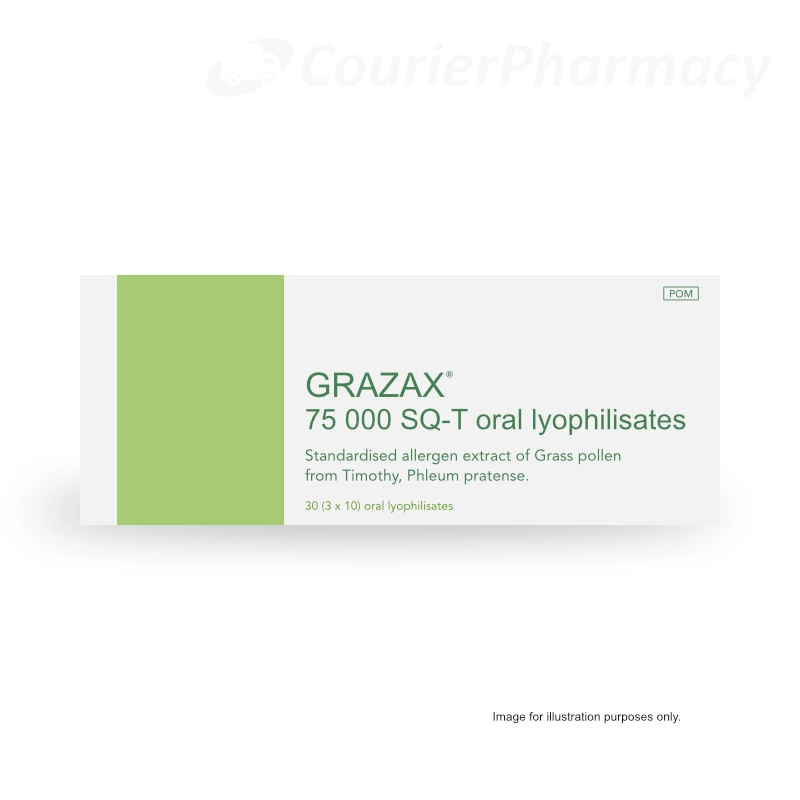
Grazax 75,000 SQ-T is a UK Prescription Only Medicine and a sublingual allergen-specific immunotherapy tablet containing a standardised extract of Timothy grass pollen.
It is taken once daily as a fast-dissolving sublingual tablet to gradually modify the immune system’s allergic response to grass pollen.
Clinical benefit appears from the first treated season and increases across subsequent seasons, with long-term data suggesting sustained benefit after course completion.
Courier Pharmacy supplies Grazax as a continuation service for patients already initiated through an NHS allergy clinic, private allergy service, or specialist prescriber.
Grazax 75,000 SQ?T is a Prescription Only Medicine (POM) for people with a confirmed grass pollen allergy. It is a type of sublingual immunotherapy. In other words, you place a fast?dissolving tablet under your tongue each day. Over time, this helps your immune system become more tolerant to grass pollen.
What Grazax contains
Each tablet contains a standardised allergen extract from Timothy grass (Phleum pratense) pollen. The dose is 75,000 SQ?T per tablet. SQ?T is ALK?Abelló’s unit for allergen activity. It helps keep dosing consistent from batch to batch.
What Grazax is used for
Grazax treats grass pollen?induced seasonal allergic rhinitis and conjunctivitis (hay fever). It suits adults and children aged 5+ who:
have clinically relevant symptoms during grass pollen season, and
have confirmed sensitisation on skin prick testing or specific IgE testing.
How Grazax is different from standard hay fever treatments
Most hay fever medicines treat symptoms while you take them. For example, antihistamines and nasal steroid sprays work best when you use them regularly.
Grazax works differently. It aims to change the underlying allergic response. It does this by exposing your immune system to a controlled daily dose of the allergen. As a result, symptoms may reduce over time. Many people also need less “top-up” medicine during pollen season.
How Grazax works (in plain English)
With hay fever, your immune system overreacts to pollen. Grazax helps retrain that response. Over months, it can reduce the “allergic” pattern and support a more tolerant immune response. However, this takes time. You won’t get the same quick relief you might feel with an antihistamine.
How to take Grazax
You take one tablet daily. Place it under your tongue and let it dissolve. Try not to swallow straight away.
For best results, start Grazax at least 4 months before the grass pollen season begins. That timing gives your body a chance to build tolerance before pollen levels rise.
How long do you need to take it for?
Most people take Grazax for 3 consecutive years. This includes taking it during and outside the pollen season. Although that sounds like a commitment, it’s the standard course used to aim for longer-term benefit.
First dose and safety
A clinician should supervise the first dose, with around 30 minutes of observation afterwards. This is because immunotherapy can cause allergic reactions, especially early on.
Some patients also carry an adrenaline auto?injector, particularly in the first weeks. Your allergy specialist will advise what’s right for you.
Who Grazax is for (and who it isn’t)
Grazax is not a first?line hay fever treatment. Many people do well with:
antihistamines
nasal steroid sprays
trigger avoidance.
Grazax can suit people who still struggle despite good use of these options. It also suits those who can stick with daily treatment for the full course.
However, it is not suitable for everyone. For example, clinicians may avoid starting it in people with severe or uncontrolled asthma, certain immune conditions, or during pregnancy.
Grazax from Courier Pharmacy
Courier Pharmacy supplies Grazax as a continuation service for patients who have already started treatment through an appropriate clinical pathway. During the online consultation, we confirm your initiation history, current phase, and ongoing safety plan.
If you want to start Grazax for the first time, we can explain the usual initiation pathway and signpost you to the right service. We won’t start it through remote supply alone.
Key features and specifications
Active ingredient: standardised Timothy grass (Phleum pratense) pollen allergen extract, 75,000 SQ?T per tablet
When grass pollen hay fever is severe enough that antihistamines and intranasal steroids alone aren’t providing the control you need, allergen-specific immunotherapy offers a different approach: not a stronger symptom suppressant, but a treatment that gradually changes your immune system’s response to grass pollen itself. Grazax is the daily sublingual tablet that delivers this immunotherapy at home, after initial assessment and first-dose supervision in a clinic setting.
At Courier Pharmacy, we believe healthcare should suit the person, not the marketing budget. This page is here for patients who have already been initiated on Grazax through an NHS allergy clinic, private allergy service, or specialist prescriber, and who are looking for a reliable continuation supply through their 3-year treatment course with ongoing pharmacist support. Whether you’re partway through your first pre-season build-up, in maintenance phase across multiple grass pollen seasons, or approaching the end of your 3-year course, this page covers what Grazax is, how the treatment works, and how we can support your ongoing use.
Important note: continuation supply, not initiation
Grazax is not a medicine we initiate through remote online consultation. The first tablet must be administered under direct medical supervision in a clinic setting, with the patient observed for at least 30 minutes afterwards, because of the recognised (small but real) risk of severe allergic reaction to the allergen extract itself. The SmPC and UK prescribing guidance both require this, and we follow that guidance.
Initial assessment, allergy testing confirmation, suitability check, and first-dose administration should take place at an NHS allergy clinic, a private allergy or immunology service, or with a prescriber experienced in allergen immunotherapy. We supply Grazax as a continuation service for patients who have completed first-dose supervision and tolerated initial treatment without significant adverse effects, and need ongoing supply with the support of a UK GPhC-registered pharmacy.
The online consultation will confirm your initiation history, current treatment phase (pre-season build-up, in-season, or maintenance), prescriber involvement, and confirm you have access to an adrenaline auto-injector if one was prescribed alongside Grazax. If you have not yet been initiated, we will explain the pathway and signpost appropriate services.
Five key takeaways
Grazax 75,000 SQ-T is a UK Prescription Only Medicine containing a standardised allergen extract from Phleum pratense (Timothy grass) pollen, taken as a daily sublingual oral lyophilisate (a tablet that dissolves under the tongue) to provide allergen-specific immunotherapy for grass pollen-induced seasonal allergic rhinitis and conjunctivitis.
Treatment is disease-modifying rather than symptom-suppressing. Daily dosing over 3 years is designed to gradually reduce the immune system’s allergic response to grass pollen, with clinical benefit typically appearing from the first treated grass pollen season and increasing over subsequent seasons.
Treatment is started 4 months before the expected start of the grass pollen season (typically in January or February in UK practice, ready for the May to August grass pollen season), and is continued daily through pollen season and out of season for 3 consecutive years.
The first tablet must be administered under direct medical supervision with 30-minute observation. Subsequent doses are taken at home. An adrenaline auto-injector may be prescribed alongside, particularly in the early weeks of treatment.
Common side effects include oral itching, mild oral swelling, throat irritation, and ear itching, particularly in the first 1 to 7 days of treatment. Severe allergic reactions including anaphylaxis are rare but recognised, which is why first-dose supervision and ongoing access to adrenaline are part of the safety framework.
Grazax 75,000 SQ-T an overview
Grazax 75,000 SQ-T is a UK Prescription Only Medicine and an allergen-specific sublingual immunotherapy product. Each oral lyophilisate (a fast-dissolving tablet designed to dissolve under the tongue) contains a standardised allergen extract from Phleum pratense (Timothy grass) pollen, dosed at 75,000 SQ-T units. The SQ-T unit is ALK-Abelló’s proprietary measure of biological allergen activity, standardised against reference preparations to ensure consistent dosing across batches.
Grazax was developed by ALK-Abelló, a Danish allergy specialist company, and was the first sublingual immunotherapy tablet to receive a UK and European marketing authorisation. It launched in the UK in the mid-2000s and has accumulated nearly two decades of clinical and real-world experience since. It is one of the most studied sublingual immunotherapy products in clinical use, with the GT-08, GT-12, and several extension studies forming the main evidence base for its efficacy and safety profile.
The clinical purpose of allergen-specific immunotherapy is fundamentally different from the symptomatic treatments most hay fever patients use. Antihistamines (loratadine, fexofenadine, cetirizine, desloratadine) block histamine receptors and reduce symptoms while the medicine is in your system. Intranasal corticosteroids (mometasone, fluticasone, beclometasone) reduce nasal inflammation while they’re being used. Nasal antihistamines (azelastine) and decongestants address symptoms locally. Each of these works only while you’re using them.
Allergen-specific immunotherapy aims to change the underlying immune response itself. By exposing the immune system to gradually increasing or sustained doses of the specific allergen (in this case, Timothy grass pollen extract), the treatment shifts the immune profile from a Th2-dominant allergic response (with IgE production and mast cell activation) towards a more tolerant Th1 and T-regulatory response. The clinical consequences develop over months and years rather than days, with reduced symptom severity, reduced symptomatic medicine requirements, and in many patients, sustained benefit after the treatment course is completed.
The evidence base for Grazax is robust. The GT-08 trial showed significant reductions in symptom and medication scores over the first grass pollen season after treatment initiation, with effect sizes maintained or improved in subsequent seasons. Long-term extension data showed sustained benefit for at least 2 years after a 3-year treatment course, suggesting genuine disease modification rather than just suppression. NICE and the British Society for Allergy and Clinical Immunology (BSACI) recognise allergen immunotherapy as appropriate for patients with significant allergic rhinitis inadequately controlled by symptomatic treatment.
The route of administration (sublingual, daily, at home) is important to the clinical position. Older allergen immunotherapy used subcutaneous injections given in specialist clinics, typically weekly during build-up and monthly during maintenance. This was effective but required clinic attendance over years and carried a higher risk of systemic allergic reactions. Sublingual immunotherapy with products like Grazax brought home-based daily dosing into the picture, with a lower but not zero risk of systemic reactions and far better practical accessibility.
The clinical positioning of Grazax in modern UK hay fever care is as a treatment for patients with:
Confirmed grass pollen allergy on skin prick testing or specific IgE testing (this is not for self-diagnosed hay fever)
Clinically significant symptoms during grass pollen season that affect quality of life, work, study, or sleep
Inadequate control on symptomatic treatment (regular antihistamines plus intranasal corticosteroids properly used)
Willingness to commit to 3 years of daily treatment with the practical and financial implications that involves
No contraindications including active or severe asthma, immunodeficiency, certain malignancies, oral inflammation, or pregnancy at initiation
Grazax is not a first-line hay fever treatment. Most patients with hay fever do well with antihistamines, intranasal steroids, and trigger avoidance. Grazax is for patients where these aren’t sufficient and where the treatment burden of 3 years of daily immunotherapy is justified by the symptom severity.
We at Courier Pharmacy supply Grazax from a UK-registered pharmacy as a continuation service for patients who have already been initiated through an appropriate clinical pathway. The online consultation confirms your initiation history, current treatment phase, prescriber involvement, and ongoing safety arrangements including adrenaline auto-injector access where prescribed. If you are looking to start Grazax for the first time, we will explain the appropriate initiation pathway and signpost the right services rather than supplying through remote consultation alone.
Key features and specifications
Active ingredient: standardised allergen extract from Phleum pratense (Timothy grass) pollen, 75,000 SQ-T units per tablet
Pack size: 30 tablets (30-day supply at one tablet daily)
Indication: grass pollen-induced seasonal allergic rhinitis and conjunctivitis (hay fever) in patients with clinically relevant symptoms and confirmed grass pollen sensitisation, in adults and children from age 5
Dosing: one tablet daily, taken sublingually
Treatment start: at least 4 months before the expected start of the grass pollen season for the first season’s benefit
Treatment duration: 3 consecutive years of daily dosing, including through and out of grass pollen seasons
First-dose administration: under medical supervision with 30-minute observation
Adrenaline auto-injector access: recommended particularly in the early weeks of treatment
Legal category: Prescription Only Medicine (POM)
Supplied by: Courier Pharmacy, UK GPhC-registered, as a continuation service after clinical initiation elsewhere
Grazax 75,000 SQ T common questions
Grazax 75,000 SQ?T is a Prescription Only Medicine (POM) for people with a confirmed grass pollen allergy. It is a type of sublingual immunotherapy. In other words, you place a fast dissolving tablet under your tongue each day. Over time, this helps your immune system become more tolerant to grass pollen.
What Grazax contains
Each tablet contains a standardised allergen extract from Timothy grass (Phleum pratense) pollen. The dose is 75,000 SQ T per tablet. SQ?T is ALK Abelló’s unit for allergen activity. It helps keep dosing consistent from batch to batch.
What Grazax is used for
Grazax treats grass pollen?induced seasonal allergic rhinitis and conjunctivitis (hay fever). It suits adults and children aged 5+ who:
have clinically relevant symptoms during grass pollen season, and
have confirmed sensitisation on skin prick testing or specific IgE testing.
How Grazax is different from standard hay fever treatments
Most hay fever medicines treat symptoms while you take them. For example, antihistamines and nasal steroid sprays work best when you use them regularly.
Grazax works differently. It aims to change the underlying allergic response. It does this by exposing your immune system to a controlled daily dose of the allergen. As a result, symptoms may reduce over time. Many people also need less “top-up” medicine during pollen season.
How Grazax works (in plain English)
With hay fever, your immune system overreacts to pollen. Grazax helps retrain that response. Over months, it can reduce the “allergic” pattern and support a more tolerant immune response. However, this takes time. You won’t get the same quick relief you might feel with an antihistamine.
How to take Grazax
You take one tablet daily. Place it under your tongue and let it dissolve. Try not to swallow straight away.
For best results, start Grazax at least 4 months before the grass pollen season begins. That timing gives your body a chance to build tolerance before pollen levels rise.
How long do you need to take it for?
Most people take Grazax for 3 consecutive years. This includes taking it during and outside the pollen season. Although that sounds like a commitment, it’s the standard course used to aim for longer-term benefit.
First dose and safety
A clinician should supervise the first dose, with around 30 minutes of observation afterwards. This is because immunotherapy can cause allergic reactions, especially early on.
Some patients also carry an adrenaline auto?injector, particularly in the first weeks. Your allergy specialist will advise what’s right for you.
Who Grazax is for (and who it isn’t)
Grazax is not a first?line hay fever treatment. Many people do well with:
antihistamines
nasal steroid sprays
trigger avoidance.
Grazax can suit people who still struggle despite good use of these options. It also suits those who can stick with daily treatment for the full course.
However, it is not suitable for everyone. For example, clinicians may avoid starting it in people with severe or uncontrolled asthma, certain immune conditions, or during pregnancy.
Grazax from Courier Pharmacy
Courier Pharmacy supplies Grazax as a continuation service for patients who have already started treatment through an appropriate clinical pathway. During the online consultation, we confirm your initiation history, current phase, and ongoing safety plan.
If you want to start Grazax for the first time, we can explain the usual initiation pathway and signpost you to the right service. We won’t start it through remote supply alone.
Why choose Courier Pharmacy for Grazax continuation supply
At Courier Pharmacy, our whole approach is built around the idea that healthcare should fit the person, not the marketing budget. For Grazax specifically, that means honest framing about what we can and cannot offer: continuation supply for patients already established on immunotherapy, with ongoing pharmacist support, careful interaction with your initiating allergy clinic, and clear signposting if your situation changes. Our service is shaped by the philosophy of Dr Ada Jex-Cori, our brand pharmacist, who has built her practice around accessible, honest, personalised care. Her view is straightforward: you are not broken. The system is the problem. We are here to change that.
What we offer
For patients already initiated on Grazax through an NHS allergy clinic, private allergy service, or specialist prescriber:
Reliable continuation supply through your 3-year treatment course
Discreet packaging and delivery to your door
Ongoing pharmacist support for technique reminders, side effect questions, and practical advice
Coordination with your initiating allergy team where appropriate
Adrenaline auto-injector supply and replacement if prescribed alongside
Reminders about treatment timing if you want them, including pre-season restart prompts
Honest discussion if your situation has changed and you may need re-assessment
What we do not offer
First-time initiation of Grazax through remote consultation. The first dose needs to be supervised in a clinic setting with 30-minute observation; this is non-negotiable for safety reasons.
Continuation supply for patients whose initiation history is unclear or who have not had appropriate clinical assessment.
Continuation supply where there are red flags suggesting the treatment is not safe to continue (significant adverse reactions, development of contraindications, lapsed treatment requiring re-initiation).
If you are interested in starting Grazax for the first time, we will be honest about the appropriate pathway. The standard route is referral from your GP to NHS allergy services (where available locally), or to a private allergy clinic offering immunotherapy initiation. We can talk you through the process and signpost suitable services.
Allergy and immunotherapy care that takes you seriously
Hay fever can be dismissed as a minor inconvenience by people who don’t have severe symptoms. For patients with significant hay fever, the impact on quality of life across summer months is real and substantial: disrupted sleep, impaired concentration, reduced exercise tolerance, social and work impact, and in some patients exacerbation of asthma and other allergic conditions. Allergen-specific immunotherapy is a meaningful treatment option that can change the trajectory of years of hay fever symptoms, and we treat it with the seriousness that respects the patient commitment involved.
For patients with the broader allergic constitution (atopic asthma, atopic dermatitis, food allergies, allergic rhinitis), Grazax sits within a wider picture of immune dysregulation. We are happy to discuss how the immunotherapy fits within your broader allergy and immune health.
Adrenaline auto-injector pairing
Patients on Grazax should have access to an adrenaline auto-injector, particularly in the early weeks of treatment and ideally throughout. If your prescriber has issued one (EpiPen 0.3mg, Jext 300 micrograms, or Emerade 300 micrograms in adult dosing), we can supply replacements as the auto-injectors approach expiry. We can also supply newer options including Eurneffy needle-free nasal adrenaline for patients who prefer or need a non-injection option. The anaphylaxis condition page covers these options in more detail.
Trust earned, not claimed
We are GPhC-regulated, we ground our content in NHS, NICE, BSACI, EAACI guidance, the SmPC, and the relevant clinical literature, and we will tell you honestly if Grazax continuation supply is not the right service for your situation. We would rather refer you on than supply where the clinical fit is not right.
How to buy Grazax (Prescription Only) from Courier Pharmacy
Grazax 75,000 SQ-T is a Prescription Only Medicine. Supply through Courier Pharmacy is restricted to patients who have already been initiated on the medicine through an appropriate clinical pathway and who are seeking ongoing continuation supply.
Here is how our service works:
Complete a quick online consultation answering questions about your hay fever history, your Grazax initiation (when, where, by whom), your current treatment phase (first season pre-season build-up, in-season, year 2 or 3 maintenance), your adrenaline auto-injector access, your asthma status if relevant, and your current medicines and medical history.
A UK-qualified prescriber reviews your answers to confirm Grazax continuation supply is appropriate for you. Where the prescriber needs additional information (a letter from your initiating allergy clinic, evidence of your most recent review, confirmation of safety arrangements), we will ask for it directly.
If approved, a prescription is issued and your order is prepared for dispatch.
We dispense and deliver discreetly to your door.
If Grazax continuation supply isn’t the right service for you, we will explain why and suggest the next best option. That might be:
A referral back to your initiating allergy clinic for re-assessment if there are red flags suggesting safety concerns
A referral to NHS allergy services through your GP if you need first-time initiation
A private allergy clinic if NHS waiting times are long and self-funded initiation is appropriate
Stepping up your symptomatic hay fever treatment (antihistamines, intranasal corticosteroids, combination products) if immunotherapy isn’t the right next step for you
A different allergen immunotherapy product if your allergy profile suggests a different allergen is the dominant driver
A conversation about adrenaline auto-injector supply if that is part of your concern
Our free fortnightly drop-in clinics at Insomnia, Derby run every other week from 10am to 12pm. Allergies, hay fever, asthma, MCAS, anaphylaxis, immunotherapy, hair loss, men’s health, weight management, and the broader conversations about quality of life are all conversations we have regularly at these sessions. No appointment needed, no charge, no pressure.
Active ingredients
Each oral lyophilisate (sublingual tablet) contains:
Standardised allergen extract of Phleum pratense (Timothy grass) pollen 75,000 SQ-T units (active ingredient): a defined, standardised grass pollen allergen extract intended for sublingual allergen-specific immunotherapy. The SQ-T unit (Standardised Quality units, Tablet) is ALK-Abelló's proprietary measure of biological allergen activity, standardised against reference preparations to ensure consistent dosing across batches
Excipients include: gelatin (fish-derived), mannitol, and sodium hydroxide (used for pH adjustment during manufacture).
Patients with known fish allergy should be aware that the gelatin in the tablet is fish-derived, although the gelatin itself does not typically contain the proteins responsible for fish allergic reactions. Discuss with your prescriber if this is a concern. The tablet is suitable for diabetic patients and does not contain significant lactose, sugar, gluten, or soya.
Grazax 75,000 SQ-T Oral Lyophilisate is a brand-name single-source medicine manufactured by ALK-Abelló (Denmark). There is no generic equivalent available in the UK.
What is Grazax 75,000 SQ-T used for?
Hay fever (seasonal allergic rhinitis) affects around 20 to 25% of UK adults to some degree, with grass pollen the dominant trigger across most of the country from May to August. Most patients manage symptoms through antihistamines, intranasal corticosteroids, eye drops, and trigger avoidance. For around 70 to 80% of patients, this is sufficient to maintain acceptable symptom control.
For the remaining 20 to 30%, symptoms remain significant despite appropriate symptomatic treatment. These patients experience:
Persistent nasal congestion, rhinorrhoea, sneezing, and itching despite daily antihistamine and intranasal steroid use
Conjunctivitis symptoms (itching, redness, tearing) that limit outdoor activity
Sleep disturbance from nocturnal nasal congestion or post-nasal drip
Concentration and cognitive impact, with measurable effects on work performance, exam results, and quality of life
Exacerbation of underlying asthma, particularly in patients with the "united airway" pattern of combined upper and lower respiratory allergic disease
Reduced exercise tolerance, particularly for outdoor activities during pollen season
Reduced quality of life across summer months, sometimes lasting 3 to 4 months per year
For this group, allergen-specific immunotherapy is one of the recognised next steps. The two main delivery routes in modern UK practice are:
Subcutaneous immunotherapy (SCIT): injections of allergen extract given in a specialist clinic, with weekly or fortnightly injections during the build-up phase and monthly injections during maintenance. SCIT has been used for over a century and has a strong evidence base. The drawbacks are practical (regular clinic attendance over years) and safety-related (higher rate of systemic allergic reactions compared to SLIT, including anaphylaxis).
Sublingual immunotherapy (SLIT): home-based daily dosing with sublingual tablets (like Grazax) or sublingual drops. The first dose is given under clinical supervision, but subsequent doses are taken at home. SLIT has a substantially lower rate of severe allergic reactions than SCIT, although the rate is not zero. The trade-off is that SLIT requires patient adherence to daily home dosing rather than scheduled clinic appointments.
For grass pollen allergy specifically, Grazax is the most established sublingual tablet preparation in UK practice. Alternative tablet preparations include Oralair (a 5-grass mixed pollen tablet from Stallergenes), and sublingual drop formulations are available from various manufacturers for both grass pollen and other allergens.
For other major allergens, similar SLIT tablet products are available: Acarizax for house dust mite allergy, Itulazax for tree pollen (birch group) allergy, and ragweed-specific products (the latter less relevant in UK practice where ragweed is uncommon). These products are not interchangeable; each is specific to its allergen and is licensed for that specific clinical indication.
Patient selection for immunotherapy is important. The candidates who benefit most are:
Patients with confirmed mono-sensitisation or dominant sensitisation to grass pollen (less benefit if grass is one of many equal allergens)
Patients with moderate to severe symptoms inadequately controlled by symptomatic treatment
Patients without contraindications (active asthma, immunodeficiency, certain malignancies, oral inflammation, pregnancy at initiation)
Patients who can commit to 3 years of daily treatment
Patients who understand the safety considerations including the small risk of severe allergic reaction
Patients with mild symptoms well-controlled on antihistamines, patients with poly-sensitisation where grass is not the dominant driver, and patients unable to commit to the treatment course are less suitable. The initiating allergy clinician will have worked through this assessment with you.
How Grazax works
Allergen-specific immunotherapy works by gradually shifting the immune system's response to the specific allergen from an allergic (Th2-dominant) profile to a more tolerant (regulatory) profile. The mechanism is complex and not fully understood, but several key changes have been identified in patients responding to immunotherapy:
Induction of allergen-specific regulatory T cells: regulatory T cells (Tregs) suppress inappropriate immune responses. Successful immunotherapy is associated with expansion of allergen-specific Tregs that dampen the allergic response to the treated allergen.
Shift in T helper cell balance: from a Th2 profile (IL-4, IL-5, IL-13 production; allergic inflammation) towards a Th1 (interferon-gamma) or balanced profile. The exact pattern varies between patients and over time.
Changes in antibody profile: rises in allergen-specific IgG4 (a "blocking" antibody that can compete with IgE for allergen binding) and gradual decline in allergen-specific IgE over years of treatment. IgG4 is thought to play an important role in clinical tolerance.
Reduced mast cell and basophil reactivity: peripheral basophils and tissue mast cells become less responsive to allergen exposure over time on immunotherapy, requiring higher allergen doses to trigger degranulation.
Reduced eosinophil recruitment: the cellular infiltration of nasal and conjunctival tissues during allergen exposure is reduced.
The clinical consequence is that during grass pollen exposure, the treated patient's immune system responds less aggressively to the allergen, producing fewer symptoms and requiring less symptomatic medicine.
The timeline of clinical response is gradual. Most patients notice some benefit during the first grass pollen season after starting treatment (4 months into treatment, given the pre-season start). The benefit typically increases across subsequent seasons. By the end of the 3-year treatment course, many patients have substantial and sustained reduction in symptom severity. Importantly, the disease-modifying effect appears to persist after stopping treatment in many patients, with extension studies showing sustained benefit for at least 2 to 3 years after a 3-year course.
The sublingual route works because the oral mucosa contains a population of dendritic cells (immune-presenting cells) that are particularly effective at inducing tolerance rather than allergic sensitisation. When allergen is presented to these tolerogenic dendritic cells via the sublingual route at appropriate doses, the immune system is more likely to develop tolerance than allergy. This is the immunological basis for SLIT working through oral exposure rather than injection.
After the sublingual tablet dissolves under the tongue, the allergen extract is absorbed across the oral mucosa and presented to local immune cells. There is no significant systemic absorption of intact allergen. The local immune response in the oral mucosa drives the gradual systemic immunological changes.
How to use Grazax 75,000 SQ-T
The information below is a summary for reference. The definitive guide is the patient information leaflet supplied with the product, supplemented by the instructions you received during initiation. If you are unsure about any aspect of dosing or technique, contact our pharmacist or your initiating prescriber.
When to take Grazax
Take one tablet once daily, at the same time each day. Most patients take their dose in the morning for consistency, although the timing of day does not significantly affect efficacy. Consistent daily dosing matters more than the specific time.
Treatment is taken every day through the year, including out of grass pollen season. Stopping out of season and restarting in season is not effective; the year-round daily dosing maintains the immunological effect.
Taking the tablet
Wash and dry your hands thoroughly. The tablet is fragile and must be handled with dry hands.
Open the blister pack carefully. Do not press the tablet through the foil; instead, peel back the foil to release the tablet without damaging it.
Place the tablet under your tongue.
Keep your mouth closed and let the tablet dissolve fully under your tongue. This takes a few seconds to a minute.
Do not swallow the tablet whole or chew it. The sublingual route is essential for the medicine to work.
Do not swallow saliva for 1 minute after the tablet has dissolved.
Do not eat or drink anything for at least 5 minutes after taking the tablet.
When and how to take the first dose
The first dose must be taken under medical supervision in a clinic setting, with observation for at least 30 minutes after dosing. This is a fixed requirement for all patients starting Grazax. If you have not yet had your first supervised dose, do not start at home.
After the supervised first dose, daily home dosing continues with the same single tablet daily regimen. The dose does not change over the 3-year course; there is no escalation phase beyond the first dose.
Missing doses
If you miss a dose, take the next dose at the usual time the following day. Do not double-dose to catch up.
If you have missed more than 7 consecutive days of treatment, contact your prescriber before restarting. The treatment may need to be restarted under supervision if the gap has been substantial.
If you are unwell
If you have an acute respiratory infection (cold, flu), an asthma exacerbation, oral ulcers, recent dental work or oral surgery, or any condition causing significant oral inflammation, you may need to pause Grazax until the condition resolves. Contact your prescriber or our pharmacist for advice.
Do not take Grazax during a severe allergic reaction or after a recent severe allergic reaction without prescriber advice. The treatment needs to be paused until you have recovered.
Storage
Store at room temperature, below 25°C, in the original packaging to protect from moisture. Do not refrigerate or freeze. Keep out of sight and reach of children.
The shelf life is indicated on the packaging. Do not use after the expiry date.
Treatment timeline
For the first season: start treatment at least 4 months before the expected start of the grass pollen season. In UK practice, this typically means starting in January or February ready for the May to August grass pollen season.
For subsequent seasons: continue daily dosing year-round through years 2 and 3 of treatment.
End of treatment: after 3 years of continuous daily dosing, treatment is typically stopped. The disease-modifying effect appears to persist after stopping in many patients, with sustained reduction in hay fever symptoms for at least 2 to 3 years in extension studies.
Warnings and precautions for Grazax 75,000 SQ-T
Severe allergic reactions including anaphylaxis
This is the most important safety consideration. Allergen extracts can trigger severe allergic reactions in patients sensitised to the allergen, and Grazax is no exception. The risk is highest in the first weeks of treatment but persists across the treatment course. Symptoms of a severe systemic allergic reaction include:
Significant swelling of the face, lips, tongue, or throat
Difficulty breathing or swallowing
Severe throat tightness or hoarseness
Severe whole-body itching or hives
Light-headedness, dizziness, or fainting
Rapid heart rate or palpitations
Severe abdominal pain, nausea, or vomiting
If you experience any of these symptoms, treat as anaphylaxis: use your adrenaline auto-injector if prescribed, call 999, and seek emergency care.
Patients on Grazax should have an adrenaline auto-injector available, particularly in the first weeks of treatment, and should know how to use it. If your prescriber did not prescribe an auto-injector and you are concerned, discuss with them or with our pharmacist.
First-dose supervision
The first tablet must be taken under medical supervision with 30-minute observation. This requirement is in the SmPC and is a fixed safety standard. We will not supply Grazax for first-time use through remote consultation.
Contraindications
Grazax is contraindicated in:
Patients with malignancies or systemic disorders affecting the immune system (immunodeficiencies, autoimmune disease under treatment, immunosuppression)
Patients with severe inflammation or wounds in the oral cavity (recent dental work, oral surgery, oral ulcers, oral lichen planus, severe gingivitis)
Patients with severe or uncontrolled asthma. Patients with controlled mild asthma may be eligible; the initiating clinician will have assessed this.
Patients with FEV1 less than 70% of predicted (a measure of asthma control)
Patients with hypersensitivity to any of the tablet excipients
Asthma considerations
Asthma is a particularly important consideration. Patients with active asthma, severe asthma, or recent asthma exacerbation are not suitable for Grazax. Patients with controlled mild asthma may be eligible, but any worsening of asthma during Grazax treatment is a reason to pause the medicine and seek prescriber advice.
If you develop new asthma symptoms (wheeze, cough, breathlessness) during Grazax treatment, contact your prescriber promptly.
Pregnancy and breastfeeding
Grazax should not be initiated during pregnancy because of the (low but not zero) risk of severe allergic reaction. Patients who become pregnant during established Grazax treatment should discuss with their prescriber; continuation through pregnancy is sometimes appropriate where the treatment is well-tolerated, but the decision is individualised.
Limited data is available on Grazax in breastfeeding. Discuss with your prescriber.
Recent vaccinations or other immunotherapy
Discuss with your prescriber if you are scheduled for vaccinations during Grazax treatment. Vaccinations are generally compatible with ongoing Grazax, but timing considerations may apply for live vaccines.
Dental work and oral surgery
If you need dental work, oral surgery, or have any significant oral inflammation, pause Grazax until your oral health has recovered. Resume only after the prescriber confirms it is appropriate.
Acute respiratory infections
Pause Grazax during significant acute respiratory infections (severe cold, flu, COVID-19) and restart when you have recovered. If the gap is more than 7 days, contact your prescriber for advice on restarting.
Driving and machinery
Grazax does not typically impair driving or machinery operation. Rare patients experience mild drowsiness or dizziness, particularly in the first few weeks; if these affect you, take appropriate care until you know how the treatment affects you.
Adrenaline auto-injector
Patients on Grazax should have access to an adrenaline auto-injector, particularly in the early weeks of treatment. If yours has expired or you are unsure of how to use it, contact our pharmacist for advice on replacement and training. The British Society for Allergy and Clinical Immunology (BSACI) and resuscitation council guidance both support adrenaline auto-injector access for patients on allergen immunotherapy.
Side effects of Grazax 75,000 SQ-T
The local oral side effects
These are the most common side effects and are essentially expected as part of treatment, particularly in the first 1 to 7 days. They reflect the local immune response to the allergen extract in the oral mucosa.
Itching in the mouth (oral pruritus)
Itching in the ears (because the oral and ear sensory innervation share pathways)
Throat irritation or scratchiness
Mild swelling of the lips, tongue, or oral mucosa
Mild burning or tingling sensation under the tongue
Mouth ulcers (uncommon but possible)
Taste changes
Dry mouth
These local effects typically settle within 1 to 7 days of starting treatment as the oral immune system adapts. If they are mild and you can tolerate them, continue treatment. If they are severe or distressing, contact our pharmacist or your prescriber for advice.
Common systemic side effects (affecting up to 1 in 10 patients)
Headache
Fatigue
Mild nausea or stomach discomfort
Sneezing or runny nose (sometimes paradoxical, sometimes from underlying hay fever)
Eye itching or redness
Less common side effects
Worsening of asthma symptoms (contact prescriber)
Hives or other skin reactions
Wheezing or chest tightness
Indigestion
Abdominal pain
Rare but serious side effects
Severe allergic reactions including anaphylaxis
Severe oral or facial swelling (angio-oedema)
Severe asthma exacerbation
Eosinophilic oesophagitis (rare, presenting with difficulty swallowing or chest discomfort)
Severe gastrointestinal symptoms
Stop and seek urgent help if
You develop signs of severe allergic reaction (significant swelling of face, lips, tongue, or throat; difficulty breathing or swallowing; whole-body hives; light-headedness; fainting)
You develop severe asthma symptoms (significant wheeze, shortness of breath, chest tightness not responding to your reliever inhaler)
You develop severe difficulty swallowing or persistent chest discomfort after taking the tablet
You experience severe abdominal pain with vomiting
Use your adrenaline auto-injector if prescribed for severe allergic reaction symptoms, call 999, and seek emergency care.
Tolerating the early days
Most patients have some oral side effects in the first 1 to 7 days. Strategies that often help:
Take the tablet at a time when you can be relatively still for the first 30 minutes (some patients take it in bed at night, others first thing in the morning before activities)
Avoid hot drinks or spicy foods for at least 30 minutes after the tablet
If oral irritation is significant, sucking on a small ice cube before or after the tablet can help
A non-sedating antihistamine (loratadine, cetirizine, fexofenadine) taken about 30 minutes before the Grazax tablet can reduce oral itching and other local symptoms, particularly in the first 1 to 2 weeks. Discuss with your prescriber about whether this is appropriate for you.
Yellow Card reporting
Suspected adverse drug reactions can be reported to the MHRA via the Yellow Card scheme at yellowcard.mhra.gov.uk. Reporting helps build the safety picture for everyone, particularly for newer treatments like sublingual immunotherapy.
Drug interactions with Grazax 75,000 SQ-T
Grazax does not have many clinically significant pharmacological drug interactions because the active ingredient is a protein-based allergen extract, not a small-molecule drug with CYP metabolism or significant systemic exposure. The interactions to consider are mostly about combining Grazax with other medicines that affect the immune system or that affect the safety profile.
Significant considerations
Beta-blockers (propranolol, atenolol, bisoprolol, carvedilol, and similar): beta-blockers can reduce the effectiveness of adrenaline used to treat severe allergic reactions. Patients on beta-blockers who experience anaphylaxis on Grazax may not respond adequately to standard adrenaline doses. Discuss with your prescriber whether Grazax is appropriate while on beta-blockers, and consider alternatives if possible.
ACE inhibitors (ramipril, lisinopril, perindopril, and similar): ACE inhibitors can occasionally cause angio-oedema and can theoretically increase the severity of allergic reactions. Discuss with your prescriber.
Other allergen immunotherapy products: do not combine multiple sublingual or subcutaneous immunotherapy treatments without specialist guidance.
Antihistamines: H1 antihistamines (loratadine, cetirizine, fexofenadine) are compatible with Grazax and may reduce local oral side effects, particularly in the early weeks. They do not reduce the effectiveness of the immunotherapy. Some prescribers recommend taking an antihistamine alongside Grazax during the initial settling-in period.
Asthma medicines: inhaled corticosteroids and bronchodilators are compatible with Grazax. Active asthma is a contraindication to Grazax, but stable controlled asthma on standard treatment is not.
Less significant interactions
Most other medicines: because the active ingredient is a protein extract with minimal systemic exposure, most commonly co-prescribed medicines (antihypertensives, statins, antidepressants, acid-suppression medicines, hormonal contraceptives) do not interact pharmacologically with Grazax.
Not significant interactions
Symptomatic hay fever medicines: antihistamines, intranasal corticosteroids, ocular antihistamines, decongestants, and similar symptomatic treatments can be continued alongside Grazax. These provide symptomatic relief while the immunotherapy gradually modifies the underlying allergic response. As the immunotherapy effect builds, many patients are able to reduce their symptomatic medicine requirements.
For patients on any of the medicines above, our prescriber will check the interaction profile during your consultation, particularly the beta-blocker and ACE inhibitor considerations.
Frequently asked questions about Grazax 75,000 SQ-T
What is Grazax?
Grazax 75,000 SQ-T is a sublingual allergen-specific immunotherapy tablet containing standardised Timothy grass pollen extract. It is taken once daily as a fast-dissolving tablet under the tongue to gradually modify the immune system's allergic response to grass pollen. It is used for grass pollen-induced seasonal allergic rhinitis and conjunctivitis (hay fever) in patients with confirmed grass pollen sensitisation and clinically significant symptoms.
How is Grazax different from antihistamines or nasal sprays?
Antihistamines and nasal sprays treat symptoms while you're using them. Grazax aims to change the underlying immune response itself, so that over time you have fewer symptoms in response to grass pollen exposure. The benefit develops over months and years rather than days, and tends to persist for years after the treatment course is completed in many patients. The two approaches are not exclusive; you can continue symptomatic treatment alongside Grazax, and many patients gradually reduce their symptomatic medicine requirements as the immunotherapy effect builds.
Why won't Courier Pharmacy initiate me on Grazax?
Because the first dose must be supervised by a prescriber with 30-minute observation, which we cannot provide through remote consultation. This requirement is in the SmPC and reflects the small but real risk of severe allergic reaction to the allergen extract itself. Initiation needs to happen in a clinic setting, with the patient observed for any signs of severe reaction in the period immediately after the first dose. After successful first-dose administration, ongoing daily dosing at home is straightforward, and we are well-placed to support that continuation.
How do I get started if I have not used Grazax before?
The standard route is referral from your GP to NHS allergy services (availability varies by region; some areas have good local access, others do not), or self-referral to a private allergy clinic offering immunotherapy initiation. The initiating service will perform allergy testing (skin prick test or specific IgE blood test) to confirm grass pollen sensitisation, assess your suitability for immunotherapy (considering asthma status, other allergies, medicines, and contraindications), administer the first dose under observation, and provide ongoing follow-up. Once you are established on treatment and tolerating it well, you can come to us for continuation supply.
When should I start Grazax for the grass pollen season?
For the first treatment season, start at least 4 months before the expected start of grass pollen season. In UK practice, that typically means starting in January or February for the May to August grass pollen season. After the first season, continue daily dosing year-round through years 2 and 3.
How long is the treatment course?
3 years of continuous daily dosing. Treatment is started 4 months before the first grass pollen season and continued every day, including out of season, for 3 consecutive years. After 3 years, treatment is typically stopped. Many patients have sustained benefit for several years after stopping.
When will I notice an effect?
Most patients notice some benefit during the first treated grass pollen season (the season starting 4 months after treatment initiation). The benefit typically increases across subsequent seasons. By the end of the 3-year course, many patients have substantial reduction in symptoms and in their need for symptomatic medicines.
Will I still need antihistamines?
Probably yes, particularly in the first season and during peak pollen periods. Many patients gradually reduce their symptomatic medicine requirements as the immunotherapy effect builds, but the reduction is usually partial rather than complete. The combination of immunotherapy plus reduced symptomatic medicine is the typical end-state.
Do I need to take Grazax every day, even out of pollen season?
Yes. Daily year-round dosing maintains the immunological effect. Stopping out of season and restarting in season is not effective; the immune response needs continuous exposure to the allergen extract to maintain the tolerant profile.
What if I forget a dose?
Take the next dose at the usual time the following day. Do not double-dose. If you miss more than 7 consecutive days, contact your prescriber before restarting; the treatment may need to be restarted under supervision.
What are the common side effects?
The most common side effects are local oral symptoms in the first 1 to 7 days: itching in the mouth and ears, mild swelling under the tongue, throat irritation, mild burning sensation, and taste changes. These usually settle within a week as the oral immune system adapts. Headache and fatigue can occur. Severe allergic reactions are rare but recognised.
What should I do if I have a severe reaction?
Use your adrenaline auto-injector if prescribed (EpiPen, Jext, Emerade, or Eurneffy), call 999, and seek emergency care. Symptoms of severe allergic reaction include significant swelling of the face/lips/tongue/throat, difficulty breathing or swallowing, whole-body hives, light-headedness, fainting, or severe abdominal symptoms.
Do I need to carry an adrenaline auto-injector?
Most prescribers recommend that patients on Grazax have access to an adrenaline auto-injector, particularly in the early weeks of treatment. If you have not been prescribed one and are concerned, discuss with your initiating prescriber or our pharmacist.
Can I take Grazax if I have asthma?
Active or severe asthma is a contraindication. Patients with controlled mild asthma may be eligible if the initiating clinician has confirmed that asthma is stable and well-managed. Any worsening of asthma during Grazax treatment is a reason to pause the medicine and seek prescriber advice.
Can I take Grazax during pregnancy?
Grazax should not be initiated during pregnancy because of the small risk of severe allergic reaction. Patients who become pregnant during established Grazax treatment should discuss with their prescriber; sometimes continuation is appropriate, sometimes pausing is the right approach. The decision is individualised.
Can children take Grazax?
Yes, from age 5. The same 75,000 SQ-T tablet is used in adults and children from age 5. Through Courier Pharmacy this online consultation route is restricted to adults; paediatric supply should be coordinated with the initiating allergy clinic.
What if my symptoms get worse during treatment?
A temporary worsening of some symptoms in the first 1 to 2 weeks is not unusual and reflects the immune system's initial response to the allergen extract. Significant or persistent worsening, particularly of asthma symptoms, warrants contact with the prescriber.
Can I take Grazax alongside my hay fever symptomatic medicines?
Yes. Antihistamines, intranasal corticosteroids, ocular antihistamines, and other symptomatic hay fever treatments are compatible with Grazax. Many patients find a non-sedating antihistamine taken around 30 minutes before the Grazax tablet helps with local oral side effects, particularly in the first 1 to 2 weeks.
Will Grazax help with my other allergies (cats, dust mites, tree pollen)?
No. Grazax is specific to Timothy grass pollen and grass pollens cross-reactive with it. It does not help with other allergens. Different SLIT products are available for other allergens: Acarizax for house dust mite, Itulazax for tree pollen (birch group). Each is specific to its allergen.
How much does Grazax cost?
Grazax is a private prescription product and the cost is substantial across the 3-year course. The exact pricing through Courier Pharmacy is available at the order stage. Be aware that the 3-year commitment represents a significant total cost, and patients should consider this when starting treatment.
Is Grazax available on the NHS?
Yes in some areas through NHS allergy clinics, although access varies by region and clinical commissioning group. NICE and BSACI guidance support immunotherapy for appropriately selected patients with severe symptoms inadequately controlled by symptomatic treatment. Discuss with your GP about NHS referral options before considering private supply.
How should I store Grazax?
Store at room temperature, below 25°C, in the original packaging to protect from moisture. Do not refrigerate or freeze. Keep out of sight and reach of children. Do not use after the expiry date printed on the pack.
How do I order Grazax continuation supply from Courier Pharmacy?
Complete the online consultation at courierpharmacy.co.uk. The consultation covers your hay fever history, Grazax initiation history, current treatment phase, adrenaline auto-injector access, asthma status, and current medicines. A UK-qualified prescriber will review your answers and confirm whether continuation supply is appropriate. We may ask for evidence of your initiation (a letter from your initiating allergy clinic, for example). If approved, the order is dispatched discreetly to your door.
More than a prescription: our community
Healthcare shouldn't only happen when you're paying for it. Every fortnight we run free drop-in talks and clinics at Insomnia, Derby, from 10am to 12pm. Bring a question, bring a friend, bring a stack of bewildering letters from another clinic; we'll sit with you. We cover allergies, hay fever, asthma, anaphylaxis, MCAS, immunotherapy, hair loss, men's health, weight management, and whatever else people bring through the door. No appointment. No cost. No pressure. Learn more about our community talks.
Disclaimer: This article is for information only and isn't a substitute for personal medical advice. Always speak to a qualified prescriber before starting or changing treatment.
How this content was created
Written by the Courier Pharmacy editorial team and reviewed by a GPhC-registered pharmacist. Grounded in the latest NHS, BNF, and EMC guidance, and the real questions patients bring to our drop-in clinics in Derby.