

CoQ10 200 mg is a supplement often used to support cellular energy and to help manage issues such as statin-related muscle pain or some heart conditions. In practice, 200 mg a day is a common starting dose, and for some clinical goals, higher split dosing is used with food to improve absorption.
If you’re reading this because you’ve started a statin, feel more achy than expected, or you’ve spotted endless CoQ10 products online and no clear answer, you’re not alone. CoQ10 sits in an awkward space in UK care. Patients ask about it often; the evidence is growing in some areas, but routine advice in primary care still isn’t always clear.
This guide explains what CoQ10 200 mg does, where it may help, how to take it safely, and where the key trade-offs are.If you’re reading this, there’s a fair chance you’ve noticed your hairline creeping back, your crown showing more scalp, or your usual styling tricks no longer doing the job. That can feel frustrating, and for many people, a bit unsettling.
Table of contents
- Five key takeaways
- What is CoQ10, and why does your body need it?
- Why statins matter here
- CoQ10 becomes practical rather than theoretical
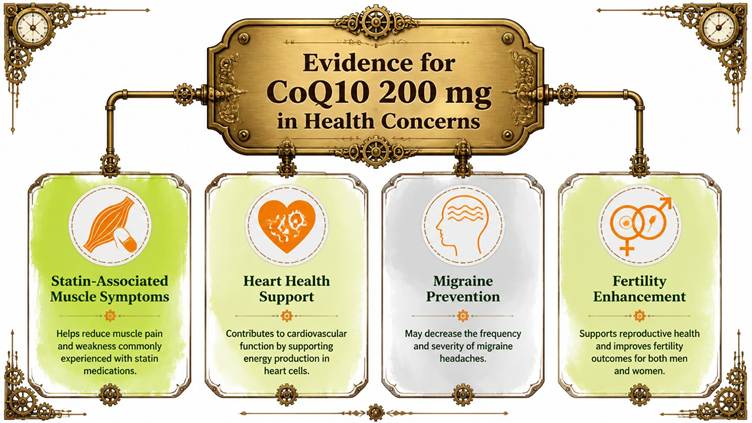
- The evidence for CoQ10 200 mg in common health concerns
- Statin-associated muscle symptoms
- CoQ10 dosing
- Heart health support
- Migraine prevention
- Fertility support
- What tends to work and what usually doesn’t
- Ubiquinone or ubiquinol which form is right for you?
- Finding your effective dose 200 mg vs other strengths
- How to take CoQ10 safely and effectively
- Safety and side effects
- Medicine interactions that matter
- Buccal film: a different way to take coenzyme Q10
- How to choose a safer UK source
- When to seek urgent help
- Sourcing CoQ10 safely in the UK
- Summary and key takeaways
- Frequently asked questions about CoQ10
- References
-
 CoEnzyme Q10 50mg Soluble Oral PatchPrice range: £29.99 through £249.99
Five key takeaways
- CoQ10 is a substance your body makes naturally and uses in almost every cell to produce energy and protect cells from damage. Statins can lower the body’s own CoQ10 production, which is why so many UK patients ask about it after starting cholesterol treatment.
- A 200 mg daily dose is the practical starting point for targeted use (statin-related muscle symptoms, cardiovascular concerns, fatigue), often taken as 100 mg twice daily with food. Smaller multivitamin-strength doses are not designed to do the same job.
- The strongest UK use case is statin-associated muscle pain and fatigue. Recent meta-analyses suggest CoQ10 can ease muscle pain, weakness, cramps, and tiredness in statin users, although it does not replace prescribed treatment, and any new or severe muscle pain still needs proper review.
- Format matters as much as dose. CoQ10 is fat-soluble and poorly absorbed from the gut, so capsules need to be taken with a meal that contains some fat. For patients who struggle with capsule size, have reflux, or simply have not seen results from standard oral CoQ10, the Courier Pharmacy 50 mg mucoadhesive buccal film bypasses the gut and the liver’s first-pass metabolism, delivering a more reliable dose with much less variability between days.
- Always check with a pharmacist before starting CoQ10 if you take warfarin, blood pressure medicines, insulin or diabetes treatment, or a complex heart medicine regimen. A regulated UK pharmacy with real pharmacist access is the safer route, particularly if you have long-term conditions, multiple medicines, or have had supplement-related side effects in the past.

What is CoQ10, and why does your body need it?
Your cells use CoQ10 to make energy
CoQ10, short for coenzyme Q10, is a substance your body makes and uses in almost every cell. The easiest way to think about it is this. It acts like a spark plug for the cell’s energy system.
Inside your cells, CoQ10 works in the mitochondria, the part that helps turn food into usable energy. It acts as a cofactor in the electron transport chain, specifically across Complexes I to III, and it also works as a lipid-soluble antioxidant in biomembranes [1]. In plain English, that means it helps power your cells and helps protect them from damage at the same time.
That matters most in tissues that work hard all day, such as muscles, nerves, and the heart.

If you want a wider look at supportive supplements, this guide to vitamins and minerals support is a useful place to compare options.
Practical rule: CoQ10 isn’t a stimulant. If it helps, it usually helps by supporting how your cells make energy, not by giving a quick “boost”.
Why statins matter here
In UK pharmacy practice, the most common reason people ask me about CoQ10 is simple. They start a statin such as atorvastatin or simvastatin, then notice muscle aches, heaviness, or fatigue.
There’s a biological reason this question keeps coming up. Statins block HMG-CoA reductase, and that process can lower the body’s own CoQ10 synthesis [1]. For some people, that drop seems to track with tiredness or myalgia. Not for everyone, but often enough that it deserves a sensible conversation.

CoQ10 becomes practical rather than theoretical
What is CoQ10 200 mg?
It’s a supplement dose often used when someone wants more targeted support for cellular energy, statin-related muscle symptoms, or cardiometabolic concerns.
The evidence for CoQ10 200 mg in common health concerns
The evidence for CoQ10 is strongest when you match it to the right problem. It’s less useful as a vague “take this for everything” supplement. It’s more useful when you ask a focused question, such as, “Could this help if my statin is making my legs ache?”
Statin-associated muscle symptoms
This is the most practical UK use case. A gap exists between what some patients experience and what they’re usually told. NICE guidance on statins doesn’t routinely recommend CoQ10, yet a recent study suggests CoQ10 may help with statin-associated muscle symptoms in some people [2].
A ground-breaking meta-analysis was conducted using 12 randomised controlled trials (575 patients) to assess whether CoQ10 supplementation could ease statin?associated muscle symptoms. Compared with placebo, improvements were reported in muscle pain, weakness, cramps, and tiredness, although no reduction was observed in creatine kinase levels. Overall, CoQ10 supplementation was suggested as a helpful complementary option for managing statin?related muscle symptoms [3]. These results in 2018 have been confirmed in a more recent meat analysis in 2025 [2].
That doesn’t mean everyone on a statin should rush out and buy CoQ10. It does mean this is a reasonable conversation when muscle symptoms appear and other causes have been considered.
Real-life example 1
A shift worker in his fifties starts atorvastatin. His cholesterol improves, but his thighs feel heavy after long shifts in the warehouse. He doesn’t need internet hype. He needs a calm review of timing, dose, statin choice, and whether a trial of CoQ10 makes sense alongside his prescribed treatment.

CoQ10 dosing
A practical point matters here. Many patients find 100 mg twice daily with meals easier than taking the whole amount in one go. It often fits daily life better and may sit better on the stomach.
For a related patient group, this article on Coenzyme Q10 and long COVID may also be of interest.
UK patients often hear, “Your blood test is fine, so keep going.” That may be true for cholesterol control, but it doesn’t always solve the day-to-day problem of muscle pain.
Heart health support
CoQ10 makes clinical sense in heart health because the heart needs a steady energy supply. Since CoQ10 helps mitochondrial energy production, it has a plausible role in people with cardiovascular concerns [1].
The key point for patients is balance. CoQ10 supports treatment. It does not replace statins, blood pressure treatment, or cardiology care. If someone tells you to stop prescribed heart medicines and use CoQ10 instead, that’s bad advice.
Where I see CoQ10 used well is alongside standard care, especially when fatigue, muscle symptoms, or tolerability issues are part of the picture.
Can CoQ10 200 mg help with heart health?
It may support heart cells because CoQ10 helps energy production and acts as an antioxidant, but it should sit alongside standard medical treatment, not replace it.
Migraine prevention
People often ask about CoQ10 for migraines, and the interest is understandable. Migraine sufferers tend to look for options that don’t leave them groggy or interfere with work.
The evidence here is promising but less settled than the statin discussion in this article. I’d describe CoQ10 for migraine as a reasonable option to discuss, especially for adults who prefer a supplement approach or want an add-on to a wider migraine plan. What doesn’t work well is taking it randomly for a few days and expecting a quick answer.
Real-life example 2
A busy parent gets repeated migraines during stressful weeks and poor sleep. They’ve tried hydration, routine changes, and trigger tracking. In that kind of situation, CoQ10 may come up as part of a broader prevention plan, but expectations need to stay realistic, and safety checks still matter.
Fertility support
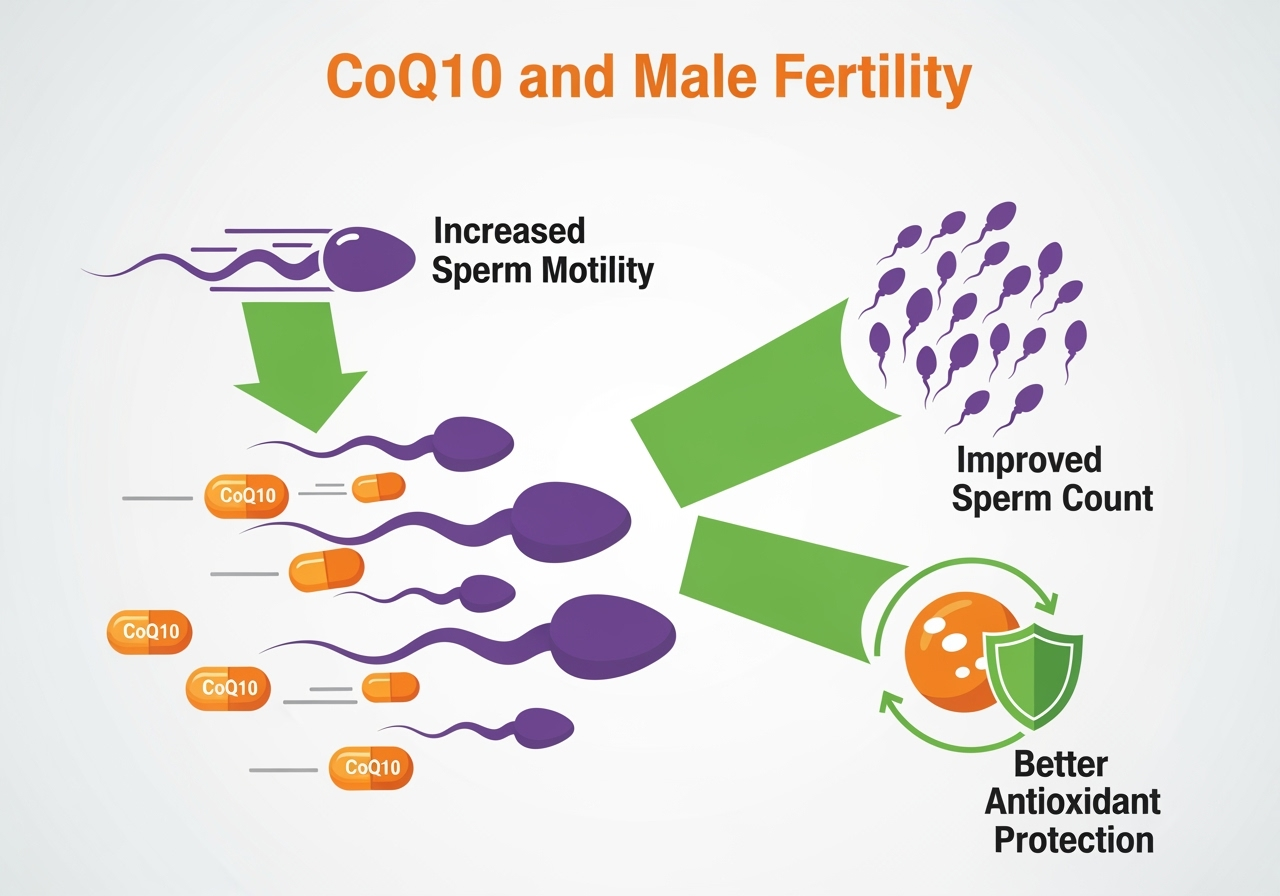
Interest in CoQ10 for fertility in the UK has grown, especially among couples who are already taking prenatal supplements and looking for options that may support egg or sperm quality.
CoQ10 is a natural substance that helps protect cells from damage and supports how the body makes energy. It may help fertility by supporting egg quality, embryo development, pregnancy rates, and overall ovarian function. That said, there are still big gaps in the research, so it is not a guaranteed fix.
More studies are needed to understand exactly how CoQ10 works in fertility, what dose and timing make the most sense, and whether it works better when combined with other treatments. Future research should also bring lab science and real-world clinic care together, so advice is clearer and more useful for more people trying to conceive [4].
What tends to work and what usually doesn’t
- Works better: Using CoQ10 for a clear reason, such as statin-related muscle symptoms.
- Works better: Taking it consistently with food.
- Works better: Reviewing other causes of symptoms first, including the statin dose itself.
- Usually doesn’t: Expecting one supplement to solve unexplained fatigue on its own.
- Usually doesn’t: Stopping prescribed medicines without review.
- Usually doesn’t: Buying the cheapest unknown brand from an unregulated seller and hoping for the best.
Ubiquinone or ubiquinol which form is right for you?
The simple difference
This is one of the most common sticking points. Ubiquinone and ubiquinol are both forms of CoQ10.
Ubiquinone is the oxidised form. Ubiquinol is the reduced form. Your body can convert between them, and both can have a place in practice.
For many healthy adults, ubiquinone is a sensible starting point. It’s widely available and often costs less. Ubiquinol may appeal more to people who want the “active form” and don’t mind paying more for that convenience.
A practical comparison
The key isn’t choosing the trendy form. It’s choosing the one you’ll take, at a sensible dose, from a reliable source.
| Feature | Ubiquinone (Oxidised Form) | Ubiquinol (Active Form) |
| What it is | The oxidised form of CoQ10 | The reduced form of CoQ10 |
| Typical role in buying decisions | Often chosen for value and availability | Often chosen for convenience and preference, studies indicate it may be more effective |
| Cost | Usually lower | Usually higher |
| Stability | Generally viewed as stable in supplement products | Often marketed as the active antioxidant form |
| Who may choose it | People starting out or watching the cost | People who prefer the active form, especially if older or using CoQ10 for a targeted reason |
If budget means you’ll actually take ubiquinone every day, that often beats buying a more expensive form you use inconsistently.
Is ubiquinol better than ubiquinone?
Not always. Ubiquinol may suit some people, but a well-made ubiquinone product at a sensible dose can still be a practical choice. However, some studies indicate that ubiqunol is more effective in some people [5].
Finding your effective dose 200 mg vs other strengths

Why 200 mg is different from a low-dose top-up
A lot of confusion comes from shelf labels. You’ll see tiny doses in multivitamins, then much larger standalone products. These aren’t trying to do the same job.
In clinical practice, 200 mg CoQ10 or higher doses are frequently used for concerns such as statin-associated myopathy, chronic fatigue syndromes, and cardiovascular risk [1]. That’s why this strength gets attention. It sits closer to a targeted therapeutic dose than a casual add-on.
There’s also a pharmacokinetic reason. Oral CoQ10 reaches peak plasma concentrations around 6 to 8 hours after a dose, and an average maintenance dose of 200 mg twice daily with food is required to achieve steady-state plasma levels above 2.5 µg/mL, a threshold often associated with measurable clinical effects in cardiac and neurological trials [1].
That doesn’t mean everyone needs twice-daily high-dose use. It means the commonly sold lower strengths may be too little if you’re trying to mirror clinical practice rather than the approach of “take some CoQ10.”
When dose splitting makes sense
A patient taking CoQ10 for statin-related symptoms will often ask whether to take 200 mg once daily or split it. In day-to-day pharmacy advice, splitting can be useful.
- Better routine fit: One capsule with breakfast and one with the evening meal is easier for some people.
- Food improves uptake: Taking doses with meals supports absorption [1].
- Stomach comfort: Smaller divided doses may feel gentler.
Pharmacist-led services in the UK can use 200 mg as a starting point for titration, then adjust based on body weight, statin dose, and tolerability.
Pharmacist’s tip
If you’re trying CoQ10 for statin muscle symptoms, a practical starting routine is often 100 mg twice daily with meals rather than one larger single dose.
Is 200 mg of CoQ10 a good dose?
Yes, for many targeted uses it’s a practical and commonly used dose. Lower strengths may be fine for general supplementation, but they may not match the doses used in clinical practice .
How to take CoQ10 safely and effectively
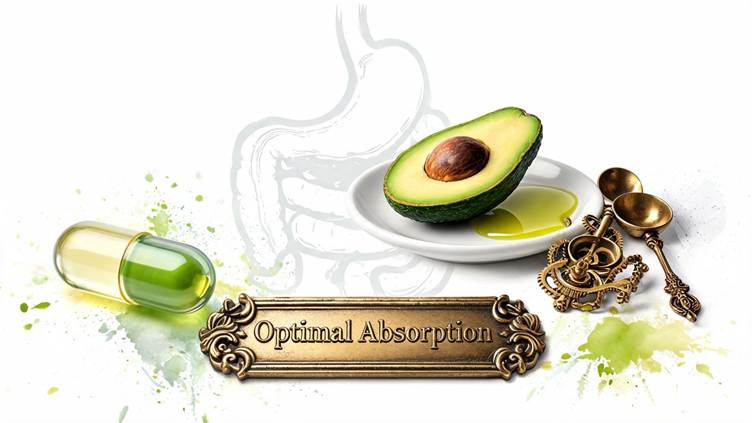
Take coenzyme Q10 with food. This is one of the simplest changes that makes a difference. CoQ10 is fat-soluble, so taking it with food helps. Breakfast or your main meal usually works well.
You don’t need a perfect “supplement meal.” You just need a normal meal with some fat in it. Think yoghurt, eggs, olive oil, nut butter, or avocado.
Pharmacist’s tip
If CoQ10 upsets your stomach, don’t take it on an empty stomach. Take it halfway through a meal instead.
Safety and side effects
CoQ10 is generally well tolerated. In the statin-focused evidence base, it’s described as safe up to 1200 mg daily [2]. That doesn’t mean more is better. It means there is a broad safety margin, but very high doses are not generally required.
What matters more in practice is avoiding sloppy use. Mild digestive upset can happen. Some people also prefer not to take it too late in the day if they feel more alert on it.
- Start small: Don’t add five supplements at once.
- Track symptoms: Note why you started it and what you’re hoping to improve.
- Review at a sensible point: If nothing meaningful changes, rethink the plan.
Medicine interactions that matter
This is where a pharmacist earns their keep. If you take regular medicines, don’t treat supplements as automatically harmless.
Speak to a pharmacist or prescriber before using CoQ10 if you take:
- Warfarin or another anticoagulant
- Blood pressure medicines
- Insulin or diabetes treatment
- Complex heart medication regimens
That doesn’t mean you can’t use CoQ10. It means you should check first.
Pharmacist’s tip
If your muscle pain started soon after a statin change, don’t assume CoQ10 is the only answer. Sometimes the statin type, timing, or dose needs to be reviewed as well.
A different delivery format may suit some patients better. For example, some people prefer Coenzyme Q10 buccal film if swallowing capsules is awkward.
Buccal film: a different way to take coenzyme Q10
If you’ve ever stared at a CoQ10 capsule the size of a small marble and quietly questioned your life choices, you’re not alone. CoQ10 is a stubbornly fat-soluble molecule, and most oral capsules and softgels need a generous bed of dietary fat, a working gut, and a bit of patience before any of it actually reaches the bloodstream. That’s fine in theory. In practice, it leaves a chunk of patients (older adults, statin users with reflux, busy parents who skip breakfast, people on multiple medicines) absorbing far less than the label suggests.
The Courier Pharmacy coenzyme Q10 50mg buccal film is designed to sidestep that problem entirely.

What is a buccal film?
A buccal film is a thin, flexible strip that adheres to the inside of the cheek (or under the tongue) and dissolves over a few minutes. The active ingredient is released directly into the lining of the mouth, where it’s absorbed straight into the bloodstream through a dense network of blood vessels in the cheek mucosa.
In the case of the Courier Pharmacy CoQ10 buccal film, that means a 50mg dose of coenzyme Q10 in a fast-dissolving, mucoadhesive oral film.
- No water needed.
- No capsule to swallow.
- No waiting for the stomach to do its part.
Why the buccal route can outperform a capsule
Three practical advantages stand out:
- The film bypasses the stomach and small intestine entirely. That matters because CoQ10 is poorly absorbed in the gut, with an oral bioavailability often quoted in the low single-digit percentages, and absorption depends heavily on dietary fat, bile flow, and how reliably you take it with food.
- Buccal absorption avoids the first-pass effect of the liver. When you swallow a capsule, anything absorbed from the gut goes directly to the liver before reaching the rest of the body, where a portion is metabolised and lost. The buccal route delivers the active ingredient straight into systemic circulation without that first hit.
- Onset is faster, and dosing is more reproducible. Capsules are at the mercy of stomach contents, gastric emptying, and how recently you ate something fatty. A film delivers a defined dose to a defined absorption surface, with much less variability between days.
There’s also a real-world tolerability angle. CoQ10 capsules are large, oily, and not always kind on a sensitive gut. A film removes the swallowing burden and removes the upset-stomach risk. For older adults, statin users with reflux, anyone with swallowing difficulties, and anyone who genuinely cannot face another capsule before breakfast, that alone can be the difference between consistent use and a half-finished bottle in the bathroom cabinet.
Why mucoadhesive matters
A “mucoadhesive” film does what the name suggests. It sticks gently to the wet inner surface of the cheek for the few minutes it takes to fully dissolve. That keeps the coenzyme Q10 in close contact with the absorption surface for the whole release window, rather than being washed away by saliva and swallowed before it can do anything useful.
In other words, you get more of the dose where you need it, and less of it lost to the stomach.
Why 50mg as a buccal dose is not the same as 50mg in a capsule
This is the part that often surprises patients, and it’s where a quick pharmacy-led conversation pays off.
A 50mg buccal dose of CoQ10 is not the same as a 50mg oral capsule. Because the film bypasses gut absorption losses and first-pass metabolism, a smaller buccal dose can produce blood levels comparable to a much larger oral dose. The exact ratio varies between products and patients, but the practical implication is consistent: when you switch from oral capsules to a buccal film, you often need fewer milligrams on the label to deliver the same effect at the cell level.
That doesn’t mean the film replaces every clinical use of higher-strength oral CoQ10. For some indications, particularly in cardiology and neurology, the published trial data have used oral doses of 200mg twice daily or higher, and any switch should be discussed with a clinician or pharmacist who knows your full picture.
What it does mean is that the buccal film is a genuinely useful option for patients who:
- Struggle with capsule size or tolerability
- Have reflux, gastroparesis, or other reasons for poor oral absorption
- Are on multiple medicines and want to minimise tablet burden
- Have not seen the results they expected from a standard oral capsule
- Want a more reliable, reproducible dose without depending on dietary fat at the right moment
How to use the Courier Pharmacy CoQ10 50mg buccal film
The film is taken once to twice daily, or as directed by your pharmacist or prescriber. You place it against the inside of the cheek, hold for a few seconds while it adheres, and let it dissolve naturally over the next few minutes. No water, no food, and no specific timing window needed, although many patients find a consistent daily routine (with morning coffee, after brushing teeth, or alongside other regular medicines) easiest to stick to.
You can find the product, dosing details, and the option to speak to a UK-registered pharmacist before ordering at courierpharmacy.co.uk.
Pharmacist’s tip
If you’ve tried CoQ10 capsules in the past and found them either ineffective or hard to tolerate, don’t assume CoQ10 itself was the problem. The delivery format matters. A 50mg buccal film with reliable absorption can outperform a 200mg oral capsule that you struggle to take consistently or that your gut never fully absorbs.
How to choose a safer UK source
The biggest mistake I see is buying based on bold claims instead of basic safety. In the UK, choose a supplier that’s transparent, contactable, and linked to real clinical support if questions come up.
Look for common-sense signs:
- Clear ingredient listing
- Plain dosing instructions
- A UK contact route
- Pharmacist access where possible
- No miracle claims
A good supplement page should help you make a decision calmly. If it reads like a late-night sales pitch, leave it.

When to seek urgent help
CoQ10 itself isn’t usually the urgent issue. Your symptoms might be.
Seek urgent medical help if you have:
- severe chest pain
- sudden shortness of breath
- fainting
- severe weakness
- dark urine with significant muscle pain
- signs of a serious allergic reaction, such as swelling of the lips, tongue, or throat
Sourcing CoQ10 safely in the UK
In the UK, CoQ10 products are usually sold as food supplements, not medicines. That matters because patients often assume every product has been checked to the same standard as a prescription item. It hasn’t.
That doesn’t make supplements unsafe by default. It means where you buy them matters more. A regulated pharmacy setting gives you a better chance of getting a product with clear supply routes and real clinical support if you’re unsure whether it fits your medicines or health conditions.
A sensible approach is to use a GPhC-registered online pharmacy, especially if you have long-term conditions, polypharmacy, or a history of side effects. If you’re unsure how to check that, start with a service that clearly operates as an online pharmacy in the UK.
If your symptoms are more complex, testing and medication review may be more useful than endlessly swapping supplements. That’s especially true for unexplained fatigue, statin intolerance, fertility concerns, or recurrent migraine.
Summary and key takeaways
- CoQ10 helps your cells make energy and also acts as an antioxidant.
- A 200 mg dose is commonly used when the goal is more targeted support, not just general wellness.
- For UK patients, the most useful conversation is often around statin side effects, especially muscle pain and fatigue.
- The evidence doesn’t mean CoQ10 replaces prescribed treatment. It may help as an add-on for the right person.
- Take it with food, consider splitting the dose, and buy from a reliable UK source.
- If you take regular medicines, especially warfarin, blood pressure treatment, or diabetes medication, check with a pharmacist first.
- Used sensibly, CoQ10 can be a practical option rather than a trendy one.
Frequently asked questions about CoQ10

How long does CoQ10 take to work?
It usually isn’t an instant supplement. If it helps, the change tends to build with regular use rather than show up after one or two doses.
Is CoQ10 200 mg too much?
For many adults, no. It’s a common practical dose for targeted use, especially in statin-related muscle symptoms or similar clinical contexts.
Can I take CoQ10 with a statin?
Often, yes, and this is one of the most common reasons people use it. But muscle pain should still be reviewed properly, especially if symptoms are severe or new.
Should I take CoQ10 in the morning or evening?
Either can work. It is generally most effective when consumed with a meal reliably eaten each day.
Is ubiquinol better if I’m older?
It may suit some older adults who prefer the active form, but “better” depends on cost, consistency, and what you’ll continue to take.
Can CoQ10 help migraines?
It may be discussed as part of a broader prevention plan. It’s not a quick fix, and it works best when paired with proper migraine review and trigger management.
Does CoQ10 help fertility?
Some clinicians discuss it because of its role in cellular energy and antioxidant support. It’s best treated as one part of a proper fertility plan, not a guaranteed solution. For a fertility-focused read, see the role of Coenzyme Q10 in fertility.
Can I take CoQ10 if I have high blood pressure?
Possibly, but check first if you already take blood pressure medicine. Supplement and medicine combinations should be reviewed together.
I can’t take large capsules, is there an alternative?
For patients who struggle with capsule size, have reflux, are on multiple medicines, or simply haven’t seen the results they expected from standard oral CoQ10, a buccal film can be a more reliable route.
The Courier Pharmacy Coenzyme Q10 50mg buccal film is a thin, mucoadhesive strip that dissolves against the inside of the cheek, releasing CoQ10 directly into the bloodstream through the cheek lining. That bypasses gut absorption losses and first-pass liver metabolism entirely, which is why a 50mg buccal dose can produce blood levels comparable to a much larger oral capsule.
No water, no food required, and a much more reproducible daily dose. Available at courierpharmacy.co.uk with optional pharmacist support before ordering.
Is a CoQ10 buccal film better than a capsule?
For some patients, yes. A buccal film like the Courier Pharmacy coenzyme Q10 50mg film bypasses the gut and the liver’s first-pass metabolism, so a smaller mg dose can deliver blood levels comparable to a much larger oral capsule. It’s particularly useful if you struggle with capsule size, have reflux, take several other medicines, or simply haven’t seen the results you expected from standard oral CoQ10. For higher-dose clinical uses (such as some cardiology or neurology indications), oral capsules at 200mg twice daily are still the dose used in published trials, so any switch is best discussed with a pharmacist who knows your full picture.
Disclaimer: This article is for general information only and isn’t a substitute for personal medical advice, diagnosis, or treatment. Always check with a GP, pharmacist, or specialist before starting a new supplement if you have a medical condition or take regular medicines.
Byline:
Medical Mojo Editorial Team, reviewed by a UK-registered pharmacist
Clinical review: Clinically reviewed by a UK pharmacist with experience in online prescribing and medicines optimisation
How this content was created
This article was written using the verified evidence supplied for this brief, with an emphasis on UK patient questions, clinical practicality, and safety-first pharmacy advice. It was reviewed for factual accuracy, readability, and responsible wording.
References
[1] Mantle, D. and Dybring, A. (2019) ‘Bioavailability of coenzyme Q10: an overview of the absorption process and subsequent metabolism’, Antioxidants, available at: https://pmc.ncbi.nlm.nih.gov/articles/PMC6822644/
[2] National Center for Biotechnology Information (NCBI Bookshelf) (accessed for verified brief data on statin-associated muscle symptoms and CoQ10 use), available at: https://www.ncbi.nlm.nih.gov/books/NBK531491/