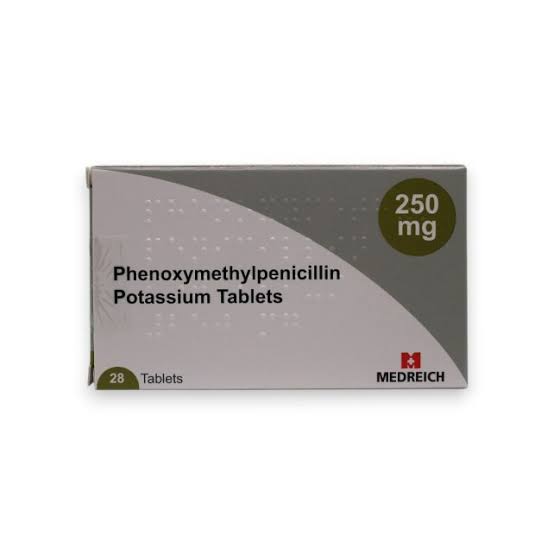
Product description Phenoxymethylpenicillin 250mg Film-Coated Tablets for Sinusitis
What phenoxymethylpenicillin 250mg tablets are
Phenoxymethylpenicillin 250mg tablets are a UK-licensed prescription-only oral antibiotic. Each tablet contains 250mg of phenoxymethylpenicillin (as phenoxymethylpenicillin potassium) in a film-coated tablet.
Also known as Penicillin V (or Pen V for short), phenoxymethylpenicillin is a narrow-spectrum penicillin. So it works against a defined range of bacteria, primarily Streptococcus and Staphylococcus species, rather than the broad range that some other antibiotics cover.
Multiple UK manufacturers produce phenoxymethylpenicillin as a generic medicine. The formulation and effect are the same regardless of manufacturer, so you may receive tablets from any UK-licensed supplier.
Why phenoxymethylpenicillin is first-line for sinusitis
NICE Guideline NG79 (Sinusitis: acute antimicrobial prescribing) recommends phenoxymethylpenicillin as the first-choice antibiotic when antibiotics are needed for acute bacterial sinusitis.
The reasons for this choice are practical:
It works against Streptococcus pneumoniae, the most common bacterial cause of acute sinusitis
It has a narrow spectrum, so it doesn’t disrupt beneficial gut bacteria as much as broader-spectrum antibiotics
Antibiotic resistance rates remain low for penicillin V against sinusitis pathogens
It has a long safety record and is well-tolerated by most people
It’s inexpensive and widely available
The 5-day course pack
This 40-tablet pack contains exactly enough tablets for a full adult 5-day course at the standard dose of 500mg (2 tablets) four times daily. So calculation is: 2 tablets × 4 doses × 5 days = 40 tablets.
Because you complete the full course, you take the last tablet on day 5. This avoids leftover tablets that shouldn’t be kept for later use (as this contributes to antibiotic resistance if used inappropriately).
Why the 5-day duration matters
5 days of treatment is enough to eliminate the bacteria causing most cases of acute bacterial sinusitis while minimising unnecessary antibiotic exposure. Longer courses don’t improve outcomes but do increase side effects and resistance risk.
Notably, if your symptoms haven’t improved substantially by day 3-5, that’s a sign to seek reassessment. So we may need to check whether the diagnosis was correct, whether a different antibiotic is needed, or whether investigation for complications is warranted.
Key features and details
Active ingredient: phenoxymethylpenicillin (as phenoxymethylpenicillin potassium) 250mg per tablet
Also known as: Penicillin V, Pen V, phenoxymethylpenicillin V
Form: film-coated oral tablet
Pack size for sinusitis: 40 tablets (full 5-day adult course at 2 tablets QDS)
Manufacturer: various UK generic manufacturers
Legal status: Prescription-Only Medicine (POM)
For: adults and children aged 12+ (sinusitis dosing). Also used at different doses for other bacterial infections in younger children (oral solution usually preferred for young children)
Sinusitis dose: 500mg (2 tablets) four times daily for 5 days, on an empty stomach
Excipient of note: contains 28mg potassium per tablet (relevant for potassium-restricted diets or severe kidney disease)
Storage: below 25°C in original packaging, away from light and moisture
Key features: NICE first-line for acute bacterial sinusitis; well-tolerated; narrow-spectrum reduces impact on gut flora
MOJO WISDOM
Take control of your health by understanding your condition and what this medication is doing for you.
READ:
More information about this treatment.
UK-based doctors and pharmacists
Discreet and Confidential
UK-based doctors and pharmacists
Free, Expert Advice
No video link provided.
No video link provided.
UK-based doctors and pharmacists
Free, expert advice
Discrete and confidential
Fast delivery
Giving you trusted clinical advice for over 40 conditions
A UK regulated pharmacy providing safe, effective treatments online since 2014
The NICE first-line antibiotic for acute bacterial sinusitis, prescribed as a 5-day course when your symptoms meet the criteria
Phenoxymethylpenicillin 250mg tablets (also known as Penicillin V or Pen V) are the first-line antibiotic recommended by NICE for treating acute bacterial sinusitis in adults and children aged 12 and over. This UK-licensed narrow-spectrum penicillin works against the bacteria that most commonly cause sinusitis, particularly Streptococcus pneumoniae.
Notably, most acute sinusitis (over 90%) is viral, not bacterial. So antibiotics don’t help most cases and shouldn’t be used routinely. However, when symptoms have persisted for 10 or more days without improvement, or symptoms are worsening despite time, or you have systemic features like a high fever, bacterial infection becomes more likely and phenoxymethylpenicillin becomes the right treatment choice.
The 5-day course pack contains 40 tablets. Because the standard adult dose is 500mg (2 tablets) taken four times a day for 5 days, this pack size covers the full recommended course exactly. So you complete treatment without leftover tablets to worry about.
Take the tablets on an empty stomach: 30 minutes before food, or at least 2 hours after eating. This matters because food reduces how well phenoxymethylpenicillin is absorbed. So timing your doses around meals is important for the medicine to work properly.
Space your four daily doses evenly, roughly 6 hours apart. For example: 7am, 1pm, 7pm, and 1am if you can, or shift the schedule to fit your day (7am, 12pm, 5pm, 10pm works too). In practice, consistent spacing keeps blood antibiotic levels effective against the bacteria.
Symptom relief usually starts within 2-3 days. However, don’t stop the course early even if you feel better. Because incomplete antibiotic courses can allow bacteria to survive, this contributes to antibiotic resistance and can lead to relapse of your infection.
Above all, phenoxymethylpenicillin is NOT for you if you have a penicillin allergy. If you’ve ever had a serious reaction to any penicillin (rash, hives, facial swelling, or breathing difficulty), you cannot take this medicine. Also, cross-reactivity with cephalosporin antibiotics happens in around 2-5% of penicillin-allergic patients.
For those with penicillin allergy needing antibiotics for sinusitis, options include doxycycline (adults only, not pregnancy), clarithromycin (a macrolide), or erythromycin. Our prescriber will assess the right option for you.
Phenoxymethylpenicillin is prescription-only. So our online prescribing service assesses your symptoms first to confirm bacterial sinusitis is likely and to check for red flags that need urgent medical review. If antibiotics are appropriate, we can issue a prescription and dispatch your 5-day course.
At Courier Pharmacy, our Superintendent Pharmacist and independent prescriber Shazlee Ahsan, alongside partner prescriber Majad Mahroof, follows NICE NG79 sinusitis guidance and current antimicrobial stewardship principles. So we don’t prescribe antibiotics routinely, but we do supply them promptly when the criteria are met.
When to see a doctor about sinusitis or penicillin treatment
Phenoxymethylpenicillin treats confirmed bacterial sinusitis in most cases. However, some symptoms or situations need urgent medical assessment rather than just an antibiotic prescription.
Signs of orbital cellulitis: swelling around the eye, redness of the eyelid, painful eye movement, bulging eye. Call 999 or go to A&E
Signs of intracranial spread: severe headache, neck stiffness, sensitivity to light, confusion, drowsiness, seizures. Call 999 or go to A&E
Vision changes: double vision, reduced vision, or eye pain. Call 999 or go to A&E
Severe unilateral (one-sided) facial swelling or pain
Symptoms of sepsis: very high fever, fast heart rate, fast breathing, feeling extremely unwell, cold clammy skin. Call 999
Signs of severe allergic reaction to penicillin: rash, hives, facial or throat swelling, breathing difficulty. Stop taking and call 999 immediately
Symptoms not improving after 3-5 days of antibiotics: needs review, and possibly a different antibiotic or further investigation
Recurrent sinusitis (multiple episodes in a year): needs GP or ENT assessment for underlying cause
Chronic sinusitis (symptoms lasting 12 weeks or more): needs GP or ENT specialist assessment, not just antibiotics
Previous penicillin allergy of any kind: do not use phenoxymethylpenicillin. Discuss options with your prescriber
Pregnancy or breastfeeding: usually safe, but discuss with your midwife or GP
Immunocompromised (chemotherapy, transplant, HIV, high-dose steroids): needs medical assessment, not routine supply
You take warfarin, methotrexate, or other medicines that interact with penicillin
Severe or persistent diarrhoea during or after the course: possible C. difficile infection, contact your GP or 111
Five key takeaways
Phenoxymethylpenicillin 250mg tablets are the NICE first-line antibiotic for acute bacterial sinusitis in adults and children 12+, supplied as a 40-tablet pack for the standard 5-day course.
For adults and older children: 500mg (2 tablets) four times daily for 5 days, taken on an empty stomach (30 minutes before food or 2 hours after).
Only for BACTERIAL sinusitis (over 90% of acute sinusitis is viral and doesn’t need antibiotics). Antibiotics considered when symptoms persist >10 days, worsen, or include systemic features like fever.
NOT for anyone with penicillin allergy. Cross-reactivity with cephalosporins possible. Options include doxycycline, clarithromycin, or erythromycin (in pregnancy).
Prescription-only. Complete the full 5-day course even if symptoms improve. Available from Courier Pharmacy through our online prescriber service after assessment.
What is Phenoxymethylpenicillin 250mg: overview
Where phenoxymethylpenicillin fits in sinusitis management
Sinusitis management follows a stepped approach based on symptom duration and severity. In practice, that looks like:
First 10 days: self-care (nasal saline rinses, decongestants short-term, pain relief, steam inhalation, rest, hydration). Most sinusitis is viral and clears without antibiotics
10+ days without improvement OR worsening symptoms OR systemic features: consider bacterial infection. Phenoxymethylpenicillin is first-line antibiotic
Recurrent or chronic sinusitis (12+ weeks): GP or ENT specialist assessment. Antibiotics alone usually won’t fix chronic sinusitis
Complications (orbital, intracranial, sepsis features): urgent hospital assessment, IV antibiotics may be needed
Phenoxymethylpenicillin vs amoxicillin for sinusitis
Amoxicillin is another commonly-used antibiotic for sinusitis, particularly in some other countries and older UK guidance. However, current NICE guidance places phenoxymethylpenicillin as first-line because its narrower spectrum reduces disruption to gut bacteria while still covering the main sinusitis pathogens.
Amoxicillin remains an option if phenoxymethylpenicillin isn’t suitable for other reasons, or in second-line situations.
Phenoxymethylpenicillin vs co-amoxiclav for sinusitis
Co-amoxiclav (amoxicillin + clavulanic acid) is a broader-spectrum antibiotic sometimes used for sinusitis, particularly when first-line treatment has failed or in more complicated cases. However, it has more side effects (particularly diarrhoea and rare but serious liver problems) than phenoxymethylpenicillin. So NICE reserves it for second-line use rather than routine sinusitis.
Phenoxymethylpenicillin vs doxycycline for sinusitis
Doxycycline is a tetracycline antibiotic used as an alternative when phenoxymethylpenicillin isn’t suitable (particularly for penicillin allergy). It has a different side effect profile, needs different timing considerations, and can’t be used in pregnancy or in children under 12.
Phenoxymethylpenicillin vs clarithromycin for sinusitis
Clarithromycin (a macrolide antibiotic) is another alternative for penicillin-allergic patients. It has different drug interaction concerns (particularly with statins and some cardiac medicines) but is safe in pregnancy under specialist advice.
Phenoxymethylpenicillin vs erythromycin (in pregnancy)
Erythromycin (also a macrolide) is often the choice in pregnancy when penicillin allergy makes phenoxymethylpenicillin unsuitable. However, it can cause more GI side effects than the other options.
Phenoxymethylpenicillin vs no antibiotic
For most acute sinusitis (viral, self-limiting), no antibiotic is the right answer. NICE and antimicrobial stewardship principles both emphasise not prescribing antibiotics unless they’re clearly needed. So many patients get better with time and supportive care alone.
Alongside supportive care
Even when antibiotics are prescribed, supportive care still matters: nasal saline rinses (Sterimar, NeilMed), short-term decongestants (up to 7 days for xylometazoline sprays like Otrivine or Sudafed nasal spray), nasal corticosteroids for congestion, paracetamol or ibuprofen for pain, adequate hydration, and rest.
Why choose Courier Pharmacy for your Phenoxymethylpenicillin
Registered, independent, and prescriber-led
Courier Pharmacy is a UK-registered independent pharmacy with independent prescribers on-site. The General Pharmaceutical Council regulates us. So when you request antibiotics through our service, a qualified prescriber assesses your situation before prescribing.
Notably, we take antimicrobial stewardship seriously. So we don’t prescribe antibiotics on demand. We assess whether they’re clinically appropriate, and we say no when they’re not (offering alternative advice or referral to your GP as needed).
Specialist prescriber expertise
Our Superintendent Pharmacist and independent prescriber Shazlee Ahsan, alongside partner prescriber Majad Mahroof, has extensive experience in respiratory and ENT conditions. So the assessment covers not just whether antibiotics are appropriate, but whether other treatments might help alongside or instead.
Dr Ada Jex-Cori, our brand pharmacist
Our brand pharmacist is Dr Ada Jex-Cori. She represents the spirit of what we do. Named for Ada Lovelace, Sophia Jex-Blake, and Gerty Cori, she stands for evidence-led, unafraid-of-questions medicine. Her message is straightforward. You’re not broken. The system is. We’re here to change that.
Care that keeps showing up
If your symptoms don’t improve on antibiotics, we’re here for the follow-up. So this includes reassessment, discussion of red flags to watch for, referral guidance if needed, and information on preventing recurrent sinusitis.
Buy Phenoxymethylpenicillin 250mg Tablets (5-Day Sinusitis Course) from Courier Pharmacy
Phenoxymethylpenicillin 250mg tablets are a prescription-only medicine. You can request supply through our online prescriber service at courierpharmacy.co.uk.
Complete our online consultation, providing details of your sinusitis symptoms, symptom duration, allergy history, current medicines, and relevant medical history
Our independent prescriber reviews your case. If antibiotics are clinically appropriate and phenoxymethylpenicillin is safe for you, a prescription is issued
The 40-tablet 5-day course is dispatched promptly, usually next working day
Take exactly as directed on the pack. Complete the full 5-day course. Contact us if symptoms don’t improve within 3-5 days or if concerning symptoms develop
If phenoxymethylpenicillin isn’t right for your situation, we’ll explain why. Options include doxycycline 100mg capsules (alternative for penicillin allergy in adults, not pregnancy), clarithromycin 500mg tablets (macrolide alternative for penicillin allergy), erythromycin 250mg tablets (usually the choice in pregnancy with penicillin allergy), amoxicillin 500mg capsules (if used for other indications), co-amoxiclav 625mg tablets (broader-spectrum second-line), nasal saline rinses (Sterimar, NeilMed Sinus Rinse), nasal steroid sprays (Beconase, Nasonex), short-term nasal decongestants (Sudafed nasal spray, Otrivine), pain relief (paracetamol, ibuprofen), or referral to your GP or ENT for complex or chronic sinusitis.
Above all, we won’t prescribe antibiotics that aren’t clinically indicated, and we’ll flag when a GP or ENT visit matters more than another antibiotic prescription.
Summary
A prescription-only UK-licensed narrow-spectrum penicillin antibiotic, first-line per NICE for acute bacterial sinusitis in adults and children 12+.
For confirmed or strongly suspected bacterial sinusitis with symptoms persisting >10 days, severely worsening, or with systemic features.
Standard adult dose: 500mg (2 tablets) four times daily for 5 days on an empty stomach.
Also used for other confirmed bacterial infections including strep throat, cellulitis, dental infections, and prophylaxis in specific conditions (though this pack focuses on the 5-day sinusitis course).
Not for penicillin-allergic patients. Available from Courier Pharmacy through our online prescriber service.
Active ingredient in Phenoxymethylpenicillin 250mg Tablets
Phenoxymethylpenicillin (Penicillin V) 250mg per tablet
Phenoxymethylpenicillin is a semi-synthetic penicillin antibiotic first developed in the 1950s. It's the oral form of penicillin, unlike benzylpenicillin which needs to be given by injection because stomach acid destroys it.
The phenoxymethyl side chain protects the penicillin structure from stomach acid, so allowing it to survive digestion and be absorbed from the small intestine into the bloodstream.
Phenoxymethylpenicillin belongs to the beta-lactam (beta-lactam) family of antibiotics. So it shares the same core chemical structure as amoxicillin, ampicillin, and the cephalosporins.
Narrow-spectrum activity
Unlike broad-spectrum antibiotics, phenoxymethylpenicillin covers a defined range of bacteria:
Streptococcus species (including S. pneumoniae, the main cause of bacterial sinusitis, and Group A strep, which causes strep throat)
Some Staphylococcus species (though many are now resistant)
Meningococci and gonococci (historical activity, resistance now common)
Some anaerobic bacteria
Notably, phenoxymethylpenicillin doesn't cover many Gram-negative bacteria, which is why it's not used for urinary tract infections or many other conditions.
Excipients in Phenoxymethylpenicillin 250mg Tablets
Potassium content
Each tablet contains 28mg of potassium (from the phenoxymethylpenicillin potassium salt). So at the sinusitis dose of 8 tablets daily, that's 224mg of potassium per day.
For most people, this potassium content is well within safe daily intake. However, if you have severe kidney disease, you're on a potassium-restricted diet, or you take potassium-sparing diuretics (spironolactone, amiloride, eplerenone) or ACE inhibitors/ARBs at high doses, discuss with our prescriber first.
Other excipients
Standard tablet excipients usually include microcrystalline cellulose, magnesium stearate, and film coating materials. So check the current pack leaflet for the full list, as this varies by manufacturer.
Suitability for special diets
Most phenoxymethylpenicillin tablet formulations are:
Suitable for vegetarians and vegans (check the specific brand)
Gluten-free (check the specific brand)
Lactose-free (check the specific brand)
However, formulation varies by manufacturer. So if you have specific dietary requirements, check the pack leaflet or ask us to confirm the specific brand being supplied.
What is Phenoxymethylpenicillin 250mg for?
Acute bacterial sinusitis (primary focus of this pack)
This 40-tablet pack is designed for the standard 5-day treatment of acute bacterial sinusitis in adults and children 12+. So the pack size matches the NICE-recommended dose of 500mg four times daily for 5 days exactly.
Bacterial sinusitis is confirmed clinically when symptoms have persisted for 10+ days without improvement, or symptoms are worsening after initial improvement, or systemic features like fever are present.
Other conditions phenoxymethylpenicillin treats
Phenoxymethylpenicillin is also licensed for:
Strep throat (Group A streptococcal pharyngitis and tonsillitis)
Scarlet fever
Cellulitis (skin infections) caused by streptococci
Dental infections (some cases)
Erysipelas
Prophylaxis against streptococcal infections after rheumatic fever
Prophylaxis against pneumococcal infections after splenectomy or in sickle cell disease
However, this specific 40-tablet pack is dosed for the 5-day sinusitis course. So different indications may need different doses, durations, or pack sizes.
What phenoxymethylpenicillin isn't for
Not for viral infections. Because most sore throats, colds, most sinusitis, and most cough illnesses are viral, antibiotics don't help them.
Not for severe systemic infections (bacteraemia, meningitis, pericarditis, arthritis, severe cellulitis). So these need IV antibiotics and hospital treatment.
Not for urinary tract infections. Phenoxymethylpenicillin doesn't cover the Gram-negative bacteria that cause most UTIs.
Not for penicillin-allergic patients. So use options from a different antibiotic class.
Not for chronic sinusitis (symptoms 12+ weeks). Chronic sinusitis needs specialist assessment, and antibiotics alone rarely fix it.
How does Phenoxymethylpenicillin work?
Bactericidal action
Phenoxymethylpenicillin is bactericidal, meaning it actively kills susceptible bacteria (rather than just stopping their growth). Because bacterial cells (unlike human cells) have a rigid cell wall made of peptidoglycan, penicillin exploits this difference.
How it kills bacteria
Penicillin binds to enzymes called penicillin-binding proteins (PBPs) on the bacterial cell wall. So this stops the bacteria from making new cell wall material. As the bacteria try to grow and divide, their weakened cell walls burst under internal osmotic pressure, killing the bacterial cell.
Human cells don't have cell walls or PBPs. So penicillin doesn't affect them. This is why penicillin is such a selective antibacterial agent, with a good safety profile in patients who aren't allergic to it.
Absorption from the gut
Phenoxymethylpenicillin is absorbed from the small intestine. However, food (particularly fatty food and dairy) reduces absorption. So taking on an empty stomach maximises the amount of antibiotic reaching your bloodstream.
Distribution and elimination
Once absorbed, phenoxymethylpenicillin distributes into most body tissues and fluids, including the sinuses. It's then mostly excreted unchanged by the kidneys. Because of this, kidney impairment can affect how quickly the antibiotic is cleared.
Why timing matters
Phenoxymethylpenicillin has a short half-life (around 30 minutes to an hour). So four-times-daily dosing keeps the antibiotic concentration in your body above the level needed to kill bacteria. Less frequent dosing would allow bacterial levels to recover between doses.
Treatment dosage for Phenoxymethylpenicillin 250mg (Sinusitis)
At a glance
For: acute bacterial sinusitis in adults and children aged 12+
Adult dose: 500mg (2× 250mg tablets) four times daily
Duration: 5 days (a full 40-tablet course)
Timing: on an empty stomach (30 min before food or 2 hours after)
Space doses evenly (approximately every 6 hours)
Complete the full course even if symptoms improve
Dose reduction may be needed in severe kidney impairment
Not suitable for penicillin-allergic patients
Standard adult sinusitis dose
The NICE-recommended dose for acute bacterial sinusitis is 500mg four times daily. Because you're using 250mg tablets, this means TWO tablets four times a day, for 5 days total.
So your daily total is 8 tablets (2 × 4 doses), and your full course is 40 tablets over 5 days. The pack size matches this exactly.
Timing your doses
Space your four daily doses roughly evenly, aiming for around 6 hours apart. Practical schedules include:
7am, 1pm, 7pm, 1am (if you're awake at night or don't mind setting an alarm)
7am, 12pm, 5pm, 10pm (four doses across your waking day, roughly 5 hours apart)
8am, 1pm, 6pm, 11pm (fits many people's routines)
The exact times matter less than keeping the doses spread out. So blood levels of the antibiotic stay steady enough to keep working against the bacteria.
Take on an empty stomach
Take each dose on an empty stomach: at least 30 minutes BEFORE food, or at least 2 hours AFTER food. Because food (especially fatty food) reduces how well phenoxymethylpenicillin is absorbed, this timing matters.
In practice, this often works well like this: first dose 30 minutes before breakfast, second dose 30 minutes before lunch or 2 hours after lunch, third dose 30 minutes before dinner or 2 hours after dinner, and fourth dose at bedtime (usually well after dinner).
If you miss a dose
If you miss a dose, take it as soon as you remember (on an empty stomach). However, if it's almost time for the next dose, skip the missed one and take the next dose as scheduled. Don't double up to catch up, because this could cause more side effects without helping.
Complete the full course
Above all, complete the full 5-day course even if you feel completely better by day 3. Because stopping antibiotics early can let surviving bacteria multiply again, this can cause a relapse or contribute to antibiotic resistance.
Kidney impairment
For severe kidney impairment (eGFR under 10 ml/min), the dose may need reducing. However, for the short 5-day sinusitis course, this often isn't a major issue. Our prescriber will assess and adjust if needed.
Pregnancy
Phenoxymethylpenicillin is generally considered safe in pregnancy. So there's no known increased risk of birth defects. However, always tell our prescriber if you're pregnant or trying to conceive.
Breastfeeding
Small amounts of phenoxymethylpenicillin pass into breast milk. So it's generally considered safe during breastfeeding, though your baby may occasionally develop mild diarrhoea or thrush. Contact your GP if concerns arise.
How to take Phenoxymethylpenicillin 250mg tablets
Standard use
Take 2 tablets (500mg total) with water, on an empty stomach, four times a day for 5 days.
Swallow whole
Swallow the tablets whole with a full glass of water. Don't chew or crush them. If you have difficulty swallowing tablets, ask us about the oral solution alternative.
Empty stomach timing
Take each dose either 30 minutes before food or at least 2 hours after food. Because food, particularly milk and dairy, reduces absorption, timing your doses around meals significantly improves how well the antibiotic works.
A common practical approach: take the first dose immediately on waking (before breakfast), then arrange other doses around your daily meal pattern.
Alcohol
You can drink alcohol while taking phenoxymethylpenicillin. However, drinking during an infection can slow your recovery. So going easy on alcohol until you've finished the course helps you get better faster.
Combined oral contraceptives
Older concerns suggested antibiotics reduced how well the combined pill worked. However, current UK guidance is that phenoxymethylpenicillin doesn't reduce contraceptive effectiveness. So you don't need extra precautions unless you have severe vomiting or diarrhoea (which can affect any oral medicine, including the pill).
Storage
Store the pack below 25°C in a dry place, away from direct sunlight. Keep in the original packaging. Keep well out of reach of children.
What to do with leftover tablets
There shouldn't be leftover tablets if you complete the course correctly. However, if any remain, return them to a pharmacy for safe disposal. Don't keep them for future use, and don't share with others, because using antibiotics inappropriately fuels resistance.
How quickly it works
Symptom improvement usually starts within 2-3 days of starting the course. Facial pain, congestion, and discharge should gradually reduce, and your energy should improve.
However, if symptoms haven't improved substantially by day 3-5, contact us or your GP. This may mean the infection isn't responding, isn't bacterial, or has complications needing further assessment.
Warnings and precautions for Phenoxymethylpenicillin
Penicillin allergy (absolute contraindication)
Above all, don't take phenoxymethylpenicillin if you have any history of allergy to penicillin. This includes previous reactions to amoxicillin, ampicillin, flucloxacillin, co-amoxiclav, or any other penicillin.
Penicillin allergic reactions can range from mild rash to severe anaphylaxis. So severe penicillin allergy can be fatal, and repeat exposure can trigger reactions even if previous exposures were mild.
Cross-reactivity with cephalosporins
If you have severe penicillin allergy (particularly anaphylaxis or severe skin reactions), you may also be at risk from cephalosporin antibiotics. Because they share a similar chemical structure, cross-reactivity happens in around 2-5% of penicillin-allergic patients.
Severe infections need IV treatment
Phenoxymethylpenicillin is for mild-to-moderate infections that can be treated orally. So severe or complicated infections (empyema, bacteraemia, meningitis, pericarditis, septic arthritis) need IV antibiotics and hospital care.
Antibiotic-associated colitis (C. difficile)
Any antibiotic can occasionally cause severe diarrhoea from Clostridioides difficile (C. difficile) infection. Because this can be serious, sustained severe diarrhoea during or after your course needs prompt medical assessment.
So contact your GP or 111 if you develop watery diarrhoea (particularly with abdominal pain, fever, or blood) during or after taking phenoxymethylpenicillin.
Rash during treatment
Rashes can occur during penicillin treatment. Some rashes are truly allergic (needing immediate stopping and medical advice). Others are non-allergic and may not require stopping.
However, if any rash develops, contact us or your GP for advice. Also, if the rash is widespread, blistering, involves mucous membranes (mouth, eyes, genitals), or you develop breathing difficulty or facial swelling, stop taking and seek urgent help.
Kidney impairment
Dose reduction may be needed for severe kidney impairment (eGFR <10 ml/min). Our prescriber will check kidney function if relevant.
Prolonged use
Prolonged antibiotic use can promote overgrowth of non-susceptible organisms, including fungi (leading to thrush) or resistant bacteria. So the 5-day course is designed to minimise this while still treating the infection.
Pregnancy
Phenoxymethylpenicillin is generally considered safe in pregnancy. Also, penicillins are among the most-studied antibiotics in pregnancy, with a long safety record. However, always tell our prescriber if you're pregnant.
Breastfeeding
Small amounts pass into breast milk. Also, penicillins are generally considered compatible with breastfeeding. However, watch your baby for occasional mild diarrhoea or oral thrush, which can occur from small amounts of antibiotic transfer.
Interactions with certain medicines
Discuss with our prescriber before starting if you take:
Methotrexate (phenoxymethylpenicillin can raise methotrexate levels, increasing toxicity)
Warfarin (variable effects on INR, closer monitoring may be needed)
Probenecid (raises penicillin blood levels, sometimes intentional but usually not needed)
Neomycin (reduces penicillin absorption)
Any prescribed medicines you're not sure about
Signs of severe allergic reaction
Symptoms include rash, hives (urticaria), facial or throat swelling, wheezing or breathing difficulty, dizziness, collapse. Stop taking immediately and call 999. Because severe allergic reactions can be fatal, this needs urgent emergency treatment.
Alcohol
Alcohol doesn't directly interact with phenoxymethylpenicillin. However, alcohol can slow recovery from any infection. So going easy on alcohol during the course helps you recover faster.
Driving and machinery
Phenoxymethylpenicillin doesn't usually affect driving or machinery use. However, if you feel unwell from the infection or experience side effects, use judgement about driving.
Side effects of Phenoxymethylpenicillin
Common side effects
Common side effects (affecting up to 1 in 10 people) include:
Diarrhoea (usually mild)
Nausea
Vomiting
Abdominal pain or discomfort
Rash (see the note above on distinguishing allergic vs non-allergic rashes)
Oral thrush (candidiasis) - white patches in the mouth
Vaginal thrush in women - itching, discharge
Managing GI side effects
Diarrhoea, nausea, and stomach discomfort usually settle when the course finishes. So taking the tablets with a small amount of water (not milk or juice) may help, though tablets should still be on an empty stomach.
Consider taking a probiotic supplement alongside the antibiotic course. Because probiotics may help maintain gut flora balance during antibiotic treatment, this could reduce GI side effects.
Managing thrush
Oral or vaginal thrush during antibiotic courses is common. So over-the-counter treatments like clotrimazole cream/pessary (vaginal) or nystatin mouth wash/gel (oral) can help. Ask us or your pharmacist for advice.
Rare but serious side effects
Rare but serious side effects requiring immediate medical attention include:
Severe allergic reaction (anaphylaxis): facial/throat swelling, breathing difficulty, hives, collapse
Above all, seek urgent medical help for signs of severe allergic reaction (facial or throat swelling, breathing difficulty, widespread rash, collapse), severe diarrhoea with pain and fever (possible C. difficile), or blistering rash involving mouth/eyes/genitals (possible Stevens-Johnson). Call 999 if severe.
Report any suspected side effects to the MHRA Yellow Card scheme at yellowcard.mhra.gov.uk or via the Yellow Card app.
Drug interactions with Phenoxymethylpenicillin
Methotrexate
Phenoxymethylpenicillin can reduce the excretion of methotrexate, raising methotrexate blood levels and toxicity risk. So if you take methotrexate for rheumatoid arthritis, psoriasis, or cancer, discuss with our prescriber first. Sometimes the antibiotic can still be used with closer monitoring; sometimes an alternative antibiotic is preferred.
Warfarin
Antibiotics can affect INR (International Normalised Ratio) in warfarin patients, though the direction and size of effect vary. So check with your anticoagulation clinic when starting any antibiotic. INR may need checking more frequently during and after the course.
Probenecid
Probenecid (used for gout) blocks the kidney excretion of penicillin, raising penicillin blood levels. Because this is sometimes used deliberately to prolong penicillin action, it can also cause more side effects. So discuss with our prescriber if you take probenecid.
Neomycin (oral)
Oral neomycin reduces the absorption of phenoxymethylpenicillin. So this combination is best avoided.
Tetracyclines
Theoretically, bacteriostatic antibiotics like tetracyclines could reduce the effectiveness of bactericidal antibiotics like penicillin. So combining them is best avoided.
Combined oral contraceptives
Current UK guidance is that phenoxymethylpenicillin doesn't reduce contraceptive effectiveness. However, if you have severe vomiting or diarrhoea (which can affect absorption of any oral medicine, including the pill), consider extra precautions until 7 days after symptoms resolve.
Alcohol
No direct interaction. However, alcohol can slow recovery from infection.
Food
Food (particularly fatty food and dairy) reduces phenoxymethylpenicillin absorption. So the empty-stomach timing is important for the antibiotic to work properly.
Frequently asked questions about Phenoxymethylpenicillin 250mg for sinusitis
What is phenoxymethylpenicillin used for?
A narrow-spectrum penicillin antibiotic. In this pack (40 tablets), it's used for acute bacterial sinusitis in adults and children 12+ as a 5-day course at 500mg (2 tablets) four times daily.
Why 250mg tablets rather than 500mg?
The 250mg tablet is UK-standard for adult sinusitis dosing. Because the dose is 500mg four times daily, you take 2 tablets per dose. So the pack size (40 tablets) matches the full 5-day adult course exactly.
How is bacterial sinusitis different from viral sinusitis?
Most acute sinusitis (over 90%) is viral and clears without antibiotics in 7-10 days. Bacterial sinusitis is more likely when symptoms persist beyond 10 days without improvement, symptoms are worsening after initial improvement, or you have systemic features like a fever of 38°C or higher, or you have particularly severe unilateral facial pain and swelling.
When should I take my doses?
Four times daily, roughly every 6 hours, on an empty stomach (30 minutes before food or 2 hours after). For example: 7am (before breakfast), 1pm (2 hours after lunch or before if practical), 7pm (before dinner), and 11pm-1am (well after dinner).
Do I really need to take on an empty stomach?
Yes. Because food, particularly milk and dairy, significantly reduces how much phenoxymethylpenicillin is absorbed, empty-stomach dosing can double the effective dose that reaches your bloodstream. So this timing matters more than it does for many other antibiotics.
What if I miss a dose?
Take it as soon as you remember (on an empty stomach). However, if it's almost time for the next dose, skip the missed one and continue with the normal schedule. Don't double up.
Can I stop early if I feel better?
No. Complete the full 5-day course even if you feel completely better by day 3. Because stopping early can let surviving bacteria multiply again, this can cause relapse or contribute to antibiotic resistance.
How quickly will I feel better?
Symptom improvement usually starts within 2-3 days. Full resolution takes the whole course and often a few days after.
What if I don't feel better by day 3?
Contact us or your GP. So this may mean the infection isn't responding, isn't bacterial, or has complications needing further assessment.
Can I drink alcohol during the course?
Yes, alcohol doesn't directly interact with phenoxymethylpenicillin. However, alcohol can slow recovery from any infection.
Will the antibiotic affect my contraceptive pill?
Current UK guidance says no. So you don't need extra precautions unless you have severe vomiting or diarrhoea (which can affect absorption of any oral medicine).
What if I'm allergic to penicillin?
Don't take this medicine. So options include doxycycline (adults only), clarithromycin, or erythromycin (in pregnancy). Our prescriber will assess the right option for you.
Can I take phenoxymethylpenicillin in pregnancy?
Yes, generally considered safe. Penicillins are among the most-studied antibiotics in pregnancy with a long safety record. However, always tell our prescriber if you're pregnant.
Can I take phenoxymethylpenicillin while breastfeeding?
Yes, generally considered compatible with breastfeeding. However, watch your baby for occasional mild diarrhoea or thrush.
What are the common side effects?
Diarrhoea, nausea, vomiting, abdominal discomfort, thrush (oral or vaginal), and rash. Most side effects are mild and settle after the course.
Should I take a probiotic alongside?
Some evidence supports probiotic use during antibiotic courses to reduce GI side effects. So a course of probiotic capsules (like Bio-Kult, Optibac, or similar) taken at a different time of day (space at least 2 hours from your antibiotic) may help maintain gut flora.
What if I develop a rash?
Any rash needs assessment. So contact us or your GP for advice. If the rash is widespread, blistering, involves mouth/eyes/genitals, or you develop breathing difficulty or facial swelling, stop taking and seek urgent help.
What if I get severe diarrhoea?
Severe or persistent diarrhoea during or after antibiotic treatment can indicate C. difficile infection. So contact your GP or 111 for advice. Don't take anti-diarrhoea medicines like loperamide without guidance, because they can make C. difficile worse.
Can I stop nasal decongestants and steroid sprays during antibiotics?
Usually no. So nasal steroid sprays (Beconase, Nasonex) can continue alongside antibiotics for congestion. Also, saline rinses (Sterimar, NeilMed) still help. However, short-term nasal decongestants (Sudafed nasal spray, Otrivine) shouldn't be used for more than 7 days total to avoid rebound congestion.
Do I need a prescription?
Yes. Phenoxymethylpenicillin is a Prescription-Only Medicine (POM). So our online prescriber service can assess your symptoms and prescribe if clinically appropriate.
What are the pack sizes?
For sinusitis, the 40-tablet pack covers the full 5-day adult course. Other pack sizes exist for other conditions with different dose regimens.
How should I store the tablets?
Below 25°C in the original packaging, away from direct sunlight and moisture. Keep out of reach of children.
What happens to any leftover tablets?
There shouldn't be leftover tablets if you complete the course correctly. However, if any remain, return to a pharmacy for safe disposal. So don't keep for future use or share with others.
Disclaimer
Disclaimer: This information is for education only and isn't a substitute for personal medical advice. Phenoxymethylpenicillin is a Prescription-Only Medicine and should only be taken when prescribed after clinical assessment. It's not intended to diagnose, treat, cure, or prevent any condition without prescriber assessment. Always follow the pack directions and your prescriber's specific instructions. Complete the full 5-day course even if symptoms improve. Contact your prescriber, GP, or A&E urgently for red flag symptoms (severe facial swelling, vision changes, severe headache with neck stiffness, breathing difficulty, or severe allergic reaction). Antibiotic resistance is a serious global threat. Only take antibiotics when they're clinically needed, and always complete the prescribed course.
References
National Institute for Health and Care Excellence (2017, updated 2024) Sinusitis (acute): antimicrobial prescribing. NG79. Available at: https://www.nice.org.uk/guidance/ng79