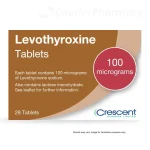
Levothyroxine 100 microgram tablets are a UK-licensed prescription-only oral thyroid hormone replacement. Each tablet contains 100 micrograms of anhydrous levothyroxine sodium, a synthetic form of the natural hormone thyroxine (T4).
Notably, levothyroxine is chemically identical to the T4 your thyroid gland normally makes. So your body handles it exactly as it would natural thyroxine, converting it to the active hormone T3 (triiodothyronine) in tissues as needed.
Why 100 microgram is a common maintenance strength
100mcg is one of the most common maintenance doses of levothyroxine. Because a typical adult full-replacement dose is 100-200mcg daily depending on body weight, age, and other factors, many patients settle at 100mcg or 125mcg as their stable long-term dose.
However, doses lower than 100mcg (25mcg, 50mcg, 75mcg) or higher (up to 300mcg in some cases) exist too. So the strength you need depends on your specific TSH results and how your body responds.
The 28-tablet pack (one month supply)
The 28-tablet pack provides one month of once-daily dosing. Because levothyroxine is usually a lifelong treatment, monthly pack sizes fit repeat prescription cycles well.
So each month, you take one tablet daily. If you take 100mcg once daily, your 28-day pack lasts 28 days exactly. If your dose combines strengths (like 100mcg on 5 days and 150mcg on 2 days for a weekly average of 114mcg), the calculation changes accordingly.
Why bioavailability and brand matter
Levothyroxine has what pharmacologists call a narrow therapeutic index. In practice, small changes in blood levels can shift you between under-replacement, adequate replacement, and over-replacement. Because different manufacturers formulate their tablets slightly differently, some patients notice symptoms when their pharmacy switches brands.
The MHRA issued specific prescribing advice in May 2021: patients who experience symptoms on switching between different levothyroxine products should stay on the same brand once stabilised. So we make note of your preferred brand and work to supply it consistently.
Key features and details
Active ingredient: anhydrous levothyroxine sodium 100 micrograms per tablet
Class: synthetic thyroid hormone (T4)
Form: uncoated tablet
Pack size: 28 tablets (one month at once-daily dosing)
Legal status: Prescription-Only Medicine (POM)
For: adults, children (with paediatric supervision), and elderly (at reduced starting doses)
Standard dose range: 100-200mcg daily (this pack covers 100mcg daily)
Timing: once daily on an empty stomach (30-60 minutes before breakfast, or 2-4 hours after last meal at bedtime)
Storage: below 25°C in original packaging, away from light and moisture
Key features: standard UK treatment for hypothyroidism; taken lifelong for most patients; multiple drug and food interactions require careful timing; regular TSH monitoring guides dose
Additional information
Quantity
1 x 28, 2 x 28, 3 x 28
MOJO WISDOM
Take control of your health by understanding your condition and what this medication is doing for you.
READ:
More information about this treatment.
UK-based doctors and pharmacists
Discreet and Confidential
UK-based doctors and pharmacists
Free, Expert Advice
No video link provided.
No video link provided.
UK-based doctors and pharmacists
Free, expert advice
Discrete and confidential
Fast delivery
Giving you trusted clinical advice for over 40 conditions
A UK regulated pharmacy providing safe, effective treatments online since 2014
No author selected. No qualification available. No user selected.
No profile picture available.
Checked By
No author selected. No qualification available. No user selected.
Levothyroxine 100 microgram Tablets (28 Pack)
The UK first-line thyroid hormone replacement for hypothyroidism, taken once daily on an empty stomach with regular blood test monitoring
Levothyroxine 100 microgram tablets are the standard UK treatment for hypothyroidism (an underactive thyroid). Each tablet contains 100 micrograms (100mcg) of levothyroxine sodium, a synthetic form of thyroxine (T4), the main hormone your thyroid gland normally produces.
Hypothyroidism happens when your thyroid gland doesn’t make enough thyroid hormone. Because thyroid hormone controls how quickly your body uses energy, low levels cause tiredness, weight gain, feeling cold, dry skin, constipation, brain fog, and low mood. So without treatment, hypothyroidism gradually affects almost every body system.
Levothyroxine replaces the hormone your thyroid can’t make. Once absorbed, your body converts it to the active hormone T3 (triiodothyronine) as needed. So the treatment works by giving your body the raw material it would normally produce for itself.
Notably, levothyroxine is one of the most-prescribed medicines in the UK. Over 3 million people in the UK take it daily. Because it’s usually a lifelong treatment, getting the dose right and the routine right really matters.
The 28-tablet pack provides one month’s supply at the standard once-daily dose. Take one tablet each day, on an empty stomach, ideally 30-60 minutes before breakfast. So this gives the tablet the best chance to be absorbed properly (food significantly reduces absorption).
An alternative timing option: take at bedtime, at least 2-4 hours after your last meal. However, either way, the key is consistency. Take at the same time each day, and don’t switch between morning and evening dosing back and forth. Because levothyroxine has a narrow therapeutic window, small timing changes can affect blood levels.
Blood levels of TSH (thyroid stimulating hormone) guide dose adjustments. So your GP or prescriber will check your TSH 6-8 weeks after starting or after any dose change, then usually annually once your levels are stable. The target TSH is generally 0.4-4.0 mU/L in most adults, though targets differ during pregnancy and in specific situations.
Levothyroxine has an extensive list of drug interactions. Above all, iron supplements, calcium supplements, and antacids all reduce absorption significantly. So space these by at least 4 hours from your levothyroxine dose. Also, many other medicines and even coffee, grapefruit juice, and soy products can affect absorption or metabolism.
Pregnancy needs special attention. Your levothyroxine dose usually increases by 25-50% during pregnancy. So if you’re pregnant or planning pregnancy, tell us and your GP early, because tighter TSH targets and closer monitoring apply.
At Courier Pharmacy, our Superintendent Pharmacist and independent prescriber Shazlee Ahsan holds an MSc in Endocrinology, giving him particular expertise in thyroid conditions. Alongside partner prescriber Majad Mahroof, our team can manage stable hypothyroidism prescriptions, review your dosing, coordinate TSH monitoring, and help you troubleshoot common issues like absorption interactions or brand switching.
When to see a doctor about your thyroid or levothyroxine
Levothyroxine works well for most people with hypothyroidism. However, some situations need medical review beyond routine repeat prescriptions.
New symptoms of over-replacement: palpitations, fast heart rate, tremor, unusual sweating, heat intolerance, weight loss, anxiety, insomnia. Your dose may be too high
New symptoms of under-replacement: worsening tiredness, weight gain, cold intolerance, constipation, brain fog, hair thinning, muscle aches. Your dose may be too low
Chest pain, breathlessness on exertion, or new irregular heartbeat: get urgent assessment, particularly if you have cardiac history
New pregnancy or planning pregnancy: dose usually needs to increase by 25-50% in early pregnancy. Contact your GP for TSH testing and dose adjustment
Miscarriage or fertility problems: thyroid function may need review. Discuss with your GP
You’ve been switched to a different brand and notice symptoms: MHRA guidance supports returning to your previous brand if you’re sensitive to switches
Starting or stopping estrogen-containing medicines (combined pill, HRT): may need levothyroxine dose adjustment
Starting iron supplements, calcium supplements, PPIs (omeprazole, lansoprazole), or antacids: absorption timing needs review
Recent surgery or acute illness: thyroid needs may change temporarily
Symptoms of adrenal insufficiency (extreme tiredness, weight loss, dizziness, salt cravings, skin darkening): needs urgent assessment, as adrenal problems must be treated before increasing thyroid replacement
Signs of severe allergic reaction: rash, facial swelling, breathing difficulty. Call 999
Bone density concerns or family history of osteoporosis: long-term over-replacement can affect bones
Newly diagnosed hypothyroidism without previous specialist review: usually needs GP or endocrinology assessment first before online repeat prescription
Long gaps in monitoring: TSH should be checked at least annually once stable, more often during dose adjustment
Five key takeaways
Levothyroxine 100 microgram tablets are the standard UK treatment for hypothyroidism, taken once daily as ongoing (usually lifelong) hormone replacement.
Timing matters. Take on an empty stomach, 30-60 minutes before breakfast, or at bedtime 2-4 hours after your last meal. Consistency each day is key.
Many interactions. Space by at least 4 hours from iron, calcium, and antacids. Also affected by PPIs, estrogens, some antiepileptics, coffee, grapefruit juice, and soy.
Regular TSH blood tests guide dose adjustments (6-8 weeks after any change, then annually when stable). Target usually 0.4-4.0 mU/L, tighter in pregnancy.
Brand consistency helps some patients (MHRA guidance). Dose usually increases 25-50% in pregnancy. Prescription-only after assessment. Available from Courier Pharmacy through our online prescriber service.
What is Levothyroxine 100mcg: overview
Where levothyroxine fits in hypothyroidism management
Hypothyroidism has several causes: autoimmune thyroid disease (Hashimoto’s thyroiditis, the most common cause in the UK), post-surgical (after thyroidectomy for cancer or nodules), post-radioactive iodine treatment (for previous hyperthyroidism), iodine deficiency, or medication-induced.
Because the thyroid can’t recover in most cases, replacement therapy with levothyroxine is the standard treatment for all causes. So the goal isn’t to fix the thyroid but to replace the hormone it can’t make.
Levothyroxine (T4) vs liothyronine (T3)
Some patients ask about T3 (liothyronine) instead of, or alongside, T4 (levothyroxine). Because most patients feel well on levothyroxine alone (as the body converts T4 to T3 as needed), T4 monotherapy is the UK first-line treatment.
However, a small proportion of patients don’t feel fully well on levothyroxine alone. So combination therapy (T4 plus T3) may be considered by specialist endocrinologists in specific circumstances, though NICE currently doesn’t recommend routine combined use.
Levothyroxine vs natural desiccated thyroid (NDT)
Natural desiccated thyroid (NDT) is a preparation made from dried pig thyroid. Because it contains both T4 and T3 in a fixed ratio, some patients prefer it. However, NDT isn’t licensed in the UK and quality control can vary between preparations.
So NICE and NHS guidance don’t support routine NDT prescribing. For patients who want to explore this option, specialist private endocrinology assessment is usually needed.
100mcg vs other strengths
Levothyroxine is available in 25mcg, 50mcg, 75mcg, and 100mcg tablets in the UK. So flexible dosing (combining strengths) allows any dose to be built up: 125mcg = 100mcg + 25mcg, 150mcg = 100mcg + 50mcg, etc.
Some patients also alternate doses on different days for fine-tuning (like 100mcg on 4 days and 125mcg on 3 days for a weekly average of 111mcg).
Alongside supportive lifestyle measures
Levothyroxine works best alongside good general health measures: regular sleep, balanced diet (with adequate iodine, selenium, and other trace nutrients), regular exercise, and managing stress. So even with optimal levothyroxine dosing, energy and wellbeing depend on these other factors too.
Why choose Courier Pharmacy for your Levothyroxine
Specialist endocrinology expertise
Our Superintendent Pharmacist and independent prescriber Shazlee Ahsan holds an MSc in Endocrinology. So thyroid conditions are a particular area of clinical expertise, alongside general prescribing capability.
This matters because levothyroxine prescribing isn’t just about issuing repeat tablets. Also, it involves reviewing your TSH results, considering interactions with other medicines you take, adjusting doses appropriately, checking for pregnancy or planned pregnancy, and identifying situations where you need more thorough investigation.
Registered, independent, and prescriber-led
Courier Pharmacy is a UK-registered independent pharmacy with independent prescribers on-site. The General Pharmaceutical Council regulates us. So when you request levothyroxine through our service, a qualified prescriber assesses your situation before prescribing.
Brand consistency where possible
If you’re sensitive to brand switches, we’ll note your preferred brand and work to keep supplying it. Because MHRA guidance supports brand consistency for sensitive patients, this is standard good practice.
Dr Ada Jex-Cori, our brand pharmacist
Our brand pharmacist is Dr Ada Jex-Cori. She represents the spirit of what we do. Named for Ada Lovelace, Sophia Jex-Blake, and Gerty Cori, she stands for evidence-led, unafraid-of-questions medicine. Her message is straightforward. You’re not broken. The system is. We’re here to change that.
Care that keeps showing up
Levothyroxine is usually a lifelong treatment. So we’re here for the follow-up questions along the way: coordinating TSH monitoring, discussing dose adjustments, managing pregnancy-related changes, troubleshooting interactions, and helping when things aren’t working as expected.
Buy Levothyroxine 100 microgram Tablets from Courier Pharmacy
Levothyroxine 100mcg tablets are a Prescription-Only Medicine. You can request supply through our online prescriber service at courierpharmacy.co.uk.
Complete our online consultation, providing details of your hypothyroidism diagnosis, current dose, most recent TSH result, other medicines you take, and any concerns
Our independent prescriber reviews your case. If levothyroxine is appropriate to supply, a prescription is issued
The 28-tablet pack is dispatched promptly, usually next working day
Take exactly as directed on the pack. Keep up with regular TSH monitoring. Contact us if concerns arise or when it’s time for your next repeat
If levothyroxine 100mcg isn’t right for your current situation, we’ll explain why. Options include different strengths of levothyroxine (25mcg, 50mcg, 75mcg for lower doses or dose combinations), levothyroxine oral solution (for those who can’t swallow tablets or need very fine dose control), specific brand requests (Wockhardt, Accord, Teva, Aristo, others), a referral to your GP for TSH testing or dose adjustment, referral to a specialist endocrinologist for complex situations (fertility, pregnancy planning, poor symptom control, suspected T3 conversion issues), or advice on managing coexisting conditions that affect thyroid function.
Above all, we won’t supply levothyroxine when your situation needs proper GP or specialist input first, and we’ll flag when your monitoring or dose review is overdue.
Summary
A prescription-only synthetic thyroid hormone (T4), used to treat hypothyroidism in adults, children, and elderly.
Chemically identical to natural thyroxine, converted by the body to active T3 as needed.
Standard dose: 100-200mcg once daily on empty stomach. This 28-tablet pack covers 100mcg daily for one month.
Usually lifelong treatment. Dose adjustments based on regular TSH blood tests.
Extensive drug and food interactions. Pregnancy requires dose increase. Available from Courier Pharmacy through our online prescriber service.
Active ingredient in Levothyroxine 100 microgram Tablets
Anhydrous levothyroxine sodium 100 micrograms per tablet
Levothyroxine sodium is the synthetic form of thyroxine (T4), one of the two main hormones your thyroid gland produces. The 'anhydrous' form means without water, providing a stable, consistent dose in each tablet.
Chemically, levothyroxine is identical to natural thyroxine. Because your body doesn't distinguish between synthetic and natural T4, the effect is the same as if your thyroid were producing this amount itself.
Thyroid hormones T4 and T3
Your thyroid gland produces two main hormones: thyroxine (T4, containing four iodine atoms) and triiodothyronine (T3, containing three iodine atoms). Because T3 is the more biologically active hormone, T4 acts largely as a storage and transport form.
Cells throughout your body convert T4 to T3 as needed, using enzymes called deiodinases. So supplying T4 (levothyroxine) allows your body to make T3 in the right amounts at the right times.
Why T4 (levothyroxine) rather than T3 (liothyronine) as first-line
T4 has a much longer half-life (about 7 days) than T3 (about 1 day). Because this gives smoother, more stable blood levels with once-daily dosing, T4 is the practical first-line choice.
Also, most patients' bodies convert T4 to T3 adequately. So supplying T4 alone lets the body regulate T3 production naturally. Direct T3 therapy causes more fluctuation in blood levels and needs multiple daily doses.
Excipients in Levothyroxine 100 microgram Tablets
Brand-specific excipients
Different UK manufacturers use slightly different excipients. Because these can affect tablet disintegration, absorption, and rare allergic reactions, some patients are sensitive to specific brands.
Common excipients across levothyroxine tablets usually include: microcrystalline cellulose, lactose monohydrate, magnesium stearate, maize starch (or other starch), and sometimes talc, colloidal silicon dioxide, or acacia. Some brands are lactose-free, which matters for lactose-intolerant patients. Check the pack leaflet for the exact composition of your brand.
What is Levothyroxine 100mcg for?
Primary hypothyroidism (the main use)
Primary hypothyroidism means the thyroid gland itself can't make enough hormone. Because Hashimoto's thyroiditis (autoimmune thyroid disease) causes most primary hypothyroidism in the UK, this is by far the most common indication for levothyroxine.
Diagnosis is made based on symptoms plus blood tests showing raised TSH with low or low-normal free T4. So treatment aims to restore normal TSH levels and resolve symptoms.
Post-thyroidectomy
After surgical removal of all or part of the thyroid gland (usually for thyroid cancer, benign nodules, or Graves' disease), full or partial replacement with levothyroxine is needed. So dose depends on how much thyroid tissue remains and the reason for surgery.
Post-radioactive iodine treatment
Radioactive iodine treatment for hyperthyroidism (overactive thyroid) or thyroid cancer often eventually causes hypothyroidism. So levothyroxine replacement is standard after this treatment.
Congenital hypothyroidism
Babies born with underactive thyroid (detected on newborn screening) need immediate levothyroxine treatment to prevent developmental problems. This is managed by paediatric endocrinologists.
Secondary and tertiary hypothyroidism
Secondary hypothyroidism results from pituitary problems (the pituitary doesn't make enough TSH to stimulate the thyroid). Tertiary hypothyroidism results from hypothalamic problems. Because these are less common and often need specialist management, GP or endocrinology input is usually essential.
TSH suppression for thyroid cancer
For patients treated for differentiated thyroid cancer, higher doses of levothyroxine may be used to suppress TSH below normal levels (to reduce cancer recurrence risk). So this is managed by specialists and needs different monitoring.
Subclinical hypothyroidism
Subclinical hypothyroidism means TSH is raised but free T4 is still normal. Because whether to treat depends on TSH level, symptoms, age, pregnancy plans, and other factors, this needs proper GP or specialist assessment.
What levothyroxine isn't for
Not for weight loss. Because using thyroid hormone for weight loss in people with normal thyroid function is dangerous (causing heart rhythm problems, bone loss, muscle wasting) and doesn't work sustainably, this use is inappropriate.
Not for tiredness alone without confirmed hypothyroidism. So many other causes of tiredness (iron deficiency, sleep problems, depression, chronic illness) need investigation, not thyroid hormone.
Not for hyperthyroidism (overactive thyroid). This needs different treatment (antithyroid drugs, radioactive iodine, or surgery).
Not for anyone with untreated adrenal insufficiency. Because levothyroxine can precipitate an adrenal crisis in people with adrenal insufficiency, the adrenal problem must be treated first with corticosteroids.
How does Levothyroxine work?
Replacing what your thyroid can't make
Your thyroid gland normally produces T4 (thyroxine) and small amounts of T3 (triiodothyronine). Because these hormones control your body's metabolic rate, cardiovascular function, temperature regulation, brain development, and countless other processes, adequate levels are essential.
In hypothyroidism, your thyroid can't make enough hormone. So levothyroxine tablets provide the T4 externally, restoring normal blood levels.
Absorption from the gut
After swallowing, levothyroxine is absorbed mostly in the small intestine. However, absorption is only about 60-80% at best, and food (particularly high-fibre food, coffee, dairy, and soy) reduces this significantly. So empty-stomach dosing maximises absorption.
Conversion to active T3
Once absorbed, T4 travels in the blood bound to carrier proteins (mostly thyroxine-binding globulin). At the tissues, enzymes called deiodinases convert T4 to the active hormone T3, which then binds to thyroid hormone receptors in cell nuclei.
So levothyroxine works because your body handles it exactly as it handles natural thyroxine. The conversion to T3 happens where and when needed.
Long half-life
Levothyroxine has a half-life of about 7 days. Because this is very long, once-daily dosing produces smooth blood levels, and occasional missed doses don't cause immediate problems. Also, dose changes take 4-6 weeks to fully take effect.
TSH feedback
Your pituitary gland produces TSH (thyroid stimulating hormone) in response to circulating T4 and T3 levels. Because low T4 causes TSH to rise, and adequate T4 causes TSH to fall to normal, TSH is a sensitive marker of thyroid replacement adequacy.
So TSH testing is the main way to monitor and adjust your levothyroxine dose. Free T4 (fT4) is sometimes measured too, particularly in specific situations.
Treatment dosage for Levothyroxine 100 microgram
At a glance
For: hypothyroidism (underactive thyroid) in adults, children (paediatric supervision), and elderly (reduced start)
Starting dose: 50-100mcg daily in most adults. 25mcg daily in elderly or those with cardiac disease
Dose adjustments: 25-50mcg steps every 6-8 weeks based on TSH results
Timing: once daily on an empty stomach
Duration: usually lifelong
Monitoring: TSH 6-8 weeks after any dose change, then annually when stable
Standard adult maintenance dose
This 28-tablet pack provides a maintenance dose of 100mcg daily for one month. Because 100mcg is a common stable maintenance dose, many patients continue on this strength long-term once TSH targets are achieved.
However, some patients need higher (125mcg, 150mcg, 175mcg, 200mcg) or lower (25mcg, 50mcg, 75mcg) doses. So the strength that works for you depends on your body size, thyroid function level, and specific medical situation.
Starting doses
For newly diagnosed adults under 60 without heart disease, the usual starting dose is 50-100mcg daily. So a 100mcg tablet may be prescribed from the start for younger patients with clear-cut hypothyroidism.
For adults over 60, or those with heart disease, the starting dose is usually 25mcg daily. Because higher doses can strain the heart and precipitate angina or arrhythmias, the dose is increased slowly (25mcg increments every 4-6 weeks) with careful monitoring.
Dose adjustments
After starting or changing dose, TSH should be checked 6-8 weeks later. Because levothyroxine has a half-life of about 7 days, it takes weeks for TSH to fully reflect a new dose.
If your TSH is too high (above target), your dose usually increases by 25-50mcg. If your TSH is too low (below target), your dose usually decreases by 25-50mcg. So over time, most patients settle on a stable dose that keeps their TSH in target.
Weight-based estimation
A rough guide for full-replacement dosing is around 1.6 micrograms per kilogram of body weight daily. So a 70kg adult would need approximately 112mcg daily. However, this is only a starting estimate, and actual optimal dose depends on TSH response.
Elderly patients
Older adults metabolise levothyroxine more slowly and are more sensitive to over-replacement. So starting doses are lower (25mcg) and adjustments are slower. Also, TSH targets are often slightly higher (up to 5-6 mU/L is acceptable) in the elderly.
Cardiovascular disease
Patients with angina, previous heart attack, or heart failure need particularly careful dose introduction. Because rapid dose increases can worsen cardiac symptoms, initial doses are 25mcg with 25mcg increments every 4-6 weeks.
Pregnancy
Levothyroxine requirements increase during pregnancy. So the dose usually needs to go up by 25-50% in early pregnancy. Also, tighter TSH targets apply: aim for below 2.5 mU/L in first trimester, and below 3.0 mU/L in second and third trimesters.
TSH should be checked as soon as pregnancy is confirmed, then every 4 weeks in the first half of pregnancy, then again in the third trimester. So notify your GP or midwife promptly when you become pregnant.
Breastfeeding
Small amounts of levothyroxine pass into breast milk. So it's considered safe during breastfeeding. Postpartum, your dose usually returns to your pre-pregnancy level, but check TSH at 6 weeks postpartum to confirm.
If you miss a dose
If you miss a dose, take it as soon as you remember (on an empty stomach). However, if it's close to your next scheduled dose, skip the missed one and continue with your normal schedule. Don't double up.
Occasional missed doses (once or twice a month) don't usually cause significant problems because of levothyroxine's long half-life. However, if you regularly miss doses, tell us or your GP so we can help you set up better reminders.
Duration
Hypothyroidism is usually permanent. So levothyroxine is a lifelong treatment for most people. Stopping without medical advice causes hypothyroid symptoms to return within weeks or months and can be dangerous if not managed properly.
How to take Levothyroxine 100mcg tablets
Standard use
Take 1 tablet (100mcg) with water, on an empty stomach, once daily. So most people take theirs first thing in the morning, 30-60 minutes before breakfast.
Swallow whole
Swallow the tablet whole with water. Don't chew or split it unless your prescriber has advised specific splitting. If you have difficulty swallowing tablets, levothyroxine is also available as an oral solution. Ask us for advice.
Empty stomach timing (critical)
Take on an empty stomach. Because food, particularly high-fibre food, coffee, dairy, and soy products, significantly reduces levothyroxine absorption, timing around meals matters more than for most medicines.
Two practical approaches work well:
Morning dose: take with water immediately on waking, then wait 30-60 minutes before eating or drinking anything else (including coffee or tea with milk)
Bedtime dose: take at least 2-4 hours after your last meal or snack. So if you finish dinner at 7pm, take your levothyroxine at 10-11pm before bed
Both work equally well. So choose whichever fits your routine best, and stick with it consistently.
Water only
Take with plain water only. Because coffee (even without milk) reduces absorption by up to 30%, tea (particularly with milk) also reduces absorption, and fruit juices, especially grapefruit juice, can affect the medicine. So water only means water only.
Consistency each day
Take at the same time each day if possible. Because your body reaches steady state on a consistent schedule, timing consistency helps keep blood levels stable between TSH checks.
Space away from certain medicines and supplements (at least 4 hours)
The following significantly reduce levothyroxine absorption and must be spaced by at least 4 hours:
Iron supplements (ferrous sulphate, ferrous fumarate, Feroglobin, or any multivitamin with iron)
Calcium supplements or calcium-containing antacids (Rennie, Tums, Calcichew)
Aluminium or magnesium antacids (Gaviscon, Maalox, Milk of Magnesia)
Sucralfate
Cholestyramine or colestipol (for cholesterol)
High-dose multivitamins containing iron, calcium, or zinc
Space by 2 hours
The following need spacing by at least 2 hours from levothyroxine:
The following should be avoided at the same meal as your levothyroxine dose:
Coffee (even without milk)
Tea (especially with milk)
Grapefruit juice
Soy products (soy milk, tofu, soy protein powders)
High-fibre supplements (Fybogel, psyllium husk)
Dairy products
Storage
Store the pack below 25°C in the original packaging, away from direct sunlight and moisture. Keep out of reach of children.
Brand consistency
If you're stable on a particular brand and notice symptoms after being switched to a different brand, tell us. So MHRA guidance supports returning to your usual brand where possible.
Warnings and precautions for Levothyroxine
Adrenal insufficiency must be treated first
Above all, if you have adrenal insufficiency (Addison's disease or hypopituitarism affecting cortisol production), your adrenal problem must be treated with corticosteroids BEFORE starting or increasing levothyroxine. Because levothyroxine speeds up cortisol metabolism, this can precipitate an adrenal crisis in undiagnosed or untreated adrenal insufficiency.
So screening for adrenal function is essential in patients with hypopituitarism, autoimmune conditions, or symptoms suggestive of adrenal problems.
Cardiovascular disease
Patients with angina, previous heart attack, heart failure, or serious arrhythmias need very careful dose introduction. Because rapid dose increases can precipitate chest pain, arrhythmias, or heart failure worsening, initial doses are 25mcg with slow adjustments.
So if you have any of these conditions, levothyroxine dose changes should be made carefully with GP or specialist input.
Elderly patients
Older adults are more sensitive to over-replacement and more prone to atrial fibrillation from higher doses. So starting doses are lower (25mcg), adjustments are slower, and TSH targets are often slightly higher than in younger adults.
Diabetes
Starting or adjusting levothyroxine can affect blood glucose control in diabetes. Because thyroid hormone increases glucose absorption and insulin needs, insulin or oral antidiabetic drug doses may need adjustment. So more frequent blood glucose monitoring is helpful during levothyroxine dose changes.
Diabetes insipidus
Levothyroxine can occasionally worsen diabetes insipidus. So specialist input is useful in this rare situation.
Pregnancy
Levothyroxine is safe in pregnancy. However, dose requirements usually increase by 25-50%. So notify your GP or midwife as soon as pregnancy is confirmed, and expect TSH monitoring every 4 weeks in early pregnancy.
Breastfeeding
Levothyroxine is safe in breastfeeding. Small amounts pass into breast milk but not enough to affect the baby's thyroid function.
Long-term over-replacement risks
Persistently taking too much levothyroxine (TSH suppressed below normal) increases risk of:
Atrial fibrillation (particularly in elderly)
Osteoporosis (particularly in postmenopausal women)
Muscle weakness
Anxiety and insomnia
So regular TSH monitoring aims to keep levels in target and avoid over-replacement.
Signs of over-replacement
Report to us or your GP promptly if you notice: palpitations, fast heart rate, tremor, unusual sweating, heat intolerance, weight loss, anxiety, insomnia, or diarrhoea. So these suggest your dose is too high.
Signs of under-replacement
Report if you notice worsening tiredness, weight gain, cold intolerance, constipation, brain fog, hair thinning, muscle aches, or low mood. So these suggest your dose may be too low.
Signs of severe allergic reaction
Allergic reactions to levothyroxine itself are extremely rare. However, some patients react to tablet excipients (particularly lactose or specific colouring agents in some brands). Symptoms of severe allergic reaction include rash, facial swelling, breathing difficulty. Call 999 if severe.
Alcohol
Moderate alcohol doesn't interact with levothyroxine. So normal social drinking is fine.
Driving and machinery
Levothyroxine doesn't affect driving or machinery use at appropriate doses. However, unrecognised over-replacement can cause tremor and anxiety that affects concentration.
Side effects of Levothyroxine
Side effects mostly relate to over-replacement
At appropriate doses matched to your body's needs, levothyroxine has few side effects because it's replacing a natural hormone. However, if your dose is too high (over-replacement), symptoms of hyperthyroidism appear.
Symptoms of over-replacement
These include:
Palpitations, fast heart rate
Tremor (particularly in hands)
Anxiety, restlessness, irritability
Difficulty sleeping
Sweating, feeling hot, heat intolerance
Unexplained weight loss
Diarrhoea
Menstrual irregularities in women
Muscle cramps or weakness
Chest pain (particularly in older patients or those with heart disease)
So if you notice these, contact us or your GP for TSH testing. Also, dose reduction usually resolves symptoms within a few weeks.
Symptoms of under-replacement
These are essentially the symptoms of hypothyroidism returning:
Increasing tiredness
Weight gain
Feeling cold, cold intolerance
Constipation
Dry skin, hair thinning
Brain fog, poor concentration
Low mood, depression
Muscle aches
Menstrual changes
So report these too, because they may mean your dose needs to increase.
Rare allergic reactions
Levothyroxine itself is chemically identical to natural thyroxine, so true allergy is extremely rare. However, some patients react to specific tablet excipients (lactose, colouring agents). So switching to a different brand often resolves excipient-related sensitivities.
Symptoms of severe allergic reaction: rash, hives, facial or throat swelling, breathing difficulty. So stop taking and call 999 for severe reactions.
Long-term risks from over-replacement
Long-term over-replacement (TSH suppressed below normal) can cause:
Atrial fibrillation (particularly in elderly)
Osteoporosis and fracture risk (particularly in postmenopausal women)
Loss of muscle mass
So regular TSH monitoring helps avoid this by keeping doses in target.
Serious side effects requiring urgent help
Above all, seek urgent medical help for signs of severe allergic reaction (facial or throat swelling, breathing difficulty), chest pain, severe palpitations or dizziness, or signs of adrenal crisis (severe weakness, dizziness, low blood pressure, salt cravings). Call 999 if severe.
Report any suspected side effects to the MHRA Yellow Card scheme at yellowcard.mhra.gov.uk or via the Yellow Card app.
Drug interactions with Levothyroxine
Iron supplements
Iron significantly reduces levothyroxine absorption. So space by at least 4 hours between your levothyroxine and any iron-containing product (ferrous sulphate, ferrous fumarate, Feroglobin, most multivitamins with iron).
Calcium supplements
Calcium reduces levothyroxine absorption. So space by at least 4 hours from calcium supplements or calcium-containing antacids like Rennie, Tums, or Calcichew.
Aluminium and magnesium antacids
Antacids containing aluminium or magnesium (Gaviscon, Maalox, Milk of Magnesia) reduce levothyroxine absorption. So space by at least 4 hours.
PPIs (proton pump inhibitors)
PPIs like omeprazole, lansoprazole, esomeprazole, pantoprazole, and rabeprazole reduce stomach acid. Because levothyroxine absorption depends partly on stomach acid, PPIs can reduce levothyroxine effectiveness. So separating doses by 2+ hours can help.
Warfarin
Levothyroxine can enhance warfarin's anticoagulant effect. So INR should be monitored more closely when starting, stopping, or changing levothyroxine dose.
Diabetes medications
Starting or increasing levothyroxine can raise insulin or oral antidiabetic drug requirements. So closer blood glucose monitoring helps during dose changes.
Digoxin
Levothyroxine can reduce digoxin's effect. So digoxin levels may need monitoring.
Estrogens (HRT, combined oral contraceptives)
Estrogens increase thyroxine-binding globulin, raising bound thyroxine levels. Because this can effectively lower free (active) thyroxine, some patients need levothyroxine dose increases when starting estrogens. So TSH check 6-8 weeks after starting or stopping estrogens is helpful.
Antiepileptics
Carbamazepine, phenytoin, and phenobarbital increase levothyroxine metabolism. So dose increases may be needed.
Rifampicin
Rifampicin (used for tuberculosis and other infections) increases levothyroxine metabolism. So dose increases may be needed.
Ritonavir (MHRA 2018 alert)
An MHRA alert flagged interaction between ritonavir-containing HIV medications and levothyroxine, leading to reduced thyroxine levels. So HIV specialists usually manage this combination.
Amiodarone
Amiodarone has complex effects on thyroid function (can cause both hypothyroidism and hyperthyroidism). So patients on amiodarone need specialist thyroid function monitoring.
Lithium
Lithium can cause hypothyroidism. So thyroid function needs monitoring in patients starting lithium, and levothyroxine may be needed.
Cholesterol medications
Cholestyramine and colestipol reduce levothyroxine absorption. So space by at least 4 hours.
Sucralfate
Sucralfate (for peptic ulcers) reduces levothyroxine absorption. So space by at least 4 hours.
Beta-blockers
Propranolol may reduce conversion of T4 to T3 at high doses. However, standard doses don't usually cause clinically significant problems.
Food and drink interactions
These reduce absorption if taken at the same time:
Coffee (even without milk) reduces absorption by up to 30%
Tea (particularly with milk)
Grapefruit juice
Soy products (soy milk, tofu, soy protein powders)
High-fibre foods and fibre supplements
Dairy products
Alcohol
Moderate alcohol doesn't directly interact with levothyroxine.
Frequently asked questions about Levothyroxine 100mcg
What is levothyroxine used for?
Levothyroxine is thyroid hormone replacement for hypothyroidism (underactive thyroid). It replaces the T4 hormone that your thyroid gland can't produce in sufficient amounts.
How do I take levothyroxine?
Once daily on an empty stomach. Either 30-60 minutes before breakfast, or at bedtime 2-4 hours after your last meal. Take with water only. Consistency each day matters.
Why empty stomach?
Food, especially high-fibre foods, coffee, dairy, and soy, significantly reduces levothyroxine absorption. So empty-stomach dosing can improve absorption by up to 40%.
Can I take with coffee?
No. Coffee (even without milk) reduces levothyroxine absorption by up to 30%. So wait at least 30-60 minutes after your dose before having coffee or tea.
What if I miss a dose?
Take it as soon as you remember (on an empty stomach). However, if it's close to your next dose, skip the missed one and continue with the normal schedule. Don't double up. Occasional missed doses aren't usually a problem because of levothyroxine's long half-life.
How long do I need to take levothyroxine?
Usually lifelong. Because hypothyroidism is usually permanent, treatment continues indefinitely. Stopping causes hypothyroid symptoms to return within weeks or months.
How often will I need blood tests?
TSH is checked 6-8 weeks after starting or after any dose change, then usually annually once stable. During pregnancy, more frequent monitoring is needed (every 4 weeks in early pregnancy).
What's my TSH target?
Generally 0.4-4.0 mU/L for most adults, though targets are individualised. In pregnancy, aim for below 2.5 mU/L in first trimester and below 3.0 mU/L in second and third trimesters.
What if I need a different dose?
Doses are adjusted in 25-50mcg steps based on TSH results. So contact us if your TSH is out of target, and we can arrange the appropriate prescription (or refer you back to your GP for review if needed).
Can I combine strengths?
Yes. Because UK levothyroxine comes in 25mcg, 50mcg, 75mcg, and 100mcg strengths, any dose can be built up: 125mcg = 100mcg + 25mcg, 150mcg = 100mcg + 50mcg, and so on.
What about brands?
Different UK brands (Accord, Teva, Wockhardt, Aristo, Almus, and others) contain the same active ingredient. However, some patients notice symptoms after brand switches. MHRA guidance supports brand consistency for sensitive patients.
Can I take levothyroxine during pregnancy?
Yes, and you should continue treatment. However, your dose usually needs to increase by 25-50% in early pregnancy. So notify your GP or midwife as soon as you become pregnant, and expect TSH monitoring every 4 weeks initially.
Can I take levothyroxine while breastfeeding?
Yes. Small amounts pass into breast milk but not enough to affect the baby.
What if I take iron or calcium supplements?
Space these by at least 4 hours from your levothyroxine dose. So if you take levothyroxine in the morning, take your iron or calcium at lunchtime or later.
What if I take a PPI (omeprazole, lansoprazole)?
PPIs can reduce levothyroxine absorption. So separating doses by at least 2 hours helps, and your prescriber may check TSH more often if you take both long-term.
Can I use levothyroxine for weight loss?
No. Levothyroxine for weight loss in people with normal thyroid function is dangerous and doesn't work sustainably. So it's only appropriate for people with confirmed hypothyroidism.
What are the signs I'm taking too much?
Palpitations, fast heart rate, tremor, unusual sweating, heat intolerance, weight loss, anxiety, insomnia, or diarrhoea. So contact us or your GP for TSH testing if you notice these.
What are the signs I'm taking too little?
Worsening tiredness, weight gain, cold intolerance, constipation, brain fog, hair thinning, or low mood. So these suggest your dose may need to increase.
Can I take levothyroxine with other medicines?
Many other medicines can be taken alongside levothyroxine, though timing matters for some (iron, calcium, PPIs). So tell us and any other healthcare providers about every medicine you take.
What if I have heart disease?
Levothyroxine dose changes need to be made more slowly if you have angina, previous heart attack, or heart failure. So this needs GP or specialist input, and starting doses are usually 25mcg with slow adjustments.
Do I need a prescription?
Yes. Levothyroxine is a Prescription-Only Medicine (POM). So our online prescriber service can supply repeat prescriptions after assessment, or refer you back to your GP or a specialist if needed.
How should I store levothyroxine?
Below 25°C in the original packaging, away from direct sunlight and moisture. Keep out of reach of children.
What if I need to travel?
Bring your levothyroxine in original packaging. Because time zone changes matter less over a few days (thanks to levothyroxine's long half-life), take at your usual home time until you settle into local time on longer trips.
Disclaimer
Disclaimer: This information is for education only and isn't a substitute for personal medical advice. Levothyroxine is a Prescription-Only Medicine and should only be taken when prescribed after clinical assessment. It's not intended to diagnose, treat, cure, or prevent any condition without prescriber assessment. Always follow the pack directions and your prescriber's specific instructions. Regular TSH monitoring is essential. Contact your prescriber, GP, or A&E urgently for signs of adrenal crisis (severe weakness, dizziness, low blood pressure), chest pain, severe palpitations, or signs of severe allergic reaction. Levothyroxine should never be used for weight loss in people without confirmed hypothyroidism.
References
National Institute for Health and Care Excellence (2019, updated 2023) Thyroid disease: assessment and management. NG145. Available at: https://www.nice.org.uk/guidance/ng145