Lumigan 0.3mg/ml Single-Dose 0.4ml Unit-Dose Vials is a UK Prescription Only Medicine containing bimatoprost 0.3mg/ml in a sterile, preservative-free unit-dose formaoff-label for cosmetic eyelash growth, applied along the upper lash line at night.
Licensed in the UK for the reduction of intraocular pressure in glaucoma and ocular hypertension. Off-label for cosmetic eyelash growth, applied along the upper lash line at night.
The preservative-free format is generally preferred for off-label eyelash use because of the daily nature of cosmetic application.
Available from Courier Pharmacy after an online consultation reviewed by a UK-qualified prescriber, who takes full responsibility for any off-label decision.
FREE daily applicators supplied with each purchase
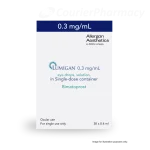
Lumigan 0.3mg/ml Single-Dose 0.4ml Unit-Dose Vials (for Eyelash Growth) are a UK Prescription Only Medicine (POM). AbbVie (formerly Allergan) manufactures them. Each box contains 30 single-use 0.4ml unit-dose vials of sterile, preservative-free bimatoprost 0.3mg/ml solution.
This unit-dose format helps people who react to preservatives. In particular, it avoids benzalkonium chloride (BAK), which appears in the standard multi-dose bottle. Therefore, clinicians often choose unit-dose vials for long-term daily use. They also suit people with dry eye, ocular surface disease, or contact lens use.
What Lumigan is licensed for in the UK
In the UK, Lumigan 0.3mg/ml single-dose eye drops reduce raised intraocular pressure (IOP) in adults with:
chronic open-angle glaucoma, or
ocular hypertension
Ophthalmology teams in the UK have used Lumigan for over two decades. So, it has a strong clinical evidence base for pressure control.
Off-label use: what this page covers (and why that matters)
This page also discusses an off-label use. Some UK prescribers use bimatoprost to support eyelash growth in adults. In the US, the FDA approved bimatoprost for eyelash hypotrichosis under the brand Latisse in 2008. However, Latisse is not licensed in the UK or EU.
Because of that, UK prescribers must handle cosmetic eyelash use carefully. They must also make sure you understand what “off-label” means. In short, it means the medicine has a licence, but not for that specific use.
This page supports an honest, prescriber-led decision. It does not “sell” cosmetic use. Instead, it helps you weigh up benefits and risks.
Safety points to understand before you decide
If you consider off-label eyelash use, focus on the safety sections first. For example, bimatoprost can cause:
changes in iris pigmentation
periorbital (around-the-eye) skin changes
effects on intraocular pressure
Therefore, a proper consultation matters. It protects your eyes, not just your lashes.
How we supply Lumigan unit-dose vials
We supply Lumigan 0.3mg/ml unit-dose vials only after an online consultation. A UK-qualified prescriber reviews your answers. The prescriber then decides if the medicine suits your situation.
If the prescriber approves off-label use, they take responsibility for that decision. They also oversee monitoring and follow-up. However, if the prescriber decides it is not appropriate, they will explain why and suggest alternatives.
Key features and specifications
Active ingredient: Bimatoprost 0.3mg/ml (0.03% w/v)
Form: Sterile preservative-free solution in single-use 0.4ml unit-dose vials
Pack size: 30 × 0.4ml unit-dose vials
Licensed UK indication: Reduction of intraocular pressure in chronic open-angle glaucoma and ocular hypertension
Off-label use discussed on this page: Cosmetic eyelash growth in adults
Legal category: Prescription Only Medicine (POM)
FREE applicator swabs with each purchase
Supplied by: Courier Pharmacy (UK GPhC-registered), after online consultation and prescriber review
Additional information
Quantity
1 x 30, 2 x 30, 3 x 30, 4 x 30, 5 x 30, 6 x 30
MOJO WISDOM
Take control of your health by understanding your condition and what this medication is doing for you.
READ:
More information about this treatment.
UK-based doctors and pharmacists
Discreet and Confidential
UK-based doctors and pharmacists
Free, Expert Advice
No video link provided.
No video link provided.
UK-based doctors and pharmacists
Free, expert advice
Discrete and confidential
Fast delivery
Giving you trusted clinical advice for over 40 conditions
A UK regulated pharmacy providing safe, effective treatments online since 2014
Lumigan 0.3mg/ml Single-Dose 0.4ml Unit-Dose Vials (Off-Label Use for Eyelash Growth)
Important regulatory note before you read further
Lumigan 0.3mg/ml single-dose preservative-free eye drops, manufactured by AbbVie (formerly Allergan), are licensed in the UK only for the reduction of intraocular pressure (IOP) in adults with chronic open-angle glaucoma and ocular hypertension. It is not licensed in the UK or EU for eyelash growth or eyelash hypotrichosis. The eyelash-growth indication is held in the United States by a separately marketed bimatoprost 0.03% product called Latisse, which is not licensed in the UK. Any use of Lumigan for eyelash growth in the UK is off-label.
At Courier Pharmacy, we believe healthcare should fit the person, not the marketing budget. That includes being honest about what a product is licensed for and what it isn’t. If you’ve come to this page looking at Lumigan 0.3mg/ml unit-dose vials for cosmetic eyelash growth, the rest of the page is written for you, with clear flags throughout about what off-label use means, what the evidence looks like, and the careful prescriber-led process we use to consider this kind of supply.
Five key takeaways
Lumigan 0.3mg/ml Single-Dose 0.4ml Unit-Dose Vials is a UK Prescription Only Medicine (POM) licensed for the reduction of intraocular pressure in chronic open-angle glaucoma and ocular hypertension. Its use for eyelash growth is off-label in the UK.
The unit-dose preservative-free format contains 0.3mg/ml of bimatoprost (the same active ingredient as US-licensed Latisse), supplied as 30 x 0.4ml single-use vials with no preservatives.
For off-label eyelash use, the typical approach is to apply a small amount of solution along the upper lash line at night with a sterile applicator brush. The dose used cosmetically is much smaller than the dose used ophthalmically.
The preservative-free formulation is generally preferred for off-label eyelash use over preserved bimatoprost formulations, because the area around the eye is sensitive to benzalkonium chloride and other preservatives over repeated daily application.
Supply through Courier Pharmacy is at the discretion of a UK-qualified prescriber who takes full responsibility for any off-label decision, considers the patient’s full medical history (particularly any ocular conditions, contact lens use, or family history of glaucoma), and arranges appropriate follow-up. FREE applicator swabs supplied with each purchase.
Licensed glaucoma / ocular hypertension dosing (the use of the product is licensed for)
One drop is instilled into the affected eye(s) once daily, in the evening. The unit-dose vial is opened, the contents instilled (a single drop typically uses around 35 to 50 microlitres, far less than the 0.4ml in each vial; the unit-dose format intentionally provides more solution than needed to allow for handling), and the remainder discarded. Each vial is for single use and should not be retained for a subsequent dose. More frequent dosing than once daily can paradoxically reduce the IOP-lowering effect.
Off-label cosmetic eyelash dosing (this is off-label use; the information below describes how clinicians typically approach the off-label dose; it is not a Courier Pharmacy recommendation)
For off-label eyelash growth, the typical clinical approach mirrors the dosing of US-licensed Latisse (which is the same active ingredient at the same 0.03% concentration). One drop of solution is placed on a sterile single-use applicator brush (not a cotton bud or fingertip, which is supplied by Courier Pharmacy FREE of charge) and drawn along the upper lash line of one eye, starting at the inner corner and moving outward, with the eye closed. A second drop is applied to a fresh applicator for the other eye. The lower lash line is not treated. Excess solution beyond the lash line is gently blotted away to reduce the risk of skin contact and unwanted pigmentation of surrounding skin. The procedure is performed once daily, in the evening, after cleansing the face and removing contact lenses.
Critically, the off-label cosmetic dose is much smaller than the licensed ophthalmic dose. The ophthalmic dose delivers solution directly into the eye; the cosmetic dose targets the eyelash hair follicles at the lid margin, with deliberate avoidance of solution entering the eye. The 0.4ml unit-dose vial contains enough solution for multiple applications, but each vial is licensed for single use; off-label cosmetic protocols vary on whether a single vial is used for both eyes on one evening (closing immediately after use) or whether a fresh vial is opened daily.
Treatment is typically continued nightly for 8 to 16 weeks before evaluating cosmetic response. Once the desired effect is achieved, some clinicians suggest reducing to alternate-night application for maintenance, while others continue nightly application throughout. If treatment is stopped, eyelashes gradually return to their pre-treatment appearance over several weeks to months.
Important off-label dosing limitations
Off-label cosmetic use of Lumigan is not recommended in patients with active ocular inflammation, uveitis, macular oedema, aphakia (no lens in the eye), pseudophakia (artificial lens) with a torn posterior lens capsule, or known risk factors for macular oedema. It is also not recommended in patients with active herpetic eye disease, dry eye disease, or significant ocular surface disease. Patients with a family history of glaucoma should discuss this carefully with the prescriber before starting, because of the theoretical concern about iris pigmentation changes with bimatoprost.
Do not use the unit-dose vial more than once. Do not save the remaining solution in an open vial for subsequent use. Do not allow the tip of the vial to contact any surface (skin, eye, applicator brush) before instillation. Do not share a vial between two people. Do not use beyond the printed expiry date.
Overview of Lumigan 0.3mg/ml Single-Dose Unit-Dose Vials
Where bimatoprost sits in the cosmetic eyelash space
Bimatoprost is currently the only molecule with robust randomised controlled trial evidence for eyelash growth. The FDA’s 2008 approval of Latisse was based on a phase III trial showing statistically significant improvements in eyelash length, thickness, and darkness over 16 weeks of nightly application. The same molecule, at the same concentration, in Lumigan 0.3mg/ml, produces equivalent cosmetic outcomes when applied off-label in the same way.
The wider cosmetic eyelash market is full of products (peptide-based serums, plant-extract products, prostaglandin-analogue alternatives like isopropyl cloprostenate) that claim eyelash enhancement. The evidence base for these is generally weaker than for bimatoprost, although some peptide serums (such as those containing biotinyl tripeptide-1) have small supportive studies. The choice between bimatoprost and a non-prostaglandin cosmetic option often comes down to a balance of expected response, side-effect risk, and whether the patient is comfortable with off-label prescription use.
The off-label decision
Off-label prescribing is permitted under UK and GMC guidance where the prescriber judges that the off-label use is in the patient’s best interests, there is sufficient evidence to support the use, the prescriber takes responsibility for the decision, and the patient is properly informed. Off-label prescribing for cosmetic indications is a legitimate but more carefully considered category, because the indication itself is not a medical condition that requires treatment, so the risk/benefit calculation depends heavily on the patient’s understanding of what they are accepting in exchange for a cosmetic outcome.
Our prescribers will only prescribe Lumigan off-label for cosmetic eyelash use after a consultation that confirms:
You are an adult capable of giving informed consent to off-label use.
You understand that the eyelash growth indication is not UK-licensed.
You have no ocular contraindications (active uveitis, macular oedema risk, herpetic eye disease, significant dry eye, aphakia or pseudophakia with capsular rupture).
You do not have a personal or strong family history of pigmentary glaucoma, where bimatoprost-related pigmentation effects could be more concerning.
You understand the risk of iris pigmentation changes (which are usually permanent), periorbital fat atrophy (which can be partially or wholly permanent), and skin pigmentation around the application site (which usually fades after stopping).
You agree to stop the product and seek a clinical review if you develop eye irritation, vision changes, eye pain, or any new ocular symptoms.
You understand that the cosmetic effect is reversible and that stopping treatment will return your eyelashes to their pre-treatment state over weeks to months.
Lifestyle and trichology context
Eyelash hypotrichosis can have many causes: ageing, alopecia areata, trichotillomania, chemotherapy-related lash loss, post-blepharitis scarring, hypothyroidism, and others. Some of these have specific underlying treatments that may improve lash density without the need for a cosmetic prostaglandin. Our prescriber will ask about these during the consultation. If there is an underlying medical cause that hasn’t been addressed, treating that first may be more appropriate than off-label cosmetic bimatoprost.
Summary
Lumigan 0.3mg/ml single-dose is licensed in the UK for glaucoma and ocular hypertension; cosmetic eyelash use is off-label and depends on the prescriber’s discretion.
Bimatoprost is a prostaglandin F2 alpha analogue that, in cosmetic use, extends the anagen (active growth) phase of the eyelash hair cycle, leading to longer, thicker, and sometimes darker lashes over 8 to 16 weeks.
The preservative-free unit-dose format is preferred for off-label cosmetic use because daily application of preserved bimatoprost (the multi-dose Lumigan 0.1mg/ml bottle, EMC code 482, which contains benzalkonium chloride) carries a higher risk of periorbital irritation over time.
The most clinically important off-label safety considerations are iris pigmentation changes, periorbital fat atrophy (prostaglandin-associated periorbitopathy or PAP), skin pigmentation around the application site, and the small theoretical concern about cystoid macular oedema in vulnerable eyes.
Treatment effect is reversible. Eyelashes gradually return to their pre-treatment length and thickness within several weeks to months of stopping bimatoprost. Iris pigmentation changes (if they occur) are usually permanent.
Why choose Courier Pharmacy for Lumigan 0.3mg/ml unit-dose vials
At Courier Pharmacy, our whole approach is built around the idea that healthcare should fit the person. For Lumigan 0.3mg/ml in the off-label eyelash context, that means careful, prescriber-led decision-making rather than transactional cosmetic dispensing. Our prescriber will assess whether off-label cosmetic use is genuinely the right option for you, screen carefully for ocular contraindications, discuss the realistic outcomes and risks (including iris pigmentation, periorbital fat atrophy, and skin pigmentation), and only approve supply where the off-label decision is in your best interests.
Our service is shaped by the philosophy of Dr Ada Jex-Cori, our brand pharmacist, who has built her practice around accessible, honest, personalised care. Her view is straightforward: you are not broken. The system is the problem. We are here to change that.
We treat off-label prescribing with the seriousness it deserves. UK GMC and GPhC guidance permits off-label prescribing where the prescriber takes responsibility for the decision, the use is supported by sufficient evidence, and the patient is properly informed.
For cosmetic eyelash use, our prescriber will spend the consultation making sure you understand the trade-offs (a reversible cosmetic improvement in exchange for a real risk of some permanent ocular pigmentation changes) and that you have no ocular conditions that make the product unsafe.
If the prescriber concludes that off-label use isn’t appropriate for you, they will explain why and may suggest non-prostaglandin alternatives such as peptide-based eyelash serums or refer you to your GP or an ophthalmologist if there are underlying causes of eyelash thinning that deserve specialist attention.
Trust is the part that has to be earned, not claimed. We’re GPhC-regulated, we ground our content in NHS, NICE, BNF, EMC, and peer-reviewed sources, and we are explicit about the off-label nature of cosmetic eyelash use. We will tell you honestly if Lumigan isn’t the right answer for your situation. We would rather lose a sale than place an off-label cosmetic medicine where it doesn’t belong. Hair loss treatment that fits you, and cosmetic care that fits you, means thinking carefully about whether the cosmetic outcome justifies the medicine, not just dispensing on request.
Lumigan 0.3mg/ml Single-Dose Unit-Dose Vials is a Prescription Only Medicine (POM) in the UK. It can only be supplied after a UK-qualified prescriber has reviewed your online consultation. For off-label cosmetic eyelash use, the consultation is particularly important because the prescriber takes full responsibility for the off-label decision and your ongoing care.
Here is how our service works:
Complete a quick online consultation answering questions about your eyes, vision history, medical history, current medicines, and your reasons for considering off-label eyelash use.
A UK-qualified prescriber reviews your answers, considers the off-label decision against your specific clinical picture, and confirms whether supply is appropriate.
If approved, a prescription is issued and your order is prepared for dispatch.
We dispense and deliver discreetly to your door.
If Lumigan’s off-label cosmetic use isn’t suitable for you, we will explain why and suggest alternatives. That might be a peptide-based eyelash serum (non-prescription, weaker evidence base but lower risk), a referral to your GP or an ophthalmologist if there is an underlying cause of eyelash thinning that hasn’t been addressed, or a discussion about whether the cosmetic effect is worth the trade-offs in your specific situation.
Our free fortnightly drop-in clinics at Insomnia, Derby, run every other week from 10 am to 12 pm. Hair loss, eyelash loss, off-label cosmetic prescribing, and the wider questions about cosmetic medicine are all conversations we have regularly at these sessions. No appointment needed, no charge, no pressure.
Active ingredient in Lumigan 0.3mg/ml Single-Dose Vials
The active ingredient is bimatoprost at 0.3mg/ml, equivalent to 0.03% w/v. Bimatoprost is a synthetic prostamide (a prostaglandin F2 alpha analogue) that binds to prostamide receptors in the eye and around hair follicles. In ophthalmic use, bimatoprost increases the outflow of aqueous humour through both the trabecular meshwork and the uveoscleral pathway, which lowers intraocular pressure. In off-label cosmetic eyelash use, bimatoprost acts on prostamide receptors in the eyelash hair follicle to extend the anagen (active growth) phase of the hair cycle, increasing follicle activity and the number of hairs in the growth phase at any given time. The mechanism is the same molecule acting on the same receptor type, at the same concentration, but with different sites of action.
The unit-dose preservative-free formulation contains bimatoprost in a sterile solution with sodium chloride, sodium phosphate (dibasic, heptahydrate), citric acid (monohydrate), and water for injections, without benzalkonium chloride or any other preservative. This is the same active formulation as the multi-dose Lumigan 0.1mg/ml bottle, except for the concentration (0.3mg/ml in the single-dose, 0.1mg/ml in the multi-dose) and the absence of a preservative. The lack of preservatives makes this format better suited to long-term daily use, particularly for off-label cosmetic use, where treatment may be continued for many months or years.
What are Lumigan 0.3mg/ml Single-Dose Vials used for?
The licensed UK use of Lumigan 0.3mg/ml single-dose is the reduction of elevated intraocular pressure in adults with chronic open-angle glaucoma and ocular hypertension. It is used either as monotherapy or alongside other glaucoma medicines (typically beta-blockers). This is the only indication for which the product is licensed and the only indication for which it can be promoted under UK MHRA rules.
The off-label use addressed on this page is cosmetic eyelash growth in adults with thin, sparse, or short eyelashes. This use is not UK-licensed. It is based on the same active ingredient and the same concentration as the US-licensed Latisse product, applied along the upper lash line at night rather than instilled into the eye. The decision to prescribe off-label is made by the prescriber on a case-by-case basis.
The product is not appropriate for:
Children or adolescents under 18 (the safety and efficacy data are based on adult populations).
Patients with active uveitis, macular oedema, or risk factors for either.
Patients with active herpetic eye disease.
Patients with significant dry eye disease or ocular surface disease.
Patients with a strong family history of pigmentary glaucoma.
Patients who are pregnant or breastfeeding (data are limited; the licensed SmPC advises avoiding use during pregnancy and breastfeeding).
Patients with known hypersensitivity to bimatoprost or to any of the excipients.
Patients seeking treatment for lower lash line growth (the off-label evidence base is for upper lash line application only; lower lash application is associated with a higher risk of unwanted skin pigmentation and is not recommended).
How does bimatoprost work for eyelash growth?
Eyelashes grow in a hair cycle with three phases: anagen (active growth), catagen (transition), and telogen (resting/shedding). At any given time, around 30 to 40 per cent of eyelashes are in the anagen phase, which lasts approximately 30 to 45 days. The total length, thickness, and pigmentation of an eyelash are largely determined by how long it spends in anagen and how active the hair follicle is during that phase.
Bimatoprost acts on prostamide receptors expressed in eyelash hair follicles. The pharmacological effect is to extend the duration of the anagen phase and to increase the proportion of follicles in anagen at any time. The clinical consequence over 8 to 16 weeks of nightly application is that more eyelashes are in active growth, individual lashes grow for longer, and the visible result is longer, thicker, and often slightly darker eyelashes. The darkness comes from increased melanin production in the hair shaft as a secondary prostamide effect.
The visible response builds gradually. Typically, 4 to 8 weeks of nightly application produce a noticeable lengthening of existing lashes. The fuller "growth-plus-thickness-plus-darkness" effect that the FDA approved for Latisse usually develops between weeks 12 and 16 of consistent use. Once steady-state has been reached, some patients can maintain the cosmetic effect on alternate-night application; others need to continue nightly.
The effect is fully reversible. Eyelashes do not permanently transform; they remain in active growth only as long as bimatoprost is being applied. When treatment stops, the follicles return to their baseline cycling pattern, and the lashes gradually return to their pre-treatment length and thickness over several weeks to months. Reversibility is a feature, not a bug; it means a patient can stop treatment without long-term cosmetic obligations.
How to use the Lumigan 0.3mg/ml unit-dose vials for off-label eyelash growth
This section describes the standard off-label protocol used by UK clinicians who prescribe bimatoprost for cosmetic eyelash use. It is not a Courier Pharmacy recommendation; the right protocol for you will be discussed with the prescriber during your consultation.
Before applying
Cleanse the face and remove all eye makeup.
Remove contact lenses (they can be reinserted 15 minutes after application).
Use a clean, single-use applicator brush (Supplied FREE of charge when you purchase any eyelash growth product from Courier Pharmacy). Most prescribed off-label eyelash protocols include a recommendation to use applicator brushes designed specifically for this purpose; do not use a cotton bud, a fingertip, or a reused brush.
Have a clean tissue ready for blotting any excess.
Applying the solution
Twist or break open one 0.4ml unit-dose vial. The vial is single-use; once opened, the unused solution is discarded after the application is complete (or at most kept for the same evening's bilateral application, with the cap sealed if the brand's vial design allows).
Place a single drop of solution on the tip of a sterile applicator brush.
With the eye closed, draw the brush along the upper lash line (the skin just above the upper lashes, at the lid margin), starting at the inner corner and moving outward. The aim is to coat the lid margin where the eyelash follicles emerge, not to flood the eye area.
Gently blot any excess solution beyond the lash line with a clean tissue. Solution that runs down onto the surrounding skin can cause unwanted pigmentation over time.
Use a fresh applicator brush and (depending on the protocol) either the same vial or a fresh vial for the other eye. Repeat the application on the upper lash line of the other eye.
Discard the used applicator(s) and any remaining solution.
Do not apply to the lower lash line.
After applying
Wait 15 minutes before reinserting contact lenses.
Do not rub the eyes for at least 10 minutes after application.
Continue normal evening routine; no special restrictions on sleep position, pillowcase, or face products applied elsewhere on the face.
Realistic expectations
Most patients see early lengthening at around 4 to 8 weeks, with peak cosmetic effect at 12 to 16 weeks of consistent nightly use. If there is no visible response by 16 weeks, continued treatment is unlikely to produce a response, and treatment should be stopped after prescriber discussion. Once you achieve the desired effect, some patients can move to a maintenance schedule (alternate nights, or 2 to 3 times weekly) under prescriber guidance.
Warnings and precautions for Lumigan 0.3mg/ml Single-Dose Vials in off-label eyelash use
The warnings below apply to off-label cosmetic use of eyelashes. The licensed glaucoma use carries its own well-established safety profile, which is covered in the SmPC.
Pregnancy, breastfeeding, and conception
Bimatoprost is not recommended in pregnancy or breastfeeding. There are limited human data, and animal studies have shown some adverse effects at high systemic exposures. For off-label cosmetic use, the precautionary recommendation is to discontinue bimatoprost when planning conception, during pregnancy, and during breastfeeding. The cosmetic eyelash effect is reversible, so a temporary stop is generally not a significant issue.
Hypersensitivity
Patients with a known hypersensitivity to bimatoprost or to any of the unit-dose vial excipients should not use the product.
Contact lens use
Contact lenses should be removed before application and may be reinserted 15 minutes later. The preservative-free unit-dose format is significantly better than the preserved multi-dose Lumigan 0.1mg/ml format for contact lens wearers, but careful application timing is still important.
The side-effect profile in off-label cosmetic eyelash use is similar to that in licensed ophthalmic use, although the doses reaching the eye and the systemic circulation are typically lower. The side effects below are drawn from the SmPC for the licensed indication and from the safety data submitted for Latisse in the US.
Side effects of Lumigan 0.3mg/ml Single-Dose Vials in off-label eyelash use
Iris pigmentation
The most well-known long-term effect of bimatoprost is a gradual increase in iris pigmentation (the iris becomes darker over time). This is a class effect of prostaglandin F2 alpha analogues and is more common in patients with mixed-colour irises (green-brown, blue-brown, hazel). The change is usually slow and gradual, but it is usually permanent and does not reverse upon stopping treatment. For patients with uniformly blue, green, or brown eyes, the risk is much lower. This is a serious consideration for off-label cosmetic use because the patient is accepting a permanent iris colour change in exchange for a reversible eyelash effect. Our prescriber will discuss this carefully during the consultation.
Prostaglandin analogues, including bimatoprost, can cause deepening of the upper eyelid sulcus, recession of the eyeball into the orbit, narrowing of the palpebral fissure (the visible eye opening), and tightening of the lid skin. This is collectively called prostaglandin-associated periorbitopathy (PAP). It is more common with several years of daily use and is partly or wholly reversible in some patients on stopping the drug, but not always. The cosmetic appearance of "deeper-set eyes" is the main visible change. This is a real consideration for off-label cosmetic use, where the patient is using the drug indefinitely for an aesthetic rather than medical purpose.
Skin pigmentation
The skin around the application site can become darker (hyperpigmentation). This is generally most visible at the lash line and on the upper lid skin, and is one of the reasons careful application with blotting of excess solution is important. The skin pigmentation usually fades over weeks to months after stopping treatment.
Eyelash changes beyond growth
In addition to longer, thicker lashes, some patients develop unexpected changes, including darkening of lashes (sometimes permanent), increased numbers of lashes growing in unusual directions, lashes growing where they didn't previously (for example, additional rows of lashes near the lid margin), and asymmetry between the two eyes if application is uneven.
Cystoid macular oedema (CMO) and ocular conditions
Prostaglandin analogues, including bimatoprost, have been associated with cystoid macular oedema, particularly in patients with aphakia (no lens in the eye), pseudophakia with a torn posterior lens capsule, or known risk factors for CMO. Off-label cosmetic use is contraindicated in these patient groups.
Bimatoprost has also been associated with reactivation of herpetic eye disease. Patients with a history of ocular herpes simplex should generally avoid bimatoprost.
Intraocular pressure changes (the opposite direction from glaucoma use)
In the licensed glaucoma use, bimatoprost lowers IOP. In off-label cosmetic eyelash use, very small amounts of bimatoprost may still reach the eye, resulting in a small reduction in IOP. For most patients, this is not clinically significant, but it can mask or interfere with the diagnosis of evolving glaucoma. Patients who are due to have ocular pressure checks should inform their optometrist of bimatoprost use.
Common side effects (affecting up to 1 in 10 patients)
Eye redness and conjunctival hyperaemia
Eye irritation, burning, or stinging at the application site
Itching of the eyes or eyelids
Skin pigmentation around the application site (hyperpigmentation of the periocular skin)
Dry eye sensation
Mild to moderate eyelid skin irritation
Less common side effects
Iris pigmentation changes (gradual increase in iris brown pigmentation, more common in mixed-colour irises)
Eyelash changes beyond intended growth (increased thickness, increased numbers of lashes, darkening of lashes)
Periorbital fat atrophy and deepening of the upper lid sulcus (prostaglandin-associated periorbitopathy, more common with long-term use)
Blepharitis (inflammation of the eyelid margin)
Conjunctivitis
Allergic conjunctivitis
Rare but serious side effects
Cystoid macular oedema, particularly in patients with aphakia or pseudophakia with capsular rupture
Reactivation of herpetic eye disease
Anterior uveitis
Severe ocular surface disease
Stop and seek medical advice if you develop:
New eye pain or significant discomfort
Vision changes, blurred vision that does not clear quickly, or any vision loss
Severe eye redness with discharge
Severe lid swelling
Any new symptoms in the eye that you would not have described before starting treatment
Yellow Card reporting
Suspected adverse drug reactions can be reported to the MHRA via the Yellow Card scheme at yellowcard.mhra.gov.uk. Reporting of adverse effects relating to off-label use is particularly valuable because the public safety database for off-label cosmetic bimatoprost use in the UK is more limited than for the licensed glaucoma indication.
Drug interactions with Lumigan 0.3mg/ml Single-Dose Vials
No formal interaction studies have been performed with bimatoprost. The systemic exposure from ophthalmic use (and the even smaller systemic exposure from cosmetic eyelash application) is very low (less than 0.2 ng/ml), so clinically significant systemic drug interactions are unlikely.
Local interactions to consider:
Other prostaglandin analogues (latanoprost, travoprost, tafluprost): Concurrent use of multiple prostaglandin analogues, including ophthalmic glaucoma prescriptions and off-label cosmetic application, can paradoxically reduce the IOP-lowering effect and is not recommended. Patients on glaucoma treatment with another prostaglandin analogue should not also use bimatoprost off-label for eyelash purposes without specialist ophthalmology input.
Other topical ophthalmic products: Apply at least 5 minutes apart from any other topical ophthalmic product, including artificial tears.
Cosmetic eye products: Allow application to fully dry before applying eye makeup. Avoid applying around the eye in the same evening if possible.
If you are taking systemic medicines, mention them during the consultation. The interaction risk is low, but the prescriber will check.
Frequently asked questions about Lumigan 0.3mg/ml Single-Dose Unit-Dose Vials
Is Lumigan licensed for eyelash growth in the UK?
No. Lumigan 0.3mg/ml single-dose is licensed in the UK only for the reduction of intraocular pressure in chronic open-angle glaucoma and ocular hypertension. Eyelash growth use is off-label in the UK. The eyelash growth indication is held in the US by a different bimatoprost product, Latisse, which is not licensed in the UK or EU. Off-label prescribing is permitted under UK GMC and GPhC guidance, but only where the prescriber takes responsibility for the decision and the patient is properly informed.
How is Lumigan different from Latisse?
Both products contain bimatoprost 0.03%. Latisse is a US-licensed cosmetic eyelash product packaged with applicator brushes; Lumigan 0.3mg/ml single-dose is a UK-licensed glaucoma eye drop in single-use vials. The active ingredient and concentration are identical; the difference is in the licensed indication, the packaging, and the country of marketing authorisation.
Why the unit-dose preservative-free format rather than the multi-dose Lumigan bottle?
The preservative-free format is generally preferred for off-label eyelash use because daily application of preserved bimatoprost (the multi-dose Lumigan 0.1mg/ml bottle, which contains benzalkonium chloride preservative) carries a higher risk of periocular skin irritation and ocular surface disease over time. The unit-dose format also delivers a precise volume per vial, which can be helpful for off-label cosmetic application protocols.
How long until I see results?
Most patients notice early lengthening at around 4 to 8 weeks of consistent nightly use. The fuller cosmetic effect (longer, thicker, and slightly darker lashes) usually develops between weeks 12 and 16. If there is no visible response by 16 weeks, continued treatment is unlikely to help and should be stopped after prescriber discussion.
Are the results permanent?
No. The cosmetic effect on eyelashes is reversible. When treatment stops, eyelashes gradually return to their pre-treatment length and thickness over several weeks to months. Some of the other effects of bimatoprost (iris pigmentation changes, periorbital fat atrophy) are irreversible, which is an important consideration in the off-label decision.
What is iris pigmentation change, and how serious is it?
Bimatoprost can cause a gradual increase in iris pigmentation, where the iris becomes darker over time. The change is usually slow and gradual, and is more common in patients with mixed-colour irises (green-brown, blue-brown, hazel). The pigmentation change is usually permanent and does not reverse upon stopping treatment. This is the single most important consideration for off-label cosmetic use, because you are accepting a potentially permanent iris colour change in exchange for a reversible cosmetic eyelash effect.
What is prostaglandin-associated periorbitopathy?
Prostaglandin analogues, including bimatoprost, can cause deepening of the upper eyelid sulcus, recession of the eyeball into the orbit, narrowing of the palpebral fissure, and tightening of the lid skin. This is more common with long-term use. It is partly or wholly reversible in some patients on stopping the drug, but not always.
Can I use Lumigan on my lower lash line?
No. The evidence base for cosmetic bimatoprost is limited to upper-lash-line application only. Lower lash line application is associated with a higher risk of unwanted skin pigmentation around the lower eyelid and is not recommended.
Can I use Lumigan if I wear contact lenses?
Yes, but remove your lenses before application and wait at least 15 minutes before reinserting them. The preservative-free unit-dose format is significantly more contact-lens-friendly than the preserved multi-dose Lumigan bottle.
Can I use Lumigan during pregnancy or breastfeeding?
No. Lumigan is not recommended in pregnancy or breastfeeding. For off-label cosmetic use, the precautionary recommendation is to discontinue bimatoprost when planning conception, during pregnancy, and during breastfeeding. The cosmetic effect is reversible, so a temporary stop is generally not a significant issue.
Can people with glaucoma in the family use Lumigan off-label?
This needs a careful discussion with the prescriber. A strong personal or family history of pigmentary glaucoma is a reason for caution with off-label cosmetic bimatoprost use, because the pigmentation effects of prostaglandin analogues are more concerning in this group. Our prescriber will work through this with you during the consultation.
Can I use Lumigan if I have dry eye or sensitive eyes?
The preservative-free unit-dose format is generally better tolerated than the preserved multi-dose format in patients with dry eye or ocular surface disease. However, significant dry eye disease remains a cause for caution and may be a contraindication, depending on severity. Our prescriber will assess this during the consultation.
Can I apply Lumigan in the morning rather than the evening?
The standard protocol is evening application, after evening face cleansing and before bed. This timing minimises the risk of the solution running into the eye during the day and gives the medicine time to act on the lash follicles overnight. Morning application is not the standard approach.
What if I miss a night?
Resume nightly application the next evening. Do not double up. Missing occasional nights is unlikely to significantly affect the overall cosmetic outcome, but consistent nightly application produces the best response over the 12 to 16 week treatment build-up.
Can I share a vial with someone else?
No. Each 0.4ml unit-dose vial is for single-person, single-use. Sharing vials risks cross-contamination and is not safe.
How should I store Lumigan unit-dose vials?
Store at room temperature, below 25°C, in the original packaging to protect from light. Keep out of sight and reach of children. Do not use after the expiry date printed on the pack. Once a vial is opened, the unused solution is discarded; it is not saved for a future application.
Will I need follow-up appointments?
Off-label cosmetic prescribing comes with responsibility for follow-up. Our prescriber will arrange appropriate review intervals to check for adverse effects (particularly iris pigmentation, periorbital changes, and any new ocular symptoms). If you develop any concerning symptoms between reviews, stop the product and contact us.
Can people with MCAS use Lumigan?
The preservative-free format makes Lumigan unit-dose vials more suitable than the multi-dose bottle for patients with MCAS or chemical sensitivities, but individual MCAS patients vary in tolerance to prostaglandin analogues. Our prescriber will work through the ingredient list and your specific reactivity pattern during the consultation.
How do I order Lumigan 0.3mg/ml Single-Dose Unit-Dose Vials from Courier Pharmacy?
Complete the online consultation at courierpharmacy.co.uk. A UK-qualified prescriber will review your answers, consider the off-label decision in light of your specific clinical picture, issue a prescription if appropriate, and our pharmacy team will dispense and deliver discreetly. Free pharmacist support is available before and after you order.
Disclaimer: This article is for general information only and isn’t a substitute for personal medical advice, diagnosis, or treatment. Always check with a GP, pharmacist, or specialist before starting a new supplement if you have a medical condition or take regular medicines.
More than a prescription: our community
Healthcare shouldn't only happen when you're paying for it. Every fortnight, we run free drop-in talks and clinics at Insomnia, Derby, from 10 am to 12 pm. Bring a question, bring a friend, bring a stack of bewildering letters from another clinic; we'll sit with you. We cover hair loss, eyelash loss, off-label cosmetic prescribing, men's health, MCAS, fibromyalgia, low-dose naltrexone, and whatever else people bring through the door. No appointment. No cost. No pressure. Learn more about our community talks.
How this content was created
Written by the Courier Pharmacy editorial team and reviewed by a GPhC-registered pharmacist. Grounded in the latest NHS, NICE, BNF and EMC guidance, the SmPC for Lumigan 0.3mg/ml single-dose (EMC product code 2947), the FDA's approval documentation for Latisse, peer-reviewed studies on bimatoprost for eyelash growth, and the real questions patients bring to our drop-in clinics in Derby. The off-label nature of cosmetic eyelash use is acknowledged throughout, in line with UK MHRA, GMC, and GPhC guidance on off-label prescribing and patient information.