

A pharmacist’s plain-English guide to tretinoin for ageing skin: what it is, how it works, how to start without the flaky phase taking over, and who should give it a miss.
Ever wondered why one small tube of cream gets talked about by skin experts the way gardeners talk about good compost? The beauty aisle is packed with serums promising to turn back the clock, yet when dermatologists talk about tretinoin for ageing, they’re talking about something with decades of clinical research behind it. It’s not magic, and it’s not instant, but it is one of the best-studied ingredients we have for fine lines, uneven tone and sun damage.
In this guide, we’ll explain what tretinoin is, how it works in your skin, how to use it without your face staging a protest, and who shouldn’t use it at all. We’ll also cover how it’s supplied in the UK, because the rules here are a little different from what you might read on American websites.
Five key takeaways
- Tretinoin is the active form of vitamin A, so it works directly in the skin without needing to be converted first, which is why it’s stronger than shop-bought retinol.
- It speeds up skin cell turnover and helps rebuild collagen, which can soften fine lines, fade sun spots and smooth rough texture over several months.
- Tretinoin is a prescription-only medicine in the UK, and using it for ageing skin needs a prescriber to check it’s right for you.
- Start slowly, use a pea-sized amount at night, and wear a broad-spectrum sunscreen every single morning.
- It isn’t suitable during pregnancy or if you’re planning a pregnancy, and it may not suit people with eczema, rosacea or very sensitive skin.
What is tretinoin?
Tretinoin is a retinoid, which means it belongs to the vitamin A family of medicines. Its chemical name is all-trans retinoic acid. That’s a mouthful, so think of it as vitamin A in its “ready to work” form.
It was first developed as an acne treatment back in the 1960s. Then researchers noticed something interesting. People using it for spots were also reporting smoother, brighter skin. That observation kicked off years of studies into tretinoin for ageing and sun-damaged skin, and the results have held up well.
Tretinoin vs retinol: same family, different job titles
You’ll see retinol in plenty of high street creams. So what’s the difference?
Here’s a simple way to picture it. Retinol is like a parcel that has to pass through two sorting depots before it reaches your door. Your skin converts retinol into retinaldehyde, and then into retinoic acid. Only retinoic acid can switch on the receptors in your skin cells that do the useful work. Some of the parcel gets lost along the way.
Tretinoin skips the depots completely. It arrives at the door already unwrapped. That’s why prescription tretinoin is much more potent than retinol, and also why it’s more likely to cause irritation when you first start.
Retinol still has its place. It’s gentler, it’s widely available, and studies show it can improve the look of naturally aged skin over time. But if you want the most evidence-backed option, tretinoin is the one researchers keep coming back to.
How does tretinoin for ageing actually work?
To understand how tretinoin helps, it helps to know what ageing does to your skin. Two things are happening at once. There’s natural ageing, which comes with time and genetics. Then there’s photoageing, which is damage from years of UV light. Photoageing is responsible for a large share of the wrinkles, blotches and leathery texture we tend to blame on birthdays.
Tretinoin works on several fronts.
It speeds up your skin’s conveyor belt
Your skin is constantly making new cells deep down and shedding old ones at the surface. As we get older, that conveyor belt slows down. Dull, dead cells hang around for longer, and skin can look tired and rough.
Tretinoin speeds the belt back up. Fresher cells reach the surface faster, which is why skin often looks brighter and feels smoother after a few months.
It nudges collagen back to work
Collagen is the scaffolding that keeps skin firm and plump. UV light switches on enzymes that break collagen down, and it also slows down how much new collagen your skin makes. Research has shown that tretinoin helps block some of that UV-driven breakdown and encourages skin to lay down new collagen. One well-known study found that collagen formation in sun-damaged skin was partly restored after 10 to 12 months of treatment.
That’s the reason patience matters. You’re not just polishing the surface, you’re helping repair the framework underneath.
It evens out tone and texture
Tretinoin also helps break up clumps of pigment, which can fade sun spots and blotchy patches. Because it keeps pores clear, it’s still helpful if you’re one of the many adults dealing with breakouts and fine lines at the same time. Nobody warned us about that combination at school.
What does the evidence say?
Tretinoin is one of the most thoroughly researched topical treatments for photoageing. Controlled trials in the 1980s found that people using tretinoin had noticeable improvements in fine wrinkles, roughness and pigmentation compared with those using a cream without the active ingredient. Later research looked under the microscope and confirmed real changes in skin structure, including new collagen.
Reviews of the evidence generally agree on a few points. Tretinoin improves fine lines more than deep wrinkles. It works best on sun-damaged skin. And results build gradually over months, not days. It won’t replace the effect of a facelift, but for everyday signs of ageing, it’s one of the few creams with solid science behind it.
Who is tretinoin for ageing suitable for?
Tretinoin may be a good fit if you:
- are bothered by fine lines, particularly around the eyes, forehead or mouth
- have sun spots, uneven tone or rough texture from years of sun exposure
- have tried retinol and want something stronger
- deal with adult acne alongside early signs of ageing
- are happy to commit to a long-term routine and wear sunscreen daily
There’s no “right” age to start. Some people begin in their late twenties or thirties to get ahead of sun damage, while others start much later and still see benefits. What matters more is your skin type, your health history and whether you’ll stick with it.

Who should avoid tretinoin?
Tretinoin isn’t for everyone. Talk to a prescriber first, and don’t use it if any of the following apply to you.
Pregnancy, planning a pregnancy or breastfeeding
The amount of tretinoin absorbed through the skin is thought to be negligible, but because a risk can’t be ruled out, topical retinoids are contraindicated in pregnancy as a precaution. Women should also be advised not to use them when planning a pregnancy, and to use effective contraception to avoid accidental exposure.
If you find out you’re pregnant while using tretinoin, stop using it and speak to your GP or midwife. Try not to panic. UK pregnancy guidance notes that most reports of babies exposed to topical retinoids show they were unaffected, although a small risk hasn’t been completely ruled out. If you’re breastfeeding, ask your prescriber before using it.
Skin conditions and other situations
Tretinoin may not be suitable if you have:
- eczema, rosacea or very sensitive skin, as it can make these flare
- sunburn, broken or grazed skin (wait until it has fully healed)
- an allergy to tretinoin or other retinoids
- a job or hobby that keeps you in strong sun for long periods
- recently had a chemical peel, laser treatment or waxing on the area
It’s also worth telling your prescriber about any other skin products or medicines you use, so they can check for clashes.

How to use tretinoin for ageing skin
This is where most people go wrong. Tretinoin rewards patience and punishes enthusiasm. More cream, more often, does not mean faster results. It usually just means a red, flaky face.
Start low and slow
Most prescribers suggest starting with a lower strength and using it two or three nights a week. If your skin copes well after a couple of weeks, you can slowly build up to every other night, then nightly if tolerated. NHS formulary guidance advises building up the frequency and duration of retinoid use over two to three weeks because of the risk of irritation.
Think of it like breaking in a new pair of walking boots. Wear them for a short stroll first, not a 10-mile hike.
The pea-sized rule
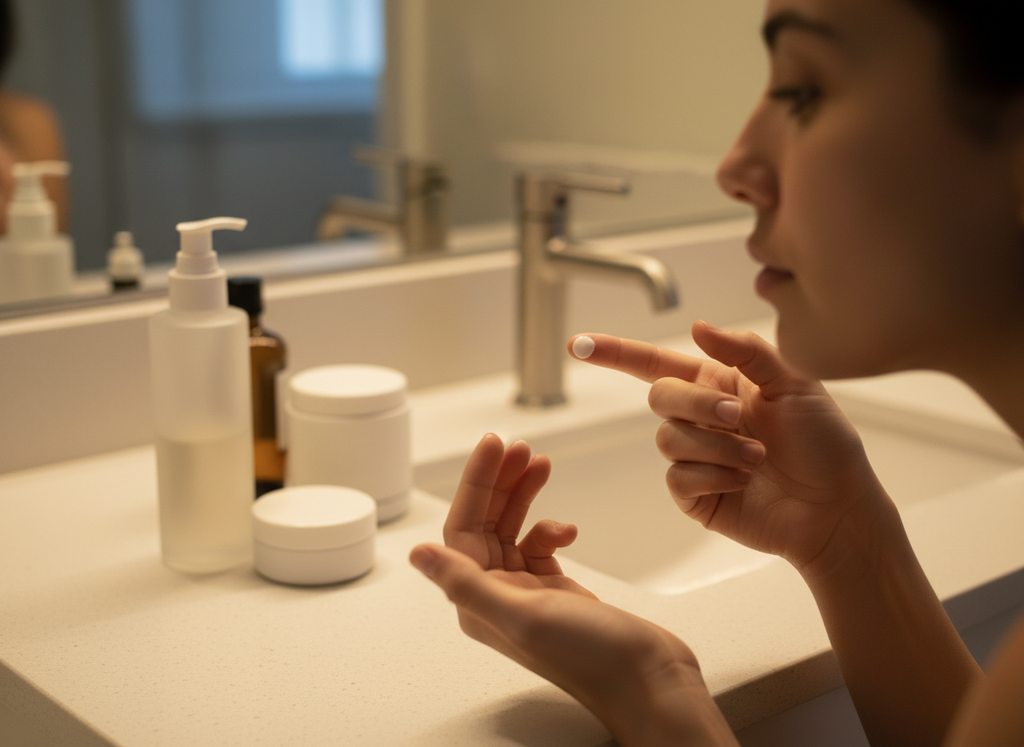
One pea-sized amount is enough for your whole face. That’s it. Dot it on your forehead, cheeks and chin, then spread it thinly. Keep it away from your eyes, the corners of your nose and your lips, as these areas irritate easily.
A simple evening routine
- Wash your face with a gentle, non-foaming cleanser and pat dry.
- Wait 20 to 30 minutes so your skin is completely dry. Damp skin absorbs more tretinoin, which can increase stinging.
- Apply a pea-sized amount, spread thinly.
- Once it has sunk in, add a plain, fragrance-free moisturiser.
If your skin is very sensitive, you can try the “sandwich” method: a thin layer of moisturiser, then tretinoin, then more moisturiser. It softens the blow while your skin adjusts.

Mornings: sunscreen is non-negotiable
Tretinoin makes your skin more sensitive to the sun. On top of that, sun exposure is the very thing causing much of the damage you’re trying to treat. Skipping sunscreen while using tretinoin is a bit like mopping the floor with the tap still running.
The NHS recommends a sunscreen of at least SPF 30 with a UVA rating of at least 4 stars. Use it every morning, even on grey days, because UVA rays go straight through clouds. Yes, even in a British October.
What not to mix it with
Avoid using these on the same night as tretinoin, at least while your skin settles in:
- other retinoids or retinol products
- exfoliating acids such as glycolic, lactic or salicylic acid
- benzoyl peroxide, which can irritate and may make tretinoin less effective if applied at the same time
- scrubs, harsh toners or products high in alcohol
If you use other prescribed skin treatments, check with your pharmacist or prescriber about how to space them out.
Tretinoin side effects and the “retinoid uglies”
Many people go through an adjustment phase in the first few weeks. Some call it “retinisation”. Others, less politely, call it the retinoid uglies.
Common side effects that usually settle
- dryness and tightness
- peeling or flaking
- redness and mild stinging
- a temporary flare of spots if you’re acne-prone
- increased sensitivity to sunlight
These are a sign your skin is adjusting. They usually ease within four to six weeks. If they’re bothering you, drop back to fewer nights a week and use more moisturiser, rather than giving up altogether.
When to get advice
Stop using tretinoin and speak to a pharmacist or doctor if you notice:
- blistering, crusting or severe burning
- swelling of the face, lips or eyes
- a rash that spreads beyond where you applied it
- unusual darkening or lightening of the skin
If you think you’ve had a side effect, you can also report it through the MHRA Yellow Card scheme.

How long does tretinoin for ageing take to work?
This is the question we hear most. The honest answer is: longer than you’d like, but it’s worth the wait. Here’s a rough timeline most people can expect:
- Weeks 1 to 6: the adjustment phase. Skin may feel dry and look a bit worse before it looks better.
- Weeks 6 to 12: skin starts to feel smoother and look brighter.
- Months 3 to 6: fine lines begin to soften and sun spots start to fade.
- Months 6 to 12: the deeper collagen changes start to show, with firmer, more even skin.
Tretinoin is a long-term treatment. If you stop, the benefits gradually fade, much like a gym routine. Many people use it for years as a steady part of their skincare.
Is prescription tretinoin available in the UK?
Tretinoin is a prescription-only medicine in the UK. You can’t legally buy it over the counter, and you should be wary of overseas websites selling it without a consultation. Products from unregulated sellers may be the wrong strength, poorly made or not tretinoin at all.
In the UK, the tretinoin products licensed by the MHRA are combination gels for acne. These include Aknemycin Plus, which pairs tretinoin with erythromycin, and Treclin, which pairs it with clindamycin. Using tretinoin specifically for ageing skin falls outside these licences. That means a prescriber has to assess you individually and take responsibility for deciding whether it’s appropriate, which is exactly why a proper consultation matters.
If you’re getting any medicine online, check that the pharmacy is registered with the General Pharmaceutical Council (GPhC). You can search the GPhC register for free on its website.

Compounding at Courier
When the standard option isn’t the right fit, we can make one to order
Courier is a compounding pharmacy. Where a prescriber decides it’s appropriate for you, we can prepare bespoke, made-to-order preparations — tailored to the individual, under full clinical governance. It’s the same principle that runs through everything we do.
Our pharmacist’s practical tips
After years of supporting patients with skin treatments, these are the tips we find make the biggest difference:
- Put your tretinoin next to your toothbrush. Linking it to a habit you already have makes it easier to remember.
- Keep a simple photo diary. Take a picture in the same spot, in the same light, once a month. Changes are slow, and photos show progress your mirror won’t.
- Go easy on the neck. Neck skin is thinner and more sensitive. Use a smaller amount and build up even more slowly.
- Buy your moisturiser and sunscreen before you start. Fragrance-free, simple and boring is ideal.
- Don’t apply right before bed if your pillowcase is precious. Give it a little time to absorb first.
- Store it at room temperature, away from heat and light, out of reach of children, and don’t use it after its expiry date.
Frequently asked questions

Does tretinoin for ageing really work?
Yes. Tretinoin is one of the most studied topical treatments for ageing skin. Clinical trials show it can soften fine lines, fade sun spots and improve texture when used consistently for several months.
What’s the difference between tretinoin and retinol?
Tretinoin is retinoic acid, the active form of vitamin A, so it works directly in the skin. Retinol has to be converted into retinoic acid first, which makes it gentler but less potent.
How long does tretinoin take to work on wrinkles?
Most people notice smoother, brighter skin after 6 to 12 weeks. Changes to fine lines usually appear after three to six months, with collagen improvements building over a year.
Can I use tretinoin every night?
Eventually, many people can. Start two or three nights a week and build up slowly over several weeks as your skin adjusts.
Why does my skin look worse after starting tretinoin?
This is often called retinisation. Faster cell turnover can cause dryness, peeling and sometimes a temporary breakout. It usually settles within four to six weeks.
Do I need to wear sunscreen with tretinoin?
Yes, every day. Tretinoin increases sun sensitivity, and UV light causes much of the damage you’re treating. Use SPF 30 or higher with at least a 4-star UVA rating.
Can I use tretinoin for ageing if I’m pregnant?
No. Topical tretinoin is not recommended during pregnancy or if you’re planning a pregnancy, as a precaution. Speak to your GP or midwife if you’ve used it while pregnant.
Can I buy tretinoin over the counter in the UK?
No. Tretinoin is a prescription-only medicine in the UK. You’ll need a consultation with a prescriber, and you should only buy from a GPhC-registered pharmacy.
Can I use tretinoin around my eyes?
Keep it away from your eyelids and the area right next to your eyes. Some people use a tiny amount on crow’s feet once their skin is used to it, but ask your prescriber first.
What happens if I stop using tretinoin?
The benefits fade gradually over time. Tretinoin works best as a long-term part of your routine, alongside daily sunscreen.
Disclaimer
Disclaimer: This information is for education only and isn’t a substitute for personal medical advice. Always follow your prescriber’s instructions.
References
- Electronic Medicines Compendium (emc) (2024) Treclin 1%/0.025% w/w gel: patient information leaflet. Mylan. Available at: https://www.medicines.org.uk/emc/files/pil.5371.pdf (Accessed: 15 October 2026).
- Electronic Medicines Compendium (emc) (2026) Tretinoin: medicines containing this ingredient (Aknemycin Plus, Treclin). Available at: https://medicines.org.uk/emc/ingredient/947 (Accessed: 15 October 2026).
- Fisher, G.J., Datta, S.C., Talwar, H.S., Wang, Z.Q., Varani, J., Kang, S. and Voorhees, J.J. (1996) ‘Molecular basis of sun-induced premature skin ageing and retinoid antagonism’, Nature, 379(6563), pp. 335–339.
- Griffiths, C.E.M., Russman, A.N., Majmudar, G., Singer, R.S., Hamilton, T.A. and Voorhees, J.J. (1993) ‘Restoration of collagen formation in photodamaged human skin by tretinoin (retinoic acid)’, New England Journal of Medicine, 329(8), pp. 530–535.
- Kafi, R., Kwak, H.S.R., Schumacher, W.E., Cho, S., Hanft, V.N., Hamilton, T.A., King, A.L., Neal, J.D., Varani, J., Fisher, G.J., Voorhees, J.J. and Kang, S. (2007) ‘Improvement of naturally aged skin with vitamin A (retinol)’, Archives of Dermatology, 143(5), pp. 606–612.
- Kligman, A.M., Grove, G.L., Hirose, R. and Leyden, J.J. (1986) ‘Topical tretinoin for photoaged skin’, Journal of the American Academy of Dermatology, 15(4), pp. 836–859.
- Mukherjee, S., Date, A., Patravale, V., Korting, H.C., Roeder, A. and Weindl, G. (2006) ‘Retinoids in the treatment of skin aging: an overview of clinical efficacy and safety’, Clinical Interventions in Aging, 1(4), pp. 327–348.
- National Institute for Health and Care Excellence (NICE) (2021) Acne vulgaris: management. NICE guideline NG198. Available at: https://www.nice.org.uk/guidance/ng198 (Accessed: 15 October 2026).
- NHS Specialist Pharmacy Service (2018) Updated measures for pregnancy prevention during retinoid use. Available at: https://www.medicinesresources.nhs.uk/en/Medicines-Awareness/Safety-Alerts/Safety-alerts/Updated-measures-for-pregnancy-prevention-during-retinoid-use/ (Accessed: 15 October 2026).
- Weiss, J.S., Ellis, C.N., Headington, J.T., Tincoff, T., Hamilton, T.A. and Voorhees, J.J. (1988) ‘Topical tretinoin improves photoaged skin: a double-blind vehicle-controlled study’, JAMA, 259(4), pp. 527–532.
- Courier Pharmacy (2026) How to apply tretinoin cream. Available at: https://courierpharmacy.co.uk/how-to-apply-tretinoin-cream/ (Accessed: 16 October 2026).
- Courier Pharmacy (2026) Which tretinoin strength shall I use for acne and wrinkles? Available at: https://courierpharmacy.co.uk/which-tretinoin-strength-shall-i-use-for-acne-and-wrinkles/ (Accessed: 16 October 2026).
- Courier Pharmacy (2026) How tretinoin for scars works. Available at: https://courierpharmacy.co.uk/how-tretinoin-for-scars-works/ (Accessed: 16 October 2026).
- Courier Pharmacy (2026) Tretinoin strengths: which one is right for your skin? Available at: https://courierpharmacy.co.uk/tretinoin-strengths-which-one-is-right-for-your-skin/ (Accessed: 16 October 2026).