

Most articles on naltrexone side effects list nausea and headache, say they settle, and move on. That is true as far as it goes. It also skips the part that matters most on the Sinclair Method. You are still drinking. That makes naltrexone side effects hard to read, because a rough morning could be the tablet, the alcohol, or both. So people blame the wrong thing. Then they either stop a drug that was working, or ignore a signal they should have acted on.
This guide sets out what the UK leaflet says, how common each effect is, and what changes when you take the tablet before a drinking session rather than every morning.
Please read this first if you get shakes, sweats or bad anxiety in the morning, or you drink to steady yourself, do not stop or cut down on your own. Sudden cuts in heavy drinking can cause seizures. Speak to your GP or alcohol service first.
Five Key Takeaways
- The “very common” list is longer than you think. Nausea, vomiting, stomach pain, headache, restlessness, anxiety, poor sleep, joint and muscle pain, and low energy all affect at least one person in ten.
- Timing changes what you feel. The drug peaks about an hour after you swallow it. On the Sinclair Method that peak lands as you start drinking, so any queasiness arrives at the worst moment.
- You cannot always tell the tablet from the drink. Nausea, headache and poor sleep are also what alcohol does. A written record for the first month sorts this out far better than memory.
- Some effects need a prescriber, not patience. Yellow skin or eyes, dark urine and pale stools point to the liver. Low mood or thoughts of self-harm need a same-day conversation.
- Do not drive after taking it. The UK leaflet warns that this drug can affect how your mind and body work. That matters more when the plan involves going out.
How Common Are Naltrexone Side Effects?
Medicine leaflets use set bands, and they are worth knowing. Very common means at least one person in ten. Common means between one in a hundred and one in ten. Uncommon means between one in a thousand and one in a hundred. Rare is rarer still.
Here is what the Naltrexone UK leaflet lists. The very common group is longer than most people expect.
Very common, affecting more than one in ten people:
- Nausea, vomiting and stomach pain
- Headache and restlessness
- Nervousness, anxiety and poor sleep
- Joint and muscle pain
- Weakness or low energy
Common, affecting up to one in ten people:
- Reduced appetite
- Feeling short-tempered, and mood changes
- Dizziness
- Diarrhoea or constipation
- Faster heartbeat, a pounding heart, chest pain
- Watery eyes
- Rash
- Thirst, chills, sweating, feeling oddly energetic
- Delayed climax, trouble getting an erection, changes in sex drive
Two things stand out. Joint and muscle pain is very common, yet almost nobody mentions it, so people blame the aching on age or the gym. And the heart effects sit in the common band, which tends to surprise readers who expect naltrexone side effects to be a stomach thing only.
Pharmacist’s tip “very common” does not mean you will get it. It means at least one in ten did in the studies. Most people get one or two things, mildly, for a short while.

The First Two Weeks
Nearly everything above shows up early and then fades after starting naltrexone. That is why your prescriber builds the dose up slowly rather than starting at full strength.
The controlled evidence here is reassuring. In an eight-month Finnish trial, no severe adverse effects appeared when treatment began, the drug was well tolerated throughout, and side-effect rates were not significantly higher than placebo.
Nausea is the one that drives people off naltrexone. It is often mild, it mostly passes within a few days, and it responds well to simple steps. Take the tablet with food, drink plenty of water, and never take it on an empty stomach first thing.
Headache and poor sleep tend to follow the same pattern. Restlessness and anxiety can feel worse than they are, above all if you were nervous about starting.
The aim of the first fortnight is simply to get through it. If you manage that, the second month usually looks very different.
Why the Sinclair Method Changes Naltrexone Side Effects
Take naltrexone daily and side effects stay in the background. You swallow it at breakfast, you feel a bit off for a few days, it settles.
Targeted dosing works differently, and three things shift.
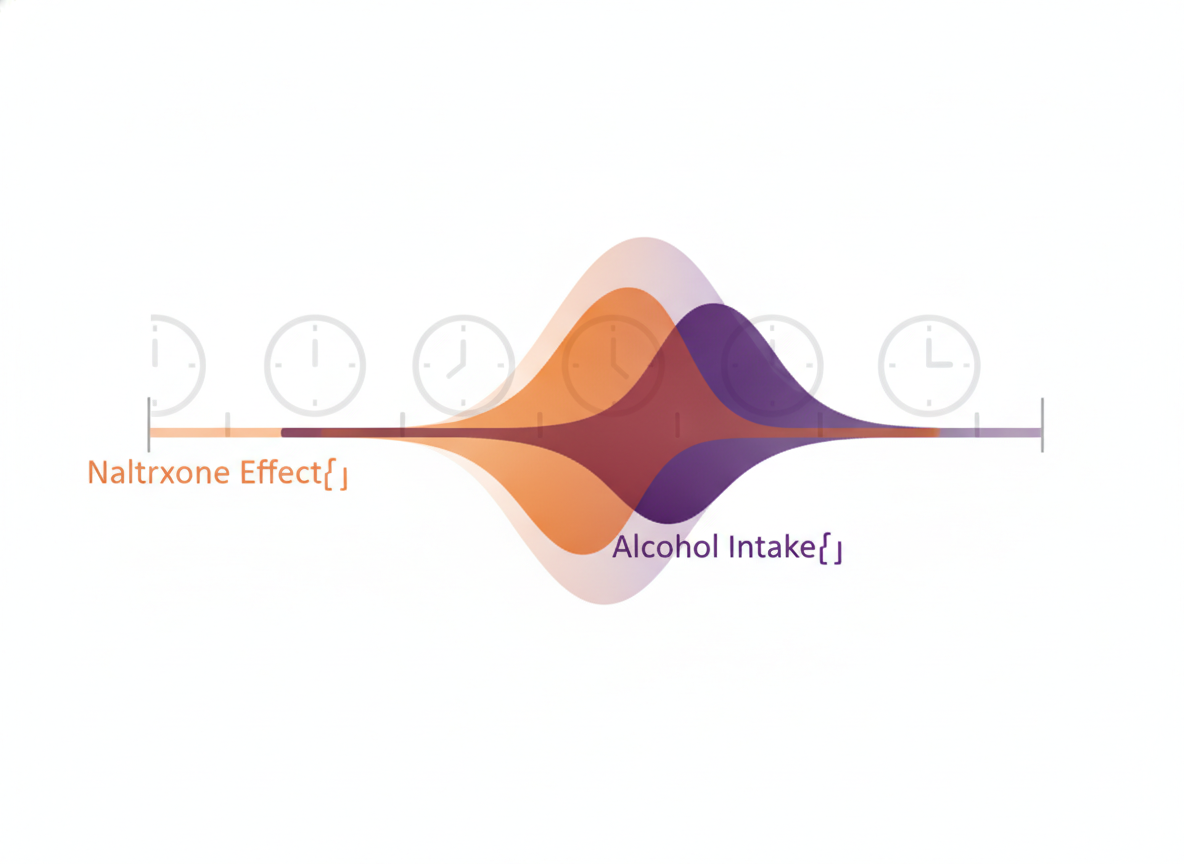
The peak lands while you drink. The body takes this drug up fast, and blood levels peak about an hour after the tablet. That is exactly why you take it one to two hours ahead. It also means that if nausea hits, it hits during the evening you were looking forward to.
Alcohol makes the stomach effects worse. Both alcohol and naltrexone irritate the stomach lining. Together, on a night out, they compound each other. Several drinks on top of early nausea is a grim mix.
Each session starts afresh. With daily dosing your body adapts and side effects fade. With occasional dosing it gets less chance to adapt, so early naltrexone side effects may last across more sessions than they otherwise would.
Drinking may actually mean fewer side effects. This sounds backwards, but the Finnish trial found it clearly. Among patients told to abstain, 74% on naltrexone reported side effects against 40% on placebo. Among those who kept drinking, the figures were 50% and 49%, effectively the same. Some of what gets called early side effects may be unrecognised alcohol withdrawal rather than the drug.
None of this makes the approach unworkable. It does mean your first few sessions deserve some planning. Eat properly beforehand, take the tablet with that food, and do not make your first attempt a wedding you cannot leave.
On the Sinclair Method, naltrexone peaks in the blood about an hour after the tablet. Side effects such as nausea can therefore arrive during the drinking session itself rather than the following morning.
Telling Naltrexone Side Effects From the Drink
Here is the practical problem nobody warns you about.
Nausea, headache, poor sleep, low energy and a short temper all appear on the list of naltrexone side effects. They are also, more or less exactly, what drinking does to you. When you do both at once, working out which is which gets difficult.
Writing things down is the way through. For the first month, note four things after each drinking occasion: whether you took the tablet, roughly what you drank, how you felt that evening, and how you felt the next day.
Patterns show up fast. Symptoms on tablet days but not on drinking-only days point to the medicine. Anything that tracks how much you drank points to the alcohol instead. Best of all, a day when you take the tablet and do not drink gives you the cleanest signal there is.
Bring that record to your review. It beats any amount of trying to remember.
Pharmacist’s tip if you are unsure, take the tablet on a night you have already decided not to drink. What you feel then is the drug on its own.

Compounding at Courier
When the standard option isn’t the right fit, we can make one to order
Courier is a compounding pharmacy. Where a prescriber decides it’s appropriate for you, we can prepare bespoke, made-to-order preparations — tailored to the individual, under full clinical governance. It’s the same principle that runs through everything we do.
Naltrexone Side Effects People Do Not Expect
A few effects catch people out because they do not fit the expected picture.
Aching joints and muscles. Very common, and easily blamed on something else. It usually eases, but tell your prescriber if it does not.
A racing heart and chest discomfort. These sit in the common band. Naltrexone can briefly raise blood pressure, and the leaflet lists a faster heartbeat. Any chest pain that is severe, lasting, or comes with breathlessness needs urgent help rather than a wait-and-see approach.
Sexual side effects. Delayed climax, trouble getting an erection and changes in sex drive are all common. People rarely raise these, and often quit the medicine without saying why. Raise it instead. Your prescriber may have something to adjust.
Watery eyes and a runny nose. Odd, harmless, and genuinely on the list.
Feeling wired. Increased energy is a recognised effect. Combined with poor sleep and restlessness, it can make the first fortnight feel jangly.
Mood, Sleep and Mental Health
This deserves its own section, because the mood effects are both common and under-discussed.
Nervousness, anxiety and poor sleep are all very common. A short temper and low mood are common. Those matter for anyone whose drinking is tangled up with how they feel.
Less often, in the uncommon band, the leaflet lists nightmares and abnormal dreams, along with confusion, low mood proper, disorientation, paranoia, hallucinations and agitation. Rarely, it lists thoughts of suicide or self-harm.
The UK leaflet makes one further point plainly, and it matters. This drug does not reduce the raised risk of suicide in people with dependence, whether or not they are also depressed. Treating the drinking, in other words, does not treat that risk. It needs looking after separately.
So if your mood drops after starting, do not file it under “adjusting”. Tell your prescriber, and tell them early. That holds whether you think the cause is the tablet, the drinking, or the general weight of trying to change something hard.


Vivid dreams and low-dose naltrexone
Dreams deserve their own note, because the official figures and real-world reports do not line up.
The naltrexone UK leaflet puts nightmares and abnormal dreams in the uncommon band, meaning fewer than one person in a hundred. Those numbers come from studies of the full 50 mg dose in alcohol and opioid treatment.
However, at the much smaller doses used off-label for other conditions, usually between 1 mg and 5 mg, vivid dreams turn up far more often than that. Many people describe unusually detailed, memorable or emotionally intense dreams in the first few weeks. For some it is merely odd. For others it disturbs their sleep enough to matter.
This is not just anecdote either. Researchers have run a randomised crossover trial in healthy volunteers looking specifically at how naltrexone changes the emotional tone of dreams, which tells you the opioid system has a genuine role in dreaming.
Two practical points follow. Dream effects usually settle over a few weeks, so they are rarely a reason to stop. And if they persist, moving your dose to the morning often helps, since the drug is then past its peak by bedtime. Ask your prescriber before changing timing.
If you are having thoughts of harming yourself, please speak to someone today. Your GP, NHS 111, or the Samaritans on 116 123, free at any hour. If you are not sure what to say, saying that you are struggling is enough to start with.
Naltrexone Side Effects and Your Liver
Your liver processes naltrexone, and liver problems sit in the uncommon band: raised liver enzymes, raised bilirubin, and hepatitis.
Two pieces of context help here. Raised enzymes during treatment tend to settle back to where they started within a few weeks of stopping. And the worrying liver results historically came from doses far higher than the naltrexone 50 mg used for alcohol.
That said, this is exactly why blood tests are usually requested. Liver function is often checked before you start and again during treatment. If you drink heavily, your liver may already be under strain, which makes that first test worth doing rather than a box-tick.
Contact a clinician promptly if you notice yellowing of the skin or eyes, dark urine, pale stools, ongoing sickness, or pain in the upper right of your abdomen. Those need looking at rather than waiting for your next appointment.
Liver problems are an uncommon naltrexone side effect. Your prescriber should test liver function before you start and again during treatment. Yellow skin or eyes, dark urine, pale stools or upper abdominal pain need prompt medical attention.
The Opioid Warning: Bigger Than Any Side Effect
This one is not a side effect. It is the single most important safety point about this drug, and it belongs here because people meet the two topics together.
Naltrexone blocks opioids. Someone who takes it with opioids in their system can suffer a sudden, severe withdrawal, which can threaten life. So you must be completely free of opioids before you start, and your prescriber will ask about them carefully.
This covers more than you might think. Codeine, including the codeine in some painkillers you can buy. Tramadol. Morphine. Methadone. Some cough and cold remedies. Some anti-diarrhoea medicines.
It works the other way too. While you take naltrexone, opioid pain relief will not work normally, which matters if you have an accident or need surgery. Afterwards, you may also be more sensitive to opioids than before.
Carry the patient card that comes with the tablets, and tell any clinician who treats you.
Driving, Machines and Other Medicines
The Naltrexone UK leaflet says this drug may affect how your mind and body work. It advises against driving or using machines.
There is a sharper reason too, and it comes from the method’s own founder. Naltrexone blocks the reward from alcohol, but it does not block the impairment. Your blood alcohol is unchanged, your coordination is unchanged, and there is evidence the drug can make divided attention harder while you drink. Sinclair’s own recommendation was that patients get strong warnings about this, driving above all.
So naltrexone does not make you safer behind the wheel. If anything, it removes the feedback that might have told you to stop. Plan your transport before you take it.
A few combinations need care. Use sedating drugs such as benzodiazepines, sleeping tablets, sedating antidepressants and sedating antihistamines cautiously alongside naltrexone. Thioridazine has been linked with drowsiness and lethargy when combined. Certain blood pressure medicines are not recommended together.
One more, for people with lactose problems: the licensed tablets contain lactose. If you have a rare inherited sugar intolerance, tell your prescriber, because this tablet is not right for you in that form.
How to Manage Common Naltrexone Side Effects
Most early effects respond to simple things.
- Nausea: take it with food, never on an empty stomach. Sip water through the day. Plain food beats rich food.
- Headache: stay hydrated. Paracetamol is fine, but check the box for codeine.
- Poor sleep: on daily dosing, take your dose in the morning. Keep caffeine to the earlier part of the day.
- Aching joints: this usually settles. Gentle movement helps more than rest.
- Feeling wired: it fades. Do not add stimulants on top.
- Stomach upset: small, frequent meals beat large ones for the first week or two.
If something still bothers you after two weeks, that is your cue to speak to a prescriber rather than push through it.
When to Contact Someone
Same day, urgently:
- Yellow skin or eyes, dark urine, pale stools, or bad pain in your upper right abdomen
- Severe or lasting chest pain, or breathlessness
- Thoughts of harming yourself
- Swelling of the face or throat, or trouble breathing
- You have taken an opioid, or you need urgent pain relief
Within a few days:
- Nausea, headache or sleep problems that have not settled after two weeks
- Low mood, or anxiety worse than before you started
- Anything stopping you taking the medicine as agreed
- Side effects that make you want to give up
That final one matters most. Nearly every reason people quit this drug can be fixed, but only if someone knows.

Summary
Most people cope well, and serious reactions are unusual. But the list of very common naltrexone side effects runs longer than most articles admit. It includes joint pain, restlessness and anxiety, not just the nausea everyone expects.
On the Sinclair Method, two things change. The peak effect lands during your drinking session rather than the morning after. And separating what the tablet does from what the alcohol does gets much harder. Writing things down for the first month solves that better than anything else.
Few effects need action rather than patience, and they are clear ones: liver signs, chest pain, and any drop in mood. You can usually handle the rest by getting through the first fortnight with food, water and a bit of planning.
If you worry about your drinking, your GP or local alcohol service is a good place to start. Courier Pharmacy offers clinician-led appointments for people who want a structured private route with proper follow-up.
FAQs

What are the most common naltrexone side effects?
Nausea, vomiting, stomach pain, headache, restlessness, anxiety, poor sleep, joint and muscle pain, and low energy. All affect more than one person in ten.
How long do naltrexone side effects last?
Most start in the first few days and settle within one to two weeks. Anything still troubling you after a fortnight is worth raising with your prescriber.
Does naltrexone make you feel sick when you drink?
It does not punish drinking, unlike disulfiram. But nausea is very common, and drink upsets the stomach too, so the two together can feel worse than either alone.
Can I take painkillers with naltrexone?
Paracetamol and ibuprofen are fine. Anything with codeine or another opioid is not, including some you can buy over the counter. Check with a pharmacist.
Should I stop naltrexone if I feel sick?
Speak to your prescriber before stopping. Nausea often settles, and taking the tablet with food tends to fix it. Stopping suddenly means losing any benefit you had.
Can naltrexone affect my mood?
Yes. Anxiety, nervousness and poor sleep are very common, while a short temper and low mood are common. Tell your prescriber about any mood change quickly rather than waiting.
Does naltrexone cause vivid dreams?
The UK leaflet lists nightmares and abnormal dreams as uncommon at the 50 mg dose. At the much lower doses used off-label, people report vivid dreams far more often. They usually settle, and taking the dose in the morning often helps.
Do naltrexone side effects damage the liver?
Liver problems are rare and tend to reverse once you stop. Your prescriber should still test liver function before you start and again during treatment.
Can I drive after taking naltrexone?
The leaflet advises against driving or using machines, since it may affect how your mind and body work. On the Sinclair Method you should arrange transport anyway.
This article covers naltrexone side effects and safety. It is not a recommendation to start any medicine. Naltrexone is a prescription-only medicine and should only be started after assessment by a clinician experienced in treating alcohol dependence.
References
1. National Institute for Health and Care Excellence (2011) Alcohol-use disorders: diagnosis, assessment and management of harmful drinking (high-risk drinking) and alcohol dependence. NICE guideline CG115. Available at: https://www.nice.org.uk/guidance/cg115 (Accessed: 2 August 2026).
2. National Institute for Health and Care Excellence (2014) Nalmefene for reducing alcohol consumption in people with alcohol dependence. NICE technology appraisal guidance TA325. Available at: https://www.nice.org.uk/guidance/ta325 (Accessed: 2 August 2026).
3. Sinclair, J.D. (2001) ‘Evidence about the use of naltrexone and for different ways of using it in the treatment of alcoholism’, Alcohol and Alcoholism, 36(1), pp. 2–10. doi: 10.1093/alcalc/36.1.2.
4. Courier Pharmacy (2026) The Sinclair Method for alcohol use disorder: how it works. Available at: https://courierpharmacy.co.uk/the-sinclair-method-for-alcohol-use-disorder-how-it-works/ (Accessed: 1 August 2026).
5. Harvard Health Publishing. Can you retrain your brain to stop excessive drinking? Available at: https://www.health.harvard.edu/medications-and-treatments/can-you-retrain-your-brain-to-stop-excessive-drinking
6. Courier Pharmacy. The Sinclair Method for alcohol dependence, UK guide. Available at: https://courierpharmacy.co.uk/the-sinclair-method-blocking-endorphin-driven-reward/
7. Courier Pharmacy (2026) Can you drink while on the Sinclair Method? a UK guide. Available at: https://courierpharmacy.co.uk/can-you-drink-while-on-the-sinclair-method-a-uk-guide/ (Accessed: 2 August 2026).
8. Courier Pharmacy (2026) Who should avoid naltrexone? A UK safety guide. Courier Pharmacy. Available at: https://courierpharmacy.co.uk/who-should-avoid-naltrexone-a-uk-safety-guide/ (Accessed: 5 August 2026).
9. Electronic Medicines Compendium (eMC) (2026) [Summary of Product Characteristics]. Available at: https://www.medicines.org.uk/emc/product/8968/smpc#gref (Accessed: 5 August 2026).