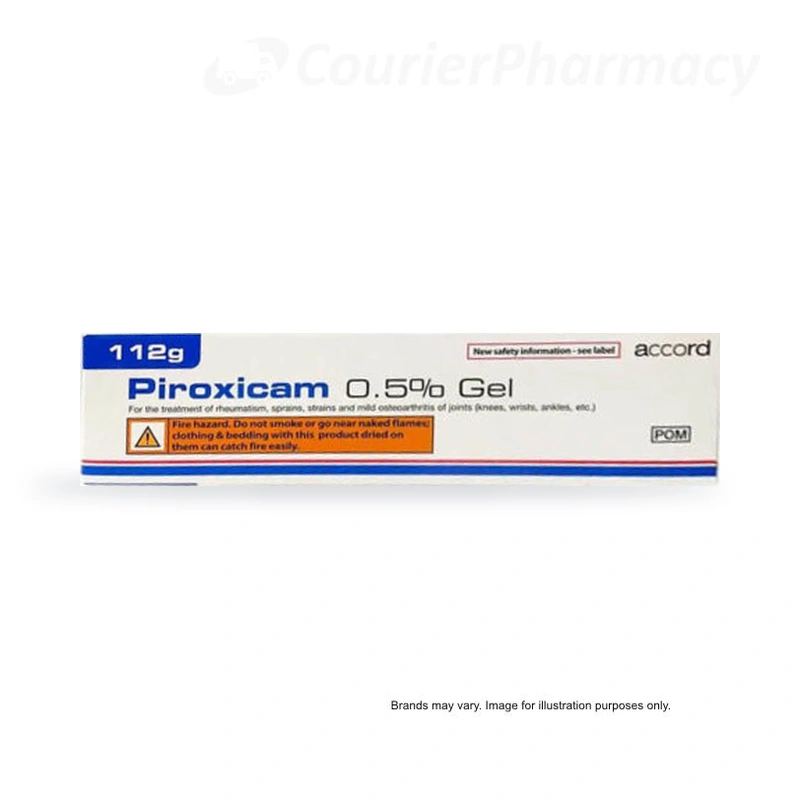
Piroxicam 0.5% Gel is a topical non-steroidal anti-inflammatory drug (NSAID) of the oxicam class.
Licensed for localised musculoskeletal pain and inflammation including osteoarthritis, soft tissue injuries, sports injuries, tendinitis, and bursitis in adults.
The piroxicam 0.5% gel 112g pack provides approximately 4 to 5 weeks of treatment.
Generic Piroxicam Gel is bioequivalent to the originator brand (Feldene) at lower cost.
Available from Courier Pharmacy under pharmacist supervision, with treatment that fits your needs.
Piroxicam 0.5% Gel is a UK Pharmacy (P) medicine for local muscle and joint pain. It contains piroxicam 5mg per gram (0.5%) in a clear, alcohol?based gel. Piroxicam is a non?steroidal anti?inflammatory drug (NSAID). It helps reduce pain and inflammation at the site you apply it.
Topical piroxicam lets you treat a specific area without taking tablets. As a result, you can often get effective relief with much lower whole?body exposure than oral NSAIDs.
Key features (at a glance)
Active ingredient: piroxicam 5mg per gram (0.5%)
Form: clear gel for skin application
Pack size: 112g tube
Who it’s for: adults
Typical use: apply a small amount 3–4 times daily
Best for: localised joint and muscle pain with inflammation
Legal category: Pharmacy (P) medicine
Supplied by: Courier Pharmacy with pharmacist support
What Piroxicam Gel is used for
Piroxicam 0.5% Gel can help with local pain and inflammation, including:
sprains, strains, and bruising
sports injuries and overuse pain
osteoarthritis in accessible joints (such as knees or hands)
tendinitis, bursitis, and capsulitis
muscular back pain
Why topical NSAIDs are often a first choice
For local joint or muscle pain, guidelines often recommend topical NSAIDs before oral NSAIDs. That’s because they can give similar relief for local problems, while reducing the risk of whole?body side effects.
Topical NSAIDs can be a sensible option if you want to avoid, or need to be cautious with, oral NSAIDs due to:
stomach ulcer or bleeding risk
kidney problems
heart and circulation risks
interactions with medicines such as blood thinners
What makes piroxicam different from other gels
Piroxicam is a longer?acting NSAID. With regular use, it can build up in joint tissues over a few days. Because of that, it can give a more sustained local anti?inflammatory effect between applications.
Where it fits in a stepped pain plan
For local musculoskeletal pain, a simple step-by-step approach often works best:
Self?care first (rest, gentle movement, physio, heat or cold)
Topical NSAID gel (like piroxicam) ± paracetamol if needed
Oral NSAIDs if topical treatment is not enough and it’s safe for you
Other options for specific cases, with clinical advice
So, piroxicam gel often sits as an early medicine choice when pain is local and inflammatory.
Piroxicam Gel from Courier Pharmacy
Courier Pharmacy supplies Piroxicam 0.5% Gel from a UK GPhC?registered pharmacy under pharmacist supervision. The 112g tube typically covers around 4 to 5 weeks of use, depending on how often and how widely you apply it.
Typical adult dose: about 1g (roughly a 3cm strip) 3–4 times daily
Onset: some pain relief within hours; best anti?inflammatory effect after several days of regular use
Max duration without review: up to 4 weeks for self?treating soft tissue injuries (longer use may suit chronic osteoarthritis with GP/prescriber advice)
Legal category: Pharmacy (P) medicine
Manufacturer: various UK?licensed manufacturers (originator brand: Feldene Gel)
Supplied by: Courier Pharmacy with pharmacist support
MOJO WISDOM
Take control of your health by understanding your condition and what this medication is doing for you.
READ:
More information about this treatment.
UK-based doctors and pharmacists
Discreet and Confidential
UK-based doctors and pharmacists
Free, Expert Advice
No video link provided.
No video link provided.
UK-based doctors and pharmacists
Free, expert advice
Discrete and confidential
Fast delivery
Giving you trusted clinical advice for over 40 conditions
A UK regulated pharmacy providing safe, effective treatments online since 2014
When localised musculoskeletal pain from osteoarthritis, sports injuries, soft tissue strains, or chronic joint problems needs effective relief without the systemic burden of oral anti-inflammatory tablets, topical NSAID gels are one of the most underused tools in UK pain management. Piroxicam 0.5% Gel delivers a long-acting NSAID directly to the painful joint or muscle, with substantially lower systemic exposure than the oral form and a meaningfully different safety profile.
At Courier Pharmacy, we believe treatment that fits the person, not the marketing budget. Topical NSAIDs are recommended as first-line pharmacological treatment for localised musculoskeletal pain by NICE and most international osteoarthritis guidelines, yet they’re often skipped in favour of stronger oral medicines that carry more risk. This page covers where Piroxicam 0.5% Gel fits, how to use it well, and how it compares to other topical NSAID options.
Five key takeaways
Piroxicam 0.5% Gel contains 5mg of piroxicam per gram of gel, a topical non-steroidal anti-inflammatory drug (NSAID) for relief of localised musculoskeletal pain, soft tissue injuries, and chronic joint pain in adults
Topical NSAIDs deliver effective pain relief directly to the affected area with substantially lower systemic absorption than oral NSAIDs. NICE NG177 (chronic pain) and NG226 (osteoarthritis) both position topical NSAIDs as first-line pharmacological treatment for localised musculoskeletal pain
Piroxicam has a notably long elimination half-life (around 50 hours systemically), supporting the twice-daily topical dosing schedule. The active ingredient accumulates in the synovial fluid of treated joints, providing sustained local anti-inflammatory effect
Standard adult dose is approximately 1g of gel (a 3cm strip) applied to the affected area three to four times daily. The 112g pack provides approximately 4 to 5 weeks of treatment at typical use patterns
Generic Piroxicam 0.5% Gel is bioequivalent to the originator brand (Feldene Gel) at lower cost. Clinical effects are identical; many patients prefer the generic for value, while others stick with the brand they have used reliably for years
Product description: Piroxicam 0.5% Gel
Piroxicam 0.5% Gel contains piroxicam at a strength of 5mg per gram (0.5%) in an alcohol-based gel formulation. Piroxicam is a long-acting non-steroidal anti-inflammatory drug (NSAID) of the oxicam class, first introduced into UK clinical practice in the early 1980s under the brand name Feldene by Pfizer. The topical gel form was developed to deliver piroxicam’s anti-inflammatory effect directly to localised musculoskeletal problems while avoiding the systemic side-effect burden of the oral form. The patent on piroxicam expired decades ago, and modern generic versions are bioequivalent to the original brand at lower cost.
The clinical position of topical NSAIDs in modern UK musculoskeletal pain care has strengthened considerably over the last decade. Multiple authoritative guidelines now position topical NSAIDs as first-line pharmacological treatment for localised musculoskeletal pain:
NICE NG226 (Osteoarthritis in over 16s): topical NSAIDs are recommended ahead of oral NSAIDs for knee osteoarthritis and other localised joint involvement
NICE NG193(Chronic primary pain): topical NSAIDs are recommended as a treatment option where pain is localised and inflammatory in character
OARSI (Osteoarthritis Research Society International) guidelines: topical NSAIDs are strongly recommended for knee osteoarthritis
EULAR (European Alliance of Associations for Rheumatology) guidelines: topical NSAIDs are positioned as first-line for hand and knee osteoarthritis
The rationale for the strong positioning is straightforward. Topical NSAIDs deliver effective pain relief comparable to oral NSAIDs for localised musculoskeletal problems, but with substantially lower systemic absorption (typically less than 5% of equivalent oral exposure for piroxicam gel). This translates into substantially lower risk of:
Gastrointestinal complications (peptic ulcer disease, GI bleeding)
Cardiovascular events
Renal impairment
Drug interactions with anticoagulants, ACE inhibitors, diuretics, and other medicines
For patients with localised musculoskeletal pain, particularly where oral NSAIDs would be relatively contraindicated (older patients, those with cardiovascular disease, kidney disease, peptic ulcer history, or on anticoagulants), topical NSAIDs are often the more appropriate first choice rather than an inferior alternative.
The licensed UK indications for Piroxicam 0.5% Gel include:
Localised pain and inflammation in soft tissue injuries (sprains, strains, contusions)
Localised musculoskeletal pain from osteoarthritis, particularly involving knees, hands, and other accessible joints
Periarticular conditions including tendinitis, bursitis, and capsulitis
Localised back pain of muscular origin
Sports injuries and overuse syndromes
What distinguishes piroxicam from other topical NSAIDs (ibuprofen gel, diclofenac gel, ketoprofen gel, felbinac gel) is its pharmacokinetic profile. Piroxicam has a notably long elimination half-life (approximately 50 hours systemically) and a particularly high affinity for synovial tissue. After topical application, piroxicam accumulates in the synovial fluid of treated joints over several days of regular use, producing sustained local anti-inflammatory effect that continues between applications. This supports the three to four times daily dosing schedule rather than the four to six times daily schedule needed for shorter-acting topical NSAIDs.
The stepped approach to localised musculoskeletal pain in modern UK practice typically follows:
First-line: lifestyle measures (rest where appropriate, activity modification, weight management, physiotherapy where indicated, heat or cold application)
Third-line: oral NSAIDs (ibuprofen, naproxen, diclofenac, celecoxib) where topical treatment is inadequate, with appropriate gastroprotection (PPI) for patients at GI risk
Specific situations: opioid analgesics (codeine, tramadol) for short-term use where NSAIDs are contraindicated or inadequate; topical capsaicin for some chronic pain conditions; intra-articular injections (corticosteroid, hyaluronic acid) for joint-specific problems under specialist guidance
For chronic widespread pain: a different framework involving exercise therapy, psychological approaches, and selective antidepressants (duloxetine, amitriptyline) under prescriber guidance
Piroxicam 0.5% Gel sits firmly in the second-line position for localised musculoskeletal pain. It is a clinically reasonable first choice in patients where oral NSAIDs carry significant risk, particularly older adults, those with cardiovascular comorbidities, kidney disease, GI history, or those on anticoagulant or antiplatelet therapy.
We at Courier Pharmacy supply Piroxicam 0.5% Gel from a UK-registered pharmacy under pharmacist prescriber supervision. The 112g pack provides approximately 4 to 5 weeks of treatment at typical use patterns, suitable for ongoing intermittent or continuous management of chronic musculoskeletal conditions where topical anti-inflammatory effect is needed.
Key features and specifications
Active ingredient: piroxicam 5mg per gram (0.5%)
Form: clear, alcohol-based gel for cutaneous application
Pack size: 112g tube (approximately 4 to 5 weeks of treatment at typical use)
Indication: localised musculoskeletal pain and inflammation including osteoarthritis, soft tissue injuries, sports injuries, tendinitis, and bursitis in adults
Standard adult dose: approximately 1g of gel (a 3cm strip) applied three to four times daily
Onset of analgesic effect: within several hours of initial application; full anti-inflammatory effect over several days of regular use
Maximum duration without prescriber review: 4 weeks for self-treatment of soft tissue injuries; longer use for chronic osteoarthritis is appropriate under prescriber or GP guidance
Supplied by: Courier Pharmacy, UK GPhC-registered, with pharmacist support
Product description: Piroxicam 0.5% Gel
Piroxicam 0.5% Gel is used for local muscle and joint pain. It contains piroxicam 5mg per gram (0.5%) in a clear, alcohol?based gel. Piroxicam is a non?steroidal anti?inflammatory drug (NSAID). It helps reduce pain and inflammation at the site you apply it.
Topical piroxicam lets you treat a specific area without taking tablets. As a result, you can often get effective relief with much lower whole?body exposure than oral NSAIDs.
Key features (at a glance)
Active ingredient: piroxicam 5mg per gram (0.5%)
Form: clear gel for skin application
Pack size: 112g tube
Who it’s for: adults
Typical use: apply a small amount 3–4 times daily
Best for: localised joint and muscle pain with inflammation
What Piroxicam Gel is used for
Piroxicam 0.5% Gel can help with local pain and inflammation, including:
sprains, strains, and bruising
sports injuries and overuse pain
osteoarthritis in accessible joints (such as knees or hands)
tendinitis, bursitis, and capsulitis
muscular back pain
Why topical NSAIDs are often a first choice
For local joint or muscle pain, guidelines often recommend topical NSAIDs before oral NSAIDs. That’s because they can give similar relief for local problems, while reducing the risk of whole?body side effects.
Topical NSAIDs can be a sensible option if you want to avoid, or need to be cautious with, oral NSAIDs due to:
stomach ulcer or bleeding risk
kidney problems
heart and circulation risks
interactions with medicines such as blood thinners
What makes piroxicam different from other gels
Piroxicam is a longer?acting NSAID. With regular use, it can build up in joint tissues over a few days. Because of that, it can give a more sustained local anti?inflammatory effect between applications.
Where it fits in a stepped pain plan
For local musculoskeletal pain, a simple step-by-step approach often works best:
Self?care first (rest, gentle movement, physio, heat or cold)
Topical NSAID gel (like piroxicam) ± paracetamol if needed
Oral NSAIDs if topical treatment is not enough and it’s safe for you
Other options for specific cases, with clinical advice
So, piroxicam gel often sits as an early medicine choice when pain is local and inflammatory.
Piroxicam Gel from Courier Pharmacy
Courier Pharmacy supplies Piroxicam 0.5% Gel from a UK GPhC?registered pharmacy under pharmacist supervision. The 112g tube typically covers around 4 to 5 weeks of use, depending on how often and how widely you apply it.
Why choose Courier Pharmacy for Piroxicam 0.5% Gel
At Courier Pharmacy, our whole approach is built on a simple idea: treatment that fits the person, not force the person to fit the system. For musculoskeletal pain, that means honest framing of where topical NSAIDs fit in modern UK guidance, when the gel is genuinely the right answer, and when other approaches would suit you better.
Our service is shaped by the philosophy of Dr Ada Jex-Cori, our brand pharmacist. Dr Ada represents the spirit of the pharmacy: evidence-led, community-rooted, and willing to challenge the one-size-fits-all approach to medicine. She is named in honour of three pioneering women in science: Ada Lovelace, the mathematician and visionary; Sophia Jex-Blake, the first female doctor in the UK who fought the medical establishment; and Gerty Cori, the biochemist and Nobel Prize winner. In our fictional world of Ethrewell, Dr Ada fights against pharma’s standardised approach to medicine. In the real world, she represents what we stand for. Her view is straightforward: you are not broken. The system is. And we are here to change that.
Honest framing of where Piroxicam Gel fits
For patients with localised musculoskeletal pain from osteoarthritis, soft tissue injuries, or chronic joint problems, topical NSAIDs are recommended as first-line pharmacological treatment by NICE and international guidelines. Piroxicam Gel is one reasonable choice within this class, with the long half-life and synovial accumulation that distinguish it from shorter-acting topical NSAIDs. For patients where oral NSAIDs carry significant risk (older adults, cardiovascular disease, kidney disease, GI history, anticoagulant use), topical treatment is often the better first choice rather than an inferior alternative.
For patients with mild occasional musculoskeletal pain easily managed with paracetamol or self-care, we will not push a daily topical NSAID when it isn’t needed. The right answer depends on your symptom pattern, not on what’s most expensive.
Treatment that fits, not one-size-fits-all
Most online pharmacies deliver the same protocol to everyone. Courier Pharmacy is different. We think through your situation: what type of pain, what you have already tried, what other medicines you are on, what your wider health picture looks like. The gel may be the right answer; an alternative topical NSAID may suit you better; an oral NSAID with gastroprotection may be more appropriate for your situation; or referral for assessment may be what you really need. We will tell you honestly.
Pharmacist support before and after purchase
Our pharmacist is available for advice on:
Whether Piroxicam Gel is the right option for your situation, or whether an alternative topical NSAID (diclofenac, ibuprofen, ketoprofen) or different approach would suit you better
How to apply the gel for best effect, including amount, frequency, and timing
How to combine topical NSAID with paracetamol, physiotherapy, and other self-management for chronic conditions
Managing side effects or unexpected responses
When your situation warrants GP review or specialist referral
How the gel fits with your other medicines, particularly for older patients on multiple prescriptions
This is free and available before and after purchase. Get in touch if you have any questions.
Care for specific patient groups
We are happy to provide tailored support for:
Older patients with osteoarthritis where the substantially lower systemic risk of topical NSAIDs is particularly valuable
Patients on anticoagulants or antiplatelets where oral NSAIDs would be problematic and topical treatment is the safer alternative
Patients with cardiovascular or kidney disease where systemic NSAID exposure carries meaningful risk
Patients with GI history including peptic ulcer disease, where topical treatment avoids the GI risk profile of oral NSAIDs
Patients with sports injuries or overuse syndromes where short-term topical treatment supports recovery
Patients with chronic pain where joined-up multidisciplinary care including topical NSAIDs as part of a wider plan produces better outcomes
Patients with MCAS or multiple sensitivities where the excipient profile of topical preparations matters
Coordination with your GP and other care
If you have a GP, rheumatologist, physiotherapist, or other healthcare professional involved in your care, we are happy to coordinate. For patients with chronic musculoskeletal conditions, joined-up care across primary care, pharmacy, and specialist services produces better outcomes than fragmented care.
Trust earned, not claimed
We are GPhC-regulated, we ground our content in NHS, NICE, BNF, EMC, OARSI, and EULAR guidance, and we will tell you honestly if Piroxicam Gel isn’t the right answer for your situation. We would rather give you the right advice than a quick sale.
How to buy Piroxicam 0.5% Gel (112g) from Courier Pharmacy
Piroxicam 0.5% Gel is a UK Pharmacy (P) medicine supplied through Courier Pharmacy under pharmacist supervision. The supply does not require a prescription, but the pharmacist will check that the use is appropriate for your situation.
Here is how our service works:
Add Piroxicam 0.5% Gel 112g to your basket and complete a quick questionnaire about your symptoms, any other treatments you have tried, your current medicines, and any relevant medical conditions
Our prescriber reviews your answers to confirm Piroxicam Gel is suitable for you. Where the pharmacist needs to ask additional questions or recommend alternatives, we will do so before completing the supply
Once approved, your order is prepared and dispatched discreetly to your door
Free pharmacist support is available before and after your purchase for any questions
If Piroxicam Gel isn’t the right product for your situation, we will explain why and suggest alternatives. That might be:
Self-management and paracetamol alone if you have not yet had a fair trial of these as first-line
An alternative topical NSAID (diclofenac gel, ibuprofen gel, ketoprofen gel, felbinac gel) if you would prefer a different agent within the class or if you have used piroxicam previously without benefit
Diclofenac sodium 2.32% Gel (Voltarol 12-Hourly) if you would prefer twice-daily dosing over three to four times daily
Compounded higher strength Diclofenac 5% cream
A topical heat patch or rub (capsaicin, methyl salicylate-based products) for some chronic pain situations
An oral NSAID with gastroprotection if topical treatment has not been sufficient and you are clinically suitable for oral NSAID use
Paracetamol or co-codamol for breakthrough pain alongside topical treatment
A referral to physiotherapy for guided exercise and movement-based management
A GP appointment if your symptoms have features warranting medical assessment
A referral to rheumatology or pain services if you have features suggesting inflammatory arthritis or refractory chronic pain
Our free fortnightly drop-in clinics at Insomnia, Derby run every other week from 10am to 12pm. Healthcare shouldn’t only happen when you’re paying for it. We cover osteoarthritis, chronic pain, musculoskeletal injuries, MCAS, allergies, hair loss, men’s health, weight management, and whatever else people bring through the door. We show up, even when it’s free. No appointment needed, no charge, no pressure.
Active ingredients
Each gram of gel contains:
Piroxicam 5mg (0.5%) (active ingredient): a long-acting non-steroidal anti-inflammatory drug of the oxicam class. Piroxicam inhibits cyclooxygenase enzymes (COX-1 and COX-2) in the treated tissue, reducing local prostaglandin production and producing anti-inflammatory and analgesic effects directly at the affected joint or muscle
Excipients commonly include: carbomer 940, propylene glycol, ethanol (which provides the gel's characteristic feel and aids transcutaneous penetration), hydroxyethylcellulose, benzyl alcohol (as preservative), diethanolamine (for pH adjustment), and purified water.
The ethanol content (around 16% w/w in many generic formulations) is what gives the gel its cooling sensation on application and supports absorption across the skin into the underlying tissue. Patients with skin sensitivities to alcohol-based preparations, or with broken or eczematous skin at the application site, should consider alternative formulations or discuss with our pharmacist. The gel does not contain lactose, gluten, soya, or sugar.
Piroxicam 0.5% Gel is supplied by various UK-licensed manufacturers as the generic equivalent of the originator brand Feldene Gel (Pfizer, no longer routinely available in UK retail). Generic and brand are bioequivalent and meet identical regulatory standards. The 112g tube supplied by Courier Pharmacy provides approximately 4 to 5 weeks of treatment at typical use patterns.
Where Piroxicam 0.5% Gel fits in musculoskeletal pain treatment
Musculoskeletal pain is one of the most common reasons UK adults seek pharmacy advice and GP appointments. Osteoarthritis affects around 8.5 million UK adults, with knee and hand osteoarthritis the most prevalent forms. Soft tissue injuries (sprains, strains, contusions) and overuse syndromes affect a substantially larger group across all age ranges. Chronic back pain affects around one third of UK adults at any given time.
The treatment of localised musculoskeletal pain in modern UK practice follows a stepped approach designed to balance effectiveness against safety, particularly the cumulative risks of long-term oral NSAID use.
First-line: lifestyle and self-management
For most localised musculoskeletal problems, the foundation is non-pharmacological:
Rest in the acute phase of soft tissue injuries, transitioning to gradual mobilisation as healing progresses
Activity modification for chronic conditions, identifying movements or activities that worsen symptoms and adjusting accordingly
Weight management for lower limb osteoarthritis, where modest weight loss can substantially reduce joint loading
Physiotherapy for guided exercise and movement retraining
Heat and cold therapy, particularly cold in the acute phase of injuries and heat for chronic muscle tension
Supportive devices such as knee braces, wrist splints, or insoles for specific clinical situations
These measures address the underlying contributors to pain rather than just suppressing symptoms, and many patients respond well enough that pharmacological treatment is not needed at all or only as an adjunct.
Second-line: topical NSAIDs and paracetamol
When first-line measures aren't sufficient, the medicine combination most often recommended in modern UK practice is:
Topical NSAID: piroxicam, ibuprofen, diclofenac, ketoprofen, or felbinac gel applied to the affected area
Paracetamol as needed for additional analgesic effect
This combination delivers meaningful pain relief for most patients with localised musculoskeletal pain, with substantially lower systemic risk than oral NSAID use. The choice between topical NSAIDs is partly clinical (different agents have slightly different penetration profiles and licensed indications) and partly patient preference (texture, smell, ease of application, brand familiarity).
The main UK topical NSAID options:
Piroxicam 0.5% Gel (this product, generic Feldene): long-acting, three to four times daily dosing, accumulates in synovial fluid
Ibuprofen 5% or 10% Gel (Ibuleve, Nurofen Joint and Back, generic): widely available OTC, four times daily dosing
Diclofenac diethylammonium 1.16% Gel (Voltarol Pain Relief Gel, generic): widely available OTC, three to four times daily
Diclofenac sodium 2.32% Gel (Voltarol 12-Hourly Joint Pain Relief): twice-daily dosing, more concentrated, generally well-tolerated
Ketoprofen 2.5% Gel (Powergel, generic, prescription only in UK): two to four times daily, slightly higher potency, associated with photosensitivity reactions requiring sun avoidance during use
Felbinac 3% Gel (Traxam, generic): three to four times daily
Clinical effects are broadly similar across these agents for most localised musculoskeletal problems, with some individual variation in patient response. Piroxicam's distinguishing features are its long half-life supporting consistent effect between applications, its accumulation in synovial tissue, and its established place in the topical NSAID class for over 40 years of clinical use.
Third-line: oral NSAIDs
If topical treatment is insufficient, oral NSAIDs may be considered, but with appropriate caution about the systemic risk profile:
Ibuprofen at standard doses (200 to 400mg three times daily, up to 1200mg daily without prescription)
Naproxen (250 to 500mg twice daily, prescription only in higher doses)
Diclofenac (50mg three times daily, prescription only)
Celecoxib (selective COX-2 inhibitor, prescription only, generally lower GI risk but with cardiovascular considerations)
Oral NSAIDs should be prescribed alongside gastroprotection (a proton pump inhibitor like omeprazole, lansoprazole, pantoprazole, or esomeprazole) for patients with:
Age over 65
History of peptic ulcer disease or GI bleeding
Concurrent corticosteroid, anticoagulant, antiplatelet, or SSRI use
Significant comorbidities increasing GI risk
Oral NSAIDs are appropriate for short courses where topical treatment is inadequate, but extended continuous use warrants prescriber review for the cumulative risk picture.
Specific situations and adjuncts
Opioid analgesics (codeine, tramadol, dihydrocodeine): for short-term use in significant pain where NSAIDs are inadequate or contraindicated. Long-term opioid use for chronic non-cancer pain is now positioned away from in modern UK guidance because of concerns about effectiveness, dependence, and harm
Compound analgesics (co-codamol, co-dydramol): combine paracetamol with opioid; useful for moderate pain in short courses
Topical capsaicin: useful for some chronic pain conditions, particularly post-herpetic neuralgia and some forms of osteoarthritis; requires careful application and adherence
Topical lidocaine plasters (Versatis 5%): useful for localised neuropathic pain
Intra-articular corticosteroid injection: useful for specific joint problems, typically under GP or specialist guidance, with limited frequency to avoid joint damage
Hyaluronic acid injection: used in some knee osteoarthritis programmes, mainly in specialist settings
Specialist referral: for refractory cases, suspected underlying inflammatory arthritis, or where structural intervention is being considered
Fourth-line: chronic pain management
For chronic musculoskeletal pain that doesn't respond to standard stepped treatment, the modern approach increasingly emphasises:
Multidisciplinary chronic pain services with integrated physiotherapy, psychology, and medical input
Selective antidepressants (duloxetine, amitriptyline) for chronic pain modulation
Cognitive behavioural therapy and acceptance-and-commitment therapy approaches
Exercise therapy as the most evidence-based long-term intervention
Pacing and self-management education
NICE NG193 (chronic primary pain) explicitly moves away from long-term opioid use, gabapentinoids, paracetamol monotherapy, and oral NSAIDs as long-term solutions for chronic primary pain, emphasising the multidisciplinary approach instead.
When specialist input is appropriate
Several patterns warrant medical or specialist assessment rather than continued self-treatment with topical NSAIDs:
Joint swelling, warmth, or redness suggesting active inflammatory arthritis (rheumatoid arthritis, psoriatic arthritis, gout)
Significant joint deformity or substantial functional impairment
Pain not improving despite a reasonable trial of standard stepped treatment
New severe back pain in patients over 50, or back pain with red flags (saddle anaesthesia, bladder or bowel dysfunction, leg weakness)
Pain following significant trauma where fracture or structural injury hasn't been excluded
Suspected septic arthritis (single hot, swollen, painful joint with fever; medical emergency)
How piroxicam gel works
Piroxicam belongs to the oxicam class of non-steroidal anti-inflammatory drugs. Its mechanism of action involves direct effects on the production of inflammatory mediators in the treated tissue.
Cyclooxygenase inhibition
Piroxicam inhibits both cyclooxygenase-1 (COX-1) and cyclooxygenase-2 (COX-2) enzymes. These enzymes convert arachidonic acid (released from cell membranes during tissue injury, inflammation, or activation) into prostaglandins and thromboxanes. Prostaglandins are key mediators of:
Pain (through sensitisation of peripheral pain receptors)
Inflammatory swelling and vasodilation
Heat and redness at sites of tissue injury
Joint inflammation in osteoarthritis and other arthropathies
Muscle pain and spasm in soft tissue injuries
By inhibiting cyclooxygenase in the treated tissue, piroxicam reduces local prostaglandin production and produces direct anti-inflammatory and analgesic effects. The mechanism is the same as oral NSAIDs, but delivered selectively to the affected area rather than throughout the body.
Tissue penetration and accumulation
After topical application, piroxicam penetrates through the skin (transcutaneous absorption supported by the alcohol-based vehicle) into the underlying tissues. Studies have shown piroxicam reaches:
The dermis and subcutaneous tissue within minutes
The underlying muscle and soft tissue within 1 to 2 hours
The synovial fluid of joints within hours, with progressive accumulation over days of regular use
Piroxicam has a particularly high affinity for synovial fluid and shows concentrations in treated joints substantially higher than in systemic circulation. This selective accumulation produces sustained local anti-inflammatory effect with relatively low systemic exposure.
Systemic absorption
The fraction of piroxicam absorbed systemically from the topical gel is typically less than 5% of the dose applied. Plasma concentrations after standard topical use are roughly 50 to 100 times lower than after equivalent oral doses. The clinical consequence is that systemic side effects (GI, cardiovascular, renal, drug interactions) are substantially less common and less severe than with oral NSAIDs, though not entirely absent at higher doses or with prolonged extensive use.
The long half-life
Piroxicam's distinctive feature compared to other topical NSAIDs is its long elimination half-life of approximately 50 hours systemically. This long half-life is what supports the three to four times daily dosing rather than the four to six times daily schedule needed for shorter-acting agents. It also means that:
Steady-state tissue concentrations develop over several days of regular use
The clinical effect builds over the first week of regular application
Effect persists for some time after stopping the gel as accumulated piroxicam is gradually cleared
The practical implication is that piroxicam gel works best with regular consistent daily use rather than occasional as-needed application. Patients new to the gel often underestimate the time needed for full effect.
How to use Piroxicam 0.5% Gel
The information below is a summary for reference. The definitive guide is the patient information leaflet supplied with the product. If you are unsure about any aspect of dosing or application, contact our pharmacist for support.
Dosing
Adults (16 and over): apply approximately 1g of gel (a 3cm strip, roughly the length of an adult fingertip) to the affected area, three to four times daily. The exact amount depends on the size of the affected area; cover the affected area in a thin layer of gel and massage gently into the skin until absorbed.
Children under 16: piroxicam gel is not generally licensed for children under 16. Paediatric use should be under prescriber or GP guidance with appropriate paediatric formulations where available. Our online supply through Courier Pharmacy is for adults only.
Older patients: standard adult dose is appropriate. Older patients may benefit particularly from the topical route, given the substantially lower systemic exposure compared to oral NSAIDs.
How to apply
Wash and dry your hands before application
Squeeze approximately 1g of gel (a 3cm strip) onto your fingertip or directly onto the affected area
Apply to clean, dry, intact skin over the affected joint or muscle
Gently massage the gel into the skin in a thin layer until it has absorbed
Wash your hands thoroughly after application (unless your hands are the area being treated)
Do not cover the treated area with occlusive dressings (cling film, waterproof plasters); these can increase absorption and irritation
Allow the gel to dry fully before dressing or contact with clothing
Where to apply
Piroxicam Gel can be applied to any localised area of musculoskeletal pain with intact skin. Common application sites:
Knees and ankles for osteoarthritis or sports injuries
Hands and fingers for hand osteoarthritis (small amounts, careful application)
Shoulders, elbows, and wrists for periarticular conditions
Back muscles for localised mechanical back pain
Calves, thighs, and other muscle groups for soft tissue injuries
Do not apply to:
Broken, cut, or weeping skin
Areas with eczema, psoriasis, or significant dermatitis
The face, lips, mouth, eyes, or genital area
Mucous membranes
Areas of skin with active infection
When to expect results
Some patients notice analgesic effect within several hours of the first application. Maximum anti-inflammatory effect develops over several days to a week of regular use as piroxicam accumulates in the treated tissue. Don't judge effectiveness after a single application; the medicine works through cumulative effect.
How long to use Piroxicam Gel
For acute soft tissue injuries (sprains, strains, contusions): typically 7 to 14 days of regular use is sufficient, continuing until pain and inflammation have settled.
For chronic conditions (osteoarthritis, chronic tendinitis, ongoing joint problems): regular continuous use for weeks to months is appropriate, with periodic review (every 6 to 12 weeks) to confirm ongoing benefit.
For self-treatment without prescriber review, the over-the-counter Pharmacy (P) supply is typically recommended for up to 4 weeks. Longer use is appropriate under prescriber or GP guidance, and many patients with osteoarthritis use topical NSAIDs on an ongoing basis for years with good safety profiles.
Missing a dose
If you miss an application, apply it as soon as you remember unless it is nearly time for the next application. Do not apply a double dose to catch up.
Stopping piroxicam gel
Piroxicam gel can be stopped without a taper. The accumulated tissue concentrations will gradually clear over a few days. Underlying pain symptoms will return if the gel was effectively controlling them.
Storage
Store at room temperature, below 25°C, in the original packaging. Do not freeze. Keep out of sight and reach of children. The gel is flammable while wet because of the alcohol content; keep away from naked flames until fully dry on the skin. After first opening, the gel should be used within the period stated in the patient information leaflet (typically 6 months).
Warnings and precautions for Piroxicam 0.5% Gel
When not to use Piroxicam Gel
Piroxicam Gel should not be used in:
Patients with known hypersensitivity to piroxicam, other NSAIDs, or any gel excipient
Patients with a history of severe asthma, urticaria, or allergic-type reactions to aspirin or other NSAIDs (cross-reactivity is common)
Patients with active peptic ulcer disease (although systemic exposure is low, caution is appropriate)
Patients with severe heart failure
Patients with severe renal impairment
Patients in the third trimester of pregnancy
Patients applying to broken, infected, or significantly inflamed skin
Children under 16 (unless under specific prescriber guidance)
When to seek assessment rather than self-treat
Several patterns warrant medical assessment rather than (or before) over-the-counter topical NSAID use:
Joint swelling, warmth, redness suggesting active inflammatory arthritis
Significant joint deformity or substantial functional limitation
Pain not improving despite a reasonable trial of standard treatment
Constitutional symptoms (weight loss, fevers, night sweats) accompanying musculoskeletal pain
New severe pain following significant trauma where fracture hasn't been excluded
Back pain with red flags (saddle anaesthesia, bladder or bowel dysfunction, leg weakness)
A single hot, swollen, painful joint with fever (possible septic arthritis, medical emergency)
Pregnancy and breastfeeding
Topical NSAIDs including piroxicam should be avoided in the third trimester of pregnancy because of the risk of premature closure of the fetal ductus arteriosus and effects on fetal renal function. Use in the first and second trimesters should be after risk-benefit discussion with a prescriber. Although systemic absorption is low, NSAIDs in pregnancy warrant caution generally; paracetamol is the preferred analgesic in pregnancy for most situations.
In breastfeeding, topical piroxicam is considered relatively safe because of the low systemic absorption and limited transfer to breast milk. Discuss with your prescriber if breastfeeding.
Older patients
Older patients are particularly suitable candidates for topical NSAIDs given the substantially lower systemic exposure compared to oral NSAIDs. The systemic safety advantages are most relevant in patients with cardiovascular disease, renal impairment, GI history, or polypharmacy.
Patients with cardiovascular disease
Topical NSAIDs are far safer than oral NSAIDs in cardiovascular disease, but caution remains appropriate for extensive prolonged use. Patients with significant cardiovascular disease (recent MI, heart failure, severe hypertension) should discuss with their prescriber for individualised advice.
Patients with kidney disease
Topical NSAIDs have substantially lower renal risk than oral NSAIDs because of the low systemic absorption. However, in significant chronic kidney disease, even small systemic absorption can be relevant. Discuss with the prescriber if you have CKD stage 3 or worse.
Patients with peptic ulcer disease or GI history
Topical NSAIDs are substantially safer than oral NSAIDs for GI risk. The very low systemic absorption means GI complications are uncommon, but they can occur with extensive prolonged use. Patients with a history of GI bleeding or active peptic ulcer disease should discuss with the prescriber.
Patients on anticoagulants and antiplatelets
Topical NSAIDs interact much less than oral NSAIDs with warfarin, DOACs (apixaban, rivaroxaban, dabigatran, edoxaban), and antiplatelets (clopidogrel, ticagrelor, prasugrel, aspirin) because of the low systemic exposure. Standard adult use is generally acceptable, but discuss with the prescriber if you are on these medicines.
Sun exposure
The treated skin can become more sensitive to sun exposure during piroxicam use, particularly with prolonged daily application. Avoid prolonged sun exposure on treated areas or use sun protection. This effect is less marked than with ketoprofen gel (which has a stronger photosensitivity warning) but is worth flagging.
Skin sensitivities
The alcohol content can cause mild skin irritation in sensitive individuals. If you develop significant skin reactions (severe redness, rash, blistering), stop the gel and seek pharmacist or GP advice. Alternative topical NSAID formulations (some have lower alcohol content) may suit better.
Asthma and NSAID sensitivity
Patients with a history of severe asthma, particularly aspirin-sensitive asthma or Samter's triad (asthma, nasal polyps, NSAID sensitivity), should avoid piroxicam gel and all other NSAIDs because of cross-reactivity risk. Even topical NSAIDs can occasionally trigger systemic reactions in these patients.
Side effects of Piroxicam 0.5% Gel
Piroxicam gel is generally well-tolerated. Most side effects are local and mild, related to the application site rather than systemic effects.
Common side effects (affecting up to 1 in 10 patients)
Local skin irritation, redness, or burning sensation at the application site
Mild itching at the application site
Dryness or scaling of the treated skin
Transient stinging on application, particularly to inflamed or sensitised skin
Less common side effects
Contact dermatitis (more significant skin reaction at the application site)
Photosensitivity (increased skin reaction to sun exposure on treated areas)
Localised eczema-type reactions
Persistent skin changes at frequently-treated sites
Headache or dizziness (uncommon with topical use)
Mild GI symptoms (uncommon, more likely with extensive prolonged use)
Rare but more significant side effects
Severe skin reactions including blistering, Stevens-Johnson syndrome, toxic epidermal necrolysis (very rare)
Severe contact dermatitis requiring discontinuation
Severe photosensitivity reactions
Allergic reactions including significant rash, angio-oedema, or anaphylaxis (rare)
Systemic NSAID side effects (GI bleeding, renal impairment, cardiovascular events) with extensive prolonged use, particularly in vulnerable patients (very rare)
Stop and seek advice if
You develop a severe skin reaction (blistering, widespread rash, peeling)
You develop signs of allergic reaction (significant swelling, difficulty breathing, severe widespread rash)
You develop GI symptoms (significant abdominal pain, dark stools, vomiting blood) that might suggest NSAID-related complications
You develop new or worsening kidney symptoms (significant change in urine output, severe fluid retention)
You develop persistent skin changes at the treated site that are not settling
Yellow Card reporting
Suspected adverse drug reactions can be reported to the MHRA via the Yellow Card scheme at yellowcard.mhra.gov.uk. Reporting helps build the safety picture for everyone.
Drug interactions with Piroxicam 0.5% Gel
Piroxicam gel has a low drug interaction profile because systemic absorption is minimal (typically less than 5% of the applied dose). The interactions to consider are mostly theoretical and relate to the small fraction of piroxicam that is systemically absorbed, plus the additive effect of multiple NSAIDs.
Significant considerations
Other NSAIDs (oral or topical): avoid concurrent use of multiple NSAIDs. Combining piroxicam gel with oral ibuprofen, naproxen, diclofenac, celecoxib, or other topical NSAID gels does not improve effect and increases cumulative risk. If you are taking an oral NSAID, the topical gel adds little benefit and increases risk
Aspirin: low-dose aspirin (75 to 100mg daily) for cardiovascular prevention can be continued, but combining higher analgesic doses of aspirin with piroxicam gel is not recommended
Anticoagulants (warfarin, DOACs): theoretical small additive effect on bleeding risk; standard adult topical use is generally acceptable but discuss with the prescriber
Lithium: piroxicam can reduce lithium clearance; theoretical concern with topical use, more relevant with oral NSAIDs
Methotrexate: piroxicam can reduce methotrexate clearance; theoretical concern at topical doses, more relevant with oral NSAIDs
Diuretics, ACE inhibitors, ARBs: oral NSAIDs can reduce diuretic and antihypertensive effectiveness and increase renal risk; topical use carries much lower risk but worth flagging in patients with significant renal impairment or heart failure
Corticosteroids: combined topical use of NSAID gel and topical corticosteroid is unusual; consult prescriber if needed
Less significant interactions
Most blood pressure medicines, statins, antidepressants, hormonal contraceptives: no significant interaction with topical piroxicam at standard use
Most antibiotics: no significant interaction
Paracetamol: no interaction; paracetamol can be combined with topical NSAID gel safely
PPIs and H2 antagonists: no interaction; gastroprotection is not generally needed for topical use alone
For patients on any of the significant-interaction medicines above, our pharmacist will check the picture during your consultation.
Frequently asked questions about Piroxicam 0.5% Gel
What is Piroxicam Gel used for?
Piroxicam 0.5% Gel is licensed in the UK for relief of localised musculoskeletal pain and inflammation, including osteoarthritis, soft tissue injuries (sprains, strains, contusions), sports injuries, tendinitis, bursitis, and localised mechanical back pain in adults.
Is Piroxicam Gel the same as Feldene Gel?
Yes at the active ingredient level. Feldene Gel is the originator branded version (Pfizer); generic Piroxicam 0.5% Gel contains the same active ingredient at the same strength and meets the same bioequivalence standards. The clinical effect is essentially identical. The choice between brand and generic is usually about preference and cost rather than clinical difference.
How is Piroxicam Gel different from other topical NSAIDs?
Piroxicam has a long elimination half-life (around 50 hours) and accumulates in synovial fluid, supporting three to four times daily dosing rather than the four to six times daily needed for shorter-acting agents. Clinical effects are broadly similar across topical NSAIDs (piroxicam, diclofenac, ibuprofen, ketoprofen, felbinac) for most localised musculoskeletal problems, with some individual variation in patient response.
How quickly does Piroxicam Gel work?
Some patients notice analgesic effect within several hours of the first application. Maximum anti-inflammatory effect develops over several days to a week of regular use as piroxicam accumulates in the treated tissue. Don't judge effectiveness after a single application; the medicine works through cumulative effect.
How much gel should I apply?
Approximately 1g of gel (a 3cm strip, roughly the length of an adult fingertip) to the affected area, three to four times daily. The exact amount depends on the size of the affected area; cover the affected area in a thin layer and massage gently into the skin until absorbed.
Can I use Piroxicam Gel with paracetamol?
Yes. Paracetamol and topical NSAIDs work through different mechanisms and can be combined safely. Many patients use this combination for moderate localised musculoskeletal pain, with the gel providing the anti-inflammatory component and paracetamol providing additional analgesic effect.
Can I use Piroxicam Gel with oral NSAIDs?
Combining topical and oral NSAIDs is not generally recommended. The oral NSAID provides systemic anti-inflammatory effect that covers the same mechanism as the topical gel; adding the gel does not significantly improve effect but increases cumulative NSAID exposure and risk. If your oral NSAID isn't providing adequate relief, discuss with the prescriber rather than adding topical NSAID.
Can I use Piroxicam Gel if I'm on anticoagulants (warfarin, apixaban, rivaroxaban)?
Topical NSAIDs interact much less with anticoagulants than oral NSAIDs because of the low systemic absorption. Standard adult use is generally acceptable, but discuss with the prescriber if you are on long-term anticoagulant therapy.
Can I use Piroxicam Gel if I have kidney or heart problems?
Topical NSAIDs are substantially safer than oral NSAIDs in patients with cardiovascular disease or kidney impairment, given the very low systemic exposure. Standard adult use is usually acceptable, but patients with significant disease should discuss with the prescriber. Severe heart failure or severe renal impairment are contraindications.
Can I use Piroxicam Gel during pregnancy?
Topical NSAIDs should be avoided in the third trimester of pregnancy because of effects on the fetal ductus arteriosus and fetal renal function. Use in the first and second trimesters should be after risk-benefit discussion with a prescriber. Paracetamol is the preferred analgesic in pregnancy for most situations.
Can I use Piroxicam Gel while breastfeeding?
Topical piroxicam is considered relatively safe in breastfeeding because of the low systemic absorption. Discuss with your prescriber if breastfeeding.
Can children use Piroxicam Gel?
The gel is not generally licensed for children under 16. Paediatric supply should be coordinated through the child's GP if topical NSAID treatment is being considered.
Can older patients use Piroxicam Gel?
Yes, standard adult dose is appropriate, and older patients particularly benefit from the topical route given the substantially lower systemic risk compared to oral NSAIDs.
What if Piroxicam Gel causes skin irritation?
Mild skin irritation (redness, slight burning) is common in the first few applications and usually settles. If significant or persistent irritation develops, stop the gel and seek pharmacist or GP advice. Alternative topical NSAID formulations or non-NSAID approaches may suit better.
Does Piroxicam Gel cause photosensitivity?
The treated skin can become more sensitive to sun exposure with prolonged daily use. Avoid prolonged sun exposure on treated areas or use sun protection. This effect is less marked than with ketoprofen gel but is worth flagging.
Can I cover the treated area with a bandage or plaster?
No. Occlusive dressings (cling film, waterproof plasters, tight bandages) over treated skin can increase absorption and skin irritation. Allow the gel to dry fully before contact with clothing.
What if the gel doesn't work for me?
Give it at least one to two weeks of regular correct use before deciding it isn't working. If it still hasn't helped after that, options include checking your application technique with our pharmacist, switching to a different topical NSAID, adding paracetamol, considering whether other treatments (physiotherapy, oral NSAIDs with appropriate gastroprotection, specialist assessment) would suit better.
Can I stop Piroxicam Gel suddenly?
Yes. Topical NSAIDs do not require a taper. The accumulated tissue concentrations will gradually clear over a few days. Underlying pain symptoms will return if the gel was effectively controlling them.
How should I store Piroxicam Gel?
Store at room temperature, below 25°C, in the original packaging. Do not freeze. Keep out of sight and reach of children. The gel is flammable while wet because of the alcohol content; keep away from naked flames until fully dry. After first opening, use within the period stated in the patient information leaflet (typically 6 months).
How do I order Piroxicam 0.5% Gel from Courier Pharmacy?
Add the product to your basket on courierpharmacy.co.uk and complete the brief questionnaire. Our pharmacist will review your answers to confirm suitability and dispatch your order. Free pharmacist support is available before and after your order.
More than a prescription: our community
Healthcare shouldn't only happen when you're paying for it. Every fortnight we run free drop-in talks and clinics at Insomnia, Derby, from 10am to 12pm. We show up, even when it's free. Bring a question, bring a friend, bring a stack of bewildering letters from another clinic; we'll sit with you. We cover osteoarthritis, chronic pain, musculoskeletal injuries, MCAS, CFS, fibromyalgia, allergies, hair loss, men's health, weight management, and whatever else people bring through the door. No appointment. No cost. No pressure. Just real support and treatment that fits.
Disclaimer: This article is for information only and isn't a substitute for personal medical advice. Always speak to a qualified prescriber before starting or changing treatment.
How this content was created
Written by the Courier Pharmacy editorial team and reviewed by a GPhC-registered pharmacist. Grounded in the latest NHS, BNF, and EMC guidance, and the real questions patients bring to our drop-in clinics in Derby.